Protests are multiplying during one of the worst weeks for Cuba’s electrical system, which is unable to meet more than one-third of national demand.
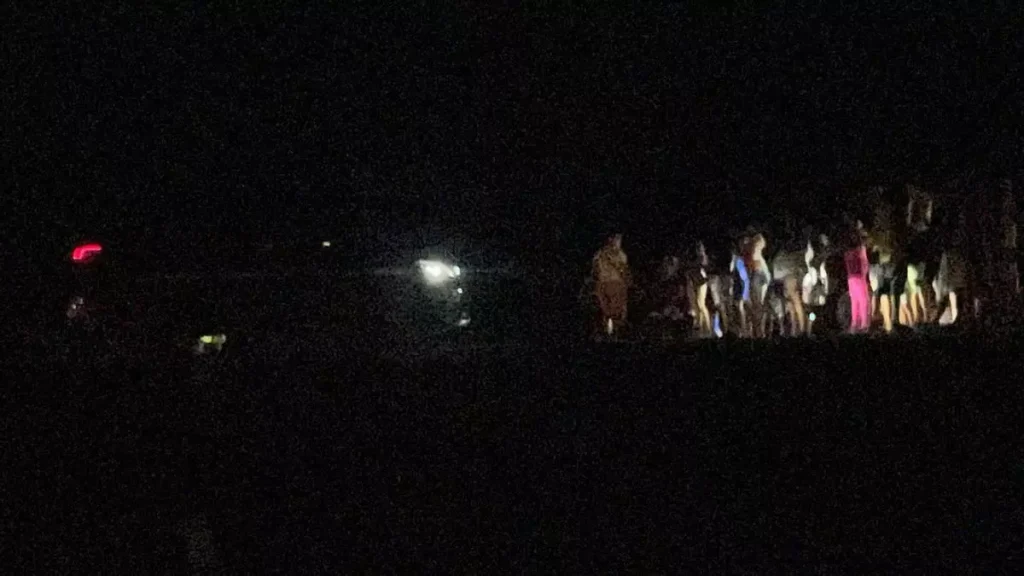
 14ymedio, Havana, June 8, 2026 — More than 50 people blocked the Vía Blanca in Havana this Sunday, according to documentation obtained by this newspaper, which witnessed the police deployment in the protest area. Residents demonstrated against the lack of electricity service, which they said they had been without for three days, according to one participant’s testimony.
Women, teenagers, and children were the main participants in the protest. Standing on the roadway and blocking one of the main highways connecting the capital to Matanzas, demonstrators banged pots and pans to express their discontent. After nearly half an hour, several police patrol cars arrived in the area to persuade protesters to end the traffic disruption.
Scarcity and desperation are pushing more and more citizens to take to the streets and protest, even in broad daylight, despite the usual police response and the arrests that often accompany these demonstrations.
The energy crisis affects virtually every aspect of daily life on the Island. Power outages also interrupt water service, make food preservation difficult, prevent sleep during hot, humid nights filled with mosquitoes—carriers of diseases such as dengue—and complicate medical care in hospitals.
Scarcity and desperation are pushing more and more citizens into the streets despite police responses and arrests
Cuba’s Electric Union (UNE) has spent weeks reporting disruptions affecting more than 60% of national demand during peak consumption hours after sunset. This situation has resulted in blackouts lasting more than 48 consecutive hours in some parts of the country and more than 20 hours per day in Havana.
Yesterday, Sunday, eleven of the country’s 16 thermoelectric generating units—most of which operate on domestically produced crude oil—were out of service due to breakdowns or maintenance work. Forecasts for Monday are very similar, with 10 units offline.
Among them is the Antonio Guiteras thermoelectric plant, the Island’s largest power generator, which had been contributing 220 MW. It disconnected from the National Electric System (SEN) last Friday for the thirteenth time this year, and repairs will still “take the necessary time under established controls,” according to its director, Román Pérez Castañeda.
The structural problems affecting thermoelectric plants, which are responsible for 40% of electricity generation, stem mainly from decades of operation beyond their intended service life and from a chronic lack of investment.
Protests are recurring frequently in different parts of Havana and other provinces, with pot-banging demonstrations, garbage fires, and road blockades
These incidences are compounded by generation limitations caused by fuel shortages. A total of 106 distributed-generation plants remain out of service, creating a deficit of 890 MW. The Turkish floating power plant [“patana“] in Regla is in the same situation.
According to the UNE report, electrical service was affected by insufficient generating capacity throughout all 24 hours on Sunday, and the disruption continued during the early morning hours, reaching a maximum deficit of 1,953 MW at 9:20 p.m. For Monday, a deficit of 2,045 MW is forecast during peak hours, equivalent to nearly 67% of the estimated demand of 3,050 MW.
Protests were also reported on Sunday in the municipality of Regla during the daytime. Demonstrations have become frequent in different areas of Havana and other provinces, especially during blackout nights, involving pot-banging protests, the burning of garbage piles, and road blockades. Many of these demonstrations have ended with police repression and the detentions of participants.
Translated by Regina Anavy
______________________
COLLABORATE WITH OUR WORK: The 14ymedio team is committed to practicing serious journalism that reflects Cuba’s reality in all its depth. Thank you for joining us on this long journey. We invite you to continue supporting us by becoming a member of 14ymedio now. Together we can continue transforming journalism in Cuba.