Nicaraguans, Venezuelans, and Colombians are also included in the measure, which aims to ease pressure on an overwhelmed system.
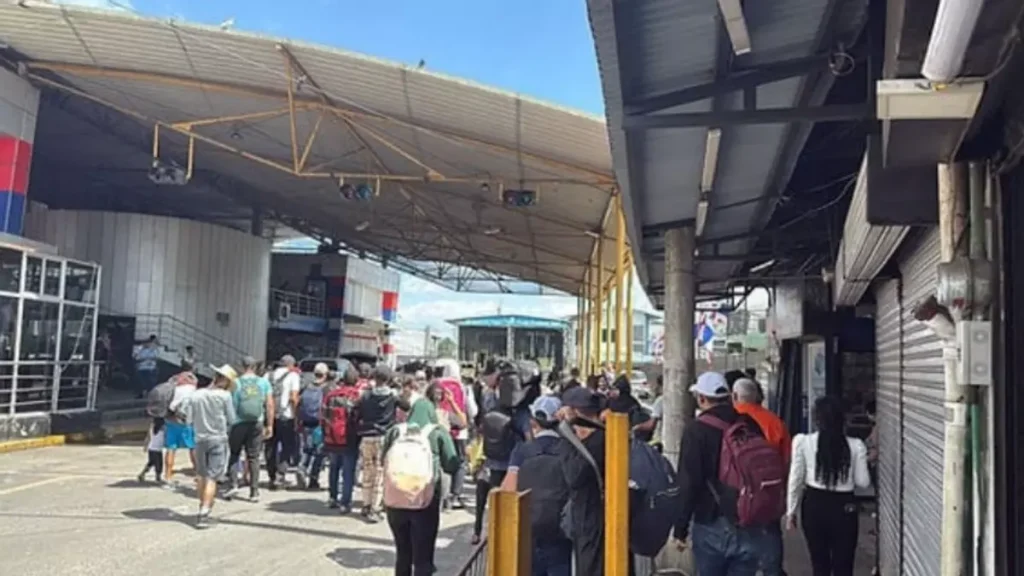
 14ymedio, Madrid, June 2, 2026 — Costa Rica announced on Monday the creation of an extraordinary regularization program for Cuban, Nicaraguan, Venezuelan, and Colombian asylum seekers whose applications are still pending or have been rejected.
“They may apply for the special temporary category for Nicaraguan, Venezuelan, Cuban, and Colombian nationals whose applications for refugee status recognition are pending resolution or have been denied,” states Article 1 of the resolution approving the measure, which was confirmed by Costa Rica’s General Directorate of Migration and Immigration (DGME) to the local press.
The official information refers to the “challenges and possible delays in the refugee status determination system” and notes that there is a “large number of people” from those nationalities with asylum cases awaiting resolution. This has led authorities to consider a regulation of this kind necessary in order to provide a “mechanism aimed at the protection and legal stay” of these individuals.
The greatest advantage of the resolution is that it will allow beneficiaries to work legally and thereby contribute to the formal economy, as specified in Article 2.
The greatest advantage of the resolution is that it will allow beneficiaries to work legally and thereby contribute to the formal economy, as specified in Article 2. “The beneficiary of this special category will have unrestricted authorization to engage in any paid employment activity, whether self-employed or working for an employer.”
The measure may benefit people who havebeen living in the country illegally for many years, since it applies to those who applied for asylum between June 1, 2014, and May 7, 2026. The DGME will verify on its own that the application was filed and that applicants do not hold any other valid immigration status or have any regularization process other than an asylum claim.
The category will authorize residence in Costa Rica for a period of two years, renewable indefinitely for additional periods of the same length. “However, before the document is renewed, the foreign national’s migration movements will be verified in accordance with Article 36 of the General Migration and Immigration Law,” the resolution states.
Beneficiaries of the measure will be able to enter and leave Costa Rica subject to the usual controls. However, if irregular travel movements are detected, the individual must provide documents and evidence explaining “the reasons why such movement does not appear in the records. If the reasons are not justified, renewal will not be authorized.”
The DGME also warned that this status may be revoked if it is determined that the person poses a threat to public security or fails to meet the requirements for renewal. It will also be lost if the individual has been convicted of a crime within the previous ten years.
Estimates by the Costa Rican press place the number of Cubans residing in the country at between 10,000 and 15,000
The resolution also establishes that anyone who fails to renew the document within three months after its expiration will automatically lose the immigration benefit without further proceedings.
Costa Rica has traditionally served as a transit country for Cubans traveling from South America to the United States. However, thousands have settled in the country, one of the most politically and economically stable in the region, with high levels of security and quality of life. Estimates by the Costa Rican press suggest that between 10,000 and 15,000 Cubans currently reside there.
The DGME reports approximately 7,300 pending asylum applications from Cubans, making them the second- or third-largest nationality group seeking asylum, behind Nicaraguans—whose pending applications numbered around 190,000 in the summer of 2025—and, at times, Venezuelans.
Translated by Regina Anavy
______________________
COLLABORATE WITH OUR WORK: The 14ymedio team is committed to practicing serious journalism that reflects Cuba’s reality in all its depth. Thank you for joining us on this long journey. We invite you to continue supporting us by becoming a member of 14ymedio now. Together we can continue transforming journalism in Cuba.