The “builders, far from merely meeting deadlines and budgets, are called upon to be the foremost guardians of the fragile island ecosystem,” Invasor urges.
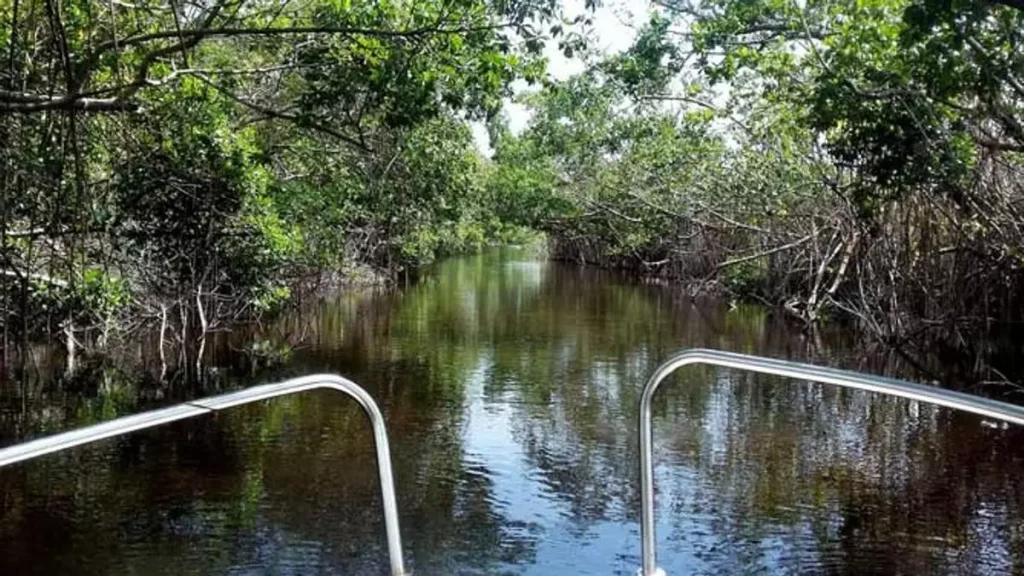
 14ymedio, Havana, May 31, 2026 – The construction of the first of two photovoltaic solar parks planned for the Jardines del Rey region of Cayo Coco, in Ciego de Ávila, could impact the already “fragile” local ecosystem. Antonio García Quintas, a doctor in Community Ecology and associate researcher at the Center for Coastal Ecosystem Research (CIEC), warns that the project, which will cover 8.5 hectares, “will harm local wildlife, including endemic and threatened species, while migratory birds would be affected by the construction.”
An article published this Sunday in Invasor warns that the installation of the panels, a plan envisioned 10 years ago but only now moving forward, will create “heat islands,” leading to the “loss of a well-preserved evergreen forest that, paradoxically, forms part of the buffer zone that should be protected” in El Bagá Natural Park.
The risk is considerable. According to Raúl Gómez Fernández, a CIEC specialist, in these territories “it is difficult to draw on a map the exact line” separating anthropized zones where human activity has transformed the environment from areas that have not been disturbed.
In response, the specialists consulted by Invasor offer viable alternatives in locations with “secondary vegetation or areas converted into solid waste dumps, at higher elevations, less prone to flooding, with lower salt exposure, and located much closer to generating units or electrical substations.”
“What is being proposed is not to halt the investment, but to do it properly, in a place where established forests are not sacrificed”
Because of the impact the project could have, it has undergone modifications since 2016. The site initially selected—western Cayo Coco—was part of non-anthropized ecosystems. Shortly afterward, the Provincial Directorate of Territorial Planning and Urban Development of Ciego de Ávila evaluated the project’s impact there and denied construction in order to protect the flora and fauna. It was then decided that the solar parks would be installed in the eastern part of the cay, although on a smaller area than originally planned, since the initial proposal called for the use of 13 hectares.
“What is being proposed is not to halt the investment, but to do it properly, in a place where established forests are not sacrificed, where existing infrastructure can be utilized, degraded areas rehabilitated, and where construction and maintenance costs would be significantly lower,” Invasor states.
Marialina Herrera Riera, director of investments for the Ciego de Ávila Electric Company, assures that the construction of the photovoltaic solar park will be carried out “under the strictest compliance with all established regulations, without violating any legal provisions.” According to the official, the goal is “to minimize possible impacts on the environment.”
Nevertheless, the provincial newspaper emphasizes that “the solar energy the country so desperately needs, and which is increasingly necessary to generate on the cays themselves where tourism development exists, deserves to be installed in locations that are technically and environmentally justified, not in places that condemn it to greater expenses, accelerated deterioration, or conflict with protective legislation.”
“The solar energy the country so desperately needs, and which is increasingly necessary to generate, deserves to be installed in locations that are technically and environmentally justified”
For this reason, Invasor states in a demanding tone, “its builders, far from merely meeting deadlines and budgets, are called upon to be the foremost guardians of the fragile island ecosystem, protecting wetlands and respecting native wildlife corridors, especially the migratory birds that nest there, ensuring that every panel, every cable, and every movement of earth is carried out with the smallest ecological footprint possible.” Only in this way, it adds, “will this project cease to be a simple renewable-energy undertaking and become a true symbol of coherence.”
The appeal stems from cases such as El Bagá Park, “a themed natural park that existed and disappeared more quickly than it took to build,” because “sustainability is not determined by the type of technology used, but by the way it is integrated into the territory. From the mistakes of the past should finally emerge the wisdom not to repeat them in the present.”
“Today, those same decisions are being paid for through irreversible environmental damage and maintenance costs that no one calculated at the time. This is not about stopping development but about understanding that a poorly located project is not development. It is a legacy of problems for future generations,” the article insists.
The authorities’ strategy for trying to address the country’s energy crisis, with blackouts exceeding 20 hours in several parts of the Island, is the massive installation of solar panels. The program is expected to be fully completed provided the planned schedule is met: within 24 years, by 2050.
Translated by Regina Anavy
______________________
COLLABORATE WITH OUR WORK: The 14ymedio team is committed to practicing serious journalism that reflects Cuba’s reality in all its depth. Thank you for joining us on this long journey. We invite you to continue supporting us by becoming a member of 14ymedio now. Together we can continue transforming journalism in Cuba.