- Economic changes will not be possible in Cuba without international humanitarian intervention
- Between 2020 and 2024, 24% of the Cuban population has left the country and they are not coming back
In 2025, the number of births fell to 68,000 – below what can be estimated for the year 1899
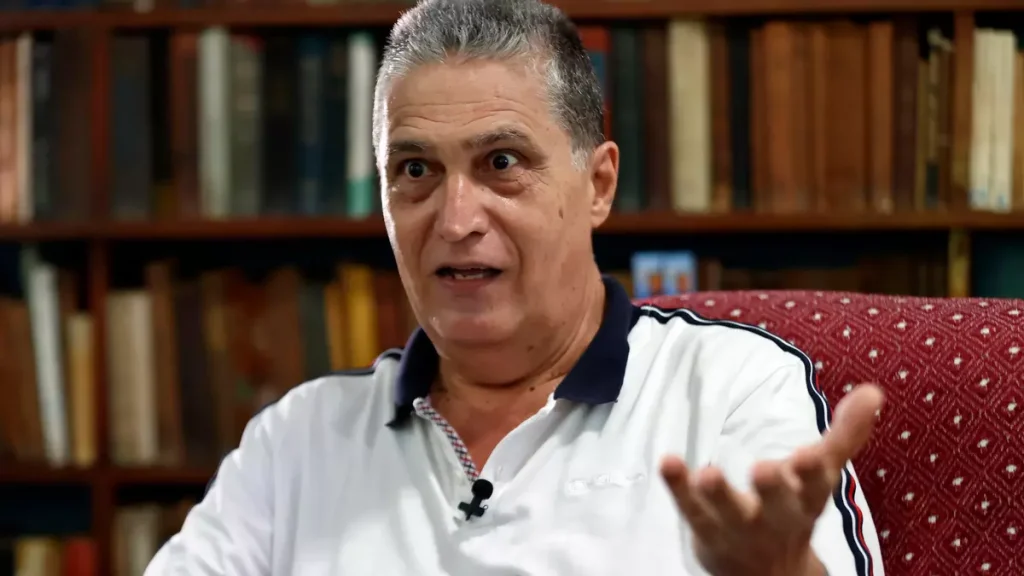
 14ymedio, Rosa Pascual, Madrid, 29 May 2026 – Juan Carlos Albizu-Campos (1963) describes himself as a child of the Cuban baby boom – that generation now facing a serious short-term threat that nobody knows how to resolve: retirement. That is one of his greatest concerns, alongside concepts such as what he calls “demographic hollowing-out” and the Malthusianism of poverty.
A graduate in Industrial Economics from the University of Havana, he is one of the foremost experts in demography – which he also studied in Costa Rica and Paris – to the point that his is now considered the most reliable count, putting the Cuban population at 8,025,624, far from the official figure of 9,748,532. He argues, however, with full conviction that Cuba does not have a population problem, but rather a population with problems.
He believes that change in Cuba is “inexorable” and is optimistic that recovery could be faster than expected, though when pressed on timescales he warns it could take no less than four years. Even so, he returns to the same point more than once during the conversation: “Remember, I could always be wrong.” And laughs.
Question. Talking to a demography expert, it’s inevitable to start by asking your opinion on the new Migration Law, which has finally just been published.
Answer. It’s still very early, but I can see things I don’t like. First of all, this invention of “effective residence.” That smells just as bad as the changes made in 2013. Cuba started showing positive net migration balances, as if more people were coming in than leaving. But that was because they had changed the method of tracking. Now, since they’ve spent so long denying the migration figures and so long trying to mask the exodus, what it seems to me is that this “effective residence” concept is going to help mask the figures. Imagine that if you happen to spend 180 days in Cuba for whatever reason, you’re already an effective resident. If a population count or census is carried out at that moment, the person would show up as a permanent resident.
There’s something here that strikes me as incoherent with respect to the Constitution, because the Constitution is clear that Cuban nationality is unique. Multiple nationality is not provided for at a constitutional level. How can a decree be issued that accepts multiple nationality when the Constitution explicitly prohibits it? That is completely unconstitutional.
How can a decree be issued that accepts multiple nationality when the Constitution explicitly prohibits it? That is completely unconstitutional.
Q. I wanted you to talk to me in historical terms. Cuba went from a strong immigration movement in the first half of the twentieth century to having…
A. First third, first third.
Q. Yes, and then to having nothing.
A. Well, Cuba is quite a singular case. The thing is, it emerges from a process of “demographic depression” linked to the last war of independence, in which it loses around 300,000 inhabitants. In that war, a tactic of the Cubans was to destroy Spain’s economic base – the sugar industry – and the Spanish side responded by concentrating the rural population in the cities, in very poor living conditions, to deprive the liberation army of its social base. That ended up driving mortality rates to completely unprecedented levels. What has been estimated is that infant mortality in 1895 – the opening year of the war – reached 380 per thousand live births.
Cuba enters the twentieth century with a population of between 1.6 and 1.8 million, but then, when this new period of pacification arrives – American administration, organisation, restoration, sanitary clean-up and all that – the Cuban population has a sort of mini baby boom between 1899 and 1910. From there, Cuba’s birth rate begins a sustained decline, until reaching 1957, when the real Cuban baby boom begins, lasting until 1963.
In those years there were very strong emigration flows in many European countries, most notably Spain and Italy. In Cuba’s case, the majority of arrivals were Spanish. Bear in mind that all those who came between 1900 and 1930 or thereabouts – because the 1931 census already shows this phenomenon – essentially doubled the population through migration alone. And it’s interesting, because the metropolis that had opposed independence ended up repopulating the country. Eighty per cent of those migrants were of Spanish origin – young single men who married native women and passed on a pattern of fertility reduction, because you don’t migrate to have children, but to settle down and build a decent life.
Eighty per cent of those migrants were of Spanish origin – young single men who married native women and passed on a pattern of fertility reduction, because you don’t migrate to have children, but to settle down and build a decent life.
Families with fewer children found it easier to cope with the economic crisis of 1929-1933, because looking after ten children is not the same as looking after five. And that is an effect that has finally been described in more recent literature as the Malthusianism of poverty. That is to say: if you have few resources, the only option left is to reduce the size of your offspring, because every child born means an investment cost for their survival. And that’s happening now too – the latest measurement puts it at 1.29 children per woman.
Q. Yes, well, it’s similar here in Spain.
A. Of course, but in developed countries the fertility transition was driven by families with higher income levels and greater economic means – the same ones who most readily adopt new behaviours when it comes to family planning. But in Cuba’s case – and this contradicts the official line – what’s happening is a consolidation or a hardening of the fertility pattern of Malthusianism of poverty. And that explains the brutal falls in the number of births: since 2024 the figure stood at 71,300-odd, and last year it dropped to 68,000-odd – a birth figure that is below what can be estimated for the year 1899. Did you hear that right? 1899. People sometimes say “no, you’ve got the wrong date.” No – it’s 1899.
From around 1933-1934, Cuba’s migration balance reverses and it starts to become a country of emigration, not only to the United States but also within the region: Venezuela with the oil boom of the 1950s, Mexico, Puerto Rico…
Q. You argue that by 2030 the entire Cuban baby boom generation will be retiring. What can be done? Because this calls for an urgent solution and the outlook isn’t very encouraging.
A. And nobody mentions it! I’ve been battling with that issue for years. First of all, because since 2010 the economically active population has stopped replacing itself – more people are leaving than entering. And that’s before the latest wave of emigration. Moreover, Cuba was historically a country with very low utilisation of its workforce. People think the Special Period began in the 1990s, but the first time Cuba’s GDP actually falls is in 1985 – that’s when it starts, and it’s been going ever since. There has been a sustained decline in fertility since 2012 and also in life expectancy, and the process of demographic ageing has become entrenched – demographic ageing as a population structure concept, not just “getting old” – because of the 24% of the population I’ve calculated to have left, 80% of those people are aged between 15 and 59.
Q. Right, but so what would the solution be?
A. The solution has to be a change of model. In the second half of the 1980s, Vietnam was confronted with a famine, which led it to carry out the reforms it has been implementing since 1989. Within three years it had become the world’s biggest rice exporter. The Chinese did something similar – Deng Xiaoping began his reforms around 1980, and we all know how the Chinese economic story turned out. Whatever we may think or say about the political model, that is the reality. What happened to the Chinese and Vietnamese pension systems is that they are economically sustainable. Cuba’s is not.
If what needs to change hasn’t changed, we’re going to have a very hard time, because the State – which is already broken socio-economically – would have no option but to abandon people to their fate. In fact, it’s already happening in terms of healthcare collapse, food crisis… which gives the measure of a population being abandoned to its fate.
Q. Given all the expectations right now, do you think anything is actually going to change?
A. Look, the change is going to be inexorable. It will change because the system is heading towards a point of implosion. And that is unstoppable. It’s going to happen. And the ruling class is going to be smart enough to realise that if the situation implodes, they too will disappear. There’ll be no way out for anyone, and you could get a social explosion like July 11th, when the regime already made clear what its attitude would be.
The ruling class is going to be smart enough to realise that if the situation implodes, they too will disappear.
On top of that, this could happen in a context of migration closure – which is the other issue. Cuban emigration has been slowing down not because there are fewer people who want to leave, but because there are fewer opportunities, for example with a migration market as large as the American one. Though routes still exist: there are currently 135,000 Cubans with work permits in Guyana alone, and there are other corridors – Central American, South American, North African… I have a list of around 20 migration routes where a Cuban presence has been detected. The population drain will continue in this process I’ve called hollowing-out – an accelerated depopulation that moreover happens over a very short period of time.
Up to 31 December 2024, I have calculated the departure of around 24% of the population relative to 2020, in the absence of war – because this sort of thing is recorded in countries in full armed conflict, particularly in Africa. It’s a genuine displacement crisis.
Q. We’ve recently seen the US President say he knew many Cubans who were happy in the United States, but that now that Cuba was going to change they would return. Do you think that’s true?
A. So has Trump put the cherry on the cake of demographic theory? [laughs] Those return flows have never happened, and there might be people who want to go back to see where they used to live. What there could be is people interested in investing – that’s true – because some people say that even the investment process that’s needed is not all that complex or costly: that Cuba is very small (which was actually a factor in the demographic transition and modernisation in the first half of the twentieth century), that it’s a long narrow country where distances are very short, and where what’s needed is a level of resources that could be substantial initially, but will gradually reduce, just as they will be recovered as an investment.
The problem is whether the necessary legal framework exists to make that possible. Because what can’t happen is that you expect lots of people to come and invest in Cuba and then have their money taken away from them.
But emigration is now “the canary in the mine.” In the nineteenth century, miners took a canary down with them. If there was a gas leak, the canary would stop singing, or pass out, or die – and everyone would run. That’s what demography is doing: sounding the alarm, denouncing the action, the effect, the impact of factors that are not demographic in nature, but that affect it enormously. The question is: who wants to invest in fixing all that? That’s why the role of international organisations will be so important, because no private businessman is going to solve this on his own.
People will keep leaving, because if things change today that doesn’t mean there’ll automatically be jobs for everyone tomorrow, or that all the healthcare infrastructure will be completely renewed with brand-new equipment…
Q. How long do you think a degree of recovery might take?
A. I think there needs to be a stabilisation process of at least four years, in which many things are sorted out that necessarily have to contribute to development – restoration of transport, communications, social, economic and energy-production infrastructure. Because when the electricity goes, it doesn’t just go for me – it goes for the factory too.
I think there needs to be a stabilisation process of at least four years, in which many things are sorted out that necessarily have to contribute to development.
But one of the things that has to change is the legal framework of the system, because if you want to protect private investment, state investment, whatever kind of investment – you have to build a legal structure that makes that protection possible. And when you change the legal basis of the system, you are changing the system politically. Laws, the legal order… these are nothing other than the will of the ruling class. You have to change it politically. There’s no other way, because it’s a system – all the dimensions are connected.
Q. Do you think that change will come under the tutelage of the United States?
A. I’ve always said, since 2021 – since COVID – that Cuba needs an international humanitarian intervention. A humanitarian intervention like those in Syria, Kosovo, Haiti… There are intervention forces that have also brought with them what’s called an interposition force [like the Blue Helmets], which protects the population from violence. In fact, economic changes won’t be possible without that. Look at Haiti…
Haiti hasn’t managed it. And that could be… Well, there’s a great Cuban economist, Mauricio de Miranda, who talks about the “Haitianisation” of Cuba as a real, already-occurring process. And indeed, when you look at productivity indicators in the economy, Cuba ends up in last place… and if you’re in last place for labour productivity in the Americas, you’re in last place in the Western Hemisphere. Immediately below whom?
Q. Haiti.
A. Exactly. And if you take, for example, Hanke’s annual misery index, in 2021 Cuba was already in first place. Its position on the human development index has fallen to level 95. When the Tarea Ordenamiento* [the monetary reordering exercise] was implemented, I estimated inflation at 1,850%, Pérez-Castellanos at 1,840%, Hanke at 1,220%… We’re talking about four-digit inflation.
I remember once an American professor who came in the 1990s, when the boom in American university groups started – they would come for academic semesters. And this one brought his doctoral group along, saying: “In Cuba, students can see what happens when things are done badly. And no school of economics in the world teaches that.”
*English sources generally refer to it as “The Ordering Task”
This text was produced in collaboration with Cuba Siglo 21 as part of the project “Cuba: Stabilize and Develop”.
Translated by GH
______________________
COLLABORATE WITH OUR WORK: The 14ymedio team is committed to practicing serious journalism that reflects Cuba’s reality in all its depth. Thank you for joining us on this long journey. We invite you to continue supporting us by becoming a member of 14ymedio now. Together we can continue transforming journalism in Cuba.