At El Turquino in San José de las Lajas, Aurelio and Alicia offer two plastic bags for 20 pesos, sometimes three for 50.

 14ymedio, San José de Las Lanas Julio César Contreras, February 26, 2026 –At seven in the morning, when the sun has barely finished rising, Aurelio is already sitting on his usual bench in front of the Ideal Market El Turquino in San José de las Lajas. At his feet he places a worn-out shopping bag, from which he carefully pulls out nylon bags. At 74 years old, that small sale—two bags for 20 pesos, sometimes three for 50—makes the difference between having a hot lunch or going to bed hungry.
However, selling little bags has become increasingly difficult. Not only because of the constant patrolling by inspectors and police who scrutinize informal vendors, but because the market has gone weeks with such a meager supply that it barely attracts customers. “These are the last ones I have left,” Aurelio says, lifting a handful of wrinkled bags. “But it’s taken me a long time to sell them, because people have nothing to put in them.”
The market’s chalkboard confirms his words. There is only salt, at 40 pesos per pound. By noon, when the heat begins to press down under the stained tile portico, El Turquino closes its doors. “There’s so little that there aren’t even flies on the counter,” the retiree jokes, returning home each afternoon with less than 200 pesos in his pocket and the feeling of having lost the entire day. “When there’s merchandise, things improve. The same people in line come looking for me without my calling them. But now there aren’t even five customers gathered.”
Near Aurelio are the white market doors, barely open a crack, the “Bodegón” signs over empty display cases, the concrete benches occupied by older men waiting—not so much to buy, as for something to happen. A parked motorcycle, a column covered with advertisements for bread and sweets that are no longer sold, flowerpots trying to add greenery where wear and tear dominates: the scene repeats day after day, like a ritual of waiting without reward.
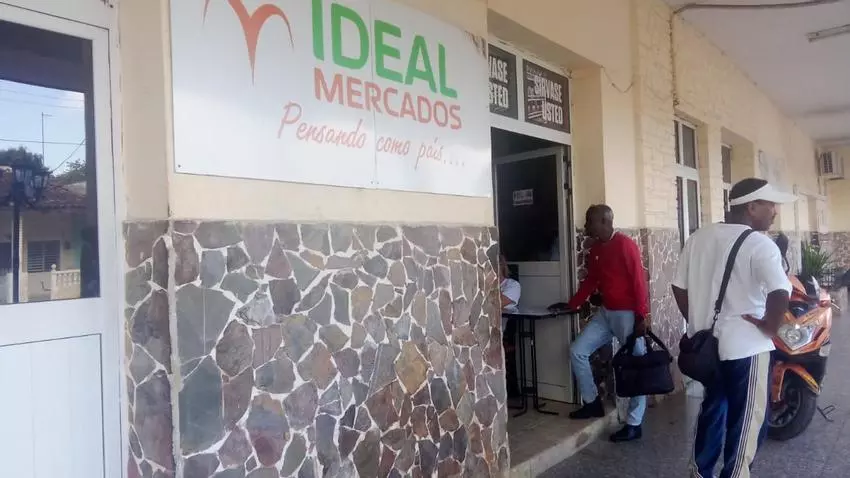
An employee of El Turquino, who asks not to be identified, explains that the lack of products is not due solely to the current fuel crisis. “This goes back years,” he says, leaning on the door. “It’s all poor management by the Commerce Company. They notify us when the truck is already parked. We unload whatever comes, and that lasts two or three hours at most.” In December, he recalls, sacks of donated rice arrived and were sold in a matter of minutes. “Sometimes a line forms just from the rumor that sugar or beans are coming in. Then it turns out to be false.”
The uncertainty also affects the workers. The market’s hours depend on whether there is anything to sell, and rumors of job reassignment circulate as lightly as those about incoming merchandise. “If they send us to another activity, I’ll ask to leave,” the employee says from inside a dimly lit shop where it is hard to distinguish the empty shelves.
A few meters from Aurelio, Alicia arranges her bags inside a large cloth purse. She is another retiree who survives by selling bags in front of the market. In her case, indignation weighs as heavily as exhaustion. “When they bring something out, the first to arrive are the resellers,” she says. “They find out from the same employees, and then each one leaves with their share. There’s a lot of shady dealing here.” Meanwhile, she is the one chased for selling small bags.
The drop in commercial supply not only empties the market shelves; it also leaves without sustenance those who depend on its activity. The elderly who sell bags depend on movement: on the line, on the bundles, on the rush to carry something home. Their age, their minimal pension, and the lack of alternatives force them to live day to day, watching a market that now sells almost nothing. The crisis in San José de las Lajas is also measured in bags that no one buys.
Translated by Regina Anavy
______________________
COLLABORATE WITH OUR WORK: The 14ymedio team is committed to practicing serious journalism that reflects Cuba’s reality in all its depth. Thank you for joining us on this long journey. We invite you to continue supporting us by becoming a member of 14ymedio now. Together we can continue transforming journalism in Cuba.