In Las Tunas, authorities want to give a second life to solar panel containers by converting them into homes.
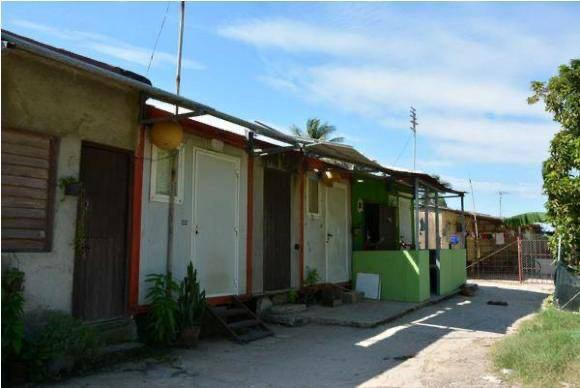
 14ymedio, Havana, August 8, 2025 — In Las Tunas, where the housing crisis has been installed for years as an uncomfortable guest, the authorities have decided to resort to a “novel” solution: converting recycled containers into homes. The metal boxes are nothing less than those that transport solar panels to the Island, and the authorities-who assure that they are inspired by similar projects around the world-have decided to give them a second life.
Héctor Rodríguez Espinosa, provincial director of housing, announced with optimism that the first containers will be installed in the municipalities of Manatí, Puerto Padre and Majibacoa. Among their advantages are resistance, durability and low environmental impact.
“At present the province has 46 containers: Eighteen of them are assigned to the Electric Company for the construction of nine houses for its workers, and 28 are to be delivered through the popular councils by delegates, community groups and the government in each territory,” said the manager.
As for the frequent “concerns” about the metal material of the containers, which could turn them into ovens, he said that there is nothing to be alarmed about. Each improvised house will be covered inside with “anti-thermal elements,”which will also provide “aesthetics, comfort and a better finish.”
They will have a plot of 150 square meters, so that “the family, if necessary and possible, can later expand by building other rooms.”
Each unit will have between 32 and 70 square meters-divided between bathroom, kitchen, dining room and bedrooms, according to the number of residents-and “ventilation” is assured with doors and windows, he highlighted. They will also have a plot of 150 square meters, so that “the family, if necessary and possible, can later expand by building other rooms.”
Meanwhile, the residents will have to adapt to living in the boxes of the refurbished metal containers. Some officials of the Housing Directorate itself were busy emptying other boxes, which came from the state budget.
In Matanzas, the People’s Provincial Court on Thursday tried two former employees of the sector-a director and an investor-for forging documents and embezzling funds. The trial, described as “exemplary” like so many others, ended with a sentence of five years in prison for the first and four for the accomplice, with the option to do correctional work without internment.
According to Girón, the former director had bypassed all procedures and signed a contract with a self-employed worker to rehabilitate a multi-family building known as the Transport Building, in the neighborhood of 13 de Marzo. The agreement was signed, clarifies the media, “behind the back of the unit’s Procurement Committee and without prior bidding.” The document did not contain “the work object; the person responsible for the supply; the representatives of the supplier and the customer; the terms of guarantee; the schedule of execution; and the list of persons authorized by the supplier and the customer to sign the certificates of conformity, acceptance and materials.”
There was no construction work on the building, which had “severe structural damage,” but there was a bill of more than half a million pesos.
There was no construction work on the building, which according to Girón presented “severe structural damage,” but there was a bill of more than half a million pesos for work that was never carried out. “No constructive action was taken to restore the original and functional values of this building as planned, and the property now remains in the same state of deterioration, although [the directors] arranged payment as if the construction had been carried out satisfactorily,” the newspaper said.
The investor, for his part, never verified that the construction had been completed with the desired quality nor requested the work file. He still certified the whole process.
Both were also prohibited from exercising any office related to “administration, care or availability of material and financial resources,” and their family members -it is not clear whether voluntarily- refunded the 531,486 pesos,19 centavos, so that Vivienda did not see its assets affected.
The trial, which was held in public, is yet another warning from the Government, among many that it has issued recently, to officials and low-ranking managers on the Island. However, the fact that such an obvious crime -since the building was never repaired- was ignored until the last moment casts doubt on the management and control of state enterprises over their resources. Justice was delivered, but, as is often the case, it was delayed.
Translated by Regina Anavy
____________
COLLABORATE WITH OUR WORK: The 14ymedio team is committed to practicing serious journalism that reflects Cuba’s reality in all its depth. Thank you for joining us on this long journey. We invite you to continue supporting us by becoming a member of 14ymedio now. Together we can continue transforming journalism in Cuba.