The Fight Against the Viruses in Cuba Is Waged From Miami

Mosquito repellents and medications sent to the island by emigrants are running out in Florida.
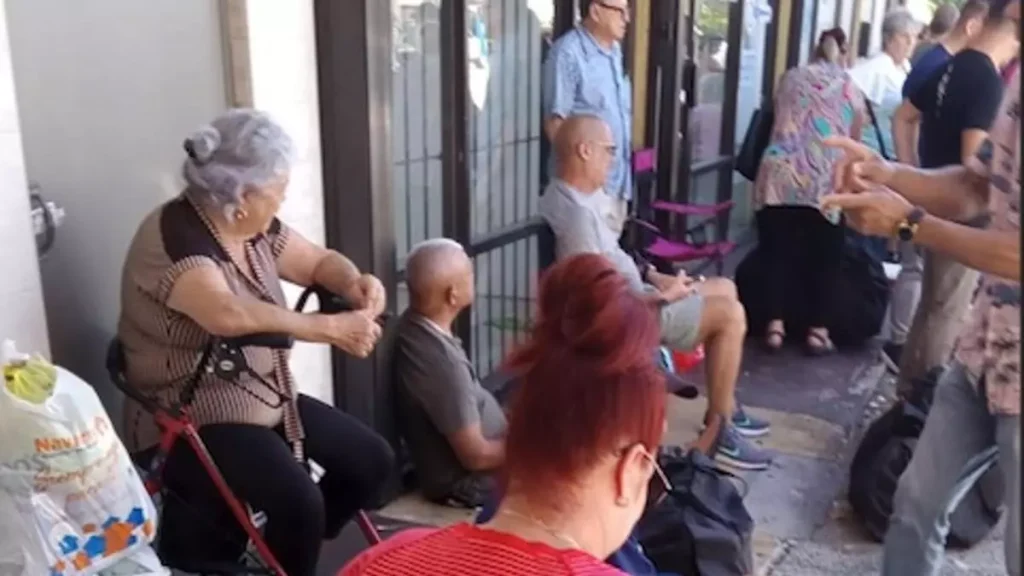

The Line at a Cubamax agency office in Miami, this Monday. / 14ymedio

14ymedio bigger14ymedio, María Casas, Miami, October 23, 2025 – Sitting on folding chairs, with umbrellas, small cups of coffee, and sunglasses, dozens of customers waited this Thursday morning in front of one of the offices of the Cubamax agency in Miami, to send a package to their families on the island. The health crisis ravaging Cuba shapes everything from what is bought in the markets of the capital of the Cuban exile to the contents of those boxes that travel 90 miles by boat or plane.

“I have two bottles of mosquito repellent, several packets of citronella incense to keep the bugs away, and medication for fever,” details Gladys, 66, who has only been in the United States for three years, speaking to 14ymedio. With numerous relatives suffering from dengue and chikungunya, the woman was trying to send several boxes full of medicine, food, and all kinds of products to keep away the Aedes aegypti mosquito, the insect that has put the Cuban Public Health system in jeopardy.

Living in San Miguel del Padrón, Gladys’s relatives have been “getting over one and getting another” for weeks, the woman warns. “It started with the children, and now the oldest members of the house are also infected. The one who’s having the worst time is my cousin, who is diabetic, has high blood pressure, and heart disease.” To complete the long list of needs and requests, the emigrant visited several supermarket chains: Sedano, Navarro, Fresco, Costco, Publix, and even Target. “I arrived in some places and they were out of repellent spray because they say people are buying too much to send to Cuba.” continue reading

The emergencies on the Island have ended up shaping commerce in Miami.

The island’s emergencies have ultimately shaped commerce in Miami. In the weeks leading up to the start of the school year on the island, demand for school uniforms increases in stores that have seen a financial windfall in the sale of these uniforms, mandatory in Cuban classrooms. If domestic coffee production plummets and the rationed quota is delayed, emigrants flock there to purchase La Llave, Bustelo, and other cheaper brands to send as quickly as possible to Havana or Camagüey.

Next to Gladys, a young man held a long, drawn-out discussion this Thursday about the merchandise he would send when, after waiting in a long line, he was able to enter the air-conditioned office. “I brought a cane for my mother, whose knee is severely swollen from the virus and she can barely take a step. I also included some medication for diarrhea and a product to purify her water, which is arriving very dirty.” He will fill the rest of the box, weighing up to 100 pounds and currently shipping for $45 under a special offer, with cans of sardines, powdered milk, and “a nebulizer for a great-uncle who suffers from asthma, and on top of that, he has oropouche fever.”

Oral rehydration salts, ointments to soothe joint pain, anti-nausea remedies, and a long list of headache relievers also piled up in the bags accompanying customers. With each person who managed to enter the office and ship their package, a family in Cuba saw the light of relief at the end of the tunnel of health collapse.

____________

COLLABORATE WITH OUR WORK: The 14ymedio team is committed to practicing serious journalism that reflects Cuba’s reality in all its depth. Thank you for joining us on this long journey. We invite you to continue supporting us by becoming a member of 14ymedio now. Together we can continue transforming journalism in Cuba.
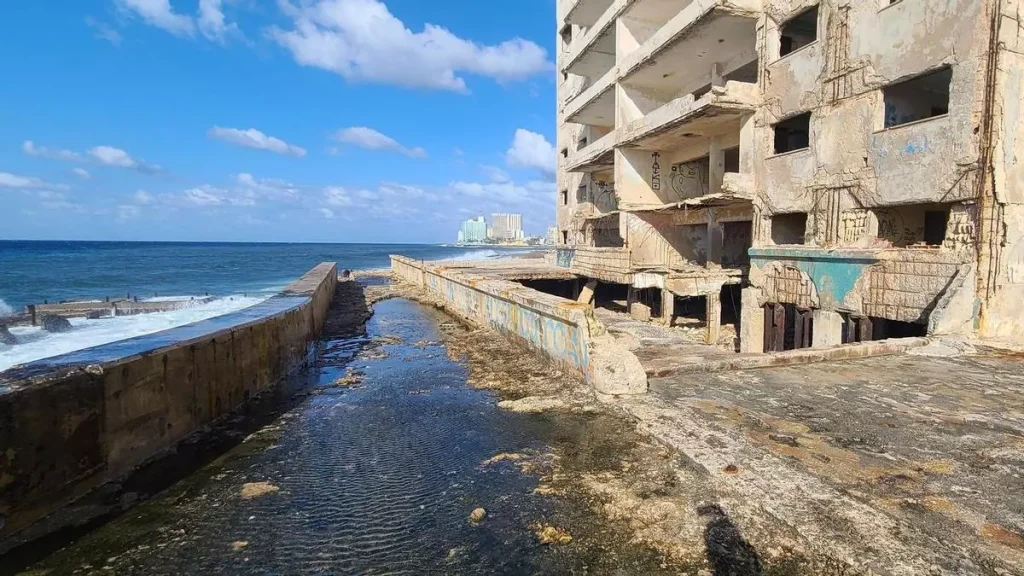
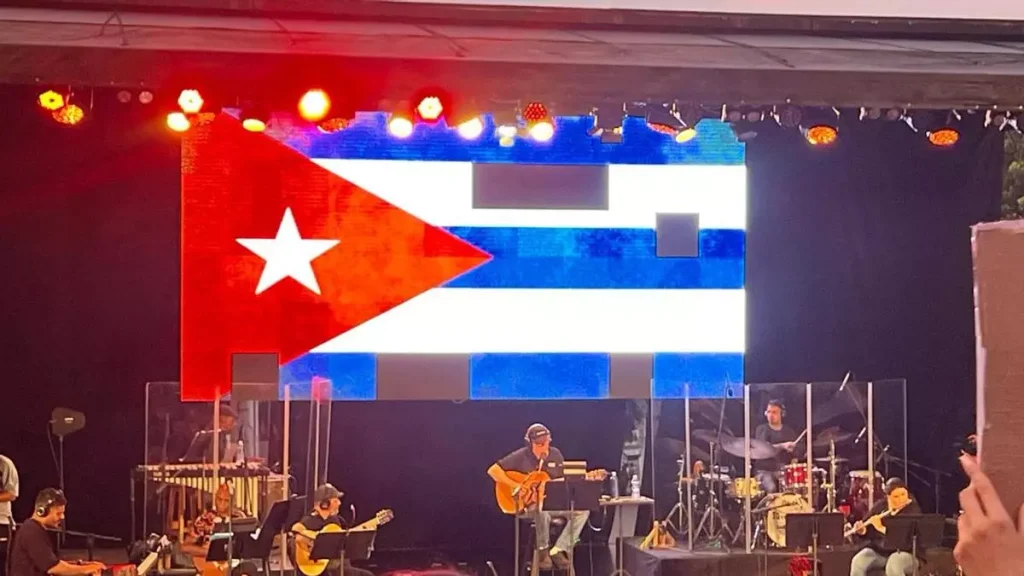
Havana Has Died and I Could Not Attend Its Death Throes

The city has passed from the to-do list to the impossible list

It has killed my octogenarian hope of getting away, with someone to assist me in the farewell ceremony. / 14ymedio

14ymedio bigger14ymedio, Juan Ernesto Cambiaso, Panama, 23 October 2025 — With my lungs tired from blowing out so many candles on my 81st birthday cake, I find it necessary to redo the list of pending subjects to find a way to address them. It is not easy, because my physical stamina has diminished, my gait has slowed, my balance isn’t the same, and my health has sent warnings that must be heeded.

The unfinished business that troubles me most is not saying goodbye to Havana, a city I love like an old harlot who has given me unforgettable moments of intense passion. I never knew a flourishing Cuba; I could only see a decaying Cuba that, as it tumbled down, emanated the aroma, sound, and light that make it unique and unforgettable.

Havana, in its death throes, rejects that I will take it by the hand

Friends whose judgment I respect have warned me that I should not travel because the filth accumulating in the streets has caused painful illnesses, because good food is scarce, medical care is conspicuous by its absence, and the sporadic moments when there is electricity, they call it alumbrones, lights, bring insurmountable inconveniences such as refrigerators no longer keeping the little food available fresh.

Listening to and reading the information I hear and see, I gather that I’m going to have to get used to the fact that Havana has gone from the to-do list to the impossible list. That Havana, in its death throes, refuses to let me take its hand, as I was able to do with my sister Rita and my friend Juan José. It has killed my octogenarian hope of escaping from Panama in January, with someone to assist me in the farewell ceremony, to hold me up as I go up and down the stairs, as I walk unsteadily on the uneven sidewalks, as I get in and out of cars, which is becoming acrobatic. It’s sad to say that on this brief one-way journey of my old age, Havana abandoned me halfway. For me, Havana has been murdered by its worst people.

____________

COLLABORATE WITH OUR WORK: The 14ymedio team is committed to practicing serious journalism that reflects Cuba’s reality in all its depth. Thank you for joining us on this long journey. We invite you to continue supporting us by becoming a member of 14ymedio now. Together we can continue transforming journalism in Cuba.

‘Continuing This Without Fidel is Not Easy, It is Not Easy’

An interview with Cuban singer-songwriter Silvio Rodríguez, featured on the cover of Rolling Stone magazine in Spanish.

Silvio Rodríguez at his concert at the University of Havana on September 19. / 14ymedio

14ymedio bigger14ymedio, Madrid, October 22, 2025 — The entire cover of the Spanish edition of the prestigious American music magazine Rolling Stone features the face of Silvio Rodríguez, who at almost 79 has just published Álbum Blanco para Silvio Rodríguez, an album made up of eleven previously unreleased songs by the Cuban singer-songwriter, created between the late 1960s and the first half of the 1970s, and which was presented this Monday in Havana.

The interview, published this Tuesday by Rolling Stone and reproduced this Wednesday by Cubadebate, was conducted by the director of the media, Diego Ortiz, in the house that the troubadour owns in Havana and is a very extensive dialogue that revolves around Rodríguez’s culture, his influences in music and poetry and the history of the so-called Nueva Trova Cubana of which he is already almost one of the few living and active representatives.

Inevitably, politics takes over in Rodríguez’s case, and to such an extent that an interview so clearly focused on music is titled with the quote “Revolutions are not perfect, they are necessary.” In the conversation, the singer-songwriter—who was also a member of the Cuban Parliament—makes it clear that his admiration for Fidel Castro remains intact.

“I’ve never felt disillusioned with the Revolution, ever. Disillusioned with some people, yes, of course.”

“Fidel was a brilliant man, there’s no doubt about that. He was a highly cultured man. Fidel was an intellectual, an intellectual lawyer. He read like crazy, knew everything, and was extremely well-informed. And he had charisma, a history, and an unquestionable track record. Continuing this without Fidel isn’t easy, it’s not easy. But it has to be this way, it has to be this way,” he says. The artist responds to the interviewer’s interrupted question, which suggests a comparison between the Cuban and Venezuelan regimes and the right-wing dictatorships in Latin America of the last continue reading

century.

“Revolutions aren’t perfect, they’re necessary. Those who make them are human beings like you and me, who aren’t perfect, so in one area of ​​the revolution, you see wonders happening, and in another, they’re doing crazy things,” Rodríguez apologizes, arguing that there is no perfect system, neither capitalism nor socialism, which he considers to be still underdeveloped and whose deployment should be adapted to the conditions of each country.

The singer-songwriter believes, on this point, that Cuba has been unable to do what it would have liked because of the measures of the United States. “Cuba is a country that has been, more than blockaded, I would say tortured. It has been subjected to a very conscious, intentionally perverse torture by a declining but extraordinarily powerful empire that controls practically everything in the Western world, and we are, geographically, part of the Western world and are 90 miles away from those people,” he specifies.

The singer-songwriter, on the other hand, very clearly rejects the idea that the embargo has affected his career as an artist when the interviewer asks him if he thinks he hasn’t been to the Latin Grammys for that reason. “They invited me, I don’t remember if it was in 2015 or 2016, or 2014. They invited me to present me with a Grammy for Musical Excellence,” he explains. According to his testimony, the organization wanted him to travel to Las Vegas to collect the award, something he found “tempting” since he’d never been, but which he had to decline due to his commitments. “I asked them if they could give me the Grammy at a neighborhood concert, inviting them to come to Cuba for that, and they told me no, that it was a hassle for them, because if they did it for one person, going to another country, they’d have to do it for someone else,” he explains.

Cover of the Spanish-language Rolling Stone magazine, featuring an interview with Silvio Rodríguez. / Rolling Stone

Although Ortiz insists it is striking that someone with his career hasn’t won multiple awards from the Miami-based Latin Academy of Recording Arts and Sciences, Rodríguez insists on avoiding confrontation on this point. “They took me into account that time, and it’s good to let it be known that we simply couldn’t meet,” he argues, pointing out that he, too, doesn’t have a profile that corresponds to those awards. “I have nothing against that world; it’s great that it exists; that’s part of the entertainment for people. Besides, there are very good, extraordinary artists in that world, without a doubt. But it’s not my thing.”

Rodríguez reviews some other issues, including his time in the Army (he did active military service and was in Angola as a volunteer, but considers the Cuban Armed Forces defensive rather than offensive); his friendship with Gabriel García Márquez; the ideological roots of Nueva Trova (which he traces back to Bob Dylan and Atahualpa Yupanqui); and various political issues ranging from his opinion of the Spanish Prime Minister to the war in Gaza.

He also recounts that at a very young age, he had a run-in with officialdom—much less severe than what some, he claims, suffer—which he quickly overcame. The artist was 21 years old when, fresh out of high school, he was signed to a music television show. “Suddenly, one day, because of an argument, they took me off television and radio, they erased me from national broadcast radio. They banned the airing of my songs,” he reveals.

However, his conclusion was that such attitudes were not representative of the system, but rather of malicious people: “This man is not the Revolution, and no one can throw me out of the Revolution anymore,” he told himself. And he remained loyal to Castroism.

In recent years, Silvio Rodríguez has been moderately critical of Miguel Díaz-Canel’s government and some of its decisions, and in this interview he was no less so. When asked if he has ever felt disappointed with the system he supported, he replies: “I have never felt disillusioned with the Revolution, never. Disillusioned with some people, yes, of course. And not even disillusioned, but simply: ‘What’s wrong with this guy?’ [laughter ].” ‘What’s wrong with this guy?’ he says, openly.

____________

COLLABORATE WITH OUR WORK: The 14ymedio team is committed to practicing serious journalism that reflects Cuba’s reality in all its depth. Thank you for joining us on this long journey. We invite you to continue supporting us by becoming a member of 14ymedio now. Together we can continue transforming journalism in Cuba.

Cuban Player Liván Moinelo Brings His Team to the Japan Series

He is the first pitcher to win the MVP in a Japanese championship series, since Masahiro Tanaka in 2013

Liván Moinelo earned his place as starting pitcher after seven years of being middle relief / Instagram

14ymedio bigger14ymedio/SwingCompleto, Havana, October 20, 2025 — Cuban pitcher Liván Moinelo led the SoftBank Hawks of Fukuoka on Monday to compete for the Japanese Professional Baseball League title. His performance in the decisive duel against Hokkaido’s Nippon Ham Wrestlers to qualify for the final led him to win the most valuable player award (MVP) of that series.

In his second appearance in seven games, with only four days of rest, he completed seven innings — as in his first appearance — and allowed three hits and a single run, in addition to giving a base on balls and six strikeouts, to take the 2-1 victory against the team from Hokkaido.

His two appearances against the Wrestlers, with 14 innings pitched and a 0.64 ERA, allowed Moinelo to be the first pitcher to win MVP in a championship series since Masahiro Tanaka in the 2013 campaign.

Now the challenge will be to maintain dominance in the Japan Series from next Saturday, when the Hawks seek the throne of Japanese baseball against the Hanshin Tigers.

Now the challenge will be to maintain dominance in the Japan Series from next Saturday

In what was just his second season as the starter of the Fukuoka franchise, the 29-year-old from Pinar del Río led the ERA with an average of 1.46 runs per game, which was a remarkable improvement continue reading

from what he achieved a year ago, with another great figure, 1.86. He struck out 155 opponents last year and exceeded that figure this season with 172 strike-outs, while reducing his number of bases per ball, from 47 to 42 between both campaigns.

Moinelo earned his place as starter after seven years of being a middle reliever. Now as opener in the last two campaigns, he has registered a record of 11-5 and 12-3.

Last year’s numbers allowed him to win the Golden Glove, which made him the first Latino pitcher to earn the ERA title during the regular tournament in the second best league in the world.

That campaign had 25 starters, and he pitched 163 innings. From the mound, he struck out 155 opponents, allowed only 34 runs and allowed 47 bases per ball, for 68.8% of wins.

That campaign had 25 starters, and he pitched 163 innings. From the mound, he struck out 155 opponents

Moinelo, one of the strong cards of the Cuba team, has found in Japan an option to have important income — he is the highest paid of the whole league, together with the Mexican Roberto Osuna, with $26.4 million for four seasons — and to compete at a high level. Other competitions in Asia have also received Cuban players, who have been highlighted recently, such as Guillermo Heredia, who plays in the South Korean league with SSG Landers.

In three seasons, the pitcher from Matanzas has established himself as the player with the best average, .342, among the batters, with at least a thousand at-bats in the last three seasons in that league. With a past in the major leagues with the Atlanta Braves, the outfielder has managed to sign a $1.6 million contract, with a $200,000 bonus.

Translated by Regina Anavy

____________

COLLABORATE WITH OUR WORK: The 14ymedio team is committed to practicing serious journalism that reflects Cuba’s reality in all its depth. Thank you for joining us on this long journey. We invite you to continue supporting us by becoming a member of 14ymedio now. Together we can continue transforming journalism in Cuba.

Cuba Has Reported 71 Cases of Severe Dengue to the Pan-American Health Organization

The Ministry reported a rate of 24.3 suspected cases of arbovirosis per 100,000 inhabitants, which rises to 59.6 in the specific case of dengue

The authorities warn that contracting a serotype other than the current one aggravates the condition. / Archive/Granma

14ymedio bigger14ymedio, Madrid, October 23, 2025 — The Cuban authorities explained yesterday that the health crisis, far from improving, is getting worse. And not just a little. Carilda García Peña, Deputy Minister of Public Health, said on Wednesday that there is a “significant increase in the rate of suspected cases of fever, with 24.3 cases per 100,000 inhabitants. The Ministry has not broken down the data by disease and merely points out that dengue is the “most dangerous” one, but data from the Pan American Health Organization (PAHO) show that the rate in this case reaches 59.6 per 100,000.

García Peña warned that the regional context is bad and that the situation of the Island is not exclusive. The PAHO figures, which are provided by the authorities of each country, coincide. There are rates much higher than the Cuban one, from 6,191 in Guyana to 1,629 in Brazil and 333 in Panama. If divided by regions, the Island is not the champion either, since Puerto Rico, with 81.2 cases per 100,000 inhabitants, has worse numbers.

There is, however, one very striking fact, which is the difference in ratio between global and severe cases. This figure gives clues about the effectiveness of the health system, since a country could have many registered patients but few that develop badly, as is the case of Brazil, whose proportion is only 0.07% of serious cases in total. Cuba is among the countries with the worst proportions, since a large majority have rates well below 1% and the Island reaches 1.09%. What is worrying is that the US, with only 0.21 dengue patients per 100,000 inhabitants, has a proportion of 1.78% cases that develop badly. continue reading

Cuba is among the countries with the worst proportions, since a large majority have rates well below 1% and the Island reaches 1.09%

According to the numbers provided by the authorities to PAHO, 71 cases of severe illness have been recorded on the Island, out of a total of 6,519 affected. This figure refers to suspected cases, not just confirmed ones, but they must have been reported to the authorities to be included in the count. Therefore, the actual figures must be much higher, since not all patients report their symptoms or seek out medical services because of the lack of personnel and medicines and the unsanitary conditions.

García Peña said yesterday, as OPS also stated on its social media, that Cuba has more circulating cases of dengue type 2, 3 and especially 4. Although all are considered potentially dangerous, types 2 and 3 are most commonly associated with serious developments, according to the scientific community. The deputy minister pointed out that an infected person who has a serotype different from the one he contracted is more likely to get worse, to have hemorrhagic dengue, or even have increased chances of dying.

The official focused on this disease because, as is warned, when viewing the incidence of dengue separately, the one that is most in circulation is the most serious of the four types. In addition, there are also chikungunya, Zika, yellow fever and oropouche, the latter in slight decline.

By province, there are more cases of dengue in Las Tunas, Ciego de Ávila, Matanzas, Sancti Spíritus, Villa Clara and Havana, not necessarily in that order. The minister did not indicate the number of cases by province, nor which one has the most. Meanwhile, chikungunya, which began its expansion through Perico (Matanzas) in July, has spread to almost the entire Island, with Havana and Matanzas being the most affected.

By province, there are more cases of dengue in Las Tunas, Ciego de Ávila, Matanzas, Sancti Spíritus, Villa Clara and Havana, not necessarily in that order

The authorities insisted yesterday that a massive fumigation campaign is underway against the Aedes aegypti mosquito that spreads the disease, although the population signals it is already too late. There are 26 fumigation carts and 2,334 backpack bazookas with insecticides, and they are guaranteed, said the official, to wipe out the larvae in water containers.

The main challenge is making sure people do not get to the point of having serious illness and avoid fatal outcomes,” added Reinol Delfín García Moreiro, Deputy Minister of Public Health, who supported his colleague’s call to be aware of the disease and seek medical attention. Cuba has, he argued, more than 10,700 medical offices and 451 polyclinics with emergency services, despite the fact that the authorities themselves recognize the delicate situation in which they find themselves.

Translated by Regina Anavy

____________

COLLABORATE WITH OUR WORK: The 14ymedio team is committed to practicing serious journalism that reflects Cuba’s reality in all its depth. Thank you for joining us on this long journey. We invite you to continue supporting us by becoming a member of 14ymedio now. Together we can continue transforming journalism in Cuba.

Shovels Make Little Headway Against the Monstrous Piles of Garbage in Havana

With each movement, the flies return, and the stench sneaks through the shutters of a nearby building

A few meters away, the door of a warehouse where food for the rationed market is stored remains open. / 14ymedio

14ymedio bigger14ymedio, Havana, Natalia López Moya, October, 23, 2025 — It was Wednesday, and at the corner of Factor and Conill, two workers from Communal Services are facing an enemy that already seems mythological: one of the many mountains of garbage in Havana, this time in Nuevo Vedado. Armed with shovels, they try to reduce what the blue containers can no longer contain: bursting bags, wet cartons, food scraps and even an old flip-flop poking through the blanket of flies.

The truck, which is older than the employees themselves, waits with its door open like a tired mouth. One of the men sighs before throwing in another shovelful, but the mass of waste is barely reduced on the asphalt. “This is hard,” he says, while the other one tries to scare away the flies buzzing around the debris. A few meters away, the door of a warehouse, where food for the rationed market is stored, remains open.

Translated by Regina Anavy

____________

COLLABORATE WITH OUR WORK: The 14ymedio team is committed to practicing serious journalism that reflects Cuba’s reality in all its depth. Thank you for joining us on this long journey. We invite you to continue supporting us by becoming a member of 14ymedio now. Together we can continue transforming journalism in Cuba.
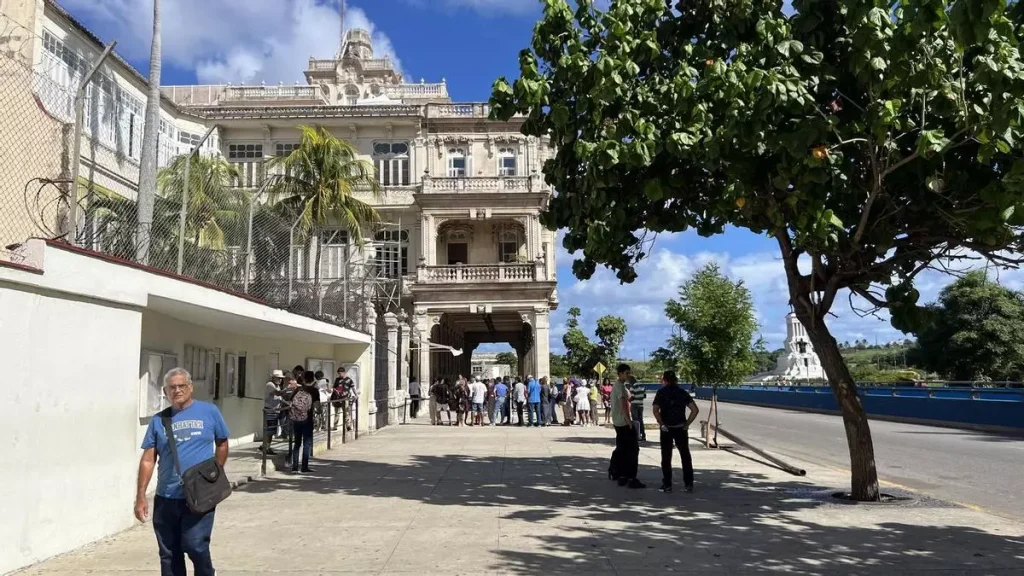
“For Spanish Nationality, If You Don’t Do It Today, It All Ends” Announces the Embassy in Havana

On the last day to apply for the Democratic Memory Law, an official counseled the unsuspecting in front of the Embassy in Havana

Lines at the Spanish Embassy in Havana, this Wednesday October 22. / 14ymedio

14ymedio bigger14ymedio, Darío Hernández, Havana, October 22, 2025 — In front of a frantic crowd divided into several lines, the custodian at the Spanish Embassy in Havana kept repeating this Wednesday that it was the last day to apply for Spanish citizenship through the Democratic Memory Law (LMD). “For Spanish nationality, if you don’t do it today, it all ends,” he warned, waving his hands decisively.

The man patiently explained to the clueless that they should consult, on the Embassy’s website, the section corresponding to the rule for making the request. “Forget about your brother, this or that other person,” he urged them. Just follow the instructions, “or you won’t be able to do it.” The questions showed how, almost three years after the law came into force and hours before the deadline for accepting applications, there are still doubts among Cubans.

One of the concerns raised by those inquiring was related to the waiting time before being called upon to review documents and continue with the process once the request has been made and the file number has been received by e-mail. As this newspaper was reminded by sources from the Spanish Ministry of Foreign Affairs, processing all of them “could take years.”

As this newspaper was reminded by sources from the Spanish Ministry of Foreign Affairs, processing all of them “could take years”

Published in October 2022, the LMD offered, in principle, the possibility of obtaining Spanish nationality for descendants of Spaniards exiled by the civil war and Francoism, to those born of Spaniards who had lost their nationality by marrying foreigners continue reading

before the entry into force of the 1978 Constitution, and for the adult children of those who had acquired it under the previous grandchild law – the Historical Memory Act of 2007 – but who had remained excluded because they were over 18 years old.

However, the instructions for applying, published a few days later in order to remove “any questions that may be raised by the Officers of the Spanish Civil Registry Offices as to the scope and interpretation of this eighth additional provision,” were interpreted to mean that not only the descendants of exiles from the civil war could be eligible but also all those “born outside Spain to originally Spanish parents or grandparents.” This led to a huge volume of applications, especially from Cuba, the second largest number of requests after Argentina.

Spanish Foreign Ministry sources told 14ymedio that up to the beginning of October, there were about 400,000 requests for the LMD in Havana, and every day they estimated they were receiving between 5,000 and 6,000 more, so they expected to reach 500,000 requests or even exceed this number.

One of the lines in front of the Embassy was exclusively for questions. / 14ymedio

For all countries, by the end of July, 876,321 people had made the request; 414,652 have now been approved, and 237,145 have obtained passports.

“We are not interested in your problems; what interests us is that you enter the system before the deadline expires,” said the custodian to those who were waiting in a line that was exclusively for questions.

In another line, people were coming and going, running, trying to resolve a needed copy or some forgotten document.

Many Cubans have criticized the “chaos” they found at the Spanish diplomatic headquarters for the LMD procedures. Asked about it during an official visit to Chile and Argentina, the Spanish minister of Territorial Policy and Democratic Memory, Ángel Víctor Torres, revealed that in Havana there had been difficulties in speeding up the process. “We have tried to set up mobile offices but it’s complicated,” said Torres, referring specifically to Cuba and Venezuela.

In line this Wednesday, a man from Havana who hoped to enter to legalize and deliver documents for several relatives, was denied: “This is the only well-organized line in all of Cuba”

The Spanish Embassy in Havana, on the last day to apply for citizenship with the LMD / 14ymedio

Translated by Regina Anavy

____________

COLLABORATE WITH OUR WORK: The 14ymedio team is committed to practicing serious journalism that reflects Cuba’s reality in all its depth. Thank you for joining us on this long journey. We invite you to continue supporting us by becoming a member of 14ymedio now. Together we can continue transforming journalism in Cuba.
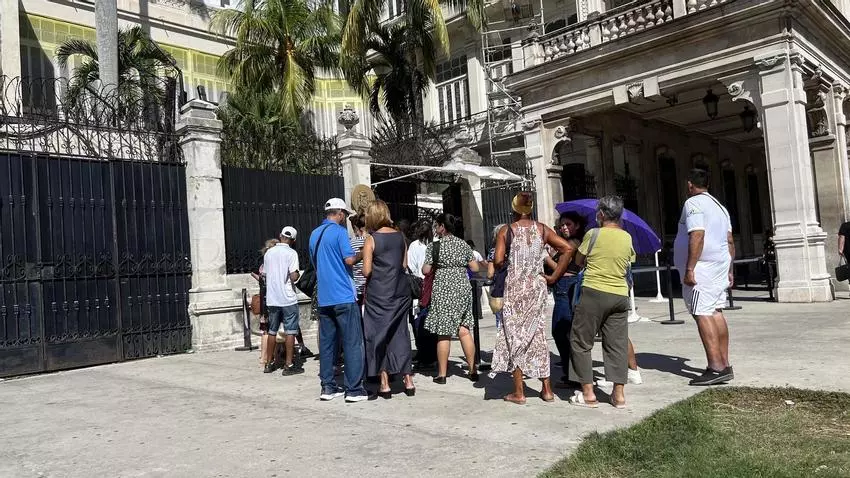
A Spanish Tourist Is Admitted to the Hospital in Cuba in Critical Condition and With a Deplorable Medical Setting

Pedro Daniel Bernad had to undergo two operations in Santa Clara due to an intestinal obstruction while pneumonia complicated his condition.

Pedro Daniel Bernad remains in the Intensive Care Unit of the Arnaldo Milián Castro hospital in Santa Clara. / Facebook

14ymedio bigger14ymedio, Havana, October 21, 2025 — The health of Spaniard Pedro Daniel Bernad, visiting Cuba, is critical. The tourist, originally from Épila, a small town in Zaragoza, arrived on the island on October 3 for what he thought would be a dream vacation, but a week later, he had to be admitted to the Arnaldo Milián Castro Hospital in Santa Clara due to an intestinal obstruction.

His family has told several Spanish media outlets about his medical situation. As if that weren’t enough, pneumonia complicated his recovery, and he remains in the Intensive Care Unit of the Santa Clara hospital.

Bernad’s sister and brother-in-law, Daniel Mosteo, traveled to the island to be near him, and the situation they have encountered in Cuba is terrifying. “It’s a country with very little health infrastructure,” the relatives told the Spanish newspaper La Razón .

“When you see the material and hygienic conditions of the hospital, your heart skips a beat,” Mosteo told the same outlet. The shortage of drugs is so acute that family members have had to obtain antibiotics continue reading

for Bernad through the Spanish consulate, but they only have enough for this Tuesday of the “seven days he needs to be given them.”

Corridors of the Arnaldo Milián Castro Hospital, in Santa Clara / Daniel Mosteo/Aragón Noticias

Given the deplorable situation at the hospital, Mosteo and his wife are trying to repatriate the 51-year-old man, but their efforts with the insurance company he hired for the trip and the Spanish consulate have been unsuccessful.

The insurer argued that repatriation in a “medicalized plane,” which costs 150,000 euros ($174,201), “is limited to certain countries.” Furthermore, Mosteo explained to La Razón, the Spanish embassy specified that official return “is only considered in situations of collective emergency.”

Bernad’s brother-in-law expressed his frustration with the system. “I don’t understand why it isn’t complementary for extremely serious situations. Why do we pay taxes if it doesn’t come back to you when you need it most? This is an extremely serious situation; it’s not a headache you get abroad, and you don’t receive support from your government,” he stressed.

The Épila City Council has joined the efforts to repatriate Bernad . In a brief statement, the organization states that it is taking “every possible step to help improve the situation and achieve his return as soon as possible.”

Family members fear it may be too late, but they continue to try to move “heaven and earth” to get the Spaniard back to Zaragoza, El Heraldo de Aragón reported.

Bernad’s case is not an isolated one. Last April, Canadians Christian Maurais and Caroline Tétrault had a similar experience when she underwent emergency surgery for appendicitis at the same Santa Clara hospital.

“There was no light, no basic conditions. It looked like a horror movie, but the doctors performed miracles with what they had,” Maurais told the Quebec press.

Their testimony, like Bernad’s, coincides with the lack of antibiotics, adequate nutrition, and basic resources. They even had to buy medicine and food on the black market, facing the risk of illegal currency exchange.

In March, another incident shocked the international community when Syrian-Canadian citizen Faraj Allah Jarjour died while on vacation in Cuba, and his family received the wrong body back. The Cuban government apologized, but the case remains unsolved.

Amid the health crisis experienced by visitors, the Ministry of Tourism highlighted this Monday that the World Travel Awards have awarded Cuba the prize for Best Cultural Destination in the Caribbean for the fifth consecutive time.

The official media outlet Adelante praised the award, which includes hotels, tourist accommodations, attractions, and airlines. “They’re considered the Oscars of the tourism industry,” it reaffirmed, without referring to the disastrous tourism figures or the increasingly frequent and harsh complaints from international visitors.

____________

COLLABORATE WITH OUR WORK: The 14ymedio team is committed to practicing serious journalism that reflects Cuba’s reality in all its depth. Thank you for joining us on this long journey. We invite you to continue supporting us by becoming a member of 14ymedio now. Together we can continue transforming journalism in Cuba.
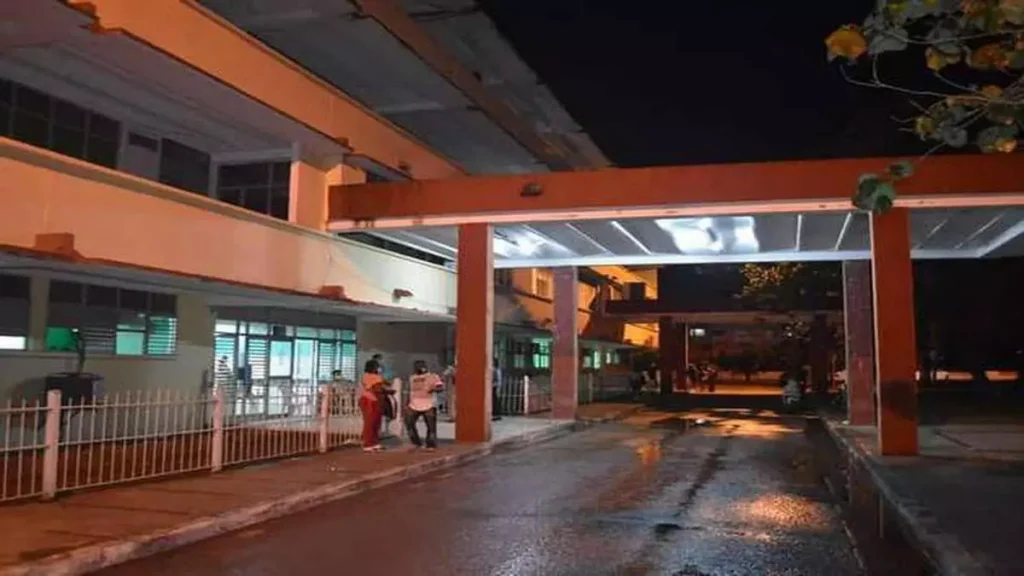
A Yucatan Town is Hiding 21 Cuban Rafters

The residents of Celestún demand that the INM issue safe-conduct passes to the island’s migrants.

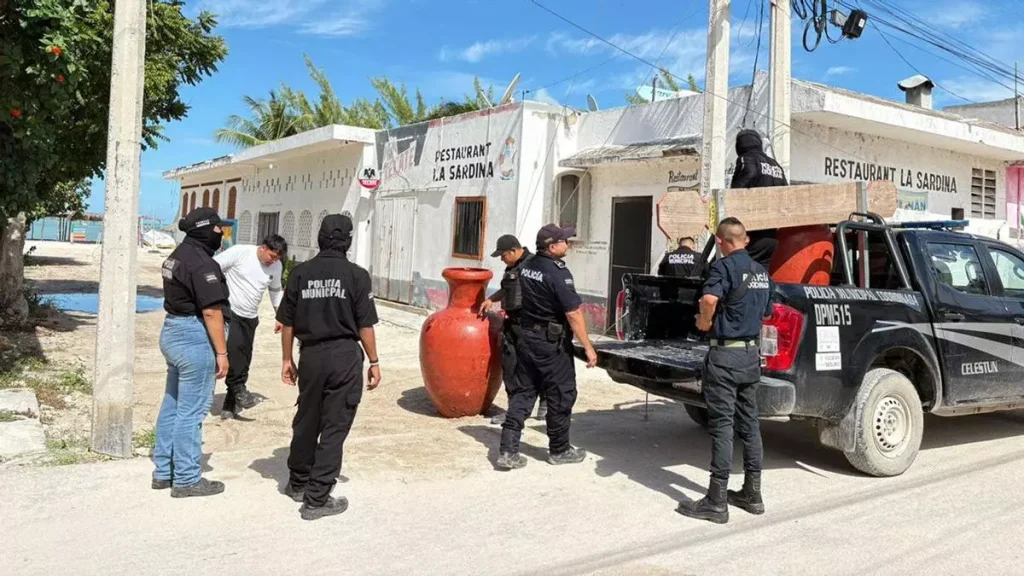
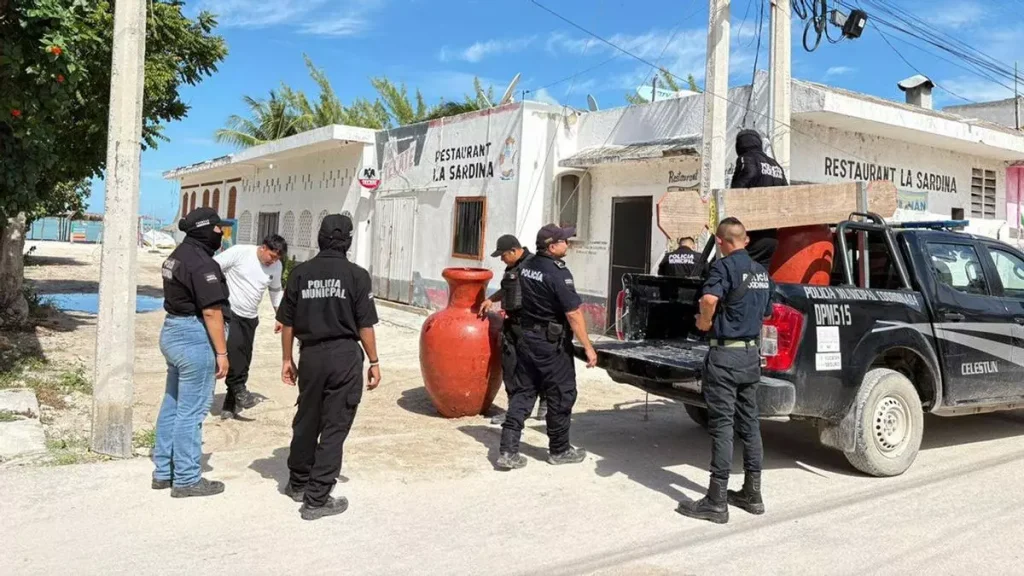
Celestún municipal police officers with residents of the fishing village. / Celestún City Council

14ymedio bigger14ymedio, Angel Salinas, Mexico City, October 22, 2025 – The residents of Celestún (Yucatán), a fishing village of fewer than 8,000 inhabitants, have been hiding 21 Cuban rafters since October 16. “People want Immigration to personally deliver a safe-conduct pass to the migrants,” local police officer Dagoberto Canul tells 14ymedio.

According to the official, the island nationals, including four women, are being held on a property near the City Hall. However, residents have asked Mayor Germán Jesús Cauich Pinto to intervene with the National Migration Institute (INM) to obtain the document, because “there is a fear that the National Guard will detain and deport them.”

Although the INM maintains that Mexico does not deport, official data certifies that in the first half of this year, 21 Cubans were expelled for “providing false information and documents and for illegally re-entering the country.” During the same period, another 74 migrants and two children were returned to Cuba through “assisted returns.” The Mexican government has justified the returns of Cuban nationals and calls them “assisted returns” [a petition that migrants supposedly sign to return to their country of origin], lawyer José Luis Pérez Jiménez tells continue reading

this newspaper.

Canul says the population has offered support to the rafters who remained adrift for seven days in two rafts before landing on the beach.

Canul says the population has offered support to the rafters who remained adrift for seven days in two rafts before landing on the beach. “Immigration has explained that they cannot issue them a safe-conduct permit for a year, that everything depends on the procedures, and that what they would be given is a document that allows them to legally stay for 30 days, during which they should use the opportunity to apply for refuge with the Mexican Commission for Refugee Assistance (COMAR),” the police officer comments.

Ixchel, who had contact with one of the women from the Island, says there’s anger because Immigration demanded they hand over the Cubans or else there would be consequences. “They’re good people who don’t harm anyone; what they want is a better life.”

The arrival of this group of rafters was reported to the Pastoral de Migración* (Migration Pastoral) in Yucatán, Officer Canul stated. “This story was confirmed to us,” he stated. However, the person in charge of the facility denied the official’s claim and said he knew nothing about the migrants.

A source confirmed to this newspaper that Enrique Puc was in Celestún on Tuesday. The local police officer believes the pastoral manager’s presence is part of the ongoing negotiations, although he warns that there has been no progress. “They have hidden them well. There are no videos or photos of the Cubans. The only thing is the footage of their arrival, and the individuals cannot be identified.”

*The Catholic Church’s ministry dedicated to serving migrants.

____________

COLLABORATE WITH OUR WORK: The 14ymedio team is committed to practicing serious journalism that reflects Cuba’s reality in all its depth. Thank you for joining us on this long journey. We invite you to continue supporting us by becoming a member of 14ymedio now. Together we can continue transforming journalism in Cuba.
The Agricultural Fair in San José de las Lajas, Cuba, is Shrinking Every Day

With colorful awnings, balloons and recorded music, the initiative is reduced to a few platforms with wilted and reheated soupy food.

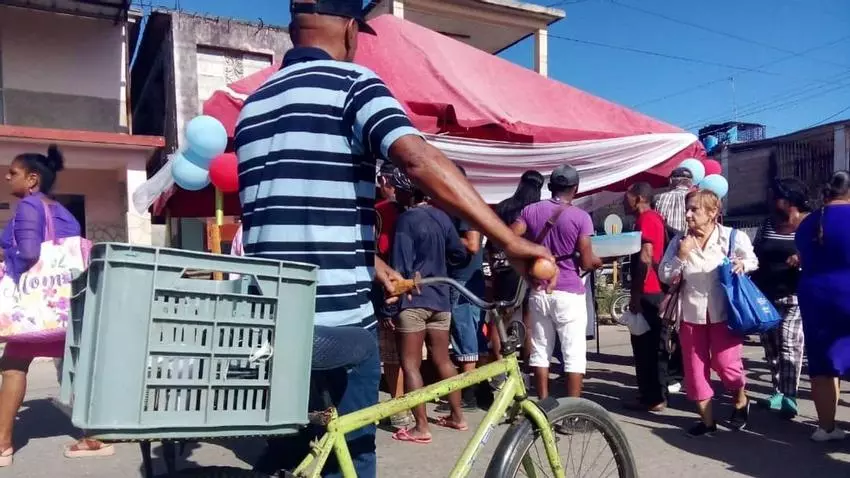
An agricultural fair with anemia, in one of Cuba’s most agricultural provinces, is a painful irony. / 14ymedio

14ymedio bigger14ymedio, Julio César Contreras, San José de las Lajas (Mayabeque), October 22, 2025 / The sun beats down on Avenida 40 in San José de las Lajas, Mayabeque, where a row of colorful awnings attempts to shade the shortages. Beneath the tarps, vendors fan themselves with pieces of cardboard, and shoppers amble along, carrying bags, umbrellas, and bottles of water. It is the third Saturday of the month, the day of the Provincial Agricultural Fair, although at first glance, you wouldn’t think the word “provincial” is so inappropriate.

The balloons tied to the tents fail to disguise the poverty of the scene. At one end, a blackboard announces the specials at La Casona kiosk: a soup for 40 pesos, a small pizza for 150, a pound of pre-boiled spaghetti with nothing added for 150. Behind the counter, the Cuban flag serves as a backdrop, and a small fan struggles to move the thick air.

“Anyone who wants to buy something good has to come early,” says Victor, a man who is already leaving with just a few yuccas and a bunch of plantains, speaking to 14ymedio. “At ten in the morning, this place is a desert,” he adds. “All that remains is what no one wanted.”

Years ago, he recalls, the fair took up six or seven blocks, from Camilo Cienfuegos School to the Youth Computer Club. Now, it only takes two to cover the entire area. “Before, there were trucks full of food, pallets of fresh produce, even pork. But with the price caps, the farmers don’t bring anything anymore. They come to comply,” explains the continue reading

university professor, wiping his sweat with a handkerchief.

Residents come more out of routine than hope. / 14ymedio

An agricultural fair with anemia, in one of Cuba’s most agricultural provinces, is a painful irony. But in San José de las Lajas, they’ve learned, through empty platforms and sky-high prices, that it’s not enough to select a space, give a rimbombante [flashy] name to a market day, and proclaim in the local media that there will be “a multitude of options” of available food.

In another tent in the run-down place, blue tarps flap over an empty table. The woman serving sighs. “If only we had electricity, we could sell cold sodas.” The phrase is lost in the murmur of recorded music distorted from a speaker. Neighbors come closer more out of routine than hope.

Nixa, a housewife from Mayabeque, examines some yuca with a distrustful expression. “At 17 pesos a pound, it’s not bad… if it were good,” she says, adding, after scanning the surroundings: “No rice, no beans, no oil. And this is a provincial fair? All they have here are squash and papayas, and all from the same truck in Güines.”

A few meters away, a man on a bicycle weaves through the crowd. He carries an empty plastic crate on the rear rack: he’ll use it if he can get his hands on some eggs. “I went to have a beer in the tent of El Chino restaurant,” he says, “but it wasn’t even cold.” “When I came to check, the eggs were gone. This can’t be fixed.”

A truck parked in front of a house sells the last bunches of plantains while a group of women discuss the price. / 14ymedio

It’s eleven o’clock, and the heat forces people to seek shade. People protect themselves with umbrellas, some rest on the sidewalk curbs. The air smells of stale fried food and reheated broth. The vendors, resigned, begin to clear away. A truck, parked in front of a house, sells the last bunches of plantains while a group of women argue over the price. Behind them, a girl holds an empty bag, watching everything disappear.

Five blocks closed to traffic, yet two would be enough to contain the entire fair. The music keeps playing, but no one dances. “This doesn’t feed anyone,” says Félix before walking away. “People come looking for food, not reggaeton or rum. What they need isn’t for sale.”

As the sun sets, vehicular traffic starts up again on Avenida 40. Balloons hang limply, awnings come down, and the smell of burnt grease mingles with the dust. The fair fades, like so many other things in Cuba, leaving behind an echo of exhaustion and a handful of empty bags.

____________

COLLABORATE WITH OUR WORK: The 14ymedio team is committed to practicing serious journalism that reflects Cuba’s reality in all its depth. Thank you for joining us on this long journey. We invite you to continue supporting us by becoming a member of 14ymedio now. Together we can continue transforming journalism in Cuba.
Cupet Tanker Truck With 31,000 Liters of Crude Oil Overturns on the Vía Blanca in Mayabeque, Cuba

The accident occurred around 6:40 p.m. this Monday, when the vehicle overturned in a dangerous area according to residents.

La carga procedía de los pozos y se dirigía a Puerto Escondido. / Cupet

14ymedio bigger14ymedio, Madrid, October 21, 2025 — The accident of a tanker truck caused a spill of part of the 31,000 liters of crude oil that it was carrying, around 6:40 pm this Monday. The vehicle of the Transportación Crudo Occidente company overturned on the Vía Blanca on the way to Puerto Escondido (Mayabeque).

The driver was taken to the town of Santa Cruz, where he was treated for his injuries, which were not life-threatening, according to the Cuba-Petróleo Union (Cupet), which announced the news on its social networks around midnight.

The vehicle was on its way from the oil wells to the processing plant at Puerto Escondido. Specialized teams went to the site trying to recover as much of the fuel as possible, in addition to mitigating “the consequences caused by the spill.” So far it is unknown how much oil has been lost definitively and the causes of the accident, although among the comments to the post, attention has been drawn to the dangers of the road on which it occurred.

“Accidents are common in that area. I worked for the company and saw that we lost colleagues in the same way,” wrote a user, identified as Carlos Manuel Martínez Peña. Another comment mentions the “huge pothole there,” and although some point to the possibility that the driver was speeding, road conditions and worn truck tires are among the most cited causes by users, who celebrate that at least nobody died this time. continue reading

“Accidents are common in that area. I worked at the company and saw that we lost colleagues in the same way,” wrote a user, identified as Carlos Manuel Martínez Peña

The accident occurred on the same day that an elevated power deficit, exceeding 1,800 megawatts (MW) at peak hours, had been forecast. According to the daily report of the Electric Union of Cuba, most of the power outages are due to the shortage of crude oil, responsible for the lack of at least 651 MW in the average hour, compared with the 395 MW of the thermal power plants. The loss of power in that time frame was almost 1,000 MW. The data, finally, must have been worse than expected, since, according to a State update, unit 1 of the CTE Ernesto Guevara De La Serna, in Santa Cruz, left the system because of a problem with the speed control valve.

The oil lost yesterday was predictably destined for any of the thermoelectric power plants, since it belonged to Cupet, which uses the highly corrosive national crude in these plants.

The most recent oil spill, albeit for very different reasons, occurred in Matanzas last May. The tank contained 500 cubic meters of fuel stored ten years earlier in two tanks of the old José Martí thermoelectric facility, and it was never known how much was recovered.

Another major loss occurred in a railway accident in Sancti Spíritus last December, when two trains collided. One was coming from Ciego de Ávila with a load of crude oil that would have been processed in the small Sancti Spíritus refinery, Sergio Soto.

Translated by Regina Anavy

____________

COLLABORATE WITH OUR WORK: The 14ymedio team is committed to practicing serious journalism that reflects Cuba’s reality in all its depth. Thank you for joining us on this long journey. We invite you to continue supporting us by becoming a member of 14ymedio now. Together we can continue transforming journalism in Cuba.
An Audit in Mexico Highlights Irregular Payments by the Government of López Obrador to INDER in Cuba

The Office of the Prosecutor has received three complaints for unsubstantiated payments in excess of $32 million

Ana Guevara during a visit to Cuba in 2019, the year of the reported audit in which the island appears. / Jit

14ymedio bigger14ymedio, Madrid, October 22, 2025 — Cuba is again involved in possible irregularities committed by the Mexican government of Andrés Manuel López Obrador (2018-2024). The former director of the National Commission for Physical Culture and Sports (CONADE), Ana Gabriela Guevara, accumulated several complaints from the administration itself, which does not manage to square the accounts. The Supreme Audit of the Federation has already filed three complaints with the Office of the Attorney-General of the Republic, finding unjustified payments, undocumented purchases and unsupported direct contracts. Among those involved is the National Institute of Sports, Physical Education and Recreation (INDER).

The finding belongs to the third (and most recent) complaint, filed because of lapses in the 2019 audit. That year, CONADE hired 29 Cuban coaches to train Mexican athletes, but it has not been proven that it complied with the law, since it was signed by the Deputy Director of Sports Quality of the organization, who did not have the power to do so. In addition, according to TV Azteca — which has put the focus on this point — the signed agreement did not go through the Ministry of Foreign Affairs for authorization, and the date when the coaches from Cuba arrived in the country could not be proven.

CONADE hired 29 Cuban coaches to train Mexican athletes, but it has not been proven that it complied with the law

The audit indicates that neither documentation of their stay in Mexico nor a report on their possible qualifications and activities were provided. No evidence has been found that the 1,200 anti-doping tests included in the agreement with INDER were carried out in a Cuban laboratory. Payments of 15 million pesos (more than $815,000 at current exchange rates) to the Cuban Embassy in Mexico were found, which were made through five bank transfers. According to TV Azteca, the audit considers that these facts caused damage to the public purse if they can’t be proven during the investigation, which is now underway. continue reading

The audit for 2019, in which this information appears, has prompted the third complaint about alleged commission charges and contract simulations against several CONADE officials. The unsubstantiated amount for that year is 60 million pesos (currently about $3.2 million), but there are two more complaints that in total now reach 524 million pesos ($28.5 million) between that year and 2022.

The complaint is based on evidence that bribes and commissions were collected to manipulate bids and award contracts to companies that did not have the technical or material capacity to provide the services. Among the most notorious cases is the hiring of a food service company for 17 million pesos, in which representatives of the company awarded the contract revealed that they had paid to secure the tender, a 15% commission demanded by the officials on the total amount invoiced and an increase in the tariff, so that the final price -and thus the commissions- were higher than expected.

The collaboration agreement and program of sports cooperation activities between Mexico and Cuba was signed in 2012 and resulted in the sending of a multitude of Cuban coaches to Mexico during the term of Enrique Peña Nieto

Before entering politics, Ana Guevara was an elite Mexican athlete, famous for track and field events. She was world champion in athletics in 2003 and Olympic silver medalist in Athens 2004 for the 400-meter race. Her work as director of the CONADE, which took place between 2018 and 2024, has been punctuated by various controversies. The most serious one has been her involvement in this possible case of corruption.

Last June, President Claudia Sheinbaum denied that there was an investigation into the former management. “What happens, as always, is that when there is a new year, the audits of previous years are decided, both of the Supreme Audit of the Federation and in this case of the Secretariat, which today is called Anti-Corruption and Good Government. Then the audits are done. If comments are found, the owner or owners of the entities have time to respond to those comments,” she said.

The collaboration agreement and program of sports cooperation between Mexico and Cuba was signed in 2012 and resulted in the sending of a multitude of Cuban coaches to the North American country during the term of Enrique Peña Nieto. What is currently in question is the so-called “supplement” to that contract, signed under the direction of Guevara, during the presidency of López Obrador, who was affiliated with the Cuban regime.

Translated by Regina Anavy

____________

COLLABORATE WITH OUR WORK: The 14ymedio team is committed to practicing serious journalism that reflects Cuba’s reality in all its depth. Thank you for joining us on this long journey. We invite you to continue supporting us by becoming a member of 14ymedio now. Together we can continue transforming journalism in Cuba.
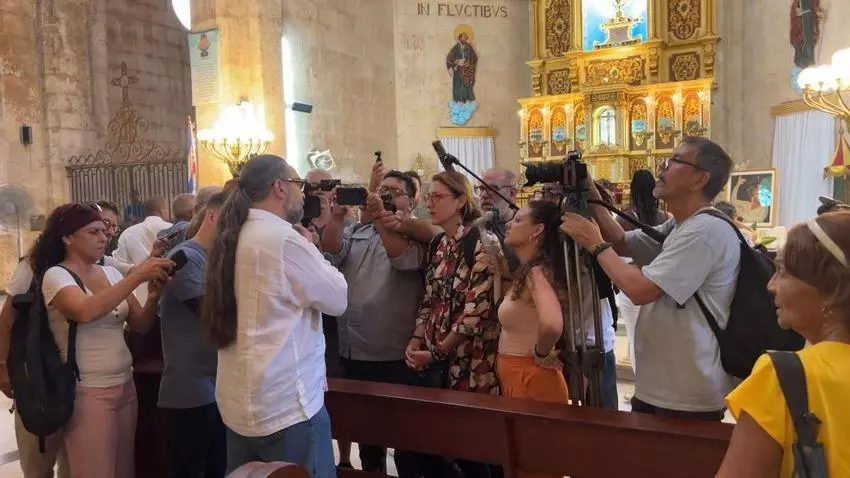
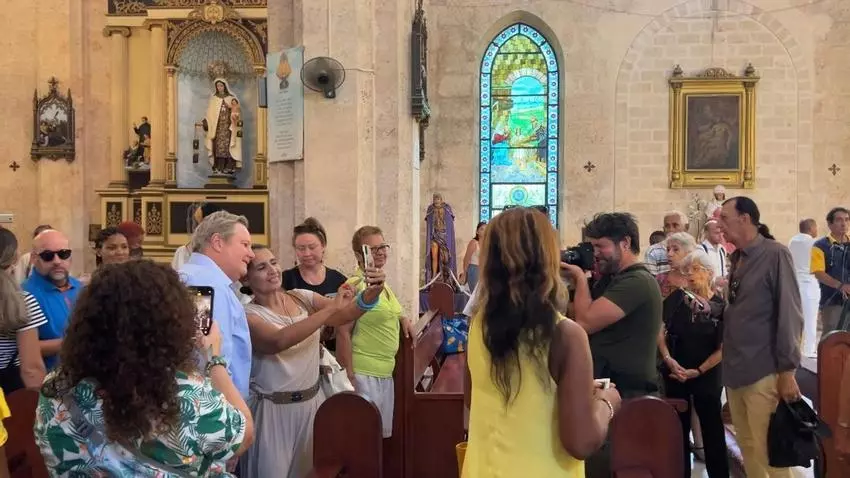
A Mass in Havana Defies Official Censorship Against Celia Cruz

Artists, diplomats and faithful gathered at the parish to pay tribute to the Guarachera de Cuba on its centenary.

Smiling and dressed in sequins, the image of the Queen of Salsa presided over the altar of the church, located on Salud Street, between Manrique and Campanario. / 14ymedio

14ymedio bigger14ymedio, Darío Hernández, Havana, October 21, 2025 / At the parish of Our Lady of Charity of Cobre, in the heart of Centro Habana, the name of Celia Cruz was heard, despite the censorship the Cuban regime has unleashed against other tributes on the island for her centennial, which falls this Tuesday. La Guarachera de Cuba symbolically returned to the island that banished her from official memory, and she did so with music, faith, and a gesture of defiance against the silence imposed for decades.

A framed photo of the smiling, sequined Guarachera de Cuba presided over the altar of the church, located on Salud Street between Manrique and Campanario Streets, where 14ymedio approached. At her feet were white flowers and lit candles. In the pews, artists, worshippers, and diplomats shared the same space.

Parish priest Ariel Suárez, in a calm but firm tone, reminded everyone that “faith knows no censorship.” His words were met with a murmur of approval from the audience. “This Mass was a request from Cuban artists who wanted to pay tribute to a woman who brought Cuba’s name to the world,” he added, while the image of Our Lady of Charity—the same one to whom the performer was a devotee—dominated the back of the church.

Parish priest Ariel Suárez, in a calm but firm tone, reminded those present that “faith knows no censorship.” / 14ymedio

Among those present, Mike Hammer, the chargé d’affaires of the U.S. Embassy in Cuba, did not go unnoticed. “It is an honor to commemorate the life of Celia Cruz here, in her homeland,” he said after the Mass. “She wanted freedom for the Cuban people, and that desire lives on in her legacy.”

At his side, artists such as Alain Pérez and Haila María Mompié shared memories and gratitude. Pérez, who worked with the singer on international stages, didn’t hide his emotion: “Celia was pure light, an ambassador of our culture. Her love for Cuba never faded, not even when it was forbidden.”

The musician also lamented that, even today, tributes to the singer continue to run into institutional vetoes. “I would have loved to see all the Cuban artists gathered here, without fear, to sing to her. I feel sorry for continue reading

them, because they’re missing out on that blessing,” the artist said, seeing that many pews in the parish church remained empty, a fear that still persists among Cubans.

“I would have loved to see all the Cuban artists gathered here, without fear, to sing to him,” said musician Alain Pérez. / 14ymedio

Mompié, dressed in white, asserted that she carried “Celia’s legacy like a treasure.” The singer released a song in her honor, “Mi vida es cantar” [My life is to sing], a title that evokes the Queen of Salsa’s philosophy of life. “Celia was Caridad [charity]—her middle name—and this temple, dedicated to the Virgin, is the perfect place to remember her. Her spirit is here today,” she added.

The Mass took place in a peaceful atmosphere, although political tension hung over the prayers. Outside, several curious onlookers paused to watch from the sidewalk; inside, the timbre of the Queen of Salsa’s voice—banned from Cuban radio and television for half a century—seemed to fill the air.

Days earlier, the National Center for Popular Music had canceled a theatrical performance dedicated to the artist by the El Público company, scheduled at the Cuban Art Factory. The decision sparked a wave of outrage among musicians and citizens, who denounced the censorship as an act of cultural pettiness.

In response, the FAC performed a symbolic gesture: an empty armchair was lit up on the stage and an hour of silence followed by the music of Celia Cruz. “Celia lives,” read the letters of light. That same message was repeated again at the Mass, now transformed into a prayer: Celia lives in the hearts of her people.

“It is an honor to commemorate the life of Celia Cruz here, in her homeland,” said the U.S. ambassador upon leaving the mass. / 14ymedio

The young urban musician Yomil showed off his forearm tattoo of Celia’s face. “She’s the only artist I have on my skin. She represents the best of us: talent, joy, and resilience,” he told the media. “No censorship can stop that.”

Celia Cruz, who died in 2003 in New Jersey, was never able to return to Cuba. Her last wish—to be buried on the island—was also not fulfilled. However, her voice continued to reach us through informal channels, on cassettes, CDs brought back from exile, and family memoirs.

The Mass concluded with prolonged applause. There were no political speeches or slogans, but the meaning was evident. “Celia, Cuba embraces you,” was heard from the pews, while the first chords of “Life is a Carnival” quietly played. Some sang along, others wept.


A mass in Havana commemorates Celia Cruz on her centenary / 14ymedio

____________

COLLABORATE WITH OUR WORK: The 14ymedio team is committed to practicing serious journalism that reflects Cuba’s reality in all its depth. Thank you for joining us on this long journey. We invite you to continue supporting us by becoming a member of 14ymedio now. Together we can continue transforming journalism in Cuba.
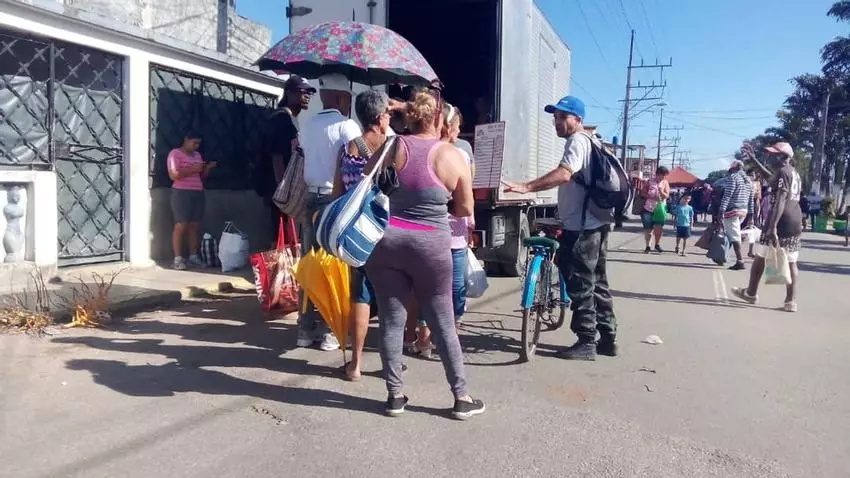
Why Are There Sugar Mills in Operation if There Is No Cane To Process? Asks Cuba’s Official Press

  • The planting program in all the Las Tunas companies “is delayed”
  • In Sancti Spíritus, only 20 of the 106 planned “cage cars” are available for transport ahead of the next harvest, which begins next December.
“Cage cars” for transporting sugarcane by rail at the Melanio Hernández sugar mill in Sancti Spíritus. / Escambray

14ymedio bigger14ymedio, Madrid, October 21, 2025 — The provincial press is once again providing most of the clues to the disastrous state of Cuba’s sugar industry, once a jewel in the crown of the country’s economy. This Monday, Escambray reveals that of the 106 “cage cars” that take the cane by rail to the sugar mills, only 20 have been repaired of the ones planned for next December, when the harvest begins.

Of these, 14 are in the Melanio Hernández sugar mill in Tuinucú, and six are in the Uruguay, located in Jatibonico. The repairs in the workshop of this last mill, says the report, “have been slowed down by electricity problems associated with the lack of a transformer and the power blackouts that occur on work days.”

The Sancti Spíritus provincial newspaper reports that Ferroazuc, the State company in charge of transporting the raw material to the mills, “intends to get about 130 cars ready,” an effort which it recognizes is “challenging in the midst of limitations and the time remaining before the start of the harvest.” Escambray warns that “Ferroazuc’s efforts in Sancti Spíritus need to advance further.”

Periódico 26 is more direct about the outlook for sugar in Las Tunas, with an article entitled “Besides cane, planting needs greater willingness,” which directly questions why there are mills in operation if there is not enough cane to process and the industry is “totally obsolete.” “Why are there sugar mills and factories if their raison d’être — the cane itself — is in crisis?” This is the dilemma with continue reading

which the author, Juan Soto Cutiño, concludes the article.

“Given all the complexity of a harvest, it is not feasible to mobilize all that equipment”

The article explains why the provincial government put the Antonio Guiteras mill at the head of the campaign instead of the Majibacoa mill. The Guiteras is “in better technical condition and easier to repair, with a competent labor force and a history of producing that is recognized by the country.”

Eddy Felipe, a representative of Azcuba in the province, added that it was also because of the low availability of cane to harvest for the Majibacoa mill.” There are only 130,000 tons of cane considered “fit to be processed,” the article continues, a quantity that at a rate of 4,550 tons per day and with 70% of the potential capacity of the mill, “would last for only 24 days of operation.”

“Let’s face it,” says Periódico 26. “Assuming all the complexity of a harvest — from the preparations to the start-up of the large agro-industrial chain that it belongs to — it is not feasible to mobilize all this equipment with the high cost involved, just to work a few days and produce a little sugar.”

In addition, the Majibacoa is carrying out two campaigns in which it is not even producing sugar but cane syrup, the same as the Colombia mill, which has survived four campaigns on the basis of this unrefined mixture. Cane syrup is used to produce rum, says the newspaper, and with a classification that is very much in demand and well-priced. Considering current conditions, this is very healthy for the economy of this sugar company.”

The fourth sugar mill in Las Tunas, the Amancio Rodríguez, is, according to Periódico 26, “the most critical and worrying case. It has been completely inactive for several years, and as can be seen on the ground, this situation could last for who knows how long.”

Therefore, it proposes to establish as a priority the planting of sugarcane. But the progress of this activity is also a disaster. The program, which includes 97.8 hectares of the Colombia, 143.8 hectares of the Amancio Rodríguez, 562.6 hectares of the Majibacoa and 1,092.5 hectares of the Guiteras, “is experiencing delays, to a greater or lesser extent, in all these companies.”

Juan Soto Cutiño recalls with nostalgia “those times when the Sugar Union organized competitions on weekends, even in Boyeros, and there were frequent mobilizations in support of the planting. The political and administrative directors of the municipality demanded concrete figures from the agencies of the areas to be planted, and the Union of Young Communists took up the challenge as a shock task.” But he is not deceived: “I recognize that present circumstances are in no way similar to those in the past.” Then he concludes by referring to the US embargo: “It would be a mirage to imagine great results amid the circumstances aggravated by the blockade*.”

“It would be a mirage to imagine great results amid the circumstances aggravated by the blockade”

That there wasn’t enough cane was something the residents of Artemisa warned about last month. If “the routines” do not change there will be no sugar, they asserted. Then, the official press of the province found that “history repeats itself. A panoramic view in any municipality with the cane tradition of Artemisa shows hectares of weeds where yesterday there was cane, so that only 47% of the cane expected for this period has been planted, 814 hectares of a plan for more than 1,700,” detailed the report.

The 2024/2025 harvest turned out to be the worst in Cuba’s history, although the real figures are unknown because the regime does not provide them. Last August, the Spanish agency EFE made a count based on the provincial press and concluded that, at best, they are more than 10,000 tons below the terrible harvest of 160,000 tons produced the previous year.

Fifteen sugar mills participated in the campaign, and 10 reported their results to the official media: a total of 95,584 tons. The remaining five did not disclose their production figures, but it is known that they all targeted 52,068 tons of sugar. That is, if they had complied with the plan, the harvest would have amounted to 147,652 tons.

This is far from the 8.5 million tons that the Island produced in the mid-1980s, when there were Soviet subsidies and sugar was still considered an economic engine and its main export.

President Miguel Díaz-Canel’s late August meeting with Zhang Anming, deputy general manager of the giant Guangxi State-Controlled Capital Operations Group Limited — the leader in sugar production in China — with the goal of exploring “joint projects,” indicates that Cuba is also counting on China for the recovery of the sugar industry.

However, the officials have published nothing else about this.

______

*Translator’s note: There is, in fact, no US ‘blockade’ on Cuba, but this continues to be the term the Cuban government prefers to apply to the ongoing US embargo. During the Cuban Missile Crisis the US ordered a Naval blockade (which it called a ‘quarantine’) on Cuba in 1962, between 22 October and 20 November of that year. The blockade was lifted when Russia agreed to remove its nuclear missiles from the Island. The embargo had been imposed earlier in February of the same year, and although modified from time to time, it is still in force.

Translated by Regina Anavy

____________

COLLABORATE WITH OUR WORK: The 14ymedio team is committed to practicing serious journalism that reflects Cuba’s reality in all its depth. Thank you for joining us on this long journey. We invite you to continue supporting us by becoming a member of 14ymedio now. Together we can continue transforming journalism in Cuba.
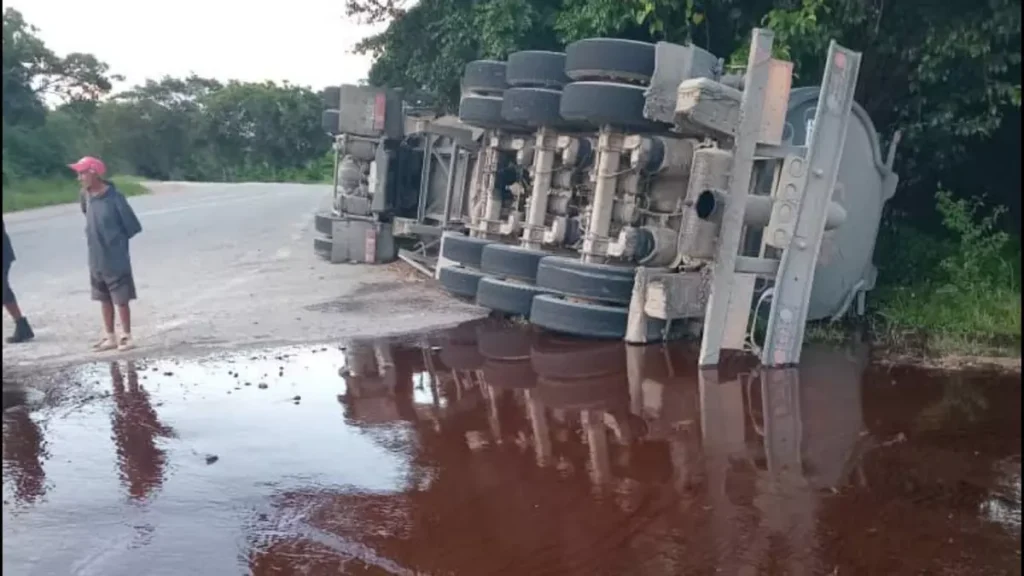
The New York Mets Hire Cuban Baseball Player Roberto Peña and Give Him a $350,000 Bonus

The pitcher, who emigrated to the Dominican Republic in 2023, is part of the U15 team that qualified for the World Cup in 2022

In late September, the New York Mets approached Roberto Peña and offered to consolidate his dream of becoming a major league player. / Facebook/Francys Romero

14ymedio bigger14ymedio, Havana, October 19, 2025 — The US Major League team, the New York Mets, signed Cuban pitcher Roberto Peña. As part of the deal, the club awarded him a $350,000 bonus, the “highest incentive for a pitcher in the organization during the current period of international signatures 2024-2025,” journalist Francys Romero revealed.

Peña is part of a generation on the run. The athlete participated with the U15 team that qualified for the World Championship in 2022. More than 90 per cent of that team emigrated in 2023.

The player from Granma had outstanding performances on first base and as an outfielder with the Cuban national team. At the time of leaving the Island “he was among the top five batters in his class.” According to the reporter, he had gained in stature, muscle mass and physique, and had the attributes of a “power hitter.”

Peña arrived in early May in the Dominican Republic and after settling in was hosted by the Ray Baseball Academy of Edwin Castillo. For more than two years, he was followed by several talent scouts. At the end of September, the New York club approached the Cuban and offered to cement his dream in the major leagues. In an effort to formalize their relationship, they offered him $300,000 as an initial bonus but saw that other teams were interested and added another $50,000. continue reading

The ball player arrived in early May in the Dominican Republic and after settling in was hosted by the Ray Baseball Academy of Edwin Castillo

“The official signature will be for this international period, before December 15,” said Francys Romero on his social networks. At this time, the player has recorded straights of 93 miles per hour, change-ups of 83 miles per hour, a curve ball of 81 miles per hour and a sinker (fast ball) of 91 miles per hour.

Roberto Peña joins the Cubans who have previously played with the New York Mets, including Ed Bauta, Rey Ordóñez, José Candelita Iglesias, Yoenis Céspedes and the brothers Orlando El Duque Hernández and Livan Hernández, Raúl Valdés, Eli Marrero, Jorge Toca, Guillermo Heredia, Alay Soler, Yoan López and Adeiny Hechavarría.

Last Friday, a two-year contract extension was confirmed for Brayan Peña with the Detroit Tigers. The Cuban will return as a Minor League manager. “In 2025 he served as coordinator of the organization’s catchers, working with prospects like Thayron Liranzo and Josue Briceño.”

Francys Ramirez noted that “it is still unknown at which level Brayan will lead, and he currently is a bench coach for the Toros del Este in the Dominican Winter League.”

Translated by Regina Anavy

____________

COLLABORATE WITH OUR WORK: The 14ymedio team is committed to practicing serious journalism that reflects Cuba’s reality in all its depth. Thank you for joining us on this long journey. We invite you to continue supporting us by becoming a member of 14ymedio now. Together we can continue transforming journalism in Cuba.