The U.S. and Cuba agree on this new method of remuneration, the diplomat told journalist Gabriel Pereyra.
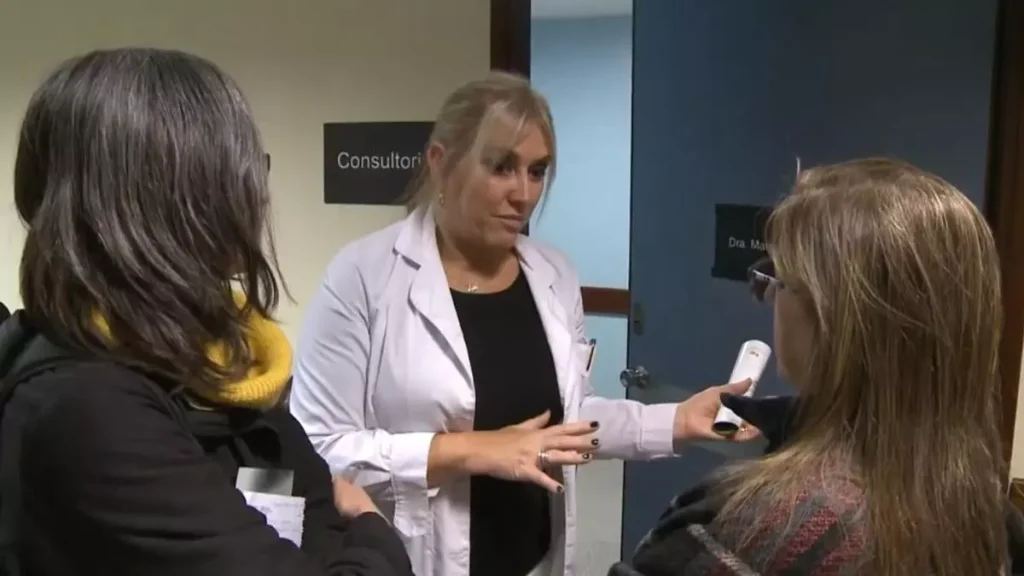
 14ymedio, Havana, September 24, 2026 – “Uruguay reached an agreement with both the Government of the United States and that of Cuba to resolve the case of Cuban doctors.” This was confirmed by Uruguay’s Foreign Minister, Mario Lubetkin, to Radio Sarandí journalist Gabriel Pereyra. The Government of Yamandú Orsi offered to “pay the professionals from the Island directly,” the journalist emphasized.
The Uruguayan diplomat was approached by the journalist in New York, and he confirmed that Cuba had accepted the new method of payment to professionals working in the country, including 21 Cuban ophthalmologists, anesthesiologists, nurses, and technicians who are currently at the José Martí Eye Hospital. However, Lubetkin clarified that “Uruguay cannot interfere in other possible movements, such as, for example, the doctors being forced to transfer that money to Cuba.”
At the beginning of September, Washington threatened the Ministry of Foreign Affairs and the Ministry of Defense with including Uruguay on a “blacklist” of countries using slave labor for maintaining the agreement with Cuba. This would mean, Pereyra indicated, no longer receiving military aid from the U.S.
Lubetkin told Pereyra that a solution is being found to “a technical problem, which is changing the method of payment to these doctors.” The Ministry of Foreign Affairs is working together with the Ministry of Public Health, the State Health Services Administration, and the Social Security Bank to implement changes to the program and formalize the new agreement.
The healthcare relationship between Uruguay and Cuba dates back to 2005, when Operation Miracle began, the ophthalmology program promoted for low-income patients and initially financed by Venezuela as part of the regional integration project Bolivarian Alliance for the Peoples of Our America (ALBA).
Cuban ophthalmologists traveled to Uruguay to select patients who were then transported to the Island for eye surgeries. Between 2005 and 2007, some thirty flights carrying 2,037 Uruguayans were recorded, according to data from the Cuban Foreign Ministry.
The president of Uruguay’s Social Security Bank (BPS), Jimena Pardo, confirmed in mid-September the disbursement of $250,000 annually from the institution’s budget to Operation Miracle. The official clarified that the money does not correspond to the salaries of the 21 Cuban professionals currently working at the José Martí Eye Hospital, which is part of the Gustavo Saint Bois Hospital Center and under state administration, but rather “is a stipend, a reimbursement of expenses.”
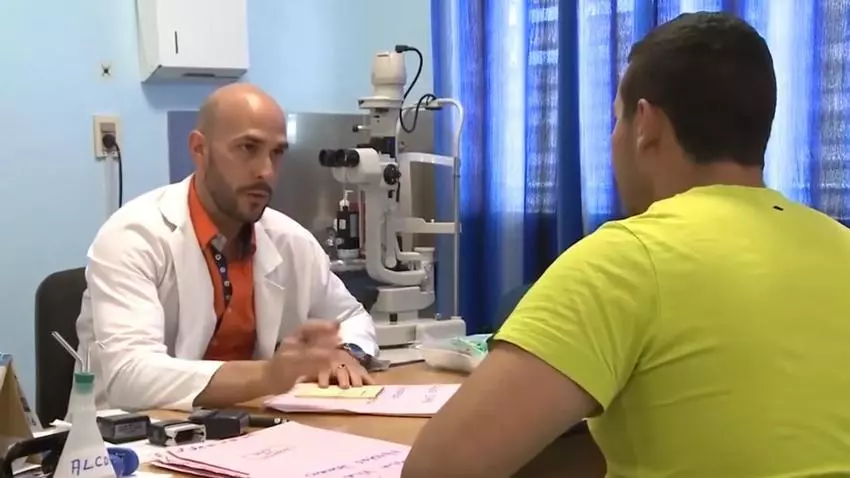
Pardo emphasized that payment of the doctors’ salaries is the responsibility of Havana. The BPS transfers the funds to an account belonging to the brigade established by the Ministry of Public Health. She also indicated that it is stipulated that they remain in Uruguay for three-year periods.
There is no official information on the salaries received by these specialists. In May 2020, Uruguay’s Ministry of Public Health refused to disclose the remuneration and number of Cuban professionals collaborating at the José Martí Eye Hospital due to the “nonexistence of data held by this State Secretariat.”
In 2015, Uruguay’s Senate forgave a debt of $31.5 million plus interest ($55 million in total) that Cuba had incurred in 1986. The decision, they argued, was made in consideration of the “numerous instances of cooperation” that Montevideo had received from the Island “in different areas.”
Between 2008 and 2022, the presence of seven brigades in the South American nation was recorded, with around 160 professionals.
Honduras, Guatemala, and Antigua and Barbuda, as well as Guyana, Saint Vincent and the Grenadines, have ended their medical cooperation projects with Cuba following pressure exerted by Washington.
Translated by Regina Anavy
______________________
COLLABORATE WITH OUR WORK: The 14ymedio team is committed to practicing serious journalism that reflects Cuba’s reality in all its depth. Thank you for joining us on this long journey. We invite you to continue supporting us by becoming a member of 14ymedio now. Together we can continue transforming journalism in Cuba.