Lacking state support, this celebration of Catalan origin was able to be organized thanks to a citizens’ initiative.
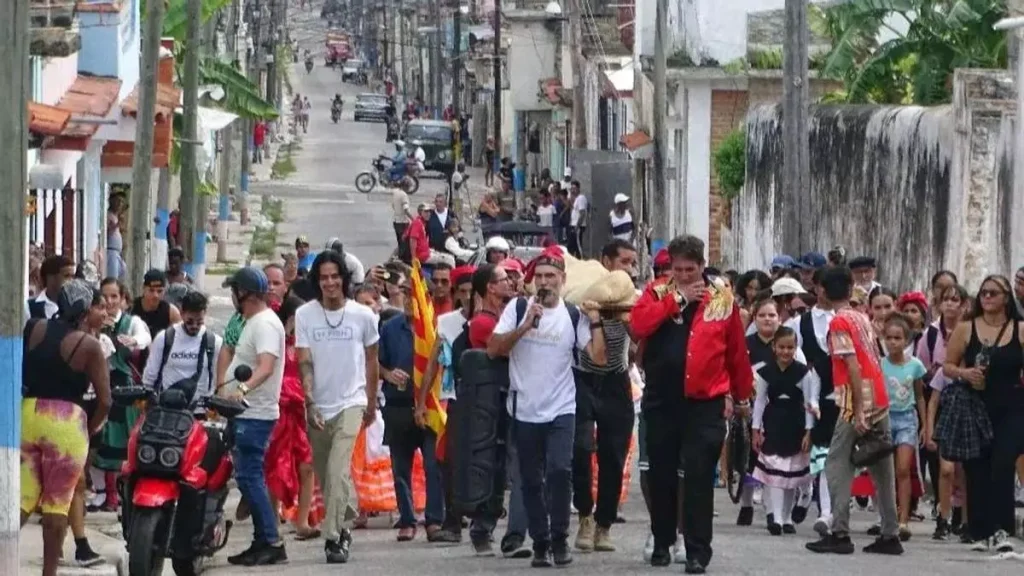
 14ymedio, Pablo Padilla Cruz, Matanzas, December 31, 2025 – On December 14th, the Colla festival took place in the city of Matanzas. This celebration of Catalan origin was made possible this year thanks to a citizen initiative, without any government support. The traditional festival, almost as much a part of Matanzas as it is Catalan, consists of a pilgrimage from Liberty Park to the Monserrate Hermitage.
Among the participants was María Ester, a resident of San Gabriel Street. “I participate almost every year. Even at 68, I can still climb up to Monserrate, but I know that one day my body will say enough is enough,” she told 14ymedio as she walked with difficulty. “For now, even though I don’t have much Catalan in me, I go and enjoy the festival. It’s something that takes me out of my daily routine,” she added with a smile as she disappeared into the crowd.
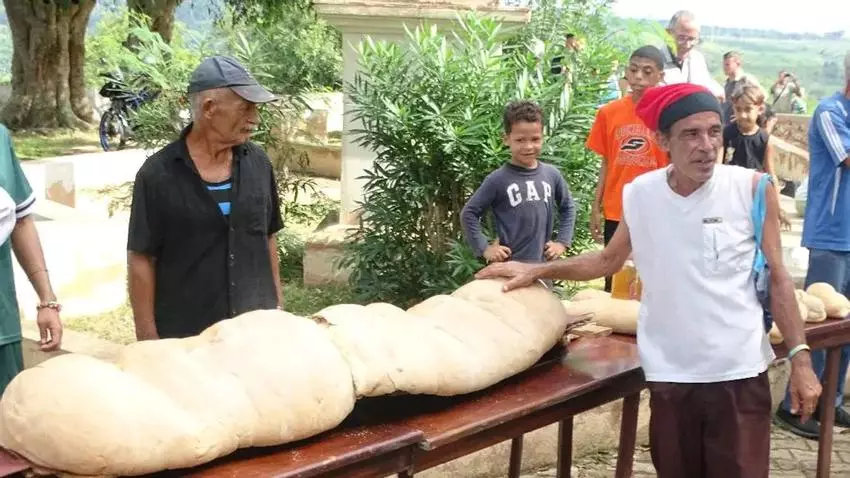
The Colla festival is an identity symbol of Hispanicity in Matanzas; the celebration is an ode to the Catalan heritage of the city and is the only festival of its kind in Latin America.
During the pilgrimage, Lionel Orozco, the city’s curator, explained to 14ymedio that the term “colla” means group or gang in Catalan. “The people of Matanzas are the colla, symbolically, and the tradition consists of going from Liberty Park to the hermitage and returning to perform the ritual of bread in sauce and wine at the old Spanish Casino, now the Provincial Library.”
Orozco also addressed the current difficulties in maintaining the celebration. “Given the country’s situation, it’s difficult to uphold this tradition, especially since it’s based on bread, and we all know that bread is a luxury right now. However, the Catalan Association has found the strength to continue and has given us another year of this tradition. Without them, Matanzas wouldn’t be Matanzas,” he stated.

The festival was revived in 1981 and has since been maintained as part of Matanzas Culture Week, although its continuation has always been at risk. Gonzalo, a member of the Catalan Association and one of the organizers, explained some of the obstacles they have faced. “The pandemic put the festival on hold for two years. The condition of the chapel also limited us until its repair in 2009 and 2019, since it is a structure inaugurated in 1875 that was almost abandoned for many years,” he said.
“We depend on gastronomy and its offerings for family enjoyment, and also on culture and the artistic work of the new generations who keep Hispanic identity alive. You never know what will happen next year or if we will meet again on this pilgrimage,” he added. “That is why it is important to pass this tradition on to the younger generations and keep alive the pilgrimage and the Hispanic roots that define us.”
For now, amidst traditional Spanish dances, bread, and wine, the group ascends and descends the city streets, filling them with color. However, uncertainty remains as to whether this will be the last pilgrimage due to a lack of state support and health issues, circumstances that directly affect the roots, traditions, and identity of the people of Matanzas.
____________
COLLABORATE WITH OUR WORK: The 14ymedio team is committed to practicing serious journalism that reflects Cuba’s reality in all its depth. Thank you for joining us on this long journey. We invite you to continue supporting us by becoming a member of 14ymedio now. Together we can continue transforming journalism in Cuba.