The island’s authorities have not reported these figures, which bring the total number of deaths to 67
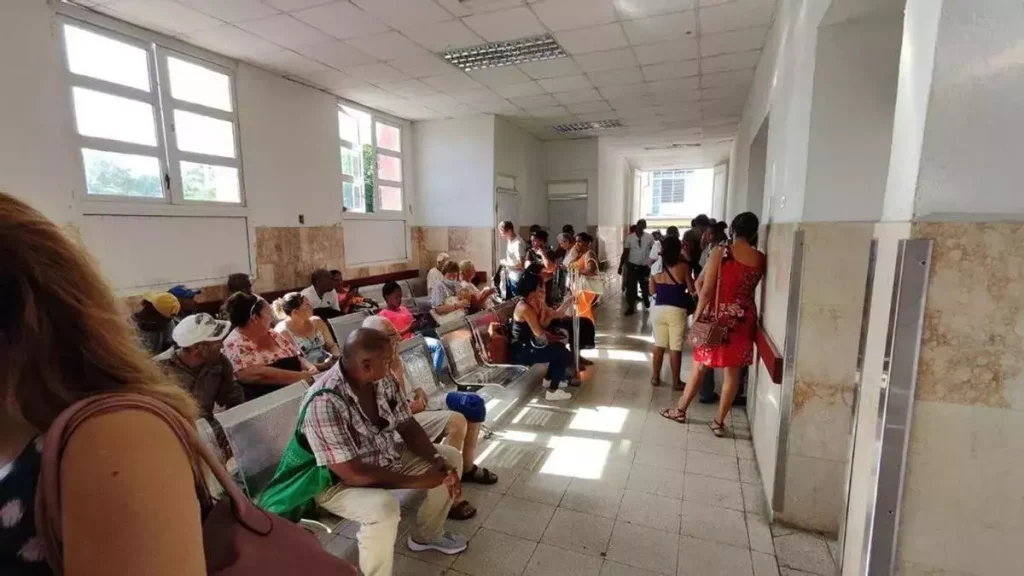
 It was the Pan American Health Organization (PAHO) — and not Cuba’s health authorities — that revealed that deaths from chikungunya have been recorded in the country in 2026. Based on the official data reported from the island, the international organization announced this Tuesday that in January there were two deaths from the viral disease transmitted by Aedes aegypti and albopictus mosquitoes, bringing the total to 67 according to the organization’s own records.
In its report, the PAHO also recorded 1,457 cases of chikungunya last month. These figures contrast with the government’s latest update on January 28, when, through Deputy Minister of Public Health Carilda Peña, it claimed that in the latter part of January the country had entered a “safety zone” regarding dengue and chikungunya infections, and only mentioned a 29.3% drop in confirmed and suspected cases of dengue and chikungunya — without providing any figures — compared to the previous week.
More than half of the nearly 70 deaths acknowledged by the PAHO are minors, and a total of 83,366 people have been infected (including those reported in January), although these figures might only be a sample. However, statistical estimates from the Cuban Observatory of Citizen Auditing (Ocac) and Cuba Siglo 21 put the death toll much higher: as of December, they estimated 8,700 deaths in the epidemic.
As for dengue, Cuba is one of the few countries (along with Venezuela, Nicaragua, Guatemala) for which there are still no 2026 data in the PAHO’s public databases.
As for dengue, Cuba is one of the few countries (along with Venezuela, Nicaragua, Guatemala) for which there are still no 2026 data in the PAHO’s public databases.
The Cuban government admitted the country was facing an epidemic on November 12 last year. However, the first chikungunya cases were diagnosed in July, and infections from both arboviruses skyrocketed in September and October. A month later came the peak, when the PAHO itself revealed that in just one month the chikungunya infection rate had doubled in Cuba. In an early November report, the country showed a cumulative incidence of 183.43 cases per 100,000 inhabitants, the highest in all of the Americas that year. By the first week of December, the figure had climbed to 350.57, a 91% increase.
Now, although official cases have dropped, reports are starting to emerge about the aftereffects suffered by many of those infected, something that’s gotten worse with the low temperatures on the island at the start of the year. That’s the case for a resident of Centro Habana who, after spending several weeks bedridden with pain and fever, still has many lingering effects more than three months later: “I can’t sleep, I spend nights wide awake with pain in my hands and knees,” she told 14ymedio in January. In Ciego de Ávila, a neighbor also said that “in the mornings I wake up with numb hands, I have to move them a lot just to function halfway decently.”
Cuba was fertile ground for the epidemic to spread due to the country’s severe economic crisis, which limits prevention capacity
Cuba was fertile ground for the epidemic to spread due to the country’s severe economic crisis, which limits prevention capacity — mainly through mass fumigation against mosquitoes — control (with tests to confirm the type of disease), and care for the sick, due to shortages of medicines and other medical supplies. Because of those shortages, many families had to get basic medical items on their own, while others had to keep the sick at home given the rundown state of health centers.
Another factor has been the piles of garbage accumulating in the streets. Various epidemiologists agree there’s a link between the spread of filth and the rise in diseases like vomiting and diarrhea caused by flies; leptospirosis tied to rats; and dengue, zika, chikungunya, and oropouche, caused by different insect vectors.
This has led to people in Havana starting to burn garbage to get rid of it. It’s now common to see piles on fire at every corner at dawn or dusk, day or night, with municipal services and neighbors alike lighting the waste without any caution.
That’s been the “solution” to the shortage of containers in the capital, which has 10,000 but needs between 20,000 and 30,000. On top of that, only 16,000 to 17,000 cubic meters are being collected daily, when in the past it was between 25,000 and 30,000.
Likewise, other problems reported by Cubadebate in early February include not just the lack of fuel but the poor condition of the equipment: out of 106 collection trucks, only 44 are working. “We’re at 37% to 44% technical availability, way below what’s needed,” admitted Alexis González Inclán, an official with Havana’s Communal Services.
Translated by GH
______________________
COLLABORATE WITH OUR WORK: The 14ymedio team is committed to practicing serious journalism that reflects Cuba’s reality in all its depth. Thank you for joining us on this long journey. We invite you to continue supporting us by becoming a member of 14ymedio now. Together we can continue transforming journalism in Cuba.