Seven people were sentenced for sabotage after stealing 1,248 liters of dielectric oil from a transformer that supplied 6,184 homes in Holguín.
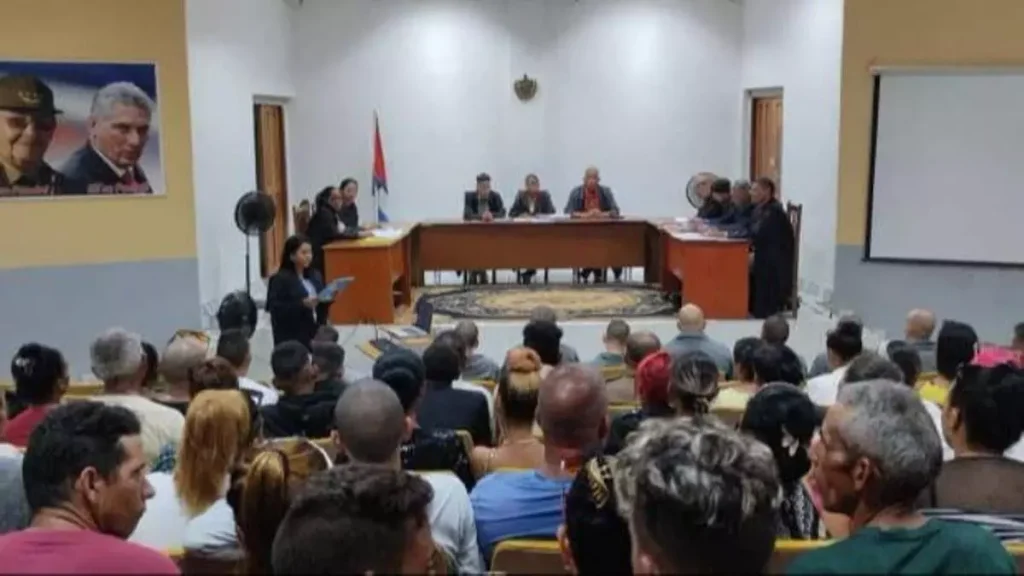
 14ymedio, Madrid, October 2, 2026 – The theft of 1,248 liters of dielectric oil from a transformer in Moa ended with seven people sentenced to between 12 and 15 years in prison for the crime of sabotage, in another exemplary trial publicized by Cuba’s official press. One of the defendants received 15 years in prison, three others were sentenced to 14 years, and the remaining three to 12 years, according to the Holguín newspaper ¡Ahora!
The case is the second of its kind held this year in Holguín province, after authorities toughened the criminal treatment of offenses affecting the national electrical system (SEN) and increased the publicizing of the sentences as a warning intended to stop a criminal practice that shows no signs of slowing. The Attorney General’s Office recalled that everyone tried in 2026 for crimes against the SEN has been convicted of sabotage, mostly receiving sentences of between nine and 20 years.
In addition to the prison sentences, the court confiscated a motorcycle, a refrigerator and 87,100 Cuban pesos, and seized five cell phones. The official report justifies the severity of the sanctions because of the damage caused amid the energy crisis and the “intensified economic and energy blockade” by the U.S. The official report even suggests that users on social media consider these sentences “lenient” given the damage caused to state property and the population.
According to the consequences described by the court’s legal representatives, the extraction caused the transformer to overheat, resulting in a short circuit and an explosion that put it out of service. The failure interrupted electricity service to 6,184 homes on circuits 4 and 11 and also affected the secondary power supply to the local hospital. The other transformer at the substation had to take on the entire load and also ended up damaged by the excessive workload. The value of the material losses was calculated by the Electric Company at 138,054 Cuban pesos, about 179 dollars at the informal exchange rate.
The failure interrupted electricity service to 6,184 homes on circuits 4 and 11 and also affected the secondary power supply to the local hospital
The criminal acts took place between the night of March 12 and the early morning of March 13 at the Moa Nueva substation, in an unpopulated area at the entrance to the Armando Mestre neighborhood. Four young men from the Punta Gorda neighborhood, in eastern Moa, stole the oil from the transformer, with the help of three other men from Sancti Spíritus who were passing through the municipality to sell agricultural products. The three men provided transportation and purchased part of the product.
The vehicle used for the theft was a state-owned truck, driven by another of the defendants. The driver paid 960,000 pesos to the alleged ringleader of the operation. The money was divided among the four young men from Moa, while the three men from Sancti Spíritus left with the remaining oil, which could not be recovered.
Fabián Vega Genicio, director of Distribution at the Holguín Electric Company, stressed to the official media outlet the increase in the theft of dielectric oil in the province. In total, the state company has recorded 65 incidents against the SEN this year, compared with 42 during the same period in 2025. Of the 36 involving oil, 12 occurred at high-voltage substations and 24 at distribution transformers, a type of theft that, according to the official, is new this year.
Vega Genicio attributes the increase in these crimes to the energy crisis, since dielectric oil can be used as fuel to start vehicles. However, the director overlooks other possible causes, such as rising inflation, the alarming devaluation of the Cuban peso, and the progressive deterioration of Cubans’ living conditions, which have contributed to pushing crime to record levels in the country.
The director overlooks other possible causes, such as rising inflation, the alarming devaluation of the Cuban peso, and the progressive deterioration of living conditions
According to the official, a subtransmission transformer can cost between $10,000 and $50,000, while a liter of dielectric oil costs around $13. On the other hand, “all of that has to be imported,” he insisted, since the dielectric oil manufactured in Cabaiguán cannot be used in equipment at that voltage level.
The official also points out that darkness during blackouts creates favorable conditions for these thefts. He acknowledges that in Holguín there are areas that can go more than 24 hours without electricity, and when failures occur in the SEN, the interruption can even exceed 40 hours. Under these conditions, it is difficult to maintain surveillance in all the areas through which the network extends, which, according to the director, has 13,100 distribution transformers and some 5,000 kilometers of lines, many of these pieces of equipment located in unpopulated areas.
The official described other recent cases in the province: three substations are affected by crimes, and more than 800 customers in the town of Frank País have been without service for more than a month because of damage following a theft at La Camaronera. The facilities at Farallones de Moa and Juan Paz, in Sagua de Tánamo, are also waiting for oil in order to return to the system.
In mid-September, also in Holguín, two other defendants received prison sentences of eight and ten years for stealing at least 440 liters of dielectric oil. The two buyers of the stolen product were convicted of receiving stolen goods and sentenced to prison terms and correctional labor.
Since May 2025, the Popular Supreme Court has considered acts involving the theft, damage or impairment of components of the SEN to constitute sabotage
This type of crime continues to spread throughout the country as the crisis worsens, despite the risk involved for those who commit these acts who have sometimes ended up injured or dead, the authorities’ “iron-fist” approach, with lengthy sentences imposed, and the consequences for the population.
This same Thursday, another exemplary trial took place in Havana in which four people were sentenced to between 15 and 20 years for stealing 140 liters of oil from a transformer that supplied the Dairy Complex.
The Attorney General’s Office of the Republic reported in August that between 2025 and the first half of 2026, more than 460 criminal investigations had been initiated in connection with crimes against the electrical system. More than 300 involved complaints of dielectric oil theft. Since May 2025, the Popular Supreme Court has considered acts involving the theft, damage or impairment of SEN components and other infrastructure considered critical to constitute sabotage. The Criminal Code provides prison sentences of between seven and 30 years for this offense, in addition to much harsher penalties in certain aggravated cases, including the death penalty.
Translated by Regina Anavy
______________________
COLLABORATE WITH OUR WORK: The 14ymedio team is committed to practicing serious journalism that reflects Cuba’s reality in all its depth. Thank you for joining us on this long journey. We invite you to continue supporting us by becoming a member of 14ymedio now. Together we can continue transforming journalism in Cuba.