Police Only Show Up in Camaguey When Diaz-Canel is in Town

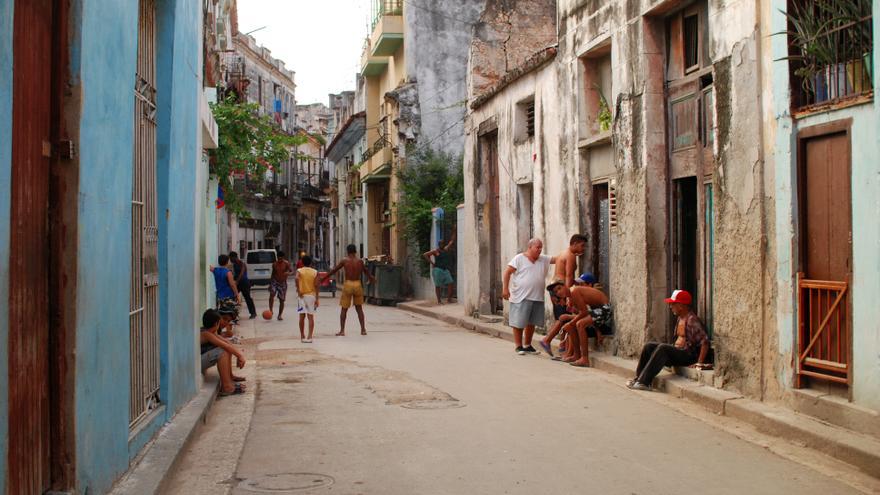
Because of Diaz-Canel’s visit hundreds of young men and women, uniformed or otherwise, have been patrolling the main intersections of Camaguey for days. (Facebook)

14ymedio bigger14ymedio, Henry Constantín, Camagüey | October 19, 2018 — President Díaz-Canel is in Camagüey. People know this not because there is more joy on the streets, nor because there are spontaneous crowds of people out to greet him, and certainly not because we see him walking about freely, approaching people to listen to their concerns.

No, none of that. People know Díaz-Canel is here because the one thing at which the country excels, repression, is everwhere to be seen.

Hundreds of young uniformed and plain-clothes police officers — unnecessary in a town that is supposedly happy with its government — have been patrolling Camagüey’s major intersections for days. They hand out citations and are on the lookout for anything that hints of black market activity or could be interpreted an expression of discontent. continue reading

What a shame. If only one of the thousand or so officers scattered around the city had been at the corner where a young woman was murdered on the night of October 10, she would be alive today.

If at least one of them had been at the foot of the bronze statue in front the Teatro Principal — one of the city’s few beautiful statues — the night it was stolen, she would be there still, on her pedestal.

If at least one of the officers had been guarding the doors of the various government and Communist Party dining rooms, through which more beef passes than their officials provide, there would be less need to fill the streets with police officers to prevent someone from telling Díaz-Canel the three or four truths he does not want to, or which they will not let him, hear.

Meanwhile, back in their offices, these officials hurriedly memorize the few optimistic details from reports they have at hand so they can recite them to their handsome new boss. While all this is going on, companies and institutions are being hastily spruced up to look pristine and beautiful for the visitor before corruption, inefficiency and the daily bureaucratic grind inundate them again.

The official press, meanwhile, stands ready once again to recycle statistics and photos, which it will later publish as accepted facts without the slightest comparison, analysis or modesty.

We will see Díaz-Canel on television, smiling while surrounded by other smiling people, chosen to be there, telling him lies they know are lies. And he will be shown the “successes of the Revolution,” which presumably are not the dilapidated and dirty bathrooms of the University of Camagüey, nor the hundreds of dirt roads and broken asphalt streets that make up our cities and towns, nor the thousands of Cubans who are ready and willing to leave the country by any means possible.

He will not say “I am with you” to the self-employed, the true economic engines of this country, who dress, feed, entertain and transport it, and who, as a thank-you, are about to be slapped with a package of destructive restrictions.

He will not see impoverished elderly men and women hawking lemons or plastic bags on the streets, or collecting cans and bottles to supplement what are the lowest pensions on the planet. Nor will he see the police ejecting, inspecting or arresting them during his visit for not having a vendor’s license.

Díaz-Canel will continue tweeting for free, not from an internet connection for which he has to pay one convertible peso per hour, like most Cubans must do. Nor will he share in the meager elementary school lunch served to the happy children of Camagüey and the rest of Cuba.

He will not have to wait in the sun for a bus home at a stop crammed with people, or be placed on the waiting list at the provincial bus terminal. Nor will his infirmities be treated by a medical student — nearly the only medical personel who have not been exported — after spending an endless period of time in the waiting room of the provincial hospital. He will not have to illegally buy cement to maintain his house or beef to maintain his family’s health.

At night — after a day of visits, tedious statements, useless statistics and copious lies — the president will go to bed. He might then wonder when he will be able to go walking through Cuba’s streets, ones which he chooses, without so many police protecting him, monitoring him; or when he might be able to live without so many lies surrounding him. But that, comrade Diaz-Canel — assuming you do not steel yourself with courage and do something different — will never happen to you.

Text originally published on Facebook and reproduced here with the permission of Henry Constantin.

____________________________

The 14ymedio team is committed to serious journalism that reflects the reality of deep Cuba. Thank you for joining us on this long road. We invite you to continue supporting us, but this time by becoming a member of 14ymedio. Together we can continue to transform journalism in Cuba.

The Embargo Has Actually Accomplished a Lot / Ángel Santiesteban

Angel Santiesteban, 18 October 2018 — The embargo has actually accomplished a lot, and it’s that the Regime has not been strengthened. That leftist Obama discourse which suits the dictatorship, needs to be undone. Imagine if the embargo didn’t exist how much more pain the totalitarian Cuban Government would have imposed on us.

In fact, the first thing it would stop doing would be exporting guerrillas around the world because it wouldn’t have money, and the socialist camp, also under pressure, would have accepted not continuing to do it, nor would they be able to continue advising and protecting terrorists.

The Cuban Government never would have permitted the paladares (independent restaurants), rentals and the other businesses of independent entrepreneurs. Everyone knows that Fidel Castro accepted it because he had the noose around his neck. If it were up to the dictator, the “Cuban community in the Exterior” never would have been let in; he had no other option but to accept it in order to suck up the money they left. In his economic insanity, he didn’t want tourists either because they would bring the scent of freedom. continue reading

The proof is that in the two years that Obama ceded before the Regime, the population didn’t see any improvement. And when they began to taste tourism, which was going to have a strong economic impact, the response was to raise the price of permits for independent entrepreneurs, asphixiate them so that they would give back their “licenses” and the State could fill its retaurants, taxis and hotels. They wanted everything for themselves; the population didn’t matter.

This doesn’t count the harm done to the opposition by Obama’s recognition, which immediately raised the number of arbitrary detentions, kept the Ladies in White from marching on Fifth Avenue and prevented their going to church to attend mass, as well as encouraging their being beaten.

What Obama really didn’t want to see, hear or understand is that the only thing the Castro family dictatorship understands is force. He’s complicit, he perceives some benefit or simply doesn’t have the mental capacity to understand it because the history is there, fresh and at hands’ reach, collected in the history books and its testimony.

Nor would they accept a plebiscite or other variants. There is no dialogue with the dictatorship, and they demonstrated that yesterday in the United Nations. It didn’t have to happen to know what they are capable of doing!!! With what they have done up to now it’s sufficient to know their nature and what they would be capable of doing to stay in power. The best example of their intransigence is Venezuela and Nicaragua, which are their pupils in these matters of repression.

There is no other option with the Regime but international pressure. The rest is fallacy, stupidity or furtive work in favor of the Castros.

ACERCA DEL AUTOR

Ángel Santiesteban

ABOUT THE AUTHOR 

(Havana, 1966) Graduate of Film Direction, he lives in Havana, Cuba. Mention in the Juan Rulfo competition (1989), UNEAC national prize of the writers guild (1995). His book, Sueño de un día de verano (Dream of a Summer Day) was published in 1998. In 1999 he won the César Galeano prize. And in 2001, the Cuban Institute of the Book Alejo Carpentier Prize with his book of essays: Los hijos que nadie quiso (The Children that Nobody Wanted). In 2006, he won the Casa de las Américas prize in the short story genre with his book Dichosos los que lloran (Happy are Those Who Cry). In 2013 he won the Franz Kafka International Prize for paperbacks, convoked in the Czech Republic, with the novel El verano en que Díos dormía (The Summer when God Slept). He has publisihed in Mexico, Spain, Puerto Rico, Switzerland, China, England, the Dominican Republic, France, the United States, Colombia, Portugal, Martinique, Italy and Canada, among other countries.

Translated by Regina Anavy

Report: Prostitution a la Carte in Cuba / Luis Felipe Rojas

Luis Felipe Rojas, 8 October 2018 — Brothels in Cuba are within reach of anyone who wants to find them, as the Spanish newspaper El País described this Sunday in a report on the panorama of prostitution on the island.

The journalist Alvaro Fuentes interviewed women in Havana who dedicate themselves to “the oldest profession in the world”. Arlen, a 50-year-old who says she started in the profession at 13, told El País that times have changed. “Now having a prostitute at home is not seen as something bad, and their families support them even, since they bring a standard of living that is unthinkable for the rest of the population”.

In an interview for Radio Martí, the independent journalist Agustín López Caninó evaluated the social phenomenon. continue reading

Yanet, another of the women interviewed by the Spanish newspaper who looks for tourists near the Malecón around the Hotel Deauville, explained: “My father is a doctor; his monthly salary is some 50 dollars. I can earn that in an afternoon. It’s frustrating to think about the near future on this island.”

The Cuban Regime has never recognized the existence of prostitution. The U.S. Department of State, in its 2018 report on human trafficking, says that “the Castro government does not fulfill ’the minimum requirements’ for the elimination of the trafficking of people” although it recognizes that the Cuban authorities are making significant efforts to do so.”

Translated by Regina Anavy

Cuban Post Office Admits Service Deficiencies Due to Lack of Investments

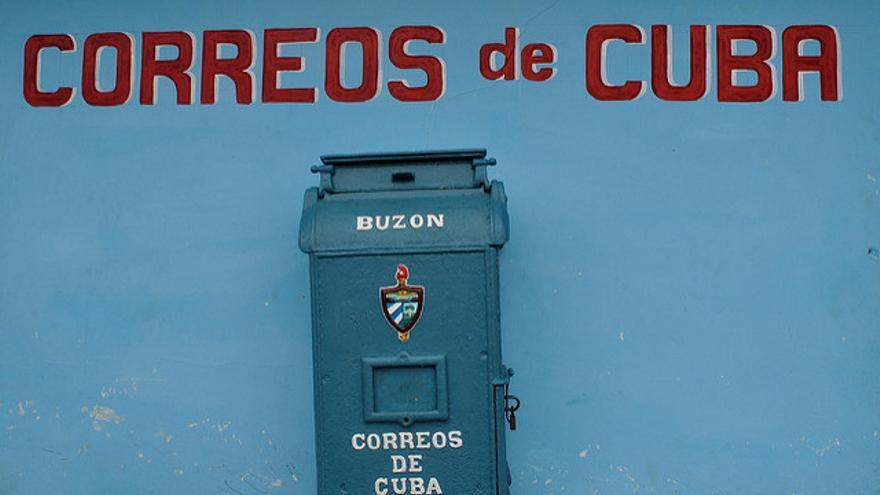
Correos also acknowledged that in most of the provinces there are “limitations in covering the the mail carrier positions, which generates irregularities in the delivery of the press on a daily basis.” (Flickr)

14ymedio bigger

14ymedio, Havana, 22 October 2018 — Correos de Cuba, the Cuban Post Office, has admitted deficiencies in its service to the avalanche of complaints from users in an online forum of the business group. The state agency’s management has responded to the criticism arguing that to solve this situation requires “large investments, which currently neither the Group nor the State can assume.”

After the digital meeting held last Wednesday on the website of the state newspaper Granma, the agency’s Institutional Communications Director, José Manuel Valido Rodríguez, responded to the criticism in an interview in which he recalled that the problems are largely due to “the manual character” of mail operations. continue reading

This “causes irregularities directly associated with the quality of services,” the official justified. “This is compounded by the technological obsolescence of computer equipment and inadequacies in the transportation system, especially in the secondary and tertiary distribution lines (from the provincial capitals to the municipal level and from there, to the localities).”

Correos de Cuba — along with the Telecommunications Company of Cuba (Etecsa), the communal service and passenger transport service — is one of the state companies most harshly criticized by its customers. Delays in shipments, loss of packages and the opening of correspondence are some of the complaints that are heard most frequently against the Group.

In the forum last week, customers complained about the delays in the delivery of the daily press, especially in the municipalities. A problem that officials attributed to the repairs that are being made Villa Clara’s Graphic industry, which has forced the national newspapers GranmaJuventud Rebelde (Rebel Youth), and Trabajadores (Workers)  to be printed in Havana, along with the provincial newspapers that are distributed in the central area of the island .

“The Havana print shop has machines that date back to the 80s of the last century, for which spare parts are no longer manufactured,” added Valido Rodríguez. “This whole process has had a negative impact on the distribution of the press in central and western Cuba, due to the delay in the printing process and the extra complexity of transporting the newspapers over much longer distances.”

Correos also acknowledged that in most of the provinces there are “limitations in covering the the mail carrier positions, which generates irregularities in the delivery of the press on a daily basis.” The salary of one of these employees does not exceed the equivalent of 30 CUC per month (roughly $30 US) and involves large distances on foot, which makes it a not very attractive position for many candidates.

Another client questioned the opening of letters or packages, a frequent practice in Cuba, where recipients have become accustomed to receiving envelopes that have clearly been violated or packages that lack part of their contents.

The representatives of the company called “the opening of correspondence and postal packages a violation” and urged complaints about these cases tobe presented at the offices of Canal Rojo (Red Channel), “represented in all the provinces of the country and where the recipient is cited for inspection in the presence of customs agents and the Correos de Cuba.”

“Why, if in the 70’s I sent a letter or package from Esmeralda (in Camagüey) to Havana, and it arrived in a week, now … 40 years later, with internet, web, emails, etc … They told a friend of mine in the Ministry of Communications that a certified letter from Havana to Santiago de Cuba took from 45 days to two months?” questioned another Internet user.

To this the employees responded that “40 years ago there was not the volume of parcels that exists at the moment,” and they also pointed out that “the transportation system did not have more than 20 years of overuse,” which causes constant breakdowns.

Correos de Cuba, which was founded 262 years ago, “maintains connection with the postal operations of 192 nations” and is “composed of 20 companies, and more than 800 service units” in which 10,000 workers are employed, Granma points out. In addition, its offices serve 52% of pensioners in the country and almost all of Cubans receiving social assistance.

In the first eight months of this year, “481 complaints were registered, most of them due to delayed deliveries.” Of these, 370 complaints related to “the press service, 171 of them due to irregular distribution, 113 due to non-delivery of subscriptions to homes and the rest due to delay in arriving at their destinations.”

In recent years and with the increase in the number of Cubans serving medical missions abroad, the postal network has been saturated with packages and correspondence. The tens of thousands of health professionals deployed in more than 60 countries use local companies to send their packages, but once on the island their delivery is the responsibility of Correos de Cuba. The state entity also handled, last year some 30 million dollars in money orders sent from abroad.

 ________________________________

The 14ymedio team is committed to serious journalism that reflects the reality of deep Cuba. Thank you for joining us on this long road. We invite you to continue supporting us, but this time by becoming a member of 14ymedio. Together we can continue to transform journalism in Cuba.
Letter from the Editors to the Members of ’14ymedio’

We are aware of the concerns of some who wish to collaborate with us but fear that their personal data would end up in inappropriate hands. (14ymedio)

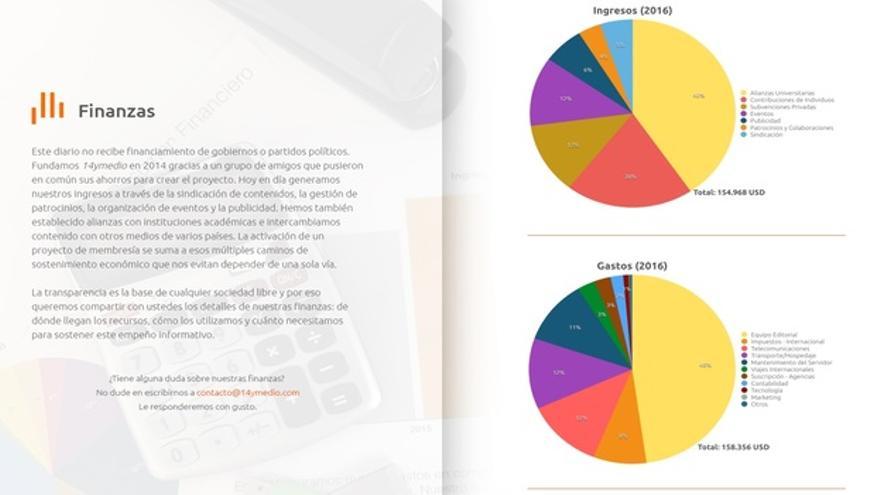
14ymedio bigger14ymedio, Havana, 20 October 2018 — A year ago this newspaper launched a membership program to consolidate the independent economic model that we have bet on from the beginning. As you know, 14ymedio does not accept money from any government and intends to serve only its readers.

Throughout this year we have received concerns from some people who want to collaborate with us but feared that their personal data would end up in inappropriate hands, with the consequences that this implies in Cuba.

In order to reassure our readers we would like to explain how we manage our databases. continue reading

The majority of our editorial office members are in Cuba, along with various collaborators in Miami and Madrid who are responsible for the publication of the texts and the refresh of the cover throughout the day. They can do this because they have  good internet connections.

Everything related to the names and personal data of those who participate in our membership program is handled from Miami and Madrid, without going through Cuba at any moment. The subscribers’ information is not kept nor stored in the national territory or on Cuban servers. On the other hand, the funds received are used to pay the salaries of the staff in Havana and the correspondents in the provinces, as well as for communications, transportation and other expenses within the Island.

Our MailChimp service is always handled with the utmost caution from computers connected far from the controls of the Telecommunications Company of Cuba (Etecsa).

We have suffered firsthand from the surveillance of State Security and, for this reason, we take very seriously the protection of personal data of each and every person.

Translated by Wilfredo Díaz Echevarria

___________________

The 14ymedio team is committed to serious journalism that reflects the reality of deep Cuba. Thank you for joining us on this long road. We invite you to continue supporting us, but this time by becoming a member of 14ymedio. Together we can continue to transform journalism in Cuba.
US Funds to Rescue the National Art Schools of Cuba

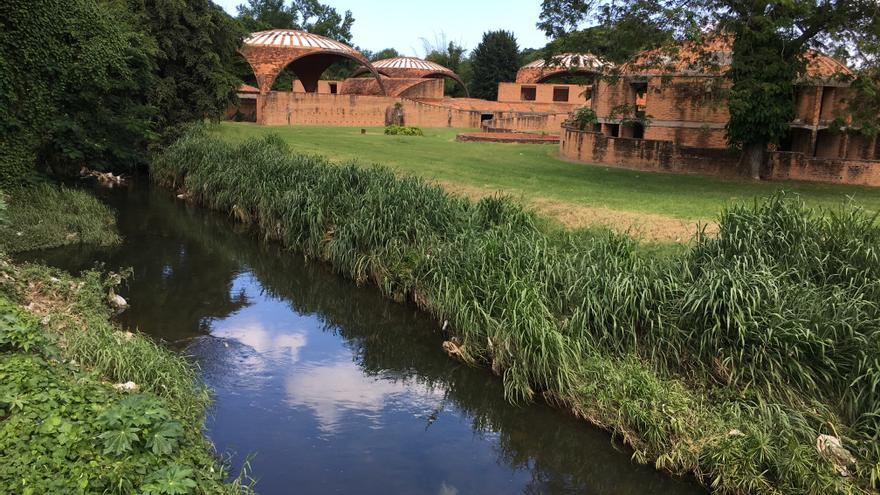
The Quibú River as it passes through the National Art School. (14ymedio)

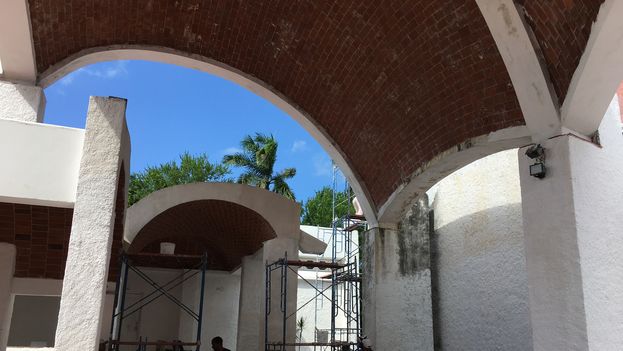
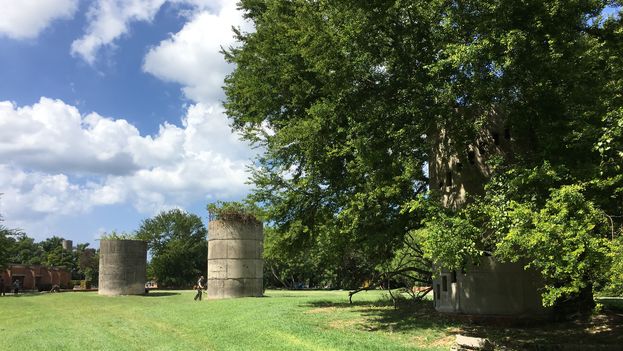
14ymedio bigger14ymedio, Luz Escobar, Havana, 20 October 2018 — After passing by the Quibú River and in the middle of the growth of the out of control grass, reddish vaults emerge that look like the ruins of a lost city. They are part of the National Art Schools of Cuba that the Getty Foundation, of the United States, wants to rescue with a donation of $195,000, after decades of deterioration.

The group of buildings that today make up the University of the Arts, conceived at the beginning of the 60s as the Cubanacán Arts Schools have gone more than half a century with hardly any repairs or investments. In that time some specific repairs have been made, but the lack of a budget forced the closing of several sites.

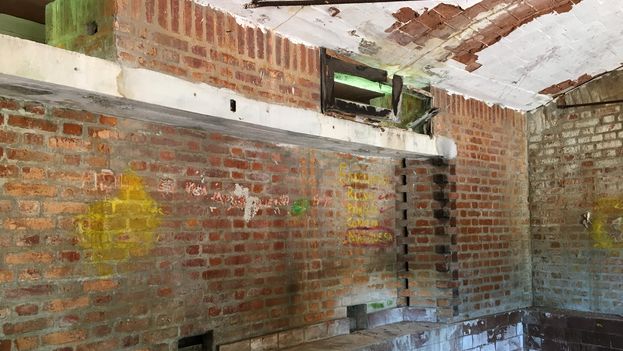
Mold and plants grow on walls and domes, a situation made worse by bats and vandalism. (14ymedio)

The School of Visual Arts is in better condition, but in the rest of the buildings mold and vegetation grow on the walls and domes, a situation made worse by bats and vandalism. Walking through the corridors of the school seems more like a trip to an archaeological dig than a complex less than six decades old. continue reading

Despite the deterioration, the place still evokes that era of pharaonic projects in which the government planned to place Cuba at the head of the countries of the region and even the world. Imbued with that competitive spirit, Fidel Castro decided to build the “most beautiful Art Schools of the World” on the old grounds of the Country Club.

Castro’s enthusiasm did not last long and in 1965 the works were left without government support. Thus were born some of the first “modern ruins” of Havana. An unfinished complex that the Getty Foundation wants to aid, although much more is needed than the amount donated to repair the damage done by time and carelessness.

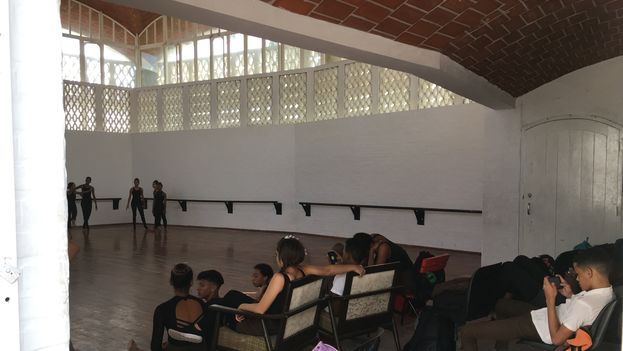
At least repairs are currently being made in the dance building and “new boards have been installed and painted,” says one student. (14ymedio)

With its Catalan vaults, its bricks and terracotta tiles, the buildings have been severely affected by the floods of the Quibú River. Plants have done the same. In 2014, the architect José Mosquera suggested the “cutting and elimination of the plants that thrive in the vaults and galleries” but the weeds continue to grow on several roofs.

It is common to hear students say things like “be careful don’t step in there” or “don’t go in that place, the roof may fall”. All of them seek accommodation in the still functional parts of the buildings conceived by the Cuban architect Ricardo Porro with the Italians Roberto Gottardi and Vittorio Garatti.

The National Art Schools were born as a project of Fidel Castro but over time they lost official favor and with it funding. (14ymedio)

Some years ago, the students themselves cleared rubble and vegetation from the areas of the School of Ballet, where the circus school was later located. With the aid of machetes, sticks and screwdrivers, they cleaned up the galleries. “We were reluctant to let those spaces die,” says Rey, who was a student at the center and now works as a professor.

The young man feels relieved that at least in the building destined for dance, repairs are currently being made and “new boards have been installed and painted”. Behind that process, he points out, “are the students, the professors and also the State.”

The building that serves as a dorm, of Soviet inspiration, contrasts sharply with the rest of the school. (14ymedio)

Other students have not been as lucky and study several subjects in the area of the dorms, buildings of Soviet architecture that contrast with the original facilities. “The spaces are different, the energy of the space is different, the square is not a very inspiring place,” says Rey.

The announcement of the donation to repair some areas has aroused certain expectations that sites that have become unserviceable over the years will be rehabilitated. “The teachers tell me how this place used to be, but now it does not resemble it much,” says a young woman who began studying dance in September.

The students of the National Art Schools often have to take classes in other spaces because the rooms destined for teaching are in terrible conditions. (14ymedio)

“Not only do they have to repair roofs and walls, but the school needs to modernize because even finding an electrical outlet that works now is complicated,” she complains. With the emergence of new technologies it’s the rare student that does not have a phone, a speaker or a laptop that needs to be charged every once in a while.

“It’s a very beautiful place but it has to become a functional place, which right now it is not,” says the young woman. Among her colleagues, the most common opinion is that it is necessary to “reenvision the school, place it in the 21st century”, but “that is not solved only with a budget, it takes will”.

The domes of the National Art Schools, one of its symbols, do not escape the deterioration. (14ymedio)

The complex, which was considered a National Monument in 2013, is a magnet for photographers and video clip makers, because of that mixture of beauty and decadence that surrounds everything. For those who sneak in to take pictures without permission, a strict security guard threatens to call the police if they do not leave as soon as possible.

But, despite the controls and deterioration, the site remains an island within the city, a kind of artistic retreat. “The school is a space of inspiration”, Rey says emotionally, “because these open areas, with trees, these materials that are close to an appearance of little elaboration, connect one with the essence of nature”.

Translated by Wilfredo Díaz Echevarria

_______________

The 14ymedio team is committed to serious journalism that reflects the reality of deep Cuba. Thank you for joining us on this long road. We invite you to continue supporting us, but this time by becoming a member of 14ymedio. Together we can continue to transform journalism in Cuba.
For Tourists in Cuba It’s Easier to Get an Apple than a Mango

In a poll conducted by The Havana Consulting Group, the most common complaint by tourists — along with sanitary conditions — is the lack of variety in food choices and the preponderance of imported products over local ones. (14ymedio)

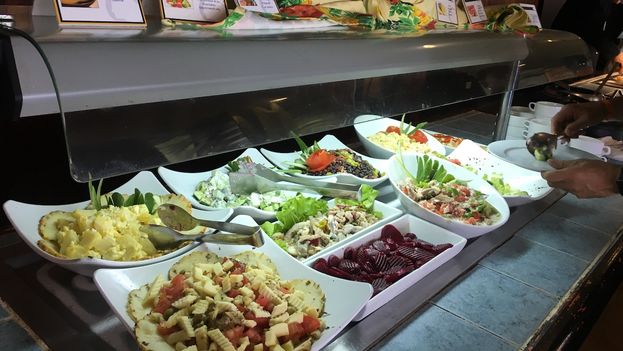
14ymedio biggerLuz Escobar / 14ymedio, Varadero / Havana, 11 October 2018 — For those who are looking for local flavor, it is frustrating to wake up to Colombian coffee, have fish from the distant shores of northern Europe and realize that it is easier to find a Heineken in the hotel bar than a Cuban Cristal. In these hotels it is more common to see tuna than snapper, an apple than a mango and artificial sweetener than the local sugar.

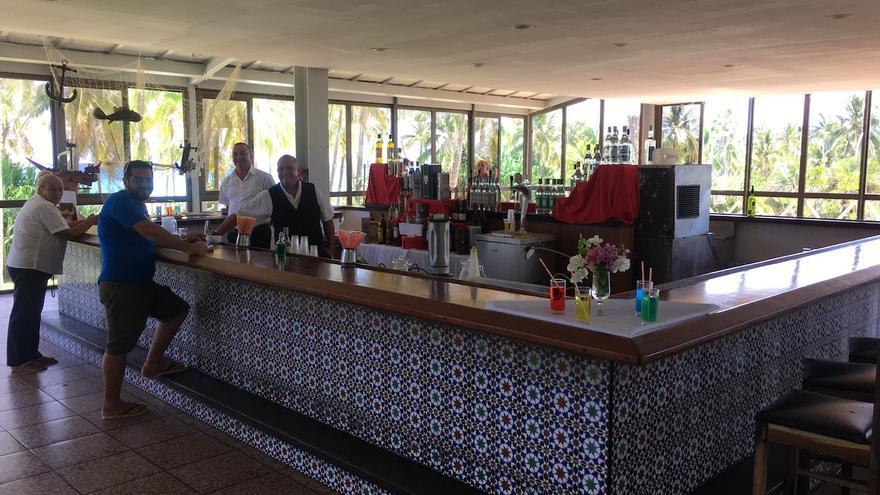
“The mattresses are Cuban but all the linens, the detergent in which they are washed and even the napkins we use in the hotel come from another country,” laments a maid at the downtown Hotel Sevilla, a local icon on Havana’s Prado that, according to one tour operator, offers its visitors “a space with Moorish inspiration and local flavor.” continue reading

The courtyard bar, a space which features blue ceramic tiles and a musical trio playing Cuban trova standards, offers guests Spanish olives, Russian vodka, French fries from Mexico and slices of Gouda cheese wrapped around sausages, which are also imported. With the exception of rum and local beer, everything else seems to have come from a Panama Canal wholesale market.

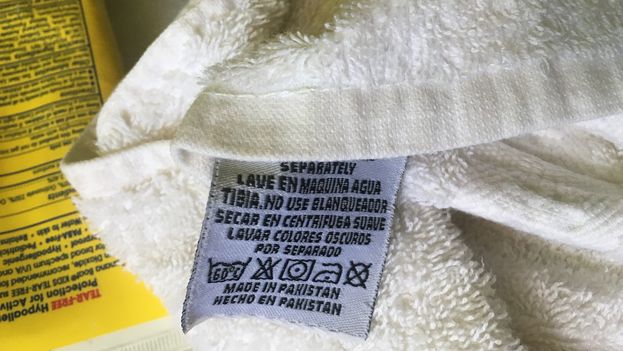
Towels from Pakistan, yoghurt from Spain and chlorine for the pool imported from a Latin American country are some of the products that allow the Puntarena de Varadero Hotel to function an day-to-day basis. It is the same situation throughout Cuba, where the large amount of imported supplies and food is a major drain on profits in the tourism sector.

Before 1959 Cuba was a net exporter of agricultural products, but times have changed. (14ymedio)

From the pat of butter that a guest has at breakfast to the orange juice used in mixed drinks, a large percentage of what is offered at these establishments fools the guests, who are expecting to be served mostly Cuban products.

The Havana Consulting Group conducted a poll which surveyed 347,833 tourists who visited Cuba between March 2016 and February 2017. It found that, along with sanitary conditions, the most common complaint was the lack of variety in food choices and the preponderance of imported products over local ones.

Beatriz, a Mexican woman who stayed for a week this summer with her family in Puntarena, told 14ymedio that the “lack of variety” was “the downside” of her stay. “On the fourth day we had to go to a private restaurant because our hotel didn’t have basics like lemons or fresh oranges,” she says.

In 2013, after decades and decades of prohibiting such activity, the government of Raúl Castro gave permission for independent producers to sell directly to hotels catering to domestic and foreign tourists. Previously, hotels had purchased their supplies exclusively through contracts with state agencies while importing what they could from abroad.

The approval process for such sales, however, is complicated and several state agencies must oversee, approve and control the distribution from the fields to the buffet tables.

Though he prefers to remain anonymous in order to remain in the program, Carlos is one of the more than fifty fruit, vegetable and grain producers in Matanzas province who have been given approval by the Selected Farming Products Company to sell their crops to hotels.

The farmer has a plot of land reserved for the cultivation of mango, melon, guava and papaya, which he has managed to sell to resort hotels.

Carlos sells part of what he grows through a cooperative to which he belongs on the outskirts of Cárdenas, a town whose main source of income is Varadero, the most famous beach resort in Cuba. “They have helped us get some important supplies such as boxes for the collection of fruit and seeds but the truth is it hasn’t worked out well.”

The most experienced tourists realize this immediately and ask if there are no “local tapas, with a Cuban flavor.” (14ymedio)

“A lot of good fruit was lost,” he notes. “We delivered it to them but the state-run company did not get it to the hotels in time.” After tropical storm Albert at the end of May the situation worsened. “We lost more in the markets than in the fields,” he laments.

After that fateful day, during which his fields were flooded, Carlos switched from fruits to vegetables. “They are faster to harvest and package, although they can be more fragile to transport. Many hotels in Varadero will choose processed carrots and cabbage before paying for a lettuce from here,” he says.

Though a hotel chain can theoretically contract directly with private or cooperative producers, throughout the entire production chain “the hand of state agencies is always present, certifying the product quality, verifying the contract terms are being fulfilled and making sure the farmer is not making too much money,” says Carlos.

To be part of this distribution chain, farmers must join the Agricultural Business Group but then get the resources for their harvests from the Logistics Business Group of the Ministry of Agriculture, a huge, inefficient mastodon they distrust.

“What is needed are agricultural purchasing centers to facilitate exchanges between producers and tourism administrators,” says Medardo, an agricultural engineer who describes himself as “someone who could free up this process.”

Medardo believes that what is needed are more markets “with greater visibility so that hotel managers know where they are and what they have to offer.” Years after they were closed, some of these points of sale have been reopned in provinces such as Pinar del Río, Villa Clara, Holguin, Las Tunas and Santiago de Cuba. The agricultural expert believes, however, that this is not enough.

“It should be like a wholesale market, where producers bring their fruits, vegetables and produce to be bought directly by hotels, but also a place to sign purchase agreements without government intermediaries, “he says.

Until 1959 Cuba was a net exporter of agricultural products, but times have changed. “There is a culture of looking for everything overseas, from butter to mangoes,” laments Medardo. “Even the shrimp tourists eat are mostly frozen imports, to say nothing of meat, which is brought in almost entirely from other countries.”

Four million tourists visited Cuba in 2017 but earnings figures do not take into account the cost of imports. (14ymedio)

In 2015 — just as the island’s tourism boom was beginning in the wake of the thaw in diplomatic relations between the Cuba and the United States — a report published by the Center for the Study of the Economy was already warning of a troubling disconnect between tourism and the nation’s industrial output. This situation has worsened due to the growth in tourism, which experienced more than four million visitors in 2017, and the subsequent increase in the demand for food and cleaning supplies.

The report warned of a growing “trade deficit resulting from substituting domestically produced items with imports” and criticized the “long approval process experienced by domestic producers trying to import supplies and parts,” which has made it easier and faster to simply bring in certain goods from overseas.

The most experienced tourists realize this immediately and ask if there are no “local tapas, with a Cuban flavor.” But employees can offer them little more than some dried produce, such as almonds and raisins, which come already packaged with a foreign label. There are no plantain chips, roasted corn-on-the-cob, pork rinds or even a Cuban tamale.

A few meters away from Hotel Sevilla, however, street vendors hawk their wares — roasted peanuts, corn chips and all manner of fritangas — in what seems like a world completely disconnected from the one inside the hotel. A distant galaxy where domestic products have more presence than imported ones.

_________________________

The 14ymedio team is committed to serious journalism that reflects the reality of deep Cuba. Thank you for joining us on this long road. We invite you to continue supporting us, but this time by becoming a member of 14ymedio. Together we can continue to transform journalism in Cuba.
Spanish President Pedro Sánchez Doesn’t Raise Expectations Among Cubans

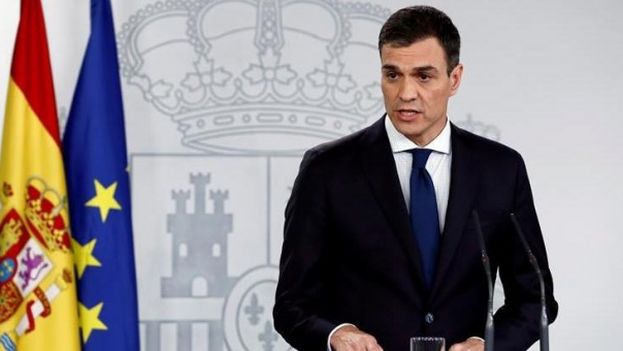
Presumably, during his visit, Sánchez will meet with businessmen or representatives of the many Spanish companies present in Cuba. (EFE)

14ymedio bigger14ymedio, Miriam Celaya, West Palm Beach, 18 October 2018 — The Spanish language version of the online American newspaper HuffPost has just published its own vision about why the upcoming November 22nd and 23rd visit to Havana by the Spanish President, Pedro Sánchez, is important.

Judging from the note, there are several reasons that give importance to the bilateral meeting on the Island between the leaders of Cuba and Spain. All of them refer to expectations on the Spanish side – in this case, the entrepreneurs of the European country present in Cuba and of their own Government – and in no case to the benefits that Cubans should expect as a result of this exchange between the two governments. continue reading

To some extent, this could be reasonable, given that, when it comes to meetings between politicians, each defends his own interests. Hypocritical speeches only work in protocol rooms.

Thus, in the effort to enhance this visit, the HuffPost uses the unoriginal resource used by so many other foreign newspapers: to falsify the Cuban reality by recreating it from the stereotyped vision of someone who absolutely ignores the scenario in which the action is moving. Or about whom, deliberately, chooses to ignore it. This explains the reference to “the new Cuba, which does not have a Castro in its government since April, which is committed to openness even with the United States, its classic adversary.”

Judging by the note, there are several reasons that lend importance to the bilateral meeting between the leaders of Cuba and Spain on the Island. All of them refer to the Spanish-side expectations

A “new” Cuba, and in the midst of a transition, described as a place where there are all kinds of openings, which now Spain regrets having distanced itself from, compared to other countries which have “taken the lead,” despite – and this is the way that the Spanish foreign minister, Josep Borrell refers to it – Spain having “strong historical, cultural, and human relations with this Island,” which makes it a contradiction that Spaniards “have nothing to say or nothing to contribute.”

About the latter, it must be admitted, Mr. Borrell is somewhat right: it does not seem that until now the Spaniards have contributed much to the Cubans.

Thus, suddenly, Sánchez’s trip acquires a sense which is “not only political but also historical and cultural”. And, incidentally, “it can serve as an outpost and pave the way to possible royal status in November 2019”, the date when “the fifth anniversary of the founding of Havana will be celebrated”.

Obviating the small error of the American media – let’s call it “errata” – of so drastically reducing the Cuban capital’s age (which, far from reaching the age of five, is approaching half a millennium since its foundation), nothing would seem more counterproductive than having the condescending presence of their Spanish Majesties at the celebration of such a relevant date.

Not only because of the strangeness of the monarchical origins of the informal plebeian Cubans, natural enemies of the label, but even without it, the sufficiently humiliating impotence of having contributed, for the last 30 years, to the recolonization of the Island through Spanish investments, while those born on this land are deprived of that right that is naturally theirs. It is not very delicate that our status as neo-subjects should be emphasized so incisively more than a century after having reached our independence.

Meanwhile, La Moncloa* has declared that the objective of the trip of the Spanish head of government is “to intensify the relations between both countries and their economic and commercial exchanges”

The HuffPost assures that this visit will be “like Spring rains” for Spanish businessmen in Cuba. Presumably, during his visit, Sánchez will meet with businessmen or representatives of the numerous Spanish companies present in Cuba, including nine hotel chains, due to the “high economic component that is to be imprinted on the visit”.

On the other hand, the note says that, “according to ICEX (the Network of Economic and Commercial Offices of Spain Abroad), Cuba was the #2 country in the Caribbean (with a total of €899 million) receiving Spanish exports in 2017.

The note adds that “Spain maintains commercial and investment relations with Cuba of a great tradition, evidenced by being the country with the most joint venture companies and most branches established in Cuba, and with an outstanding presence in the tourism and services sector”. A fact that, nevertheless, shows an asymmetry in the benefits of these relationships, since it does not reflect in any way an increase in the consumption capacity of Cubans.

Finally, the fifth and last important reason for Sanchez’s announced visit to Havana are the approximately 140,000 Spanish citizens living in Cuba, to whom The HuffPost refers in terms of “Spanish colony.”

‘Granma’, the official newspaper, barely just published, simultaneously, a brief note in the section Hilo Directo (Direct Thread) announcing, without much fuss, Sanchez’s imminent visit

It is about none other than Cubans who have acquired Spanish citizenship under the Law of Historical Memory – better known as the grandchildren law – who perhaps should be called “Spaniards of convenience”, not only because Spanish citizenship is useful for certain practical purposes, especially easing travel by making use of a passport that opens doors to numerous destinations without the need for a visa, but because the “Cubanish”, usually treated as lesser carnival dance processions and undesirables at the Spanish Consulate in Cuba, are recognized as fellow citizen by the Spanish authorities when it’s convenient. Now it seems to be the case, so that, as if by magic, they have been transmuted into “a great Spanish community”.

This way, The HuffPost affirms that “Sánchez will have an opening to meet with Spanish colony in Cuba”, which means that he will meet with those Spanish groups that have been acknowledged and promoted by the Cuban authorities in terms of their own political and economic interests.

And while the most enthusiastic are rubbing their hands and making plans to share in the benefits of the new resumption of relations between Spain and Cuba, Havana has not given the same relief to the fact. The official newspaper Granma just simultaneously published a short note in the section Hilo Directo (Direct Thread), announcing the next visit of Sánchez, without much ado.

Perhaps the hierarchs of the caste of the insular Power, who do know exactly how tense the social vibration in Cuba is, favor keeping a low profile? Or, more traditionally stated, the oven is not ready for cookies here.

 Translated by Norma Whiting

*Translator’s note: Moncloa Palace is the official residence and workplace of the Prime Minister of Spain

___________________________________

The 14ymedio team is committed to serious journalism that reflects the reality of deep Cuba. Thank you for joining us on this long road. We invite you to continue supporting us, but this time by becoming a member of 14ymedio. Together we can continue to transform journalism in Cuba.
The Lack of Journalism Freedom Stays the Same Under Diaz-Canel

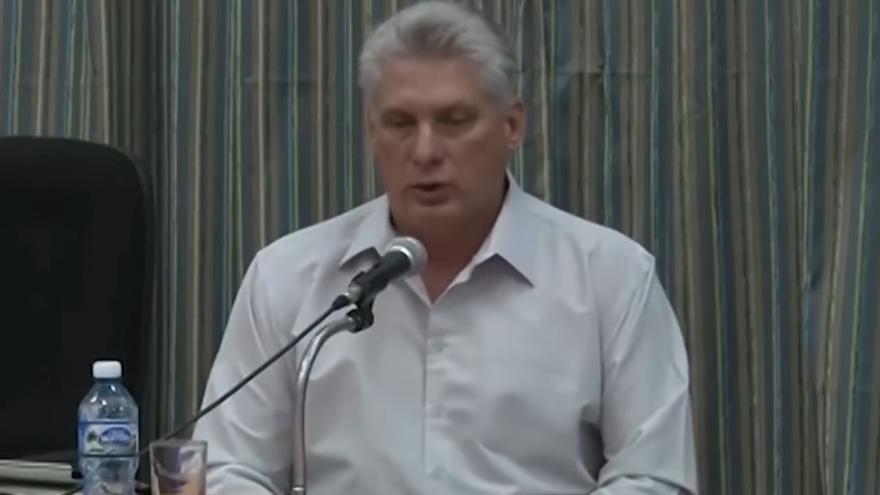
A little over a year ago, Miguel Díaz-Canel harshly criticized the independent press of the Island. (Screen capture)

14ymedio bigger14ymedio, Havana, 19 October 2018 — Nothing has changed for freedom of the press on the island since Miguel Díaz-Canel became president last April. This is the conclusion reached by the Inter-American Press Association (IAPA) in its report presented this Friday at the organization’s General Assembly that will continue until the 22nd in Buenos Aires.

“Censorship seems to have increased,” says the report written by the Camagueyan journalist and director of the magazine La Hora de Cuba  Henry Constantin, who was unable to leave the island to present it. continue reading

The IAPA recalls that Diaz-Canel, who a little more than a year ago harshly criticized the independent press, acceded to the presidency “in the midst of a tsunami of police repression and months of continuous psychological torture against the independent press,” and that the constitutional reform whose approval is scheduled for February 24 “maintains serious limitations on freedom of the press and of expression.”

On this last point, the report makes reference to the controversial proposal for the reform of Article 60 of the Constitution. Although the new text recognizes the freedom of the press for citizens, the media will continue to be “socialist property of all the people, which ensures its use for the service of the whole society.” In addition, “the State establishes the principles of organization and functioning for all means of social communication”.

Government tactics to silence independent journalists have not diminished either, according to the report of the association, which indicates that short-term detentions and the use of subpoenas for interrogation in the offices of the Ministry of the Interior (Minint) are common and aim to intimidate these professionals.

The IAPA affirms that although men are detained more frequently and for longer periods, “it is the women to whom the Minint applies the most prolonged punishments, especially those who have children.” It specifically quotes the case of economist Karina Gálvez, also a member of the editorial board of the magazine Convivencia (Coexistence), who is serving a three-year sentence for tax evasion and is not authorized to practice her profession.

The “frequency and aggressiveness” of verbal harassment against independent journalists in public has also increased, according to the report, which sets forth the case of Iris Mariño. The photographer and reporter at La Hora de Cuba “suffered continuous sexual harassment, in the form of stalking, filming, touching and even kissing from agents of the State Security,” the article reads.

According to the IAPA, not only have searches of the homes of independent journalists increased, but so has the pressure on tenants who are kicked out of their rental homes. In addition, the report states that “State Security has carried out defamatory campaigns against communicators in the areas where they live or on the Internet.”

Other repressive practices of State Security, such as the confiscation of personal and work property, the prohibition against leaving the country or the interrogations or “exhaustive reviews during airport stops” remain almost unchanged.

In its report, the IAPA does not minimize the importance of the new technologies so that independent reporters can carry out their work, and notes that “a score of media websites focused on the country as well as international newspaper organizations” continue to be blocked on the island. And it also points out that “the prices and the poor geographic reach of Internet access prevent the use of the web to inform or share information,” alluding to the low quality of the service provided by the Telecommunications Company of Cuba monopoly, Etecsa.

Translated by Wilfredo Díaz Echevarria

_____________________________

The 14ymedio team is committed to serious journalism that reflects the reality of deep Cuba. Thank you for joining us on this long road. We invite you to continue supporting us, but this time by becoming a member of 14ymedio. Together we can continue to transform journalism in Cuba.
The President of Spain Will Visit Cuba on November 22 and 23

Pedro Sánchez and Miguel Díaz-Canel at their meeting in New York during the UN General Assembly. (EFE)

14ymedio bigger14ymedio, Havana, 16 October 2018 – The President of Spain, Pedro Sánchez, will visit Cuba November 22 and 23, the first visit by a Spanish president to the island in 32 years. The trip, according to the newspaper El País, citing diplomatic sources, was agreed to during a meeting with President Miguel Díaz-Canel when the UN General Assembly was in session.

“Since then, the staffs of both leaders have been working to finalize their respective agendas,” reads the note. At first it was suggested that Pedro Sánchez visit Havana as part of his trip to Guatemala, where he will participate in the Ibero-American Summit, but this was not possible. continue reading

El País calculates that, given the revised schedule, the Spanish president will have to cross the Atlantic three times in little more than two weeks. First to travel to Guatemala between November 15 and 16, then to go to Cuba on the 22nd and 23rd and, finally, between November 30 and December 1 to attend the G20 summit in Buenos Aires.

The sources consulted pointed out that the surprising thing is not that a Spanish president will visit Cuba, but that none has done so in more than three decades,” according to the note. The last time a head of government of that European country visited Havana was the socialist Felipe González in November 1986. Later, in 1999, the then president José María Aznar visited the island with King Juan Carlos to attend the Ibero-American Summit but it was not an official visit.

Now, the objective of the visit of the Spanish President aims to normalize relations with the island, which with the arrival last April of Diaz-Canel to the presidency isn’t governed by the Castro brothers after the triumph of the Revolution in 1959.

Predictably, Pedro Sánchez will not only meet with the Cuban president, but also with members of the Spanish community who have settled in Cuba and with representatives of the more than 200 companies operating in the country. It is not known if he will hold meetings with the opposition or independent civil society groups.

“A visit (to Cuba) from the King is pending which, if it were to take place, would be the first in history by a Spanish monarch.” If Sanchez’s visit is successful, Felipe VI could travel in 2019, coinciding with the 500th anniversary of the founding of Havana”, the El País note speculates.

Translated by Wilfredo Díaz Echevarria

____________________________

The 14ymedio team is committed to serious journalism that reflects the reality of deep Cuba. Thank you for joining us on this long road. We invite you to continue supporting us, but this time by becoming a member of 14ymedio. Together we can continue to transform journalism in Cuba.

The UN Calls For "Adequate Reparations" For Ariel Ruiz Urquiola For His "Arbitrary Detention"

Ariel Ruiz Urquiola has received help from organizations such as Amnesty International and several well-known personalities. (Facebook)

14ymedio bigger14ymedio, Havana, 17 October 2018 – The arrest of biologist Ariel Ruiz Urquiola was arbitrary according to the report prepared by the United Nations (UN) Working Group dedicated to this matter. The document asks the Government of Cuba to grant him “adequate reparations,” including immediate unconditional release.

The Working Group on Arbitrary Detention considers that the arrest of Ruiz Urquiola contravened up to three articles of the Universal Declaration of Human Rights and asks Havana to take “the necessary measures” to solve “without delay” the case “in accordance with the relevant international standards.”

The reports prepared by this UN body are intended to define whether an arbitrary detention is in accordance with the standards of international law and make recommendations to governments who may or may not take them into consideration. continue reading

The document, which has already been sent to Havana, will be published in full in the coming weeks, but the information was released by the Cuban Observatory of Human Rights (OCDH), which describes it as a “strong setback” for the government in a press release from the organization based in Madrid.

The UN document asks the Cuban government to present, within six months, information on whether it has guaranteed the unconditional release of the scientist, if compensation has been granted, if it has investigated the violation of his rights and approved legislative amendments that achieve “harmonization of the laws and practices of the government with its international obligations.”

Ariel Ruiz Urquiola, who continues his project in Viñales (Pinar del Río) after been released an “extrapenal license,” which means he can be returned to prison at any time, denounces having received pressure and threats from the State Security to return to Havana and affirms that the government of Cuba “is unable to compensate for all the damage” that it has caused him.

The scientist was sentenced to one year in jail for disrespect after an altercation with officials, but has always argued that his case was due to a government plan to destroy his ecological project.

During his career, the biologist had repeatedly denounced the damage to the Cuban ecosystem, such as the indiscriminate felling of trees, the hunting of endangered species and the dumping of toxic substances in the waters of the valley of Viñales.

His family, moreover, has affirmed that it is about revenge on the family, since the father, Máximo Omar Ruiz Matoses, was a high official of the Cuban army and served 17 years in prison for opposing the regime.

Ariel Ruiz Urquiola received help from organizations such as Amnesty International and well-known personalities such as the Bishop of Pinar del Rio, Jorge Serpa, and even the troubadour Silvio Rodríguez, who asked that the case be analyzed with “maturity and dialogue.” “I am going to live my life as a social and honest being, which is what I am,” Ruiz Urquiola said after learning about the UN decision.

Translated by Wilfredo Díaz Echevarria

_____________________

The 14ymedio team is committed to serious journalism that reflects the reality of deep Cuba. Thank you for joining us on this long road. We invite you to continue supporting us, but this time by becoming a member of 14ymedio. Together we can continue to transform journalism in Cuba.
Fidel Castro’s Big Mistake

Fidel Castro’s big mistake was not trusting in his people. (EFE/Alejandro Ernest)

14ymedio bigger14ymedio, David D Omni ZF, Havana, October 17, 2018 — I believe that the big mistake of Fidel Castro, like so many others who remain in power for a long time, was not trusting in his people, getting them accustomed to paternalism, and mutilating the initiatives of the entire society.

He was the great economist, the great politician, the great artist, the great Father close to a godly being, on which an entire people depended. Such a display of ego, tending to mutilate the natural diversity of the wide human spectrum, based on a transparent messianic complex, brought as a consequence a deep crisis of values in our society.

No citizen born in Cuba from 1959 on with his own irrepressible ideas found support under the mantle of the great Father who prohibited strikes, parties, or any other social demonstration that would stray from the guidelines of the only ruling party. The constant emigration and repression of free-thinkers, over several decades, has left us an orphan society. continue reading

Father is no longer, but before leaving he cloned himself in all the legal institutions of our Island. All businesses, politics, art, and education are in the power of two or three generals of the army. Now it falls upon the shoulders of Cuban civil society, extremely limited and stigmatized, to fight with courage to plant scarce but fertile seeds in this arid land that Father left us.

In any case, along with considering the consequences of a prolonged Fidel, it is also important to refer to the role of civil society. First it is, then it thinks, then it does, and then it has, being evident that in order to give it’s necessary to have.

To give money, it’s necessary to have money, to give peace it’s necessary to have peace, to offer love it’s necessary to have it in one’s chest, and to give liberty it’s necessary to possess it.

Hypocrisy is a clear example of giving what one doesn’t have. The list of politicians who speak of peace and have armies, of artists who speak of community without knowing service, and of leaders who speak of purity while keeping seeds of tyranny in their hearts, is long.

Most of us are on this list, so for that reason I cannot speak of the future of my Island and not interfere with the world. Yes, I see a future, but what future comes just as one has planned? The future is in the vigilance of our present actions, there are no guaranteed strategies, but it’s proven that the sincere action of one who cannot live without honor leaves profound marks on history.

It’s certain that in my country the lack of democracy is a major issue, but it’s not more certain than the capacity of acting in liberty that dwells in the will of man. When we blame our problems on persons and situations other than ourselves, we give away our power. If the root of the problem isn’t in us, neither is the power to resolve it.

I don’t believe that these are times to wait for democratic platforms that the Government isn’t interested in creating, so for that my deepest respect for Cuban civil society which, under blows and arbitrary detentions, decides to take the reins of liberty in its hands, and yes, is creating democratic spaces even though the Government tries to minimize them.

Every people has its way of making history according to its culture, in the case of the Cuban people I’d like to make a little historical summary. In the wars of independence in the 19th century, when we were still a colony of Spain, there was a minority of fighters for liberty. Only when they marched triumphantly through the streets did the people join them.

In the 20th century there were other minorities who, until achieving victory, didn’t obtain the support of the passionate mass. Today, there is another minority, which the majority of the people doesn’t even know.

I have the privilege of being part of this civil society, which additionally is peaceful and one day not far off will march triumphantly. Already the tree of the Cuban Revolution grew, gave its fruits, and died long before Fidel. When I say “died” I don’t do so poetically, the same founders of this revolution ended up drenched in corruption and those who weren’t, are maintained, since by now working honorably in this country is impossible.

Our frustrated fathers are the example of the future that awaits us if we keep supporting this empty revolution. Today’s young people see an example to follow in a hotel waiter, in a tour guide, or in a raft on the sea, the engineers and teachers today are street vendors of anything that can be slipped past the police in order to live.

Those who keep studying for some degree know clearly that in Cuba there will be no future. Every day various planes from various provinces of the country leave filled with Cubans who do not plan on coming back.

I only see hope in what we are capable of doing, if we want democracy, it’s time to have democracy in our homes, if we want prosperity it’s time to create unions and independent societies, if we want liberty, it’s time to walk with our heads held high shouting to the four winds an emancipating cry.

All this is illegal in Cuba, but it’s authentic and inherent to the soul, and only civil society has been capable of carrying this cross and bearing the stigma. The current Cuban civil society is the bearer of the legacy of Félix Varela y José Martí, and it doesn’t surprise me that it is slandered, persecuted, and feared by many. The many will later join along with the slanderers and persecutors who since time immemorial have moved in mobs without even knowing what it is to be human, unique, diverse, and creative; everything that a mob is not.

Translated by: Sheilagh Carey

_________________________

The 14ymedio team is committed to serious journalism that reflects the reality of deep Cuba. Thank you for joining us on this long road. We invite you to continue supporting us, but this time by becoming a member of 14ymedio. Together we can continue to transform journalism in Cuba.

Cuban Temper Tantrum Unleashed at the United Nations

14ymedio bigger14ymedio, Yoani Sanchez, Generation Y, Havana, 17 October 2018 – At first one can even be sympathetic: an elementary school classmate who flaps her arms while screaming. Later, comes the rudeness as the saleswoman’s mouth clenches before she spits out, “Girl, why did you even take that off the shelf if we haven’t marked the price yet?” Or the soldiers practicing on Independence Avenue while chanting a motto that ends in the phrase, “y nos roncan los cojones.”

Thus, over several generations, we Cubans have grown up with the idea that screaming, saying bad words, insulting others, calling them mocking nicknames and not letting others speak makes us look brave, superior or “macho.” This has undoubtedly contributed to what can be called “revolutionary trash talk,” that effrontery in the use of language and manners to make us seem more proletarian, more humble.

Within that code of socialist morality and Cuban uncouthness it is accepted and admired to use the vocal chords at full volume to prevail in a discussion. If, in addition, the person who is most vociferous intersperses swear words referring to the masculine sexual organs, he will be applauded as the winner of the debate and homage will be paid to him for being a true Cuban. continue reading

However, relating vulgarity with humility is one of the great errors that this system has instilled in us. My grandmother lived all her life in a tenement in Cayo Hueso and I don’t remember ever hearing a single bad word from her. I know thousands of examples of people who eat only once a day and yet continue to repeat to their children those maxims of “poor but honest,” “poor but clean,” “poor but decent.”

On several occasions I have had to witness the sad spectacle of acts of repudiation against me, with this practice of shouting so that I cannot express myself, accompanied with offensive gestures and rudeness. Experiencing it as an individual is something that everyone handles in their own way (I confess I’ve often laughed at them), but it is something else to see the name of the country where you live associated with such boorish manners.

I can’t stop feeling embarrassed for the Cuban delegation and the lamentable spectacle they displayed at the United Nations. I know that they do not represent all Cubans, not even the majority, but I can’t help thinking that for those present in that room and for all those who watched on TV or online the screaming, the banging on the tables and the mouths distorted by the anger of those shock troops must represent to them “Cuba.”

I want to apologize on their behalf, even if I do not have an ounce of responsibility for what happened and I disapprove of those practices and the government that drives them. However, I do have to apologize because we have allowed this Island to remain in the hands of people who do not have the moral stature or the decency to represent us.

______________________________

The 14ymedio team is committed to serious journalism that reflects the reality of deep Cuba. Thank you for joining us on this long road. We invite you to continue supporting us, but this time by becoming a member of 14ymedio. Together we can continue to transform journalism in Cuba.
Havana Turns 500 With its Infrastructure and Services Anchored in Time

At the point of turning half a millenium old, Havana is many cities in one. (Aris Gionis)

14ymedio bigger14ymedio, Zunilda Mata, Havana, October 15, 2018 — Havana is many cities in one. Tourists see it as a theme park of the past, with old cars and “beautiful” ruins; those who were born here more than five decades ago recall its endless nights and lament its deterioration; while young people consider it like a jungle where one must survive or flee.

The city, at the point of turning 500 years old, doesn’t leave anyone indifferent. Its wide coastal avenue, with the emblematic Wall of Malecón, is one of the great attractions of a metropolis that the sea breeze refreshes from time to time. For the majority of foreign visitors, the city is reduced to Old Havana, Central Havana, and Plaza of the Revolution. Few venture farther out, to shining Cerro, the old and stately La Víbora, or the deteriorated San Miguel del Padrón.

However, for those who live in this old town founded in 1519, the neighborhoods of the city are like pieces of a badly-fit-together kaleidoscope that reveals social differences, the greater or lesser attention of the authorities, and even the racial composition of its inhabitants. All of them long to see an improvement in “the capital of all Cubans.” continue reading

“In this city they’ve hardly built any new roads, beltways, tunnels, or bridges in 60 years,” notes Niurka Peraza, a graduate in civil engineering who has been self-employed for the last six years as an interior designer. “And notice that I say ’hardly’ but I could be more categorical and say ’nothing at all.’”

The tunnel of Havana Bay, its two close cousins that cross to the other side of the Almendares River, and the “elevated” bridges of Calle 100 are part of a past glory of construction that has not been repeated again. The avenues and roads are still the same that Havanans have walked for the last half century.

For the young architect “that lack of expansion and evolution in the roads and infrastructure directed at improving traffic affects the life of all Havanans, even in the smallest details. It’s seen in the dangerous traffic circles, where there are continuous accidents, in the collapse of transport when one of the tunnels from the Republican era fills with water. And new alternatives haven’t been created,” she explains.

Peraza thinks that Havana “needs an urgent investment in roads because now the problem isn’t seen as so serious because the car volume is relatively small in comparison with other cities, but we could be arriving at a rupture point, a crisis point.”

The well-known actor Luis Alberto García exploded last week on Facebook about the situation of the roads. “Why? Why do the citizens of this country, pedestrians, passengers, and drivers have to be exposed to these dangers on the highways and streets that are in such poor shape, without the slightest safety conditions for our lives?” he demanded. The performer from Clandestinos and the saga of Nicanor O’Donnell seemed indignant because resources keep being directed at building hotels rather than repairing the streets.

Nieves Suárez, resident of Cayo Hueso in Central Havana, is one of the many who view as a “major problem the collection of trash and the lack of hygiene” and says that she feels ashamed when she travels around other cities in the country and finds them cleaner and better cared for. “Meanwhile, this looks like a pigsty,” she protests.

Havana generates 20,000 cubic meters (m3) of solid waste each day, classified as 15,000 of urban waste, 3,000 of debris, and 2,000 in tree prunings, in addition to other types of trash. Although the quantity isn’t very high for a city of two million inhabitants, a good part of the waste ends up on the pavement, in abandoned lots, or on the sidewalk.

Despite those problems, Suárez doesn’t want to move to another area of the Island. “The best opportunities are here, because this is a very centralized country, if you’re not in Havana you miss almost everything.” One of her children recently emigrated, “thanks to a tourist he met at the Malecón. Can you imagine that in Aguada de Pasajeros?” she reflects.

The problem of the trash is directly connected with that of the water supply. Havana has suffered for decades from instability of water access in homes. Residents have developed mechanisms that range from the popular wheeled carts with which they move tanks of water from one neighborhood to another, to learning to bathe with the minimum amound of liquid.

“If it wasn’t for that problem I would feel very good here, because the area has been restored and honestly there are buildings that have remained very pretty,” confesses Esperanza González, resident of Calle Cuba, in Old Havana. “We’ve had to put more tanks inside the house and washing with the water from the sink is a luxury because it uses a lot. You have to do it by little jugfuls.”

From González’s window you can see part of the bay, an area that once saw the hustle and bustle of cargo ships coming and going. Now, there are only mainly cruise ships and small fishing boats. “They say that they’re going to turn it into a big recreation zone, but as long as we Cubans are unable [i.e. forbidden] to go on yacht trips and get to know our coast, that will be very difficult,” the Havanan believes.

Traveling by sea is a fantasy that seems unreachable and that few think about when they need to catch a bus at rush hour.

Starting in 2016 the Government undertook a reordering of the routes and frequencies of passenger transport inside the city, but two years later Havanans are exasperated in face of the small progress and the lack of improvements.

In that time, the number of buses fell. While in 2016 the capital had 858 buses in circulation, 339 of those articulated, currently there are only 792, 260 articulated. The result is long lines at stops and the irritation of the population, which sees itself forced to turn to private shared fixed-route taxis, which have disproportionate fares in relation to salaries.

For the 500th anniversary of the city’s founding, which will be celebrated in November of 2019, a broad program of repairs and cultural activities is expected, but Havanans are skeptical. “They’ll stay in the same places as always, Old Havana, the most touristy streets, and the avenues where foreign visitors walk,” laments Nieves Suárez.

“Something will touch us, but it might only be music and fanfare, because I don’t believe that the problem of leaks and the bad state of the plumbing is going to be fixed in a year when it has had decades of deterioration,” predicts Suárez.

For the architect Niurka Peraza, the date is “an opportunity. For a city, celebrating 500 years is a great challenge, and this can help the authorities as well as the inhabitants value more what we have. In the case of the Government that translates into more investments, and in the case of the citizens, into more care.”

Translated by: Sheilagh Carey

_______________________

The 14ymedio team is committed to serious journalism that reflects the reality of deep Cuba. Thank you for joining us on this long road. We invite you to continue supporting us, but this time by becoming a member of 14ymedio. Together we can continue to transform journalism in Cuba.
Díaz-Canel and the Mask of the Modern President

Miguel Díaz-Canel has tried to present an image of a modern president close to the people.

14ymedio bigger14ymedio, Yoani Sanchez, Havana, 16 October 2018 — The first months in the highest office of the nation have been frantic for Miguel Diaz-Canel. We have seen him touring industrial zones, visiting several provinces, dancing in New York and even establishing a Twitter account. All these actions are aimed at creating an image of a modern president close to the people, an illusion that ends as soon as he opens his mouth.

The man who in his teens sang songs by Silvio Rodríguez, who listened to The Beatles and earned a degree in a profession with a strong pragmatic foundation — electrical engineering — wants to connect with those generations of Cubans who have turned their backs on politics, tired of the immobility and the outdated thinking of the governing elite.

To achieve that connection, Díaz-Canel has turned to gestures that range from the simple to the grandiloquent. In some of them he is accompanied by his wife, going to receptions, events and meeting with Hollywood celebrities during his visit to the United Nations in the United States. For a people who, for nearly six decades, did not know – for certain – who the president’s wife was or whether he liked movies, this alone marks a difference. continue reading

Going from a vist to La Demajagua in Granma province, to the other end of the Island, in Pinar del Río, in just a few hours, is also a novelty. Our octogenarian leaders moved very slowly or did not move at all, as when Hurricane Irma devastated part of the north central coast and Raul Castro did not visit the affected areas but preferred to mask his absence with written and televised messages.

The opening of a Twitter account on October 10 also marks a new hallmark for Díaz-Canel, because he becomes the first Cuban ruler in more than half a century to have a direct channel, without intermediaries, with the population. In other words, if a resident of Central Havana decides to complain on that social network about the serious problems with the water supply and street paving that characterize that district, the president will no longer be able to say that he did not know about it.

Unlike the Castro brothers who could always argue that they were not aware of the difficulties that Cubans were experiencing every day, or the desire of our emigrants to recover all their rights as citizens, Díaz-Canel cannot claim that the information never got to him or that some undisciplined official did not pass on the details. He is on Twitter and cannot hide what he hears about.

Now, all those attempts to present him as just like us, or as someone who arrives with fresh ideas, collapse as soon as he speaks in front of a microphone. At that moment, a twentieth-century politician emerges, with stereotypical and outdated ideas, with a not at all modern vision of the world and, what’s worse, anchored to a series of commitments made with his predecessors that leave him little or no room to maneuver.

If, on the outside, he wants to show himself as a good-natured and understanding statesman, his words show that his entire discourse is built on a rancid intolerance. We have seen him, before being handpicked as president, rail against the independent press and threaten it with greater censorship; we have heard him denigrate private cultural productions and even affirm at the United Nations that his Government represents “continuity, not rupture.”

To top it off, he has filled his Twitter account with slogans and calls to end the US embargo in a boring singsong that can barely connect with anyone other than the forced workers of state media and other institutions that have been given the task of following the president’s timeline. In that social network the partisan positions and the militant language are immediately noticed and what is pure propaganda cannot be considered spontaneous.

Díaz-Canel is a man caught between the image he wants to project and the agenda his government follows. He wants to appear as a statesman who looks to the future and is capable of facing the arduous tasks that urgently need to be addressed in the Cuban reality, however, he can not contradict or criticize his predecessors even the slightest bit, because they are precisely the ones that have raised him to the power.

The new president must follow the course of the leaders of the Communist Party and accept it, or at least pretend to like it and agree. If he wants to maintain his position, he is obliged to wear a mask of fidelity and docility, delivering a demeaning discourse that is half a century behind. The problem is that when you wear a mask for a long time, it ends up becoming your face, the only skin that remains after years of pretending.

______________________

The 14ymedio team is committed to serious journalism that reflects the reality of deep Cuba. Thank you for joining us on this long road. We invite you to continue supporting us, but this time by becoming a member of 14ymedio. Together we can continue to transform journalism in Cuba.