Cuban Women Live at the Margins of a Regime Led by Men

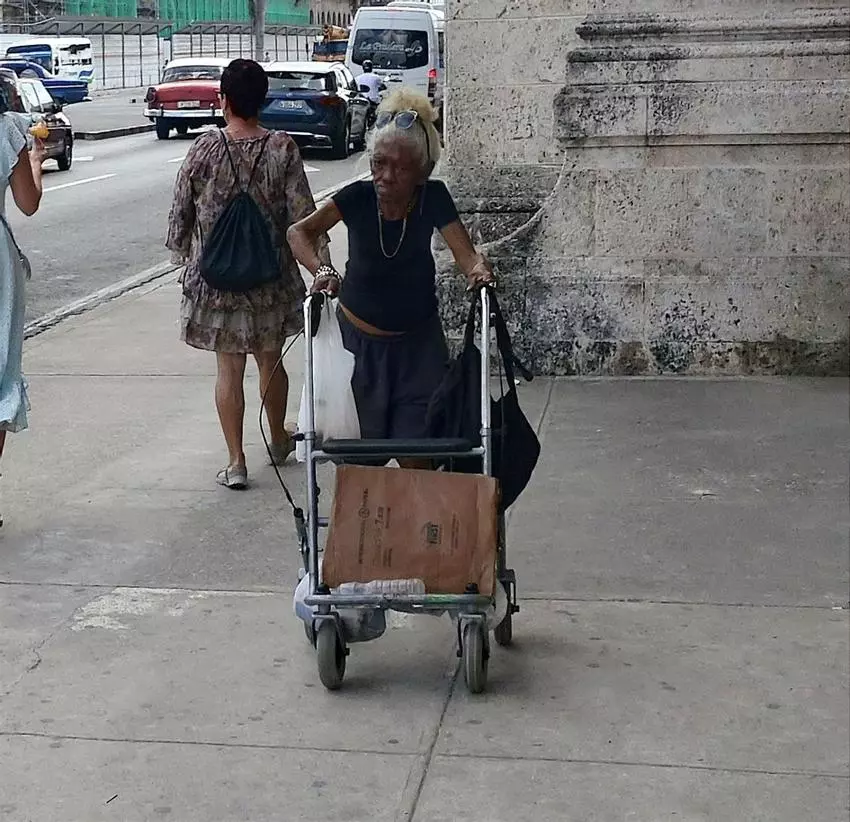
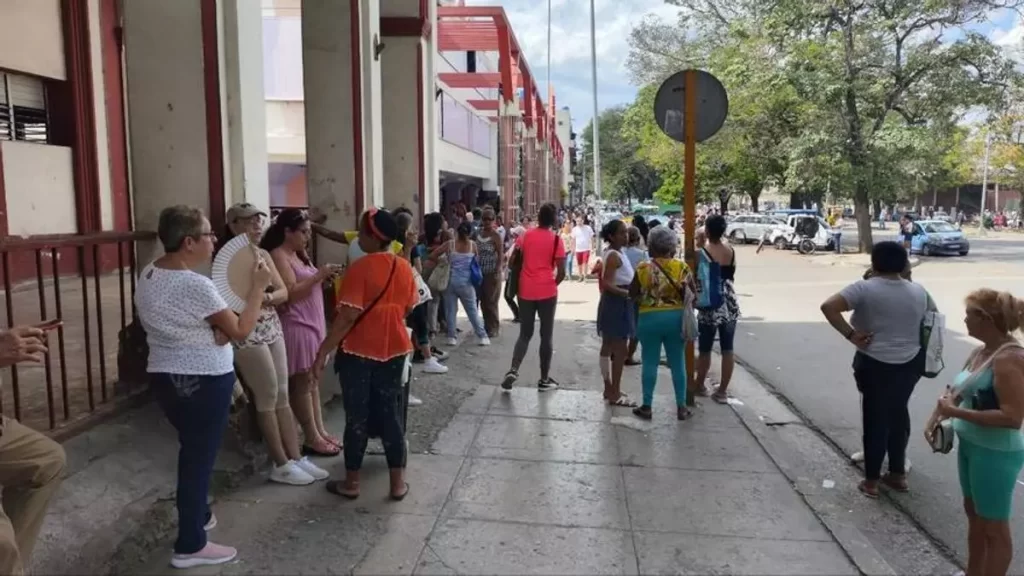
It is women who mostly stand in Cuba’s endless lines to get food / 14ymedio

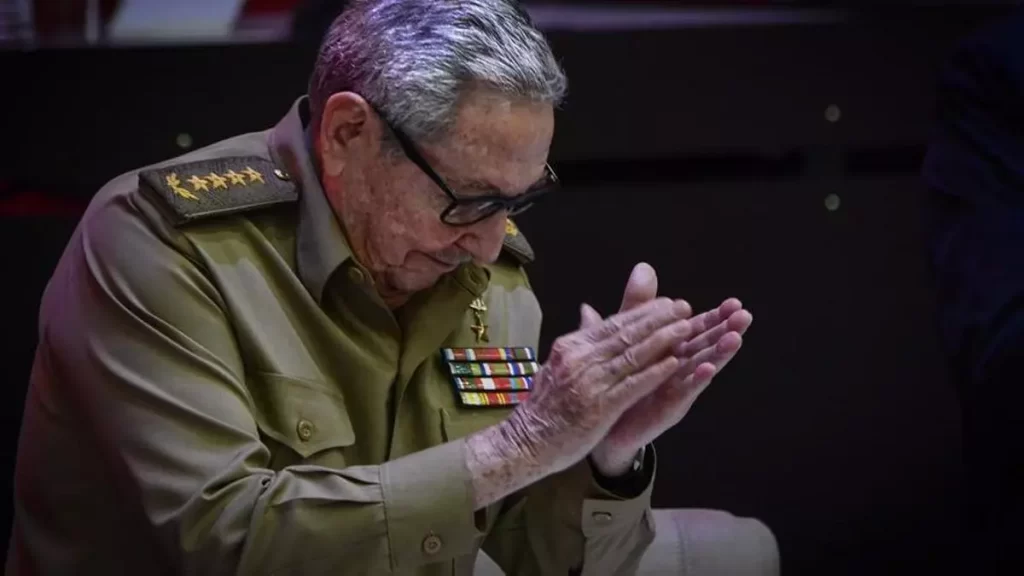
14ymedio bigger14ymedio, Juan Diego Rodríguez and Olea Gallardo, Havana, 8 March 2024 — The eleventh congress of theFederation of Cuban Women (FMC) was formally closed this Friday by the six men who govern the destiny of the country. The female quota in the presidium made up of Raúl Castro, Miguel Díaz-Canel, Esteban Lazo, Manuel Marrero, Roberto Morales de Ojeda and José Ramón Machado Ventura is covered by one woman: Teté Puebla, member of Las Marianas in the Sierra Maestra and first (and only) Brigadier general woman on the Island.

“The Feminist Path is Not Exclusive to Women,” the State newspaper Granma headlines its note on the occasion of March 8, in case things were not clear.

At the same time, the ruling FMC assures that “the development of scientific research is urgently needed to study the implementation of public policies with a gender perspective to move towards full equality.” And we must “overcome the meeting schedule.” And “update communication codes.”

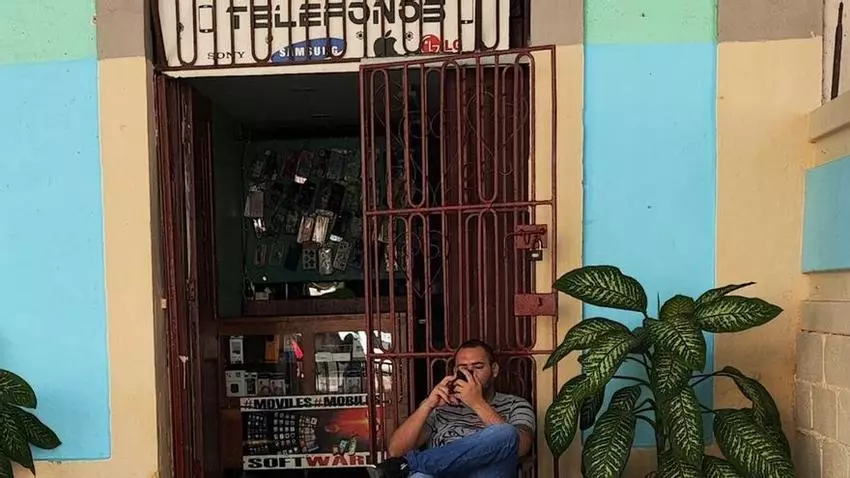
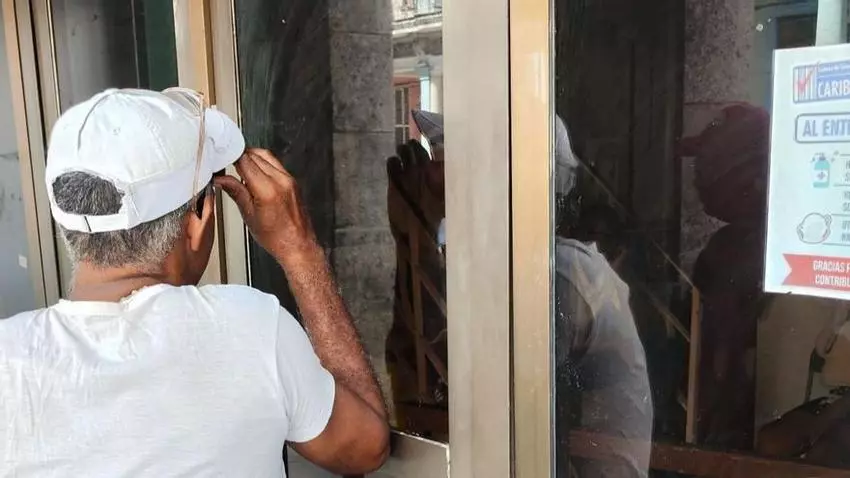
Far from so many words, the streets show that the face of Cuba, increasingly empty, increasingly poor, is that of a woman / 14ymedio

Far from so many words, the streets show that the face of Cuba, increasingly empty, increasingly poor, is that of a woman. It is women who continue reading

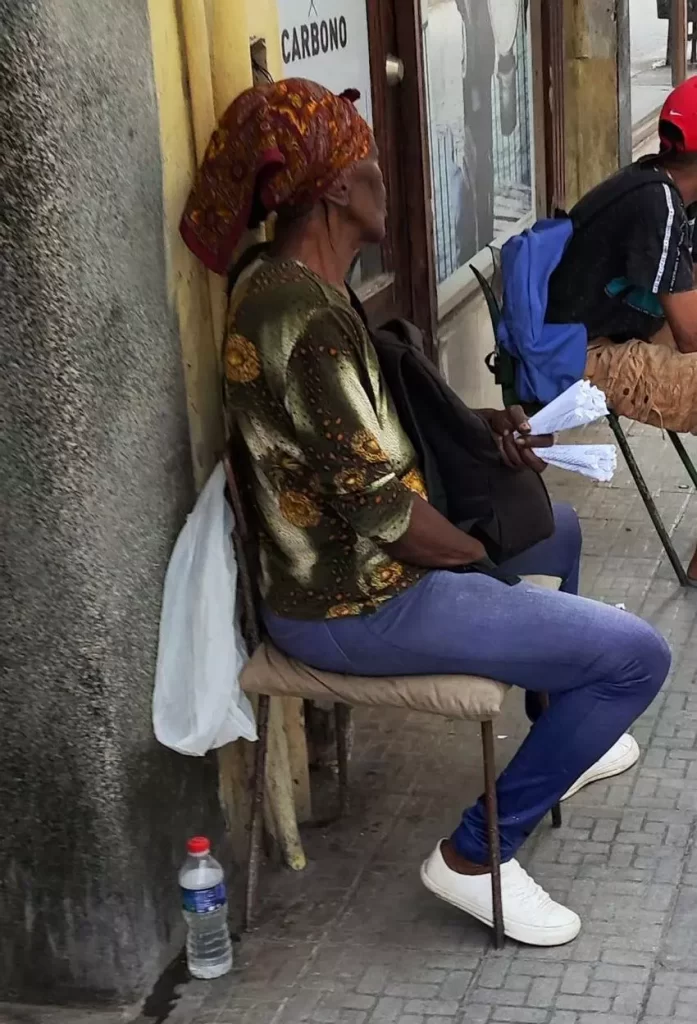
mostly stand in endless lines to get food. The oldest ones have to bring their own stool to endure the hours and the heat.

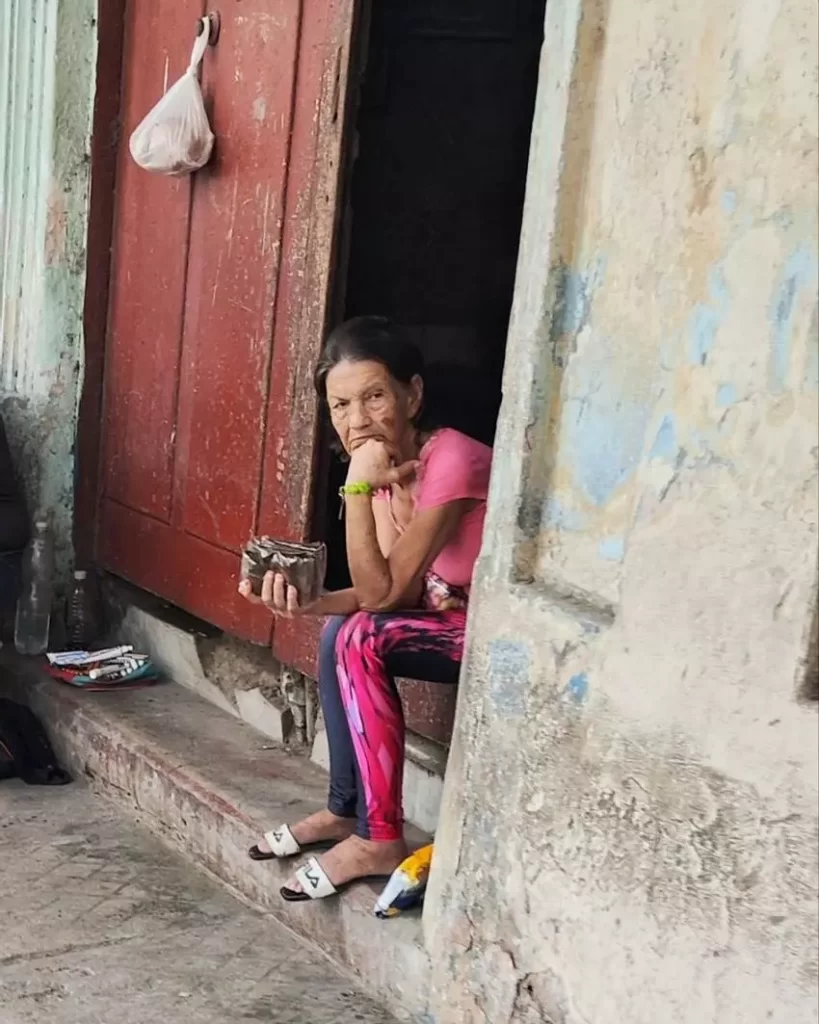
If you have to put a color on those faces, it is fundamentally dark. The color of those who cannot emigrate due to lack of resources / 14ymedio

If you have to put a color on those faces, it is fundamentally dark. The color of those who cannot emigrate due to lack of resources.

The oldest ones have to bring their own stool to endure the hours and the heat / 14ymedio

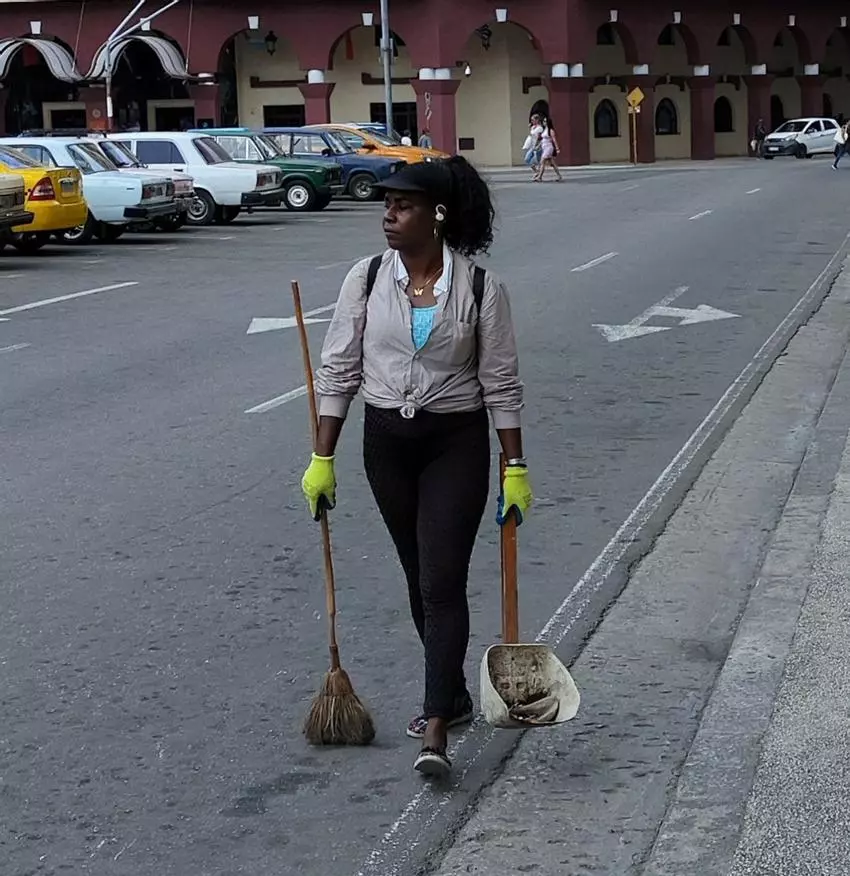
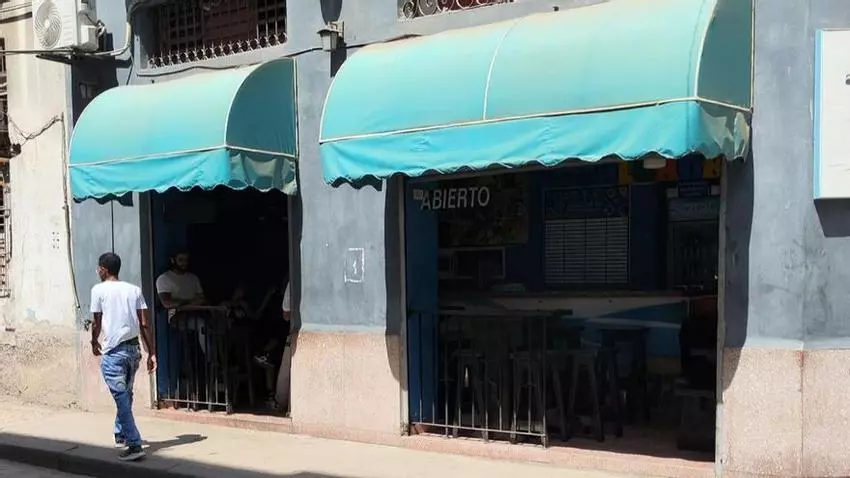
State workers, informal saleswomen or retirees – the luckiest ones, with emigrated families – all have poverty and boredom in common. Neither the FMC nor the men who protect it have solved their problems one bit in 65 years.

State workers, informal saleswomen or retirees – the luckiest ones, with emigrated families – all have poverty and boredom in common / 14ymedio

____________

COLLABORATE WITH OUR WORKThe 14ymedio team is committed to practicing serious journalism that reflects Cuba’s reality in all its depth. Thank you for joining us on this long journey. We invite you to continue supporting us by becoming a member of 14ymedio now. Together we can continue transforming journalism in Cuba.
The Smokescreen Expands: The Cuban Regime Asks for the Head of the Former Minister

“Corruption should not surprise us. We see it every day in the favors that certain children, grandchildren and nephews/nieces have,” says Mauricio de Miranda Parrondo. Photo: Raul Castro/ cdn.mediawpaccore.net

14ymedio bigger14ymedio, Madrid, 8 March 2024 — Two things have caught the immediate attention of the Cuban economist Mauricio de Miranda Parrondo in the brief statement with which the opening of an investigation against the former Minister of Economy and Planning Alejandro Gil was announced on Thursday. The first is the concern for what “the enemy” will say and not the Cuban people; the second, how much it reveals about the inability of the system to really fight corruption.

“As expected, the enemy will unleash a new propaganda campaign against Cuba, but our people, as we are accustomed to, will remain firm on the side of their Party and Government, faithful to the legacy of the Commander-in-Chief and the teachings of Army General Raúl Castro Ruz,” closes the statement, signed by the President of the Republic, Miguel Díaz-Canel.

“Really? Is that what the opinion polls say or are they no longer being carried out? The more than 500,000 Cubans who have left the country in two years selling houses and furniture don’t count? And are those who are silent out of fear also on the side of the Party and the Government or rant about it in a low voice in their kitchens as was the case in the former USSR?” wrote the economist, a professor at the Javeriana University of Cali (Colombia), almost immediately after he heard the news. continue reading

Do the more than 500,000 Cubans who have left the country in two years selling houses and furniture not count?

In an extensive reflection, shared on his Facebook page, the expert addresses the differences that exist in a case of corruption in a democracy and in a dictatorship without separation of powers. “There is corruption in almost every political system in the world. What happens is that this scourge has a propitious breeding ground in those countries where there are no independent legal controls and audit mechanisms.”

In case there were doubts, the official report makes it crystal clear that the investigation will be carried out “at the proposal of the Attorney General’s Office, the Political Bureau of the Central Committee of the Party and the Council of State,” which “approved that the competent bodies of the Ministry of the Interior initiate the corresponding actions for the total clarification of these behaviors.”

Contrary to other systems, in Cuba it is the Party and the Government who give the order to the Police to start an investigation, which means that nothing will ever be known that the authorities do not want known. “The explosion of scandals will depend on the ’scapegoat’ on duty,” warns De Miranda.

The economist recalls that this is not the first time that similar events have occurred in which defenestration is followed by a complaint for criminal offenses, but it is not explained how the Government trusts – publicly at least – that the population will defend the system from the enemy’s attacks when that same citizenry suffers the effects of a corruption that it sees on a daily basis.

“Corruption should not surprise us. We see it every day in the favors of certain children, grandchildren and nephews/nieces turned overnight into successful businessmen and true tycoons in the midst of the poverty of most of the country. And when I say poverty, I mean that even those who do not suffer from it are saved thanks to their FAITH (fe) that is, their relatives (familia) abroad (en el exterior).”

“Corruption should not surprise us. We see it every day in the favors of certain children, grandchildren and nephews/nieces turned overnight into successful businessmen”

“How did those children, grandchildren and nephews/nieces who become potentates in the blink of an eye originally accumulate the capital? Where did some get the money to build mansions to rent and others to develop prosperous businesses of all kinds, while those who are “less equal,” to paraphrase Orwell, suffer restricions”? he asks.

With little faith, the expert requests that what happened with Gil Fernández not be “a smokescreen” and that “the specific charges of which he is accused” be known.

That is, precisely, one of the requests that is most repeated in the more than 200 comments that the report has generated in Cubadebate since it was made public. Most of the readers of the official media have shown the desired adherence to a Revolution that, with the investigation of the former minister, is “relentless, ethical and transparent,” but the demand for explanations is a constant.

“There will be no trust unless the information is accurate and enlightening, taking into account Gil’s position and that his  performance affected the entire population,” says a commentator. Another asks for more details: “Yes, we need more information: What exactly did he do? How long did he do it? Did he do it with someone else? At that level, it seems impossible that someone else is not directly involved or that at least they have turned a blind eye. Transparency must prevail here! An important step has already been taken, but it is not over. And let the one who has to fall fall.”

“Don’t close the door yet, there are a few missing”; “They have to keep shaking the tree. There are many others like him, for sure”

That shadow of doubt is present in countless messages. “Don’t close the door yet, there are a few missing”; “They have to continue shaking the tree, there are many others like him, for sure”; “We must delve into the state of opinion of the population, who in different scenarios and moments express opinions about certain leaders and close relatives with indirect participation in private businesses. Anyone understands that behind these opinions there can be a whole enemy strategy, but be careful: sometimes, where there’s smoke, there’s fire.”

In the case of Alejandro Gil Fernández, whose personal matters are in fact unknown, the report speaks of “serious errors” but lets drop that corruption is being investigated, which, far from a mistake, is a crime. This has allowed an opening for many Cubans to start asking for everything to be reviewed.

“Research in depth the offers of premises and leases for private businesses. In Holguín there are many who are involved in this process, a tremendous amount,” says a message. “It is very easy to detect someone who is corrupt,” says another reader. “Follow those next to him, below and above him, many interact with him. Something has been going wrong for many years and we don’t realize it, or we don’t want to.”

On February 6, just four days after his dismissal, Gil Fernández received a warm congratulations from the ministry he headed for his 60th birthday. “Many congratulations on your birthday. Health and success in your new tasks. And as you well say: ’We are still fighting for our country and our Revolution’,” the organization wrote on its X account. The message was one of gratitude by the former minister, who called the department a “family” that he would always carry in his heart.

Less enthusiastic was Díaz-Canel, who wrote an extremely conventional message: “Another hug for Alejandro Gil on his birthday.” The president had already begun to get rid of his former subordinate.

Translated by Regina Anavy

____________

COLLABORATE WITH OUR WORKThe 14ymedio team is committed to practicing serious journalism that reflects Cuba’s reality in all its depth. Thank you for joining us on this long journey. We invite you to continue supporting us by becoming a member of 14ymedio now. Together we can continue transforming journalism in Cuba.

The Cuban Government Rejects 31 UN Recommendations on Human Rights

Rodríguez Parrilla was in charge of responding to the UN Periodic Review for Cuba

14ymedio bigger14ymedio, Madrid, 8 March 2024 — The Cuban Observatory of Human Rights (OCDH) reported on Thursday that Cuba rejected 31 recommendations from different countries to the Island during the Universal Periodic Review (UPR) of the UN Human Rights Council held in November.

The organization, based in Madrid, said in a statement that all the suggestions “pointed, precisely, to the hard core of repression in Cuba and demanded the release of political prisoners.”

Similarly, the OCDH also criticized the fact that the Island did not accept a request to “guarantee the necessary medical care to imprisoned political opponents.” continue reading

All the suggestions “pointed, precisely, to the hard core of repression in Cuba and demanded the release of political prisoners”

Last November, Cuba was submitted to the UPR, a review of the human rights situation that all countries carry out every four and a half years in the UN Human Rights Council, in which they receive recommendations from their peers.

Among the rejected recommendations is the Dutch request to “put an end to harassment, repression and arbitrary arrests (…)”; the Swedish, which requested the “access of independent observers (…) to trials and prisons”; the Spanish, which called for reforms to allow the “full exercise of freedom of expression, peaceful assembly and association”; and the American, to end the “one-party system and allow the holding of truly free elections.”

Despite this, the OCDH pointed out that the Cuban Government did assume 292 recommendations and “take note” of 41 others.

According to the latest data from the organization Prisoners Defenders, based in Madrid, there are 1,066 political prisoners on the Island, a large part of them participants in the anti-government demonstrations of July 11, 2021.

Translated by Regina Anavy

____________

COLLABORATE WITH OUR WORKThe 14ymedio team is committed to practicing serious journalism that reflects Cuba’s reality in all its depth. Thank you for joining us on this long journey. We invite you to continue supporting us by becoming a member of 14ymedio now. Together we can continue transforming journalism in Cuba.

Dozens of Cuban ‘Mules’ Are Trapped in Haiti Due to the Crisis of Violence

One of the groups of Cubans from Camagüey that was stranded in Haiti. / Screen capture

14ymedio bigger14ymedio, Madrid, 7 March 2024 — Some 258 Cubans remain stranded in Port-au-Prince, the capital of Haiti. The flight that was supposed to leave for Havana last Thursday, February 29, was hit by gunfire from armed gangs that have the country in a state of suspension. Haiti is a destination coveted by mules for their purchases, but the violence has led to the cancellation of all flights.

Cuba’s Minister of Foreign Affairs, Bruno Rodríguez, said on Wednesday that the Embassy “is making arrangements to guarantee the safe return of Cubans residing and in transit in that country, in the face of the increase in violence by criminal gangs and clashes with law enforcement.”

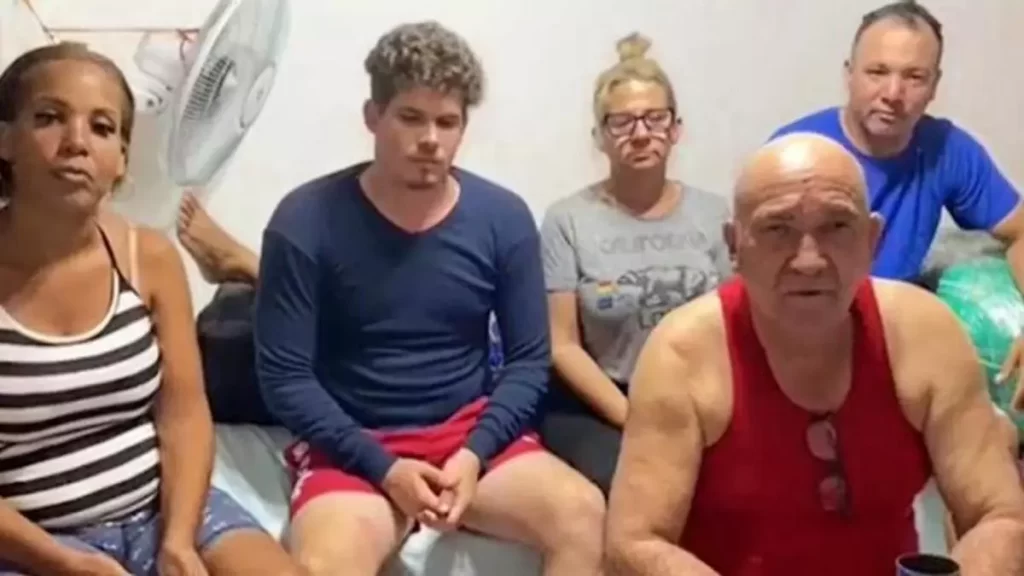
The minister stated that the situation of the Cubans is being addressed precisely on the day that some of those affected began to make their situation public through videos disseminated on their social networks. Among them there are groups from Havana, Camagüey and Santiago that have shared their situation, which they describe as distressing due to the lack of explanations from the airline and the climate of insecurity that has led the Haitian authorities to declare a state of emergency.

“We are here practically without resources, and we want to know if Sunrise Airways will respond and send us a flight”

“We are practically without resources, and we want to know if Sunrise Airways is sending us a flight because we haven’t received any communication from them. They sent us home without a response; they don’t answer our emails and don’t respond to messages,” says one of continue reading

the victims. “Thankfully, we have a friend who takes care of the rent and is making a great effort to bring us food,” adds another. “We need answers of any kind, both from the Cuban Government and from Sunrise Airways.”

In another video, a man from Camagüey whose flight was canceled on Friday, March 1, complains that the airline doesn’t respond at all and their families are worried. They themselves are afraid.

Sunrise Airways, a Haitian company that maintains several routes to Cuba, released a statement last Tuesday in which it asked that it be contacted by email or instant message to reschedule their flights. “Dear passengers, please keep in mind that, for security reasons, all our flights are suspended until further notice. Please contact us to reschedule your flight. We appreciate your understanding and apologize for any inconvenience,” reads the short text.

Fifty affected people have reacted, demanding that their money be returned and that they be immediately provided with transport, but the airline insists on saying that the situation exceeds its capacity, since it is about the safety of passengers and crew. In addition, and to the disappointment of travelers who threaten to sue, the company specifies that the terms and conditions of ticket purchase indicate that there is no refund, and it posts a link where passengers can verify the statement.

The Cuban consular headquarters in Port-au-Prince stated that they maintain contact with the Association of Cubans in the country. “We are following up on the situation of Cubans residing and in transit in Haiti, and steps are being made to guarantee the safe return to Cuba of our nationals,” it said on social networks.

The embassy has asked relatives and interested parties to contact them through emails that it has provided

According to the independent media Cubanet, a family member of those affected got a response from the authorities. “At the embassy in Havana they called the representative of Sunrise Airways, which they normally use to travel, and they said that two small Cuban planes, each with a 60-passenger capacity, were going to return for the Cubans, starting with Santiago de Cuba, Holguín, Camagüey and finally Havana, but only after the situation in Haiti was normalized. In other words, they don’t know when it will happen.”

For his part, the Haitian counsel in Havana “promised to try to manage a way to get them to the Dominican Republic by a humanitarian corridor, but the approval of that country is needed.”

According to the Spanish agency EFE, on Wednesday Port-au-Prince experienced one more day of shootings, looting and incendiary acts and is waiting for new measures to be implemented. Institutions, public and private companies, shops and educational centers kept their doors closed in the city, where public transport barely works and the water crisis is aggravated.

The police seem to have practically lost control, and the authorities are totally powerless in the face of armed gangs that kidnap, burn, rape, steal and kill, while the population flees and the health system is under great pressure, according to the NGO Doctors without Borders.

“The collapse of the State has reached a new level,” said the Haitian Federation of Bar Associations yesterday, calling for signs of “courage and imagination when it comes to tracing new paths towards the restoration of peace and democracy, with the Government, with Henry at the head of it, recognizing that its place is no longer here.”

Since the assassination in July 2021 of President Jovenel Moïse, Ariel Henry is the highest authority in the country, with no counterweights and without a legal framework. During these 32 months, the situation has not stopped deteriorating, and now it has become worse, with Henry out of the country after attending the Caribbean Community (Caricom) summit in Guyana and traveling to Kenya to agree on the latest details about the multinational security support mission approved by the UN that Kenya will lead.

Now Henry is in Puerto Rico, where he landed on Tuesday after not being able to go to the Dominican Republic and after several days of his whereabouts being unknown.

Translated by Regina Anavy
____________

COLLABORATE WITH OUR WORKThe 14ymedio team is committed to practicing serious journalism that reflects Cuba’s reality in all its depth. Thank you for joining us on this long journey. We invite you to continue supporting us by becoming a member of 14ymedio now. Together we can continue transforming journalism in Cuba.

Alejandro Gil Will Not Be the Only One To Fall

It is not very credible that such a hierarchical corruption plot can be carried out without others noticing or knowing it.

14ymedio bigger14ymedio, Havana, Reinaldo Escobar, 8 March 2024 — An unusual “official note” made public the depth of the fall of Alejandro Gil Fernández, Cuba’s now ousted Deputy Prime Minister and Minister of Economy and Planning. Readers of the the Communist Party press already know that this headline discloses the most important information, but this note was not signed by a ministry or a state entity, but by the leader of the Government and the Communist Party of Cuba (PCC).

Miguel Díaz-Canel had congratulated Gil a month earlier on his 60th birthday and in another tweet, where the president was delicate with defenestrated ministers, including Gil, when he told them: “They gave their energies in very hard years for the country. They will have tasks to continue doing for Cuba.”

The March 7 note  is obscure and imprecise. It does not reveal who was in charge of the “rigorous investigation” that determined the “serious mistakes” made by Gil in the performance of his duties. Later it adds that, given “the level of verification of the facts, and at the proposal of the Attorney General’s Office,” the Political Bureau and the Council of State approved that the Ministry of the Interior initiate “the corresponding actions for the clarification of these behaviors.” By the way, the mistakes made in the exercise of a position are not conduct or crimes.

Here you have to ask yourself not only who carried out the rigorous investigation but who approved it. Rumors point to a namesake of Alejandro, who, it seems, has the power to investigate without waiting for permission.

Although they are different cases, today the same questions that surrounded the so-called Case number 1 of 1989 are reopened.

The lack of precision becomes more evident when one tries to identify the nature of the facts with the mention of three generalities taken from a moral code: “corruption, pretense and insensitivity.” They are mentioned as part of the ethics of the Revolution that “has never allowed, nor will ever allow them.” The president (Díaz-Canel) lacked “revolutionary firmness” by limiting himself to these insinuations. continue reading

What is most heard right now in the streets of Cuba are questions, and the most frequent refer to whether other heads will roll below and even above the level of the accused former minister. It is not very credible that such a hierarchical corruption plot can be carried out without others noticing or knowing it.

Although they are different cases, today the same questions return as those that surrounded the so-called Case number 1 of 1989*, which began on June 14 with an informative note from Granma and ended on July 13 with the execution of the main characters involved.

If, under the accusation of breaking the stained glass window of a commercial establishment in the middle of a citizen protest, several people have been sentenced to prison terms of 12 or 15 years, what will be the request of the Prosecutor’s Office for Alejandro Gil and his accomplices? Will there be a public trial? Who is going to sign the next “official note”?

*Translator’s note: A reference to General Arnaldo Ochoa, who was found guilty of drug smuggling among other crimes and was executed by firing squad.

Translated by Regina Anavy

____________

COLLABORATE WITH OUR WORKThe 14ymedio team is committed to practicing serious journalism that reflects Cuba’s reality in all its depth. Thank you for joining us on this long journey. We invite you to continue supporting us by becoming a member of 14ymedio now. Together we can continue transforming journalism in Cuba.

Former Cuban Minister of Economy Alejandro Gil is Being Investigated for Corruption

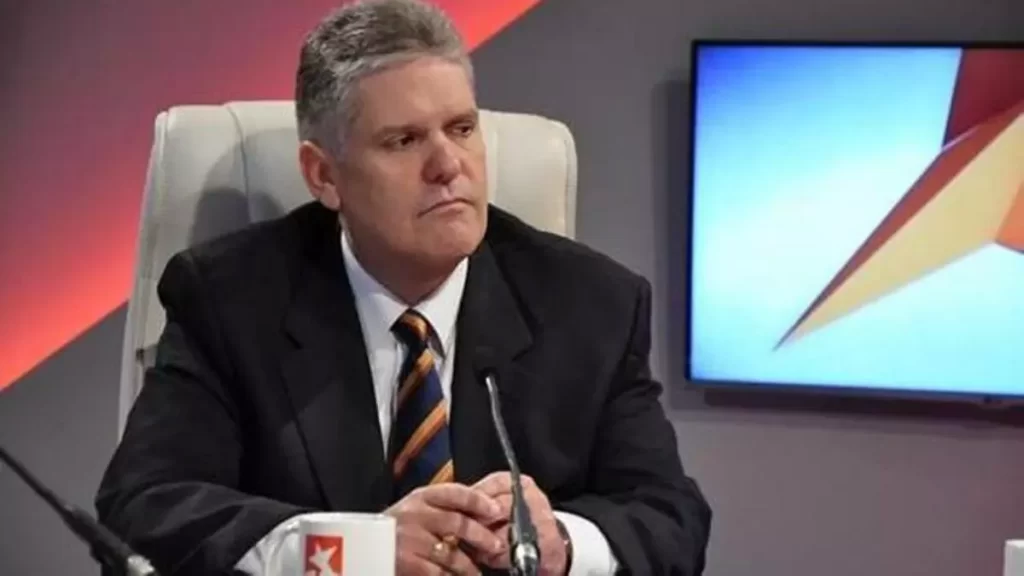
Alejandro Gil, during one of his many speeches on Cuba’s State TV Round Table program (Screen capture)

14ymedio bigger14ymedio, Havana, 8 March 2024 — The Cuban Government announced a criminal case for corruption against Alejandro Gil Fernández, who until last February 2 was Cuba’s Deputy Prime Minister and Minister of Economy and Planning. According to a brief note published by the official press, on Thursday night, and signed by Miguel Díaz-Canel, Gil is being investigated for “serious mistakes made in the performance of his duties.”

The statement specified that the regime’s action was taken after a “rigorous investigation” and “taking into account the level of verification of the facts.” Díaz-Canel approved an investigation carried out by the Ministry of the Interior “for the clarification” of Gil’s behavior.

Díaz-Canel said that the Party and the Government have “never” allowed, “nor will they ever allow, the proliferation of corruption, pretense and insensitivity,” without giving more details of the crimes for which the former official will be prosecuted.

He also said that the regime “will maintain, from legality, the permanent confrontation, transparency and zero tolerance for these types of incidents that affect” the people, and “the higher the level of trust placed in an official, the greater the rigor and intransigence with which action is taken in the face of events of this nature.” continue reading

Gil is being investigated for “serious errors made in the performance of his duties”

Gil acknowledged the “serious accusations” of his conduct, so, says Díaz-Canel, the official “resigned” days ago “in his capacity as a member of the Central Committee of the Party and as a deputy to the National Assembly of People’s Power.”

In concluding, Díaz-Canel, who is also the first secretary of the Central Committee of the Communist Party, said that “the enemy will unleash a new propaganda campaign against Cuba,” but dared to predict that “the people, as always, will remain firm on the side” of the regime.

Until the beginning of last month, Gil was one of the key men of the regime. When he was appointed Minister of Economy and Planning by Díaz-Canel in 2018, he was an unknown. The following year he  added the position of deputy prime minister. A survivor of several crises, including the debacle after the so-called Ordering Task,* his lucky streak ended after taking responsibility for el paquetazo — the package of measures that the Cuban Government implemented in the last three years.

As a regular guest of the Round Table program, Gil’s apparent optimism when announcing each measure seemed bulletproof, even in the face of the craziest plans. His sister, María Victoria Gil, gave the best definition of what the “smiling minister” came to represent: he is one of the “most hated” by the people along with Díaz-Canel and Manuel Marrero, she said in an interview.

María Victoria Gil announced three days ago that she was leaving for Cuba from Spain, where she resides. Her last appearance on social networks was on a plane that was going to fly to Havana, but since then nothing more has been known of her.

*Translator’s note: The Ordering Task is a collection of measures that include eliminating the Cuban Convertible Peso (CUC), leaving the Cuban peso (CUP) as the only national currency, raising prices, raising salaries (but not as much as prices), opening stores that take payment only in hard currency, which must be in the form of specially issued pre-paid debit cards, and a broad range of other measures targeted to different elements of the Cuban economy. 

Translated by Regina Anavy

____________

COLLABORATE WITH OUR WORKThe 14ymedio team is committed to practicing serious journalism that reflects Cuba’s reality in all its depth. Thank you for joining us on this long journey. We invite you to continue supporting us by becoming a member of 14ymedio now. Together we can continue transforming journalism in Cuba.

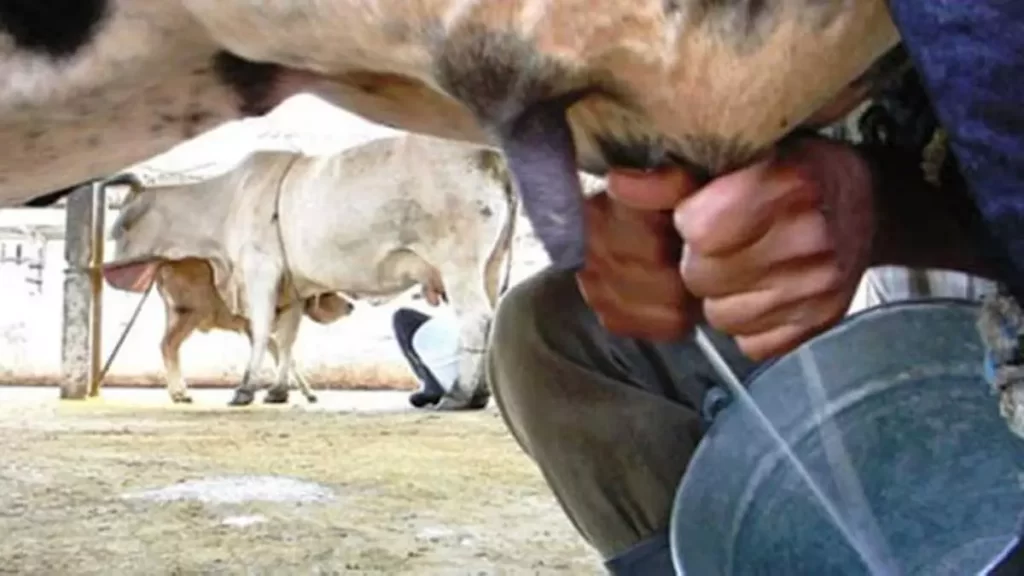
In Addition to Being Scarce, the Milk in Cuba Is Adulterated

Veterinarians warn that stress puts the health of cows at risk. (Escambray)

14ymedio bigger14ymedio, Madrid, 7 March 2024 — The dairy industry in Ciego de Ávila receives 12,300 liters (3,249 gallons) of milk every day, half of what it should have, about 24,000 (6,340 gallons), for children under seven years old, special medical diets, and consumption in hospitals and centers for the elderly. The established plan is 17,500 (4,623 gallons), but the producers don’t deliver what they contracted with the State.

This situation produced a lot of talk this week about the difficulties in meeting the needs of the population that was guaranteed milk, which forced the Government to ask for formal help from the UN World Food Program.

In that context, powdered milk will be delivered only to babies through seven months, while the others must have fluid milk, which is in short supply. The data come at the end of an extensive report by the newspaper Invasor, which brings up another important issue about the milk: its adulteration. The report traces in detail a chain, apparently impeccable, in which it is difficult to find – if it works so well – the point where the milk is mixed with water or other substances that can even put health at risk.

It is difficult to understand why such a well-oiled system has so many known frauds and why so few offenders are detected.

It’s not a minor problem and is denounced by a large part of the population. The report, entitled “Water and Other Milk Demons,” begins by saying, “The history of the adulteration of cow’s milk is as old as the very act of milking that ruminant, and it turns out that when demand increases and the product is scarce, the easiest way for a cheater, or several, is to add water and other demons to ’stretch’ it and increase profits,” says Invasor. continue reading

The tracking begins when the drivers arrive with the milk at the Dairy Products Company. “If the microbiology laboratory determines irregularities in any part of the trip, the next day an inspector of the Dairy Community Business Unit or a member of the board of directors of the entity accompanies that driver and takes the corresponding samples to analyze them.” Another point of interest is the inspection of producers to verify that milking takes place in the required hygienic-sanitary conditions.

According to the managers of the sector, the chain reaches the ration stores, and samples are again taken “to check if there is correspondence between what comes from the dairy and what is collected, and if it is given directly to the consumer.” Finally, there is talk of an agreement with Commerce to place inspectors at the points of sale. “It may be that the chain until one in the morning is fine. Our driver leaves the collected milk without alterations and when the ration store dispenses it, it is now altered,” adds the director of the provincial dairy company, Rubén Pina.

In the places of collection, say the managers, there are refrigerators that have a lactodensity meter, and there is also a sampling program along the routes. In addition, each municipality has – or must have – a laboratory to check the milk, and the citizens themselves have the right to go, product in hand, to demand that theirs be analyzed.

The low birth rate and the well-known problems of livestock – from theft to malnutrition – affect the figures.

It is difficult to understand – and in this Invasor agrees – why such a well-oiled system has so many known frauds and why so few offenders are detected. But the situation begins to be better understood when one reads further, in addition to the corruption that corrodes the entire system. “We regret, says an employee of the sector, that the provincial industry lacks the equipment needed to determine the addition of other products, such as cassava starch, lime, water and urea.”

The interviewees affirmed that the limitations of resources and more sophisticated technologies prevent the detection of some problems, and the shortage of plastic bags favors adulteration. “We have a very hard fight when we detect on the routes that the milk is adulterated, mainly with water and salt,” adds a specialist.

Maritza Valladares Quiñones, a dairy microbiologist, states that farmers are required to have milk with 1.030 kg (2.3 pounds) of weight (density) and a minimum of 3.2% fat, so that they can then mix it with pasteurized skim and reach 2.4%.

Presently, a ton of powdered milk on the international market is sold at $3,300 to $3,500, says the deputy director general of Economy and Planning in Ciego de Ávila, José Lemos. That amount, he maintains, rises to $4,000 in the case of Cuba, due to the embargo, defined by the official as “economic and financial persecution to which it is subjected by the coercive measures of the blockade of the Washington Government.”

That fact, despite the help of the World Food Program, purchases from some countries (including the United States) and the support of Sancti Spíritus, which provides 3,000 liters (793 gallons) of milk per day, has led the provincial authorities to restructure milk deliveries, as explained weeks ago.

The farmers are also present in the text, in which the alleged exclusive benefits of cow’s milk are provided, increasingly discussed compared to vegetable alternatives. They explain that each cow gives an average daily yield of 2.3 liters (.6 gallons), which could be four more if they had better food and more attention paid to their rumening (digestive) schedules. In addition, the low birth rate and the well-known problems of cattle – from theft to malnutrition – affect the figures.

In the last 12 years, the livestock mass in Ciego de Ávila decreased by more than 5,100 per year, and in 2023 by more than 13,000 animals.

Basilio González Adega, a veterinary doctor interviewed by the media, explains that stress on the animals makes even fertility a “luxury” and clarifies that, of those that are pregnant, “more than 10% abort because of the trauma caused by the more than 13 hours without food and water when they are put inside to prevent theft or slaughter.” For all these reasons and others, mortality is increasing.

“If our cattle slept in paddocks, the birth rate would be 10% or 15% higher and deaths 2% lower; the animals that are slaughtered would reach 30 kilograms (66 pounds) or more in weight; and each cow would give, at least, one more liter (33.8 ounces) of milk,” he emphasizes. According to this tale of the milkmaid,* 6,300 cows would be born; there would be 427 tons of meat, cows would deliver 4 million liters (1,056,688 gallons) of milk; and deaths would drop by 3,446.

But as in the story, the pail spills and the reality is different. In the last 12 years, the livestock in Ciego de Ávila decreased by more than 5,100 head per year, and in 2023 by more than 13,000 animals, which would lead, if this continues, to the disappearance of dairy farming in the next 25 or 30 years.

*Translator’s note: Aesop’s Fables: A cautionary tale of a milkmaid who was so distracted thinking about her future profits she spilled the one pail of milk she actually had.

Translated by Regina Anavy

____________

COLLABORATE WITH OUR WORKThe 14ymedio team is committed to practicing serious journalism that reflects Cuba’s reality in all its depth. Thank you for joining us on this long journey. We invite you to continue supporting us by becoming a member of 14ymedio now. Together we can continue transforming journalism in Cuba.

In Cuba, Private Fishermen Will Be Able To Sell Their Catch Without a State Contract, Except for Lobster

The marketing of fish must be subject to the decisions of local governments and there will be a “quarterly reconciliation process” / 14ymedio

14ymedio bigger14ymedio, Havana, March 5, 2024 — The Government has definitively eliminated the obligation for private fishermen to contract with a State company authorized for commercialization to receive a fishing license. This resolution, published on Monday in the Official Gazette, is a measure that was taken provisionally in 2022, but it leaves out the star product of the Cuban seas: the lobster.

The text details that the species that can be freely fished are “fish, tuna, oysters, clams, crab and marine shrimp, in this case, outside the coastal lagoons, in the waters of the Island platform.” Meanwhile, marketing must be subject to the decisions of local governments in each case, and there will be a “quarterly reconciliation process” between the National State Inspection Office and the fishermen on the catches made by delivering an affidavit.

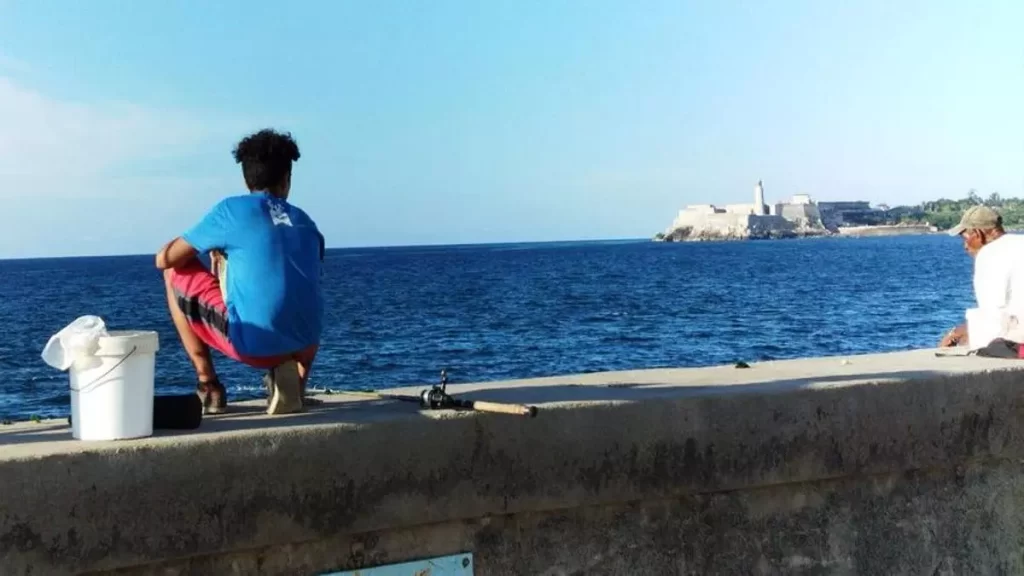
The current resolution puts an end to the limbo in which the fishermen had remained since the beginning of 2024, since the previous one ended on December 31, 2023. That document was received with enthusiasm at the time by the population, who did not cease to point out the delay in relaxing some limitations that, in their opinion, tied the hands of thousands of workers in the fishing sector. The consequence was the unprecedented situation of barely any fish to eat in a country surrounded by the sea.

But despite this good step, the faint liberalization has not had any visible effect in the year and a half that it has been approved. According to data from the Ministry of Food, fish consumption in Cuba fell from an annual average of 39.7 pounds per capita three decades ago to about 8.4 pounds per capita in 2022. The figures for 2023 are still unknown, but nothing predicts that they are positive. continue reading

The sector will not recover the levels of production experienced in the 1990s, when Cuba extracted 100,000 tons of fish from international waters

Although the fishermen have been warning for years that the State pays them – like farmers – little and late, officials have almost exclusively attributed the fall of the fishing sector to the deficiencies of the fleet. “Between 1976 and 1990 we had a fleet that fished in international waters. Cuba thus received about 100,000 tons of fish annually. From 1992 there was a gradual withdrawal of this fleet, and in 2002 we had practically no active fleet,” said the deputy minister at a Round Table in the middle of last year.

Shortly before, in December 2021, Ariel Padrón Valdés, director of Fisheries Regulations and Sciences of the Ministry of the Food Industry, warned that the sector will not recover the levels of production experienced in the 90s, when Cuba extracted 100,000 tons of fish from international waters, more than 70,000 from Cuba and 33,000 imported.

Faced with this scenario, the authorities have chosen to resort to aquaculture, but the deterioration has also reached this modality. In 2022, the province of Sancti Spíritus barely reached 57% of the expected production due to the lower presence of species, the shortage of fuel to carry out the extraction work and the lack of maintenance of the dams.

The liberalization of the sector may not be working due to the low State payments, ridiculous if compared to what a private company offers. In a report published by this newspaper in January, several fishermen from Manzanillo (Granma) said that the Fishing Combine pays less than 2,000 pesos for each ton of fish caught; that is, less than one peso per fish. “This forces us to sell to private individuals, who buy it from us at 200 pesos per pound. Then they resell it.” Others, they added, manage to do “a good business with some owner of a private company, who buys their whole catch.”

Meanwhile, the lobster and pink shrimp – which will continue to be subject to current regulations – are an extraordinary source of foreign exchange for the State, and fishing companies, such as Santa Cruz del Sur, in Camagüey, tend to catch even more than expected. In 2019, the Government of Cuba earned 63 million dollars per year for the export of lobster and shrimp, the last year for which a figure is available.

Translated by Regina Anavy

____________

COLLABORATE WITH OUR WORKThe 14ymedio team is committed to practicing serious journalism that reflects Cuba’s reality in all its depth. Thank you for joining us on this long journey. We invite you to continue supporting us by becoming a member of 14ymedio now. Together we can continue transforming journalism in Cuba.

Blackouts Come to Havana While the Rest of Cuba Sinks Into Darkness

Store that required payment in MLC (freely convertible currency) on Belascoaín Street in Havana, closed due to lack of power on March 7, 2024

14ymedio bigger14ymedio, Natalia López Moya, Havana, 7 March 2024 — Without much notice or publication of the schedule, long blackouts have returned to Havana. The Cuban capital, which for weeks had the privilege of electricity while the provinces sank into power outages of more than ten hours a day, has not managed to avoid the crisis caused by fuel shortages and the deterioration of the Island’s thermoelectric plants.

This Thursday, last summer’s events were repeated in the most populous city in the country. Outside a private store on Carlos III Avenue in Central Havana, a bored employee waited in the dark, trying to avoid the heat. Behind him, the name of Las Columnas (The Columns) was displayed on a counter, along with cell phone cases, charging cables, devices to measure the number of steps that are taken each day and some bluetooth speakers.

All the products for sale in the small business require a connection to electricity, at least to be charged. An electricity that the people of Havana are beginning to lack, even in neighborhoods that in previous years were “forgiven” from power cuts due to the presence of several hospital centers or an underground electricity system, so obsolete that the authorities themselves fear turning it off.

14ymedio

“I walked near the Hermanos Ameijeiras hospital; the whole area was in the dark, and you couldn’t hear the power plant that sounds like a dragon; when it’s on you can hear it for several blocks,” a retiree told this newspaper. She was frustrated when trying to get her pension out of an ATM on nearby Belascoaín Street; it was out of service due to lack of power. continue reading

The famous La Cubana hardware store, on the corner of Reina and Lealdad streets, popularly known as Feíto and Cabezón, was also closed to the public due to the blackout. Despite selling its products in freely convertible currency (MLC), a modality designed for those who have income in foreign exchange, the premises lacks a generator that would allow it to continue operating in these circumstances.

The customers who arrived looked through the entrance windows with frustrated expressions, trying to spot the merchandise they had come to buy or if any employee deigned to approach and give an explanation about the time of the possible reopening. “It’s the same old song. If the blackout continues after two in the afternoon, they will probably not attend to anyone else,” said a man who moved there from Cojímar in Habana del Este. “They told me that there was a piece here that I need for the sink but it has been a total frustration.”

The famous La Cubana hardware store, on Reina Street on the corner of Lealtad Street, popularly known as Feíto and Cabezón, was also closed to the public due to the blackout / 14ymedio

In La Algarabía, a private cafeteria on Neptuno and Escobar streets, also in Central Havana, silence was the tone of the morning. There were no customers at the tables, in the dark despite the strong sun outside, and the workers sat near the entrance, waiting for the electricity to return. “Without light there is no profit; without light nothing happens,” said one of them.

A map of part of the city, with zone 1 surrounded by red, became popular this Thursday in several WhatsApp groups. The image warned about the neighborhoods that were without electricity, a mapping of the blackout  which the eyes of the residents of Havana must get used to again so they can plan their lives accordingly.

This Thursday, the same thing was experienced during the six-hour blackout by the residents of La Timba, one of the poorest neighborhoods in the Plaza de la Revolución municipality, despite its proximity to the Council of State. The well-to-do residents of Kohly Avenue in Nuevo Vedado were also affected. The tall buildings near Tulipán Street and Boyeros Avenue, built in the years of the Soviet subsidy, was the worst hit due to the paralysis of the elevators, indispensable to access the higher floors.

The famous La Cubana hardware store, on the corner of Reina and Lealtad streets, popularly known as Feíto and Cabezón, was also closed due to the blackout. (14ymedio)

“To top it off yesterday, no water arrived, so today we’re in a blackout and without water. We don’t know if, when the electricity returns, the cistern will have been able to fill up or not,” complains a resident of the 18-storey building located on Factor Street, near Conill, known as “the pilots’ building” by the professional sector that benefited from its apartments in the 1980s.

On social networks, residents of other provinces barely hid their joy because the Cuban capital finally has joined them in the energy crisis. “Ah, in Havana the power is also going out,” said a netizen on the Facebook page of the unpopular Electric Union of Cuba, which predicted a deficit of 1,210 megawatts for this Thursday. But beyond the regional rivalries, the signal sent by the Havama blackouts was “bad for everyone,” summarized another commentator.

“If there are now blackouts in Havana, what awaits the rest of Cuba is total darkness,” a woman predicted.

Translated by Regina Anavy

____________

COLLABORATE WITH OUR WORKThe 14ymedio team is committed to practicing serious journalism that reflects Cuba’s reality in all its depth. Thank you for joining us on this long journey. We invite you to continue supporting us by becoming a member of 14ymedio now. Together we can continue transforming journalism in Cuba.

The Dollar and the Euro Are on the Way to Reaching 340 Cuban Pesos in March

In February the euro reached 320 pesos, the dollar reached 314, and the MLC reached 268. / EFE

14ymedio bigger14ymedio, Havana, 6 March 2024 — Among the Government’s pending and urgent tasks, said Cuban Prime Minister Manuel Marrero on Monday, is “the restructuring of the foreign exchange market,” set for February. Now in March, and without measures on the horizon, it is impossible to contain. In the midst of government inaction, the escalation in the price of foreign exchange is unstoppable, and the forecasts of the Observatory of Cuba’s Monies and Finance (OMFi) predict that both the euro and the dollar could exceed 340 pesos in the informal market this month.

In its monthly report, the OMFi, an independent project promoted by Cuban economists and journalists to provide information about the foreign exchange market and the evolution of the country’s financial and economic indicators, states that in February the euro reached 320 pesos, while the greenback (US dollar) reached 314 and the MLC (freely convertible currency) reached 268, which meant a depreciation of the national currency by more than 8% with respect to the foreign currencies and 5.1% in relation to the virtual MLC. Despite the disastrous data, it is a relief compared to the month of January, when the peso lost 18.5% of its value against the dollar and 17.6% compared to the euro.

“Due to the constant informal depreciation of the peso and the inaction of the economic authorities in terms of exchange rate policy, the gap between the multiple exchange rates in the economy continues to widen,” says the document, signed by the Cuban economist Pavel Vidal, a resident of Colombia. continue reading

The OMFi estimates that in March there will be, on average, a new devaluation of the national currency

The OMFi, which manages a model by which it predicts the depreciation of the peso, estimates that in March there will be on average a new devaluation of the national currency of 8% with respect to the euro and 9% against the dollar, with a maximum of 340 pesos or 330 in a more conservative scenario. According to its analysis, the consistent devaluation shows that there are no speculative factors behind the rise, but that its origin is related to “the permanence of fundamental imbalances connected with the crisis in national production, inflationary pressures and limited foreign exchange income in the economy.”

The argument responds, possibly unintentionally, to the constant accusation from the ruling party towards El Toque – which is part of the OMFi – of speculating with exchange rates by forcing a rise. In mid-2023, the independent media was the subject of criticism from the official Razones de Cuba, which accused it of cooperating with the United States in its “unconventional war” to force a social crisis. El Toque has explained its method of analysis and calculation to eliminate any unfounded suspicion, but the regime does not ease off. This same Tuesday, its Facebook account returned to the attack.

“What do you know about the induced inflation operation carried out by the CIA and carried out by El Toque? Inflation in Cuba is being generated, induced, with criminal manipulation of the exchange rate,” said the regime’s media. The objectives are to “attack the currency, not only to generate hyperinflation, but to contract production; to alter the distribution of goods, take them to informal markets and sell them at inflated prices; and, basically, to attack the economic measures of the Cuban Government.”

To the surprise of few, the publication has received an avalanche of responses in which users, loading their comments with irony, question the media for attributing so much power to an independent website and such little power to a Government with all the devices of the State in its hands.

“More than the objectives (of El Toque), they should explain how they do it, and how the Government is unable to counteract it,” says one of the most moderate. Because what is more than evident is the Government’s inability to take effective measures to stabilize the currency. By the way, El Toque has explained its methodology to the point of exhaustion and is quite convincing. The Government has no explanations and takes measures without listening to renowned national economists.”

The OMFi report points out that the most recent changes in tariffs, taxes and prices have been processed by the market “in an orderly manner,” but this could change depending on the decisions made by the Government, in addition to the uncertainty with which the market reacts to its policies.

The most recent changes in tariffs, taxes and prices have been processed by the market “in an orderly manner”

The coexistence of three rates for the currency, two official – 24 and 120 pesos for 1 dollar – and an informal one that is, in practice, the most widespread – by private and in current transactions – coupled with the de facto dollarization of the economy “distorts the relative price signals on which the productive sector and consumers must make decisions,” the report adds. This generates, it continues, great inequalities with a particularly negative impact on agriculture, since “the farmers must face both the prices set by the State with the official exchange rate and the market prices that follow the dynamics of the informal exchange rate.”

As for informal currency sellers, profitability remains high, and, according to the document, the trend is expected to continue in March, although there are indications of a possible – but unlikely – downward reversal. In addition, since January there has been a demand for currencies well above supply, which is the basis for the accelerating depreciation of the national currency. At the beginning of February there was a slight drop in demand, but it was not enough to change the upward trend. The supply of money has experienced a “discrete positive slope,” but, once again, it is not enough for a real impact to occur.

The report adds that, despite the fact that the depreciation of the Cuban peso was 18% in the last quarter alone, there are still a large number of buyers willing to pay the price that is asked for the currencies. “The behavior is consistent with the macroeconomic panorama and confirms that the fundamental factors that determine a high demand for foreign exchange (excess pesos in circulation, dependence on imports, dollarization and high inflation) and a low availability of foreign exchange (limited exports and remittances) have been consolidated. The temporary closure of Western Union’s operations has worsened the development of remittances in recent weeks,” it concludes.

Translated by Regina Anavy

____________

COLLABORATE WITH OUR WORKThe 14ymedio team is committed to practicing serious journalism that reflects Cuba’s reality in all its depth. Thank you for joining us on this long journey. We invite you to continue supporting us by becoming a member of 14ymedio now. Together we can continue transforming journalism in Cuba.

Airbnb Is Sued in the United States for Renting a Property Confiscated by the Cuban Revolution

The property subject to the lawsuit is a six-unit building located at number 1212 on 33rd Avenue, in Miramar.

14ymedio bigger14ymedio, Havana, 6 March 2024 — An American doctor, Javier García-Bengochea, has sued the Airbnb platform for renting a property in Havana confiscated by Fidel Castro in 1960. According to the Nuevo Herald, the lawsuit was filed on Monday in the court of the central district of Florida, based in Orlando.

The property subject to the lawsuit is a six-unit building — defined in the Airbnb ad as “magnificent” and “elegant” — located at number 1212 on 33rd Avenue, in Miramar, built in 1939 by the Parreño family. One of its members, Alberto Parreño, died in 1972, and the plaintiff’s cousin inherited the property from him.

In 1970, explains the Herald, the Foreign Claims Resolution Commission of the Department of Justice certified the claim of Alberto Parreño, then a US citizen, to a third of the land and the building, valuing his loss at $66,666 in the 1960s (equivalent to almost $700,000 today).

The complaint brought by Javier García-Bengochea, family estate administrator, alleges that Airbnb “continued to advertise the property between August 2019 and May 2022,” after being notified that it was subject to a claim, and that it had “trafficked the property consciously, voluntarily, intentionally and continuously,” at least since 2017. continue reading

The doctor, a neurosurgery specialist and resident of Jacksonville, sued the State Department in 2009 for renting a penthouse in another building owned by his family to house American diplomats.

It’s not the first time that the doctor, a specialist in neurosurgery and resident of Jacksonville, has filed a claim based on Title III of the Helms-Burton Act

It’s not the first time that the doctor, a specialist in neurosurgery and resident of Jacksonville, has filed a lawsuit based on Title III of the Helms-Burton Act, activated by Donald Trump’s Administration in 2019.

In 2019, he filed complaints against several shipping companies for using the lands that house the port of Santiago de Cuba, inherited by García-Bengochea in 2000 from his cousin Desiderio Parreño, and this in turn from his brother Alberto. The lawsuit was settled, on that occasion, in favor of the cruise companies.

This did not happen in a similar case, that of Mickael Behn, who sued Carnival, Royal Caribbean, Norwegian Cruise Line and MSC Cruises for using the facilities in the port of Havana, originally owned by his family. The judges ordered the shipping companies to pay more than 400 million dollars in compensation.

At the beginning of 2022, Airbnb faced another type of problem related to the Island when it was sued for violations of the embargo on Cuba and was forced to pay $91,172.29 to the US Government. In addition, it had to commit to addressing “deficiencies in compliance with sanctions” and introducing “additional commitments designed to minimize the risk of recurrence of similar behavior in the future.”

Airbnb was ordered to block the granting of permits to people located in Cuba who were acting as hosts on the platform, and to collect information about the country of residence and the payment instrument of the users, to determine if they are “nationals or residents” of the Island and ensure that the hosts certify that they are private entrepreneurs and not “officials of the Cuban Government or members of the Communist Party.”

Since then, Airbnb – strongly defended by the Island’s regime – has continued to operate normally and currently has announced on its website more than 1,000 rentals in Havana. But not, however, the apartments that are the subject of Javier García-Bengochea’s lawsuit.

In its conditions, Airbnb dumps on the ’host’ – as Airbnb calls the individual renting the property – the whole burden of complying with the legislation in force in the country or city of the property and presents itself as a mere digital space for ads, without any responsibility for the properties that are promoted on its page. However, Airbnb is profiting from that property, since it charges a commission.

Translated by Regina Anavy

____________

COLLABORATE WITH OUR WORKThe 14ymedio team is committed to practicing serious journalism that reflects Cuba’s reality in all its depth. Thank you for joining us on this long journey. We invite you to continue supporting us by becoming a member of 14ymedio now. Together we can continue transforming journalism in Cuba.

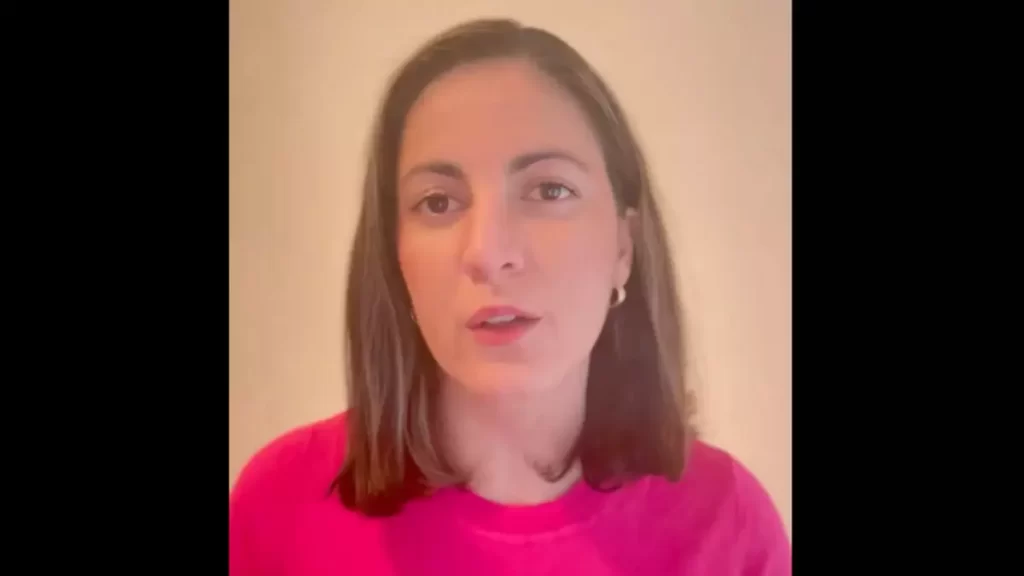
Cuban Activist Rosa Maria Paya Is Invited to Biden’s Annual State of the Union Speech to Congress

Rosa María Payá in her video thanking Congressman Giménez for the invitation / Screen Capture

14ymedio biggerEFE (via 14ymedio), Washington, D.C., March 7, 2024 — Cuban activist Rosa María Payá has been invited by Congressman Carlos Giménez to witness the annual State of the Union speech that the President of the United States, Joe Biden, will deliver this Thursday at the Capitol, the Republican legislator reported on Wednesday.

The representative of an electoral district comprising Miami-Dade County and the Florida keys pointed out that with the presence of Payá, daughter of the late Cuban opposition leader Oswaldo Payá, he seeks to “continue denouncing the evils of the regime.”

In a video published on social network X, Giménez said that Rosa María Payá will join him during the speech “to denounce the current brutality of Cuba, demand freedom for all political prisoners and hold the regime responsible for its crimes against humanity.” continue reading

He warned that “Cuban communism poses a direct threat to the security of the United States and the stability of the western hemisphere,” and he criticized the recent trip to Havana of his colleagues, alluding to the visit that Democratic legislators Pramila Jayapal and Ilhan Omar made in February to the Cuban capital.

The congressman emphasized that Rosa María is a champion in the defense of human rights and “a tireless fighter for the liberation of Cuba from communism.”

He alluded to the lawsuit for death by negligence that the Payá family filed last week in Miami against former U.S. Ambassador Víctor Manuel Rocha, who is detained and is expected to plead guilty to conspiring to act as an agent of a foreign government.

In the lawsuit, Oswaldo Payá’s widow, Ofelia Acevedo, accuses Rocha of having been “an accomplice” in the “murder” of her husband.

“My family seeks what we have always sought, justice, the truth, and an end to the impunity of the Cuban regime and its accomplices.”

Payá “was assassinated by the Castro regime in 2012, a period during which Rocha was collaborating with Cuba while advising U.S. national security officials and had access to the most sensitive intelligence information,” stated the organization Cuba Decide, founded by Rosa María Payá.

“My family is looking for what we have always sought – justice, the truth, and ending the impunity of the Cuban regime and its accomplices, as we have done since the murder of my father in 2012,” Rosa María Payá said in her statement from the congressman’s office.

Translated by Regina Anavy

____________

COLLABORATE WITH OUR WORKThe 14ymedio team is committed to practicing serious journalism that reflects Cuba’s reality in all its depth. Thank you for joining us on this long journey. We invite you to continue supporting us by becoming a member of 14ymedio now. Together we can continue transforming journalism in Cuba.

Cuba Needs 10 Billion Dollars and Ten Years To Rebuild Its Thermoelectric Plants

Image of the Antonio Guiteras thermoelectric plant. / Cubadebate

14ymedio bigger14ymedio, Madrid, 6 March 2024 — The repair of Cuba’s obsolete infrastructure to produce electricity would take between six and ten years, in addition to a colossal investment: 10 billion dollars. It is one of the devastating figures included in a report from Cuba Siglo 21 signed by Emilio Morales and made public this Wednesday.

Titled Cuba Collapses and Also Turns Off the Light, the text analyzes the dramatic energy situation of the Island, “after decades of negligence in maintenance,” a few days after the entry into force of the so-called economic package, with an increase in the price of fuel of more than 400%.

The Electric Union has a generation availability of 2,097 megawatts (MW) and a maximum demand of 3,000 MW

The Electric Union (UNE) has a generation availability of 2,097 megawatts (MW) and a maximum demand of 3,000 MW, the report notes, which implies a deficit of 903 MW, a third of what it would need to meet the demand. A figure, it is also noted, that may grow in the coming weeks. continue reading

Morales indicates that “the energy challenges facing Cuba do not have an immediate solution,” since the country “lacks domestic resources of oil or natural gas to meet the demand for electricity production, which forces it to depend on imports.”

The analyst also deals with the promised production of electricity with alternative sources, of which he says that “it is not a magic wand and takes time to develop them.”

Even more, he asserts that the goal to reach 37% of renewable energies by 2030 crowed about by the ruling party “is a fantasy of the Cuban Government.” And he lists: “Investments in renewable energies have been insufficient and poorly planned. In 2013, the installed capacity for electricity generation in the country based on renewable sources was just 4.3%. Ten years after defining those goals, the generation capacity in renewable energies grew only 0.96%. Projects such as the biomass plant at the Ciro Redondo Sugar Plant have failed due to the decrease in sugar cane production. Wind energy has also faced difficulties in materializing.”

With this panorama, the price increase that came into force on March 1 “will not solve the energy crisis”

With this panorama, the price increase that came into force on March 1, Morales insists, “will not solve the energy crisis.” This, he continues, “will only increase inflation, distort the prices of products and services in the market, increase the distortion of wages and will not contribute to a stabilization of the economy.”

There is only one solution, according to the consultant: “Eliminate the model of nationalized (totalitarian) centralization of the economy and go to a free market economy.”

Translated by Regina Anavy

____________

COLLABORATE WITH OUR WORKThe 14ymedio team is committed to practicing serious journalism that reflects Cuba’s reality in all its depth. Thank you for joining us on this long journey. We invite you to continue supporting us by becoming a member of 14ymedio now. Together we can continue transforming journalism in Cuba.

Independent journalist Carlos Michel Morales, ’11J’ Political Prisoner in Cuba, Is Released

Activist Guillermo del Sol and independent journalist Carlos Michel Morales outside the El Pre prison in Villa Clara

14ymedio bigger14ymedio, Havana, 6 March 2024 — Independent journalist Carlos Michel Morales Rodríguez was released from prison this Wednesday after serving the sentence of two years and ten months of deprivation of liberty that he received for demonstrating in Caibarién, Villa Clara, during the popular protests of 11 July 2021 (commonly referred to as ’11J’), according to confirmed activist Guillermo del Sol.

“I am here outside El Pre prison, I arrived at six in the morning waiting for Carlos Michel to be released,” Del Sol explained in an audio that he sent via WhatsApp to other activists and independent journalists. “They are delaying and delaying the release but they have to release him today,” added the dissident.

Hours later, the photo of both men together confirmed the reporter’s release. In the image, Morales Rodríguez, extremely thin, makes the victory sign with his fingers. According to reports from close friends, the activist of the Cuba Decide platform has serious health problems derived from malnutrition and the hunger strikes that he carried out while he was behind bars.

The mistreatment received in prison has also taken its toll on the body of the independent journalist, contributor to spaces such as Cubanet and Cubita Now, especially a beating he received at the hands of prison guards in mid-2022 for demanding respect for the rights of the prisoners.

“I’m here on the outskirts of El Pre prison, I arrived at six in the morning waiting for Carlos Michel to be released”

“The family of another prisoner who is in the same prison informed me that Carlos Michael was beaten by the guards for demanding the right of all prisoners to watch television, that happened in his detachment, and there many prisoners intervened so that he would not be hit more,” Javier Delgado Torna, also convicted of 11J, reported to Martí Noticias at the time.

Among the health problems suffered by Morales Rodríguez is ulcerative gastritis that has brought him multiple relapses, he was even admitted to the maximum rigor prison hospital in Guamajal due to his health condition and the strong cramps derived from his pathology.

Morales Rodríguez was also imprisoned in the Alambradas de Manacas prison in Villa Clara and during the trial against him he was accused of leading a group of people who shouted anti-government slogans during the 11J protests and of inciting other neighbors to join the protest.

In January, political prisoner Yusmely Moreno González was also released, having been sentenced to three years in prison for also participating in the 11J demonstrations, in her case in the town of Surgidero de Batabanó, in the province of Mayabeque.

“Freedom through compliance,” read the brief document that Moreno González received upon leaving the Villa Delicia work camp in Havana, where she was recently transferred after spending most of her sentence in the Mujeres de Occidente prison. also known as El Guatao.

Cuba closed the year with six more political prisoners than in 2022 , as the list grew from 1,057 to 1,063. Throughout the 12 months, 1,251 people arrested or imprisoned for political issues have passed through its list and 188 have fully served their sentences during the year, according to a report by the organization Prisoners Defenders (PD), based in Madrid.

____________

COLLABORATE WITH OUR WORKThe 14ymedio team is committed to practicing serious journalism that reflects Cuba’s reality in all its depth. Thank you for joining us on this long journey. We invite you to continue supporting us by becoming a member of 14ymedio now. Together we can continue transforming journalism in Cuba.

The Cuban Regime Trips Over Itself in Justifying Its Request for Milk to the UN

Some 24% of Camagüey producers did not deliver a single drop of milk to the State. (Invasor)

14ymedio bigger14ymedio, Madrid, 4 March 2024 — The Cuban Government has waited five days to respond to the revelation that, for the first time in history, it has had to resort to an urgent request for aid to the United Nations World Food Program (WFP) in the face of milk shortages. The regime tries to tone down the uproar with a long article published in the official press, stating that the request was made as a function of the bilateral relationship, the long-standing cooperation, and the Strategic Plan for Cuba in 2024.

The Government considers the request normal and suggests that the independent press is exaggerating, but the truth is that the WFP itself pointed out how exceptional the request is, despite the fact that it has maintained collaboration programs on the Island for years: “It was the first time that Cuba requested help by issuing an official communication at the highest level of government.”

The WFP told the Spanish press agency EFE that it was aware of the situation from two different sources in Cuban ministries and that there was an “urgent need,” stressing “the importance of this request” in the context of “the deep economic crisis facing Cuba.” The request was made in December by letter, and the WFP has delivered “144 tons of skim milk powder.” But it added that there was no “time frame,” and the aid will be extended without a planned end-date, leading the agency to “mobilize additional resources” from “traditional and non-traditional donors.” continue reading

According to the report from Cubadebate, signed by Óscar Figueredo, deputy director of IdeaGoMedia – the regime’s media propaganda conglomerate – the ship that arrived from Brazil with 375 tons of powdered milk is the result of the collaboration, which, he emphasizes, had to be resorted to because of the “resurgence of the blockade.” He adds that 500 tons of the product were purchased from the United States, highlighting the standard payment conditions required: cash and in advance.

He adds that 500 tons of the product were purchased from the United States, highlighting the standard payment conditions required: cash and in advance

In more than a dozen paragraphs, the importance of the aid is minimized, arguing that the exchange is common and that Cuba is not only a recipient but also a donor. “An example of this is the annual donation of 2,500 tons of sugar since 1996, which has made it possible to help different countries in the world such as the Dominican Republic, Jamaica, Honduras, Haiti, Ethiopia and Angola, among others,” says the article, without adding that this cooperation came to an end at least 15 years ago.

“The total value of the contributions made by Cuba to the World Food Program as a sugar donor amounted to more than 8 million dollars s of 2009,” it states. It inferred that the contribution ended because the Island has had a series of catastrophic harvests for years and has even ceased to have enough sugar for export and domestic consumption.

The report also outlines some of the projects that are developed in Cuba through collaboration with the WFP – which is said to support 120 countries, normalizing the situation – ranging from the planning and implementation of planting initiatives to training in the face of emergencies in events such as hurricanes and floods, among others.

“In a complex economic context as a result of the combined effects of the COVID-19 pandemic, the impacts of adverse weather events and, mainly, the resurgence of the U.S. economic, commercial and financial blockade, the country faces great challenges to access international markets and financial sources, which has been aggravated by the unfair and arbitrary inclusion of Cuba on the List of States that Sponsor Terrorism,” thereby justifying the request.

It is inferred that the contribution ended because the Island has had a series of catastrophic harvests for years and has ceased to have enough sugar for export and domestic consumption

The text also highlights the effort to clarify that the Government controls what food is delivered, as it should. The statements seem to be aimed at controlling the rumors about the appearance in the markets, on different occasions, of food donated by the WFP, as was the case of Russian oil in 2021, or the coal and mattresses delivered after Hurricane Irma in 2017, when some citizens had to pay the State for these items.

Several paragraphs at the end are dedicated to noting Cuba’s historical achievements in life expectancy, maternal and child health and low infant mortality, which have been constant since 1959, especially thanks to the Russian subsidy, and which have allowed the country to maintain good data in the regional context, but whose deterioration in recent years has become evident. In addition, it once again claims the right of the population to food and criticizes the “hostility” of the United States towards the Havana regime, which “impedes normal access to international resources and global banking relations.”

However, at the same time, the authorities are recognizing that there is a lack of milk, and the problem is not only the shortage of money to import it from abroad. The Government has been unable to guarantee the product by stimulating  milk production. This weekend, an article from the provincial media of Camagüey, formerly a dairy power, delved into the alarming situation of the sector.

The beginning cannot be more forceful: “In January, the delivery of milk to the industry began badly, and February followed the same path,” summarizes the report, in which it is made explicit that many producers (24%) have not sent “a single liter to the factories.” In 2023, barely half of what was planned was delivered, less than 42 million liters, compared to the 81.4 million liters expected. The number of farmers contracted by the State has gone down, from 8,581 in 2022 to 7,671 in 2023 and 7,448 this year.

“For this, a logical explanation must be found,” the newspaper claims, as if it were a secret that theft, disease and malnutrition, non-payments and arrears, deaths and low birth rates were not the perfect framework for no one to want to deliver milk to the Government.

The article states that non-payments will no longer occur, since the money is insured, say the dairy managers, who are hard to believe after years of non-compliance. The farmers themselves, interviewed for the article, assume the blame for the situation, which led nine municipalities to lower the amount delivered.

“It’s a management problem that depends a lot on us, to make sure that the cows have water, mineral salt, conditions of shade and tranquility before they are subjected to milking. The use of protein plants in the feeding of the livestock has been a constant,” says Isidro Saavedra Salazar, one of the farmers who traveled to Havana “on the Government’s instructions to acquire knowledge in that field.” His example is seen as a sign that “with effort” they can comply with the deliveries, which will allow children and the sick to eat, in addition to the existence of other products such as butter, yogurt and cheese.

But reality didn’t escape the many readers who commented on the article. The country’s food does not depend on the individual effort of the farmers but on the policies of the State. “It’s impossible that at 20 pesos per liter (.26 gallons) someone wants to produce milk; aren’t there any economists who dare to tell the truth?”

Translated by Regina Anavy

____________

COLLABORATE WITH OUR WORKThe 14ymedio team is committed to practicing serious journalism that reflects Cuba’s reality in all its depth. Thank you for joining us on this long journey. We invite you to continue supporting us by becoming a member of 14ymedio now. Together we can continue transforming journalism in Cuba.