The Country of Our Dreams / Rebeca Monzo

Those childish and youthful dreams were a long time ago, when we were excited to see the flag and hearing the first notes of the national anthem could move us to tears.

I remember years ago, being in Madrid at the International Crafts Fair, with some of my students and I heard in the distance the first notes of our anthem. I trembled, felt my throat go dry and, excusing myself from them, left to go where those first notes were echoing. I was dressed in campaign mode: jeans, t-shirt and sneakers to be able to run between the different pavilions. Suddenly, when the music great louder and clearer, I saw standing in front the then Cuban ambassador to Spain, with the doctor who had spent a lot of time taking care of my mom. We were both surprised. He very elegant, his wife like she’d stepped from the pages of Vogue. I was embarrassed but noticing my confusion he gave me a hug that surprised everyone present, then, when I’d regained my composure, he asked me an uncomfortable question, “And what about you, what are you doing here?”

“It’s a long story,” I answered, while saying my goodbyes and getting away.

Later, back home, I remembered those verses by Martí that were always my among my favorites:

“The mother love of the Country is not a ridiculous love of the land, nor of the grass our plants walk upon. It is the invincible hatred of anyone who oppresses it, it is the eternal rancor of anyone who attacks it.”

To feel oneself Cuban, to be Cuban, it is not necessary to live in Cuba (an absurd criteria they would like to impose upon our culture). To be Cuban is an innate condition, incorporated into the depths of our feelings, there is nothing nor anyone that can stop it, no decree can exclude it, they would have to tear out our soul. My country is my family, my children, my friends, my neighborhood, the place where I was born. Country is much more than an anthem and a flag.

October 9, 2010

Those Who Don’t Want to Leave Will be the Last to Get Out / Iván García

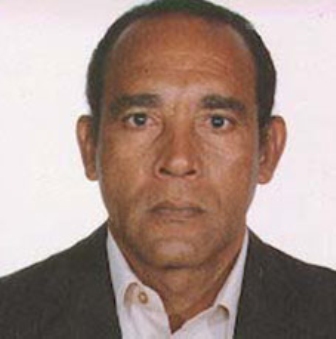
Photo: Pedro Argüelles Morán, the first political prisoner who declared he would not leave Cuba.

Perhaps as a punishment for their decision not to leave Cuba, the prisoners of conscience from the Black Spring of 2003 who have chosen to remain in their country will be the last batch to come out of prison.

This was announced by Cuban Foreign Minister Bruno Rodriguez Parrilla in an exchange with the New York media. I don’t know if it is a concerted strategy by Spanish Foreign Minister Miguel Angel Moratinos, General Raul Castro and Cardinal Jaime Ortega, as had been expected that the “plantados” — those who refuse to emigrate — will be the last to be released.

There is also a serious drawback. Rumors are that the political prisoners will be released on “extra-penal license,” an ambiguous legal term, which has already been applied to dissidents from the Group of 75 such as Martha Beatriz Roque, Jorge Olivera, and Oscar Espinosa Chepe, among others.

Said “license” is an open invitation to the government. And under certain circumstances, they could be returned to prison. It’s a sword of Damocles hanging over the heads of released opponents and independent journalists who remain in Cuba.

I would like to know if the plans of the triumvirate of actors in who negotiated the prison releases of 52 dissidents, anticipated that these “extra-penal licenses” would be kept in place against the opponents who don’t want to go into exile.

It was a masterful psychological move by the regime. It is not easy for a group of men who have spent more than 7 years behind the bars of a cell, to say no to a friendly phone call from Cardinal Ortega, suggesting they can go to Spain voluntarily in a matter of hours, if they wish.

Among those refusing to leave are Pedro Argüelles Morán, Oscar Elias Biscet, Arnaldo Ramos Lauzurique, Guido Sigler Amaya, Angel Moya Acosta, José Daniel Ferrer García, Héctor Maseda Gutiérrez, Librado Linares García, Eduardo Díaz Fleitas, Félix Navarro Rodríguez, Iván Hernández Carrillo and Diosdado González Marrero.

Among the group of those released and exiled to date (of which two are in Chile and the United States), some wanted to stay at home and then changed their position. Perhaps pressure from their families or because of fear that the government, at any time, could change its mind and not allow any more exits to Spain.

Everyone already knows how the regime works. They are unpredictable. The mood of the brothers from Birán varies in accord with certain regional and global events. And the majority of imprisoned opponents know that.

None of those who have left have done so with pleasure. They had wanted to remain in their provinces to continue working peacefully and writing their points of view about the reality within the island.

Almost three months have passed since the government statement, where they agreed to release the 52 prisoners of the Black Spring over the course of four months and it’s clear that their strategy was to try to have the least number of dissidents remaining in the country.

They are uncomfortable people. The fewer of them remaining in Cuba, the better for the Castros.

October 1, 2010

Being a Dandy is Now an Official Trade in Cuba / Iván García

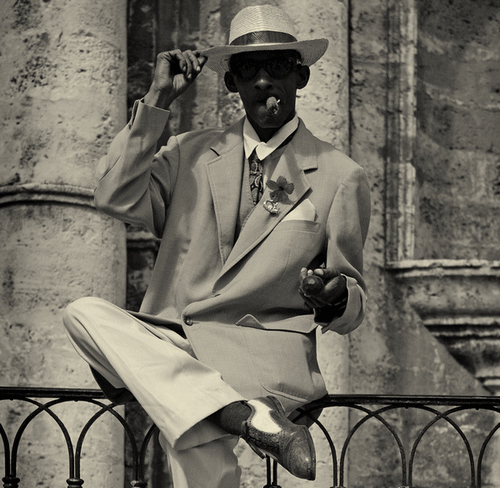
Photo: Andry Bracey, Flickr

On the streets of Havana you can see older men dressed like dandies, which used to be seen as an eccentricity. Not anymore. It is one of the 178 activities the government has authorized for self-employment.

It is one of the most striking, but not unique. The activities also include fortune teller, and the “Havana woman,” as they have decided to call those women, almost all of the black, who in recent times can be found in the colonial areas of the city: colorfully dressed, smoking cigars, selling flowers, or giving spiritual consultations to distracted tourists.

Novelties aside, the fact is that hundreds of jobs were eliminated in Cuba after the arrival of the Castro brothers. In their place others grew up, creations of necessity.

One of them — and with this name, at least, it doesn’t appear on the list issued on September 24 — is that of debris collector. Jose, 53, unemployed, charges 100 Cuban pesos (4 dollars) for each sack of bricks, stones, pipes, pieces of wood, and leftovers from home repairs. “I put the sack on a cart and empty it in the first vacant lot I find.”

Luisa, 64, retired, works cleaning rice at home. For each pound she charges two Cuban pesos (ten cents on a dollar). “I already have an established customer base. I earn about 100 to 200 pesos a week and with that I can buy pork and food at the farmers market.”

Although not included in the official list, such work already forms a part of the native landscape. Older people sell “jabitas” (nylon bags), newspapers, single cigarettes, peanuts and homemade candy. Others, younger, prefer to refill cigarette lighters. Yes, the same ones that in other countries are thrown away.

After 1959, the wearing of suits, collars and ties went out of style in Cuba. The Mao style prevailed.

Men dressed alike, thick cotton, opaque colors and Russian boots. That’s when the tailors started their decline.

Lacking material, the dressmakers became “patchworkers.” Thanks to Rosa, 71, many neighbors can cover themselves with sheets and dry themselves with towels that are more or less decent.

As a patchwork specialist, Rosa cuts out the worn parts of a sheet or towel and on her old Singer sewing machine, joins them with pieces in better condition. “I don’t trash the worn out bits, I throw them in a box and give them to a relative who uses them as wadding to stuff mattresses.”

If there is a trade in high demand in Cuba in 2010 it is mattress repair. And the same for the private shoe repairers, plumbers and electricians. Although no one is as well as paid as the car mechanics, charged with keeping the ancient American cars rolling.

With or without a license, for a long time one has been able to hire clowns for children’s party, and photographers, who have become experts in photo-montages or Photoshop work for weddings, baptisms and birthdays. One of the most successful private businesses is the legion of specialists in quinceañeras — the celebrations for girls when they turn 15 — from gown rentals to the choreography and editing of the party video.

Unlike seamstresses and refillers of lighters and mattresses, this sort of trade in a luxury in a country full of shortages. Similar is everything relating to dogs, an activity that is emerging from the closet of illegality. Orlando, 39 and gay, alternates giving ladies haircuts in their homes with the attention and care of their dogs. “The little tame dogs, I bathe them and do their hair. If the owner pays me I make clothes for them. For the big fierce ones, I don’t want to know,” he says, laughing.

Those are for a braver race of men among whom we find Manuel, 43, who pocketed almost two thousand Cuban pesos (80 dollars) in a month — four times his salary — training German shepherds.

Perhaps they don’t earn as much, but the dandies are more picturesque. At least they don’t have to tramp around the city selling peanuts, cigarettes and newspapers.

October 3, 2010

Monologue of an Unemployed Cuban / Iván García

Photo: Jan Sochor

“I’m sick of everything. Fidel Castro and his brother Raul’s “blockade.” I can’t stand one more speech. It’s all lies. False promises. At this point in my life, after working for 50 years and fighting in all the wars they sent me to, they come and say now is the time to build socialism.

“Fuck this government. And what hurts most is to see how they’ve used me. I’ve been manipulated like a puppet. That’s what I’ve been: a common puppet moved at their will. This is as far as I go, as Saramago said.

“Not one day more will I support those two who have ripped off my future, my dreams, even my family. For supporting them I lost three marriages and neglected my children. Both left the country and we stopped talking, because I was a Party member. The first thing I’m going to do is call them ask them to forgive me.

“After taking part in every kind of Revolutionary idiocy, from planting coffee in the Havana Cordon, cutting cane like a slave in the ten Million Ton Harvest, even training the Latin American guerrillas in subversion and putting my own skin on the line in the wars in Angola and Ethiopia, now comes some guy wearing his white guayabera and chatting about the past and after giving me a pat on the back, he tells me I should write a book about my Revolutionary career and suggests I should rent out my Russian car, my Lada. And the only thing I have after half a century of being a true believer, I should chase some bucks with the Lada? That’s the solution they have for me, after leaving me in the street without even a latchkey?

I’m 68 and now that I’m old it seems I’m not the right person for my job. That we have to do everything to move the country forward. That the economy can’t support State paternalism. Then, why the fuck did they install it? Nobody, at least no one I know, asked the government to be our father.

“I don’t have a cent and the easiest thing is to lie and pretend that we’ll keep applauding those who are leaving us unemployed. Machiavelli is a baby at the tit next to the Castros. To do this to me, who never stole a thing; who traveled halfway across the world in the name of this government, and it never crossed my mind to flee with a suitcase full of dollars. They throw me out like some disposable object.

“That hurts. But the worst thing is that they’re not capable of facing reality. And they say what goes on in Spain is bad, the United States is hell, and nuclear war is around the corner. They are not capable of explaining, looking you in the eyes, that the Cuban system is broken and we have to change it.

“At this age, I have to go back to my beginnings, when I was 18-years-old and driving a taxi to help my widowed mother. I don’t mind that I had to do that. What pisses me off is having been such an asshole. I distanced myself from a part of my family and many of my friends because they thought differently.

“Now, after it’s all gone to hell, I feel like a free man. Without political strings. I’ve learned my lesson. I hope it’s not too late.”

October 7, 2010

Hookers and Thieves Could Increase With The Layoffs / Iván García


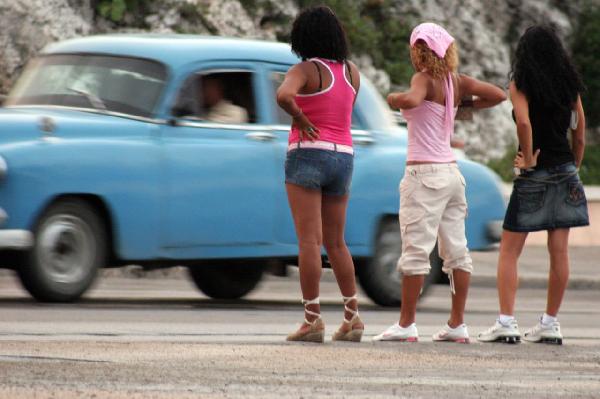
Troubled waters, a growth in the number of jineteras — prostitutes — and thieves. With the number of unemployed expected to be more than a million in the coming year, the streets of Havana will be getting more dangerous and cheap hookers will be the order of the day.

Loipa, 24, draws his weapon. After a stint in jail she thought she’d redeemed herself. And she started work as a receptionist at a business. But she was the first to be laid off.

The only option they offered her was as a farm laborer. Then she decided to return to the “trade” she knows best: hooker. “I don’t think the police presence will be too severe, I will be engaged in a lot of things. Now I’m going to offer my services, even in national currency, but in foreign currency, of course, if I can catch some ‘yuma‘ (foreigner). It will be hard. There aren’t enough tourists for the number of prostitutes in the country, there’s three of us for every one ‘yuma,'” commented this mulatta with expressive eyes and a striking mole under her mouth.

Competition in the prostitution world in Cuba is strong. There is a legion of teenagers between 14 and 17, still students, who spend their free time selling their bodies. Cheaply.

The crippling economic situation, that has lasted 21 years, and the growing number of hookers swarming the streets, has lowered prices in the island’s pleasure market. Already no outsider pays more than 30 convertible pesos (35 dollars) for a hot night with a whore. For 70 convertible pesos (85 dollars) you can take a couple of lesbians to your room.

When they give another turn to the screw of harsh living conditions in Cuban life, it’s not unreasonable to think that the number of “sex workers” will shoot up. The same as other illegal activities. The thieves are also having a field day.

In times of crisis and hardship, delinquency rears its head. Havana is not yet a city where violence is a problem. It’s far from being Caracas or Juarez. But so many unemployed people, with no future and empty wallets, is a perfect breeding ground for thugs to prosper.

The black market has dried up, leaving the residents of the poor neighborhoods, who live by doing “bisne” (business) under the table, few alternatives. The women, young or old, if they have a good butt and have grown up with the promiscuity, might be thrown into the street. Not to protest. To “search for bread” (prostitute themselves).

Black men, strong and athletic, could begin to try their luck as ‘pingueros‘ (‘dick-men’, i.e. toyboys), which until now has been the province of good-looking whites and mulattoes, gays and transvestites. Or they might “specialize” in stealing music equipment from the cars of tourists, or in the “art” of swiping the bags of visiting foreigners.

The news is very bad for the police force. A ton of disgusted people without money, who are trying to put food on the table by any means possible, and to dress in the latest fashions, is a more serious matter than it might seem.

Loipa has already gotten her start us a hooker. She lost fifteen pounds at the gym and is chasing after the first tourist to buy her two or three dresses, high heels and a nice perfume. That’s a starting point.

Her ultimate goal is that of any prostitute. To marry a foreigner with several credit cards in his pocket. Loipa’s hope is that the United States Congress will end the travel ban for Cuba.

“If this happens, I’m going to ‘hacer el santo‘ (make an offering to the gods). But all I want is just let the gringos come. I am waiting for them with my legs open,” she says, laughing.

Like Loipa, thousands of Cubans pray for this measure to pass. The Americans are seen as a lifeline. And not only by the hookers. Also by the Castro government.

October 7, 2010

Zoé Valdés, a Pen Like a Whip / Iván García

On one of those nights in Havana, when the sky is clear with a handful of stars as a witness, someone told me that the Castro brothers feel a particular hatred for three Cubans. The list, what a coincidence, three writers: Guillermo Cabrera Infante, Reinaldo Arenas and Zoé Valdés.

The resentment was so great, this person told me, that they even performed curses, with the bones of the dead and elephant tusks brought from African soil. I don’t think that’s true. But I have to admit that this woman from Havana, born with the Revolution on May 2, 1959, is feared by more than the Castros.

Zoé Valdés uses her pen like a whip. She usually fires high caliber bullets. Between prose and poetry, this woman with 22 published books and a collection of prizes in her Parisian bag, writes for the Spanish and European media. She has a personal blog and whoever wants to read or hear it will hear how she sees Cuba and the world, without any rose-colored glasses.

Her brain is directly connected to her tongue: critical, controversial and bold. At times vitriolic, most of the time gently. With a recurring dream: to walk with her daughter along Havana’s Malecon and through Old Havana’s cobblestone streets.

Valdés’s grudge is exactly that: Fidel Castro has usurped her Havana. And the sensitive and altruistic novelist will never forgive him. When the dark years have become a part of our past, perhaps Zoe will devote herself to writing children’s books. From her house in Paris, she has given us an interview.

La Nada Cotidiana (1995) (The Daily Nothing) has become one of the most read of your novels by Cubans on the island. Do you expect that El Todo Cotidiano (The Daily Everything), your latest novel, will be also?

“Although El Todo Cotidiano is not a continuation of La Nada Cotidiana, we can talk about it as Part Two, because the people, for the most part, are the same; We also find characters there who represent other exiles. I hope that many people in Cuba will read this novel, because my natural reader, despite the censorship and the ban on my books in Cuba, is the Cuban reader.

“This is a more thoughtful novel, choral, Pantagruelian, Gargantuan, where there is a great deal of humor but also the Cuban drama from both sides, without morals or moralizing, which is always expected — coming from both sides — of a Cuban novelist. My writing is absolutely subversive and amoral, where desire is the direct resource and freedom, in all its enormity, is the environment in which the characters are moved.

Was it the success of La Nada Cotidiana that led you to continue the saga?

“No, it wasn’t the success of La Nada Cotidiana that drove me to take up writing the novel El Todo Cotidiano. It was the character of Ida, who is the mother of Yocandra, in La Nada Cotidiana. This has partly to do with it being partially autobiographical, because the character has become a literary institution: when I could get my mother out of Cuba, after a great and traumatic effort caused by the Castro dictatorship, I lived with her for two years in Paris. She loved everything about this city, and lived as if she had forgotten the long years during which she had resisted and sacrificed under the Castro regime. She only remembered her life from before 1959, and was enormously appreciative of how she was living. But my mother was very sick, and she only enjoyed two years of freedom.

“As she was dying, she told me I should write this story, of those two years. It all started with her but at one point I needed Yocandra, that it, I used the daughter to better observe the grand the great transformation of a lady — her mother — who had to go into exile, fight the world, and who dares, and so then I had to resuscitate her (Yocandra), and the rest. I started writing and came to the point where it was telling me this was El Todo Cotidiano, that I was telling the daily lives of those Cubans in Paris, mixed with other exiles, from other places that had little to do with the island. And it was all very dramatic and also humorous, because they had already changed, they saw life differently, they were involved, including emotionally, with other realities, but the one thing that didn’t change was the island. So it was born, and in this way the cycle closes.”

On the island, there are those who see you as a feminine version of Guillermo Cabrera Infante, wielding the machete of slaughter against the Castros.

“Guillermo Cabrera Infante is one of my literary fathers, I think the most important. He was a friend, and still is, because through Miriam Gómez, his widow, we have continued codes of understanding, of love, of respect. She is a great friend, she has fought for his work, and she is a great Cuban, universal. My work is inspired in part by Guillermo, that is, in his Havana, but I tell my story, and also I constantly learn from François Rabelais. I deeply love Manuel Mujica Láinez, Lydia Cabrera. They are also literary parents, Then I have literary examples, which can even be my own age, or just a few years older. That’s the case with Reinaldo Arenas, who is two generations — if we count five years — ahead of mine.

“But Guillermo is the author I admire, and the friend, also very loved; for me it is a great honor to be compared with him. I think that we both assume the social and political commitment of the writer, but in reality, between us, we spoke little about it, we only discussed (he most of all) that marvelous Cuba that he lived, and literature and film. In France it is natural for writers to be politically involved with their opinions, even if they don’t belong to any party. This is something I essentially learned in France, where I knew what it meant to live in freedom. Something that for Cubans is extremely difficult.

“I also want to say something about being the machete — as you have called it — anti-Castro, it turns out it is not easy, no special resources are given, in fact it closes many doors, even today, when people want to believe, or see Cuba as a social example. I don’t see myself like that, as a machete, I only respond when someone asks me about politics. I am usually a calm person, but yes, I say what I think, and as I defend human rights for the world, I defend them for my country,  as I cannot defend them in the land where I was born. And I did it long before, from my world, that of literature and cinema, within Cuban in the 1980s and up to the mid 1990s.”

How do you see the situation in Cuba right now? What about the Cubans, including opponents, independent journalists and bloggers?

“I’m a hopeful pessimist in relation to Cuba, at the moment. Because I think that only with the passing of both brothers, number 1 and number 2, and the chaos that will remain, can we resolve the Cuban situation. I never expected anything of Raul Castro, because I know well how communist, totalitarian, countries work. And I will continue expecting nothing.

“But I think he has in his hands the possibilities of parting ways with his brother and delivering the country to the Cuban-Americans who have studied and lived under capitalism, and who have made fortunes, with which they could settle on the island, and in the end they are Cubans; and not, on the other hand, giving it over to the Chinese, the Russians, just for two examples.

“The exile of the political prisoners, and the continuing imprisonment of Biscet and others who have refused to accept exile, speaks to the real intentions of Raul Castro, who is fundamentally following the same hard line. You can’t expect anything else from a person who executed innocents from the first day of the Revolution or the Castro Revolt. The abnormal is how the world had already become accustomed to seeing the normal succession of the Castro-Communist-Dynasty, period. I just hope to see how things go, it can’t get any worse, and then the changes that will be caused by the laws of nature. We know they are preparing their children for the Castro legacy, but I’m not so sure people will put up with it.

“As for the opponents, the independent journalists and bloggers, I think they are all necessary, with their different points of view. Personally, however, I dismiss those who want to keep sucking, now “rebelliously,” at the tit of the Castro regime. I deeply regret that being anti-Castro has become a way of living. That said, I recognize those who have made our country great in recent times: the majority are black, loudly calling for freedom and democracy, without the Castros, and every day they are persecuted, beaten, tortured, imprisoned and murdered as was the case with Orlando Zapata Tamayo.”

Most Cuban exiles tend to keep alive the hope of returning to their homeland before they die. Is this one of your wishes?

“I would like to return, of course, but not to destroyed country. I have my tomb in Père Lachaise cemetery in Paris, together with my mother. For my eternal rest, I like this place. With the summer sun, and covered in snow in the winter. I am fascinated by snow. I travel a lot, I have other commitments with other people I also love and respect deeply. Thanks to my author’s royalties I am able to help in some places, as in the case of Haiti and Pakistan, I have been able to build shelters and schools for teenagers leaving prostitution. I speak very little of this, because I want to offer support in silence, and when I can, and now make some kind of public fanfare of this. I love Cuba deeply, it is my country, and I will return without any doubt. At the moment, for now, I only aspire to continue writing, to learn from other places, and to further integrate myself into this country that gave me the possibility of being truly free.

Finally, I wonder what is daily life like for Zoé Valdés and her family in the City of Light.

“I work night and day, I have never stopped working on a thousand things at once: my books, films, the production of the films of Ricardo Vega, my husband, and mine, and also the art gallery. I get up and then turn to my notebooks and the computer, later I work on other issues that have nothing to do with my books, I return to writing and I read very late into the night. Ricardo also has his work and our daughter is at school.

“I love Paris, it is a city that each day brings something new, culturally and from all points of view. I could not live in the future without this city. Although I said the same about Havana. What happens is that Havana lives inside me, inside my dreams, and my nightmares. You will notice when you read El Todo Cotidiano, and I think you will really enjoy it.”

Iván García

October 6, 2010

Recycling / Claudia Cadelo


Photo: Claudio Fuentes Madan

One of the new self-employment “activities” approved by the Cuban government is the controversial “recyclers-sellers of raw materials.” This toughest “private enterprise” encompasses Havana’s beggers who survive on collecting what the rest of the society throws out.

Several years ago Claudio Fuentes Madan was making a series of paintings using the city’s waste, which brought him into contact with many of these men and women who eat, literally, garbage. For the most part they are people without homes (and no possibility of acquiring one since buying and selling property is forbidden to Cubans). They spend the night in the most sinister places in the city (areas of destroyed hospitals, abandoned buildings declared uninhabitable because of the risk of collapse, parks far from the center, and that part of the urban landscape that is essentially shanty towns). They often live as “illegals,” under a Stalinist law that prevents anyone without a permanent address in Havana from staying in the city. To prevent disease, Claudio told me, they mix gasoline or kerosene into the water they use to bathe with, which they do at the home of an acquaintance, paying a modest rent in advance for the use of the sanitary services.

These are people who from now on will have to pay a percentage of their earnings to the Cuban state. It’s so sadistic it’s hard to imagine. You feel like covering your eyes with both hands like during the bloody scenes in terror movies. But this isn’t a movie, it’s what remains of the socialist economy.

One wonders why this business appears to be — I can’t think of another adjective — prosperous enough for the State to decide to relieve its beneficiaries of a portion of their earnings. It turns out that true civics, that legendary course that my parents studied in primary school and I did not, has lost its semantic meaning in Cuba. People do not feel responsible for recycling the trash: if the state needs raw materials, that’s its problem. That’s why the recycling centers — the “offices for the recollection of raw materials” — are ignored; only the dumpster divers bother to take there the plastics and cans that they find in the garbage cans.

The other day a friend collected all the bottles that had accumulated in his home over the years, and set out — the paradigm of the New Man — to take them to the closest center. On arriving he discovered he had to take all his “recyclable material” home again, because he didn’t bring them in a sack consistent with what they would accept. Late that same night he gave them to a girl with a cart collecting rubbish in the city. She had changed her work schedule from three in the afternoon to three in the morning.

October 8, 2010

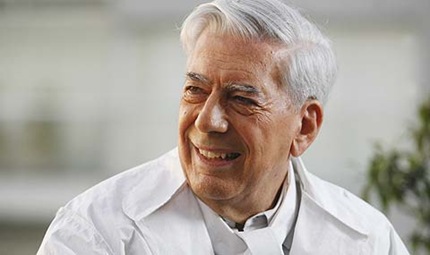
Mario Vargas Llosa: A Nobel Long Delayed / Yoani Sánchez

The literature of Mario Vargas Llosa has been the source of several key turning points in my life. The first was 17 years ago, during a summer marked by blackouts and the economic crisis. With the intention of borrowing The War of the End of the World, I approached a journalist expelled from his profession for ideological problems, with whom I still share my days. I keep that copy, with its cracked cover and yellowed pages, as dozens of readers have found their way with it to this Peruvian author banned in the official bookstores.
Then came the university and while I was preparing my thesis on the literature of the dictatorship in Latin America, he published his novel The Feast of the Goat. My including an analysis of his text on Trujillo gave no pleasure to the panel that evaluated me. Nor did they like the fact that of the characteristic of the American caudillos, I highlighted only those displayed by “our own” Maximum Leader. Thus, the second time a book by today’s winner of the Nobel Prize in Literature marked my life, because it made me realize how frustrating it was to be a philologist in Cuba. Why do I need a title — he told me — that announces I am a specialist in language and words, when I may not even freely assemble sentences.

So Vargas Llosa and his literature are responsible, in a direct and “premeditated” way, for much of who I am today: for my matrimonial happiness and my aversion to totalitarianism, for my betrayal of philology and approach to journalism.

I am preparing myself now, because I fear that the next time a book of his falls into my hands its effect will last another 17 years, and once again slam the door on my profession.

October 8, 2010

The Color of Life / Ángel Santiesteban

Camilo Cienfuegos, by Alexis Esquivel

THAT MORNING MY mother didn’t threaten me with if I left my breakfast I wouldn’t go to Salvador’s study to see him paint. Those words were enough to accept any of her commandments.

Salvador had become used to my presence. I understood not to bother him. From a corner, I watched his ritual of preparing the oils with the care of a great alchemist. I was trying to learn his every move because I aspired to be his amanuensis. For me, happiness was being able, one day, to prepare his palette, squeeze the tubes, and even, with time, help with a precise stroke. I delighted in seeing how canvas ceded space to other colors. Unintentionally he was introducing me to a world of lines, dots, a kaleidoscope of images that never repeated themselves. In the end, tired, he covered it with a pure white cloth to protect both it and the eyes of his daughter and wife.

But that morning my mother didn’t mention my friend Salvador. And as a symbol of disobedience, I left the completely full glass of milk. I looked in her eyes but she avoided me. She said I could no longer watch him paint: he had died at dawn. I didn’t know this word and shrugged my shoulders. Then she explained that death was like the uncle who left on a raft whom we would never see again. I ran to drink my milk, I didn’t want this punishment, but she stopped me and held me to her breast. That morning I fell asleep on the sofa and had a fever. The neighbors approached, watching me with pity. Mysteriously they whispered in each other’s ears. Salvador’s study would never again open in my presence. I lost my appetite and the hole in my life seemed like it would never be filled.

I even looked through the window of Salvador’s house and I saw him hiding in the green of his last painting, he put his finger to his lips so he wouldn’t be discovered, then he laughed. I kept quiet about the last secret he shared with me. He taught me not to reveal the themes he painted when the curious asked. Sometimes I caught myself talking to him. It was enough to know that he was still there, putting the final touches on an unfinished painting. So from that day I knew that death is inconclusive; to the rest of the world, I’m crazy. A started taking the pills the psychologist recommended.

Since that experience I fight against what seems definitive. I know that behind every breath, image, word, is the bravery of someone who patiently waits to be heard, seen, named. The opportunity is also a cry of hope.

October 6, 2010

From My Window / Rebeca Monzo

I’m not a photographer but I love photography. I have a son who is one, and a very good one, with many awards here on my planet. When I leaned out the window a few days ago and saw these colors, I ran to find my little camera and tightening the strap around my wrist I pushed it carefully through the blinds to capture the moment. Incredibly, as I pressed the shutter, I thought of him, of my other son, of my beautiful granddaughters, whom I barely know, of my friends who have left, and it saddened me not to be able to share this impressive vision with them.

When I think that they had to leave and miss these sunsets (even though they may enjoy others), simply for having lost here, in the land of their birth, the horizon, I feel something inside me breaking.

To travel, to go to live in another country, to stretch other links, to return, and to leave again, is the most natural thing in the world, but to have to leave what is yours indefinitely, because you have no future there, no options, this is not fair. Even more so when you grow up hearing it said in school and in the media that everything that was done was to make a better future for you.

October 6, 2010

Weekend Movies / Regina Coyula

cortesía Orlando LuisThis weekend I saw on TV two very different movies, both very perturbing because of what they show in regards to the relation between reality and fiction. The movies were Agora, on the Friday time slot for movies, and The Experiment on Saturday.

The movie Agora takes place in Alexandria during the final years of the Roman Empire when Christians, after many years of persecution, win the streets and obtain power. We had seen the suffering of Jesus’s followers, the cruelty and spite which they suffered at the hands of the pagans. But, what happens when Christians obtain power? They mimic and even surpass those who had the power before them, they desecrate the symbols of the past: temples, statues, and in what will be a sign of the dark centuries ahead, they destroy the Library of Alexandria.

The other movie, with superb acting by Adrien Brody and Forest Whittaker, tells the story of a group of people who volunteer for an experiment on the conditions experienced on a prison setting, who are surprised to find out that a few of them will act as guards while the rest will be the prisoners. What happens when regular men obtain power? Cruelty, sadism. The experiment ends, predictably, when the prisoners rebel.

So much time has gone by, and things still do not improve when it comes to human relations.

Translated by: Xavier Noguer

October 6, 2010

The Treasure / Ángel Santiesteban

Photo AP

I WAS IN MY NEIGHBORHOOD cruising the streets on my scooter like a Caribbean Quixote in the year 1992. One afternoon, I turn the corner of my house and notice a neighbor stopped on his bike, one foot on the curb of the sidewalk, the other in the street, an arm on the handlebars, with his head resting on his forearm which served as his pillow, looking like a rag doll. Something I’d rarely seen in that man who, from the time I was a child, I’d watched go into his house near mine; I turned the wheel of my scooter to go back. As I came up to him I saw that, despite the noise of the scooter’s engine, he didn’t raise his head.

I asked him if I could help. He said something I couldn’t understand, I lowered the throttle on the bike and got closer, he cocked his head and I could see his pale face, “Hold me,” he said. I quickly turned off the scooter and took his arm, “I’m dizzy,” he said again, and I felt his body trembling like the page of a book. I suggested he breathe deeply. He could barely manage it. At times his legs buckled. I discovered that despite his weakness he was protecting something in his other hand, his fist closed against his chest. I offered to hold it and he shook his head. He made an effort to lift his head and look at me. I kept holding him up. He said he knew he shouldn’t have done it but he didn’t have any other choice. For lunch he had just had a little rice, and he went to his sister-in-law’s house to look for something, for his wife, at least, to have to go with it. He no, he’d gone for a week with only rice and he wasn’t complaining; but he knew that she, even though he did everything in his power, wouldn’t be able to eat; then his sister-in-law gave him the last one left, and he looked at his closed fist. With great care he opened his hand, and before my eyes appeared a hen’s egg.

October 7, 2010

Crossing the Barbed Wire with the Blue Bird / Luis Felipe Rojas


I spent the night of September 30th traveling, and part of October 1st on the expressway of Farola in order to get to Baracoa. The 7th session of the committee of the Eastern Democratic Alliance was to be held in Maisi, but the detentions began on Friday and did not cease until Sunday. The grand total of detentions was 19, with 6 deportations to Camaguey, Guantanamo, Santiago de Cuba, and las Tunas. There weren’t any beatings and there was less confrontation than other times, but it was still a mass operation which included the extensive search of the beaches which they thought we would try to escape by in order to get to Maisi.

In my case, I was detained along with 5 other human rights activists. Amid all of this, I noted something interesting: we spent various hours stationed on the outskirts of the road waiting for a military transport to take us to the police unit in Baracoa. When we got there, a political police officer ordered for us to be removed from the barracks immediately, a much different scenario than the usual, where we are nearly always put in cells instead. While we traveled aboard the olive-green jeep I thought that I was the king of the internet, for I was using Twitter to report the names of those who were detained, in order of the news I was receiving. I could already picture myself turning into a blue bird and flying to the homes of friends outside of Cuba and telling them the news.

But what a fiasco, none of my 140-character messages arrived at their destination, yet each and every one of them was charged to my account. The list of the detainees was the same as always: Rolando and Nestor Lobaina, Idalmis Nunez, Omar Wilson, Jorge Corrales, Belkis Barbara Portal, Virgilio Mantilla — in sum, 19 peaceful dissidents who were impeded from freely walking towards the lighthouse of Maisi, the eastern-most point of the island. There, we were planning to read the calling for the Unity in Diversity document which the Democratic Alliance had launched, but since such acts were impeded two days later, while we had been released we re-grouped in a central area of the city.

Early that day, we silently walked more than ten blocks, all the way to the bust of Marti where we placed a floral gift and sang the anthem before the eyes of hundreds of Baracoa natives. The Cuban G-2 (secret police) watched us during the entire process but did not impede the march. I’m starting to think that they did not want to repeat the macabre spectacle which they carried out last August when they took part in the condemnation mob against the Rodriguez Lobaina family. During those days, I could easily notice the air of disgust towards the political police which permeated among many locals after the beatings and barbaric acts which were carried out in the home of the brothers, where they used rocks to shatter the windows of the apartment where their father lives, and when they beat up some inhabitants.

To top it off, my old Sony digital camera ceased working, and seemingly forever. This is why I haven’t been able to take a single photo as I am used to doing on any of these trips. This time, you will all have to just settle with these bunch of words, believing or disbelieving what I say.

Today, many of us who report from this eastern cave have our cell phones blocked from making calls to places outside of Cuba. Meanwhile, Cubacel still continues charging us their draconian rates. The police continues to restrict our movements, shoving gags in our mouths so we won’t speak up, and strictly spying on us wherever we go. And as if that wasn’t enough, Twitter has just shut off the only ray of light we had left upon their shutting down messaging through the phone. In which direction are we headed? Reporting what really happens in Cuba, which is ignored by the popular media outlets, will become a rare privilege if the Great Blue Bird does not come back.

* Friends who have showed solidarity and who have found out about the difficulty of sending messages through twitter with our cell phones have opened a provisional account, which we dictate through the phone, to cross the barbed wires from Holguin to Guantanamo.

@alambradasCuba @RRLobaina @jccpalenque

Translated by Raul G.

October 6, 2010

Computer Glitch and Missing Translations / Iván García

Note to the readers from the translators:

Please accept our apologies for the gap in English translations!

A few weeks ago some “behind the scenes” technical changes were made in Ivan’s blog in Spanish, which we weren’t aware of on the “English side.” From that time the “automatic post grabber” for the translating site, HemosOido.com, could no longer pick up the posts because it was searching for the “old” computer code, not the new one.

Unfortunately, it took us a little while to realize there was a problem, and then quite a bit longer to fix it because, frankly, our volunteer programmer has been completely swamped with her “regular job.”

It is now fixed and we will, entry by entry, fill in all the missing entries from September, and of course keep the translations coming going forward.

Again, our sincere apologies! And please… those of you who are bilingual… translate Ivan so we can catch up!

October 7, 2010

Custom Filters / Laritza Diversent

Cubans who opine publicly regarding the Government, are condemned to suffer confiscation. The Customs Office for Post and Shipments (APE), an entity which is part of the General Customs Office of the Republic (AGR), has a filter for seizure for shipments abroad, applicable to dissidents.

Within the last 2 months, this agency has confiscated 2 shipments that had been sent to me from the United States. I was advised on the 13th of August about the most recent, via the “Resolution of Forfeiture #1209” dated the 29th of July, 2010, and an Act of Forfeiture and Notification, both documents signed by Danny Samada Rivero, Inspector of Customs Controls.

Had this occurred once, one could consider it an issue of chance. A second occurrence would be a purposeful act of viciousness; but if other people with the same uneasiness regarding the political situation suffered the same indignities, then it’s a matter of a strategy of the State. A subtle form of punishing those who dare question the status quo of the system.

I have no doubts, this administrative act has a political underpinning. Its not a coincidence that it applies since various months to the forfeiture of shipments from abroad to various dissidents against the Government, including Yoani Sanchez, the author of the “Generation Y” blog.

As per Samada Rivero, the contents of the package were contrary to the general interests of the nation. He used Resolution #5-96, from the Manager of AGR, as the basis for the forfeiture. The first was applied by the resolution of forfeiture no. 978, on 8 June. On that occasion Raimundo Pérez García, Inspector Control Customs seized the shipment arguing the same reason and legal basis.

Resolution No. 5 of the AGR, existing since 1996, allows the application within the national territory, of the International Convention on the Suppression of the circulation and traffic in obscene publications.

The rule prohibits the importation by shipments, of “any object whose content is considered contrary to morals and good customs or which go against the “general interest of the nation”. In addition, the seized products are to be delivered to the corresponding body of the Ministry of the Interior.

Under both resolutions customs Control Inspector, Samada Rivero and Pérez García, failed to explain in what way the imported articles affected the general interests of the nation. Most of the products were for personal hygiene, health and for use in an office, of general, every-day use for a household. The same products are for sale in State shops and foreign currency stores, within the national territory.

At the end of July, I lodged an appeal to the head of the customs, requesting cancellation of the first resolution of confiscation. On August 17, I was notified of the resolution of Appeal No. 231 of 2010, denying my claim.

The officer, Raúl Gómez Badía, the ultimate authority of the organ of the State in question, considered the measure applied by the customs inspector, Raimundo García Pérez, as being correct. That decision exhausted the administrative process open to appeal the decision; the next recourse is the judicial path in open court. My next step will be to claim my rights before the revolutionary courts.

Perhaps the new offensive has another goal. Destroy attempts to re-establish communication between Cuba and the United States. The products were imported from that northern country through agency “Universal Postal service” in the Office of international exchange (OIC). Cuban and American representatives initiated talks to standardize the service of mail between the two countries in September 2009.

On the other hand, the filters of the Customs Agencies show that political interests that run the country, supersede the interests of all Cubans. It punishes equally, applying the legislation extraordinarily and arbitrarily to a group of citizens who publicly express their feelings about the Government.

September 11, 2010