In Matanzas, drivers who agree to give free rides are scarce; getting around depends much more on patience than on transport.
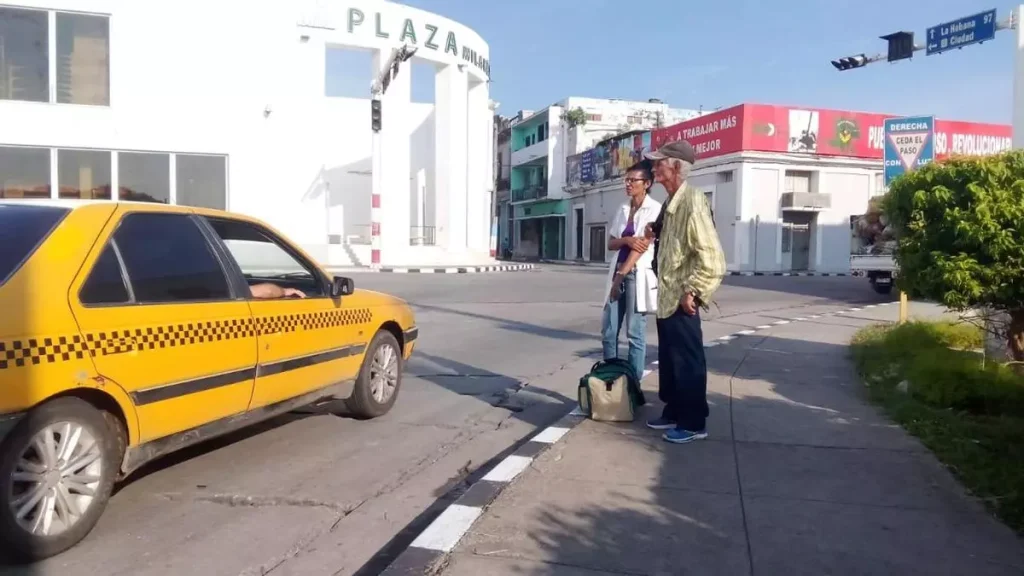
 14ymedio, Julio César Contreras, Matanzas, August 14, 2026 / Among the drivers offering trips only to Varadero, a shaved ice vendor, and a traffic light that no one expects to see working anymore, dozens of people raise their arms hoping that some driver will be kind enough to stop. The Viaduct bus stop is just a few meters away, but seeking refuge from the sun under that shelter can turn into an ordeal of several hours.
The images repeat themselves over and over again in front of the newly renovated Plaza Milanés. Men with backpacks slung over their shoulders scan the horizon every time a car appears; a woman shields herself with an umbrella while calculating how much longer she can endure the sun; an elderly man and a young man share the same wait by the side of the road. Behind them, the city seems to carry on as usual, but a few minutes of reflection reveal that public transportation is going through one of its worst periods, exacerbated by the energy crisis and fuel shortages.
“I’ve been here for almost two hours, and in all this time, if nine or ten cars have passed, that’s a lot. A moment ago a Lada with state license plates stopped for me. Just as I was about to get in, the driver told me it was 500 pesos to Peñas Altas, so I immediately told him to go away, not out of pride, but because I don’t have the money to pay him,” a woman from Matanzas, who knows this boarding point very well, where local buses have completely disappeared, told 14ymedio.
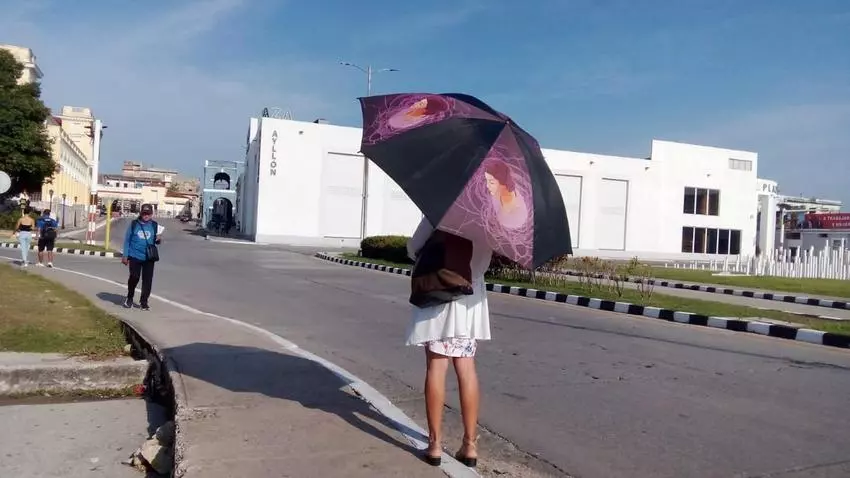
“Sometimes, when there’s a transport inspector around, getting on a bus is a little easier. However, lately they haven’t been showing up at the bus stop either,” the woman adds, as she watches a yellow taxi slow down only to accelerate again a few meters later.
As she explains, places like this abound within the city, where electric tricycles pass by packed to capacity, private taxis drive right past, and state vehicles avoid stopping. “When the kids have school, it gets really bad for getting on the bus, especially around midday. To get to the university, where I work, on time I have to be here before seven in the morning. If I don’t, it can get to be nine o’clock by then.”
The uncertainty of raising a hand to a car that might never stop grips hundreds of people every day on both sides of the Vía Blanca. Some prefer to move away from the group and position themselves a few meters ahead, taking advantage of the fact that vehicles slow down as they cross the railway line, where trains to the industrial zone stopped running years ago. There, each driver represents a possibility, and each acceleration a new disappointment.
“Since I got married four years ago, I’ve lived in the town of Carbonera, but I still work for a small business here in Matanzas. Coming here is just as complicated as making the return trip, always with the pressure of trying to spend as little as possible,” says Andrés, while trucks, machinery, and private cars continue to pass by without even looking at him.
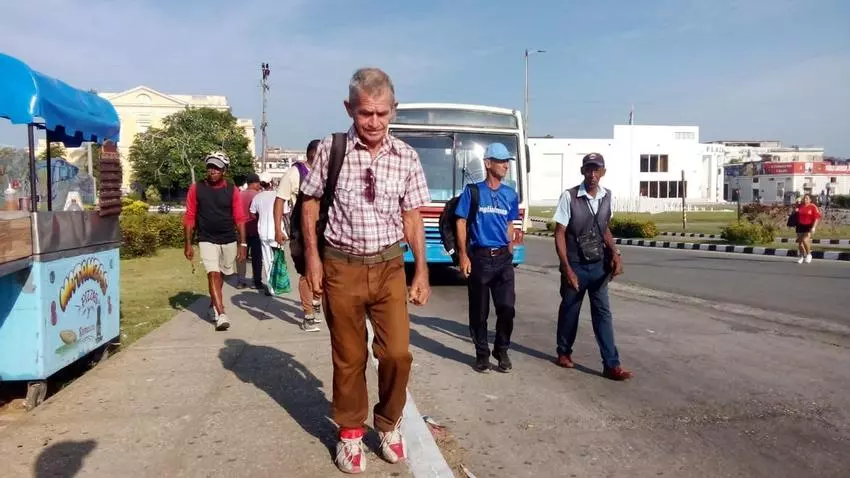
For the young man, there’s almost no difference left between state and private drivers. “They both try to make a living off the needs of others. The trucks going to Havana are useless to me now, because you have to pay the full fare. The tourist buses disappeared from this route a long time ago, and the Transmetro buses don’t stop because they’re chartered. Drivers who agree to take someone for free are becoming increasingly rare. That’s not because of a lack of fuel; it’s because of a lack of something else,” he says before signaling, once again, to a taxi that also doesn’t stop.
At this intersection, where the silhouette of the Sauto Theater is just steps away and the bay looms in the distance, coger botella [‘grabbing a bottle’, i.e. catching a ride] can become a daily ordeal. It doesn’t matter if your destination is Reparto Iglesias, Peñas Altas, Carbonera, or even Cárdenas. The combination of prolonged power outages, lack of diesel, and reduced public transportation has multiplied a problem that long ago ceased to be a mere annoyance and has become a permanent obstacle to working, studying, or simply getting home.
Meanwhile, the street vendor observes the scene with the serenity of someone who sees it every day. “Buy yourself a shaved ice, you don’t know how long you’ll be here,” he calls out to the newcomers. No one seems to take the phrase as a sales tactic. It sounds, rather, like advice born of experience. Around him, arms continue to be raised, vehicles pass by without stopping, and the traffic light remains off, as if it too has given up on bringing order to a city where, for months now, getting around depends much more on patience than on transportation.
______________________
COLLABORATE WITH OUR WORK: The 14ymedio team is committed to practicing serious journalism that reflects Cuba’s reality in all its depth. Thank you for joining us on this long journey. We invite you to continue supporting us by becoming a member of 14ymedio now. Together we can continue transforming journalism in Cuba.