In Luyanó, another Havana neighborhood, residents collected 70,000 pesos to replace a broken transformer, but in the end it couldn’t be done.
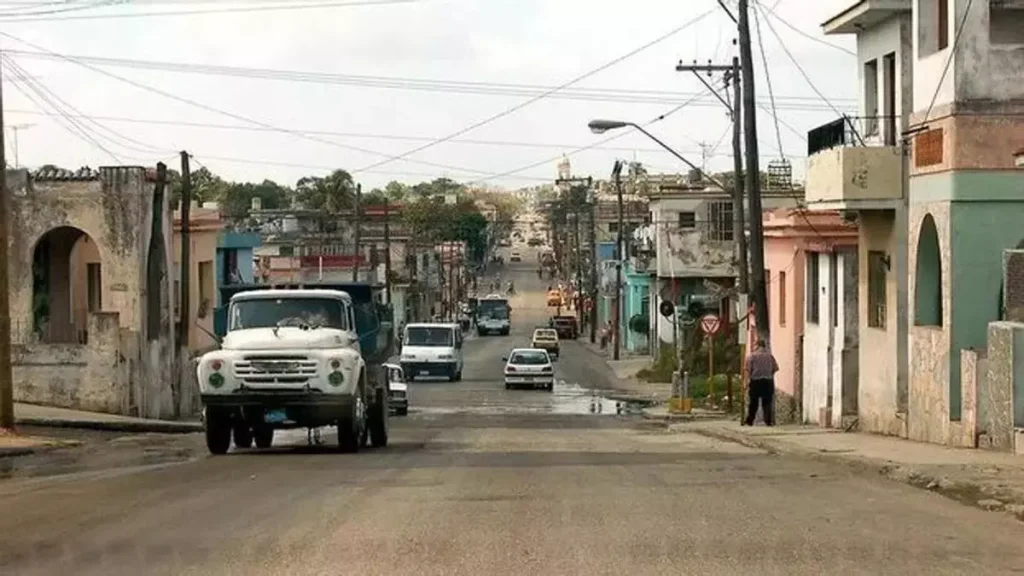
 In the Lawton neighborhood, in Havana’s Diez de Octubre municipality, residents experienced a power outage lasting all of 137 hours, from August 2nd to 8th. “That’s like five days and a bit more without electricity. Completely in the dark,” a resident told 14ymedio. “Then I’ll tell you about the water shortage, which is even worse,” he added.
in Luyanó the crisis is repeated . After three days without power, desperate owners of small and medium-sized businesses in the area and their neighbors organized to collect 70,000 pesos so that local linemen would replace their transformer. “Paying for their work,” said one resident, who, with a prophetic voice, predicted: “You can’t say anything, because if you do, they won’t fix it. What has this country become? My God.”
Hours later, the plan fell apart. “A neighbor went to the command post and snitched on the money for the transformer, and now the linemen have backed out,” he said. Now, he said, “you already know what that means—we just have to keep waiting.”
The energy situation in the country is driving Cubans to desperation, and the situation is far from improving this Monday. According to the daily report from the National Electric Union (UNE), the national situation for Monday, August 10, looks critical. At 6:00 a.m., the National Electric System (SEN) had only 930 MW available, compared to a demand of 2,820 MW. At that time, there was already a deficit of 1,880 MW, and by midday, the UNE estimated a shortfall of 1,700 MW.
During peak demand hours, when solar energy no longer contributes anything to the SEN, the state-owned company anticipates an impact of 2,280 MW.
The prognosis for tonight is even worse. During peak demand hours, when solar energy no longer contributes to the National Electric System (SEN), the state-owned company anticipates a shortfall of 2,280 MW, although this is far from the record deficit of 2,411 MW registered last week .
Currently, seven of the country’s 16 thermoelectric generating units are not operational. Unit 6 at Mariel, Unit 4 at Carlos Manuel de Céspedes, and Unit 2 at Felton are experiencing “breakdowns,” while Unit 3 at Santa Cruz, Unit 5 at Nuevitas, and Units 5 and 6 at Renté (Santiago de Cuba) are undergoing “maintenance.”
Thermal power plants contribute 40% of the energy mix and are fueled by domestic crude oil. The other 40% comes from generators, but this energy source, which requires diesel and fuel oil, has been shut down since January due to US government sanctions.
The Cuban energy crisis is explained by the combination of a situational element, the United States oil embargo, an action that the Cuban government has repeatedly denounced as “energy strangulation,” and a structural factor, a profoundly obsolete energy system that needs at least $6.612 billion just to upgrade its electricity generation capacity, according to a report by the US research center Cuba Study Group published last March.
The technical recovery of the national electricity system depends on institutional and economic conditions.
The study, conducted by Cuban economist Ricardo Torres, notes that the “technical recovery” of the national electricity system “depends on institutional and economic conditions that allow for sustained investment and operational reliability” and, in general terms, an “economic transformation.”
The cleanup, Torres points out, involves on the one hand, recovering the generation of thermoelectric plants and distributed generation (diesel and fuel oil engines) and, on the other hand, promoting a transformation of the energy mix by boosting renewables (solar, wind and bioelectric plants based on sugarcane biomass).
The serious energy situation in Cuba – which has caused 12 national blackouts in the last two years – has almost completely paralyzed the state economy, which, according to independent estimates, could contract by 6.5% this year, after an accumulated drop of more than 15% in the previous five years.
______________________
COLLABORATE WITH OUR WORK: The 14ymedio team is committed to practicing serious journalism that reflects Cuba’s reality in all its depth. Thank you for joining us on this long journey. We invite you to continue supporting us by becoming a member of 14ymedio now. Together we can continue transforming journalism in Cuba.