Agricultural companies in Artemisa owe more than 95 million pesos to producers alone, not counting the financial debt from loans.
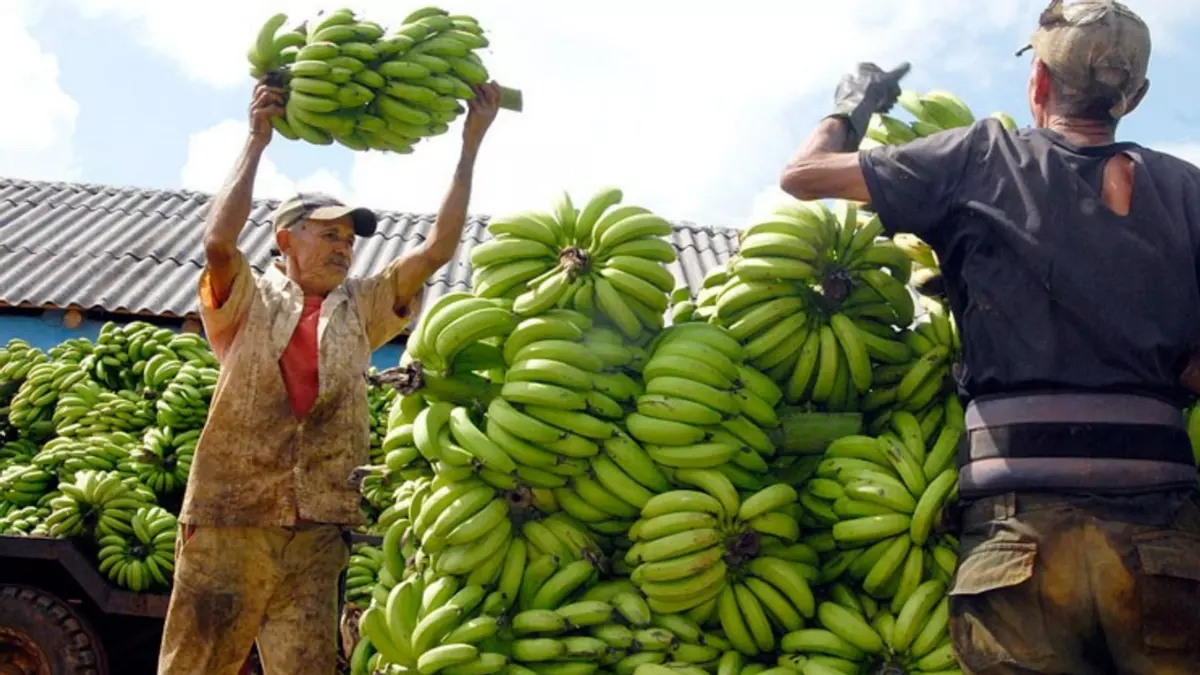
 14ymedio, Madrid, September 23, 2026 – “The debt of millions of pesos persists, like a virus that refuses to be removed.” This is how the official press characterizes the nonpayments by state agricultural companies to producers in a report published this Wednesday that reviews the large amounts owed to hundreds of farmers in the province of Artemisa, the agricultural hub par excellence of the western part of the Island.
The chain of nonpayments is scandalous and affects some 300 producers and 36 cooperatives in the territory. The total amount owed by the state companies exceeds 95 million pesos if the staggering 60 million owed by the San Antonio de los Baños agricultural company is added to the 35.7 million owed by the company in the municipality of Artemisa, according to Juan Carlos Alcolea Torres, president of the official National Association of Small Farmers (Anap).
Of this latter amount, most (82%) is already overdue, 29.3 million, according to Osbel Guilarte González, municipal director of the Artemisa Agricultural Company.
Of this latter amount, most (82%) is already overdue, 29.3 million, according to Osbel Guilarte González, municipal director of the Artemisa Agricultural Company
This is only if one looks at the producers, because the debt to the banks makes the rest pale in comparison. “We owe the bank more than 260 million pesos in overdue loans from previous years. In 2024 we renegotiated that debt for 10 years, and because of that we have overdue loans coming in almost every month, which we have to keep paying. So the bank takes 80% of whatever comes into our accounts from our income.” With the remaining 20%, they must cover salaries, other financial expenses, and the legally required contributions.
The report focuses on the cases of three producers who are struggling desperately to get paid. One of them is Daniel Evelio González, who has watched his banana harvest decline because of the impossibility of paying for the necessary supplies. “Without fertilizers, the bananas are delayed; when the plant produces, it takes too long to reach its size and ripen. And they owe me about half a million pesos,” the farmer says. These are bad times, he adds, because no one wants to work in the fields, much less under the existing conditions.
González says he has stopped harvesting because, as a result of the nonpayments, he has no way to cover the farm’s expenses, including paying temporary workers who want to be paid at night and in cash for what they did in the morning. The situation is made even more difficult by the impossibility of having cash. “We had more than a million pesos in the bank and they give us 2,000 or 5,000 pesos,” the farmer says. Previously, he delivered his products to Acopio, which in turn paid the cooperative he belongs to, the Tomás Álvarez Breto, but they are delivering less and later each time. “Explanation? That there’s no money. I don’t know,” he says.
William Hernández Valdés, a member of the same cooperative, is owed more than one million pesos for what he has harvested since last November on his nearly 20 hectares of burro bananas. “That affects the contracting itself and the payment to the workers. When you can find them,” he laments, pointing to the same difficulties as González.
“They requested a 48-million-peso loan with which they were going to pay us. It took time to be approved, and now they were told it would be used to pay for marketing; that is, for the products we delivered after the approval, not the debt”
Fernando García Cazañas, president of the cooperative, adds that the agricultural company owes them nearly 12 million in total, which increases every month, to which the air conditioning must be added. “They have a very bad economy; when they have had the opportunity, they have gotten tangled up with the production and payments from Havana, which also owes them many millions,” he points out.
García Cazañas reveals that there was already a precedent in 2025 and, on the advice of the first secretary of the Communist Party in Artemisa, they stopped delivering products to the capital. “Under Decree Law 63, if you have to block Havana, do it. Because if they don’t pay you, you get tangled up with the people here, and in the end your own people are going to sue you. You have to find another destination.” Although they have managed to sell and earn money this way, the bank loan payments leave no room for anything else.
“They requested a 48-million-peso loan with which they were going to pay us. It took time to be approved, and now they were told it would be used to pay for marketing; that is, the products we delivered after the approval, not the debt,” says the cooperative member, who explains the difficulties of making the producer understand that the arrears will not be paid, but rather whatever new products they contribute. “That encourages the producer not to deliver anything. They are the ones affected. Some are owed one million pesos, others nearly that amount. And the marketing in Artemisa and Havana is also harmed,” he maintains. Other provinces and destinations, like Internal Commerce and Public Health, benefit from the situation, he adds, while the market stalls in the province and the capital remain empty, not to mention the “social mandate.”
The article reviews more cases, including those who manage and fail to pay the farmer, depending on how they organize themselves; a context in which the issue of gasoline arises. “Now there is the possibility of importing fuel and whatever you need. Of course, that requires money. Many have told me, ‘Why don’t you pay me the debt, so I can buy at least 30 liters?’ You call the supplier and they bring it to the farm, but they tell you, ‘Give me what you owe me.’ And it can’t be everyone,” he emphasizes.
The president of the Camilo Cienfuegos cooperative, Alfredo Morales López, describes another imposing debt owed by Acopio, which from November through the end of July already amounted to six million pesos. “The company needs almost 26 million to pay the debts. However, they explained to us that the approved 46-million-peso loan would be used to pay for whatever is delivered from now on,” he says. The same case as that of García Cazañas.
“Recently, the company director said they managed to collect several million and would pay us everything. They owe farmer Adolfo Briz Benito 5,811,740 pesos alone. But one week after another goes by… and nothing,” he adds. The outlet contacted the executive, who confirmed the version, but the problems do not stop. “Now all that is missing is for the money to finally make its way from the Bank to the card, between the electricity and the connection, and then for us to withdraw it little by little, in another long process,” he says.
Osbel Guilarte González admits that the collection process “has not been the most efficient,” although he attributes it to transportation. “We have accumulated almost 120 million in accounts receivable, a large part of them long overdue. Our main customer, the Havana Acopio Company, owed us more than 11 million pesos as of the end of May, and the UEB Mercado de Plaza Cerro, which belongs to Havana Acopio, but to the Matanzas company, owes us almost 15, that is, 27 million between the two,” he summarizes.
“They still owe us for November and December 2025, as well as January, May, June, and July of this year. Nine million remained to be paid, and now the debt has grown to 11.7 million”
In his view, if they managed to collect everything, they could meet their payments to the farmers, but every time money comes in, the bank takes it and a new loan is needed. “At the beginning of June, another one was approved for us for marketing: 45 million to pay the farmers,” he says. They are now trying to pay within a maximum of 30 days and have already eased some of the burden, he maintains, although the cooperative members recall that money is still lacking and distrust that the amount will stop increasing.
“They paid us for February, March, and April of this year, because those were the smallest amounts. They still owe us for November and December 2025, as well as January, May, June, and July of this year. Nine million remained to be paid, and now the debt has grown to 11.7 million,” García indicates.
The report does not mention it, but since April of this year and as part of the Government’s economic reforms, Acopio loses its marketing rights if it fails to pay. The authorities established in the new regulation that the state company must fulfill its contractual obligations regardless of whether or not it has financial resources. In the event that it has logistical and financial problems, it is required, like everyone else, to notify the producers with whom it had contracted, who are thus released to market their products with other individuals or legal entities, a mechanism that puts an end to the obligation imposed on farmers despite the endless debts and nonpayments.
Translated by Regina Anavy
______________________
COLLABORATE WITH OUR WORK: The 14ymedio team is committed to practicing serious journalism that reflects Cuba’s reality in all its depth. Thank you for joining us on this long journey. We invite you to continue supporting us by becoming a member of 14ymedio now. Together we can continue transforming journalism in Cuba.