The exile community has watched as changes they considered imminent have been postponed, The Wall Street Journal reports.
 14ymedio, Madrid, September 21, 2026 – With November in sight, the halfway point of Donald Trump’s second term is approaching, and Cuban Americans continue to wait for a change in Havana that once seemed imminent but has not arrived. “They haven’t changed the goal, but they have moved the goalposts,” says Tony Costa, a businessman, president of the Foundation for Human Rights in Cuba, and one of the best-known faces of the historic exile community in Miami.
At 86, he is one of the wealthy men now sketching out the future of Cuba on the other side of the Florida Straits together with Juan Omar Sixto and Jorge Mas, all of them close to the Republican Party and featured in a report that The Wall Street Journal is dedicating this Monday to the plans of those anxiously awaiting the moment of a power vacuum in Havana.
“We have waited 67 years. We have to start,” Sixto, president of the new Cuban-American National Chamber of Commerce (CNCCA) said at a group meeting in June. Their plans encompass all kinds of areas, from the political — a provisional government with two years to lay the groundwork for free elections and the temporary application of the 1940 Constitution — to the economic.
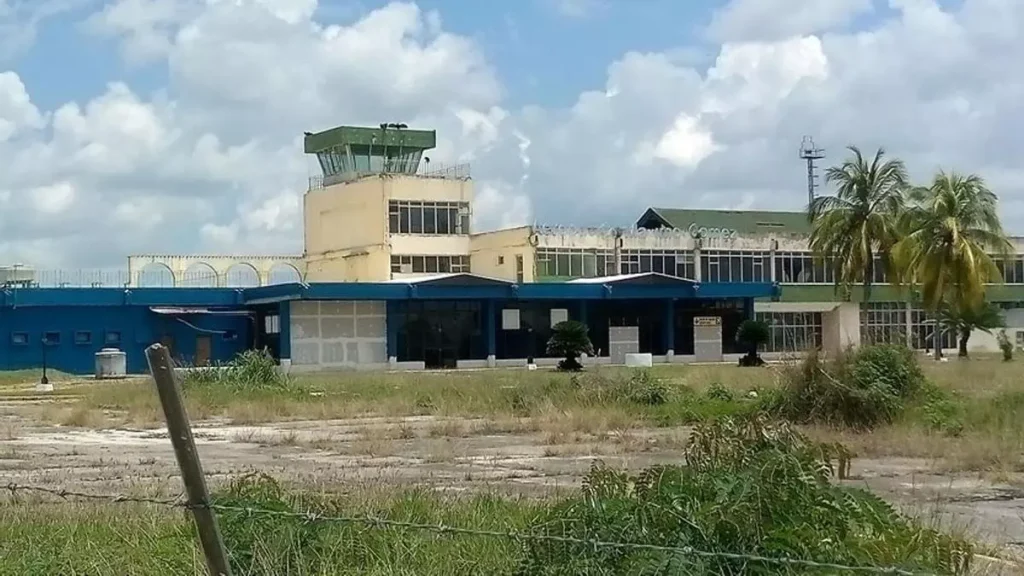
In the latter area, the needs are endless: engineers have been recruited to analyze the reform of the energy infrastructure, banks, and companies. Investment funds have been contacted to provide money for reconstruction and architects to remodel the Island’s eight airports, a project estimated to cost $8 billion. Lawyers are available to pursue claims for confiscated properties.
Engineers have been recruited to analyze the reform of the energy infrastructure, banks, and companies. Investment funds have been contacted, along with architects and lawyers to pursue claims for confiscated properties
“Anyone hoping to take a bite out of the Cuban piñata is hiring lawyers and lobbyists, particularly within Trump’s inner circle,” Ric Herrero, director of the Cuba Study Group, told The Wall Street Journal. “People are lining up for a transition that is by no means guaranteed, preparing for a friendly takeover or simply wasting their time,” he said. His statements highlight the quiet competition between businessmen close to and opposed to Trump, all ready to position themselves to land on the Island at the first opportunity.
Among the fervent Republicans is also Jorge Mas, president of the most powerful organization in the exile community, the Cuban American National Foundation and co-owner of the Inter Miami soccer club, who says that Trump once asked him how much it would cost to rebuild the Island. Some $90 billion for the first three years of the transition was the businessman’s answer, adding how easy it would be for them to raise the money.
Time is passing, however, and nerves are beginning to fray. Mas is a personal friend of Secretary of State Marco Rubio. Like most of those cited in the report, he expected to see a change in Cuba by summer, one they had anticipated ever since January 3, when U.S. troops captured Nicolás Maduro in Venezuela. Washington has, in practice, taken political and economic control of that country, although Chavismo remains, one of the greatest fears of these exiles.
“However, Havana has proved resilient, and with Trump’s attention consumed by the war in Iran, any plan to focus on Cuba has taken a back seat,” The Wall Street Journal noted. The newspaper says that senior administration officials are already talking about timelines so long that they could extend until the end of Trump’s term in 2028. It also recalls that Rubio was very annoyed this summer when he was asked for an approximate timetable for the end of the regime. “Global affairs are not a miniseries where you go through three episodes and it’s over. Global affairs are difficult,” the Secretary of State snapped at reporters, after saying they were prepared to be “very realistic and patient about how” that change would come.
The Wall Street Journal explains that Rubio has ordered sanctions to be maintained as a constant trickle, less for their actual effects than for the psychological pressure they create and the permanent sense that something could happen, without anything actually taking place. Something the newspaper adds that is also perceived by Mike Hammer, the head of the U.S. Embassy in Havana.
People close to the diplomat’s circle told The Wall Street Journal that, after months of saying in the U.S. and Europe that change was imminent, he has stopped mentioning 2026.
People close to the diplomat’s circle told The ‘Wall Street Journal’ that, after months of saying in the U.S. and Europe that change was imminent, he has stopped mentioning 2026
Similar ambivalence can be perceived in the words of Bryan Calvo, the young mayor of Hialeah. “I don’t think we have ever been this close. But at the same time, if it doesn’t happen now, it will never happen,” he said.
The approaches are, the newspaper report insists, at a standstill. The exile community opposes the dialogue route through Raúl Guillermo Rodríguez Castro, El Cangrejo, the general’s grandson. The demands made by U.S. officials on the regime have had very limited success: yes to economic reforms, nothing in the way of political changes.
The Wall Street Journal cites a survey published by The Miami Herald that concluded, after questioning 800 Cuban Americans, that four out of five see military action as the only option, since the Cuban population is not going to protest enough. “The country is completely paralyzed. People walk around like zombies,” says economist Omar Everleny Pérez Villanueva. Other analysts told the outlet that it is highly unlikely that Cubans will rise up: they have done so only twice before in 70 years; the opposition is disorganized; young people have emigrated; and older people can’t take it anymore. “We are children of mistreatment. You try to survive and get by,” admitted a day laborer from Havana who was interviewed.
Meanwhile, the CNCCA is not giving up on its efforts and is seeking, through volunteers, to teach the Cuban population how modern capitalism works.
Marcell Felipe, president of the American Museum of the Cuban Diaspora, sums it up: “This is our Berlin Wall moment.”
Translated by Regina Anavy
______________________
COLLABORATE WITH OUR WORK: The 14ymedio team is committed to practicing serious journalism that reflects Cuba’s reality in all its depth. Thank you for joining us on this long journey. We invite you to continue supporting us by becoming a member of 14ymedio now. Together we can continue transforming journalism in Cuba.