A family can spend thousands of pesos before even getting close to the dolphins or seals
 14ymedio, Havana, Juan Diego Rodríguez, July 25, 2026 / Hundreds of people were waiting this past Friday shortly before 10 a.m. for Cuba’s National Aquarium to open. The lack of small change was delaying ticket sales, heightening the anticipation. It had been a long time since the center, located in Havana’s Miramar neighborhood, drew such a crowd. The last time, in fact, that 14ymedio visited the site, it seemed unable to recover in any way from the decline into which it had fallen in recent years, especially after the COVID-19 pandemic.
To breathe some life into it this summer, the State has carried out two strategies: concentrating visits into fewer days of the week – at first, only from Friday to Sunday, though starting next week Wednesdays will be included – and organizing a “festival” called Pa’ Cuba. It is run by Grupo Palco, the entity belonging to the military conglomerate Gaesa in charge of organizing fairs, sales, and exhibitions.

And indeed, more visitors can be seen at the Aquarium, but in exchange, very little attention is paid to the animals. “There are people who haven’t even seen the fish yet, but they’re already in line for a cafeteria that sells bread with cheese for 150 pesos,” lamented one worker. “Some people come here just to kill their hunger,” she admitted candidly.
The kiosks selling all kinds of goods and food, as well as the tents with the most varied attractions, were indeed more appealing – provided, of course, that one was willing to part with cash.
Tartlets for 700 pesos, lemonade for 1,000 pesos, or a frappuccino for 2,800 were some of the prices in the food area. “And sugarcane juice, 300, 400, and 500 pesos,” noted a retiree who had brought her grandchildren to spend the day. And she complained: “They’re really squeezing people dry here.”
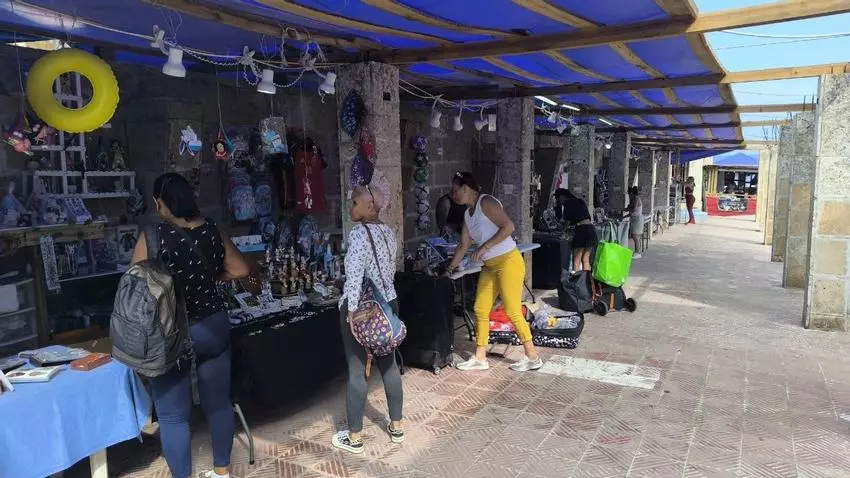
Rather than the country’s main center for marine species research, it was a genuine variety fair. At the stalls one could see anything from sneakers for 26,500 pesos to dolls priced between 4,000 and 10,000 pesos, as well as Bluetooth speakers for 19,500 pesos or knockoff soccer jerseys – including an old one from Spain, the reigning World Cup champion – for 20,000 pesos.
Some of the stalls, a knowledgeable visitor noted, “belong to private vendors.” At these, one could pay in either pesos or dollars.
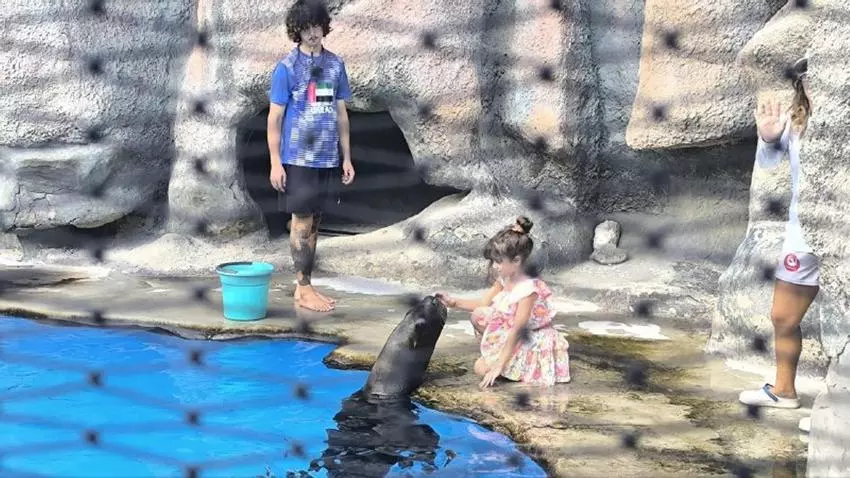
As for the attractions for children, they weren’t cheap either: 300 pesos for the mechanical bull, 500 pesos for the zip line, 850 for face painting, 1,500 pesos for tattoos, 3,000 pesos for an hour… Didn’t the Aquarium have dolphin and seal shows? “Not right now,” answered a worker. “All you can do is touch them, nothing more.” With payment required beforehand, of course: 1,300 pesos, for example, to interact with the sea lion.

None of that was reflected in the words of Mabel Góngora Leal, head of the Aquarium’s Marketing and Communications department, when she announced the opening of the Pa’ Cuba festival in the state media on June 18. “The aquarium is a scientific, educational, and recreational center, and environmental education is essential here,” the official said. In the same forum, Góngora acknowledged that the place had been “depressed” and that it had nearly “hit rock bottom,” although, she added, “we never closed,” and she expressed satisfaction over the “small” recovery in visitor numbers they were seeing.
Some visitors did not agree with this view. “This place is here to raid people’s pockets,” said a Centro Habana resident who had come to the Aquarium with her mother and her two children to relieve the children’s boredom. Transportation to get there cost them 13,500 pesos, on top of which the family had to pay for tickets – 150 pesos for adults and 50 for children. “We don’t have much left to enjoy, and without money you can barely do anything.”
Lydia, another Havana resident, agrees, with one caveat: “It’s a good entertainment option for the kids, because in the end there aren’t many options for them right now, not to say there are none at all. The children are locked up at home all day, suffering through blackouts and water shortages.” Still, she conceded: “Only people with remittance income can come here, because this is a palace of consumption.”
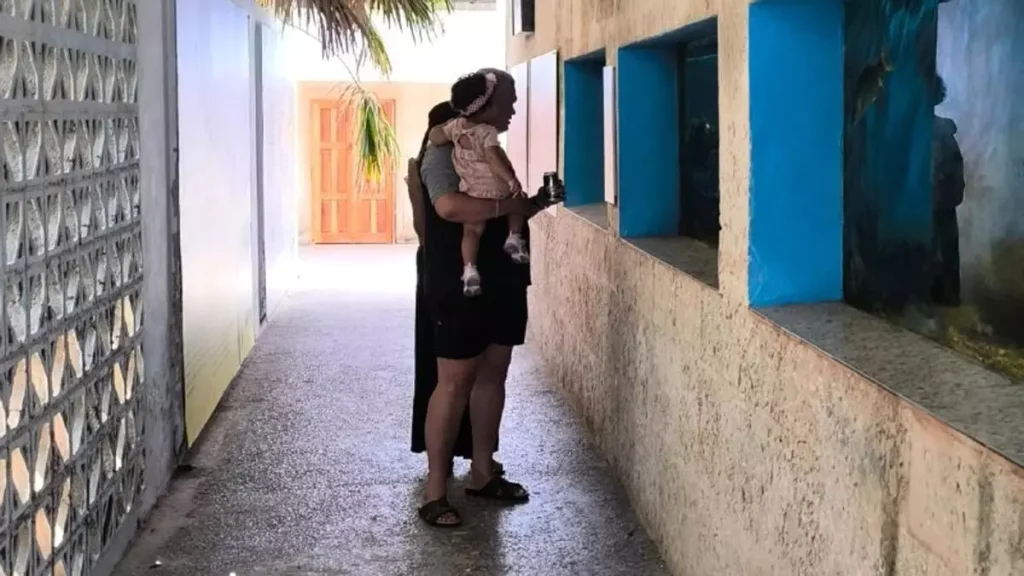
While the food and recreation areas were packed, the corridors with the fish tanks looked empty. Workers were filling the sea turtles’ tank, the turtles hidden from the sun beneath a rock in the meantime. They had emptied it, an employee explained to this newspaper, to remove the leaves and seeds that fall from the trees. “Now we’re filling it back up.”
Once they had finished their breakfast, visitors began walking through those areas as well. A father, trying to be funny, said to his son: “The fish look good enough to eat.” There was still hunger there.
Translated by GH
______________________
COLLABORATE WITH OUR WORK: The 14ymedio team is committed to practicing serious journalism that reflects Cuba’s reality in all its depth. Thank you for joining us on this long journey. We invite you to continue supporting us by becoming a member of 14ymedio now. Together we can continue transforming journalism in Cuba.