Like all his predecessors, Trump invokes his country’s “national interest” to justify his decision
 14ymedio, Havana, August 25, 2026 / Amid an unprecedented oil embargo against Cuba, US President Donald Trump extended the Trading With the Enemy Act (TWEA), one of the historical legal pillars used to maintain economic sanctions against the island, for another year, until September 2027.
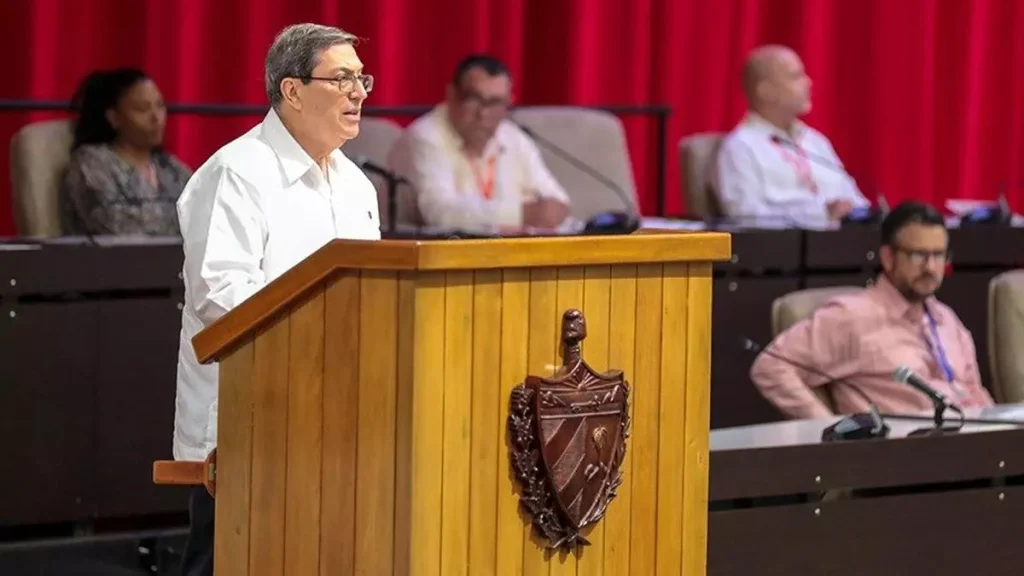
Hours after the extension was published, Havana condemned the measure through Foreign Minister Bruno Rodriguez, who referred to the mechanism as “a genocidal policy that has been maintained against our people for more than six decades.” In a message on X, the Foreign Minister stated that “the renewal of the so-called Trading with the Enemy Act until September 2027 is not a minor administrative act, but rather confirmation that Washington persists in its aim to suffocate an entire nation. This extension comes at the most cruel moment of the US offensive against Cuba in recent years.”
The decision, which appears as Presidential Determination 2026-21, was signed by Trump on August 20 and reinforces the network of sanctions that Havana describes as an “economic, financial and commercial blockade”.
It reinforces the network of sanctions that Havana describes as an “economic, financial and commercial blockade”
“The continuation of the exercise of those powers with respect to Cuba for one year is in the national interest of the United States,” Trump said in the document issued from the White House.
The TWEA, in force since 1917, was applied to Cuba on October 19, 1960 by then-President Dwight Eisenhower in response to the nationalization of American properties after the triumph of the Castro Revolution in 1959. Two years later, President John F. Kennedy signed the decree that turned it into an embargo prohibiting commercial and financial transactions with the island.
Over the decades, the policy was codified and strengthened through laws such as the Torricelli Act (1992) and the Helms-Burton Act (1996), which extended its reach to third countries and foreign companies. Since then, every U.S. president has annually renewed the application of the Trading with the Enemy Act with respect to Cuba.
The renewal of the embargo does not include new sanctions, travel bans, additional restrictions on remittances, or new Cuban companies on the US blacklist. However, it comes at a very different time than in previous years, as this year the White House has deployed a new sanctions program specifically targeting Cuban officials, state-owned enterprises, and strategic sectors of the Cuban economy.
Trump signed an order expanding sanctions against the Cuban government and authorizing the freezing of assets belonging to officials, state-owned companies, and financial institutions.
On May 1, Trump signed an order expanding sanctions against the Cuban government and authorizing the blocking of assets belonging to officials, state-owned companies, financial entities, and individuals linked to repression, corruption, or strategic sectors of the island’s economy.
This has impacted shipping companies and insurers that transport crude oil and commercial cargo to Cuba, which have canceled deliveries of fuel and other products. Furthermore, the financial embargo has also intensified, potentially leading to multimillion-dollar fines for foreign banks conducting business with Cuban entities, while companies from third countries are threatened with reprisals if they invest in or maintain a presence in strategic sectors such as tourism and mining, triggering a mass exodus of foreign companies from the country.
Havana has repeatedly denounced that US sanctions seek to “suffocate” the national economy, limit access to markets and technologies, and cause shortages of essential goods, with the aim of triggering a social explosion.
______________________
COLLABORATE WITH OUR WORK: The 14ymedio team is committed to practicing serious journalism that reflects Cuba’s reality in all its depth. Thank you for joining us on this long journey. We invite you to continue supporting us by becoming a member of 14ymedio now. Together we can continue transforming journalism in Cuba.