The winner of the 2026 National Television Award was one of the most beloved faces for several generations of Cubans
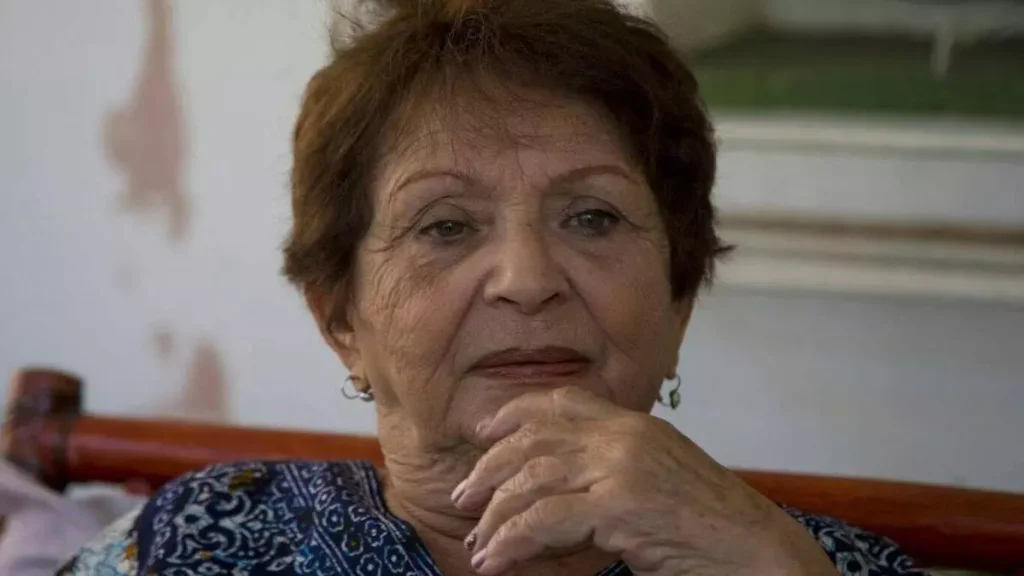
 14ymedio, Madrid, August 3, 2026 / Cuban actress Paula Alí, one of the best-known and most beloved performers among audiences on the island and winner of the 2026 National Television Award, died this Monday at 88. The news was announced by the Union of Writers and Artists of Cuba (Uneac) through a statement.
The organization highlighted her extensive career in television, film, and theater, which began more than six decades ago. It added that the actress was capable of taking on “with equal skill dramatic characters of profound emotional intensity,” although it was in comedy where she left “an especially endearing mark,” thanks to “a professionalism, a naturalness, and a charisma” that set her apart.
Paula Andrea Alí Rivera was born on January 26, 1938, in Candelaria, in what is now Artemisa province. Her first artistic work came in 1959, when she began as a model and television extra. From then on she built a career that took her through the country’s leading stages and made her a familiar face for several generations of Cubans.
Her connection to theater included a stage at the Martí Theater, where she worked in the vernacular genre and bufo theater. In 1970 she joined Teatro Estudio, a company with which she maintained a relationship for decades. She also took part in productions by El Público, directed by Carlos Díaz, in which she starred in La Celestina.
She was also fondly remembered for the character of Dr. Rosa Matriz in the comedy program ‘Punto G,’ one of the roles that cemented her popularity
In film she appeared in more than 30 productions of the Cuban Institute of Cinematographic Art and Industry (Icaic). Among her best-known films are Cartas del Parque (1988), Lista de espera (2000), Nada (2001), and El cuerno de la abundancia (2008). For her performance in Nada, directed by Juan Carlos Cremata, she received the award for Best Actress at the Cartagena de Indias Festival in Colombia in 2003.
However, television was the space that made her especially close to the Cuban public, with roles in telenovelas such as Enamorada del mar (1989), Las huérfanas de la Obrapía (1999), and Vuelve a mirar (2021). She was also fondly remembered for the character of Dr. Rosa Matriz in the comedy program Punto G, one of the roles that cemented her popularity.
Last July she received the 2026 National Television Award, granted in recognition of more than 60 years of uninterrupted work
Throughout her career she received numerous honors. In 1990 she won the Uneac Award and the Segismundo Award for her performance in the monologue Una mujer sola. Four years later she won the Caracol Award for the telenovela El año que viene. She was also honored with the Pequeña Pantalla Award and the Special Maestra de Generaciones Award, both in 2021, in addition to the Distinction for National Culture.
Last July she received the 2026 National Television Award, granted in recognition of more than 60 years of uninterrupted work in Cuban television, theater, and film.
The affection she inspired in the public was evident in 2024 when, after being hospitalized, she received hundreds of messages of support. She publicly thanked the outpouring of affection with a video shared on social media: “I am very moved to see so much affection. It’s something indescribable.” Two years later, that same affection is reflected once again in the farewells of colleagues and viewers who grew up watching her on the small screen.
Translated by GH.
______________________
COLLABORATE WITH OUR WORK: The 14ymedio team is committed to practicing serious journalism that reflects Cuba’s reality in all its depth. Thank you for joining us on this long journey. We invite you to continue supporting us by becoming a member of 14ymedio now. Together we can continue transforming journalism in Cuba.