Manuel Tovar states that the decision has nothing to do with the alleged US pressure denounced by the Cuban foreign minister
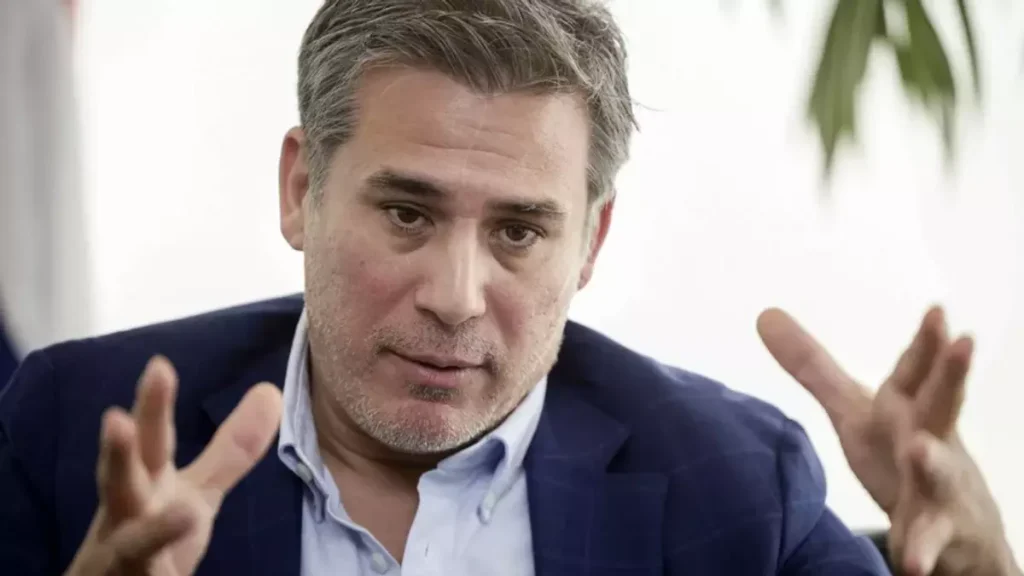
 14ymedio, Madrid, September 18, 2026 / The Government of Costa Rica takes a further step in its estrangement from Cuba, and six months after Rodrigo Chaves’s government closed the Embassy in Havana, that of his successor, Laura Fernández, announces that the decision has greater implications.
“There is a rupture of diplomatic relations,” said Foreign Minister Manuel Tovar Rivera in an interview with the Miami Herald. The foreign minister maintains that the measure will remain in place until the people of Cuba “regain their freedom” and that it represents nothing more than the continuation of traditional Costa Rican policy, broken only in 2009, during the government of Óscar Arias. “A foreign policy mistake,” the official maintains.
“Costa Rica will no longer lend itself to legitimizing a tyrannical and despotic regime that has robbed its people of the most fundamental freedom of a democracy,” he adds. For the time being, consular services for Costa Ricans visiting or passing through Cuba have been routed to the Embassy of Panama, while Cubans living in Costa Rica continue to handle their paperwork in San José. The previous government asked Havana to withdraw its diplomats, and this occurred, although citizen services continue to be handled, something relevant for the thousands of Cubans residing in the Central American country.
“Costa Rica will no longer lend itself to legitimizing a tyrannical and despotic regime that has robbed its people of the most fundamental freedom of a democracy”
According to press estimates, the number could be between 10,000 and 15,000, based on the sum of nearly 3,000 who hold residency cards, the 7,000 who have applied for refuge in the last six years, and the mass of undocumented persons, which could range between 2,000 and 4,000.
Tovar also referred to the number of Nicaraguans and Venezuelans who have arrived in the country, for whom, as for Cubans, an immigration regularization process was being prepared. The figure for Nicaraguan exiles is striking, as it is around 600,000 to 650,000, and all of them are entitled to free education and healthcare. “Someone has to pay those costs, and it’s Costa Ricans,” the official laments, although he stresses that his country will continue to be a refuge for whoever needs it.
However, he maintained – without providing data – that the number of migrants has dropped notably as a result of Donald Trump’s “deterrent policies”. One of the trade-offs for Costa Rica has been agreeing to be a “safe third country”, which means it receives around 100 people a month of various nationalities whom neither the US nor their country of origin will accept. Between April, when the flights began, and early June, 149 deportees arrived who, according to the minister, mostly returned to their homes, with notable exceptions: Asians, Eastern Europeans, and those seeking asylum.
“We did not receive any advice, any guidance, any instruction, any suggestion from any Government, neither from the United States nor from any other”
The minister, who met this Wednesday in Tovar with Marco Rubio, also rejected the accusations from the Cuban regime, which attributes the Costa Rican government’s stance to pressure from Washington. “It was a sovereign decision made by the Government of the Republic of Costa Rica. We did not receive any advice, any guidance, any instruction, any suggestion from any Government, neither from the United States nor from any other,” he stated, in response to Bruno Rodríguez, his counterpart on the island. The Cuban foreign minister accused the previous administration of “servility” in March, following the announcement of the Embassy’s closure.
Tovar did say, however, that he spoke with the US Secretary of State about “the return to a democratic path in Cuba and Nicaragua” – without mentioning Venezuela – a topic that will be discussed at the meetings of the Shield of the Americas, on the sidelines of the 81st General Assembly of the United Nations.
In that space, other issues will also be addressed, such as the fight against drug trafficking and other transnational crimes, arms and human trafficking, money laundering, environmental damage, and resource extraction.
Translated by GH.
______________________
COLLABORATE WITH OUR WORK: The 14ymedio team is committed to practicing serious journalism that reflects Cuba’s reality in all its depth. Thank you for joining us on this long journey. We invite you to continue supporting us by becoming a member of 14ymedio now. Together we can continue transforming journalism in Cuba.