The New Microphones / Yoani Sánchez

For a long time the only way to get one’s hands on that gadget called a microphone was to pass through many ideological filters. Given that same paranoia, to this day few programs on our national channel are broadcast live, so that no one can deliver–to the eyes of the viewers–opinions contrary to the system. And although in recent months criticism has been timidly allowed to pass in the official media, the doors remain closed to those who do not agree with the official discourse. Hence, we have had to find other microphones, other sets, other cameras. Improvised and less professional, yes, but indisputably more free than those of the studios at 23rd and L, at Mason and San Miguel, or at the provincial broadcast centers.

From the terrace of a house, with a sheet hung as a curtain and lights borrowed from a musician, one can make films without the boring triumphalism of the Roundtable show. One example of these new spaces that are emerging is the SATS project, where “art and thought come together,” directed by Antonio Rodiles. In a broad framework for debate, guests expound on a theme and then, later, respond to questions from the public. They analyze, equally, the trajectory of a hip hop musician, the work program of an outlawed legal association, or civil society from the viewpoint of a doctor of philosophy. Afterward, each day’s filming is distributed by the same alternative networks within which blogs, films, documentaries and opinions circulate.

Still missing, it’s true, from these space of SATS and also Citizens’ Reasons, is the presence of the “other.” Of those who defend the official versions of events and who are willing to come together with us and say so in front of a camera. But however much invitations have been extended to these people from State institutions, calling on them to debate and present their arguments, they prefer not to bestow on us the belligerence of their presence. I remain hopeful, however, that one day they will arrive. Sooner rather than later they will come, perhaps before they offer us their own spaces and allow us to speak from “their” microphones.

13 June 2011

Yoani’s Op-Ed in the Washington Post / Yoani Sánchez

What Jimmy Carter can’t change in Cuba

Thirty years after he left the White House and nine years since his only previous visit to Cuba, Jimmy Carter arrived in Havana last week, wearing the white guayabera that would serve as his uniform during a three-day visit to our island. Watching on television, I recalled how toward the end of his presidency — just as I was starting kindergarten — I learned to scream my first anti-imperialist slogans while thinking of his blue-eyed face.

In the 1970s, the newspaper Granma mocked his background as a peanut farmer. Soon, however, the Castro regime launched more than grievances and caricatures at the U.S. president. In 1980, the Mariel Boatlift sent more than a hundred thousand of our compatriots to his shores, including prisoners and mental patients rushed to the port from Cuba’s jails and asylums.

Those same sad days brought the birth of “repudiation rallies,” with mobs throwing stones, eggs and excrement and spitting on the “infamous traitors” boarding those boats because they couldn’t stand to wait any longer for the promised island paradise.

The pressure of such a flood forced Carter to close the doors to immigrants, handing that battle to Fidel Castro, who screamed “Let the scum go! Let them go!” as he masked ideological extremism under the pose of revolutionary euphoria.

Carter’s mishandling of that immigration crisis, some say, is among the reasons he was not reelected.

Some 20 years later, our media did an about-face and began referring to the former U.S. commander in chief as Mr. Carter. When he visited in 2002 he was introduced as a friend of our Maximum Leader. We who had once insulted him at school assemblies were confused by the red-carpet treatment afforded the man who was once our greatest enemy.

On that visit, as on his recent one, Carter met with government figures but also with opposition groups demonized and outlawed by the authorities. For a moment, we almost thought the world might have changed when Carter spoke before national television cameras in the Great Hall at the University of Havana. It was from his lips that we Cubans heard for the first time about the Varela Project, an effort by Oswaldo Paya to collect signatures for a referendum to amend the Cuban constitution to recognize our basic human rights, including freedom of expression and association.

But the moment was fleeting. Within a few months of Carter’s departure, a series of arrests known as the Black Spring took place across our country. Long prison sentences resulted for 75 dissidents and independent journalists, particularly those who had gathered signatures.

Last week, Carter met with Raul Castro in a formal government setting and with Fidel Castro, casually and at length in his living room.

As before, the regime pretended to show a tolerant face. Raul apparently gave the order not to interfere with the Nobel peace laureate’s early-morning breakfast with a few of us alternative bloggers who, just days earlier, had been demonized on official television as “mercenaries of the empire.”

Also on Carter’s agenda were just-released prisoners of the Black Spring, at least those who were not forced into exile, and their brave wives — known here as the Ladies in White — who never stopped marching for their husbands’ freedom, stoically facing down the repudiation rallies.

As before, Carter found points on which to praise the government, but it all sounded more like diplomatic formalities than real points of consensus.

The big question is whether the presence of the former U.S. president in our complex national situation will change anything. While I don’t believe we will move from a totalitarian state to a democracy by the mere fact of his visit, some acts have a symbolic significance that transcends their purposes.

His willingness to meet with bloggers and other representatives of our country’s emerging civil society extends some ephemeral mantle of protection. It proves that a bubble of respect is possible and that the shock troops who act against the activities of the dissidents are neither spontaneous nor autonomous but a formal arm of the regime. Carter’s willingness to hear our concerns forced Cuban authorities to inadvertently validate us and to acknowledge that there are other voices.

But there must be no illusions. Never mind that Carter proclaimed the innocence of jailed American Alan Gross, who was sentenced to 15 years for sharing technology to provide Internet access to Jewish groups in Cuba, nor that he stated that Cubans should be able to freely leave and enter the country. Carter will not succeed in creating changes we ourselves have not set in motion. And on this island where objectivity finds no middle ground, it seems we must wait for an entire family to die before anything can happen.

Yoani Sanchez is a writer in Cuba. Her awards include the 2010 World Press Freedom Hero award. She blogs at www.desdecuba.com/ generationy and is the author of “Havana Real: One Woman Fights to Tell the Truth About Cuba Today.” This column was translated from Spanish by M.J. Porter.

April 8, 2011

Since the Appreciation / Yoani Sánchez

Yoani Sanchez, Havana, 23 March 2011 — Had I hired an ad agency and a nimble publisher to disseminate the work of the alternative bloggers, I probably would not have accomplished such wide awareness of our existence, within Cuba, as that achieved thanks to the “Cyberwar” program shown Monday on official television. The tangible result is that my phone hasn’t stopped ringing and I’m hoarse from talking to so many people who have come to show me their solidarity. My sunglasses — as big as owl’s eyes — are no longer enough camouflage for me to pass unnoticed in my city. Every few yards someone approaches me on the street to offer words of encouragement and even big hugs, the kind that take my breath away.

What’s happening on this island such that those of us “stoned” by official insults have become so attractive? What happened to the time when aggravating State media represented years and years of ostracism and vilification? When did the spontaneous anger against those slandered, the sincere punch in the face for the stigmatized, fade away? I swear I was not prepared for this. I imagined that 24 hours after this pack of lies, told in emulation of Big Brother, everyone would pull away, stare fixedly at the cobwebs on the wall whenever I passed by. The result, however, has been so different: a complicit wink, a pat on the shoulder, the pride of neighbors who are surprised because a certain quiet and frail little woman who lives on the fourteenth floor is apparently enemy number one — at least this week — until the next to be stoned appears.

And I’m not the only one. Almost all the bloggers whose names and images appeared on the “Interior Ministry Soap Opera” are experiencing similar situations. Vendors at the farmers market who hand them a piece of fruit in passing, drivers of collective taxis who say, “You don’t pay today, sir, it’s on the house.” If the scriptwriters of that courtroom TV show had calculated such a response at the grass roots level, I think they would have refrained from putting our faces on television. But it’s already too late. The word “blog” is now irrevocably linked with our faces, glued to our skin, associated with our actions, tied to popular concerns, and synonymous with that prohibited zone of reality that is becoming more and more magnetic, more and more admired.

23 March 2011

Here is the TV show Yoani refers to, in 2 videos with English subtitles:
Cyberwar in Cuba’s Reasons

Bitter Coffee / Yoani Sánchez

To have a sip of coffee in the morning is the national equivalent of breakfast. We can lack everything, bread, butter and even the ever unobtainable milk, but to not have this hot, stimulating crop to wake up to is the preamble to a bad day, the reason for leaving the house bad-tempered and fit to burst. My grandparents, my parents, all the adults I saw as a child, drank cup after cup of that dark liquid, while they talked. Whenever anyone came to the house, the coffee was put on the stove because the ritual of offering someone a cup was as important as giving them a hug or inviting them in.

A few weeks ago Raul Castro announced that they were going to begin mixing other ingredients in the ration market coffee. It was nice to hear a president speak of these culinary matters, but mostly it was the source a popular joke, that he would say something officially that has been common practice – for years – in the roasting plants of the entire Island. Not only citizens have been adulterating our most important national drink for decades, the State has also applied its ingenuity without declaring it on the label. Nor will they use the adjective “Cuban” in the distribution of this stimulating beverage, as it’s no secret to anyone that this country imports large quantities from Brazil and Columbia. Instead of the 60 thousand tons of coffee once produced here, today we only manage to pick about six thousand tons.

In recent weeks “the black nectar of the white gods” — as it once was called – has become scarce. Housewives have had to revive the practice of roasting peas to ensure the bitter sip we need just to open our eyes. Whether it can be called coffee, we don’t know, but at least it is something hot and bitter to drink in the morning.

A Passport, A Safe-Conduct / Yoani Sánchez

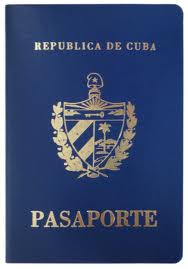
2010-12-06-cubapassport.jpgIt’s only thirty-two pages in a blue booklet with the shield of the Republic engraved on the cover. This Cuban passport looks more like a safe-conduct than an ID, with it we can escape from insularity though it still doesn’t guarantee we can board an airplane.

We live in the only country in the world where acquiring this document to travel requires us to pay in a currency different from that in which they pay our wages. Its cost — fifty-five convertible pesos — means that the average worker must save his entire salary for three full months to be able to buy this filigreed booklet with the numbered pages. What should be a credential that can be obtained for the mere fact of having been born in a given nation, in our country is a privilege for those who have hard currency: the colored notes obtained by doing the exact opposite of what the official discourse tells us to do.

Here, at the beginning of the 21st century, however, it is no longer unusual to meet a Cuban with a passport, something extremely rare in the seventies and eighties. In that era only a select few could display a credential that allowed them to board an airplane and fly to a foreign airport. We became an immobile people, and the few who did managed to travel were either being sent on a foreign mission, or departing into the finality of exile. To cross the barrier of the sea became a prize for those who had climbed the structures of power; the great mass of “unreliables” could not even dream of leaving the archipelago.

Fortunately, that began to change in the nineties. Perhaps it was the huge influx of tourists who infected us with curiosity about what was “outside,” or the fall of the socialist camp, but they could no longer restrict travel to “incentive trips” won only by the most loyal. The truth is, in those years the mechanism for leaving the Island began to loosen. The access to convertible currency, either through remittances from family abroad, or earnings from self-employment or the black market, also encourages us to begin exploring new horizons. Most often this is achieved through the help of a friend or relative living in another country, who pays the excessive cost of the trip. If we depended solely on our own pockets, few would ever manage to board a flight.

It’s true that travel is no longer a prerogative enjoyed only by the elect, but the government maintains an ideological filter to avoid allowing its critics such a succulent gift. There continue to be strong restrictions on leaving and entering the national territory. For those of us inside the country, the padlock is called the “exit permit” and is awarded based on political considerations. Those who have emigrated must endure a similar process that culminates in their acceptance — or not — to re-enter their own homeland as tourists. The final decision on both types of permits is made by a military institution that reserves for itself right to offer no explanations. Thus, the offices in Cuba where one solicits the exit permit — the so-called “white card” — or the Cuban consulates abroad where our exiles must seek approval to return home for a visit, are staging areas for human dramas, where the arbitrary is the order of the day.

Those who express critical opinions, belong to an opposition group, or have dared to engage in the exercise of independent journalism, rarely receive a travel permit. Another tightly controlled sector is those people who work in public health professions, who need a license from the appropriate minister himself, to be able to travel.

The situation takes on dramatic tones among those exiles who have lived abroad for decades, unable to visit their families or see their already grown children. Some die far from home, having never been able to return to kiss the forehead of the mother they left behind, or to take a last look at the house where they were born. A Party, an ideology in power, has claimed the power to regulate our migratory flow, as if the island platform was not home, homeland, refuge, but rather prison, fortress, trench.

For those lucky enough to get their exit permit, then comes the second stage of the ordeal which consists of arriving at the airport abroad and showing the passport that so many look upon with suspicion. The high number of Cubans who, every month, remain illegally in some corner of the terrestrial globe, makes us targets of great skepticism when it comes time to apply for a visa. Thus, when they finally settle in and become citizens of another country, my compatriots breathe a sigh of relief to have a new identification document that gives them a sense of belonging somewhere. A few brief pages, wrapped in a cover with the coat of arms of another nation can make all the difference. Meanwhile, that little blue booklet that says Born in Cuba, remains hidden in a drawer, in the hopes that one day it will be a source of pride, rather than shame.

December 6, 2010

The Carnival of the Dead / Yoani Sánchez

The rumba sways from side to side as the partying cuts across the Havana Malecon in a summer that makes you use your shirt sleeves to wipe away the sweat. From the eighth floor of a nearby building, a man can no longer hear the congas and the drunken shouts. His thoughts come with bursts of machine gun fire and the smell of a distant Africa where he lost a friend, sanity, and sleep.

Ariel is the main character in The Carnival and the Dead, the latest novel from Ernesto Santana, an authentic writer of shadows in a blacked-out city. For those of us who already know his writing — harsh, accurate and loaded with questions — this new novel reacquaints us with a daily venality now so common that we hardly see it anymore. He draws us into the trauma of those who were taken to distant lands to wage a war they didn’t understand, one that still, today, many of us cannot comprehend. It is a story of love, ghosts, HIV, and other characters in this drama of just 175 pages. A fiction of the dead who leave and return, of specters in their epaulets and medals, soaked in alcohol, needing to forget, urged to throw themselves into the void. In short, a book in the most intimate and raw style of the winner of this year’s “Novelas de Gaveta Frank Kafka” literary competition, Ernesto Santana.

Shortly, in our home on the fourteenth floor of a Yugoslav-style building that could well be in any part of Cuba, we will be presenting this horrifying and indispensable work. Neither triumphalism nor despair will be welcome.

December 3, 2010

The Market of Silence / Yoani Sánchez

Teenagers executed in Iran in 2005 for homosexuality. Image from http://www.enkidumagazine.com/

I still can’t believe that the Cuban delegation at the United Nations added its vote to a group of “countries that include homosexuality as a crime under the law, including the application of capital punishment for that reason, in five of them.” I didn’t invent the quoted phrase, it comes from a statement published by CENESEX (The National Center of Sex Education) to try to explain this absurdity, to justify the abominable. On a peculiar list, where some of the great suppressors of individual liberties appear, this Island also appears, despite the official discourse that has assured us for some time that abuse of homosexuals is chapter from the past.

It goes without saying that no one consulted Cubans before ratifying — in our name — a resolution that gives carte blanche to the death penalty for reasons of the victims’ sexual orientation. Not a single word is said by the official press, no transvestites have been able to go out and protest in the Plaza of the Revolution or in front of the Foreign Ministry to demonstrate their displeasure with this act of political expediency. Initially, it was the Benin delegation that pushed for a change in the resolution about extrajudicial, summary or arbitrary executions in the world, a change that as a result of which — as of two weeks ago — the UN resolution will no longer apply if the accused is subject to execution for loving a person of their own gender. Frightened, we witness the circle joined by the intolerant, the complicity established between the doctrinaire, the silence before violations committed by others, to buy silence for when they themselves will have need of it.

It is sad that an institution like CENESEX, that has worked to promote respect for diversity, engages in verbal acrobatics so as not to call things by their name. Mariela Castro, Director of CENESEX, cannot take cover behind the terse words of a statement where one finds no condemnation proportional to the mistake committed by our delegation to the UN. This coming Sunday she will appear on a national television show, Journeys to the Unknown, to present a documentary that touches on the theme of tolerance towards gays and lesbians. I think that would be a good time to explain to us why her response has not been stronger, why her silence has the ring of an accomplice.

December 1, 2010

Cubacel, In Bed With The Censorship / Yoani Sánchez

Dark night, a blackout in the vicinity of the Buena Vista neighborhood in Playa. The dilapidated shared taxi I’m taking stalls, and with an exhausted snort refuses to start again. A passenger and the driver are trying to fix it, while on both sides of the street we see people are sitting outside their houses, resigned to the power outage. I look in my wallet for my mobile, wanting to tell my family I’m delayed so they won’t worry about me. It’s an ugly picture: we are surrounded by darkness, in an area where crime isn’t child’s play, and to top it off my cellphone doesn’t work. Every time I try to dial a number I get the message, “Call Failed.” Finally, the car is purring again and we manage to advance, but the telephone service is not restored to the useless gadget and I feel like throwing it out the window. When I get home I discover that Reinaldo can’t call from his, either, and that my blogger friends can’t even receive text messages.

Our only mobile phone company cut the service for all of Friday night and part of Saturday, canceling for more than 24 hours a service for which we paid in convertible currency. With its announcements of “instant communication,” Cubacel comports itself as if it is an accomplice to the ideologically motivated censorship; supporting the reprimand from the political police, it puts an error message on our screens. It uses its monopoly power to punish those clients who deviate from the official line of thought. Part of its business capital, provided by foreign investors, is used to support the infrastructure of a momentary or prolonged boycott of certain cell phone numbers. A contradictory role for a company that should connect us to the world, not leave us hanging when we need it most.

It is not the first time this has happened. Every so often someone flips a switch and leaves us in silence. Curiously, it happens when there is important news to report and urgent information to bring to light. The forced cancellation of the concert by the group Porno Para Ricardo may have been the trigger for the phone company to violate his own maxim of keeping us, “in touch with the world.” The possible cremation of the body of Orlando Zapata Tamayo and everything that is happening around that event could be another reason to turn off our voices. What is certain is that on Friday night — in the midst of the darkness and worry — Cubacel failed me again, showing me the military uniform that hides beneath its false image as a corporate entity.

The Country of Long Shadows / Yoani Sánchez

2010-11-29-vigilantescopy.jpg

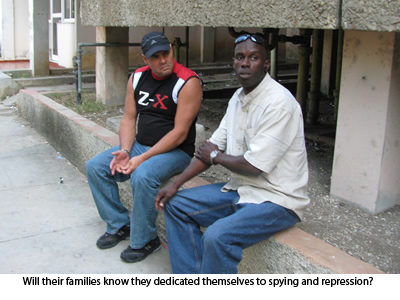
There are two men on the corner. One of them wears a headset attached to one ear while the other looks toward the door of the building. All the neighbors know exactly why they are there. A dissident lives on one of the floors and two political police watch who enters and leaves the building, giving the word if the “target” crosses the threshold of the huge concrete block; they have a car nearby to follow him wherever he goes. They don’t try to hide, they want people to see that this person with critical opinions is being monitored, so that his friends and acquaintances will be afraid to approach him, not wanting to fall into the network of control, the web of surveillance.

The Crushing Machine
This is not an isolated case, in Cuba every non-conformist has his own shadow or group of them who pursue him. The so-called “securities” also use sophisticated monitoring techniques, which range from tapping the telephone line and putting microphones in people’s houses, to tracking the person through the location of his mobile phone signal. For some time now, Havana has been filled with cameras on many corners; not only do they monitor ordinary crimes, but also follow the work of opposition groups, independent journalists, and civic and citizen associations with opinions that differ from those of the ruling party.

George Orwell’s futuristic novel has come to life here in a complex technological network supported by a huge number of plain-clothes police. Eyes that scrutinize are everywhere, and the results of these observations are added to individuals’ files, waiting for the day when the surveillance will result in a trial before a court. The devastating effects on the personal and social lives of those who suffer one of these operations are reflected in the terrible names Cubans use to refer to State Security: The Apparatus, Armageddon, The Crushing Machine. For anyone who has ever been their victim, their flamboyant methods can become a recurring nightmare. They are also the reason that others maintain their masks of make-believe, for fear of being entered into their dark archives.

Growing Vigilance
In a country in economic collapse, where cuts of up to 25% of the active labor force have been announced, it is curious that the number of employees in the Ministry of the Interior will not be reduced. On the contrary, the state budget allocated to the military and security sphere has increased every year between 2004 and today. If anything has characterized the leadership of Raul Castro, it is the emphasis on the presence of police, military and security guards everywhere. The latter abound in the cultural centers where there is an event, keeping an eye on the lines whether its to enter a film festival or a hip-hop concert.

Sometimes one almost feels like laughing to see an unarmed and peaceful man, accompanied only by his words and arguments, pursued by several cars, by cops with walkie-talkies, and a technical apparatus that seems more appropriate for action movies than reality. It is rather ridiculous to see these muscular men, trained to fight, waiting for hours in front of the house of a government opponent so they can harass him whenever he takes his dog out to relieve itself or goes to buy a pack of cigarettes. If it weren’t too sad to be funny.

The Privileged Elite
Although they’ve been trained in the methods of the former Soviet KGB, each one of these intimidators thinks himself a bit like Rambo, ready to flaunt his knowledge of karate any time someone turns around, or when a detainee doesn’t want to be forced into a car with private plates without an official arrest order. They specialize in beating people where it won’t show, in dislocating things that later, no doctor, will want to record, and threatening the victim with whatever he fears most. In short, they are specialists in terror and harassment. They enjoy the privileges that come to them as the arms of power: a weekend at the beach, a car imported from China, a higher-than-average salary, a little extra food each month. Crumbs that turn them into faithful members of a repressive machine.

People, however, don’t like them, though they present themselves as heroes, self-appointed defenders of national security. People talk about the disproportionate number of securities who surround each non-conformist. Under their breath, and while looking over their shoulders, many comment ironically, “There’s such a lack of bodies in agriculture, and look at these guys, standing around all day watching people who think differently.” If instead of casting their long shadows over the system’s critics, they decided instead, say, to cast them over some of the country’s empty furrows, perhaps they could plant a few tomatoes or some lettuce, and actually make a difference.

This article originally appeared in El Comercio.

Meet Pepito, the Character Who Makes Cubans Laugh / Yoani Sánchez

Laughter, banter, kidding around have been group therapy on this island where the frustration and dissatisfaction is exorcised by humor. We laugh at ourselves, and that’s healthy, but we also make those who govern us the butts of our jokes, though generally in the privacy of the family or with a close circle of friends.
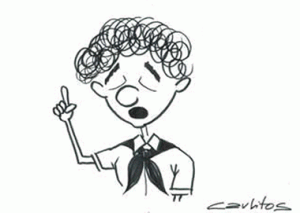
We assign nicknames, look for burlesque similarities between between one public figure and another, collect jokes and bust out laughing in a gesture that is sometimes more sad than happy. In short, what makes us roar with laughter would make us cry, if we couldn’t find a way to joke about it.

The terrible boy

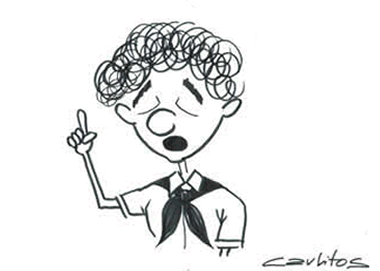
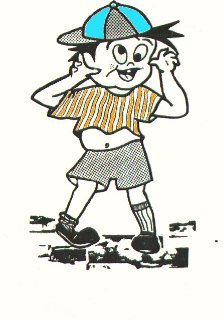
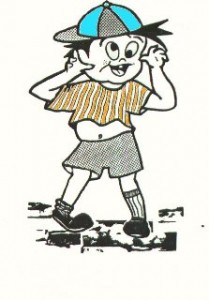
This national trend to go overboard has found its personification in the character of a young boy, eternal scholar full of uncomfortable questions. Pepito, the principal figure of many of our satiric stories, has a sharp tongue and empty pockets. His stories circulate clandestinely, spread by word of mouth with each one adding another detail, a punch of pepper to spice up the adventures of this urchin. For as long as I can remember, I’ve been hearing about this boy who stars in almost all our jokes.

Pepito went to the moon when the Soviet Union and Cuba launched their first joint mission to space, he was with Pope John Paul II during his visit to Havana, and he swears he entered the secret bunker where Fidel Castro spent his convalescence. He has been everywhere and nowhere.

Truth in humor

The strength of this enfant terrible is his ability to say what we are thinking, but don’t dare to verbalize. Pepito is Cuba, without the masks, without the double standard, without faking it. His anecdotes reflect the daily hardships, the long lines, and the basis of the rationed market: We have it but you can’t have it and if you have it it doesn’t exist.

His family is dysfunctional and suffers from the same housing problems as hundreds of thousands of his compatriots. He plays his most sympathetic scenes at school, when he raises his hand and the teacher knows he doesn’t know the answer. No matter, Pepito in front of an important visitor and tells her what his mother has told him a thousand and one times — he shouldn’t say in public.

I remember once, on the blackboard of that imaginary classroom was a picture of an American president and the teacher in the cartoon was saying, “Because of this man we have all these economic problems.” When she asked if any students knew who he was, the hand of the little trickster shot up. Finally, even though he’s not called on, he shouts out, “I know who it is teacher! I just didn’t recognize him without his beard!”

It is easy to imagine how the joke ends, with the teacher red in the face and a smack on the head for the little guy.
Dear jester

The mischievous child of our stories also warned us of the shadowy bear projected from the Kremlin, showing him as a rafter crossing the straits of Florida accompanied by sharks, and mocked the lizard his mother served up as dinner during the most difficult years of the Special Period, after the collapse of the Soviet Union and the loss of its subsidies made fresh lizard look like a pretty good meal. Nothing would have been same without Pepito, without his presence the most difficult times would have taken on an even more ominous hue.

We all remember his visit to Hell, where he found that, just like in socialist Cuba boiling oil was scarce, the torture machines were lacking spare parts, and the demons all napped during working hours. He also knocked on the doors of Heaven, but Saint Peter refused to open, arguing that if he let this diminutive Cuban enter, the celestial consulate would be overrun by refugees. Pepito has mocked us in our greatest miseries, but how much we love him!

A gap in gap-toothed humor?

Just when we though that this student of the unexpected would be with us forever, Pepito began to languish. His jokes became further and further apart, and in the streets his old jokes were recycled. Then came the theories, also mocking, about what had happened to the child whose sharp laughter had seen us through good times and bad.

Has the national humor begun to dry up? Is there no longer any reason to joke? Then came the jokes that Pepito had been arrested for crimes against hilarity, that finally the long arm of censorship had shut his mouth, or that he’d hopped on a raft himself and taken his jokes into exile. But many of us knew that his extinction was something more tragic: the effect of such prolonged anxiety was taking its toll on our mood, the daily difficulties were weighing us down so much we couldn’t even fight them off with sarcasm.

Recently it has become difficult to hear a Pepito joke and his corrosive stories are sadly missed. Every day when I wake up I think he will come back, that jokes will once again enter our lives, in the form of a naughty child who does not respect anything or anyone.

A Spanish version of this article originally appeared in El Comercio.

Prosperity and Personal Well-being: “Completely contrary to the principles of our society” / Yoani Sánchez

The response of the General Customs of the Republic to my complaint about the confiscation of ten copies of the book Cuba Libre is incredible. See with your own eyes their motivations for declaring these daily vignettes “dangerous.”

Translation of “facts” on second page of letter:

  1. Fact: I am the Inspector of Customs Control and of the Postal and Shipment Customs.
  2. Fact: It was the acting inspector who issued the Resolution of Forfeiture No. 409 of March 25, 2010, which provided for the administrative forfeiture of ten books entitled “Cuba Libre,” published by Marea, Yoani Sanchez author, and a blank publishing contract.
  3. Fact: The contents of the book “Cuba Libre” are against the general interests of the nation, since it argues that certain political and economic changes are required in Cuba so that its citizens may have more material benefits and achieve personal fulfillment, ends completely contrary to the principles of our society.
  4. Fact: The shipments constitute a unique and indivisible whole, a reason to also apply the sanction of confiscation to the publishing contract with “Marea” Publishers.
  5. Fact: The fundamental facts taken into account to apply the sanction of confiscation were not recorded.

November 25, 2010

Cultural Dysgrphia / Yoani Sánchez

Claudia Cadelo is still waiting for a response from the Provincial Prosecutor to her complaint about the cultural apartheid at the last Young Filmmakers Exhibition. Agent Rodney never showed his face to confirm or deny the sad events of November 2009. And plainclothes police surround the home of Luis Felipe Rojas, without any court order to do so. My complaint to the court for the beating and false arrest I suffered last February has met only silence from the legal institutions… while Dagoberto Valdés is still waiting for an explanation of why they will not let him travel outside of Cuba. We are surrounded by a repression that does not sign papers, show its face, or place a stamp next to each act which violates its own law.

Punishments they do not want to leave any evidence of, detainees who do not appear on the inmate roll of any police station, threats from voices that leave no trace. A culture of intimidation without a written language, imposed by pseudonymous agents who use coercion to avoid leaving evidence. When we demand that they put in writing the phrases they scream at us, far from the cameras and microphones, they tighten their lips and boast about the power that allows them to remain anonymous. If we file a complaint, appealing to the law that they themselves have created, then thirty, sixty, ninety days pass, and nothing. No judge will hear a complaint against the olive-green institution that rules this country.

So vainglorious from the dais, they use words like “courage,” “sacrifice” and “fortitude,” to hide behind their own fear, to avoid putting their names, their faces, and their convictions next to the atrocities they commit.

November 25, 2010

The Prodigal Friend / Yoani Sánchez

He returns speaking softly, knocking cautiously on the door of that friend he hasn’t wanted to see for more than a year. For a long time he doesn’t talk about what happened when he didn’t come, or why, but the way we look at each other says everything. Fear, that element that puts affection to the test and throws corrosive acid over declarations of loyalty, has kept him away. Now he’s back for just a few minutes. While he’s in our house he speaks in a whisper, pointing to the tiny hidden microphones he imagines in every corner. We invite him to share a couple of fried eggs, a piece of taro, and some rice, not a word of reproach. We act as if we’d seen him yesterday or as if we’d talked on the phone just this morning, as if he’d never been away.

Nevertheless, something is broken beyond repair. So we only tell him about family things, about Reinaldo’s granddaughters who grow bigger every day and Teo’s new interest in playing the guitar. Not a single word from this side about the gratifying and painful side of our lives that comes from expressing ourselves freely in a country full of masks. When we seem to have run out of things to say, we extend the conversation by mentioning the rain or the stories of violence that seem to become more common every day in this city. To fill the void created by distance we tell him about our inability to find cooking oil, and the detergent one has to tease out from the hidden stores in the shops. We avoid, of course, future plans, daily worries, the police cordon, and how sad we feel about those who leave.

After a while the friend goes and we’re convinced he won’t return for a year or two, an eternity or two. Who knows, he might be here sooner than we think, patting our backs and telling us that when everyone fled from us in terror he wasn’t infected by the fear and from his room, at a safe distance, he was with us every step of the way.

The Lovers’ Bridge / Yoani Sánchez

There is a false impression, quite widespread, that lovers are people with their heads in the clouds, oblivious to practical details. But there are romances that owe their survival to carefully calculated actions, organized from the beginning. In the city where I live, for example, couples will consider in advance whether they are going to live with his parents or hers, given the poverty that prevents them from having a nest of their own. They know that the decision to live together involves a lot of red tape, such as the complexities of changing one’s address and registration in the rationed market.

And then there are people like Ricardo, who for years managed to avoid complicating his life with a stable engagement. But, his intentions notwithstanding, the summer before last he met Niurka and all his plans gave way before this 20-year-old from Santiago. They lived intense days in a room borrowed from a friend, and nights on the benches of dark Havana parks. He said he didn’t want commitment, but with one kiss from her his strength failed before this new relationship. From September on, they couldn’t be separated, even for a day, without talking at length from the congested public payphones. He changed his plans and proposed that they emigrate together, because neither had any property or projects to hold them here.

In December, Ricardo married an Englishwoman nearly six feet tall, with Niurka as a witness at the opulent wedding. While the official bride entertained her friends, both Cubans threw each other glances, and promised themselves a more beautiful ceremony in the future. He left on a plane before Christmas, which took him off to a language of which he barely spoke a dozen words. With the first money he earned he called his brown-skinned lover and told her of all the things he was seeing. He had started working in a bar and saving money for the coveted project of reunification with Niurka. His legal wife barely noticed that Ricardo spent a lot of time staring into the distance.

Meanwhile, in this eclectic city that is Havana, the grieving ex-girlfriend was looking for a springboard to take her near to London where he lived. She bought some very short skirts and began to frequent the places where tourists go to look for sweet beautiful girls. She said nothing to Ricardo, because they had both agreed to forget the crooked paths that would lead them to be together again.

“We will start from scratch,” he had said, and the detour of his current marriage would be erased in the happy life that would include them both. Thus, she swallowed hard, and began dating a 60-year-old who lived on the outskirts of Paris. It wasn’t difficult to adore her, because the agile girl gave him a lot of love in the four weeks he was in Havana. When he left for the airport she told him, in clear and slow Spanish, “I can’t live without you,” and the lonely European imagined an upcoming wedding.

In early March the enraptured Frenchman returned to the arms of Niurka, with his birth certificate and all the papers required to seal the union legally. The night it was announced, she managed to get a few minutes alone to send an email to the anxious Ricardo. “I have the ring. You and I are about to embrace,” she wrote. They signed the marriage certificate on a grey day, which she would never mention to her future grandchildren. The visa arrived three weeks later and in her last days here she nostalgically visited the places where she had begun her love affair with Ricardo.

Niurka and Ricardo have managed to get close to each other near the Mediterranean, where nothing reminds them of the Caribbean where they were born. He will tell his wife that a friend has invited him to go fishing, and she will lie as well, saying that she’s going to visit a relative who emigrated. Neither of them knows how they will fix the legal mess in which they are trapped, but those details can wait for later. Now, they only have time for love, while — in different cities in Europe — two deceived people have been the bridge for their reunion.

Photo: Jane&Cathal

November 22, 2010

The Mandarins Come by Boat / Yoani Sánchez

It is a mesh bag, a reddish woven net with five mandarins inside. They’ve been carried here — from Europe — by a reader who discovered where I live thanks to the tracks left in the blog. After I brought him a glass of water, he took the citrus fruits out of his backpack — a little embarrassed — as if he’d come to give me something too common on this island, even more common than the invasive marabou weed, or intolerance. It’s inexplicable, then, why I grabbed the bag and buried my nose in every fruit. Within a few seconds I was shouting for my family to let them know about the orange globes I was already beginning to peel. Sinking my nails into their skin and smelling my fingers, I have a celebration of orange zest on each hand.

A trail of peels covers the table and even the dog is enthusiastic about the scent that is wafting through the whole house. The mandarins have arrived! The almost forgotten scent, the extravagant texture, have returned. My niece celebrates their appearance and I have to explain that once these fruits did not arrive by boat or plane. I avoid confusing her — she’s only eight — with the history of the National Citrus Plan, and the large expanses on the Isle of Youth where oranges and grapefruits were harvested by students from other countries. Nor do I mention the triumphalist statistics thrown out from the dais, or the Tropical Island juices that started out with pulp extracted from our own crops and now are made with imported syrup. But I do tell her that when November and December rolled around, all the children in my elementary school smelled like oranges.

What days those were! When no one had to bring us, from a far off continent, what our own earth could produce.

November 20, 2010