Six people imprisoned following the 2021 protests have died in state custody
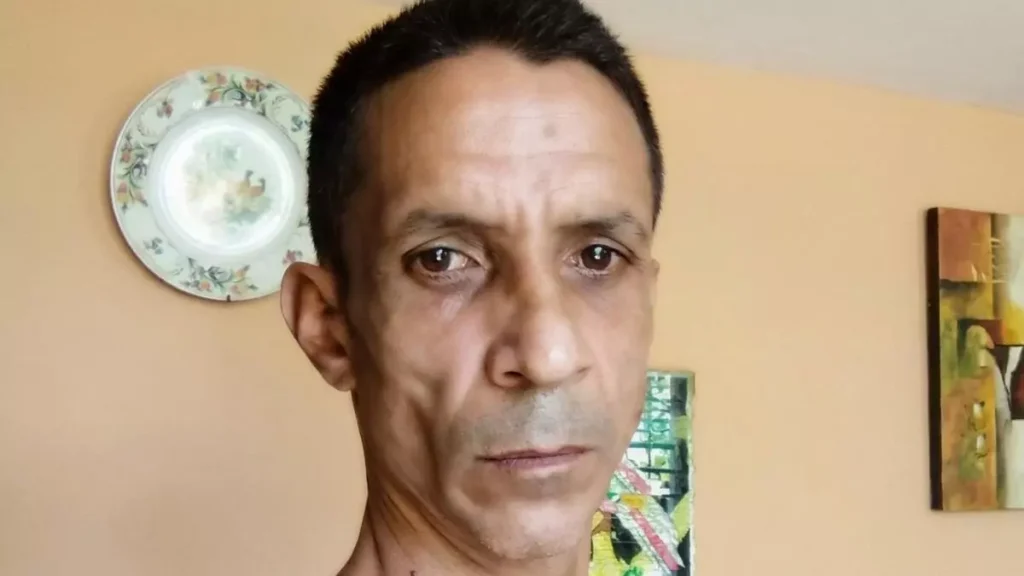
 14ymedio, Havana, May 18, 2026 / Political prisoner Ernesto Brieva Sempé, 52, arrested after the massive Island-wide protests of 11 July 2021, died in custody in the early hours of May 13 at the Combinado del Este high-security prison in Havana. The information was released this Monday by the legal advice center Cubalex, which reported that the man was “in a severe state of malnutrition,” although it noted that, to date, “it has not been possible to verify the official cause of his death.”
The man, who, according to Prisoners Defenders (PD), had diabetes, was tried along with 14 other protesters who took to the streets in the Havana municipality of Diez de Octubre during the 11J protests and who faced long prison sentences for the crimes of assault, contempt, public disorder and incitement to commit crimes.
In the case of the man from Brieva Sampé, he was serving a five-year sentence of correctional labor without internment for sedition – handed down in January 2023 – although the prosecution had originally requested 12 years in prison .
Sources close to the matter confirmed to Cubalex that Brieva Sempé’s sanction had been revoked, but that he was still serving time in the Combinado del Este prison for “continuing to publicly express his critical stance toward the system.” The NGO also reported receiving information that the funeral “took place under heavy surveillance by State Security agents.”
The funeral “took place under heavy surveillance by State Security agents”
The advisory center demanded an independent and impartial investigation into his death, as well as guarantees of protection for people deprived of their liberty and an end to reprisals against those who exercise their right to freedom of expression.
Since 2021, six political prisoners from the July 11th events have died in state custody. The most recent case was that of Luis Miguel Oña Jiménez, just 27 years old, who died last February three days after being released on parole, when his health was already critical, from the Panama prison for HIV patients in Güines, Mayabeque province.
Although it did not occur inside a prison, organizations such as PD and the Cuban Prison Documentation Center (Cdpc) held the authorities responsible for the death.
Oña Jiménez, who was serving a 12-year sentence for sedition, suffered a stroke (a decrease in blood flow to a part of the body), which left him unable to move his mouth, hands, or feet. He was subsequently transferred to the Julio Trigo López Hospital in Havana. According to Prisoners Defenders, he was given a terminal diagnosis and sent home on parole, where he died shortly afterward. Despite his condition, he did not receive adequate medical attention following such a serious neurological event, nor did he receive treatment for his underlying health conditions.
There he was “evicted” and sent home on parole, where he died shortly afterwards
Prior to that case, another prisoner from the 11J massacre who died in custody was Manuel de Jesús Guillén Esplugas, who died from a beating at the Combinado del Este prison on December 2, 2024. An activist with the Patriotic Union of Cuba (Unpacu), Guillén was serving a six-year prison sentence for filming and disseminating videos of the anti-government marches.
Prior to this, the death of Gerardo Díaz Alonso, 35, was reported at the Canaleta high-security prison in Matanzas. The cause of death for the man, who was serving a 14-year sentence, was a heart attack.
Months earlier, Yosandri Mulet, sentenced to 10 years in prison for “sedition,” had died in the Julio Trigo hospital, where he was admitted on August 22, 2024 after jumping off the Calabazar Bridge in Havana during a protest.
Likewise, Luis Barrios Díaz, who died “due to negligence by the authorities” on November 20, 2023. In his case, it was reported that he was admitted to the infirmary of Prison 1580 in San Miguel del Padrón, Havana, and later transferred to La Covadonga Hospital, also in the capital, “to receive specialized care.” At the hospital, doctors warned that Barrios Díaz’s admission was “essential” due to his poor health, but prison authorities ignored them. They returned the prisoner to his cell, claiming they “did not have enough fuel to guarantee constant surveillance” of the inmate, a decision that, according to the Cuban Observatory for Human Rights, “led to the worsening of his health and subsequent death.”
So far this year, Cubalex has documented 20 deaths in custody in the country’s prisons. Meanwhile, the CDPC has recorded 128 deaths since January 2023.
______________________
COLLABORATE WITH OUR WORK: The 14ymedio team is committed to practicing serious journalism that reflects Cuba’s reality in all its depth. Thank you for joining us on this long journey. We invite you to continue supporting us by becoming a member of 14ymedio now. Together we can continue transforming journalism in Cuba.