The center, located in Artemisa, provides housing, food, and medical care to elderly people, individuals with mental health disorders, and other vulnerable citizens.
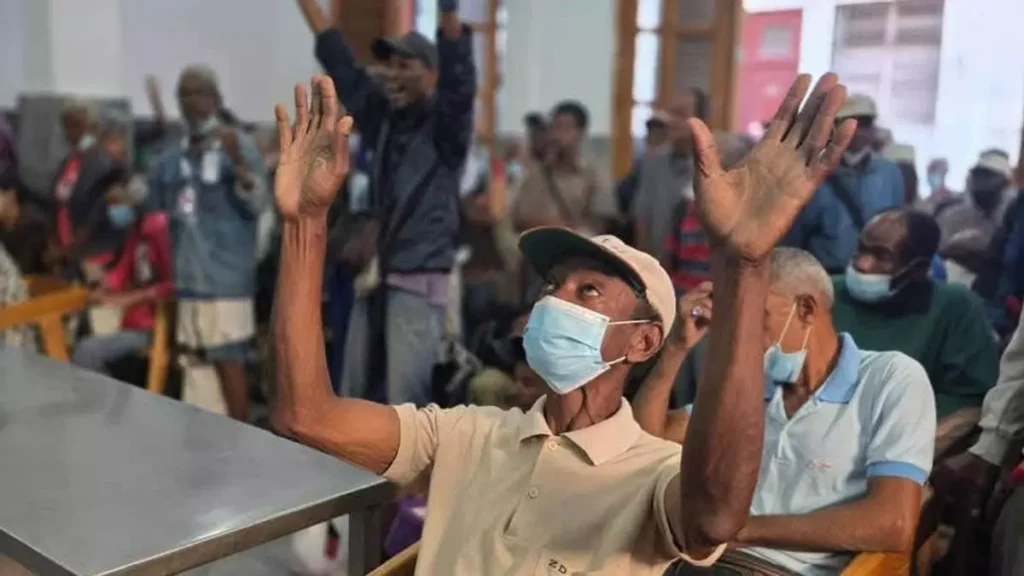
 14ymedio/EFE, Havana, November 21, 2026 – A total of 318 people who were living on the streets of Cuba have found shelter at Quisicuaba, a center located in San Antonio de los Baños, in the province of Artemisa, where they receive free housing, food, and healthcare. Amid the profound economic and social crisis gripping the Island, the institution provides basic services that are becoming increasingly difficult for much of the population to secure.
Located in a rural area, about 20 kilometers from Havana, the project occupies the facilities of a former school renovated by a religious institution. Among its residents are elderly people, individuals with mental health problems, and citizens undergoing social reintegration. Most have lost contact with their families.
The presence of homeless people has become increasingly visible on Cuban streets, against a backdrop of rising food prices, shortages of medications, low pensions, and deteriorating living conditions. These difficulties are compounded by a lack of specialized facilities to care for those who have been abandoned.
The Quisicuaba camp is undergoing expansion, and its managers hope to reach a capacity of between 560 and 580 beds
“This project is capable of taking in a homeless person, and that person goes on to live here, becoming part of the community,” Yadelki Hernández, the center’s director, explained to EFE during a tour of the facilities.
As she accompanies the journalists, Hernández takes calls to locate a doctor, coordinates the transportation of several elderly residents to Havana for ophthalmology appointments, and checks on the progress of lunch preparations, which are cooked over charcoal.
The Quisicuaba camp is undergoing expansion, and its managers hope to reach a capacity of between 560 and 580 beds. It currently has a pharmacy, medical office, bookstore, hair salon, exercise areas, laundry facilities, and bathrooms.
The project also has dozens of hectares devoted to food and charcoal production, resources that help sustain the more than 30 social initiatives developed by Quisicuaba.
The director acknowledges that demand for assistance continues to grow. “We know how much our country needs to address this situation today, a situation that only continues to get worse,” she admits.
“We are not concerned about who they were, what they did, or what happened in their past. They are simply human beings living in very difficult conditions on the streets”
The institution has a multidisciplinary team of 62 employees, including doctors, psychiatrists, therapists, and assistants. In addition to providing daily care, specialists design occupational therapies tailored to each resident’s cognitive abilities.
According to Hernández, those who arrive at the center are usually in “extreme physical and mental conditions” after experiencing abandonment, hunger, and deteriorating health. The director estimates that between 85% and 90% of those taken in have some type of psychiatric disorder.
“We are not concerned about who they were, what they did, or what happened in their past. They are simply human beings living in very difficult conditions on the streets, and what we do is try to heal them, care for them, and look after them so they can have the best possible quality of life until the day they die,” she says.
In addition to having rooms and clean clothing, residents receive six meals a day: breakfast, lunch, dinner, and three snacks. The center also provides wheelchairs for those with mobility difficulties.
Quisicuaba’s work also extends to the surrounding rural communities
Much of the equipment comes from international donations. The institution is currently working with Spanish partners on a project to install solar panels that will reduce its dependence on the national electricity grid, which has been affected by a severe energy crisis.
Quisicuaba’s work also extends to the surrounding rural communities. In response to the suspension of school transportation routes due to fuel shortages, the center established a classroom in coordination with educational authorities for students from preschool through sixth grade, with the aim of preventing them from losing the school year.
The facilities also house an affiliated classroom of the University of Medical Sciences, where dozens of students complete practical training and examinations.
According to Hernández, the project’s operation depends not exclusively on financial resources but also on the commitment of those who work there and the solidarity of the young people who participate in its activities.
In a Cuba where the number of people needing assistance continues to grow, Quisicuaba is trying to expand its capacity to provide shelter, food, and medical care to those who have been left outside the networks of family support and social protection.
Translated by Regina Anavy
______________________
COLLABORATE WITH OUR WORK: The 14ymedio team is committed to practicing serious journalism that reflects Cuba’s reality in all its depth. Thank you for joining us on this long journey. We invite you to continue supporting us by becoming a member of 14ymedio now. Together we can continue transforming journalism in Cuba.