The Secretary of State laments that too many of the regime’s supporters “still believe they can hold out until the end of this Administration without doing anything”
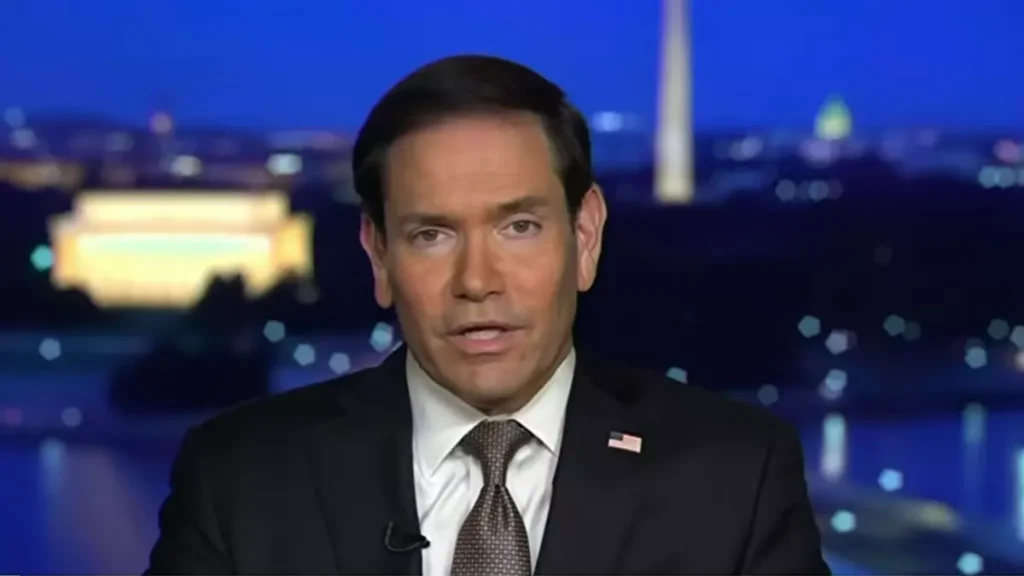
 14ymedio, Madrid, September 29, 2026 / The constant back-and-forth of the US Administration in its policy toward Cuba had a new episode yesterday with statements by Secretary of State Marco Rubio. In an interview with Fox News, the Republican warned “certain individuals” who control the regime to “open their eyes to the reality they face” or “the consequences will be even worse for them.”
Rubio stated that Washington has no intention of allowing the island “to become a base of operations against the United States.” The Secretary of State insisted that the regime cannot keep wasting time and urged it to choose “a different path.”
“Unfortunately, the people who are still there chanting revolutionary slogans, many of them, still believe they can hold out until the end of this Administration without making changes or doing anything. They are wrong, and they will learn the lesson the hard way if they don’t change their attitude,” the Republican insisted.
The Secretary of State expanded on the idea that Cuba is a “failed state” and stressed that, in reality, “it has already fallen.” “It doesn’t have a functioning economy, and it is governed by people who keep preaching about a revolution that has been dead for 20 years. It has never worked; that’s the problem they have,” he added.
The Secretary of State expanded on the idea that Cuba is a “failed state” and stressed that, in reality, “it has already fallen”
“They have a functioning regime, one that has jailed and killed people, but it is not a functioning government or a functioning country. It simply isn’t. On top of that, it is a country driven by corruption and theft,” he continued. Rubio also maintained that the Cuban people are shut out of the economy.
“Anything that had the chance of generating money in Cuba was controlled by the Cuban Armed Forces and the Cuban Communist Party, to line the pockets of a handful of individuals at the expense of the entire country. Since 2021, at least close to 20% of the population has left the country. They left because it is a failure, an absolute failure,” he observed.
The Secretary of State once again hardened his tone compared with the one he took last week in New York, when he stated: “There are some individuals in that regime we will never be able to work with because they have blood on their hands. But there are people there I believe we could work with if they are willing to steer the country toward political and economic freedom and toward the process that will lead us to that final goal.”
Thus, he once again toyed with the military route when he implied that the time for dialogue may run out. “Our president’s preference is to resolve these things diplomatically and in a way that allows him to reach an agreement and put Cuba – or any country – on a path of possible and irreversible change that includes economic freedoms, but also political freedoms,” he said. And he insisted on this point, as is being demanded from Florida: “You cannot have economic freedom if you don’t first have political freedom. Both have to happen at the same time, because that will require a period of transition.”
Right afterwards, just 30 seconds before the end of the interview, he was asked about Venezuela, where the transition seems to be dragging on longer than the opposition expected in January. “Two things are happening in Venezuela: one, its economy needs to keep recovering because the people have suffered too much. We are talking about 25 to 30 years of corruption. The other thing that has to happen, and that we are focused on, is a democratic transition: they need to have free and fair elections in that country. We are working very hard with the National Assembly to establish the necessary conditions and have free and fair elections as soon as possible,” he said, without mentioning María Corina Machado, about whom he did speak last week in New York, when he was asked about the opposition leader’s return.
“María Corina is very brave, and we respect her. But there are some eight million Venezuelans outside their country, and our policy seeks to allow the entire community to return safely and rebuild what it lost”
“María Corina is very brave, and we respect her. But there are some eight million Venezuelans outside their country, and our policy seeks to allow the entire community to return safely and rebuild what it lost,” he argued.
Hours after Rubio delivered a relatively conciliatory message toward Cuba last week, CBS News published a report that made headlines around the world about alleged preparations by the US Army Reserve to support Southern Command in the event of a possible military operation related to Cuba.
Hours later, the network scaled back the scope of that report and, citing an expert, stated that the documentation did not necessarily imply “an invasion order.” Asked by the press, Donald Trump emphatically ruled out that option: “I would say Cuba and we will make a deal. I don’t think we need the military,” he said on Saturday.
Translated by GH.
______________________
COLLABORATE WITH OUR WORK: The 14ymedio team is committed to practicing serious journalism that reflects Cuba’s reality in all its depth. Thank you for joining us on this long journey. We invite you to continue supporting us by becoming a member of 14ymedio now. Together we can continue transforming journalism in Cuba.