The proceedings revive disputes under the Helms-Burton Act after a judge overturned a $29.8 million verdict against the company in 2025.
 14ymedio, Madrid, August 30, 2026 – The U.S. travel agency Expedia Group is once again facing a lawsuit in a federal court in Miami over the use of properties confiscated by the Cuban Government after 1959, in proceedings brought under Title III of the Helms-Burton Act.
The new trial began on August 19 and includes Cuban-American Mario Echevarría among the plaintiffs. A year ago, he obtained $29.8 million in damages from Expedia in a similar case, although the verdict was overturned by a judge in September 2025 and the decision is currently under appeal.
The new case stems from a lawsuit originally filed in 2019 by Maricela Mata, Bibiana Hernández and other relatives claiming rights to land expropriated by the Cuban Government. Echevarría later joined the proceedings.
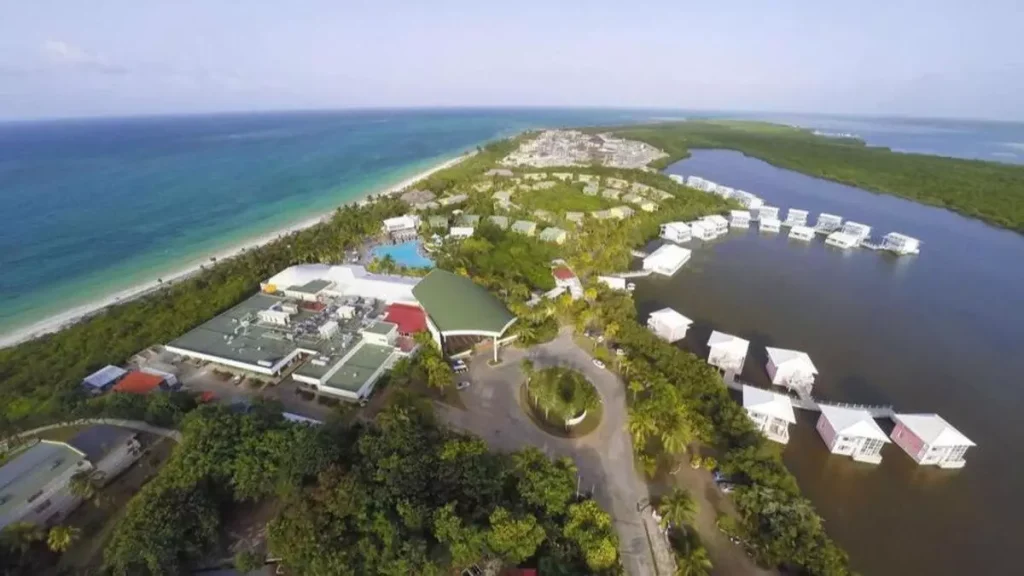
Unlike the trial held in 2025, which focused on three hotels in Cayo Coco on land linked to the Echevarría family, the current proceedings cover four other hotels at the same tourist destination and the Hotel San Carlos in Cienfuegos. The establishments were operated by the Spanish hotel company Meliá before it definitively withdrew from the Island this summer. The plaintiffs estimate the market value of the properties for which they are seeking compensation at about $82 million.
The plaintiffs estimate the market value of the properties for which they are seeking compensation at about $82 million
The lawsuit alleges that Expedia “trafficked” in those assets by promoting and handling reservations at hotels built on land confiscated from the plaintiffs’ families. Expedia’s defense argues that the company did not “knowingly or intentionally traffic” in the properties because it was unaware that the hotels had been built on expropriated land.
Veronica Cassano, a former company manager, testified that she never received instructions from her superiors regarding the Helms-Burton Act or discussed with them the historical ownership of Cayo Coco, and described meetings with high-ranking Cuban officials. Expedia’s attorney, Santosh Aravind, argued that those meetings were part of the legitimate process of establishing operations on the Island, where the State owns all hotels. He also noted that they were held with the knowledge and approval of the U.S. Treasury Department.
Expedia began operating in Cuba in 2017, following the rapprochement between Washington and Havana promoted by President Barack Obama. The company then began offering reservations at Cuban hotels through its platforms, in a market dominated by State-owned establishments managed by foreign chains, such as Spain’s Meliá.
The trial that has just begun does not replace the previous one, nor is it a repeat of the same case. With a new jury and more properties in dispute, its development also coincides with recent Supreme Court rulings that have broadened the interpretation of the Helms-Burton Act.
With a new jury and more properties in dispute, its development also coincides with recent Supreme Court rulings that have broadened the interpretation of the Helms-Burton Act
This year, several decisions by U.S. courts have changed the legal landscape in which these claims are being pursued. The most significant case has been Havana Docks Corporation’s lawsuit against four major cruise companies. In May, the U.S. Supreme Court ruled in favor of Havana Docks and revived its claim against Carnival, Royal Caribbean, Norwegian and MSC over their use between 2016 and 2019 of Havana port terminals that were confiscated by the Cuban Government in 1960.
A month later, the Supreme Court again broadened the scope of the law when it decided the case of ExxonMobil against the Cuban State-owned companies Cimex and Cupet. The Court determined that Title III of the Helms-Burton Act allows lawsuits against Cuban State-owned companies without requiring plaintiffs to also overcome the usual sovereign immunity barriers established under U.S. law. ExxonMobil is seeking more than $1 billion, including interest, for assets confiscated in 1960, including a refinery, oil facilities and more than a hundred service stations.
The two rulings generated expectations among former owners and their heirs and created a precedent for subsequent litigation.
This July, the former Cuban Electric Company filed a new lawsuit, this time against Unión Eléctrica (UNE) and Energas, two Cuban State-owned companies. The company is seeking $267.6 million, plus interest accrued since its assets were confiscated in 1960. The lawsuit was filed after the Supreme Court cleared the obstacle of sovereign immunity for Cuban State-owned companies.
Title III of the Helms-Burton Act, passed in 1996, allows certain U.S. citizens to seek damages from those who traffic in properties confiscated by the Cuban Government after 1959. The provision remained suspended by successive presidents for more than two decades until Donald Trump allowed it to take effect on May 2, 2019. Since then, dozens of lawsuits have been filed.
Experts estimate that between 40 and 50 lawsuits have been filed in U.S. federal courts under the Helms-Burton Act, and that some of those cases have reached the Supreme Court.
Translated by Regina Anavy
______________________
COLLABORATE WITH OUR WORK: The 14ymedio team is committed to practicing serious journalism that reflects Cuba’s reality in all its depth. Thank you for joining us on this long journey. We invite you to continue supporting us by becoming a member of 14ymedio now. Together we can continue transforming journalism in Cuba.