The fund has been sanctioned by the U.S. for partnering with the Cuban State in the real estate sector and holding ownership stakes in five hotels that Meliá managed until yesterday.
 14ymedio, Havana, July 26, 2026 – The buildings, swimming pools, and hotel rooms are still there, but 34 Cuban hotels lost something this Friday that is much harder to replace: the Meliá name, its sales channels, and its commercial marketing network. The Spanish hotel chain’s definitive withdrawal coincides with a new obstacle for five of those properties, which are owned by the Cuban State in partnership with the British investment fund Ceiba Investments.
The U.S. State Department added the Guernsey-registered company to the Specially Designated Nationals and Blocked Persons list on Thursday. Washington maintains that the company operates or has operated in the financial services sector of the Cuban economy, one of the activities subject to sanctions under Executive Order 14404.
The blow comes as Ceiba must dismantle Meliá’s management contracts, decide how it will keep five hotels operating, and find a hotel chain willing to replace the Mallorca-based company. The firm acknowledged that it is still analyzing how to reorganize the management and marketing of those properties and has not identified an alternative operator.
Ceiba Investments is listed on the London Stock Exchange and concentrates almost all of its business in hotels and other real estate assets in Cuba. It is headquartered in the tax haven of Guernsey—in the English Channel between England and France—which assumed “full ownership” of the financial company Orbit after Gaesa was sanctioned on May 7. Through several subsidiaries, it participates in joint ventures with state-owned entities such as Cubanacán, which own hotels that until now were managed and marketed by Meliá.
The company requested a temporary suspension of trading in its shares on the London Stock Exchange while it evaluates the consequences of the U.S. measure
Five shareholders control nearly 60% of its capital. The largest is Northview Investments, with 27.43%, followed by POP Investments, owned by British financier Andrew Pegge, and Ursus Capital, linked to investor Colin Kingsnorth, both with about 10%. Also listed are a company belonging to the British investment manager Aberdeen and Citco Global Custody.
The latter acts as a financial custodian, meaning it may formally appear as the holder of shares that it keeps on behalf of third parties whose identities do not necessarily appear in the public shareholder registry. Executives Sebastiaan Berger and Cameron Young, who have lived in Cuba since the late 1990s, jointly control about 6.2% of the fund and have managed its investments on the Island since 2002.
The company requested a temporary suspension of trading in its shares on the London Stock Exchange while it evaluates the consequences of the U.S. measure. Ceiba also announced that it will seek to persuade Washington to remove it from the list of sanctioned entities.
According to Ceiba’s explanation to the London Stock Exchange, Washington believes the company attempted to shield Gaesa’s assets and revenue sources from sanctions by purchasing 51% of Inmobiliaria Monte Barreto from Inmobiliaria Lares, an indirect subsidiary of the military conglomerate. Monte Barreto owns the Miramar Trade Center, a large office complex in Havana.
Three foreign members of the board of directors—Simeon Goddard, Briton Robin Haake Smith, and Canary Islands businessman Enrique Martinón García—submitted their resignations with immediate effect
Ceiba rejects that interpretation. It says negotiations began in 2017, that the binding agreement was signed on April 22—before Gaesa was placed on the sanctions list—and that the transaction was completed on June 4 within the deadline granted to unwind ties with the military group. The company also maintains that it did not pay Gaesa in foreign currency, but instead used reserves, pending dividends, and other funds belonging to Monte Barreto that were already deposited in Cuba.
The designation also triggered an immediate shake-up in the fund’s leadership. Three foreign members of the board of directors—Simeon Goddard, Briton Robin Haake Smith, and Canary Islands businessman Enrique Martinón García—resigned with immediate effect. Ceiba did not explain the reasons for the resignations, but their timing, coinciding with the company’s inclusion on the sanctions list, reflects the severity of the blow and the risks for executives, banks, and suppliers of maintaining ties with an entity sanctioned by the United States.
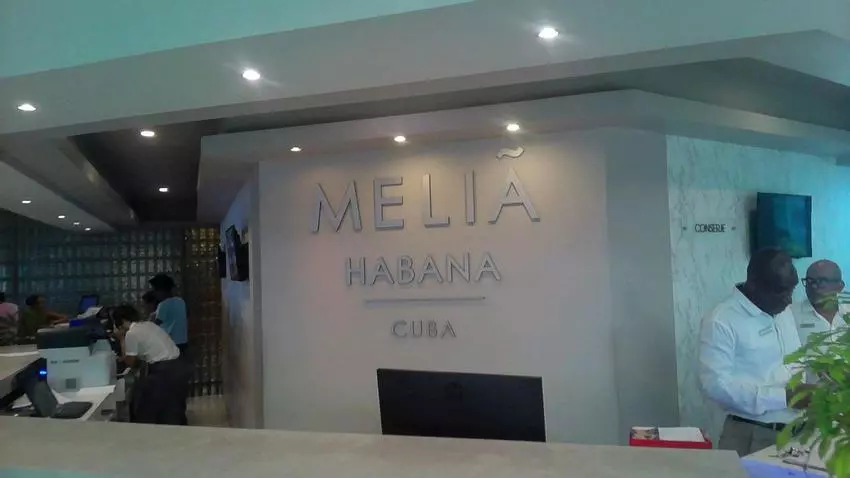
Regarding the five hotels, Ceiba said they will temporarily remove the commercial references to the Spanish hotel chain. The Meliá Habana will become Hotel Habana; the Meliá Las Américas will become Hotel Las Américas; the Meliá Varadero will become Hotel Varadero; Sol Palmeras will drop the “Sol” and become Hotel Palmeras; while the Meliá Trinidad Península will retain only the name Hotel Trinidad Península.
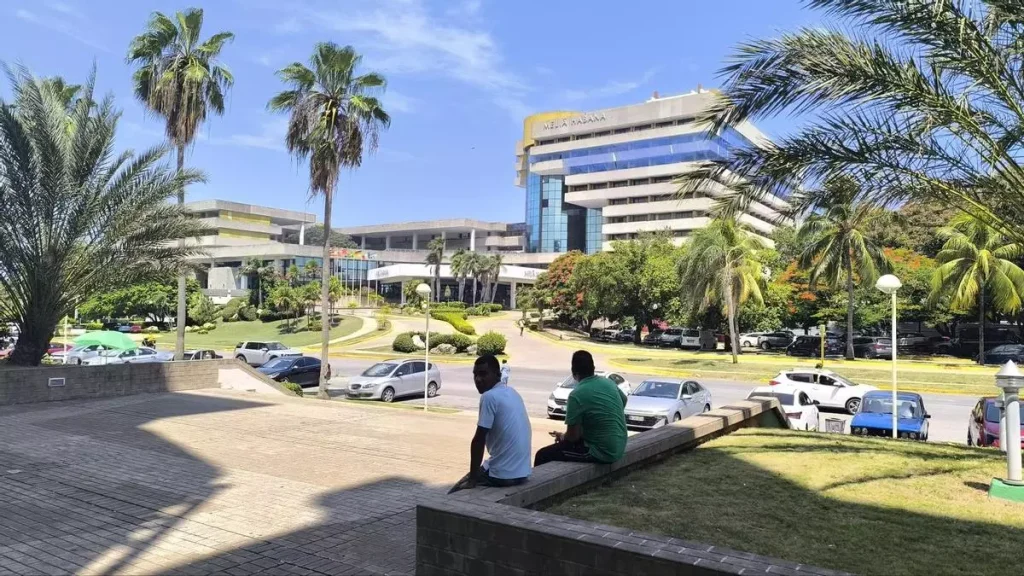
The new naming scheme looks more like an emergency solution than a commercial strategy. This Saturday, 14ymedio visited the Meliá Habana and confirmed that the large sign bearing the Spanish chain’s name was still mounted at the top of the building. The hotel remained open, although the upper floors were partially covered with protective netting and appeared to be undergoing repairs.
Hotel staff said that day-pass offers for the swimming pool would be available again on Monday, with prices ranging from $25 to more than $200. When asked why the Meliá sign remained on the façade, an employee declined to offer an explanation.
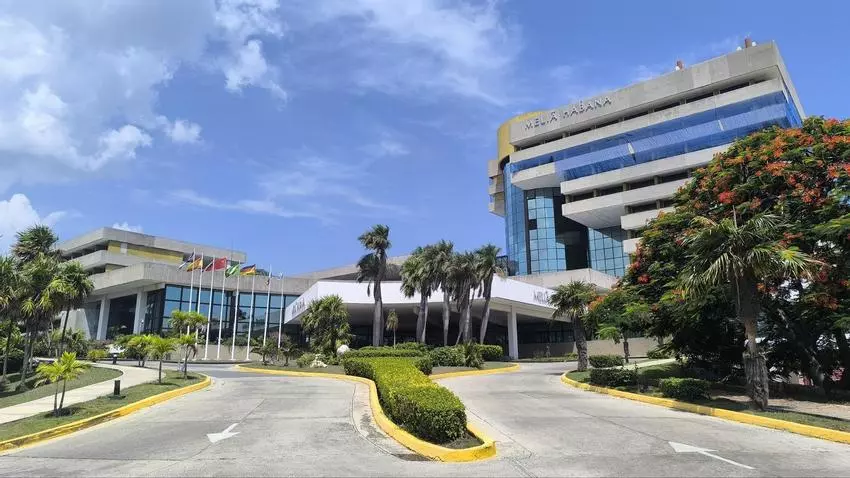
With the Spanish company gone, the properties are not left ownerless, because Meliá did not own any of them. Its role was to manage them, lend them its brands, connect them with tour operators, and sell their rooms in international markets.
Those responsibilities now fall to the Cuban entities, which must take charge of complexes designed to operate with the standards, reservation platforms, and loyalty programs of an international hotel company. As of this Saturday, no foreign company had announced that it would take over the portfolio abandoned by Meliá.
The loss of the Meliá name will be only the visible part. The hotels are also leaving the chain’s commercial ecosystem, which includes its booking website, the MeliáRewards program, agreements with travel agencies, advertising campaigns, and a sales network built over decades.
The Ceiba case sums up the dilemma facing any foreign investor operating in Cuba under the new sanctions framework. Even a transaction explicitly designed to comply with the deadline for severing ties with Gaesa ended up turning the company itself into the target of the very sanctions it had sought to avoid. The simultaneous departure of Meliá, together with Iberostar, Barceló, and other international hotel chains, leaves Cuba’s hotel sector not only without its principal operators, but also without the commercial infrastructure that sustained its access to international tourism, just as the Island is experiencing its worst visitor crisis in more than a decade.
Translated by Regina Anavy
______________________
COLLABORATE WITH OUR WORK: The 14ymedio team is committed to practicing serious journalism that reflects Cuba’s reality in all its depth. Thank you for joining us on this long journey. We invite you to continue supporting us by becoming a member of 14ymedio now. Together we can continue transforming journalism in Cuba.