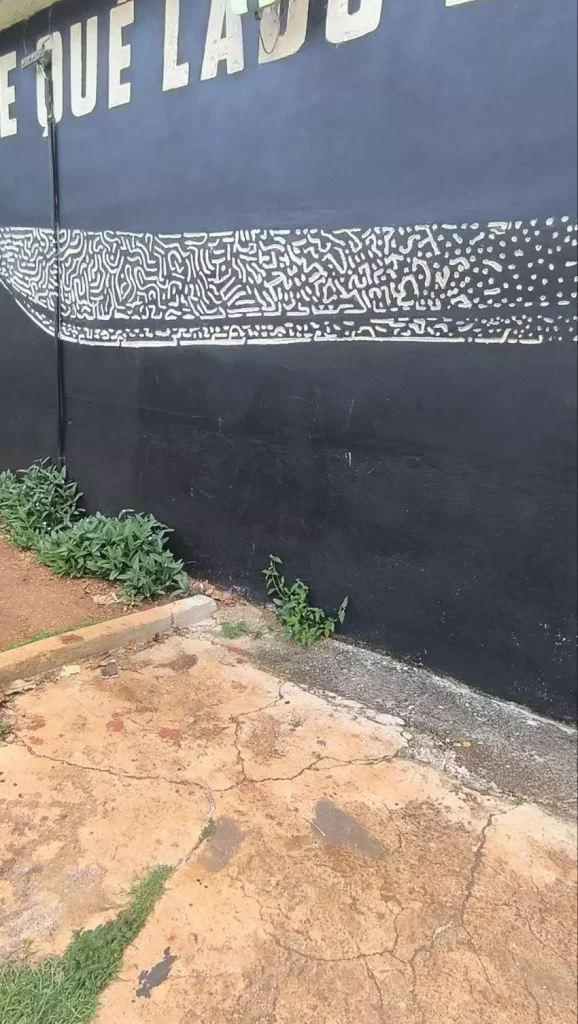
This Wednesday, the trace of one of the “subversive” posters was still visible, despite the persistent black paint.
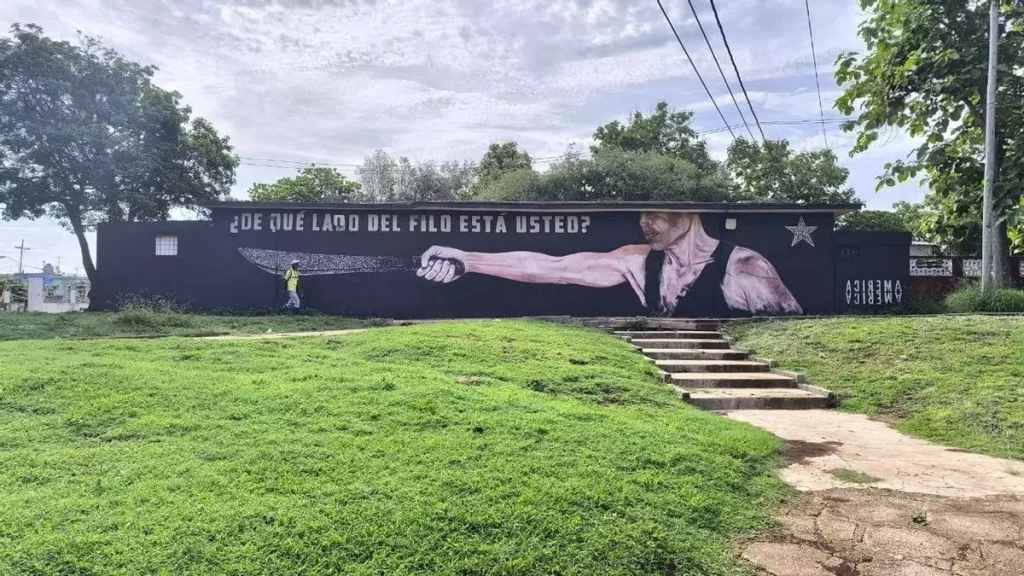
 14ymedio, Juan Diego Rodríguez, Havana, June 11, 2026 / The Chilean “urban artist”Sebastián E., known professionally as Rata Virus, has attracted significant media attention, including from some international outlets, for the mural he created in José Raúl Capablanca Park in Havana’s Playa municipality. Covering a large wall with a black background, the mural depicts a male figure, with only half of his face and his chest visible, wielding a machete, beneath the caption: “Which side of the edge are you on?”
As the artist himself explained to EFE, he traveled to Cuba following a promise to the late Uruguayan president José Mujica, and with his work he seeks to reflect how “the people always lose” in scenarios of political confrontation. “Not everything can be seen in black and white,” he told the Spanish news agency, somewhat cryptically.
“Generally, the Cuban people are on the edge of the machete, they’re in the middle, and the powerful are on the handle of the machete, they’re the ones who control the blade.” He added: “The work is interesting because it makes you reflect on the fact that whichever side you choose will always end up cutting you.”
What wasn’t mentioned in those media interviews is the subversive slogans written on top of the mural, which were conveniently covered up by the authorities. This Wednesday, still visible in the outline of one of them was the “down” of “down with the dictatorship,” despite the persistent black paint.
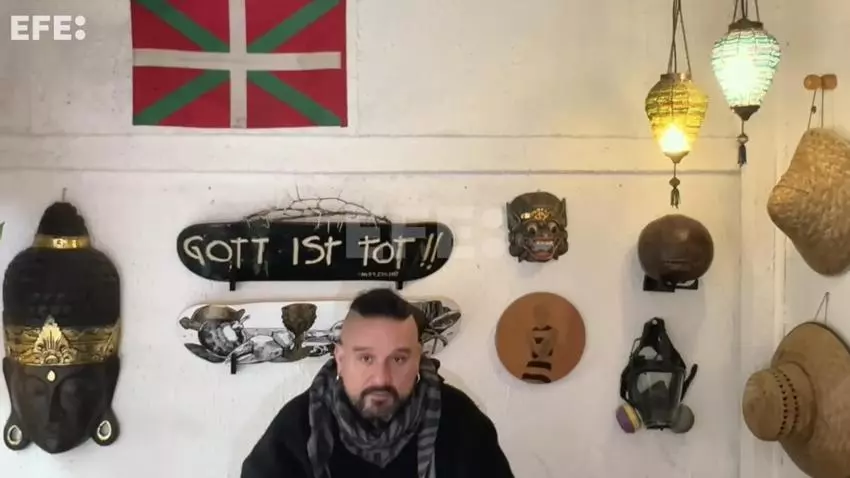
“In Cuba, the fracture is mainly seen in a senstion of political tension that translates into fear, into uncertainty,” Sebastián E. explained in his conversation with EFE, in front of a Basque flag and Nietzsche’s words in German: “Gott ist tot” (“God is dead”).
In the same space, he added, unknowingly putting the finishing touch on the hidden message: “People don’t know what’s going to happen, especially when you add a little something extra that is censorship.”
______________________
COLLABORATE WITH OUR WORK: The 14ymedio team is committed to practicing serious journalism that reflects Cuba’s reality in all its depth. Thank you for joining us on this long journey. We invite you to continue supporting us by becoming a member of 14ymedio now. Together we can continue transforming journalism in Cuba.