Wasteful use of lighting and air conditioning in the new store opened in Havana by a state partnership associated with a Slovak company
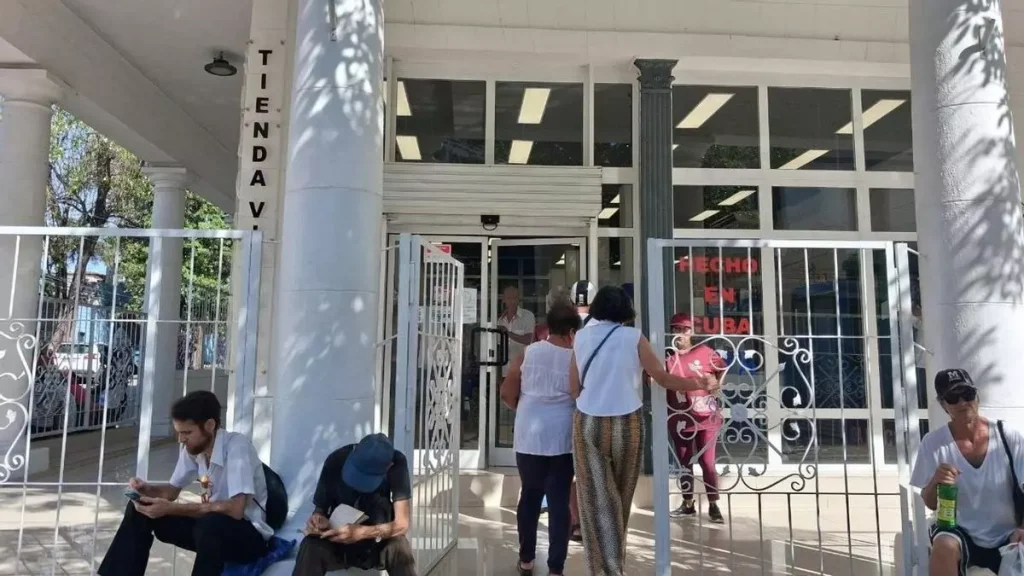
 14ymedio, Havana, Natalia López Moya/Juan Diego Rodríguez, May 28, 2026 – Brightly lit and with the air conditioning running at maximum power, the new Hecho en Cuba 100% store seems oblivious to the severe energy crisis the country is experiencing. The business, located in the Trimagen complex, the film division of the Revolutionary Armed Forces (FAR), in Havana’s Plaza municipality, was inaugurated this Tuesday with great ostentation.
The company’s social media accounts documented the event. The firm appearing to be in charge is Proxcor S.A., a joint venture formed by the Slovak company Proxenta and the Cuban Corporación Alimentaria S.A. (Coralsa), dedicated to the commercialization of food and beverages through companies such as Los Portales, Bucanero, Bravo, Papas & Company, and Stella. The post quickly filled with comments, mainly asking about prices and payment methods, but the replies were unclear.
“If everything is made in Cuba, they should sell according to the salaries we earn in Cuba and of course in national currency,” one user remarked with barely concealed irony. “Thank you for your comment, we will take it into account,” was the response.
It is worth remembering that Proxenta arrived in Cuba in 2019 through the creation of Proxcor S.A. in Villa Clara, with a 25-year contract for confectionery production, and later expanded its partnership with the Cuban State by founding Baracocoa S.A. for the processing and commercialization of local cocoa. The decision dealt a blow to local farmers who had temporarily been allowed to enter the cocoa business, a highly profitable sector in foreign currency.
During a visit to the new store on Ayestarán Street this Wednesday, 14ymedio confirmed what commenters feared: the store only sells in dollars, and payment can be made in cash, with foreign cards, or with the Clásica prepaid card. The place has the unmistakable atmosphere of state power, with some employees dressed in Cimex uniforms.
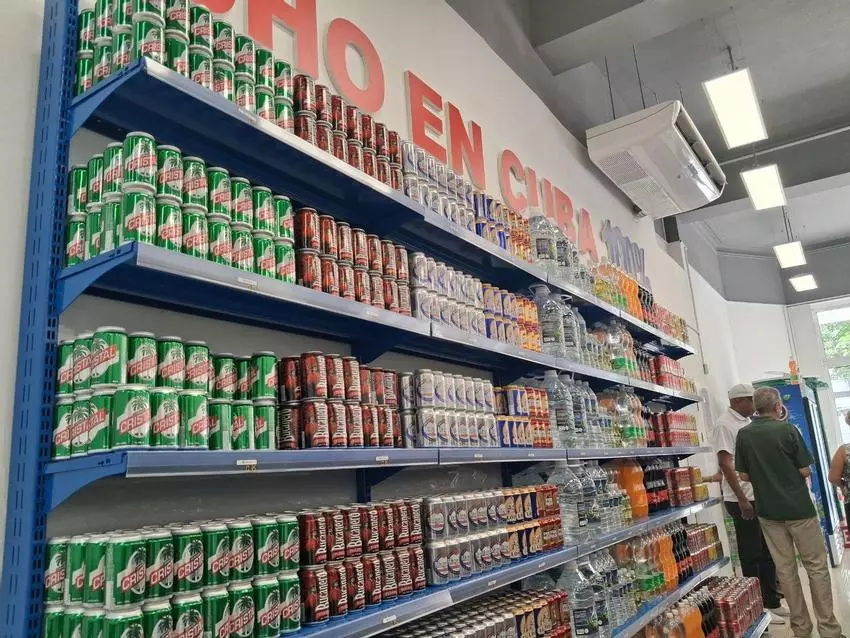
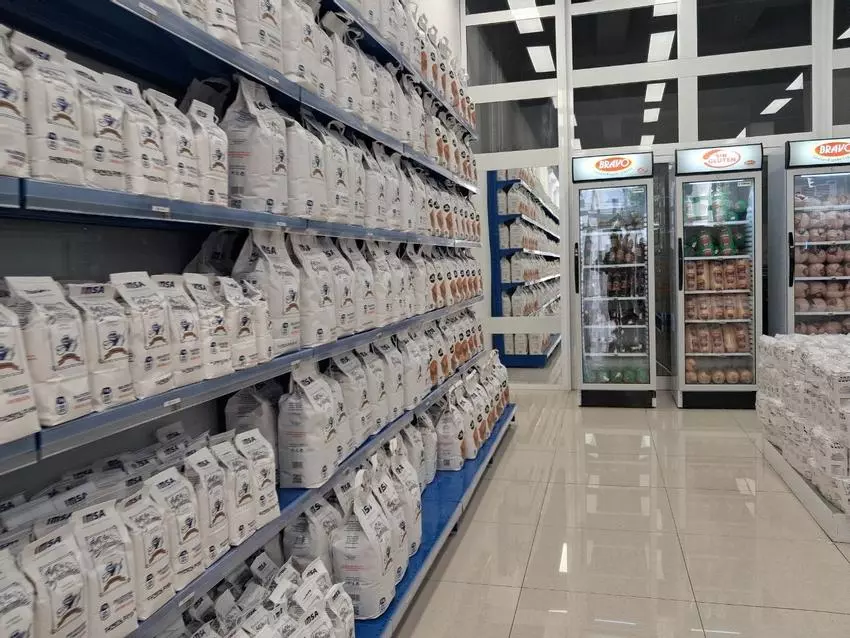
The facilities are excellent, yes, but they offer few products. “Of course, if they sell what is produced in Cuba, this little bit is all there is,” observed one customer passing shelves packed with the same product. Bravo cold cuts, Cristal and Bucanero beers, Findy mayonnaise, Ciego Montero soft drinks, flour from Unión Molinera de Cuba… The brands, indeed, were not lying: merchandise from the battered national production system.
A woman visiting the establishment for the first time was especially surprised by the variety of Cuban coffee brands, including Cubita, Arriero, and Regil, something unimaginable for a long time in other stores. The selection was completed with small black cups bearing the word Cubita. “It’s been years and years since I saw this for sale!”
The prices, meanwhile, are not for everyone. A tube of ham for 13 dollars or a one-kilogram package of coffee for 16 dollars gives an idea of the costs; an arepa mix costs 4 dollars, and six small cups cost 20.
One cashier slowly and carefully wrapped a customer’s purchase. The customer told her: “Don’t take too long, in case the power goes out and I can’t pay with my card,” but the worker reassured her enthusiastically: “The power almost never goes out here, and when it does, they restore it very quickly.” “Do you have a generator?” the shopper asked. “No, but they almost never cut our electricity.”
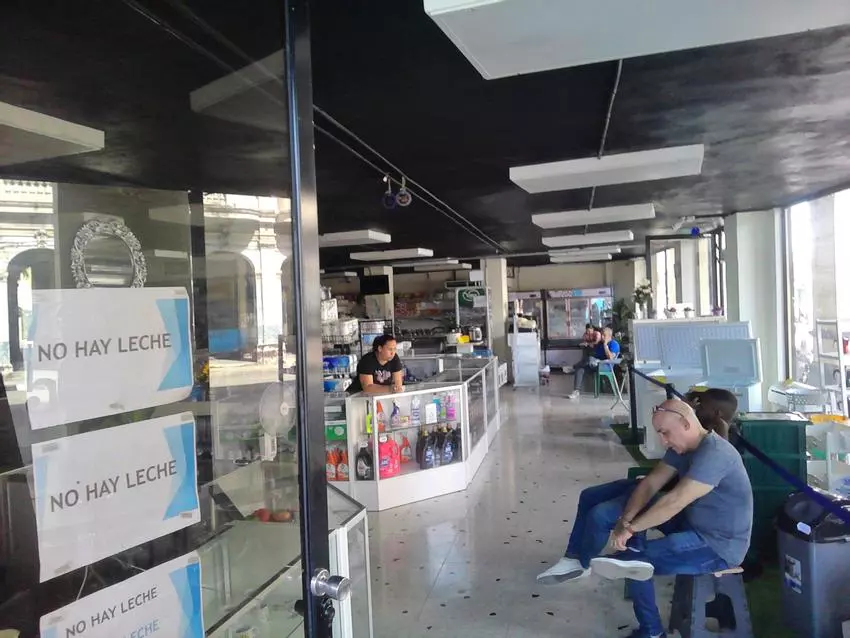
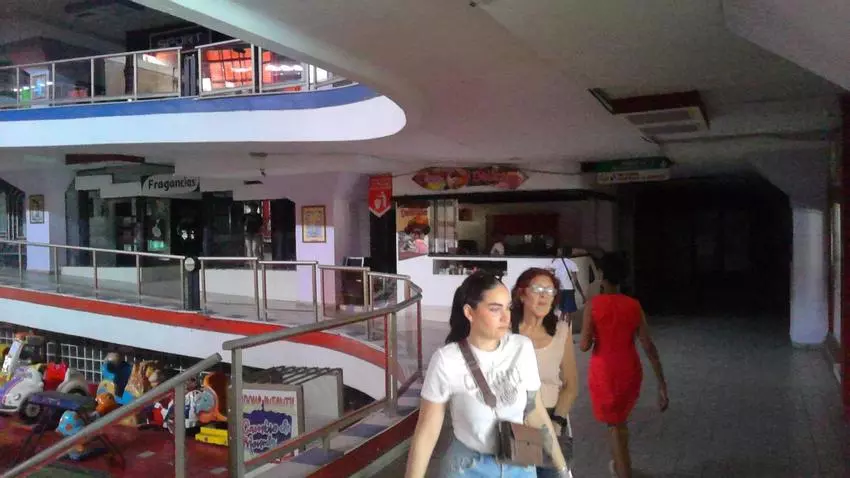
In contrast to this privileged situation, the commercial heart of Central Havana looked gloomy that same day. At the Bazar A&M branch on Infanta and Carlos III, employees were sitting idle. “No milk,” “no milk,” “no milk,” repeated three signs discouraging customers from asking for anything.
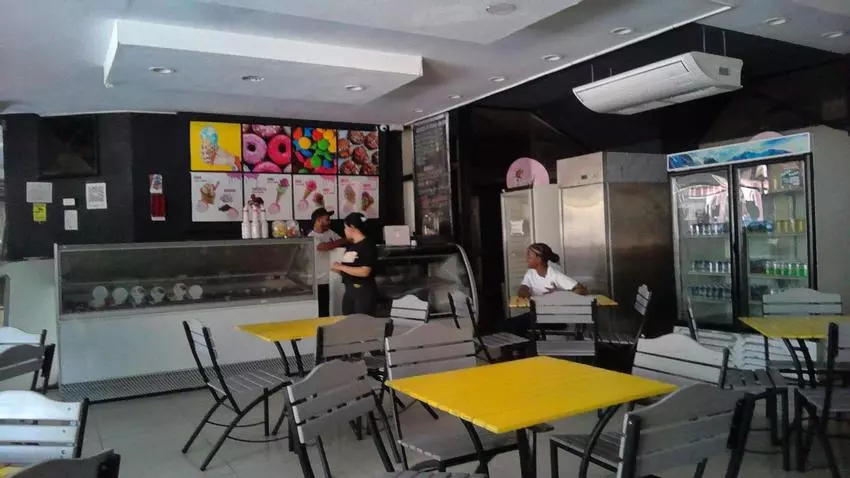
At Plaza de Carlos III, the power went out in the middle of the morning rush of customers. The darkened stores, without cold drinks to relieve the heat of these days, were buzzing with complaints from the workers themselves. One single topic monopolized conversations: the sleepless night caused by the blackout. “We only had twenty minutes of electricity at two in the morning, and we had to start pumping water from the cistern to the tank,” one cashier told a colleague.
At Fress, the first private business established in Plaza de Carlos III, employees said they did not know if they would be able to continue working today. “There’s no fuel for the shopping center’s generator. They say the power went out last night and they couldn’t turn it on again.”
The blackouts, at least in principle, do not distinguish between state and private businesses: they affect everyone equally. Except for Proxcor’s new store.
Translated by Regina Anavy
______________________
COLLABORATE WITH OUR WORK: The 14ymedio team is committed to practicing serious journalism that reflects Cuba’s reality in all its depth. Thank you for joining us on this long journey. We invite you to continue supporting us by becoming a member of 14ymedio now. Together we can continue transforming journalism in Cuba.