Without buses or state taxis, pregnant women and relatives depend on motorcycles and tricycles to reach the José Ramón López Tabrane Gynecology and Obstetrics Hospital.
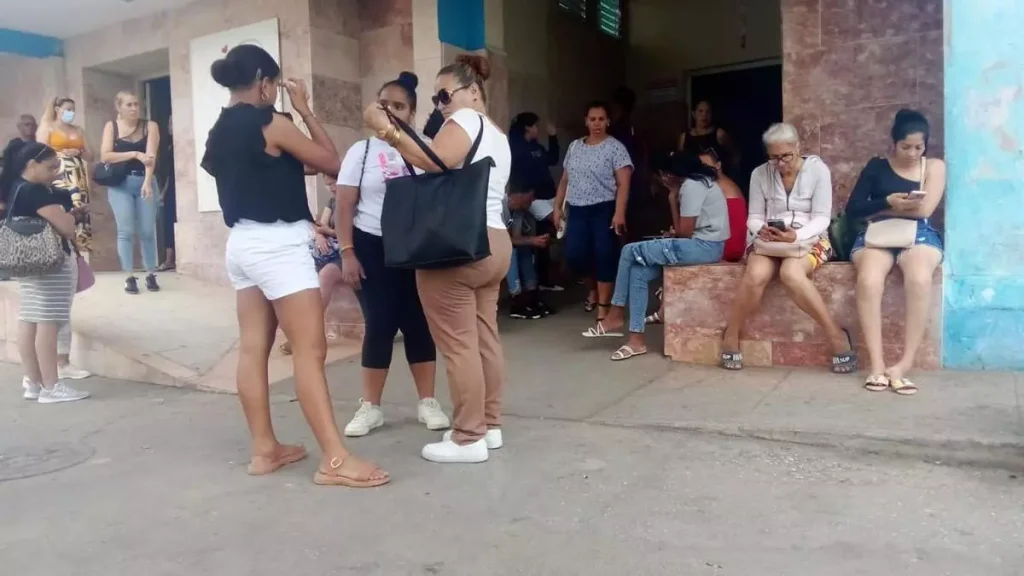
 14ymedio, Matanzas, Julio César Contreras, March 10, 2026 – Getting to or leaving the José Ramón López Tabrane Gynecology and Obstetrics Hospital, in the Versalles neighborhood, has become a daily ordeal for patients and their relatives in the city of Matanzas. In front of the main entrance of the well-known Maternal Hospital, pregnant women, companions carrying bags, and young people persistently searching for transportation that rarely appears all mingle together.
At the building’s entrance, several people sit waiting on the edge of the steps. Some check their phones with resignation, others speak quietly while looking toward the street as if a lifesaving taxi might turn the corner at any moment. But the asphalt remains almost empty. From time to time a motorcycle or an electric tricycle passes by and is immediately surrounded by people trying to negotiate a seat.
“Local buses are not coming to this part of the city,” says Sandra, a young pregnant woman who has just gotten off a red motorcycle taxi. The driver has not even started the engine again when she is already mentally calculating the money she will have to spend to return home.
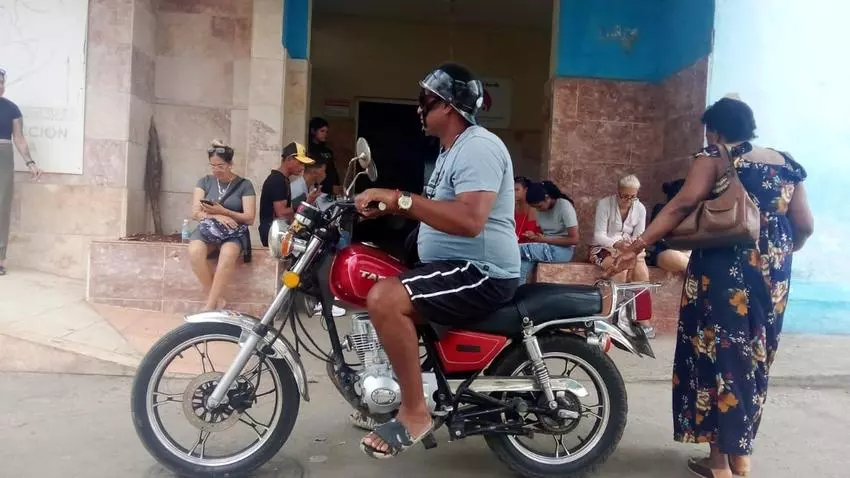
“I just paid 1,000 pesos to bring me from my house, which is about three kilometers from here. If I don’t make that sacrifice I miss the genetics appointment,” she explains while adjusting her bag on her shoulder.
Sandra is in her third month of pregnancy and has already had to go to the hospital several times for checkups with the obstetrician. During none of those visits has she been able to find public transportation or any official vehicle associated with the Maternal Hospital taxi stand.
“I haven’t seen a state taxi parked in front of the emergency entrance even by chance,” she says. According to what she has been told, there is a car available 24 hours a day to assist with transporting patients, but it almost never appears. “They always say it’s on the road or attending an emergency.”
The scene surrounding the hospital entrance reflects the energy crisis the country is experiencing. The fuel shortage has reduced the circulation of buses and state taxis to a minimum, forcing people in Matanzas to rely on motorcycles, electric tricycles, or any vehicle that does not require fuel to move.
In one corner of the doorway, several women talk while waiting for news about possible transportation. One of them is Idania, who holds a bag full of baby clothes. Her niece has just been discharged after giving birth.
“She gave birth the day before yesterday and today she’s going home,” she explains. “The question is how we’re going to get there.” The woman looks toward the street with clear frustration. “There’s no ambulance here, no taxi, and no shame from the Public Health bosses. They go around in cars everywhere.”
Sitting on a concrete bench, Idania says she has spent the morning trying to avoid a solution she considers excessive: paying 50 dollars for a private taxi to take the mother and the newborn to Santa Marta.
“When it was time for the birth a neighbor did us the favor of bringing us,” she recalls. “At least in our case, the guarantee of institutional transport has been completely absent. We came on our own and we will leave on our own.”
For her the problem goes beyond the lack of fuel. “Here the answer is always that there isn’t any,” she complains. “But what there also isn’t is sensitivity.”
A few meters away, Lizandra watches the scene with concern. The young university student studies psychology and is going through her first pregnancy. While waiting to be called for an appointment, she calculates what each visit to the hospital costs her.
“Just to get here and then return home you need at least 2,000 pesos,” she explains. That is if you are lucky and a motorcycle or tricycle appears with space available.
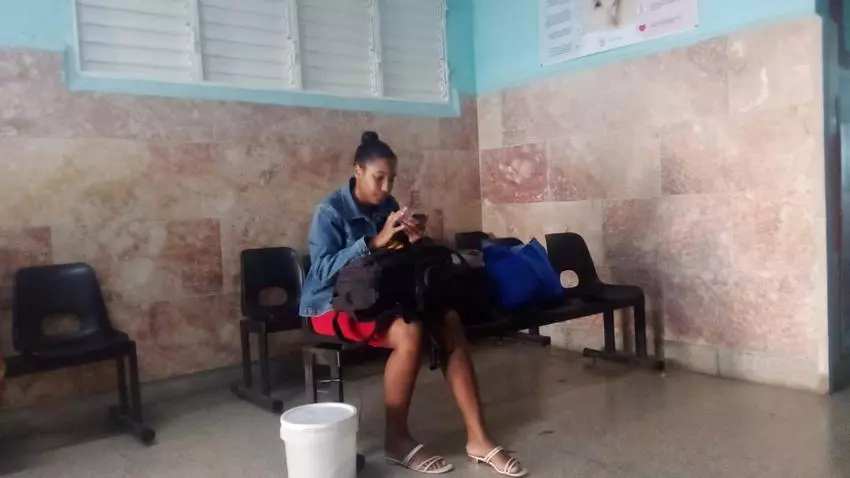
The uncertainty about transportation adds to the normal fears of pregnancy. “You already are nervous, as with any medical appointment, and on top of that you have to think about how you are going to get here and how you will get back home,” she says.
For pregnant women who live outside the provincial capital the situation is even more complicated.
“I have friends who have practically gone through their entire pregnancy at home because they have no way to come from Ceiba Mocha or from Pedro Betancourt,” Lizandra says. Getting to the hospital means organizing an uncertain trip, and, many times, one that is too expensive.
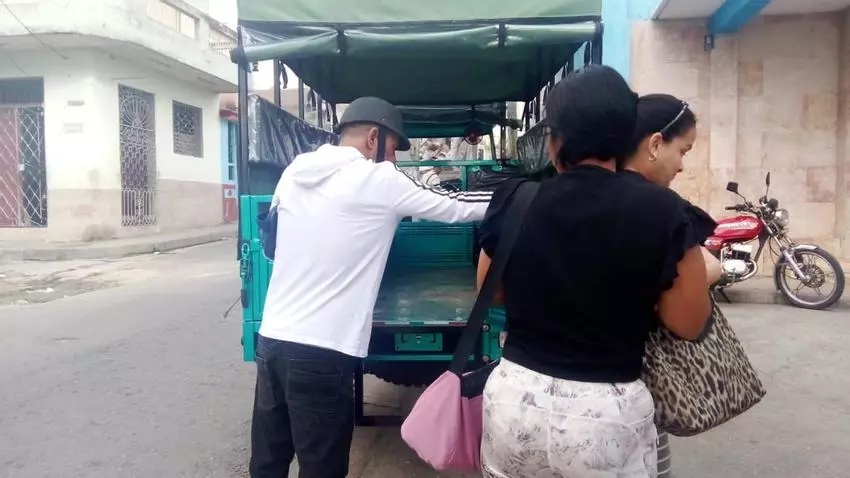
Meanwhile, in front of the Maternal Hospital the small group of people waiting for transportation continues to grow. A green tricycle stops for a few seconds and immediately several relatives approach to ask if there is space.
The driver shakes his head and starts moving again.
A motorcyclist stops shortly afterward, with his helmet raised and the engine still running. Two women approach to negotiate the price. The driver raises three fingers.
“1,500 pesos,” he says.
The women look at each other. One sighs and finally nods.
In the hospital no one seems surprised by these scenes. State taxis, recognizable by their yellow color, are nowhere to be seen. Ambulances only appear when there is a medical emergency. The rest of the time, patients and companions must manage on their own.
In the hospital doorway, Sandra looks at her phone again before entering her appointment. In a few hours she will have to repeat the same process: go out to the street, raise her hand, and wait for some motorcycle or tricycle to agree to take her.
In today’s Matanzas, even getting to the hospital can become an uncertain journey. And returning home often simply depends on having enough money to pay for the trip.
Translated by Regina Anavy
______________________
COLLABORATE WITH OUR WORK: The 14ymedio team is committed to practicing serious journalism that reflects Cuba’s reality in all its depth. Thank you for joining us on this long journey. We invite you to continue supporting us by becoming a member of 14ymedio now. Together we can continue transforming journalism in Cuba.