It has now become nearly impossible to obtain fuel on the black market, where it’s sold at 1,000 pesos per liter.
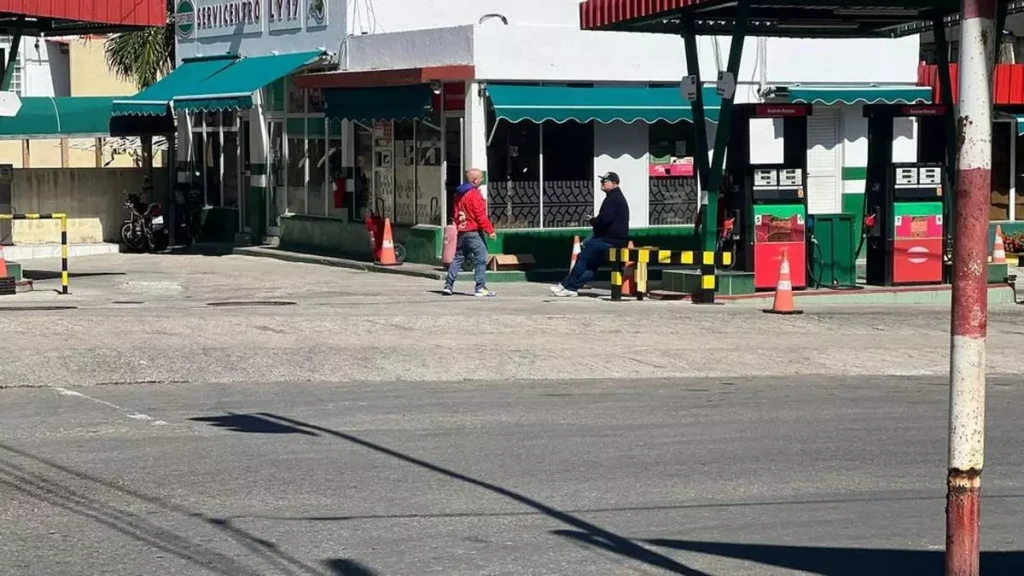
 14ymedio, The main partner to the shortage, corruption, has colonized the sale of gasoline at a dizzying rate. The under the table sale is a minor thing: they are now even selling turns to buy gas at service centers in dollars, and the price is no small issue. The ten dollars that it costs to move ahead in the line are, at the informal exchange rate (490 as of Thursday), more than double the minimum wage in Cuba.
“It’s no secret to anyone, and the eyes are useless when the mind is blind, fuel is extremely limited,” warned Pedro Garcés, organizer of the service stations of El Vedado and of the social group Gente del Barrio, this Wednesday, to introduce new regulations around the sale of gasoline. All service stations now deal in dollars, he explained, “a measure which we should understand the importance of in order to, in the middle of this siege, continue paying the least amount possible,” added the man who regularly brags about his loyalty to the Revolution.
Garcés explained that, for right now, the waiting lists on the Ticket app for sales of gasoline in pesos are closed, given that they are unable to serve “those that are in them, whose numbers surpass the thousands.”
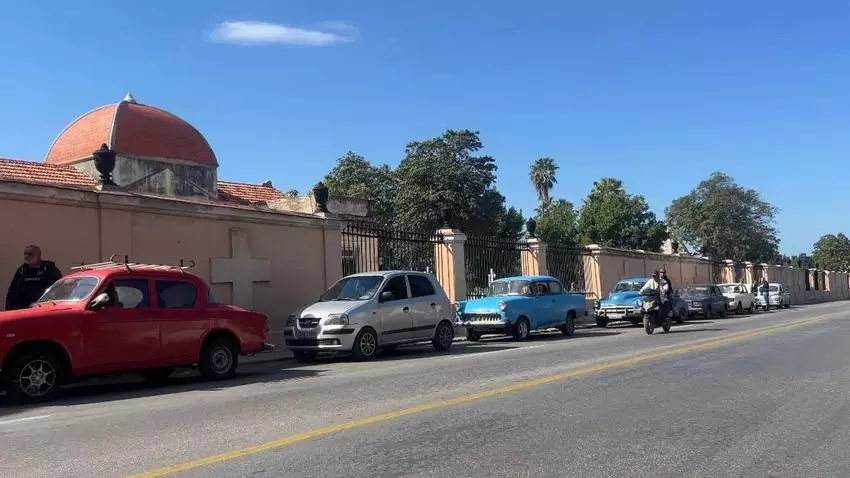
The organizer insisted that the corporation Cimex – controlled by the military conglomerate Gaesa and in charge of, among other things, the management of gas stations– accepts the contributions that he himself sends based on the demands of the population. Despite this, “they are searching for solutions to avoid the long lines and the waste of time to obtain fuel in dollars, a situation which today generates growing illegalities,” he lamented. More than the price of 10 dollars to get a turn, Garcés affirmed that the liter is being sold under the table at 1,000 pesos, more than double the price tag that it carries in dollars on the legal market.
The situation is an open secret on the streets of the capital. Regular gas in service stations costs $1.10 (equivalent to 539 pesos on the black market) and premium $1.30 (637), and now there is no way to get it in pesos on the Ticket app. “Now I don’t see the group nor the app,” said a man posted in the service station on Zapata and 4th, in Guanabacoa. “Everything is a shameless mess. The line doesn’t move. And, of course, it’s only in the gas stations in Zapata, of Línea & E, and Riviera: all in dollars. If you want to pay in pesos, pay the street rate of 1,000. If you’re lucky and you find it…” he said this Wednesday while waiting in a long line guarded by two officers. Resigned to wait hours or days to get gas in dollars.
A few meters away, in the same line, another man assured 14ymedio that the day before he spent five hours waiting for his turn and, at the end, he had to leave empty-handed because there was none left. The shortage is so bad that where before there were generators to fix the light issues they have started to install new solutions, like the purchase of electric generators, which take 2 or 3 hours to charge.
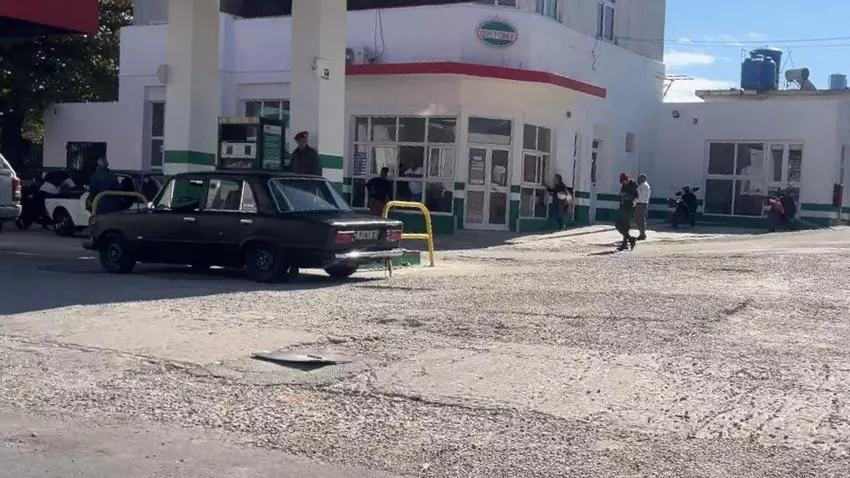
In Vedado, they only dispense for sales in dollars, while in Tángana and the service stations at 25th & G and L & 17th they don’t have a drop of fuel. Furthermore, in Guanabacoa two gas stations are selling, but only on the surface, given that instead of the long line that would be expected in that case, there have barely been two or three vehicles, a fact that quickly raised suspicions among passers-by.
“Now with 750 or 800 pesos you can’t afford a liter,” admits another aspiring customer. “If anyone has it, in a few hours it’s already run out. It’s selling for 1,000 pesos, for example, on the Santa Fe bridge,” they added.
“My neighbor, who used to sell regularly, now doesn’t have any,” confessed another driver. “He has huge barrels in his house and people come with containers of all kinds. Cans of 1.5L, 5 liters, etc. I couldn’t tell you where he gets the gas, I only know that his daughter works with something to do with Cupet. I guess that it would be from there.”
In the gas station at Vía Blanca, the line was the usual: only state vehicles. The discomfort is heightened among the drivers, who complain that those cars still don’t have restrictions. “They haven’t cut their rations, nor reduced them. They hope that they soon will, including a 50% reduction, but until this moment, they haven’t done it. They are the only ones that you see in these gas station lines,” protested another.
Translated by Logan Cates
____________
COLLABORATE WITH OUR WORK: The 14ymedio team is committed to practicing serious journalism that reflects Cuba’s reality in all its depth. Thank you for joining us on this long journey. We invite you to continue supporting us by becoming a member of 14ymedio now. Together we can continue transforming journalism in Cuba.