Ecuador’s Ministry of Public Health has activated a protocol to monitor all persons entering the country from the island.
 14ymedio, Havana, 23 November 2025 (delayed translation) — Ecuador’s Ministry of Public Health (MSP) “activated protocols for the containment and prevention” of chikungunya after confirming two cases in travellers from Cuba who entered the country last Thursday. “Both patients were notified immediately” and their progress is being “actively monitored and recorded,” the agency said.
The MSP stressed that in response to the outbreak of the virus – which is the main disease affecting the island with a cumulative total of 31,513 cases, of which 61 are in serious condition and 20 are in critical condition – alerts have been activated and “people coming from the island” who enter Ecuador are being registered and monitored.
One of the confirmed cases was reported by the National Reference Centre for Exanthematic, Gastroenteric and Vector-Borne Viruses of the National Institute of Public Health Research (Inspi). A second patient is a woman who lives in a private residential complex in Portoviejo and who, according to Freddy Macías, head of the Vector Control Brigade in Zone 4, “entered Ecuador already infected”.
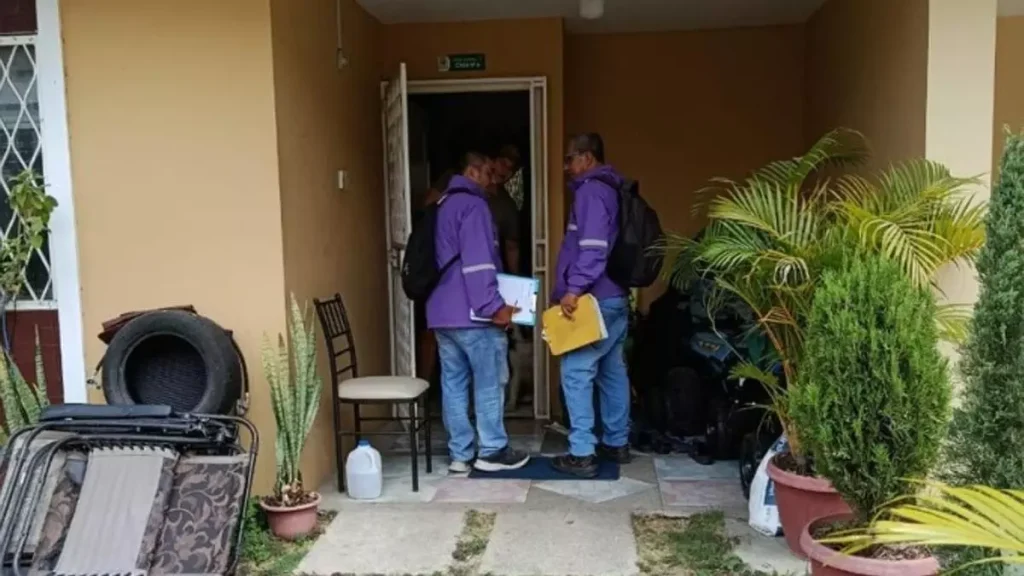
Macías recalled that a week before the cases were confirmed, an epidemiological cordon was activated in the Portoviejo region. Once the patient with chikungunya was identified and located, the specialist explained to local media outlet La Veci, health authorities carried out a second cordon consisting of “inspecting homes and searching for breeding sites” of mosquitoes that transmit the disease. A third stage will be carried out during the week. “The controls seek to cut off any possibility of local transmission around the patient,” he added.

The cases triggered an alert in Ecuador, where the virus had been under control since 2023, when a visitor with chikungunya was recorded. Epidemiological surveillance figures reveal that the main concern is dengue, with 15,814 patients as of last October, 61,404 in 2024, 27,906 (2023), 16,402 (2022), 20,689 (2021) and 16,741 (2020).
As part of measures to eradicate dengue, Zika and chikungunya, Ecuador encourages the formation of mingas (community brigades) that collect tyres and waste that can serve as mosquito breeding grounds, thereby reducing the risk of these diseases spreading.
For its part, Inspi trains community health teams to identify vulnerable areas and implement preventive measures.
At the end of September, the US Embassy in Havana issued a health alert for anyone wishing to travel to Cuba due to the outbreak of Chikungunya. The risk was classified as Level 2, requiring “additional precautions” to be taken.
The diplomatic headquarters recalled that this virus is transmitted by mosquitoes and that symptoms, mainly fever and joint pain, appear between three and seven days after the bite. In addition, the Mexican Ministry of Foreign Affairs also recently issued a travel alert to the island due to the “worsening health situation resulting from the spread of arboviruses.
Translated by GH
____________
COLLABORATE WITH OUR WORK: The 14ymedio team is committed to practicing serious journalism that reflects Cuba’s reality in all its depth. Thank you for joining us on this long journey. We invite you to continue supporting us by becoming a member of 14ymedio now. Together we can continue transforming journalism in Cuba.