The authorities are secretive about the port facilities, while giving great publicity to the construction of solar parks
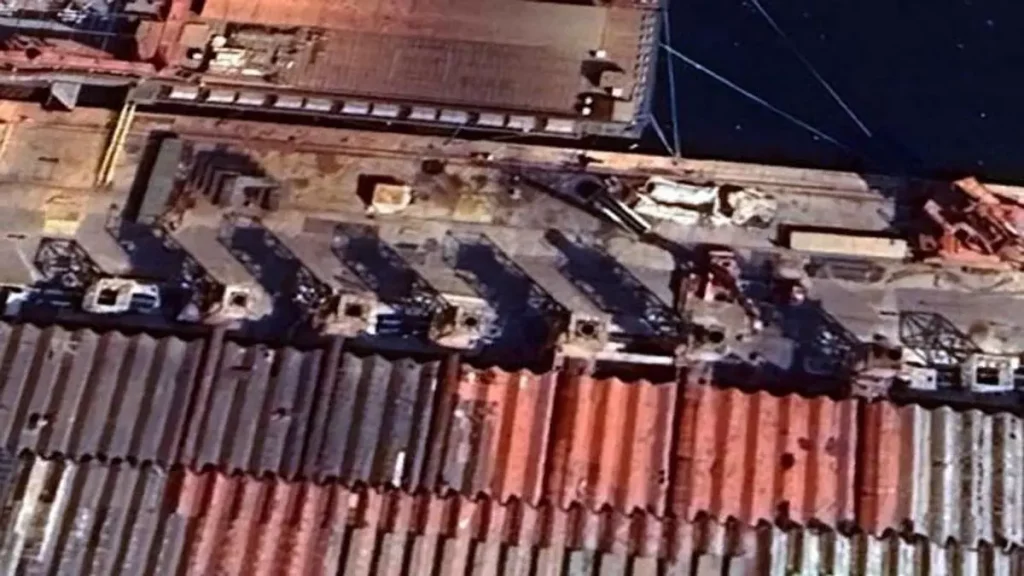
 14ymedio, Havana, October 5, 2025 — The Asticar power plant, located on the docks of Astilleros del Caribe in Havana, has been under construction since at least the beginning of this year. A satellite photo taken in March, shared with this newspaper by University of Texas expert Jorge Piñón, shows the progressive construction of the chimneys.
Mentioned only a couple of times by the authorities of the National Electric Union (UNE), the power plant — which, unlike other Turkish patanas is not floating and is on land — remains a mystery. Located on a dock of the state shipyard belonging to the Gemar Group of the Ministry of Transport, it is unknown where the engines came from, what generation capacity they have and how much Havana disbursed — unless they were donated- – to acquire them.
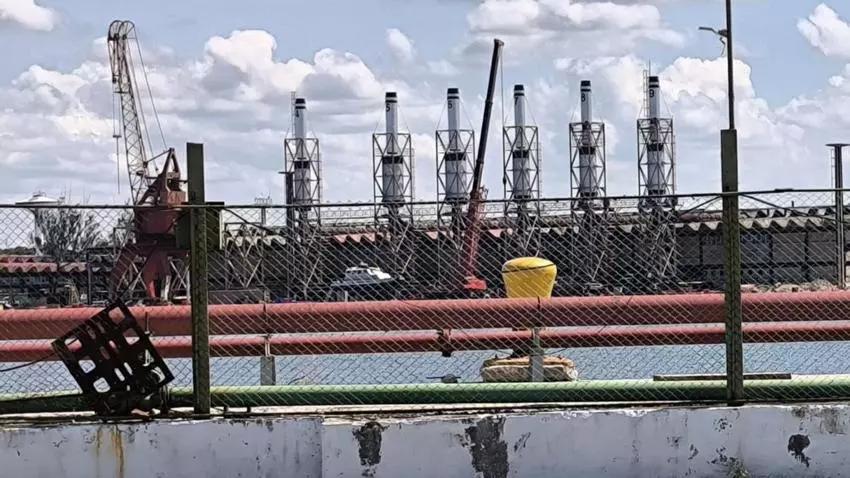
However, it is clear that the Asticar plant is still under construction. So far it has only six visible chimneys, numbered 4 to 9 on the top, suggesting that at least three more are missing. Photos taken by 14ymedio show three other scaffoldings similar to those supporting the chimneys just at the side, indicating that towers 1, 2 and 3 are still under construction.
About the origin of the patana, located a short distance from where the Turkish Suheyla Sultan used to be, which left in August, taking with it the 240 megawatts (MW) it produced, Piñón ventured several hypotheses. Looking at the date of construction of the chimneys, the engines may have arrived on board Karpowership’s floating power plant Cankuthan Bey in December 2024.
As the UNE reported at the time, the Cankuthan Bey arrived in Havana on December 8, 2024, “to begin work on its units and, once completed,” left Cuba in September.
Another theory is that the generation units of the Asticar plant — or at least part of them — arrived on board the heavy cargo ship OK last May, although the satellite image, which shows the half-built chimneys, suggests that the placement of the patana began months before.
As for the origin, everything points to the chimneys being Turkish, although they could also be one of the many donations made by China to Cuba in recent months, or even by a third partner that the regime refuses to reveal. In the first case, points out Piñón, each of the nine engines, similar to those of the floating power plants, would have a capacity of 15 or 20 MW, which would give a total generation of 135 or 180 MW.
The mention of the “Asticar patana” at the beginning of this week in a breakdown report from the Havana Electric Company also suggests that the patana could be running at half capacity while they finish installing the corresponding engines and chimneys.
The secrecy with which the authorities act has also been reflected in the agreements signed with the Turkish company Karpowership (Karadeniz Holding) since the arrival of the first patana, in 2019. The cost to Cuba was never known, although by August 2023 it was estimated that the bill amounted to more than $100 million.
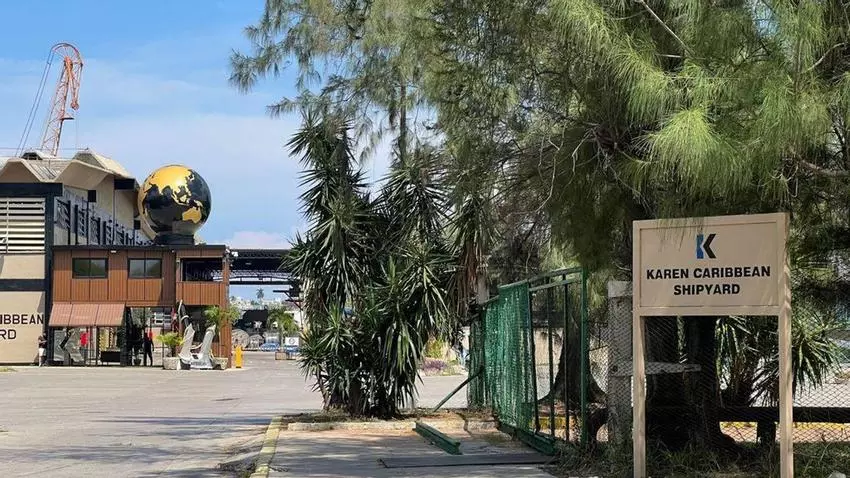
Faced with Havana’s inability to pay this amount, the Turks gradually withdrew their patanas and managed to get compensation. Of the eight in Cuba, only one remains, in Regla. Although this is again a secret agreement, it is known that the Turkish shipping company Karen Caribbean Shipyard was awarded a port concession for part of the docks in the state-owned Caribbean Shipyards (Asticar), where they are installing the new engines to produce power.
The silence surrounding this plant and its installation does not fit with the authorities’ desire to show, at all costs, that “work is being done” in the country to reduce the hours of blackouts. The best example is the delivery of Chinese solar panels and industrial generators, which the official press has announced on each occasion with great hype, assuring that every extra MW that arrives at the National Electric System (SEN) relieves the burden of the overexploited thermoelectric plants of the Island.
However, neither the photovoltaic with its thousands of panels installed nor the Chinese generators have been able to alleviate the enormous deficit that the Island experiences on a daily basis. The lack of power has normalized in the country to such an extent that the 1,570 MW deficit forecast for this Sunday by the UNE seems a relief from the 1,840 registered last Tuesday.
Translated by Regina Anavy
____________
COLLABORATE WITH OUR WORK: The 14ymedio team is committed to practicing serious journalism that reflects Cuba’s reality in all its depth. Thank you for joining us on this long journey. We invite you to continue supporting us by becoming a member of 14ymedio now. Together we can continue transforming journalism in Cuba.