Russian Oil Tanker ‘Anatoly Kolodkin’ Docks in Matanzas: “The AK We Need Now”

Experts estimate it will take between 15 and 20 days to process the crude oil and convert it into diesel, and another week to deliver the refined product.
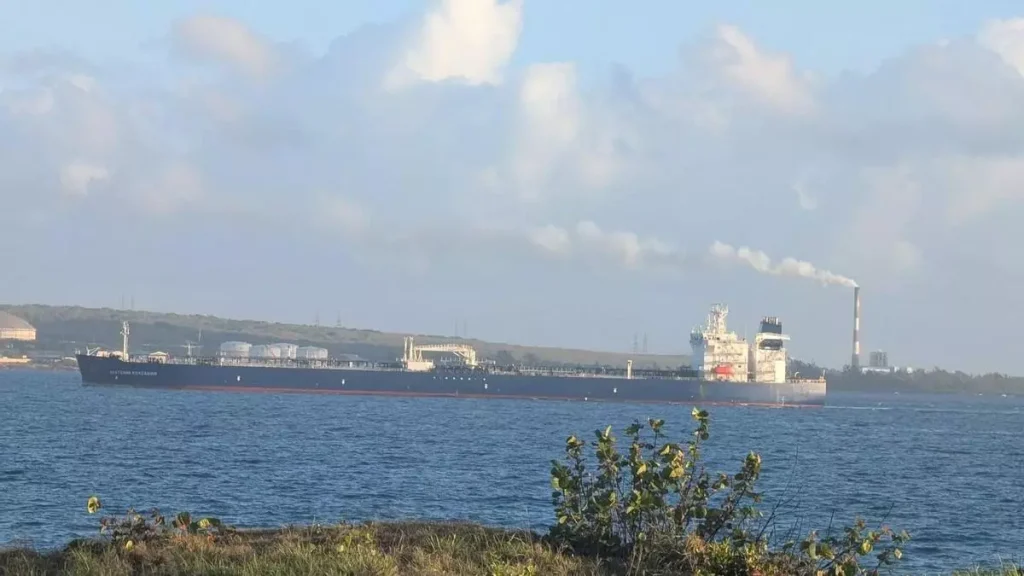

The Russian tanker ‘Anatoly Kolodkin’ arriving at the dock of the Matanzas Supertanker Base. / Facebook/Lázaro Manuel Alonso

14ymedio bigger14ymedio, Havana, March 31, 2026 / No oil tanker that has sustained Cuba’s energy system for decades had generated as much anticipation as the Anatoly Kolodkin , which finally docked in Matanzas this Tuesday. Loaded with some 730,000 barrels of Russian crude, equivalent to about 100,000 tons, it is the first tanker to arrive on the island since the Ocean Mariner arrived on January 9 with more than 80,000 barrels of fuel from Mexico .

Dozens of journalists were waiting early in the morning at the port of Matanzas to broadcast the arrival of the ship, which docked at the Matanzas Supertanker Base around 8:50 a.m., as reported by Pedro Rizo Martínez of TV Yumurí. “After docking, the unloading of the crude oil begins,” the state-run reporter also said.

Oliver Zamora Oria, a contributor to the Russian state broadcaster RT from Cuba , didn’t miss the opportunity to take a selfie next to the ship, while expressing on his social media: “As someone said: the AK we need now.”

“This is like a drop of water in the desert,” Marino Gálvez, 66, a resident of Matanzas, told the British news agency.

Cubadebate also reported the news , highlighting the statements of Russian presidential spokesman Dmitry Peskov, who said that Russia “considers it its duty” to offer the necessary assistance to Cuba and assured that Moscow will continue working to supply more oil to the island. continue reading

Also present at the port were Lázaro Manuel Alonso, a broadcaster for Canal Caribe, as well as correspondents from foreign media outlets, such as the EFE and Reuters news agencies. “This is like a drop of water in the desert,” Marino Gálvez, 66, a resident of Matanzas, told the British agency, as he watched the ship’s maneuvers in the bay from the city’s waterfront.

The man lamented, referring to the oil blockade imposed on Cuba by Donald Trump after the United States’ intervention in Venezuela and the capture of Nicolás Maduro: “What they are doing to us is very unfair, and people shouldn’t have to pay for the policies of any government.”

Once the crude oil is unloaded from the newly arrived ship, it must be transported to refineries in Havana and Cienfuegos, where it could be converted into approximately 250,000 barrels of diesel, according to Jorge Piñón, an energy specialist at the University of Texas. Processing will take between 15 and 20 days, and the refined product will take another week to be delivered.

This fuel would allow for a few days’ supply of generators, transportation, and agriculture, although the expert also fears the government will keep some for itself. “Are we so naive as to think the government won’t keep a significant amount of diesel for its own reserves, instead of supplying it to those who need it most to survive?” he told 14ymedio .

The Anatoly Kolodkin belongs to the main state shipping company, the Sovkomflot corporation, sanctioned by the US since 2024, and departed from the Russian port of Primorsk on March 9.

Two days ago, the US president downplayed the arrival of the tanker . “They have to survive! I have no problem with that,” he told reporters, while also opening the door to other similar operations: “I told them, if a country wants to send oil to Cuba right now, I have no problem with that. Whether it’s Russia or not.” He asserted: “They have a bad regime, they have bad and corrupt leadership, and whether or not they get an oil tanker, that doesn’t matter.”
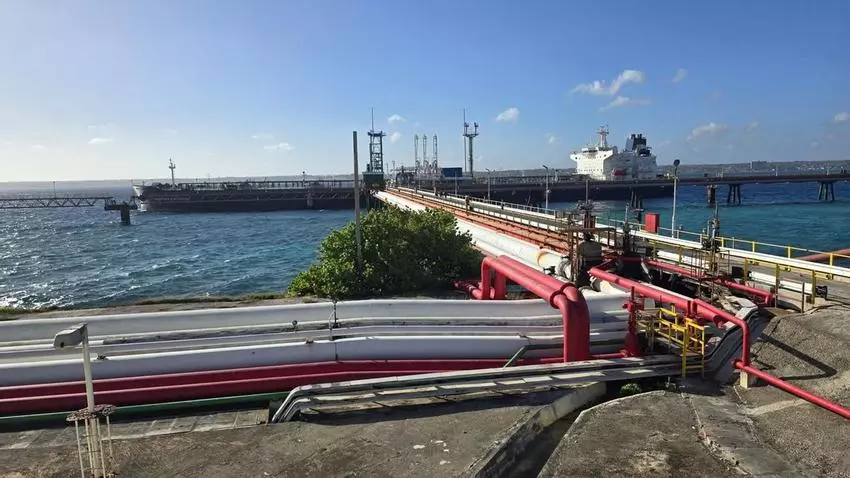
El tanquero ruso ‘Anatoly Kolodkin’ en el muelle de la Base de Supertanqueros de Matanzas. / Facebook/Oliver Zamora Oria

However, on Monday, White House spokeswoman Karoline Leavitt said that if the US allowed the Anatoly Kolodkin to reach the island, it was for “humanitarian reasons,” and that the country will analyze each case to determine whether or not to authorize the arrival of other ships.

“There has been no firm change in our sanctions policy,” Leavitt stated at a press conference. “We will continue to consider each case individually, whether for humanitarian or other reasons.”

Before this appearance yesterday, Mexican President Claudia Sheinbaum had avoided clearly answering whether she would continue sending oil to the island, in light of Trump’s statements on Sunday. The president reiterated that the Mexican government is helping the Cuban people with humanitarian aid while also maintaining trade agreements with its counterpart in Havana. “What we have always said is that Mexico has every right to send fuel, whether for humanitarian or commercial reasons, but we don’t want to harm Mexico,” she explained.

At the same time, she referred to the “tariffs, well, duties” with which Trump threatened nations that send oil to the island. “In that context,” she summarized, “we will make the decision, and it will always be reported whether or not oil is sent to Cuba.” Furthermore, as something “very important,” Sheinbaum mentioned that “there are private companies in Cuba,” such as “hotels and others,” that “require fuel,” and that “they are looking for private companies willing to supply them with fuel, not necessarily government-to-government.” She continued, without clarifying whether this is the method they have found to send oil or which companies are involved, on either side: “There are private companies that have approached us, for example, to buy fuel from Pemex and then deliver it to private companies in Cuba.” 

______________________

COLLABORATE WITH OUR WORK: The 14ymedio team is committed to practicing serious journalism that reflects Cuba’s reality in all its depth. Thank you for joining us on this long journey. We invite you to continue supporting us by becoming a member of 14ymedio now. Together we can continue transforming journalism in Cuba.
The Central Bank of Cuba Creates 2,000 and 5,000 Peso Banknotes To Facilitate Transactions ‘In the Current Moments of Inflation’

For the first time, Cuban banknotes feature the faces of women, Mariana Grajales and Celia Sánchez.

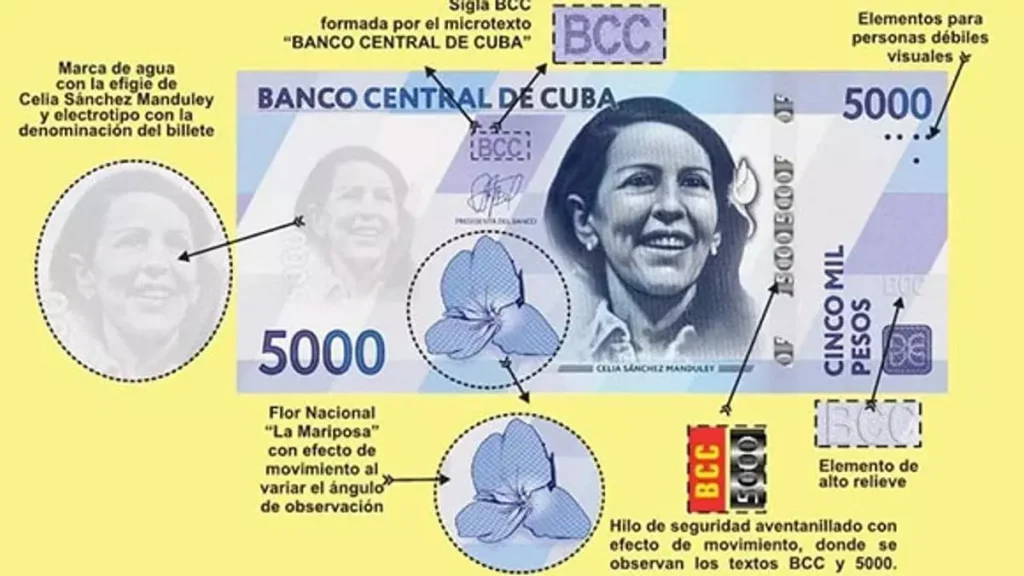
New 5,000 peso banknote with the face of Celia Sánchez Manduley / Central Bank of Cuba

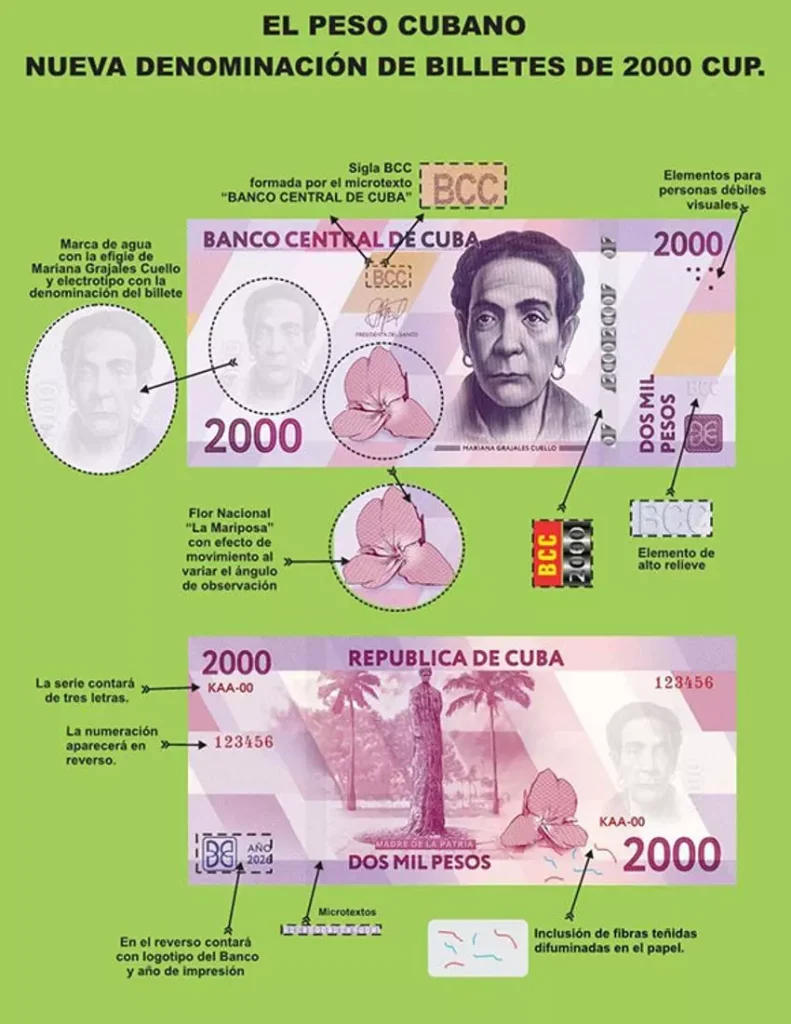
14ymedio bigger14ymedio, Havana, March 31, 2026 – Mariana Grajales and Celia Sánchez will be the first female faces to appear on Cuban banknotes starting this Wednesday, when the Central Bank of Cuba (BCC) puts into circulation new denominations that have emerged driven by inflation. Grajeles, the mother of Antonio and José Maceo will appear on the 2,000 peso notes, while the guerrilla fighter Celia Sánchez Manduley, who was already present in the watermark of the 200, 500, and 1,000 peso notes, will now take center stage on the 5,000 peso notes.

The new banknotes of this very high denomination will begin circulating this Wednesday in the capital and will gradually extend to the rest of the country, the BCC announced. The 2,000 peso notes will appear somewhat later, although the official report does not provide exact dates.

“The issuance of the new banknotes aims to facilitate cash transactions, respond to the real needs of the economy that demands large amounts of cash, helping to reduce costs related to cash logistics and to gain agility in operations in the current moments of inflation the country is experiencing,” the statement emphasizes, published in all official media.

New 2,000 peso banknote with the face of Mariana Grajales / Central Bank of Cuba

The bank has described with precision each of the new banknotes, both measuring 150 by 70 millimeters and made of special security paper for their function. The 2,000 peso notes will be pink and violet, while the 5,000 peso note is continue reading

blue. Both will carry the watermark of Celia Sánchez, like their high-value predecessors.

Other details include the integration of two additional security features: a vertical thread and the mariposa — the national flower — on both the front and back, which will have a rainbow movement effect.

The initials of the BCC, the signature of the bank’s president, Juana Lilia Delgado Portal, and other embossed elements will characterize the new denominations, which will also each feature a commemorative set. The 2,000 peso bill shows the monument to Mariana Grajales in Santa Ifigenia Cemetery, while the 5,000 peso bill will feature the monument to Celia Sánchez Manduley in Lenin Park.

The BCC has provided all the essential details to identify the validity of the two banknotes, although it does not reveal the amount invested in issuing these new denominations.

The expert then spoke of the possibility that China might print the Cuban banknotes, although he also pointed to the Russian option, a manufacturer that supplies many countries.

Since 2023, the need for higher-value denominations had become evident, since for foods as common as a carton of eggs, more than three banknotes of the highest denomination were required. However, the shortage of paper currency to produce them was so evident that the State acknowledged having problems printing.

At that time, the issuance of more 100 peso banknotes was announced, but with new paper that would circulate simultaneously with previous versions but without the raised print or the Braille system.

“With inflation and devaluation, more banknotes are needed to buy the same product or service, or new banknotes with higher denominations, and this is where the cost of printing paper money and the decision about banknotes with denominations higher than 1,000 come in,” explained Cuban economist Pedro Monreal at the time.

The expert then spoke of the possibility that China might print the Cuban banknotes, although he also pointed to the Russian option, a manufacturer that supplies many countries. The Asian option was one of the most economical in the world, where each banknote costs between 0.05 and 0.10 cents of a dollar. Monreal already warned at that time that it would be necessary, in any case, to consider replacing the denominations that would substitute the current ones that had “become obsolete due to inflation and devaluation,” although that “would imply an outlay of millions of dollars.”

Translated by Regina Anavy

______________________

COLLABORATE WITH OUR WORK: The 14ymedio team is committed to practicing serious journalism that reflects Cuba’s reality in all its depth. Thank you for joining us on this long journey. We invite you to continue supporting us by becoming a member of 14ymedio now. Together we can continue transforming journalism in Cuba.
France: It Is “Important” That Cuba “Make Gestures” of Economic Openness and Human Rights

Nicolas Forissier, Minister Delegate for Europe and Foreign Affairs, said that the dialogue between the U.S. and the Island “must be constructive, but it must also be demanding”

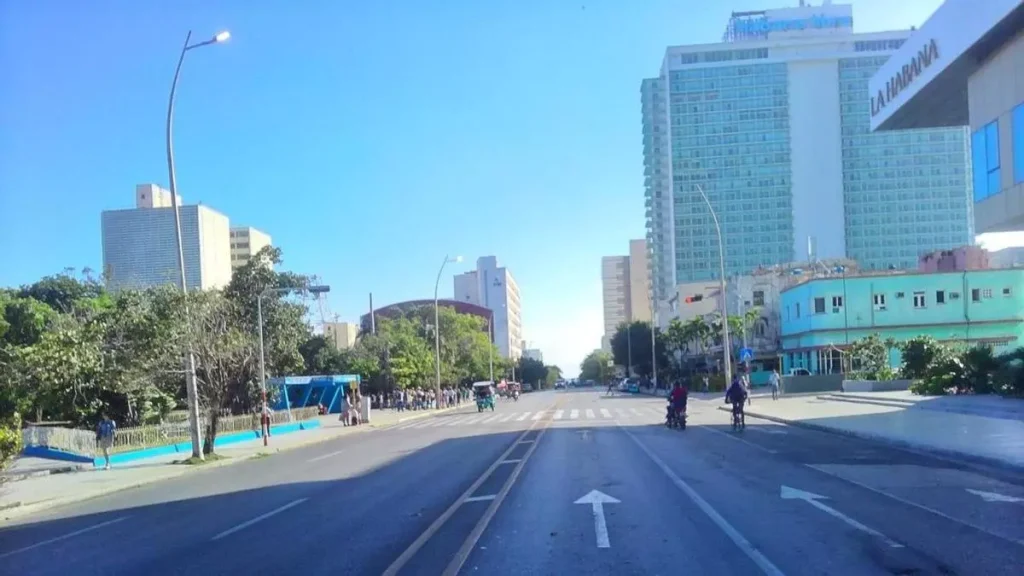
The central 23rd Street, in Havana’s El Vedado, empty of vehicles, this Tuesday / 14ymedio

14ymedio bigger14ymedio / EFE, Paris, March 31, 2026 – France welcomed the talks initiated between the United States and Cuba this Tuesday, intended to achieve a “stabilization” of the situation on the Island, and considered that it is “important that Cuba, especially in matters of human rights and economic openness, show signs of goodwill.”

“With regard to Cuba, since 1992 we have continuously requested from the United Nations that the embargo be lifted. We constantly call for dialogue in order to promote prospects for the stabilization of Cuba,” Nicolas Forissier, Minister Delegate for Europe and Foreign Affairs, said this Tuesday in the French National Assembly.

He was responding to a question from Macron-aligned deputy Frantz Gumbs about Paris’s position regarding the crisis on the Island, which in Forissier’s words is going through a situation of “economic suffocation” that affects “the entire Cuban population in a totally indiscriminate way” and that may have consequences for the stability of the Caribbean region, where France has continue reading

territories.

France is, within its means, “available for initiatives led by the UN in terms of emergency humanitarian aid”

Forissier indicated that his country supports talks to find a negotiated solution and insisted that the dialogue “must be constructive, but it must also be demanding.”

“And from this point of view, it is important that Cuba, especially in matters of human rights and economic openness, make gestures,” he stressed, while also recalling that the Island is very present within the framework of the French presidency of the G7, which is following the situation “very closely” with “initiatives and exchanges that are underway.”

Regarding the possibilities of humanitarian support for the inhabitants of the Latin American country from Paris, Forissier assured that France is, within its means, “available for initiatives led by the UN in terms of emergency humanitarian aid and in response to calls from the WHO.”

Translated by Regina Anavy

______________________

COLLABORATE WITH OUR WORK: The 14ymedio team is committed to practicing serious journalism that reflects Cuba’s reality in all its depth. Thank you for joining us on this long journey. We invite you to continue supporting us by becoming a member of 14ymedio now. Together we can continue transforming journalism in Cuba.