Last week, the man lost his life in a failed break-in attempt. The lack of proper treatment had turned him into a danger to his neighbors and to himself
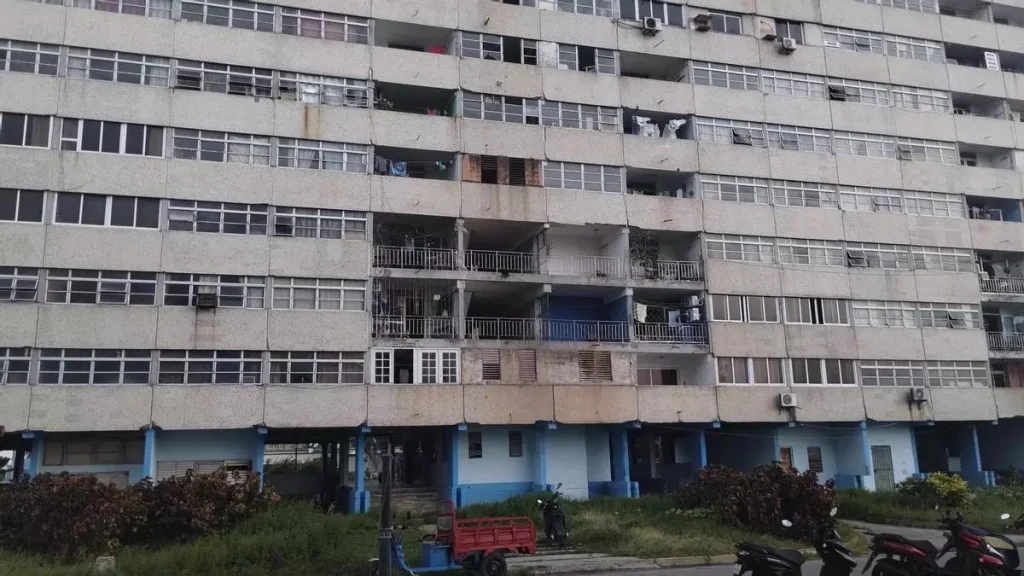
 14ymedio, Pablo Padilla Cruz, 13 July 2026 / It was around ten o’clock at night on July 7 when a man, later identified as Miguel, fell from the sixth floor of the well-known thirteen-story old building in Matanzas while attempting to break into a neighbor’s home. According to the preliminary forensic report, the intruder tried to grab onto a protective railing on the building’s balcony, but the structure gave way, sending him plummeting to the ground floor.
When Miguelito fell he was wearing a ski mask covering his face, which initially kept neighbors from identifying him. It was his own mother who, before police investigators, confirmed the identity of the deceased.
For the community, the tragic outcome was not a surprise but something expected for a person like Miguelito: mentally ill for years, with a criminal record, and forgotten by the authorities.
“He was a problem for the neighborhood,” says one neighbor, speaking on condition of anonymity. “He was someone with a mental disorder who was undergoing psychiatric treatment. About fifteen years ago he stabbed a young man in the same building several times – a young man who used to help him and even gave him work making handicrafts. One day, with no prior argument or dispute, he waited for him downstairs and stabbed him repeatedly,” he recounts.
“He was someone with a mental disorder who was undergoing psychiatric treatment. About fifteen years ago he stabbed a young man in the same building several times who used to help him”
Miguel spent eight years in prison and, once he had served his sentence, returned to the neighborhood. It was the victim who had to move away, out of fear of another attack. “I’m no judge, but someone who endangers other people’s lives should either be given specialized help or removed from society. What you can’t do is send him back, after just a few years, to the very place where he nearly killed an innocent person,” the neighbor laments.
The alarming lack of infrastructure, medication, and follow-up protocols for people with chronic mental illness is one more open wound among the many in Cuba. The extreme shortage of antipsychotic drugs and sporadic medical supervision have left it up to families and neighbors themselves to contain patients who, during a crisis, can become very dangerous.
The island’s health system, which years ago centralized control of these cases through extended hospital stays or strict provision of treatment, no longer takes charge of them. Faced with the collapse of hospitals and pharmacies, patients with severe diagnoses of schizophrenia or psychosis end up wandering the streets or confined to homes that lack sufficient resources to care for them. The lack of adequate inpatient institutions and the absence of supervised reintegration programs turn mental health care in Cuba into a game of Russian roulette for public safety.
Odalis, the owner of the apartment Miguel tried to enter on the night of July 7, confirms the earlier account while still trying to come to terms with what happened. “I’m still shaken. His mother is a much-loved neighbor, but that young man needed urgent medical attention. He’d tried to get into my home several times that same week for different reasons, and now this happens. Nobody knew his real intentions – only that he was wearing a ski mask and had a rope and a hammer in a backpack. It’s hard to think that if he hadn’t fallen, the one who ended up dead today might have been me,” she says with sorrow.
Although a sense of helplessness can be felt throughout the building, her case is a special one, and she agrees this was foreseeable. “Ever since he stabbed Eduardito, the craftsman, we all knew – and the police did too – that he wasn’t right psychologically. All because no one treated a sick person or took him somewhere he could get help.”
“It’s not that everything bad that happened in the building was Miguelito’s fault, but he used to follow the girls around, harass them, and threaten families”
Residents say Miguel’s erratic and intimidating behavior was frequent and that early warnings were systematically ignored by law enforcement. In recent nights, Miguel, adds a third neighbor interviewed, had taken to throwing bottles from his balcony at passersby.
“We called the police and they never came,” he laments. “Just like they never came when Cecilia, a neighbor on the eleventh floor, had her door forced open and her EcoFlow unit stolen. It’s not that everything bad that happened in the building was Miguelito’s fault, but he used to follow the girls around, harass them, and threaten families. The Ministry of the Interior and the local sector chief never did a thing. Now look – if this tragedy hadn’t happened, Odalis might not be alive,” he continues.
The neighbor says all the residents deeply feel for Magalys, his mother. “She’s a lovely person, but this is like the García Márquez book: a chronicle of a death foretold. The worst part is that it could have been prevented with treatment and supervision from specialists.”
Translated by GH.
______________________
COLLABORATE WITH OUR WORK: The 14ymedio team is committed to practicing serious journalism that reflects Cuba’s reality in all its depth. Thank you for joining us on this long journey. We invite you to continue supporting us by becoming a member of 14ymedio now. Together we can continue transforming journalism in Cuba.