The Automotive Business Group has recorded a 47.9% decline in passenger transportation and a 31.5% drop in freight transportation.
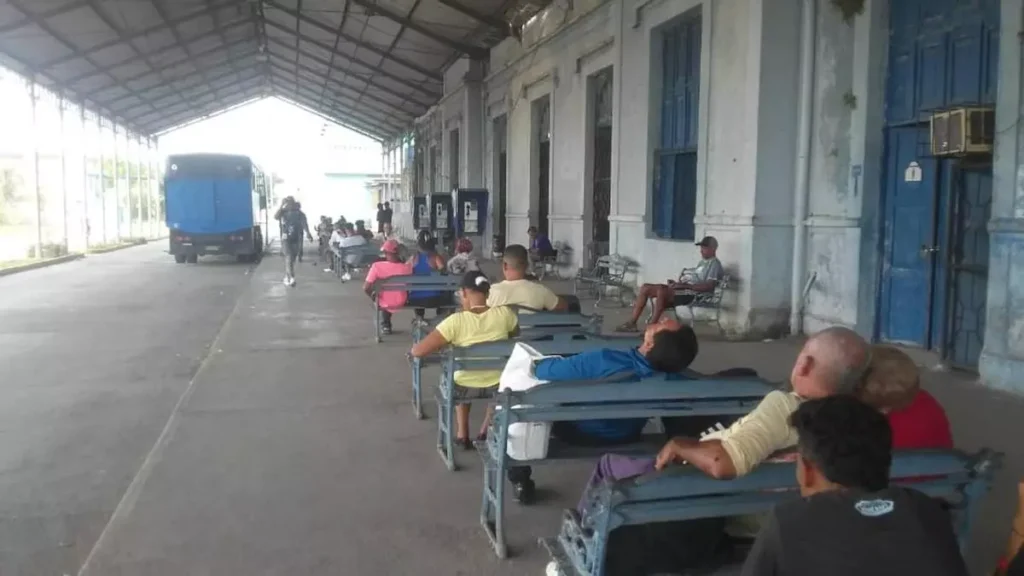
 14ymedio, Madrid, November 12, 2026 – The survival of Cuba’s state transportation sector will depend, to a large extent, on the two-thirds of its workforce that must be sacrificed to make 17 companies belonging to the Automotive Transportation Services Business Group (GEA), with 16,487 employees, financially viable. According to its director general, Oscar Alberto Carbajal Serrano, the organizational structure had 90 employees, a number that was reduced to 70 and will eventually fall to 29.
These cuts at the Higher Business Management Organization (Osde), the state entity that groups together all companies linked to transportation, affect office personnel, from executives to specialists, technicians, and administrative staff. But the changes “also extend to the 17 basic business units, many of which will begin operating as state-owned micro, small, and medium-sized enterprises (MSMEs) or will be established as subsidiary companies of the entities to which they belong,” Carbajal predicted. The warning has raised fears about the fate of many workers who do not know whether they will be absorbed by the newly announced entities.
Carbajal said Wednesday on the television program Mesa Redonda that, given the current crisis, “the business group should have gone bankrupt and closed down,” but he attributed its survival to decisions made under the 176 economic reforms approved by the Government in June. The group recorded a 47.9% decline in passenger transportation and a 31.5% drop in freight. The figures are even worse when looking at the sector as a whole, as Transport Minister Eduardo Rodríguez Dávila revealed last month in an interview with Reuters: a 75% decrease in trips compared to last year.
Carbajal said Wednesday on the television program Mesa Redonda that, given the current crisis, “the business group should have gone bankrupt and closed down”
The National Bus Company, Carbajal explained, is in the worst condition. It was already experiencing a very negative trend, but in 2026, the limited availability of fuel has caused a sharp decline in travel, with daily trips on interprovincial routes falling from 5,000 to just 844. According to the official, freight distribution is another major concern, affecting all types of products, whether medicines, food imports, or even parts and components for solar power facilities.
“Multimodal transportation requires more than 9,000 liters of fuel per day to guarantee its operations throughout the country,” he warned. This has affected hemodialysis patients, sometimes forcing hospitals to admit them to avoid costly, or even impossible, transportation, while also creating difficulties for their relatives. Other groups affected, according to the broadcast, include school transportation, which has required adjustments to routes and schedules, as well as taxis and other vehicles. He also included the 900 three-wheeled vehicles used for short trips, whose availability has likewise been limited.
To address the situation, executives analyzed solutions across the 17 companies, which cover all kinds of related activities, including advertising, technology, logistics, and software. These are the areas where workforce reductions have been concentrated.
Leasing vehicles, warehouses, and premises at transportation terminals to private operators has become a source of income that the group plans to capitalize on. It will begin with more than 600 transportation units, out of the total of 12,650 owned by the group’s 17 companies that are now in the hands of “new non-state economic actors.”
“That is precisely what this is about: making assets productive,” Carbajal said, arguing that all of this will ultimately lead to better quality and more affordable prices. To date, however, citizens are far from seeing such improvements: state transportation is scarce; corruption and unofficial fares are widespread; and the private alternative, when available, is priced beyond the reach of much of the population.
The official mentioned the state-owned companies currently responsible for transporting personnel: Transmetro and the new MSME Transmed, which plan to expand their services for healthcare workers and patients.
The official mentioned the state-owned companies currently responsible for transporting personnel: Transmetro and the new MSME Transmed, which plan to expand their services for healthcare workers and patients
Carbajal elaborated on the idea of charging stations, which Rodríguez Dávila had also announced in his interview with Reuters. The group has 120 charging stations acquired with state funding and manufactured with the participation of the domestic industry, he said. That is twice the 60 stations previously announced by the minister, corresponding to those that, according to the executive’s statement yesterday, are at the distribution company and ready to be sent to other provinces. “It is one way of taking advantage of local energy for local transportation,” he said.
This would help begin supporting the circulation of the increasingly numerous electric vehicle fleet. Cuba currently has 150,000 vehicles of this type, including cars, motorcycles, and three-wheeled vehicles, representing 15% of the total. Taxi Cuba has just received 200 cars, Carbajal explained, 160 of which are already in service, and is awaiting another 200.
At a time when transportation for ordinary users is in complete collapse, it was striking to hear the executive say that, at least, the administrative situation remains afloat, even if it does not solve the population’s problems. “None of the 17 companies is currently operating at a loss,” he stated, explaining that although revenues are not yet satisfactory, none will end the year in the red.
“The group’s primary social responsibility is precisely to guarantee the transportation services that citizens need, especially those connected with essential services,” he concluded. In reality, however, this is not being fulfilled.
Translated by Regina Anavy
______________________
COLLABORATE WITH OUR WORK: The 14ymedio team is committed to practicing serious journalism that reflects Cuba’s reality in all its depth. Thank you for joining us on this long journey. We invite you to continue supporting us by becoming a member of 14ymedio now. Together we can continue transforming journalism in Cuba.