The store at 23rd and 10th reopens under the name Sumai, with electric motorbikes, cars and a scant variety of products, but it accepts neither Cuban pesos nor Clásica cards
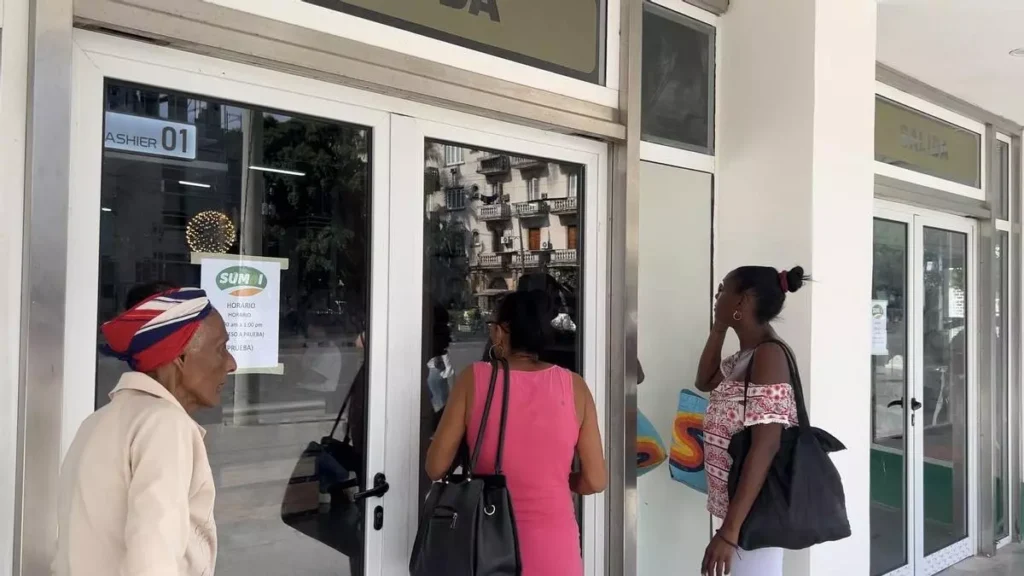
 14ymedio, Havana, Darío Hernández, November 12, 2026 /Sumai’s green sign stands out on the facade of the old Ten Cent at 23rd and 10th, in El Vedado. The building, which for decades was a landmark of Havana commerce, has regained some of its outward luster. But this Wednesday, barely 24 hours after the new Chinese-managed market opened, customers were met with a surprise: the store was closed “for inventory.”
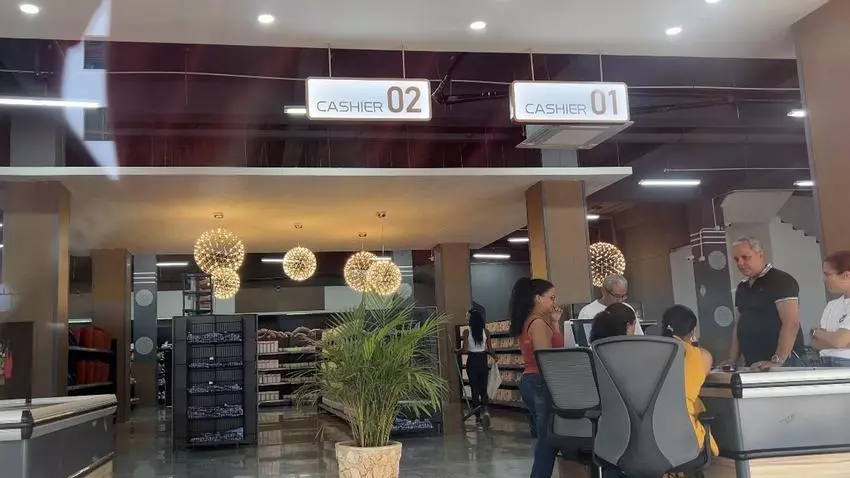
Behind the glass doors, the cash registers, the decorative lamps and a few shelves can be made out. Outside, curious onlookers take turns pressing their faces against the glass to find out what’s inside. A man shields himself from the glare of the sun with one hand as he tries to peer into the interior. The scene seems more fitting for an exhibition than for a retail business.
“Is the same thing going to happen to it as to the other Chinese store that was shut down a few days after it opened?” asks a woman who came from Centro Habana. Her concern is not unfounded. The experience of other businesses launched amid high expectations and later brought to a standstill feeds consumer distrust.
In August 2024, China Import, popularly known as the “Chinese Costco,” closed its doors at Manglar and Oquendo, in the Cerro neighborhood, just as it was starting to become famous for its competitive prices. The business, housed in former industrial warehouses linked to the Sabatés soap factory, was subjected to an audit. Shoppers who turned up at the time found a sign announcing it was closed “until further notice” and explanations that were far from reassuring. There was no further notice.
The new Ten Cent, run by the Cuban-Chinese joint venture Sumai S.A., opened this Tuesday with a long line. At ten in the morning, those interested began going in, ten at a time. But the excitement was short-lived. One customer who came out among the first warned that there was no food or toiletries, precisely two of the goods that Cuban families need most.
On Wednesday, by contrast, there was no line. Visitors arrived, asked questions, looked through the windows and ended up leaving. On one of the doors, a sheet of paper stuck on with tape announced opening hours from 10:00 a.m. to 1:00 p.m., accompanied by the phrase “trial process.” The makeshift nature of the notice contrasted with the renovation of the building, painted an intense green that is impossible to ignore.
Through the glass, one could make out shelves with merchandise, gleaming counters and several spherical lamps that give the interior the air of a modern store. Also visible were fairly empty spaces, with wide expanses of shiny floor and a layout that still seemed far from making use of the building’s full capacity.
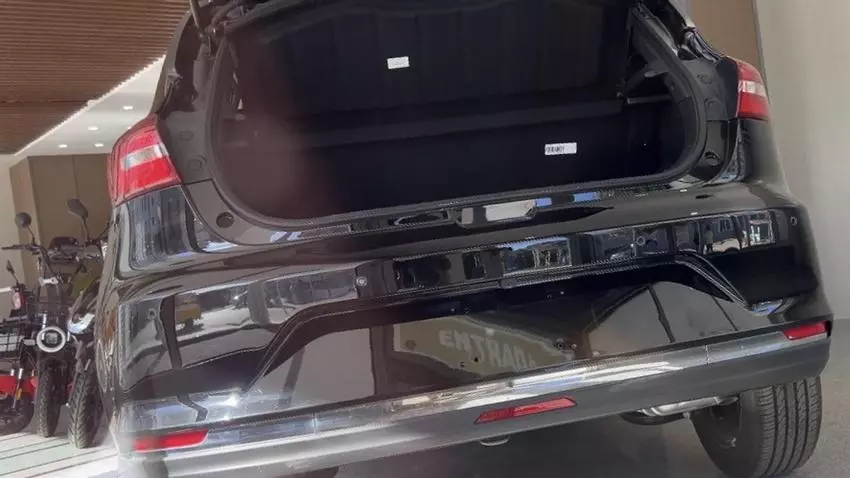
Among the products on sale are electric motorcycles and cars of little-known brands. One of the cars, black and gleaming, was on display with its trunk open, as if waiting for someone to make up their mind to load their purchases. The image had something extravagant about it in a city where getting hold of a packet of detergent can be a good deal more urgent than driving off in a brand-new vehicle.
But the biggest surprise lay in the payment terms. The establishment does not accept the Clásica card, used in other dollarized stores on the island. Purchases must be paid for exclusively in U.S. dollars in cash. It is a requirement that considerably shrinks the pool of potential buyers, especially among those who receive wages and pensions in Cuban pesos.
The commercial promise was ambitious. Sumai had announced back in July a range of goods that would cover food, household appliances, hardware, construction materials and renewable-energy equipment, in addition to retail and wholesale operations. That is why the reopening of such a well-known building raised expectations that went far beyond curiosity about seeing a new store.
On the sidewalk, meanwhile, life went on as usual this Wednesday. A homeless man was resting, sitting against the green wall next to the store’s exit door, which was covered by curtains with blue and red stripes. Further along, other passersby stopped for a few minutes in front of the windows. The old shopping corner had regained its ability to draw people’s gaze, but it had not yet managed to turn that into purchases.
For several generations of Havana residents, the Ten Cent at 23rd and 10th represents a memory of display windows, merchandise and family outings through El Vedado. The popular stores belonged to the U.S. chain F. W. Woolworth Company, which arrived on the island in 1924 and opened outlets in Havana and other cities. Famous for their variety of merchandise and their affordable prices, they were nationalized by Fidel Castro in October 1960, although their name has survived for decades in popular memory.
So the reopening of this centrally located store, after such a long wait, had all the ingredients to become good news. However, between the absence of essential products, the requirement for cash dollars and the closure “for inventory” just one day after the opening, the initial enthusiasm is beginning to cool.
For now, the Chinese market has achieved something that seemed difficult: getting Havana residents to stop once again in front of the doors of the old Ten Cent. What it has not yet managed to do is give them enough reasons to cross the threshold.
Translated by GH.
______________________
COLLABORATE WITH OUR WORK: The 14ymedio team is committed to practicing serious journalism that reflects Cuba’s reality in all its depth. Thank you for joining us on this long journey. We invite you to continue supporting us by becoming a member of 14ymedio now. Together we can continue transforming journalism in Cuba.