The official media present as a “technological innovation” a practice that is standard in the industry worldwide, while acknowledging that domestic production of the bean is insufficient
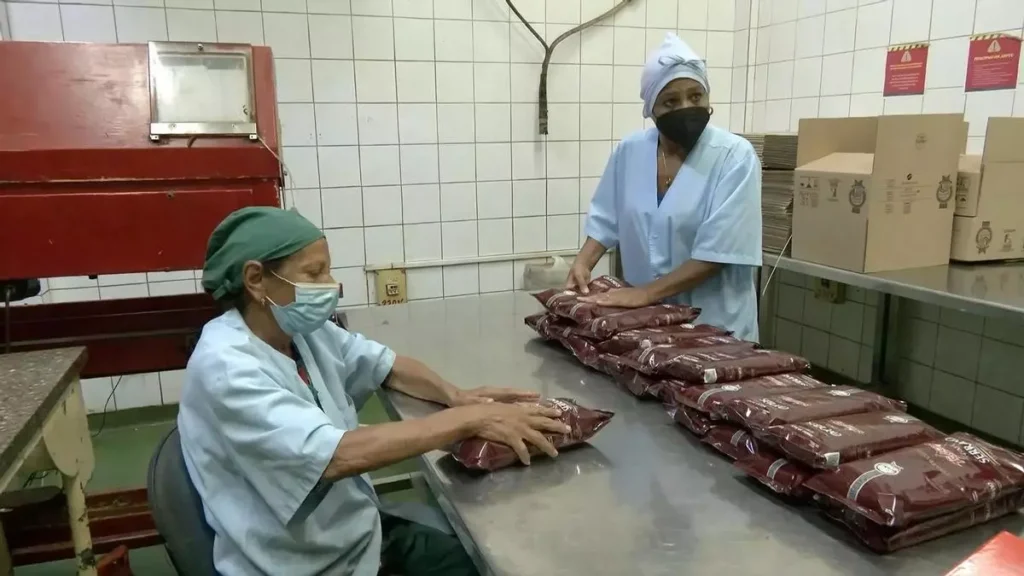
 14ymedio, Madrid, November 2, 2026 / For at least a week now, residents of Havana’s Nuevo Vedado neighborhood, near this newspaper’s newsroom, have once again noticed the haze and the unpleasant burning smell in the air, unmistakable signs that the Café Selecto Roasting Plant of Havana has resumed roasting domestically harvested beans.
The Roasting Plant, which belongs to the Ministry of the Food Industry, had halted production due to the fuel crisis, which prevented it from using diesel for roasting. Now the factory has announced its switch to manufactured gas, which has allowed it to resume operations. Gas roasting had already been adopted years ago by most of the coffee industry worldwide, owing to its low cost, availability, and ease of measurement and regulation. Gas also allows for more controllable roasting than diesel and is more efficient in terms of heat and radiation.
However, the official press now presents it as a “technological innovation” and “an unprecedented experience in the country,” a symbol of “resistance and talent” in the face of the “economic war imposed by Washington,” which threatens to “completely paralyze the industry.”
According to Canal Caribe, it was this paralysis under US pressure that led “experts and specialists” from the Agri-Food Business Group to “turn to science and to the study of practices in similar industries internationally.”
“The levels of domestically sourced beans being processed are still insufficient for the installed industrial capacity”
“Around the world, the fuel normally used in the coffee roasting industry is liquefied gas,” acknowledged the technical director of the Cubacafé company, who went on to explain how they made the “unprecedented” logistical decision: “What happened? Because of the harsh imperialist blockade, we were forced to replace the diesel we normally used with manufactured gas.”
However, the report also admits that “the levels of domestically sourced beans being processed are still insufficient for the installed industrial capacity,” which means that the country’s coffee harvest is not enough to keep the Roasting Plant running at full capacity. To “boost production and export more,” the report continues, they are prioritizing industrial management in partnership with “other economic actors.” One such case is Nescor, the joint venture formed by the Swiss multinational Nestlé and the Cuban state-owned Corporación Alimentaria S.A. (Coralsa), producers of Café Serrano, the brand the Roasting Plant was processing at the time of the report.
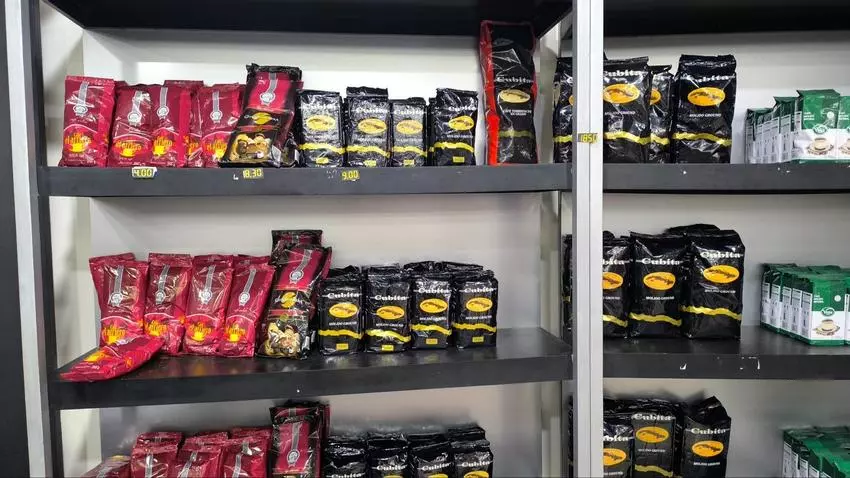
The general director of the Roasting Plant welcomed the fact that, thanks to the 176 economic reforms implemented by the Government, there is now the opportunity to open a retail outlet that will benefit both workers and local residents. Although she did not specify the prices of the products on offer, coffee from this Roasting Plant is sold to Cubans themselves in dollars. A kilogram of domestic coffee can cost, for example, 18.50 dollars, which at today’s exchange rate is equivalent to 16,650 Cuban pesos, that is, much more than the monthly salary of a Roasting Plant worker.
This was confirmed by one of the company’s own employees. Yonier Simeón told Canal Caribe that he used to earn 4,000 pesos a month, but his salary has now risen to 13,000 – 14.44 dollars at today’s exchange rate – although with quarterly incentives and sales bonuses he can earn up to 20,000 – just over 22 dollars. That would be enough to buy perhaps two packages of Serrano, the very coffee they produce.
Also asked about the 176 economic reforms, the technical director of Cubacafé – which belongs to the Ministry of the Food Industry – welcomed the government measure that puts them “on the same level as non-state actors, and that makes the state enterprise more competitive.”
The Roasting Plant, however, still does not have a photovoltaic system to mitigate the problems caused by prolonged blackouts
Roasting this “100% domestic” bean with manufactured gas, according to the specialists cited by Canal Caribe, shows parameters of “quality, efficiency and financial savings.” As an example of the benefits of this “technological innovation,” they compare it with the consumption previously required: producing ten tons of coffee used to take 1,280 liters of diesel. Engineer Yordis Roja explained that gas roasting improves the quality of the final bean (aroma, flavor, essential oils) because the roasting is slower and more even.
The Roasting Plant, however, still does not have a photovoltaic system to mitigate the problems caused by prolonged blackouts. According to the Cubacafé executive, they plan to begin the first stage of this installation in the first quarter of 2027.
The various problems with domestic production of the bean mean that it is offered to the public in dollars and at prices beyond consumers’ reach. As a result, the coffee Cubans drink most is not the one produced on the island – which is geared more toward the international market – but the one imported from the US: La Llave, Bustelo, Pilón, La Carreta, and Cubanazo.
According to data from the National Office of Statistics and Information (Onei), domestic coffee production fell by 84.8% between 2021 and 2025. In Santiago de Cuba, the country’s main coffee-growing province, the forecast for the 2026-2027 harvest is to collect just over 1,390 tons, compared with the nearly 4,000 projected two years earlier. But coffee is not the only example of the collapse of domestic production. With the exception of tobacco, beer, detergent, and lobster tail, every productive sector has collapsed over the last five years: rice, shrimp, coffee, pork, yogurt, cement, and televisions fell by between 65% and 98%, according to official Onei figures.
Translated by GH.
______________________
COLLABORATE WITH OUR WORK: The 14ymedio team is committed to practicing serious journalism that reflects Cuba’s reality in all its depth. Thank you for joining us on this long journey. We invite you to continue supporting us by becoming a member of 14ymedio now. Together we can continue transforming journalism in Cuba.