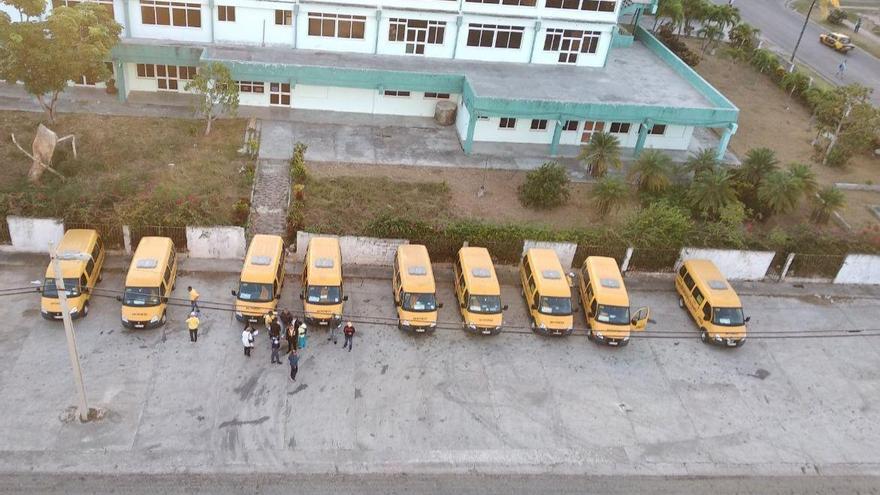

A Microbus Route in Search of Passengers

Stop for the new microbuses at Calle 5B between 164 and 164A, in Alamar, a municipality of East Havana. (14ymedio)

14ymedio bigger14ymedio, Luz Escobar, Havana, January 24, 2019 — “Come on, get on because we’re leaving…” Thus the microbus driver addresses the only client who this Tuesday morning is at the stop at 1st and 70th street in Havana. The news of the recently inaugurated Route 15 doesn’t seem to have yet reached the inhabitants of the capital, where for decades getting from one point to another has been a headache.

Immaculate, the seats without a spot of dirt, the new little buses arrived from Russia, are the Government’s latest bet in its attempts to get private transport off of Havana’s streets. In the domain of the almendrones [classic American cars, mostly from the 1950s, typically used as private taxis] and the pisicorres [vans or trucks adapted to transport passengers], these 12-seat vehicles stand out and provoke more than one prediction. continue reading

On the route, which begins in Playa and ends in Alamar via Avenida Carlos III and the Monumental, a few passengers get on. The majority ask loudly how long this new experiment will last: “We’re going to see in six months how they are,” is the sentence most repeated by the incredulous riders.

At the stop in the Playa municipality, only one stand with the information for the routes gives away the beginning of “operation microbus,” as some jokesters have nicknamed the new routes. With only one passenger, the driver starts up before the curious glances of passersby.

The passenger, somewhat astonished to be traveling so comfortably inside the vehicle, spends part of the journey reading all the posters inside with the details of prices for stretches of routes, streets through which the microbus travels, and the stops it makes. “That’s so that everyone knows what they have to pay and nobody is ripped off,” thinks the rider while a mother and child get on at a stop.

“It smells new, Mommy,” lets out the boy as soon as he smells the aroma of recently-opened merchandise that still fills the microbus. “We’ll see how it smells in a few months,” responds the mother. The skepticism turns into the “stone passenger” along the majority of the route, as if riders would prefer to not to get too hopeful.
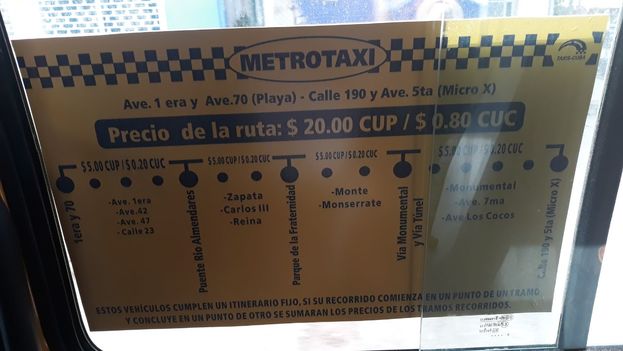
Inside the microbus is all the information on the route and the prices to pay for each stretch. (14ymedio)

Made by the Russian company GAZ, the vehicles run between 6:30 am until 10:00 pm and share stops with almendrones whose owners, a few self-employed drivers, have decided to accept the new rules of the game.

In December the government approved a package of measures to regulate the work of private drivers. Among the new measures is the obligation to establish stops, travel on determined routes, and buy fuel with a magnetic card that allows a greater control on spending and consumption*.

The new rules generated a great dissent among the drivers, who pressured authorities with a strike for several days. As of that moment the flow of private taxis hasn’t stablized again and the Government has kept up the battle of wills with them by importing and putting into service new state vehicles.

The confrontation has challenged the entire city, where an average of almost a million and a half people move about each day, of which a million do so on State-owned buses. With an evident decrease in private drivers, Havanans had an end of the year “where everything collapsed at the same time,” the mother with her son on the microbus laments this Tuesday.

“The lack of flour and eggs, the rise in prices, and also the problems getting around,” explains the woman. “Now we have these microbuses but there’s no chicken anywhere,” she adds with an annoyed look. “It’s like we can’t have complete happiness, either we can get around or we can eat.”

At the top of Calle 42, the microbus now carries six people. A lady with a box full of onions, two young people who only take photos of the interior to put them on Instagram with sepia- and rose-colored filters, the passenger who got on at the beginning of the route, and the mother with her son, who at this point breathes on the window to draw little circles with his finger.

Next to the driver, the conductor is tasked with charging for the passage, which varies according to the stretch traveled. “To travel the entire route, you pay 20 pesos,” exclaims the elderly lady with the onions. “I thought that there was going to be a real reduction but prices are still very high for people.”

After the fascination of the first moment and the happiness of traveling in a clean and new bus passes, the passengers dedicate themselves to complaining about the prices of life.

The driver tries to calm the mood by saying that the advantages of the equipment cannot be denied. “These cars just arrived, I took the plastic off these seats and you all are using it for the first time,” says the driver at the top of Puente Almendares.

A young resident of Alamar recognizes that until then he had to take three cars to get to his grandfather’s house in Playa, but he doesn’t believe he could be a steady client of the microbuses because “you can’t spend 20 or 40 pesos every day on transportation.” He also complains that the initiative still wasn’t well organized and in East Havana he had seen a line of vehicles that were going out “one after another instead of doing it in a staggered way so that it would be more efficient.”

A yell from the lady with the onions interrupts him: “Stop!” she orders the driver. “I’m getting off here, I see that they [the stores] have oil.” With the sudden stop, some onion skins fall on the impeccable upholstery of the seats, and the door opens to return to a reality without novelties.

*Translator’s note: In other words, it prevents drivers from buying fuel on the black market because their purchases from the government are tracked on the card and inspectors can check if they bought enough fuel to operate the miles traveled.

Translated by: Sheilagh Carey

________________________

The 14ymedio team is committed to serious journalism that reflects the reality of deep Cuba. Thank you for joining us on this long road. We invite you to continue supporting us, but this time by becoming a member of 14ymedio. Together we can continue to transform journalism in Cuba.
Yusnel Bacallao and Lisandra Ordaz Will Not Participate in the National Chess Tournament

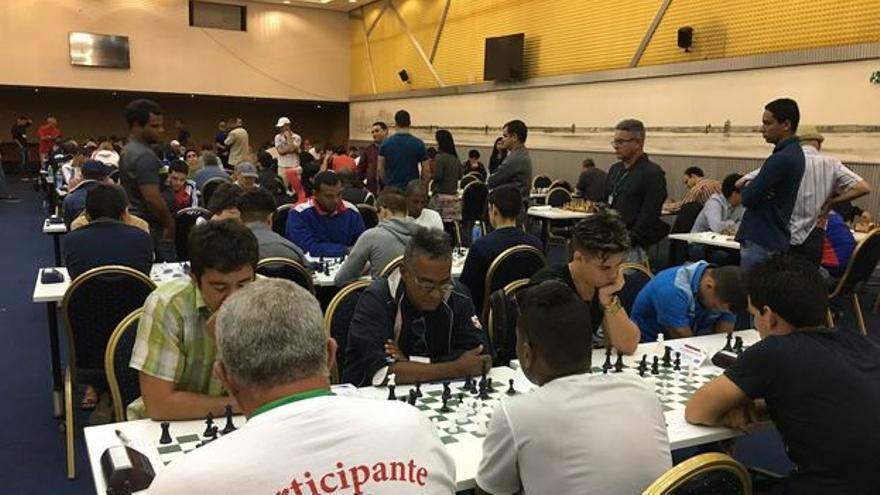
Participants in the 53rd edition of the Capablanca Memorial International Chess Tournament in Havana. (14ymedio)

14ymedio bigger14ymedio, Havana, 22 January 2019 – Cuban Grandmaster (GM) Yuniesky Quesada Perez shared on his Facebook account information from journalist Osmany Pedraza on the decision of Matanzas GM Yusnel Bacallao and Pinar del Río GM (absolute International Master) Lisandra Ordaz to not participate in the final stage of the national chess championships.

Automatically eligible, the two chess players, members of the national teams who participated in the last Olympiad of the scientific game in Batumi, Georgia, neither one has stated the reasons why they will not attend the domestic tournament. continue reading

As in the prior cases, once again it was Carlos Rivero González, president of the Cuban Chess Federation, who stated that they declined to participate due to personal reasons.

The information mentions that the women’s tournament begins in Holguin on January 28, while the men will begin to move the chess pieces on February 2 in Santa Clara.

Yuleisy Hernandez from the capital city will also not participate, although nothing has been said about this.

In the case of the Grand Master from Pinar del Rio, Lisandra Ordaz, many experts consider her among the three best Cuban chess players of the current century. Although she has never won a national tournament, she was the first to surpass the 2,400 ELO classification points hurdle and became the first Cuban to be recognized as an International Master, regardless of sex.

Bacallao, on the other hand, was called to occupy a greater leading role after the departures of Leinier Domínguez, Yuniesky Quesada and Lázaro Bruzón. The first days of January brought him a second place in the Zicosur 2019 chess tournament, which was won in Antofagasta, Chile, by the Peruvian José Eduardo Martínez.

Lisandra Ordaz is listed in 67th place among the first 100 women in the world rankings and is the first Latin American on the Elo list updated on January 1st.

Translated by Wilfredo Díaz Echevarria

________________________________

The 14ymedio team is committed to serious journalism that reflects the reality of deep Cuba. Thank you for joining us on this long road. We invite you to continue supporting us, but this time by becoming a member of 14ymedio. Together we can continue to transform journalism in Cuba.
Lumberjacks Achieve the Throne of the National Baseball Series

The champions, Las Tunas, already have to start preparations to go to battle in the Caribbean Series in Barquisimeto. (Granma/Ricardo López Hevia)

14ymedio bigger14ymedio, Ernesto Santana, Havana, 18 January 2019 — With four victories against one loss in the final, the Las Tunas team has just made their debut at the top of Cuban baseball against the orange Leopards who neither gave nor asked for a truce, and won 9-4 in the third encounter and lost by scores of 13-6 , 8-4, 7-5 and 8-4, in the first, second, fourth and fifth games, respectively.

After prevailing in their home at Mella stadium, the Lumberjacks arrived at Sandino stadium where the public pondered the defeat. After the start of the duel, Freddy Asiel Álvarez vs. Yoanni Yera, and an inning in which the Tuneros scored four runs against the orange starter, he righted himself and his teammates made a historic comeback. Afterwards Pablo Guillén ended things, striking out six of the ten men he faced to seal the victory. continue reading

The second game in Santa Clara was eminently tactical, with many emotions and controversial decisions. Alain Sánchez and Leandro Martínez started and again the Leopards fought hard, but the lockdown pitching by Yudier Rodríguez and Yoelkis Cruz — the great starters converted by wise decision into great closers — allowed the success that put the home team on the edge of elimination.

The final match at the Sandino was worthy of the grand final. If the Leopards opened by biting fast, the Lumberjacks used that deadly method that has become their hallmark: the epic comebacks every time the opponent takes the lead. The hero of the game, Jorge Johnson, defined the triumph driving in a run in the seventh to make the score 5-4, but, just in case, in the ninth he connected with the hit of the championship, a three run homer. Although Villa Clara threatened by loading the bases with one out, they could not pull it off.

The 39-year-old veteran Yoelkis Cruz-who participated in all five and saved four games- again shone in closing with the victory going to Yadián Martínez, who was credited with the last two wins in Las Tunas.

Although with their gold medal Las Tunas fulfilled the predicitions of many throughout the season, they also broke the supposed curse that the leader in the qualifying round never wins the championship in the end. Either way, this crown is the greatest collective sports success in the 42-year history of the province.

That’s what the “family-team” of manager Pablo Civil was aiming for since he took the field on August 9 to fight for each game as if it were the decisive one, with cohesion and function in all aspects, fast and powerful, where even the last man could be the first, without improvisation, with a heart called Danel Castro (“Without Danel there is no championship!”, the Tuneran fans shouted and sang from the beginning) and a captain like Yosvani Alarcón.

The designated hitter, who is as old as his province, was joyful: “This is big, big, I was a champion with Villa Cara, but with Las Tunas it’s something else. It was what I was dreaming about for my sports career. Now I am enjoying this and we will see what happens next year. I’ll have to think about whether I’ll retire or not. ”

For their part, the Sugarmakers returned along with their leopard mascot to the elite of Cuban baseball, improving with silver medal from their eighth place finish in the previous series and thus achieving its tenth subtitle in the national classic. Eduardo Paret could not make a better debut. Sancti Spíritus, bronze, deserves the most repeated praise.

While the statistics speak for themselves, they do not sufficiently explain the crown for Las Tunas. Although their success was seen coming since 2017, it is based on  very long, patient and focused work, which began prior to Pablo Civil and his excellent body of physical trainers. Suffice it to remember that Ermidelio Urrutia, who played with them, and later managed them also feels happy today with this laurel.

Along the way back to their home territorry, the Lumberjacks have been cheered by admiring crowds, including by their recently defeated Villa Clara and Avilanian rivals. In Camagüey, of course, the celebration was huge, since Dariel Góngora and Alexander Ayala are from there, two of the architects of the triumph. In Las Tunas, of course, who knows how long the fun and madness will last.

But the athletes can’t celebrate too much, because after a short break, they have to start preparing to go to battle in the Caribbean Series in Barquisimeto, Venezuela, between February 2 and 8, against Puerto Rico, Mexico, Dominican Republic and the hosts. Some hope that Las Tunas, reinforced with other good players from the championship series, will help raise at this time the self-esteem of the depressed nature of our national baseball.

Translated by Wilfredo Díaz Echevarria

_______________________

The 14ymedio team is committed to serious journalism that reflects the reality of deep Cuba. Thank you for joining us on this long road. We invite you to continue supporting us, but this time by becoming a member of 14ymedio. Together we can continue to transform journalism in Cuba.
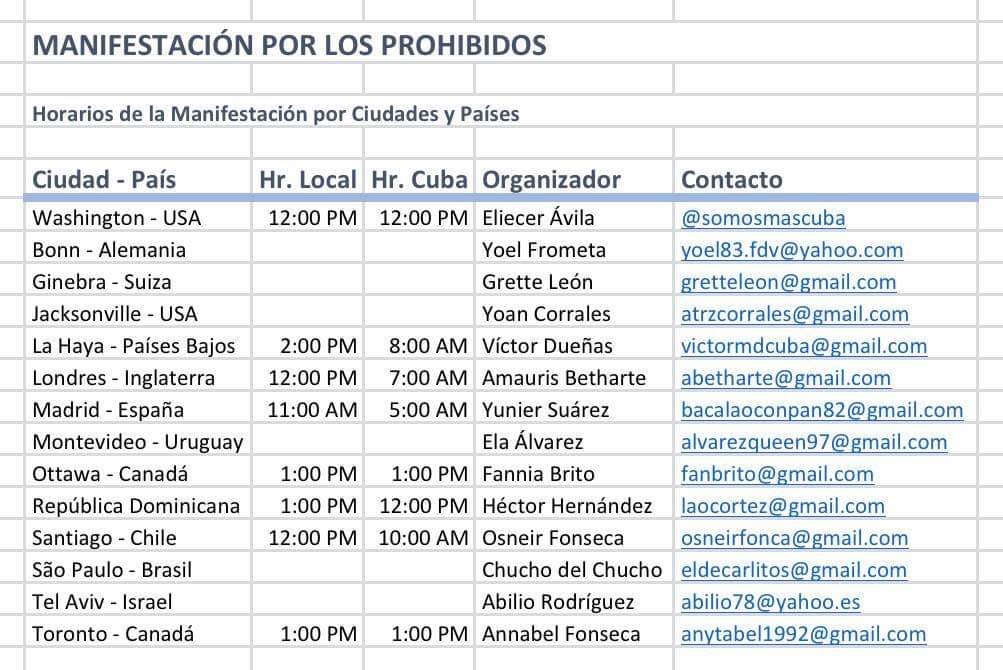
The March of the Prohibited: #I Vote No / Somos+

List of March Coordinators, by Country

The March of the Prohibited

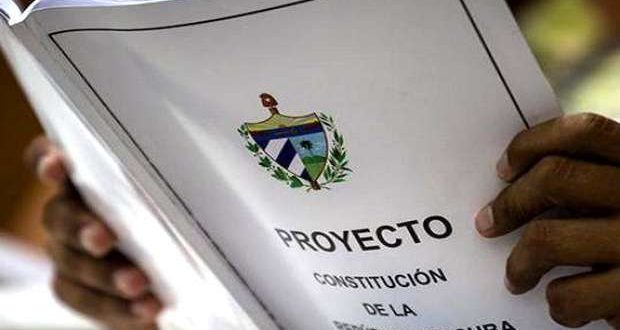
Somos+, 17 January 2019: This coming February 26th will be transcendental for all Cubans abroad, who will answer the call to responding NO to the unacceptable proposal of the constitutional reform that the Cuban government has launched.

Cubans from all over the world will demonstrate against this constitutional project that enslaves Cuba to a single party (the Cuban Communist Party, PCC), and therefore to a communist dictatorship, for life.

Somos+ summons all Cubans who want to support this initiative to join the protests. Contact the coordinator of your country and inform yourself of the exact time and location of the march.

Translated by Wilfredo Díaz Echevarria

Those Who Vote Yes and Appear to Support the Cuban Regime / Ivan Garcia

From Cubanet.

Iván García, 18 January 2019 — He always believed in God or in some deity from the Afro-Cuban list of saints. He never read Marxist literature nor did he like the soporific war films of the disappeared USSR. Germán, 51, is who he is. A midlevel official of the Ministry of Internal Trade with a communist party card that has made money and carved out a privileged status, looting with more or less pretense the state warehouses of provisions.

He’s the owner of a 1958 Chevrolet, updated and impeccable to the detail. He’s a fan of Made in USA products, from an iPhone to Guess jeans. Through El Paquete [The (Weekly) Packet] he follows American television series and Major League Baseball. With religious punctuality, every day he plays 200 pesos in the illegal lottery known as el bolita [little ball]. He drinks more alcohol than is recommended. He has two lovers and he likes to visit with his buddies in a rented house at the beach, where they don’t lack for fried pork and young women. continue reading

In the two decades that he has been an official (manager) he has learned to have his cake and eat it too. The complicated system has allowed him to have a comfortable house with air conditioning and he never lacks food. He doesn’t get his quality of life by means of his salary. No. He maintains it profiteering and operating like a financial expert he covers it up with accounting tricks.

Cubans, experts in rearranging the Spanish language to their taste, use different metaphors to camouflage a word as cutting as “stealing”: striving, inventing, being in the “tíbiri tábara* “…Over and over, when the tide rises and the olive green regime begins to audit the state’s businesses, Germán goes into hibernation mode.

The nets of corruption that have been woven in six decades of Castroism are vast, functional, and methodical. Germán himself says that “in the barters between companions money never plays a part. For example, I get ahold of a leg of pork and three cases of beer for an official from the municipal party and, in exchange, when I need it, the guy arranges a house on the beach for me or supports me for a promotion within Internal Trade.”

That dissipated existence has an inviolable point: “When the Party or the Revolution needs you, one has to take a step forward.” That means you must participate in the marches called by the government, vote in favor of whatever electoral fakery, shout insults at whoever, whether dissident or not, tries to bring about a change in the country. The profile of Germán is repeated on the Island with different stories and strategies.

These imperturbable bureaucrats, who may add up to one or two million people, move within all of the institutions of the State. In return for silence, convenience, or simple opportunism, as if they were a cancer, they metastasize in the economic, social, and political structures of Cuban society. They aren’t ministers or high-ranking leaders. They’re the screws and pawns that allow the system to function. Like parrots they repeat the slogans of the moment and make up a caste that supports the leaders and back the national economic disaster.

From that singular class, similar to that of other totalitarian systems, the black market stays supplied and gasoline flows for private transport. In return, loyalty to Fidel, Raúl, and irrevocable socialism.

Thanks to them, the regime is assured of some 20% of the votes for support of its cause. The managers of the system represent another similar figure: ministers, advisors, officials of the Revolutionary Armed Forces (FAR) and the Ministry of the Interior (MININT), leaders and officials of the first level and their family members, who detest democracy because they would have to be transparent, account for themselves, and wouldn’t be able to unlawfully hold power indefinitely.

Another class are the indifferent, people who justify their apparent support for the government with endless sophistry. “At the polling places there are cameras that capture the vote of each person. If I don’t go to vote I stand out at my workplace and if I vote No, I can cause problems for my son who studies at university,” they say. In general, they are men and women who work in hotels and companies with foreign capital.

And there are the revolutionaries, although far fewer than before. Cubans who continue believing in the Revolution and are going to vote Yes in the February 24 referendum. They are the so-called “comecandelas**,” Cubans between 60 and 80 years old who don’t need favors in exchange for loyalty. They live badly, eat worse, and their homes are threatening to fall down. They’re already in extinction, like the duck-billed platypus, but for those who remain, their neighbors brand them as crazy, sclerotic, old grouches.

Almost all of them are heartfelt communists and have read Lenin and Marx. They were or still are militiamen and some fought at Playa Girón (Bay of Pigs), Ethiopia, Angola. It’s difficult for them to believe that now they are useful fools. When you show them photos of the children and grandchildren of the main leaders, eating seafood, sailing on yachts, vacationing in Europe, and dressed in brand name accessories from the “imperialist enemy,” they affirm that it’s part of a CIA conspiracy.

It’s these, essentially, who for one reason or another maintain the olive green autocracy. Excepting the high civil and military posts and a small sector of bullet-proof Castrists, the majority of the population applauds the official narrative without questioning anything. For 60 years, the survival instinct has forced them to pretend.

It’s those people whom Cuba’s opposition has to convince if we want to take the first steps on the path to democracy.

*Translator’s notes:
*A Cuban expression that appears to have many dueling meanings (and so is not translated here!).
**Literally “fire-eating,” or in English “fire-breathing” a word that conveys a total revolutionary commitment.

Translated by: Sheilagh Carey

The ‘Every Voter An Observer’ Campaign Invites Citizens To Exercise Their Rights

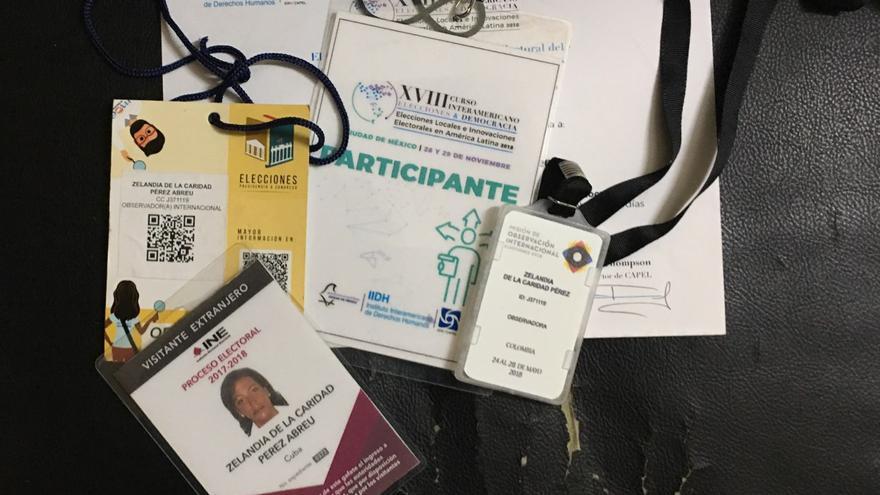
Credentials for election observers (14ymedio)

14ymedio bigger14ymedio, Reinaldo Escobar, January 23, 2019 — Separate from the heated debates between the supporters of YES, NO, and abstention in the February 24 referendum, a group of activists is preparing to watch over the process so that the norms are followed. The Cuban Association of Electoral Observers (ACOE) tells 14ymedio that so far 400 people in 76 municipalities have joined the initiative, but they hope for more.

Despite the fact that the association, a part of the Cuban Commission for Voting Protection (COCUDE), has not yet received a response to the request for recognition that they sent to the National Assembly of People’s Power, they haven’t given up and have launched the Every Voter An Observer campaign, with which they want the entire citizenry to participate in watching over the vote to prevent irregularities. continue reading

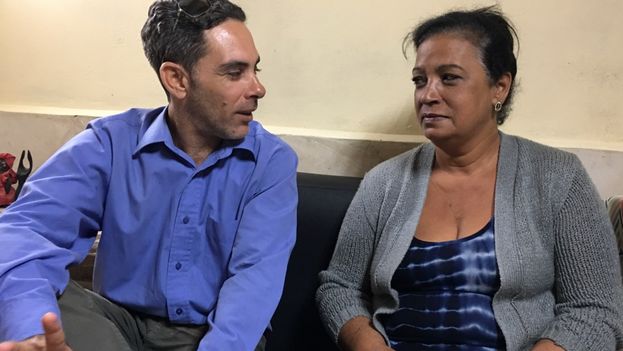
Zelandia de la Caridad Pérez, coordinator of the Cuban Commission for Voting Rights, and Frank Abel García, national coordinator of the Cuban Association of Electoral Observers. (14ymedio)

Zelandia de la Caridad Pérez, national coordinator of the group, explains that several observers “are backed by regional bodies.” Although the law provides for voters to participate in the vote count, few dare to do it out of fear of being seen as people who distrust the electoral process and not as individuals exercising their rights.

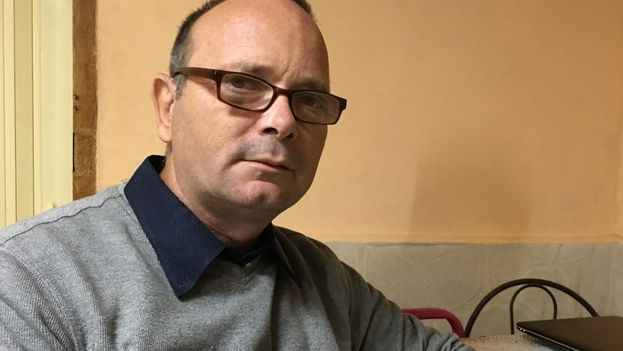
“Citizen action from electoral observation is always going to be legitimate,” explains Juan Manuel Moreno, executive secretary of Candidates for Change. In his view, and against those who believe that voting legitimizes the regime, “the system is corrupt, dictatorial, and totalitarian, but it has an army, a currency of legal tender, it issues passports that are recognized at the immigration windows of the rest of the world. Although it’s difficult for us, the system enjoys legitimacy.”

Juan Manuel Moreno, executive secretary of Candidates for Change. (14ymedio)

His opinion is shared by Frank Abel García, national coordinator of ACOE, who thinks that Cubans cannot expect “to live one day in a democratic society without mechanisms that defend the popular will,” something that must begin to be “practiced starting now.”

ACOE seeks to transmit to each voter a sense of accompaniment, of the presence of independent individuals who can keep watch so that nobody is coerced, is impeded from exercising their right to vote, or is discriminated against for choosing one option or another. They cannot change the course of the process but they can track it.

The points that these observers will have to review include from checking that all citizens with the right to vote are on the Electoral Register, to that the established schedules are kept and that the members of the polling places are properly accredited and have whatever is necessary to guarantee the day’s events.

The privacy of the cubicle, the state of the ballot boxes at the beginning of the vote, and that voters have pens to mark their option with indelible ink are other aspects that must be supervised by the observers, who will be witnesses to the count and to the writing of the final record.

Other bodies, like Citizen Observers of the Electoral Process and Observers for Voting Rights, are also planning to monitor the referendum. Whereas the independent organizations Somos Más (We Are More), the Cuban Observatory of Human Rights, the Cuban Nationalist Party, the Autonomous Pinero Party, and Citizens for Development, will give information to the ACOE.

In one month, the Cuban government will not only have to deal with the possible figures of abstention, the volume of annulled ballots, and the numbers of NO to the new Constitution, but also will feel the weight of the gaze of these citizens ready to defend their votes with civic responsibility.

Translated by: Sheilagh Carey

________________________

The 14ymedio team is committed to serious journalism that reflects the reality of deep Cuba. Thank you for joining us on this long road. We invite you to continue supporting us, but this time by becoming a member of 14ymedio. Together we can continue to transform journalism in Cuba.
"All Of My Neighbors Know Of My HIV Because The Doctor Told Them"

With medical care statistics that can compete with any developed country, Cuba fails to protect the privacy of patients or the confidentiality of clinical records. (OPS)

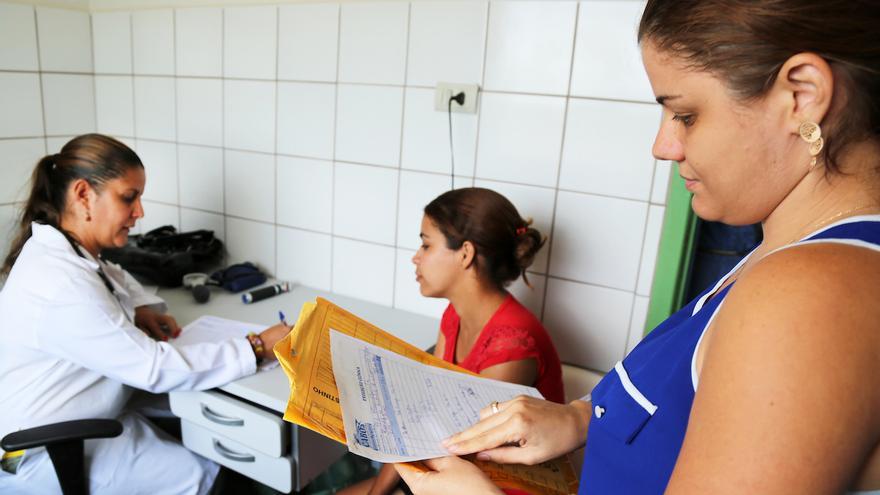
14ymedio bigger14ymedio, Marcelo Hernández, Havana, 22 January 2019 — The door did not close. While lying on the stretcher, naked from the waist down, the patient could see the faces of those who waited outside the examination room. After that experience she spent years without visiting a hospital for fear of again suffering a violation of her privacy, an element that is rarely taken into account in Cuban healthcare.

With medical care statistics that can compete with any developed country, Cuba fails to protect the privacy of patients or the confidentiality of clinical records. Complaints of indiscretions, leaking of medical information, or people who burst in the middle of a consultation are common in the hospitals of the Island. continue reading

The problem is frequent in the 10,800 medical offices in the country and more than 450 general hospitals, but the complaints mount in maternal hospitals.

“Our delivery rooms are shared and it is common for two women to be giving birth at the same time in one of them,” a doctor from the Gynecology and Obstetrics Hospital Ramón González Coro, who preferred to remain anonymous, told this paper. “Many patients complain of lack of privacy in such an intimate moment.”

In the delivery rooms of this Havana hospital, it is established that a screen is placed in the middle of the two patients to offer more privacy during childbirth, but sometimes “the haste with which the medical staff works and their own movement, from one side to the other, prevent that visual barrier from remaining in place,” confesses the obstetrician.

Yadira, who gave birth at the González Coro at the end of last year, confirms it. “It was my first delivery and what scared me the most was going into the room and seeing a woman who was giving birth in front of the stretcher where they put me,” she says. “I felt shame for her because she was exposed to the eyes of strangers,” she says.

Yadira expressed her desire not to be in the same situation as the other pregnant woman. “They answered that when the baby was sticking his head out, what I would least care about is being seen naked,” she says. “I felt as if I were a box, a wrapping without the right to have my body and my privacy respected.”

Later, in the recovery room where Yadira stayed for three days, the nurses were going to stitch up the wound left by the episiotomy, a surgical cut that is made just before delivery. “Everything is done in front of the other patients who are in the room and when I complained, the employees mocked me and told me to stop being such a prude.”

“This type of behavior goes against everything that is taught in the medical schools of the country,” says Maricarmen Ferrer, a retired doctor who also participated in training of new doctors. “Since 1989, bioethics began to be taught in Cuban universities and an important part is respect for the patient’s privacy, even when the patient is not aware of it or can not demand it for herself”.

“Unfortunately, many of the medical facilities in the country do not have the conditions to provide more personalized and individual care,” acknowledges Ferrer. “Many times we have to work in offices in which the door does not close or, to put it directly, that do not have one, and so there is no way to provide a private space to the patient.”

The doctor, however, believes that part of the responsibility for violating the privacy and information of patients comes from the patients themselves. “Many do not knock on the door before entering, they arrive in the middle of a consultation and make comments about the person being treated or about others,” Ferrer warns. “It’s a problem of lack of education that affects us a lot.”

Ferrer believes that indiscretions and the violation of ethical protocols can even cause someone to abandon treatment. “Once I had to call out a newly graduated urologist because he peeked outside his office and asked aloud what patients were waiting to ’be seen for a problem of impotence.’ No one in the waiting room answered.”

However, these actions rarely come to be presented as complaints in the Ministry of Public Health or to be taken to court. Ivan, 32, is an HIV patient and lives in the municipality of San Miguel del Padrón in Havana. “All my neighbors know about my illness because the family doctor told a person who ended up spreading the information in the neighborhood,” he laments.

“At first I thought to file a report, but my friends convinced me not to because the damage was already done,” adds Ivan.

“After a lot of research, I was told that all that would come of it was an administrative sanction but that it was never going to reach the courts,” Ivan explains to 14ymedio. The indiscreet doctor was moved to another office, and the patient fears that wherever he is he can continue to “spread the private information of others.”

An investigation by the doctors Maylin Peña Fernández and Hiram Tápanes Daumy puts salt on the wound. In the opinion of these specialists the frequent “rotation” of doctors to different jobs causes the continuity in the treatment of patients to be lost and this also affects privacy.

In addition to the deficiencies in the functioning of the Health Service, the indifference of Cuban society explains this type of behavior, and this is reflected in the official press. The images of the injured or sick being treated in a hospital are frequent on national television. And, worse still, the government has repeatedly disseminated clinical details of opponents and activists.

Translated by: Michael S Brown

_________________________________

The 14ymedio team is committed to serious journalism that reflects the reality of deep Cuba. Thank you for joining us on this long road. We invite you to continue supporting us, but this time by becoming a member of 14ymedio. Together we can continue to transform journalism in Cuba.
Believing is Easier than Thinking / Somos+

Somos+, Jorge Pantoja, 3 December 2018 — Upon hearing and studying the history of Cuba, as told by the victors of the so-called Cuban Revolution, there are many points of total incoherence that we, without being experts, can ask ourselves. Did it really happen like that?

Wherever there exist doubt, there is a very high possibility that history was changed to favor of the victors, generally those most disadvantaged until the moment just prior to reaching their objective.

I ask myself, how is it possible that such a ruthless tyranny as Batista’s would give an opportunity to its main opponent, Fidel Castro, to have a fair trial, defend himself and win the court’s ruling, this being perhaps the determining factor of the future as Castro himself removed from the constitution of the republic the right of a Cuban to defend himself in front of a court by his own means. continue reading

Instead guaranteeing with the great lie of judicial security representation by a professional who only responds to the interests of the government because it is his employer; lawyers in Cuba are present only because they have to be there and not because they can perform their work with dignity.

Just the mention of the physical disappearance of Camilo Cienfuegos my stomach churns; Cuba needed one last hero to complete the process and this man was Castro’s sacrificial lamb.

It is very easy to deceive a people when only one voice is heard and others that arise are silenced. What a coincidence that very few survived the year 1959 but the commander-in-chief suffered not even a scratch.

Democracy in Cuba was in good shape but it was well screwed up in the first minute of the Revolution, with those massacres of supposed traitors, that holocaust of silencing competing ideas because we already had the great thinker-in-Chief , I regret how my people let themselves be deceived in this cheap and vile way.

Another murky point in the history of Cuba is that after the Granma there were very few revolutionary’s left, and yet, they were always nearby to defend a peasant family that was under assault by the rural guard throughout the Sierra Maestra.

The great power of the revolutionary government was centered around the survivors of the landing of the Granma, little by little they got rid of those who were not on that boat until creating that closed circle of individuals overrated in heroism. I would say that it was cynicism more than anything and a well thought out plan.

I don’t know about everybody else, but for me, it has become easier for Cubans to BELIEVE THAN TO THINK.

 Translated by Wilfredo Díaz Echevarria

It Wasn’t Revolution, It Was Dictatorship

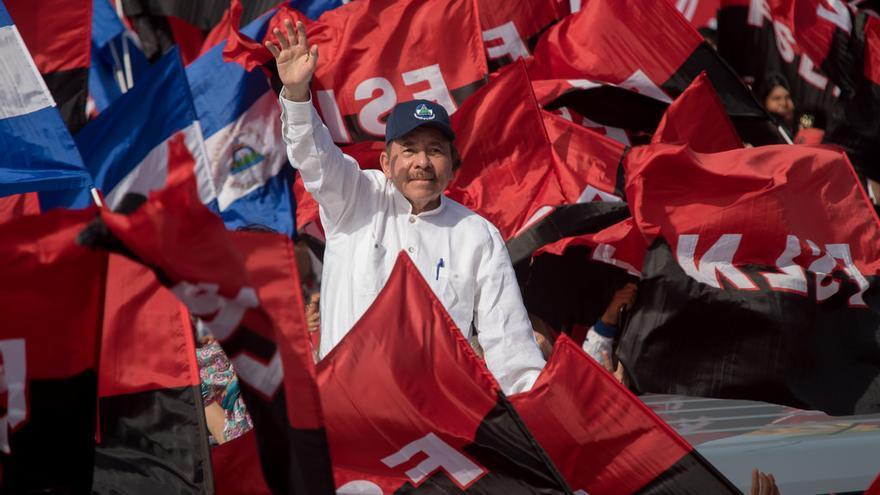
Francisco Larios assures that “many of those who today oppose Ortega-Murillo in Nicaragua were part of the movement” that brought them to power. (Carlos Herrera/Niú)

14ymedio bigger14ymedio, Francisco Larios, Miami, January 22, 2019 — I don’t know with what words, nor with how many amplified speakers, email messages, publicity posters, speeches, and pleas, to recommend “Connecting the dots between totalitarianisms,” a magnificent work by the painter and writer Otto Aguilar.

My motivation is this: I believe that the massacre of 2018 and all the crimes that are being committed in Nicaragua come from the lie that has been lived since 1979, the year in which we believed that we were touching heaven with our hands, and in a blind ectasy we allowed a gang that was not fit for power to accumulate it in excess. continue reading

I know that it’s painful for many, still, at this stage, to confront that brutal reality. Many of those who today oppose Ortega-Murilla, and are even their victims, were part of the movement, like an enormous number of people that at the time acted out of principal and decency.

Many of them cried, and I don’t say that in the figurative sense, when the dictatorship of the FSLN fell in defeat in 1990. It even cost them years, after that defeat, to break completely with the mother tree.

They have attempted later, instead of facing the truth, to create another myth, that of “before the ‘piñata’ — the idealistic revolution and its achievements — and after the ‘piñata,’ the hijacking of the party and the decline.”

But the evidence that has accumulated for more than 30 years is overwhelming, and should force them to return to the lost path, not only for themselves, but at some point for all of us: the path of truth.

To begin, one has to put the “Sandinista revolution” between quotation marks and throw the key into the trash.

It’s quite certain, there was a popular insurrection against the dictatorship, also genocidal, of the Somozas. The rebellion was full of heroism and desperation, and of a passionate desire to build a utopian future.

Then they arrived, the same ones as always, the foxes of power.

In such a manner that from the revolution there was guillotine, and privileges for a few. Of equality, fraternity, and liberty, very little. Much Hollywood and Bollywood, much revolutionary tourism, affectation, and high-profile Machiavellianism, at the same time lots of torture, robbery, crime; and the rest, the same as our entire previous history.

If before it was the peons of the haciendas who were the “volunteers with rope,” the cannon fodder of the oligarchs and caudillos, during the Frentista dictatorship (that one goes without quotation marks) such disgrace touched an entire generation of young people, kidnapped by the totalitarian state and used as pieces in their chess game of blood.

For that reason I also was struck by the book Perra Vida, the memoirs of the adolescence of the writer Juan Sobalvarro, in which he beautifully narrates, from his own experience as a recruit, what the kids who at that time couldn’t evade conscription lived through.

That’s why I repeat my message to the translators and communicators of the story that still clings to the myth of the “Sandinista revolution:” the most revolutionary thing they could do, the bravest, the most beautiful legacy, the one that can change history for the good (not “revise it”) is to denounce the root of the tragedy: having let the tree grow twisted since the beginning, despite having been irrigated with so much generosity by so many.

Translated by: Sheilagh Carey

Editors’ Note: This text was published by the Nicaraguan digital outlet Confidencial, which has authorized us to reproduce it here.

___________________________

The 14ymedio team is committed to serious journalism that reflects the reality of deep Cuba. Thank you for joining us on this long road. We invite you to continue supporting us, but this time by becoming a member of 14ymedio. Together we can continue to transform journalism in Cuba.
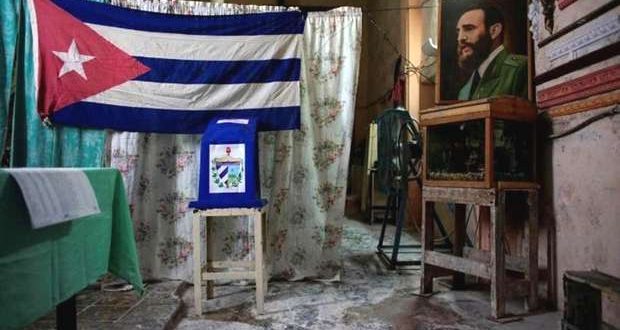
I’M VOTING NO, a Campaign Attempting to Make History in Cuba / Ivan Garcia

Source: CubaTV.

Iván García, 14 January 2019 — “That cold morning of February 15, 1976,” recalls Sergio, a retired worker, “I was one of the first to vote in the referendum that was held to ratify the drafts of the Constitution and the Law of Constitutional Passage. I believed blindly in Fidel Castro and neither I nor anyone else considered voting NO. The internet didn’t exist, access to information was limited, and we Cubans would sign whatever blank paper the government gave us.”

Forty-two years later, some things have changed. Sergio no longer supports the government, because he assures that it hasn’t done a good job in its obligations in the economic and social spheres. “The money from my retirement and the salaries of my three children are barely enough to eat, and for that reason I go out to drive an almendrón [old American car used as a taxi] that a neighbor rents me, so I can try to get a few extra pesos. I’m going to vote NO for several reasons. The main one, I don’t want to validate a government that in six decades has been incapable of guaranteeing food for the people or offering quality public services.” continue reading

Sergio is not a dissident. Neither is José Manuel, a computer specialist. “When the government proposed a new Constitution, my gang of friends, almost all of them intellectuals, musicians, and designers, showed interest in studying it and comparing it with the previous one, from 1976. We were in favor of Article 68, on gay marriage. They were intending to vote Yes and I was thinking of abstaining, in order to not go against the gays. But when they withdrew 68, I moved from abstention to voting NO.

“I don’t care if this Constitution is better than that of ’76. If they haven’t fulfilled the obligations of the previous one, what will obligate them to fulfill those of this one? So, with Article 68 gone, it’s clear to me that it’s no longer about choosing between two Constitutions, but about a referendum of support for the government. I don’t want socialism to fall, but I do believe that the government deserves a good whack on the head,” he says and adds:

“Eliminating Article 68 not only changed my position, but also that of my friends and many people. A few days ago I took a survey at a family party. There were 20 people between 25 and 50 years old. I expected half and half approval for the Constitution, but the result surprised me: 16 responded that they were going to vote NO and 4 still hadn’t decided. I told them that for the first time I was noticing an agreement between ’the worms [derogatory term for Cuban exiles and opposition] and the intellectuals.’

“It’s an unprecedented situation: Díaz-Canel, the current president, didn’t storm the Moncada Barracks, he didn’t sail on the Granma, and he didn’t go up to the Sierra Maestra with the guerrillas, he doesn’t have the same legitimacy of the Castro brothers. He’s just one of us. The people don’t see him as a sacred being, and that is noticeable in the nerve with which the government is criticized on social media, by people who live in Cuba and don’t belong to the dissidence.

“Whatever intentions he has, Díaz-Canel is closely watched. I believe that the government should be worried about what will happen on February 24. I think that the result will be 60-70% in favor and between 30-40% against. Although in the end the government will win with the usual 90%. Cuba is crazy like that.”

The Constitution of 1976 was ratified by 97.7% of Cubans. “I was born in 1959 and in 1976 I was 17. I was studying at a technological institute and was openly gay. It was the first time I voted in my life. I was scared shitless, but when I was alone in front of the ballot paper I put down a giant NO. If at that time, when everyone supported the Revolution, I was capable of voting against, now that people are lying in the middle of the street, I’m also going to vote NO. I’m tired of so many lies and promises. I don’t want socialism at all,” confesses Adolfo, a private hairdresser.

Rolando, an accountant, sees the February 24 referendum “as another pantomime by the leaders, to try to legitimize not only the future to which they want us to bow, but also, as always, to confuse and entangle the world with a false democracy that in Cuba has never existed. I no longer remember the last time I went to vote, I got tired of so much show a long time ago. When I used to go I would annul the ballot, but this time I’m planning to go and vote NO,” he says and adds:

“I would like to be surprised and for them to say that the percentage of approval was 80 or less, but that would be a reality that I believe they are not prepared to admit. They neutralized the greatest danger that they had by withdrawing the famous Article 68, they knew that they would have a large protest vote, because of that article and to demand the Direct Vote [to elect the president] that, incidentally, were both debated at the assembly in my neighborhood.

“One lady mentioned that in numerous countries people voted to elect their president, and she too wanted to elect our own. Due process of law was also debated, that citizens have the right to an attorney from the very moment of their arrest and until the lawyer is present, not to be obligated to make a statement, as is seen in movies.”

The political indifference among ordinary Cubans, those who breakfast on coffee without milk, is tremendous. On corners, in lines at shops, or inside shared taxis, there are people who speak frankly about their voting intentions. In the neighborhood where Rolando lives, in the west of Havana, “people prefer not to have an opinion, apathy is significant, although some say that they won’t go to vote. I try to convince my friends of how dangerous and irresponsible it is, at this stage, to play the government’s game, how the best thing is to go and vote NO. Even if afterward they falsify the results.”

Carlos, a sociologist, believes that “the government has attempted to raise a curtain of smoke, legally modernizing the future Constitution by introducing Habeas Corpus and recognizing private work, but it keeps the disrespect toward those who think differently. It’s abnormal to sustain a dysfunctional system for life. In one of the articles of the new Constitution the use of arms is authorized if someone intends to change the system. Accepting that Constitution is jeopardizing the future of our children and grandchildren.”

Julio Aleaga, an independent journalist and spokesman for Candidates for Change, points out that “the best strategy is voting NO. The regime isn’t prepared to execute a massive fraud. Any citizen, in agreement with their own regulations, can observe the vote count after the referendum. We are preparing dozens of activists to perform that function on February 24. Voting NO is a better proposal than not going to vote. Abstention or leaving the ballot blank doesn’t specify what was the intention of that person’s vote. A NO has a marked political intention. If we follow the voting trends of past elections, now, when we have alternative journalists, independent artists, private workers, and citizens upset with the performance of the regime, I’m convinced that the vote for NO will be notable.”

Juan González Febles, director of the weekly Primavera Digital [Digital Spring], supports the group of opponents whose strategy is not going to vote. “It’s the State that counts the votes and whenever we are talking about dictatorships, it’s not going to hold an election to lose. If the Neocastro regime senses that it could lose, there will be a widespread fraud. If those who opt to vote NO lose, as will surely happen, they will have no other choice but to recognize their defeat. Then they will be legitimizing an autocracy.”

Reinaldo Escobar, editor-in-chief of the newspaper 14ymedio, is in favor of NO. “A miracle would have to occur for that proposal to win by majority. But I believe that it’s worth trying,” he emphasizes. In a recent article, Escobar writes that “the suspicion of a possible fraud has a demobilizing effect among the promoters of NO. The most effective antidotes to cancel out this paralyzing pessimism are assuming that possibility as a reasonable risk or trusting that fraud won’t be committed.”

With fewer than forty days from February 24, when the popular referendum that would approve the new Constitution of the Republic will take place, the regime, which according to its own electoral laws prohibits carrying out advertising campaigns, “in the next weeks, in high schools, universities, and work places discussions will be held with the objective of encouraging the people to vote YES,” assures a party official.

The battle is set. The government wants to cover up its inefficiency with the worn out anti-imperialist discourse and insulting those who think differently. The activists for NO, without public spaces to discuss their arguments, seek that the greatest number of Cubans over age 16 join a political process where votes are as powerful as any weapon. Adding people is the premise. Change is only possible if the citizenry mobilizes.

Translated by: Sheilagh Carey

The Director General of RTV Comercial Has Been Detained and Is Under Investigation

Joel Ortega Quinteiro is the director of the largest state production and marketing company of films and television programs in Cuba. (Cubanow)

14ymedio bigger14ymedio, Havana, 18 January 2019 — The director general of RTV Comercial, Joel Ortega Quinteiro, has been detained for the alleged crimes of influence peddling and embezzlement, as confirmed by several sources in the sector. The official directed the largest state production and marketing company of films and television programs in Cuba.

Ortega Quinteiro was arrested earlier this month and taken to Villa Marista, the Operations Directorate of State Security in Havana. In addition, the director of artistic representation of RTV Comercial, Wendolyn Ferrer Vela, is under house arrest while the investigation is being conducted. continue reading

According to an employee of the company and another of the Institute of Music, the director is accused of possible mishandling of funds, overpayment of salaries to employees and that some in his family were hired by the departments that buy audiovisual equipment abroad.

The RTV director’s secretary declined to confirm the information in a telephone call with this newspaper, although she said that Ortega Quinteiro would not be available in his office “until the end of February.” When pushed, the employee explained that Friday was his “last day of work in the company” and that he was “liquidating everything” in his office in El Vedado.

The company, directed until now by Ortega Quinteiro, has been in charge of programs such as Sonando en Cuba, a program of musical competition that achieved an impressive audience within the Island. It has also produced the acclaimed film Conducta, winner of the Coral Award at the Havana Film Festival in 2014 and, more recently, the reel “Why do my friends cry?

RTV Comercial has been in recent years the crown jewel of the Cuban Radio and Television Institute (ICRT by its spanish acronym) and has been responsible for obtaining foreign currency to reduce the amount allocated by the State to radio and television productions. With a management model more focused on commercialization, the entity began to be the focus of the economic police more than a year ago.

RTV’s audiovisuals are characterized by resources that are rarely available for regular television programs. “The company accumulated enemies and people who questioned how it handles resources and what projects it assumes,” an ICRT source told the newspaper, who requested anonymity. “It was a matter of time before Joel was knocked down because it was known he was committing irregularities.”

“There were also allegations of delays in payments and possible bribes to be hired to the staff of a program,” adds the state employee. “Although the ICRT has not officially reported anything to the workers, the director’s arrest is the talk of the day in the corridors.”

So far “the projects that RTV Comercial was conducting have not been suspended, but all those involved in these programs have their hearts in their mouths because of the fear of losing their jobs or of not being paid the agreed salary,” the source explained.

Some producers consulted praised the salaries that the company could afford to pay to the creators because the content was later commercialized internationally. However, other sources allude to the fact that many of the programs produced were never sold to other chains, which caused severe losses that have also weighed in the arrest of Ortega Quinteiro.

The technical staff that is hired by RTV Comercial earns high salaries in convertible pesos (CUC — roughly equivalent to the US dollar). The director of Sonando in Cuba, Manolo Ortega, earns 3,000 CUC (roughy $3,000 US or about 75,000 cuban pesos) for one season of the program that lasts less than three months. While any other director of musicals linked to ICRT only earns 2,400 CUP (Cuban pesos — about $96 US) in the same timeframe.

In an interview with the Cubanow site, Ortega Quinteiro stated that RTV applied “a production system that is not very far from traditional production,” although he acknowledged that “national television goes through issues related to material resources that escape from the hands of the creators and the institution,” something that his company sought to improve.

The company was born in 1994, in the midst of the deep economic crisis caused by the end of the Soviet Union. A moment in which a process of decentralization of foreign trade was promoted, so that each state agency could create a team or department in charge of imports and commercialization of its products.

However, it wasn’t until 2007 with the advent of digital television that RTV began to produce content with standards that could be sold in the international market. Since then, programs with audience participation have been its mainstay.

Ortega Quinteiro explained to the official press that the company offered at the beginning “three fundamental services: licensing of audiovisual works, production services and importation of equipment.” Now, it covers “ten business lines,” including the production of revenue-generating audiovisuals and co-productions with other institutions.

The night of December 31, RTV participated in the production of the television show for New Year’s Eve and in tribute to the 60th anniversary of the Cuban Revolution. The transmission was praised in the official press but a few days later Ortega Quinteiro was arrested and taken to the headquarters of the State Security.

Translated by Wilfredo Díaz Echevarria

________________________________

The 14ymedio team is committed to serious journalism that reflects the reality of deep Cuba. Thank you for joining us on this long road. We invite you to continue supporting us, but this time by becoming a member of 14ymedio. Together we can continue to transform journalism in Cuba.
Jazz Breezes Refresh Santiago de Cuba

For the first time, the Plaza Jazz Festival included performances and concerts in Santiago de Cuba this year. (14ymedio)

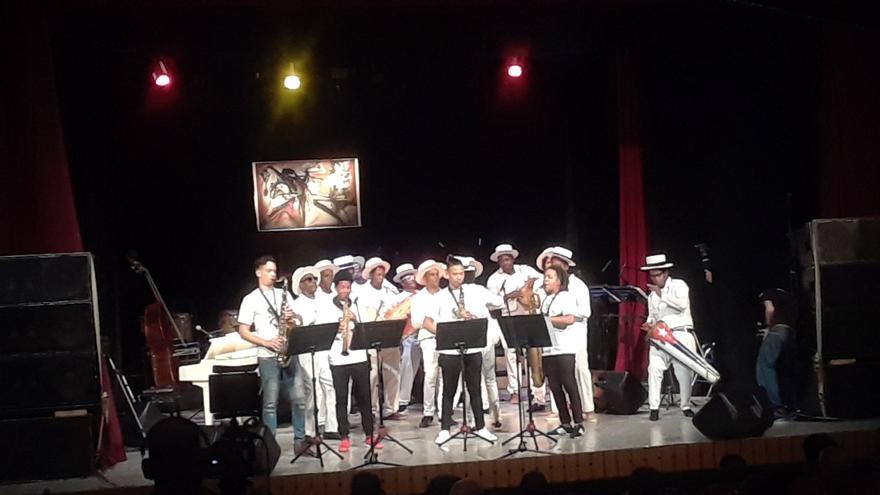
14ymedio bigger14ymedio, Eduardo Marín, Santiago de Cuba, 21 January 2019 – Santiago de Cuba has lived an unusual week. Not only have the temperatures cooled and long sleeves become more frequent in the streets, but the winds of good music have also blown. For the first time, the Plaza Jazz Festival included presentations and concerts in this city in eastern Cuba.

The inaugural day, January 14, brought a combination of experimentation and tradition with the show of Arturo O’Farrill, Los Muñequitos de Matanzas and the Conga de Los Hoyos at the Martí Theater. It was a night that neither the delay in starting the show nor the hubbub of the audience, formed by students of the Vocational Art School, managed to tarnish. continue reading

O’Farrill showed that his family ties to Cuban music from his father are not only a matter of blood inheritance but that his interpretations are permeated by a mixture of audacity and folklore. He reached the climax of the presentation when he performed the danzón Bodas de Oro (Weddings of Gold) with his two sons and the conga santiaguera.

The jazz festival program also featured throughout the week  the Colombians José Tobón and Sigura Jazz Ensemble, the Canadians Stich Wynston and The Shuffle Demons, along with a good number of Cuban musicians and students from the Esteban Salas Conservatory.

However, the final weight of the event was more inclined towards genres such as son, rumba and salsa due to the existence of very few jazz groups in the province. This musical reality was described by one of the members of the Vocal ConPaz quartet, Gualveris Rosales, who defined the Festival as “50%” jazz.

For several attendees consulted by 14ymedio, the fact that there are few santigueran groups dedicated to this genre born in the United States is due, in part, to the lack of presentation venues destined for its dissemination. “Jazz needs an atmosphere, a more intimate space in which the viewer and the musician connect better,” said Isaac, a young man who was at the Plaza Dolores for the closing of the Festival on Sunday.

So at the closing of the santigueran edition of Jazz Plaza the majority of the public came to dance with Ronald’s drums and his Rumbera Explosion, rather than with the cadence of the saxophones and piano.

Translated by Wilfredo Díaz Echevarria

_____________________________

The 14ymedio team is committed to serious journalism that reflects the reality of deep Cuba. Thank you for joining us on this long road. We invite you to continue supporting us, but this time by becoming a member of 14ymedio. Together we can continue to transform journalism in Cuba.

Dissidents and Independent Journalists, Voice of the Cuban Public / Ivan Garcia

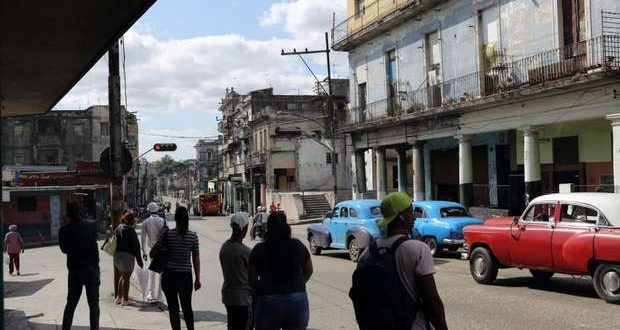
Trying to take a private taxi on the corner of 10 de Octubre and Dolores, Havana. Image by Juan Suárez taken from Havana Times.

Iván García, 21 January 2019 — In the summer of 2008, behind a pigpen, in a miserable improvised wooden hovel in El Calvario, a town south of Havana, a 28-year-old attorney made a speech about the importance of the Cuban regime ratifying the International Treaty on Civil and Political Rights and the International Treaty on Economic, Social and Cultural Rights approved by the United Nations General Assembly in 1966.

A passionate lawyer, Laritza Diversent explained that since Minister of Foreign Relations Felipe Pérez Roque had signed these documents at UN Headquarters in New York, Cuba was obligated to ratify them and, thus, must comply and establish civil and political rights that would pave the way towards a future democracy.

Laritza had three powerful factors working against her: she was a woman, black, and poor. Moreover, she was the mother of a 10-year-old son. It was a feat that she had graduated as a lawyer, given such difficulties. The campaign she started was supported by various opposition groups. The dictatorship, in its arrogance, refused to ratify these treaties. continue reading

Independent lawyers like Laritza Diversent and Julio Ferrer did not desist in denouncing the arbitrariness of the legal apparatus, and opened an office, Cubalex, dedicated to advising hundreds of people whose rights the government transgressed. Diversent carved a successful path within the dissident movement in Cuba.

With immense patience, she prepared several workshops on legal information aimed at members of the opposition, activists and independent journalists. She participated in international forums denouncing the abuses of Castroism. Always documenting every abuse. In her testimonies she dismantled the veneer of apparent democracy that the island government likes to show off. And showed reality as it is. A hard and pure dictatorship.

Her legal knowledge made her a formidable enemy for the olive green special services of the autocracy. One morning in 2016 they dismantled the Cubalex legal advice office, imprisoned the lawyer Julio Ferrer and opened a punitive file on Laritza. The only door that remained open was that of exile. Currently she resides in Pennsylvania, but like many exiles, she continues to sleep with Cuba under her pillow. She is very active in social networks and thanks to new technologies, advises, from the distance, whoever asks her for help.

Lawyers like Laritza, Julio Ferrer and René Gómez Manzano, among others, have demonstrated the authentic apartheid erected by the Castro brothers against their people. Like the decree Law 217 of 1997, which prevents Cubans born in the eastern region from living in Havana. Or the regime’s violations of its own Constitution.

It is true that the peaceful opposition is divided and has not been able to reach ordinary people. But its capacity to denounce has influenced the brief economic reforms promoted by the regime of Raúl Castro.

Until 2008, no journalist of the official media, minister, nor reputed intellectual, publicly recognized that Cubans were second class citizens and could not stay in tourist centers, legally sell or buy a house or travel abroad without so many immigration controls. It was the members of the opposition and free journalists who always demanded those and other deeper openings in the economic, social and political fields.

Today, it is the opposition that demands a new Constitution, a Law of Laws that protects all currents of thought and recognizes political diversity, not the false Magna Carta that the government will implement in 2019.

It is the dissident movement that asks for greater economic freedom for private entrepreneurs, to repeal the absurd regulations that limit wealth, when what is at issue is to combat the poverty that increases every year in the country. It is they who demand democracy, tripartition of powers, freedom of expression, of the press and culture, and university autonomy.

If there is a revolutionary and progressive entity in Cuba, it is the opposition and the independent press.

We independent journalists are the ones who recount the transportation problems, the shortage of food, the hardships of retirees, the aspirations of the population, without makeup nor political slogans.

Nothing escapes us. In blogs and alternative sites is where you can read the stories of those who have no voice, be it an elderly person, a prostitute, a family without resources, a vulnerable community or a web of corruption.

In silence and without recognition, we continue writing. It seems as if no one listens to us. But the rulers are taking note. Fearing loss of power, they do not accept most of the requests, suggestions, or complaints. It is precisely the antagonistic forces that the regime has as a reference in order to know the state of opinion in the streets.

The state scribes spread the directives that come from above. They are part of the trained chorus that applauds a regime that sooner or later will have no choice but to initiate a democratic opening.

Translated by: Michael S Brown

Healthcare in Cuba Doesn’t Discriminate, it’s Bad for Everyone

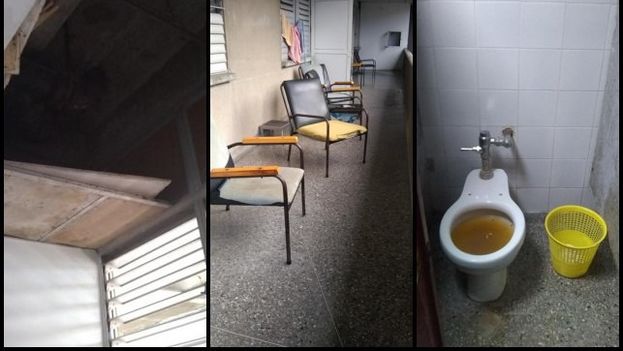
The state of Abel Santamaría Hospital during the hospitalization of the writer’s friend. (Yosvany Hernández)

14ymedio bigger14ymedio, Yosvany Hernández, Pinar del Río, January 21, 2019 — The deplorable state of many Cuban hospitals and the dreadful nature of their services is no secret. But there is a false conception in the popular imagination that if you have money, life flows, even when it comes to hospital treatment.

I want to share with you the story that shattered that myth for me. It is the experience of a friend who was in a car crash and spent three days in Abel Santamaría Hospital, in the city of Pinar del Río.

My friend is German. Although I was convinced that the service would be costly, I thought that she would have the best treatment, because of that widespread belief that foreigners have priority. continue reading

Upon her arrival, the emergency room was packed with patients and she had to be seen in a room with no privacy (nor beds). I don’t know whether because of protocol or lack of management, she remained stranded on the same stretcher on which she arrived, right next to an open and overflowing wastebasket.

The first checkup was the most similar to that song about elephants balancing on a spider’s web, only that these white-coated elephants would touch, go, come, whisper, wait, et cetera, to, once in a while, ask one or another bilingual question (half Spanish and half sign language).

They did some routine procedures: ultrasounds, x-rays, and blood analysis.

Then “the attending comrade” appeared, that is to say the person responsible for counting and charging every movement of personnel and resources moving around the foreign patient. My instinct as a good Cuban senses mystery and adult language like in the Saturday movie.

So far nobody had addressed her to explain what was happening, nor what the procedures would be, but the accountant comrade managed to inform the patient that the hospital didn’t have a connection with her insurance and that, to avoid delays in treatment, she should pay in cash for the services she was going to receive. Despite this not being an appropriate conversation for a moment like this, the patient, who luckily was conscious and wasn’t traveling alone, agreed.

The first diagnosis was encouraging, only a fracture of the collarbone, immobilization, eight hours in observation, and she could return home. The rooms meant for foreign patients were full and, after 3 hours, they put her in another room with worse conditions for which she had to pay the same price, 10 CUC per hour.

Each consultation 30 CUC, 25 CUC for x-rays, and the ultrasound, which in the words of the little economy comrade was a little more expensive, 300 CUC; plus 50 CUC for a gauze bandage to immobilize the shoulder.

After eight hours during which there was very little observation, due to protocol, two exams with their respective additional costs had to be repeated. The same ones had to be examined by a second orthopedist, which meant waiting until the next day.

The second orthopedist suspects a fracture in the spine and suggests an MRI. At this point my friend had been in pain for 18 hours, without cleaning herself up nor understanding how, after charging her for so many x-ray exams, there still wasn’t certainty about her health status.

An incomplete MRI (400 CUC) produced a spinal fracture, and after repeating it (300 CUC), another break appears. Hours pass and the bill rises.

She had read many good things about Healthcare in Cuba, and she wasn’t expecting that her situation could be complicated, but faced with the dreadful appearance of the place and with such a diagnosis she decided to transfer to Havana.

After resolving the bureaucratic problems and with a pinch of persistence, now that the official who attended foreigners claimed that it was not necessary to transfer her, it was 6:00 in the evening. And interprovincial ambulances don’t run at night.

On the morning of the third day the ambulance finally arrived.

During the entire stay not even an orderly appeared. It was necessary to do two MRIs and, each time, someone had to go to look for the technician at his house. Even more disappointing than the lack of medications, inappropriate conditions, and several references to the economic blockade was the apathy of the majority of the doctors, the bad treatment, and, above all, the evasion of responsibility.

After paying $1,697 at the ambulance door for terrible service and an unreliable diagnosis, she was left with only the hope of that hospital in Havana where all the foreigners go, and which, as they told her by telephone, was the best.

We Cubans don’t have that hope, because what we’ve got is that one, that of mistreatment, that of the horror movie.

It is very difficult to preserve, after hearing this story, the image of the eternal humanitarian, the good Samaritan of so many international medical missions.

Translated by: Sheilagh Carey

___________________

The 14ymedio team is committed to serious journalism that reflects the reality of deep Cuba. Thank you for joining us on this long road. We invite you to continue supporting us, but this time by becoming a member of 14ymedio. Together we can continue to transform journalism in Cuba.
Cuba, a Sanctuary for Fugitives From Justice

Negotiations with the guerrillas continue as of today. (Colpisa)

14ymedio bigger14ymedio, Yoani Sanchez, Havana, 21 January 2019 – The center of attention has shifted abruptly for the Cuban authorities. A few weeks before a complex constitutional referendum, with an economy taking on water everywhere, Havana is now embroiled in a bitter dispute with the government of Colombia. The bout between the Plaza of the Revolution and the Nariño Palace looks like it might go on for a while.

After the terrorist attack that left 20 dead and 68 wounded in Bogota, President Ivan Duque has insisted that Havana hand over the ten members of the National Liberation Army (ELN) peace delegation that remain on the island. Cuban Foreign Minister Bruno Rodríguez has responded with a technicality that raised more doubts than certainties. continue reading

According to the foreign minister in his Twitter account, “Cuba will act in strict respect with the Peace Dialogue Protocols signed between the Government and the ELN,” should negotiations break down. The Colombian side replied that “there is no protocol that protects terrorism,” and Havana added fuel to the fire by insisting that it has never permitted nor will it permit its territory to be used for the organization of terrorist acts.

But the precedents of these last six decades belie these assertions. If the history of recent years is reviewed, it is easy to conclude that the island’s authorities will avoid handing over the guerrillas at all costs. It is very unlikely that this case will put an end to the government’s long history of protection for fugitives and criminals. It is unthinkable that, asked to choose between two loyalties, it will end up choosing to please Duque.

Dozens of members of the Basque separatist group ETA, involved in assassinations and with a long criminal history in Spain, have been hiding on the island for decades. Joanne Chesimard is also living in Cuba’s capital city; known here as Assata Shakur, she is on the FBI’s list of most wanted terrorists after having killed a policeman. The famous thief Robert Vesco found refuge under the skirts of the Cuban Revolution after stealing more than 200 million dollars.

This “solidarity” with criminals and terrorists is based on two pillars. The first of these was established from the first years Fidel Castro came to power and expressed support for any movement or person who shares anti-capitalist, communist ideas and supports subverting the established order in their country of origin. The second obeys the maxim that “the enemy of my enemy” is always a friend to the Cuban regime.

Under these two premises, the authorities have welcomed any and all international criminals who have requested refuge after showing a record of harm against the institutions of the United States, the governments of Latin America and the law enforcement agencies of the countries most critical of the human rights situation in Cuba. Hosting these “unpresentables” has been an act of political revenge, a challenge to international justice and a mockery of the victims.

Criminals who have escaped from other countries have not only found here a place to avoid ending up in front of a court, but most have enjoyed a standard of living far superior to that of most Cubans. In mansions, with bodyguards and a good supply of food, many of these delinquents on-the-run have led a life well away from the narrow cell they deserved.

In the case of Colombia’s National Liberation Army (ELN), the “hospitality” has meant that as of 10:00 am this Monday, the official press has still not published a word about the statement made by the guerilla group taking responsibility for the terrorist attack against the Police Cadet School in Colombia. Not only has the government given them shelter, but it has also offered them the complicity of its silence.

Why would the Government of Cuba now act differently with these fugitives? Increasingly isolated in the region, with the so-called “historic generation” clearly in biological withdrawal, and a system that can not lift Cuba’s 11 million people out of a quagmire, Havana should respond affirmatively to Bogota’s request, to make it clear that the times of support for criminals have ended.

However, to believe that something like this is possible is equated to the frog’s dream that the scorpion who helps him cross the river will not sting him. Even though it is sinking in the waters of disrepute and diplomatic solitude, sheltering terrorists is in Castroism’s nature.

_____________________________________

Editor’s Note: A shorter version of this text was published by Deutsche Welle.

The 14ymedio team is committed to serious journalism that reflects the reality of deep Cuba. Thank you for joining us on this long road. We invite you to continue supporting us, but this time by becoming a member of 14ymedio. Together we can continue to transform journalism in Cuba.