We are on the new host

7 July 2019

Dear Readers: As you may have noticed we’ve had some problems with our site recently so we  moved to a new hosting company to try to ensure these problems don’t continue. There still may be some glitches to iron out.

Karen wants us to give a shout out to Hosting Matters for being a terrific hosting company with super-responsive support and nice people.  She uses them for many of her other sites so she’s had a long time to insure they are good folks and will do a good job keeping Translating Cuba up and running.

Although – like we said – there could still be a few glitches here and there as we shake down.  This is a very complicated site with lots of custom programming.

14ymedio Headline News Summary: "Behind the Scenes" Videos Filmed by Rihanna in Cuba

A series of five to seven minute videos manage to encapsulate the extraordinary visual richness and color of Cuba without the ’makeup’ that appears in the movie ’Guava Island’. (EFE)

Source: EFE via 14ymedio, Yeny García, 5 July 2019 — Cuba shows its most authentic side in five documentary videos, produced by Amazon and available since Thursday on YouTube , which narrate “behind the scenes” stories about the rhythms, the sets and the Cuban actors involved in Guava Island, the musical filmed by Donald Glover and Rihanna on the Island.

Government Strengthens Its Control Over Content on the Web

Access to the web from Wifi sites had been a breath of fresh “informative” air for Cubans. (EFE)

14ymedio bigger14ymedio, Mario J. Pentón/ Yoani Sánchez, Miami/Havana, 5 July 2019 — The control that the Government has had over the media for years has a mirror for the virtual world. So far, online publications have been able to escape the legal censorship that weighs on analogue media, but the days are numbered for that status.

This Thursday, the authorities published a set of laws “on the computerization of society in Cuba” that have as their objective, “to elevate technological sovereignty for the benefit of the society, the economy, security and national defense” and “to counteract the cybernetic aggressions.”

One of the contraventions that has generated the most controversy so far is the penalty for “disseminating, through public networks of data transmission, information contrary to the social interest, morals, good customs and integrity of people.” Several users on social networks have expressed concern that this section is aimed at controlling opinions on the networks. continue reading

“This is like the Law of Pre-Criminal Dangerousness, but in the world of cyberspace. It is a tool to be used against those who annoy the system,” says an independent journalist. With these regulations, the Cuban government expands the control it has over printed matter and media circulating on paper throughout the national territory, to the web.

In addition, the new regulations prohibit “hosting a site on servers located in a foreign country, other than as a mirror or replica of the main site servers located in national territory.” With this measure, the government makes illegal dozens of blogs, media and magazines that have emerged in the last decade and are characterized so far by their ability to escape state control.

The measure not only affects informational sites and digital spaces dedicated to activism, but also portals dedicated to the promotion of accommodations for tourists, others focused on classified sales and those that promote private restaurants. The fine for contravening the regulation can amount to 1,000 CUP, a figure close to the average monthly salary on the island, recently raised to 1,067 Cuban pesos.

The new regulations require companies to use national antivirus software. Should the user prefer to use a foreign antivirus software, they must get authorization from the Ministry of Communications. In addition, mobile phones that are marketed within Cuban must use apps developed on the island.

The system electronic control internet access by the Government, the creation of applications for the payment of services and the terms of  legalization — effective as of July 29 — of the private data networks that have operated clandestinely throughout the country, are some of the measures covered by this policy that are criticized by some sectors, which see it as one more form of control.

The measures could directly affect the network of independent media that have proliferated on the island in recent years as a result of the emergence of new technologies. From portals dedicated to sports, to fashion and even to news portals that are produced primarily with reporters and journalists based in the country.

At the end of April, and for the first time, hosting service for websites operated by natural persons began to be offered in Cuba. However, the announcement was met with skepticism and criticism due to costs ranging from 1.50 to 55 CUC per month.

After the publication of the offer on official sites, Internet users demonstrated their dissatisfaction. For example, a user with the pseudonym Nick Bombadil insisted that “with these prices international hosting is more profitable , offers more storage space and bandwith, and in addition eliminates ‘the eyes of Etecsa’ [the State telecommunications company] watching from above.”

A user identified as Berta said the announcement “is not serious” because “prices are sky high and connectivity is terrible. Who is going to be responsible if there is an attack on the server or an avalanche of traffic,” she lamented.

In the digital site Web Hosting Secret Revealed, dedicated to reporting web hosting options worldwide, the designer and computer expert Jerry Low detailed the best deals of this type as of the middle of this year. In the list of the ten best companies, the monthly price varied between $4.00 and $9.95, with capacity to host from one domain to an unlimited number.

“These are resolutions that, in the manner of Decree 349 [which regulates artistic dissemination] and the latest regulations on wireless signals, are designed not to be applied in their entirety against anyone who contravenes them, but rather as a matter of discretion against individuals, independent media and certain phenomena of diffusion of content,” says the tweeter and lawyer Luis Carlos Rojas, a resident of Havana.

“They are inserted in the same line that we have seen other regulations in recent months: to give the Government control over certain phenomena, especially those linked to the dissemination of content, the transmission of information and the presence of critical voices in social networks” says the young jurist.

For Rogelio A. Yero, the danger lies in how this new legislation can be interpreted. “I wonder who will define whether a publication is or not in accordance with the interests of Cuban society,” warns the Internet user in reference to one of the law’s clauses which forbids the “spread, through public networks of data transmission, information contrary to the social interest, morals, good customs and the integrity of people.”

The journalist Elaine Díaz, director of the site Periodismo de Barrio , called the Ministry of Communication to obtain more information about to reference to web hosting in another country. “I was referred to a specialist, the specialist tells me that it applies to any natural person. I asked him if I want to have a WordPress blog not on a national server what happens. He told me it is forbidden.”

 @DiazCanelB Presidente, ¿why is it prohibited for natural citizens to host sites on foreign servers? pic.twitter.com/BTevXbF1E4

— Elaine Díaz (@elainediaz2003) July 5, 2019

“I speak with a second specialist, he says yes, it applies to any natural citizen. I ask him if I have my blog on WordPress and I do not want to have it on a national server, can I be fined?” He replies: “Well, if they detect it,” says Díaz.

The opponent and former prisoner of the Black Spring, José Daniel Ferrer, has gone a step further and announced his attitude of rejection of the new legislation. “I solemnly declare that I will fully violate the new and dictatorial technologies regulations of tyranny, nor do I pay fines,” the leader of the Patriotic Union of Cuba (Unpacu) wrote on the Twitter social network.

_________________

The 14ymedio team is committed to serious journalism that reflects the reality of deep Cuba. Thank you for joining us on this long road. We invite you to continue supporting us, but this time by becoming a member of 14ymedio. Together we can continue to transform journalism in Cuba.
Think Like a Country

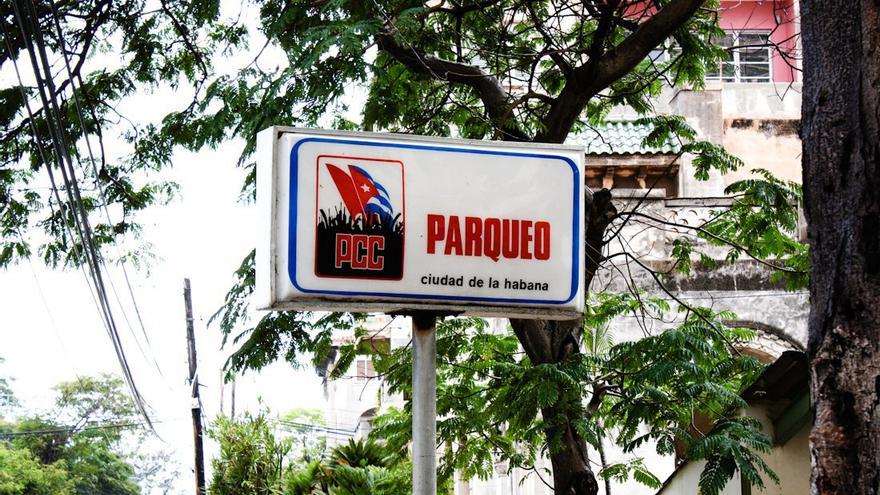
The motto “Think like a country” would be acceptable if the Cuban government would stop thinking like a party. PCC= Cuban Communist Party

14ymedio bigger14ymedio, Reinaldo Escobar, Desde Aqui, Havana, 4 July 2019 — The most recent political marketing discovery launched by Cuban President Miguel Díaz-Canel is summarized in his call to “Think like a country.”

The call comes in the midst of a plan to increase wages “in the budgeted area of the state sector” and aims to mobilize an awareness among different economic actors to, on the one hand, avoid an indiscriminate rise in prices and, on the other, to increase the diversity and quantity of  goods and services.

As Fidel Castro’s successor and scion, Díaz-Canel seems to be inspired by the Maximum Leader’s idealist postulate that it was correct to create wealth with conscience and not vice versa, as proposed by the materialist rules of orthodox Marxism. continue reading

The motto to think like a country would be acceptable if those who govern stop thinking like a party. Or even better if those who govern will realize that party and country are not synonymous.

One can only think like a country when the thought in question is the result of a national consensus where partisan interests are relegated in the interest of prioritizing the most shared interests of the nation, the population, the citizenship, whichever you prefer. If the Revolution — and socialism — is invoked as a condition, Fidel Castro’s legacy is no longer thinking like a country, but as a party.

To determine what is appropriate for the country in the short and long term, we have to listen to everyone, but there is no point in being willing to listen when those who express different ideas are repressed, when government media attack and discredit those who depart from the official thinking.

As long as the national dissenter continues to be identified with the foreign enemy, thinking like a country will only be an empty slogan. This country will arrive late to the fourth industrial revolution if it remains committed to economic self-sufficiency; it will compromise its future if it keeps the productive forces of the non-state sector chained; it will impoverish its intellectual creation and its spiritual production if the cultural institutions do not abandon their inclination to gag all who disagree with them.

This country, diverse, plural, with genes of modernity and propensity to connect with the rest of the world, can expand an advanced, humanistic and innovative thinking, a generator of solutions. All that is required is to stop criminalizing those who think differently.

______________________________

The 14ymedio team is committed to serious journalism that reflects the reality of deep Cuba. Thank you for joining us on this long road. We invite you to continue supporting us, but this time by becoming a member of 14ymedio. Together we can continue to transform journalism in Cuba.

14ymedio Headline News Summary: Diaz-Canel Links Salary Increases to the End of the Dual Currency System in Cuba

Source EFE, via 14ymedio: Cuban president, Miguel Diaz-Canel, denied on Tuesday that the imminent rise in state wages is a populist measure, and he assured that it will be accompanied by other economic reforms, such as the long-awaited elimination of the double currency.

The president affirmed in an appearance on the Roundtable TV show that the elimination of the double currency will be one of the measures that will go along with the increase of salaries, without specifying a date or the strategy that his Government will apply for the unification.

He also emphasized that Cuba will achieve “prosperity” despite the financial and commercial embargo imposed by the United States and hoped to correct the “internal blockade,” referring to inefficient production and excessive bureaucracy of state agencies.

More detail here, in Spanish

 A note to TranslatingCuba.com readers: The purpose of our project is to translate independent Cubans writing from the Island. In addition to its own articles, 14ymedio also publishes syndicated articles which we rarely translate. In the interest of ensuring our readers get critical news about Cuba from whatever source, we are going to experiment with these “News Summaries.”

Independent Journalism In Cuba: Flourishing But Underfunded / Ivan Garcia

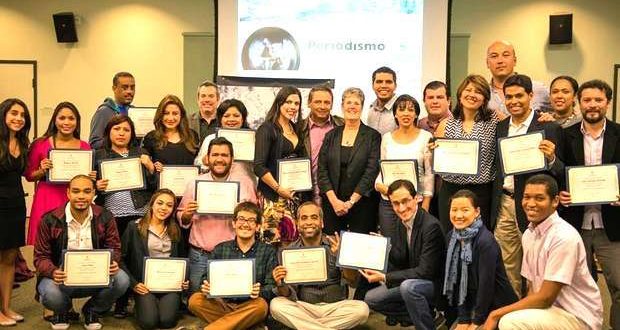
Journalists from Latin America, Central America, and the Caribbean participate in the Investigative Journalism Workshop, organized by the Institute of the Americas on 10-14 November 2014, in San Diego, California. Representing Cuba was the independent journalist Iván García Quintero (back row, far left).

Iván García, 9 May 2019 — Around the mid-1990s, the cohort of official reporters taking the leap into unrestricted journalism in Cuba had — besides experience and media training — the privilege of typewriters at their disposal. Those just starting out in the world’s best occupation were hand-writing their articles in school notebooks.

Newbies would be tasked with reporting evictions, setting up interviews, or being gofers. Those who had been at it longer would sign the articles to be published later by some daily or website based in Florida. In 1995, when poet, writer, and journalist Raúl Rivero founded the Cuba Press agency, he opened the door to a handful of young people who lacked a journalism education but had the desire to learn and work.

To the rookie reporters, Raúl would assign brief write-ups, which after his meticulous review of spelling and style, would be replete with strike-throughs from his red pen that he kept in the pocket of his perennial blue denim shirt. Rivero would dress up the story and insert a compelling headline, never longer than five or six words. In the end, the text would emerge, infused with the literary flavor of his excellent compositions. continue reading

Twenty-four years later, Luis Cino, Jorge Olivera, Víctor Manuel Domínguez and I, among others of Raúl’s followers, continue to religiously publish two or more columns per week on several sites.

We learned that work culture and respect for the profession from dyed-in-the-wool journalists such as Raúl Rivero, Tania Quintero and Ana Luisa López Baeza (deceased in 2018 in exile). It was a time when the Internet sounded like science fiction. Articles would be read by telephone to someone in Miami who would record the texts and later upload them online.

At that time, at the start of the independent journalism movement, you had to climb a sort of military ladder. First, you had to learn to write longhand. Then, you had to master the heavy-duty typewriters made in East Germany. And when you were finally capable of writing a decent text, you could produce it on a laptop that was rotated among various journalists. In those hard years, the beginner reporter learned by doing.

In the spring of 2003, Fidel Castro made a gross mistake: he sent 75 peaceful opposition members, 27 of whom were independent journalists, to prison. He expected that, by jailing a third of those who dedicated themselves to writing freely, he would intimidate the rest. But from the Island there was no stopping the denunciations about repression, the political prisoners of the Group of 75, nor about the situation in Cuba or of Cubans – even if the texts were published unsigned.

Fear did not freeze the writing pens. In November 2007, a group of journalists headed by Juan González Febles y Luis Cino founded Primavera Digital (Digital Spring), an openly anti-Castro weekly. Others continued sending their articles to Cubanet, Cubaencuentro, Revista de la Fundación Hispano-Cubana, and the Sociedad Interamericana de Prensa website.

Some months before, in April of 2007, following the success of the Generación Y blog created by Yoani Sánchez, other oppositional blogs began multiplying. Dozens of bloggers irrupted into digital journalism. Starting in 2012, the incessant trickle of journalists quitting their positions in state media has been unstoppable. As of today, the independent (or free, or alternative – whatever you want to call it) press has grown impressively.

To the more than 200 reporters who, on their own and at their own risk systematically write from Cuba on political, social, cultural, ecological or sports-related topics, we must add newspapers, magazines, Facebook accounts, YouTube channels, and other online platforms.

Also administered from the Island are Primavera Digital, 14ymedio, Periodismo de Barrio, Postdata Club, La Joven Cuba, El Estornudo, El Toque, and Vistar Magazine, among others. Ignacio González of En Caliente Prensa Libre, headquartered in Havana, and Rolando Rodríguez Lobaina of Palenque Visión, located in the eastern zone of the Island, lead audiovisual agencies that are notable for their social protests.

Almost all free communicators lambast the government. Others demand democratic changes, but they recognize and accept the status quo. The biggest problem faced by sites edited in Cuba is monetary. Periodismo de Barrio is the only one that transparently informs the public how it receives and spends its funding, which isn’t much.

The lack of regular cash flow when it’s time to pay contributors for their work, and of the minimum financing needed in journalism, puts the brakes on various projects. Journalistic investigations and in-depth reporting are expensive: they tend to be team efforts, they can last for months, and occasionally require travel to other locations, provinces or countries. With no access to bank credits, the new independent journalism presents a great many difficulties for self-management, growth, and solvency.

The majority of independent journalists in Cuba survive by writing for sites whose editorial staffs are based abroad. A great portion of the materials published in Diario de Cuba, Cubanet and Cubaencuentro come from Cuba. But other sites, also located in foreign countries and dedicated to the subject of Cuba, are sustained by contributors who do not live in Cuba, by international news agencies, and by the rehashing of content from independent sites or the official Cuban press.

Some non-official reporters collaborate on commercial sites run out of the United States, Mexico, and Spain. Those who do this on sites that are subsidized by various foundations will charge $30 to $40 dollars per published text, a bit more if accompanied by photos or videos. Those who publish in for-profit media can make double that, from $50 to $60 per piece. But there are very few who can publish between eight and ten works per month in a private newspaper.

Due to the boom in the number of journalists and a deficit of financing for the editorial offices anchored in other countries, even a willing editor cannot publish more than five or six pieces per month by a single contributor. On average, an independent journalist in Cuba makes somewhere between $125 and $150 per month. This amount is the equivalent of four to six times the median salary in Cuba, but given the scarcities and inflation rampant in the country, it is not enough to live on and provide for a family.

So, what happens? With no outlets for their writing, talented journalists – who, besides lacking material goods, are harassed by State Security – are making plans to exit the country permanently. This is a shame. Young people are leaving who excel in the profession and have even taken courses and won scholarships in foreign universities.

One solution that would stem this bloodletting might be that serious and professional sites such as Diario de Cuba, Cubanet and Cubaencuentro, could receive greater funding so that they could publish more journalists residing on the Island and pay them better rates. Or that foundations or non-governmental organizations would facilitate funds for independent reporters with possibilities of establishing a digital journalism site headquartered in Havana.

Cuba’s future will be decided in around five or six years. By then, the country will find itself with an even more ruined economy, without public infrastructure to speak of, and decapitalized corporations.

And, contrary to the spokespersons for neo-Castroism in the state-run media, Cuban independent journalists will continue denouncing injustice and shedding light on the reality of their country and people. As they have done up to now.

Translated by: Alicia Barraqué Ellison

Multitudes and Frustrations at the New Coppelia

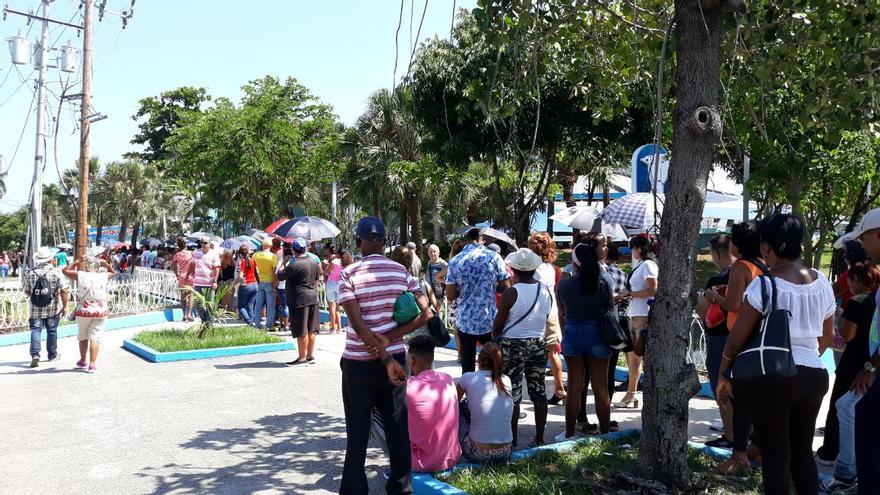
Customers protect themselves from Havana’s summer sun while waiting outside Coppelia.

14ymedio bigger14ymedio, Luz Escobar and Yoani Sanchez, Havana, June 26, 2019 — At what has been called the Cathedral of Ice Cream, the faithful wait outside for hours on the day that the Coppelia ice creamery is scheduled to reopen after a weeks-long remodeling. The first day of operation is marked by scenes of people shoving each other as police try to control the line of customers waiting to try the long anticipated chocolate ice cream.

On Monday, after official news outlets announced the date of its reopening, dozens of people with the patience of pilgrims start lining up outside. Designed by architect Mario Girona, the iconic Havana building looms as large in the public imagination as the Giraldilla statue, Morro Castle and the Malecon. As they wait patiently, hundreds of customers try to glimpse the menu board inside to see if it lists all fifteen flavors promised in official media reports.

Such a high level of anticipation should come as no surprise. Coppelia is one of the few places in the capital where ice cream can still be bought with Cuban pesos rather than hard currency, something hard to fathom for the astonished, open-mouthed tourists who walk past the enthusiastic throng, asking if they are part of a demonstration. When told the crowd is just waiting to buy ice cream, they can be heard saying, “I can’t believe it.” continue reading

In spite of a sign announcing a 10 o’clock opening, Coppelia begins its first day of operation an hour later, much to the discomfort of customers, who have to rely on umbrellas and sports caps to escape the relentless summer sun. This means that, before cooling off with ice cream, customers are first treated to a “free tropical sauna,” as one woman waiting in line notes ironically.

Every generation is represented. There are those who remember Coppelia in its heyday, after its debut in 1963, when it offered dozens of flavors; those who watched it languish during the Special Period of the 1990s, when it operated almost as a workers’ canteen; and those born after the advent of the dollar economy, who grew up eating Nestlé ice cream at shopping malls or coveting it through display windows.

Everyone arrives armed with cell phones to report the reopening to a family member who has emigrated to Buenos Aires, Miami or Berlin, someone who met her partner in the historic ice cream parlor, where a man’s wife began to feel her first delivery pains, or where someone had a final conversation with a friend who passed away not long after. Each of them has some memory sewn into the metal trellis chairs on the ground floor or to the thick shade trees.

Between the shoving to get inside and the screaming at others who have jumped the the line, there is the sound of “clicks” from dozens, or even hundreds, of cell phone cameras. “This is for Instagram and this for Facebook,” explains a teenager who poses in front of the sign of a ballerina’s plump legs above the iconic location’s name. He also takes a snapshot in front of a slogan, “La Habana real y maravillosa” (The real and wonderful Havana), that now appears on an exterior wall.

As the hours pass, enthusiasm dims and outrage grows. Around noon, after getting past the doorman trying to control the entrance, an avalanche of people runs through the esplanade to the staircase on the second floor, where the area known as the Tower is located. Their first surprise is the wallboard menu in this most exclusive area of Coppelia, which lists only eight flavors, half of what was promised.

When the crowd gets to the bottom of the stairway, they regroup. Some take the opportunity to fix their hair, some to straighten shirts which were rumpled in the scuffle outside and some to make sure they have not lost their wallets in the tumult. Children cannot stop smiling, their eyes open wide, as if they were on an adventure, monsters included, with a promised reward.

Eventually, little by little, everyone sits down. Then comes a second surprise: you may only order two specialties per person, a restriction that began with the crisis of a quarter of a century ago and which apparently is still in force despite a new, strikingly blue paint on the walls and employees in redesigned uniforms.

As has become customary, tables at Coppelia must be fully occupied. It does not matter if the people with whom you are seated are complete strangers. Some customers enjoy the surprise of being able to have a conversation with someone they are seeing for the first time. Others resent the lack of privacy and the unwanted, frightening encounters they imagine having.

Now seated after waiting four hours in line, Ulises — a 60-year-old restaurant worker — is still running his hand over a rib which was jabbed during the scrum to get inside. “Older people being pushed around, women with small children shoved to the ground, people in wheelchairs and with canes not given priority. And everyone fighting with the employees. I’ve never seen anyting like it,” he tells his companions.

“You didn’t experience Coppelia when it was Coppelia,” he says with a certain taste of nostalgia. Before paying, he very slowly counts his coins because, as he notes, no one gives him anything; he lives on his salary. This is a rarity, as difficult to find as a sliver of almond in the ice cream, which is now served on plastic plates when you order three scoops.

Next to him is a Cuban couple who now live in Florida and cannot stop laughing. “We needed a dose of Cuban reality but here we’ve gotten a full shower,” they joke. When the ice cream arrives, the woman takes a small taste but leaves the rest while the man takes several photos, which he will later post on Twitter. Meanwhile, Ulises takes a plastic container out of his bag and begins filling it with a melted chocolate and strawberry combination.

“The chocolate failed the test,” a young woman seated at another table is heard to say. “But the only thing on this plate I can eat is the chocolate. The strawberry is totally synthetic. There’s no fruit in it,” she adds with her nose near the plate. A dusting of cookie crumbs begins to fuse with the melted ice cream scoops.

One of the most frequently heard complaints involves the well known combination known as the “salad,” a mixture of five scoops with a few small cookies on the side, which can only be ordered with a mix of ice cream flavors. When a group of adolescents at one table asks an employee why this is, her only response is that it results from “a desire to provide a variety of flavors.”

But the ice cream fails to deliver. “Not creamy, tasteless and melted,” is how a mother with two children describes it, wrapping up her assessment with an “I won’t be coming back.”

After returning to his table smiling, another guest is eager share the details of his trip to the restroom. “They fixed all the toilets and there was even water for the sinks,” he explained. Though he wanted to provide more details of his experience, few listen to him.

At three o’clock a lady who has been in line with her granddaughter to go up to the Tower finally cries out in despair, “I have been here since 1:30 and everything they are saying on television is a lie. It’s an insult.” The woman has brought her daughter here for her birthday after the girl became intrigued by a report on the midday news about the successful reopening earlier in the day.

Images of the fights were not shown on national television, nor was the presence of police, who were there to maintain order, or the attendant trying to maintain discipline in the line. Instead, news reports only described calm and happiness. One customer adopted the idyllic tone, tellling a reporter, “It’s all beautiful, so beautiful.”

Far from camera range, one woman is compelled to seek shelter under a tree after waiting three hours in line. “This is abusive,” she repeats. Meanwhile, her two grandchildren, now on vacation from school, take advantage of not having to contend with the sun’s glare on their cell phone screens to share some wifi apps.

In the distance they can see an air-conditioned upper-floor salon offering ice cream for sale in hard currency. At The Four Jewels,* as the space inside Coppelia is known, smiling, sweat-free customers are enjoying a much more costly and creamy ice cream.

*Translator’s note: The space, named for four legendary dancers of the National Ballet of Cuba, was inaugurated in June 2013 by the ballet’s then-director, Alicia Alonso, in a ribbon cutting ceremony.

____________________

The 14ymedio team is committed to serious journalism that reflects the reality of deep Cuba. Thank you for joining us on this long road. We invite you to continue supporting us, but this time by becoming a member of 14ymedio. Together we can continue to transform journalism in Cuba.
A Rabid Dog Always Ready to Bite

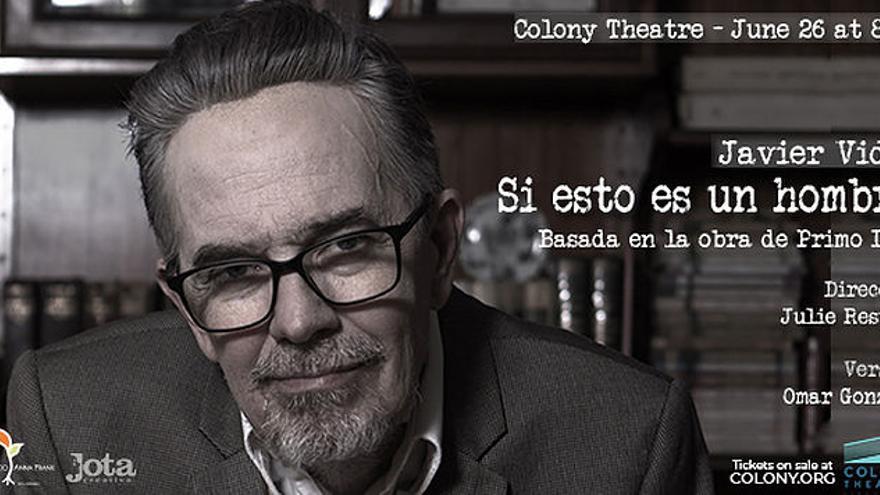
Promotion for the monologue of the Italian Primo Levi entitled “If this is a man.” (Cortesía)

14ymedio bigger14ymedio, Carlos A. Montaner, Miami, June 30, 2019 — Incredible. Anne Frank is a venerable old woman of 90. She remained frozen in the image of a smiling, sensitive, and good girl who discovered love and sexuality in the middle of adolescence as she records in her Diary. The Nazis murdered her in February or March of 1945, a little before the end of the war. She had been born in June of 1929.

So a foundation called “Anne Frank Space,” at this time led by its vice president, the architect Ilana Beker, caught my attention. It is composed, essentially, of Venezuelan Jews. If the massive immigration of that people is great for the societies that receive them, it is even more significant when it comes to Jews. They tend to have excellent education and a profound sense of social responsibility. This foundation’s objective, in essence, is to fight againt prejudices and that we manage to live together in harmony with different people. continue reading

Within that spirit, they brought to Miami Beach, to the Colony theater, the monologue of the Italian Primo Levi entitled If This is a Man, published in 1947. They are his memories from the Auschwitz concentration camp. Along with Levi, 650 Italian Jews were transported like animals to that horrible slaughterhouse. Only 20 survived. Four decades later, in 1987, hounded by depression, Levi committed suicide by throwing himself to the pavement from a third floor. Elie Wiesel, upon finding out, wrote: “Primo Levi died in Auschwitz forty years later.”

The actor Javier Vidal achieves a tremendous resemblance to Primo Levi and turns to an excellent “trick:” he recites the text admirably with the accent and cadence of an Italian who speaks Spanish. For an hour and a half it is very easy to believe that Levi himself transmits to us his experiences. His wife, Julie Restifo, directs the work with an enviable economy of media. A few chairs on the stage and the projection of some drawings and images set the horror with total clarity.

Almost at the end of the work, Primo Levi warns that what they are suffering can be reproduced in the future. And thus it is so. One of the constant features of Western civilization is antisemitism. Hitler and the Nazis did not invent anything. They limited themselves to picking up a bloodthirsty tradition initiated by the Egyptians, Greeks, and Romans, but amplified by primitive medieval Christianity, which has been changing with each generation and adapting itself to every stage of history.

Hitler attributed to the Jews the German defeat in the First World War, despite the heroic participation of many Jews on the German and Austrian side, and supposed that by eradicating that “damned race” from the face of the earth all of Europe’s problems would suddenly disappear. Of course it was an unjust stupidity, but the ground had been fertilized for centuries with outrages against Jews.

It is true that the Roman papacy has asked forgiveness for its criminal excesses, but antisemitic prejudices are still alive in our culture. I remember a meeting of the Liberal International in Finland, in which they asked me to sit with an enigmatic Russian politician, Vladimir Zhirinovsky, who had created a supposed Liberal Party and wanted to affiliate it with our political family.

It was enough to ask him “how are things in Boris Yeltsin’s Russia” for antisemitism to rise to the surface. “Imagine,” he said to me, “the Jews are keeping everything.” He criticized to me the “cosmopolitanism” of that ethnicity and even mentioned “the conspiracy of the Jewish doctors” denounced, persecuted, and murdered by Stalin at the end of the forties.

Everything continued the same way in the Russian mentality, like in the time of the czars, when the political police, the fearsome Okhrana, fabricated The Protocols of the Elders of Zion, as if there existed a Judeo-Masonic conspiracy to take control of the planet. Of course antisemitism has not diminished. It has mutated and presents itself today as anti-Zionism, but it is the same dog with a different collar. A rabid dog always ready to bite.

Translated by: Sheilagh Herrera

___________________________________

The 14ymedio team is committed to serious journalism that reflects the reality of deep Cuba. Thank you for joining us on this long road. We invite you to continue supporting us, but this time by becoming a member of 14ymedio. Together we can continue to transform journalism in Cuba.

The New Heat Record in Cuba is in Veguitas

This Sunday the maximum temperatures marked by thermometers in Cuba fluctuated between 32 and 35 degrees Celsius (89.6 to 95 F). (14ymedio)

14ymedio bigger14ymedio, Havana, July 1, 2019 — This June 30 in the afternoon the record for heat in Cuba was broken when the station in Veguitas, province of Granma, registered a maximum temperature of 39.1 degrees Celsius (102.4 F), as the Institute of Meteorology reported this Monday.

Armando Caymares, of the National Forecast Center, told the official press that this maximum was reported at 3:30 in the afternoon and it is the most notable value since records started being kept at a national level. continue reading

The data was later ratified by experts from the Cliamte Center who certified the new national record of absolute heat.

As Caymares explained, the few clouds and the weakness of the wind favored the intense evening warm-up in the area; a high pressure system in the low and medium levels of the troposphere influenced the eastern region.

The Twitter account @invntario, which posts data about Cuba, offered records going back to 1901.

Why limit yourself to feeling the heat when you can also visualize it?

This is how the average monthly temperatures (C) have behaved in Cuba from 1901 to March of 2019 pic.twitter.com/8boDTF4erK

Previously the record was 38.8 (101.8 F) degrees, and it was recorded in Jucarito on April 17, 1999.

This Sunday the maximum temperatures marked by thermometers in Cuba fluctuated between 32 and 35 degrees Celsius, although they were higher in some places in the eastern provinces. For this week forecasts indicate possible temperatures around 33 degrees Celsius.

Translated by: Sheilagh Herrera

__________________

The 14ymedio team is committed to serious journalism that reflects the reality of deep Cuba. Thank you for joining us on this long road. We invite you to continue supporting us, but this time by becoming a member of 14ymedio. Together we can continue to transform journalism in Cuba.
Cuban MeToo Movement Challenges the Power with “Hairs on Its Chest”

For the official Federation of Cuban Women, women are soldiers, impeccable workers and players that underpin the ideology (Alan K.)

14ymedio bigger14ymedio, Yoani Sanchez, Havana, 2 July 2019 – He watches her pass by and whistles as she walks away, on the bus he sticks to a young woman until he is so close she feels his sweat on her skin and, when he gets home, his wife has dinner on the table and doesn’t start eating until he takes his first bite. At night, even though she doesn’t want to, he will “fulfill his manly role.” These situations are so common and repeated that many have come to believe that this must define normal, a woman’s lot.

This entire web of pressure, abuse and violence is coming to light as a result of the personal scream of a singer who decided to tell what she lived through. The public denunciation made by Dianelys Alfonso, known as La Diosa de Cuba (The Cuban Goddess), against the musician José Luis Cortés, El Tosco (The Rough One), for alleged verbal, physical and sexual abuse has opened a Pandora’s box of incalculable scope. We can delineate when it all began, but not how far the catharsis will go.

Cuban society is pierced from one side to the other by machismo. A harassment and exploitation that is so commonplace that many do not see it, or do not want to see it. It begins very early, sinking its roots so deeply into everyday life that sometimes it is difficult to separate how far feminine will goes and at what point masculine imposition begins, how much more determinate is machismo, than is the free will of a human being. continue reading

From the men who still brandish the teasing compliment or supposed street flattery as a way to respond to the physical attractiveness of a woman, passing through the administrator who believes that by organizing a party with gifts for March 8 – International Women’s Day – he has paid his share of respect towards “the beautiful gender,” right up to the official spokesman who accuses a dissident of moral laxity or of being a prostitute just because she utters a criticism.

Millions of women on this island are trapped between the role of “flowers of adornment,” and that of domestic slaves or of pieces to be used and discarded. Not only are they condemned to perform most of the domestic chores, but from the time they are small they are trained to please, complacently serve and assent to masculinity. Departing one centimeter from that mold can lead from insults to aggressions.

They are the ones who do the most of the cooking, take care of the children, go to school meetings, do the tasks related to the care of the elderly, financially support the children of the husband who took off or who does not pay support, attend the sick, and work in the most thankless places in hospitals, schools, soup kitchens or asylums.

They are also mistreated. A violence that has many faces, some of them so apparently “benign” such as to pushing them to always look “beautiful, well-groomed and attractive.” Something that forces them to straighten their hair, paint their nails, shave their legs, constantly fuss with their hairstyle, wear make up, dress sexy and be willing to compliment and conquer, grateful that men pass by, look, praise or touch.

But coercion can also be much stronger. It is the boyfriend who says “if I see you with another man, you know what’s going to happen to you”; the husband who prevents her from wearing tight pants; the neighbor who insinuates that if she is very lonely he can accompany her and be at her side so that no other man dares to bother her; the boss at work who lets fall that she has a promising future ahead and “all the attributes” to achieve it.

There is also physical violence. Like that suffered by the woman who conceals her black eye under sunglasses; another who endures beatings because she has nowhere to go in the absence of shelters to house battered women; or the woman who has been protecting herself for years from the slaps of a husband who comes home drunk but she has to put up with it because – after all – she migrated from the east and it would be illegal in Havana if he were the kick her out of the house.

The actress who has to undress on stage to achieve a role, the singer who only has sexual relations with the bandleader so she can aspire to a permanent position in front of the microphone, the professional who must accept the idiotic flirting of her company’s director to be chosen to go on a trip, get a promotion, or simply have the chance to keep her job.

And the social and institutional violence of the police who, when she comes to file a complaint, repeat “no one should intervene between a husband and wife”; the lawyer who refuses to take her case because the defendant is a powerful man and she is “a perfect unknown”; the friends of the abuser who are on his side and throw tons of mud on the credibility of the victim; the official figures that hide the femicides; and government spokesmen who strut in international forums insisting that on this island there is no real problem of gender violence.

Now, all that reality begins to find a speaker from the MeToo movement, which has been slow to reach this island, but in other places on the planet has already made visible a problem shared by many women. A movement that has given strength to other women to bring several abusers before the courts, and to dissuade other men from continuing to commit their excesses. A movement that has raised awareness about the situation of gender-based harassment in this country.

What role has the official Federation of Cuban Women (FMC) played in all of this? So far none, because the largest and only formal female organization allowed in the country does not act if it does not receive guidance from Power ahead of time. Feminism, like social, environmental or LGBTI activism, has never been looked on kindly by the Cuban government, which considers all these “isms” to be forms inherited from bourgeois mentality and capitalist countries.

For the FMC, women are soldiers, impeccable workers and players that underpin the ideology, but defending them from male abuse would, in many ways, be confronting the Government itself. In the end, harassment against females is not only carried out at the domestic or social level, but it is disseminated and validated by the State itself.

The “hair on the chest” Power that dominates Cuba resorts to sophisticated threats against women who oppose it. They publicly question women’s morality, accuse them, when they engage in active dissent, of not acting on their own impulses but under the management of some man, allude to their lack of femininity and, in the final indignity, reveal their most intimate details, exactly those that they taught her in school and the family to hide, keep silent about, keep in the shadows.

_____________________

The 14ymedio team is committed to serious journalism that reflects the reality of deep Cuba. Thank you for joining us on this long road. We invite you to continue supporting us, but this time by becoming a member of 14ymedio. Together we can continue to transform journalism in Cuba.
On La Rampa, Better Not to Look Down

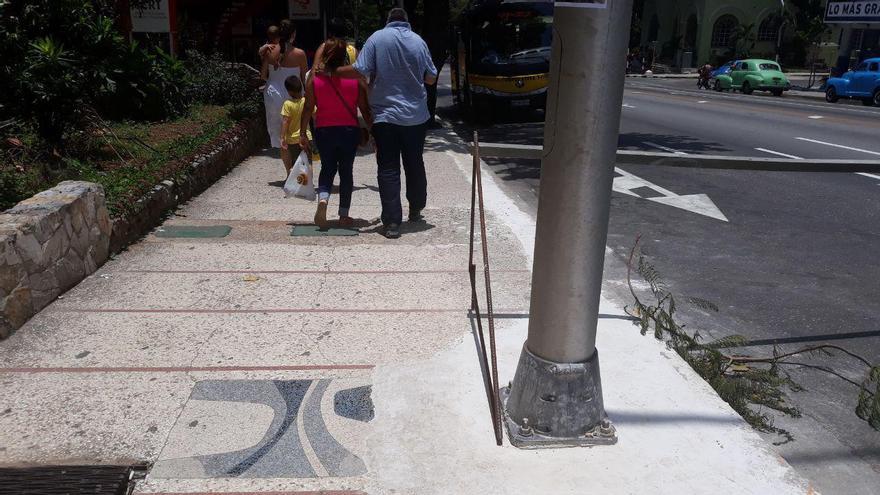
The public works project of the Electric Union have not taken any care to respect the works of La Rampa. (14ymedio)

14ymedio bigger14ymedio, Marcelo Hernandez, Havana, 24 June 2019 — If something differentiates Cuban nationals from tourists when they walk through the streets, it is the place where they fix their eyes. While the visitors are left looking at the beauty of the architecture or the miracle that a decrepit balcony has not yet fallen, those of us who live on this island walk around all the time looking down to avoid the gaps in the sidewalk, the puddles of sewage water and all types of common waste on public roads. This is the case almost everywhere on Havana’s La Rampa, where foreigners also like to enjoy the scenery under their shoes.

The most famous sidewalk in the Cuban capital is dotted with mosaics by national artists such as Amelia Peláez, Wifredo Lam, René Portocarrero, Hugo Consuegra, Mariano Rodríguez and Cundo Bermúdez, among others. For decades, walking along it has been like enjoying an exhibition hall without having to pay entrance fees. Although the years and the deterioration has caused it to lose some of its beauty, Havanans trusted that the stone and granite were harder than the apathy.

But a few days ago the Electric Union began to break up the pavement of 23rd Street, especially in the section between L and M and, in addition to taking pieces of the artistic works with them, they did not hesitate to carelessly fill in the outline of the images and cover parts of others with cement.

Now, everyone keeps looking down when they walk by along La Rampa, but not to admire the beauty under the feet but to see how far the mess can go. It does not matter if you are Cuban or foreigner, everyone looks at the ground and it hurts, of course it hurts.

__________________

The 14ymedio team is committed to serious journalism that reflects the reality of deep Cuba. Thank you for joining us on this long road. We invite you to continue supporting us, but this time by becoming a member of 14ymedio. Together we can continue to transform journalism in Cuba.
Cuban President Diaz-Canel Takes Up Fidel Castro’s Obsolete Discourse on Intellectuals

During the speech, Díaz-Canel was interrupted several times by long standing ovations from the artists. (UNEAC)

14ymedio bigger14ymedio, Havana, 1 July 2019 — Miguel Díaz-Canel used his closing speech to the IX Congress of the Union of Writers and Artists of Cuba (UNEAC) to recall the controversial Words to the Intellectuals delivered by Fidel Castro in 1961 and to call for fighting the “cultural mercenaries, those willing to lynch how many artists and creators who support the Revolution.”

In his words, the Cuban leader warned that “creation is not going to be limited, but the Revolution that has resisted 60 years by knowing how to defend itself is not going to leave its institutional spaces in the hands of those who serve its enemy.”

The year 2019 began marked by an open controversy in the art world over Decree 349, which regulates artistic expression on the Island. The new regulation, which came into force last December and has not yet been applied to its full extent, caused a a schism between Cuban intellectuals who openly support it and those who consider that it censors art, especially because it regulates who can and can not be considered creators, and because it interferes with the dissemination of art in private spaces. continue reading

Díaz-Canel defined Cuba as a country “riddled with journalists by the most influential media on the planet” and said: “Fidel [Castro] knew to warn of the risk of losing our greatest strength: unity, identity, culture, with the colonizing avalanche that advanced in the times of globalization.” The president expressly referred to “massive access to new technologies, promoted by modern merchants.”

Social networks also had a place in the words of Diaz-Canel, in the midst of an increase in the presence of Cubans on Twitter and Facebook, where, in recent months, there have been frequent criticisms of the management of the Government, demands for improvements in services and, more recently, an intense campaign for the state telecommunications monopoly to lower the prices of Internet access.

On that issue, the president again praised Fidel Castro for being aware that these accelerated development technologies would be “a powerful weapon of education and multiplication of knowledge” and he created the University of Computer Science (UCI), under the direction of State Security.

The president, coinciding with the 58th anniversary of the Words to the Intellectuals, recalled the meetings in the National Library that gave rise to a cultural policy within strict ideological limits and also to the creation of the UNEAC. “If, 60 years ago, the attempt to fracture the visceral union between that vanguard and its Revolution, that is, itself and its people, was defeated, later and many times over the years, the adversary would uselessly endeavor to do so,” he proclaimed.

Díaz-Canel also took up the controversial words pronounced by Castro on that occasion to define the limits of artistic production [“Within the Revolution, everything, against the Revolution, nothing”]. “I’ve always been worried that from those words a couple of phrases are extracted and they are raised as a slogan,” said Diaz-Canel. “Our duty is to read it aware that it is still a document for all time.”

The president recognized in his words the outgoing UNEAC president, the writer Miguel Barnet, who held the office for more than two decades, and congratulated the newly elected Luis Morlote Rivas, a cadre without an artistic career who previously served as vice president of UNEAC, after being president of the Hermanos Saíz Association and who is currently a deputy of the National Assembly of People’s Power.

Morlote represents the new litter of faces that are taking positions within national institutions, of proven ideological loyalty and a discourse totally aligned with the Communist Party. Among his most combative actions in recent years was his presence in the Parallel Forums of the VII Summit of the Americas in Panama, 2015, where he was part of the shock troops against Cuban activists.

In his first words as president of the government organization, Morlote said that at the UNEAC Congress it was demonstrated that “there is a UNEAC committed to the Revolution, with the thoughts of Fidel and Raúl, and of all those who continue their work.” For his part, Barnet was recognized with the position of honorary president of the organization.

“I do not have a work as big as el Turquino [Cuba’s highest peak], but after 22 years in the Executive of the UNEAC and eleven in the presidency I can say: do not believe that it has been a sacrifice, I have surrendered and I will continue delivering, because for me most important is the cause, this great Revolution that has brought us this far,” said Barnet, accepting the new position.

During the speech, Díaz-Canel was interrupted several times by long standing ovations from the artists, and many of his phrases received brief applauses and approvals from the voices of some artists.

The National Council of UNEAC was also elected, composed of Alicia Alonso, Leo Brouwer, Alfredo Diez Nieto, Ambrosio Fornet, César López, Eusebio Leal, Chucho Valdés, Graziella Pogolotti, Martha Rojas, Omara Portuondo, Pablo Milanés, Roberto Fernández Retamar, Rogelio Martínez Furé, Rosita Fornés, María Teresa Linares, Fina García Marruz, Silvio Rodríguez, Nancy Morejón, Jesús Ortega, Verónica Lynn, Pedro de Oraá, Jesús Chucho Cabrera and Miguel Barnet.

The Cuban art sector is undergoing a rapid transformation with the emergence of new technologies, the growth of cultural consumption “a la carte” and the expansion of the private sector. If, before, the creators needed to be integrated into an institution to record a record, publish a book or perform in a show before the public, now there are recording studios, video clip professionals and private bars where they can do these things without government intervention.

Decree 349 attempts to regulate the phenomenon and return to cultural institutions the ability to decide everything from what music is heard in those particular places, to what art can hang on the walls of the independent galleries that have sprung up all over the country.

Díaz-Canel also did not miss the opportunity to refer to the United States and linked the funds destined to promote democracy on the island with the protests of recent weeks on the Internet.

The president accused the current Trump administration of asking “those who wish to access the privileged preserves of the empire to give an account of what they do or say on social networks,” an idea repeated in recent days by officials and official spokesmen against the users of the state monopoly Etecsa who are demanding a reduction in the pricesit charges to access the internet.

___________________

The 14ymedio team is committed to serious journalism that reflects the reality of deep Cuba. Thank you for joining us on this long road. We invite you to continue supporting us, but this time by becoming a member of 14ymedio. Together we can continue to transform journalism in Cuba.

Gay Pride in Cuba: Without a March, Matrimony or Adoption

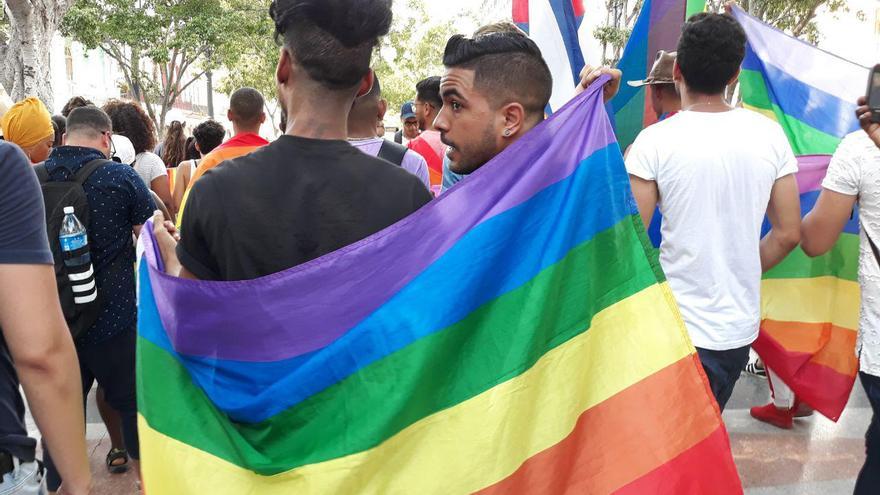
The Cuban LGBTI community has been left with the unmet demands of equality and equal marriage and the memories of the repression of May 11 still fresh. (14ymedio)

14ymedio bigger14ymedio, Luz Escobar, Havana, 28 June 2019 — Tonight, in the privacy of their home and surrounded by some friends, René and Richard will have a symbolic wedding ceremony. “We were waiting for the Constitution to permit gay marriage to do it, but it looks like that will happen when it snows in Cuba,” jokes René. “We are tired of waiting and tonight we’re going say ’I do’ for ourselves, even if it’s not in any civil registry.”

The Cuban LGBTI community is celebrating this June 28, Gay Pride Day, inside. There will be nbo public march or rainbow flags on the facades of the institutions. With the unmet demands for marriage and adoption and the memories of the repression of May 11 still fresh, there is hardly anything to celebrate 50 years after the Stonewall riots that gave rise to the commemoration of this day all over the world.

René and Richard’s party will be attended by the latter’s parents and the sisters of both. René’s parents do not accept the union because they belong to one of the evangelical communities that most strongly opposed the inclusion in the Constitution of Article 68, which laid the foundations for equal marriage. “They almost have rejected me as a son and even if I could legally get married right now, nothing is going to change their reaction,” he laments. continue reading

In the neighborhood where they live and earn their living with a small hairdressing and massage business, many neighbors have accepted the situation but others do not speak to them, says Richard. “Although these are no longer like the times when there was even more rejection, we can not say that everything is a bed of roses. Sometimes someone insults me when I walk down the street and do not even think about walking hand in hand.”

Although Richard and René declare themselves “far removed from all the political wrangling” and do not engage in public LGBTI activism, they consider that from their place in society they are helping to move the wall of intolerance and rejection. “People have to understand that we are human beings and that we have the right to choose who we love,” one of them clarifies.

They have little confidence that the approval of a new Family Code, scheduled to happen in two years, contemplates the legalization of equal marriage and will give them full rights. Right now, if one of them has some mishap and dies, the other will not be able to get a widower’s pension and would not have the power to decide whether to bury or cremate his partner, should his family decides otherwise.

“Behind closed doors we are a couple like everyone else within the law, but as soon as we leave this house we are two people without any relationship before the law that rules the country,” René complains. “It’s like playing hide and seek, denying what everyone knows happens anyway,” he adds.

Yania, who asked that her name be changed for this report, drives a taxi leased from the State and has been with Leticia for seven years. Both are taking care of the latter’s son, the fruit of a previous relationship where abuse prevailed more than love. “We are two moms, although most of the neighbors think that I am her cousin and that I live with her to help her with the child, but they also gossip a lot about that,” she says.

Spending more than 14 hours a day behind the wheel, Yania supports her family while Leticia takes care of the child and domestic chores. At school, the taxi driver is called “Jeancarlos’s aunt” and the boy says “mama” only to his mother. He calls the other woman by a diminutive of her name. Both dream of being able to give him a little brother now that the family’s economic situation is better, thanks to the sale of a family home.

“We know we have no chance of being able to adopt a baby,” laments Yania. In the same block where she lives, a teenager from a family with problems of violence got pregnant and had proposed that they keep the baby. “But we do not want to do anything illegal, because tomorrow she will change her mind and we will not have any rights.”

In Cuba, the adoption of children by heterosexual couples is already complicated in itself. “If there are barely children available for adoption for heterosexual couples, who is going to open the possibility to homosexuals,” says an Education worker.

However, some have found ways to satisfy their desires for parenthood despite legal obstacles. “I grew up with two wonderful men and since I was little I knew they were a couple,” Liuba Herrera tells 14ymedio. Now a young college student, she was cared for from the time she was very small by two neighbors who lived next door to her house. “My biological mother was an alcoholic and ended up dying of cirrhosis of the liver.”

Carlos and Emmanuel, her two parents, took care of everything. “I had a childhood in which I did not lack anything, including love,” says Herrera. “At my school, some people made fun of me and made jokes in bad taste, but in the end they ended up accepting that I had two dads.” Now, their greatest dream is to become grandparents. “But they’ll have to wait because I’m still working toward graduation,” she says.

Today’s date, chosen in honor of the Stonewall riots (1969), has been extremely uncomfortable for the Plaza of the Revolution for decades, partly because the phenomenon originated in the United States in one of the moments of greatest rivalry between both governments. That aversion reached the point that the National Center for Sex Education (Cenesex), directed by Mariela Castro, opted to move the celebrations to the Day Against Homophobia, on May 17.

This year everything points to a stagnation for the LGBTI community in the struggle to conquer its rights. Ultimately, the article that would have opened the door to equal marriage was not included in the new Constitution, then came the cancellation of the conga celebration organized by the Cenesex and later the police violently arrested several activists who organized a march along the Paseo del Prado in Havana.

Despite having few reasons for the party, there are those who resist seeing this Friday as any other day, but little can be done in a country where free association does not exist and where many have preferred to live together as a couple, celebrating the day behind closed doors or raising a neighbor’s child because they can not adopt a baby.

“The ruling party has never taken the streets or celebrated this date. It has only been celebrated by the independent community, an example of that was the Gay Pride El Paseo that began in 2011,” gnacio Estrada tells 14ymedio. Estrada is, now a resident in Miami, was one of the organizers of that demonstration.

For the artist Adonis Milan, currently the greatest repression is “with the trans.” An LGBTI activist, Milan resides near Fraternity Park in Havana, a traditional meeting point for the community. “They [transsexuals] do not have jobs because they are not hired anywhere, so they live on prostitution, which is the only way they can sustain themselves,” he laments.

The police frequently raid the place, says Milan. “They arrive with a truck and take them away”, something that also happens in the vicinity of the Polivalente sports hall, another meeting place for transsexuals.

“They have already fined me three times and they fine me for male prostitution despite the fact that, in this case of meeting points, sex is for pleasure and not for money,” explains the artist. “The dynamics of the police is one of contempt and humiliation, but here there is no other place, the policy they follow with this community is hatred and contempt and they often mistreat us.”

The director of the Tremenda Nota magazine, Maykel González Vivero, does not believe that the repression of May 11 in the capital can be seen as a setback in the institutional attitude towards the community. “It is a position consistent with the official discourse, which has distrusted the rebellious nature of the LGBTI movement.” Remember that “Mariela [Castro] said that the so-called LGBTI Pride, the commemoration of Stonewall, is a commercial, capitalist party.”

For the journalist, “the closest thing to a Cuban Stonewall — people refused to accept the brakes applied by the authorities — was the march last 11 May, which Mariela rejected.” According to him, the Cuban authorities canceled the conga precisely because it coincided with a symbolic date, the 50th anniversary of the incidents in the New York bar. “In any case, the official notes do not lie, a disturbance was feared, which finally happened, something like a Stonewall.”

Although it is still a long time before Carlos and Emmanuel will be abvle to walk together as a couple with a grandson, the activist Isbel Diaz Torres, of the Rainbow Project, considers that “the Cuban Government’s policies of retreat on LGBTI rights have meant the perfect opportunity for an advance in the configuration of a true LGBTIQ movement on the Island.”

A few steps forward have been achieved “with autonomy and belligerence. No right is permanent or immovable, but we are learning that those obtained without struggle or social pressure, as benevolent gifts of power, are easier to lose than those conquered after a popular clamor, civic demands, the legitimate demands of the excluded.”

Torres points out that, after all, “to the Latin and African-American trans people of Stonewall, 50 years ago, nobody gave them anything.”

________________

The 14ymedio team is committed to serious journalism that reflects the reality of deep Cuba. Thank you for joining us on this long road. We invite you to continue supporting us, but this time by becoming a member of 14ymedio. Together we can continue to transform journalism in Cuba.

"It’s Incredibly Important That We All Speak Up, Even if We Are Afraid Afterwards"

The artist has decided to denounce José Luis Cortés, who was her partner, after receiving a threatening message on revealing the alleged abuses to which she was subjected. (Facebook)

14ymedio bigger14ymedio, Luz Escobar, Havana, 25 June 2019 — The public accusation made by the singer Dianelys Alfonso, known as La Diosa de Cuba (The Goddess of Cuba), against the musician José Luis Cortés El Tosco, for alleged verbal, physical and sexual abuse at the time when the young woman was a singer in his orchestra, has unleashed the Cuban #MeToo movement. On Friday, 14 June, the artist revealed the alleged mistreatment suffered during five years on Alexander Otaola’s program and, since then, the reaction on social networks has multiplied and put sexist violence at the center of the national public debate.

#MetooEnCuba, #NoEstasSola (You Are Not Alone) and #DiosaYoSíTeCreo (Diosa I Do Believe You) are supportive hashtags many Internet users have used to show solidarity with the artist, whom many others have doubted and disbelieved.

A week after opening up about the alleged abuses, La Diosa decided to file a complaint against José Luis Cortés for threats. According to the artist in conversation with 14ymedio, the musician sent a message with the phrase: “There will be consequences.” continue reading

The police declined to pursue her complaint and the singer had to resort to a prosecutor, with whose intervention she was able to present the complaint. “They told me that I could not do it, that they could not receive the complaint because, to them, the message was not a threat,” she says.

The singer regrets that official organizations have not offered her any help. “I have not received support from anyone. I went to seek help from an association of gender violence (The Feminist Assembly), I went desperately to seek help from them, I discovered it through a friend. What I’m going through is very difficult because I have had no one concerned about my situation, to know how I feel, right now I am very afraid, for many reasons, not only what José Luis Cortés can do to me, but also that justice is not done in this country and that things do not go well.”

La Diosa also denounces pressures in the workplace and says that she has heard rumors of attempts to expel her from the state music company she belongs to. “If they expel me from the Cuban Rap Agency they put an end to my life, because the only thing I can do is sing, this scares me,” she explains.

For Alfonso, one of the hardest things about making public her past experience is that many have doubted her or questioned her reasons for bringing it to light after so long.

“Many people are asking the same questions. For three days I didn’t know what to do about the situation until, little by little, visiting a women’s association, they explained to me that this is a normal process. But it really affected me a lot, the response of so many people demanding that I shut up and asking me why now. Little by little I was showing the evidence and some began to believe my story and they apologized for not having believed me. It was very difficult for me to see that, after having had the courage to speak out, there were people who did not believe me, it was devastating,” she laments.

Nor has it been easy, she says, to see how many of the people who, according to her testimony, witnessed the events she denounces, have now turned their backs on her out of fear. “Today, the campaign that is being supported is what keeps me going, those people who have used the phrase #YoSíTeCreoDiosa have helped me keep going after that day,” she says with relief.

Alfonso agrees that the Cuban artistic scene is very permissive about abuses and that is why she has decided to make her story public. “I have allowed it to be publicized on social networks of all kinds because it is the only thing that protects me here. I do not think Cuba will change because, unfortunately, the laws are not strong,” she said.

The artist believes that on the Island a woman can not get ahead in the world of music without the support of a man or a producer. “It took me five years after I repatriated, I returned to my country without any help from any kind of media, television, radio, anything, and the answer is in my past, that I never spoke about it. I did not talk about it anymore, I tried to think that I had forgotten it, but life wanted this to happen.”

Dianelys Alfonso started out with almost 20 years of working with NG La Banda, the orchestra led by Cortés, winner of the National Music Award in 2017. “I was very young and the worst thing that can happen to a young girl is coming from being a healthy person, leading a quiet life, with super-educated parents and ending up in the hands of someone who beats you… It’s something I do not wish on any girl.”

Alfonso, who was the musician’s partner for a while, is now about to file a complaint against him also for the “physical abuse” she experienced in those years and she already has a lawyer.

After what she has been experiencing in recent days, Alfonso has a message for Cuban women who are living in a situation of abuse. “I tell them to not remain silent, to speak up, for all of us to shout to stop this situation, because if we remain silent we continue to be victims until the last days of our lives. This leaves us with many consequences, scars that we never forget. It is very important that we all talk, that we go out and denounce it, it is very important, even if we are afraid afterwards.”

This kind of controversy is not new for El Tosco. Recently his name was linked with a video by the artist Michel Mirabal in which the painter appeared “playing on” the buttocks of several women as if they were percussion instruments. The audiovisual was denounced by dozens of Internet users and ultimately Mirabal withdrew it from the social network.

Mirabal defended himself saying that the project was not finished and added that he was organizing a “live concert” with Cuban music figures such as El Tosco and the producer Maikel Barzaga. “I was sitting quietly in my house and a stellar man of the arts called me to participate in a global project… Michel takes the sound to the buttocks of women whose faces we do not see,” said Cortés himself.

Ultimately Mirabal apologized to those who “felt attacked” and published several photos of himself with his daughter.

____________________

The 14ymedio team is committed to serious journalism that reflects the reality of deep Cuba. Thank you for joining us on this long road. We invite you to continue supporting us, but this time by becoming a member of 14ymedio. Together we can continue to transform journalism in Cuba.

Cuban President Diaz-Canel Triples Salaries of Official Journalists

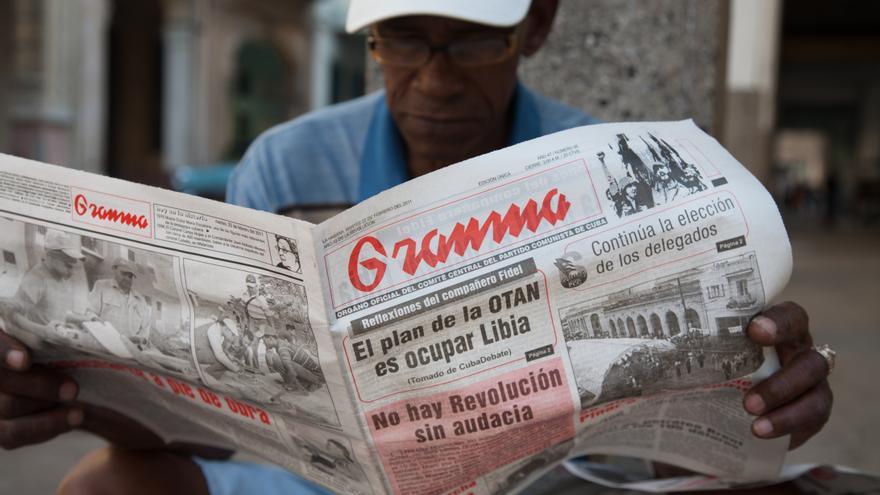
A man reads the official press.

14ymedio bigger14ymedio | Mario J. Pentón, Miami, 29 June 2019 — Official journalists will soon receive nearly triple their current salaries, as part of the increase announced by President Miguel Diaz-Canel last Thursday.

During a meeting on his visit to Pinar del Rio, Díaz-Canel gave the example of the recent increase in salaries for members of the journalists’ union, who had a base salary of 385 Cuban pesos a month (15 CUC — roughly the same in dollars) but now will start to earn between 1,100 Cuban pesos (44 CUC) and a little more than 1,300 Cuban pesos (52 CUC) according to their rating. In the same meeting the president boasted of the salary increase for university professors which, in the case of incumbents, will increase to 1,700 pesos per month (68 CUC).

The last rise in the minimum wage was made by the late former president Fidel Castro in 2005, when he brought the minimum wage to 225 pesos a month, about 9 dollars. continue reading

“We are very happy, that was something that we had always raised in all the meetings and at long last they have given it to us. We know it’s not what we deserve, but at least it is something,” said a journalist from the Cienfuegos radio network, who requested anonymity because he is prohibited from speaking with the independent press.

“The newsrooms are empty. They [the government] know that if they want to have journalists for propaganda they have to pay more. Most of those who graduated with me have left the country or are with the independent press that pays better,” he added.

The officials who lead Cuba’s Journalists Union are annoyed by the independent press, which thanks to more innovative business schemes, subsidies from international organizations and sponsorships, pays its reporters much better.

“Sometimes I am ashamed that my colleagues talk about a report on farms or factories because there they receive a bag with some products in gratitude from the directors of those places. Journalist should have a decent salary,” lamented the newsman.

With the increase in the number of independent media that publish from the Island, the official press has been increasingly lagging behind in the publication of scoops and reports on reality. Among young people, preferences lean towards sites that lean more to audiovisual journalism or tell about events that the media controlled by the Communist Party usually silence.

The arrival of the web browsing services to mobile phones last December has increased the audience of independent media, which often use applications developed on Android or iOS to reach national readers. Several of these digital sites are blocked on national servers but the use of anonymous proxies and VPN services is common on the island.

“I work in a state radio station but I really make a living providing notes for an information site that is produced in Miami,” a journalism graduate from the class of 1988 told this newspaper.

“None of my colleagues knows that I do this other job, because I sign under a pseudonym but I can say that the new [monthly] salary that I will earn for my official work starting in July is equivalent to what I get paid for two reports of 700 words from the other site.”

This reporter, who also prefers anonymity, said that she feels that “in neither of the two places am I doing the journalism that I would like — here because of censorship and there because it is a frivolous medium for entertainment. But the reality is this is what puts the beans on my table,” explains the reporter.

In June her earnings from the state broadcasters in Cuba were around the equivalent of 38 CUC, whereas her earnings from her reports published from Miami totaled some 400 CUC.

_____________________

The 14ymedio team is committed to serious journalism that reflects the reality of deep Cuba. Thank you for joining us on this long road. We invite you to continue supporting us, but this time by becoming a member of 14ymedio. Together we can continue to transform journalism in Cuba.