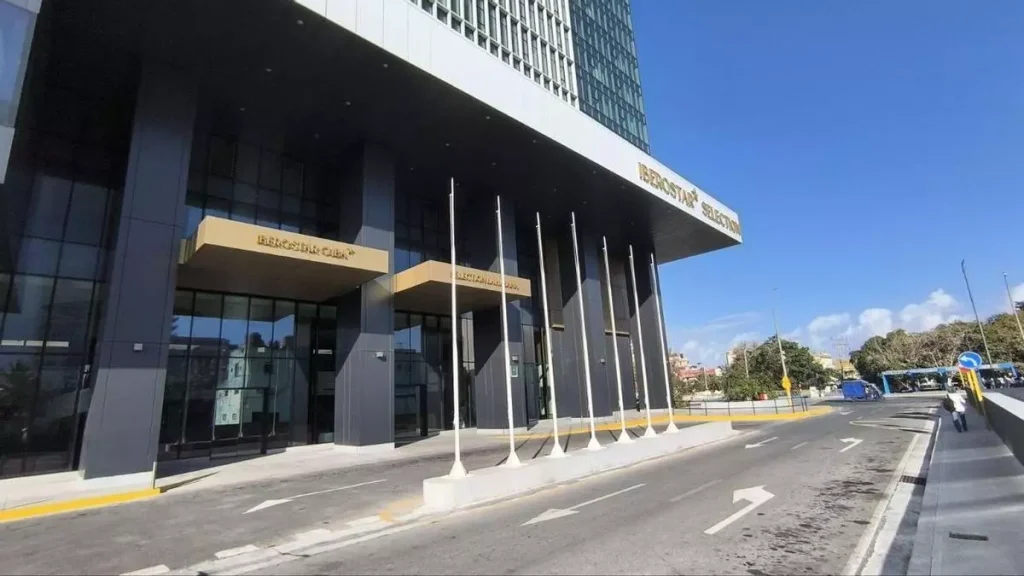
 14ymedio, Havana, Juan Diego Rodríguez, March 13, 2026 –The Iberostar Selection La Habana hotel, which occupies the skyscraper located on the central 23rd Avenue known as Torre K and was inaugurated only last year, has closed its doors, and no one knows when it will reopen. At its main entrance, there are not even flags on the flagpoles, which indicates a decision that goes beyond something temporary.
Asked about it, the guard at the site, without a uniform, responds that he does not know and that the closure is “because of the country’s situation.” The Avenida 23 cafeteria, located on the ground floor with views of K Street, which provides service to the public and not only to hotel guests, is also closed. “The only thing still open inside the hotel is the bank, until noon,” the guard also says.
The man does not specify which institution he is referring to, and on the official website of the accommodation no bank branch appears among its services.
Just two days ago, sources familiar with the matter revealed to 14ymedio that, due to the lack of electricity, Aguas de La Habana would stop pumping the water supply to the capital for at least 48 hours. “Anything that runs on motors, including Torre K, is pointless,” said an employee of the state company.
“The only thing still open inside the hotel is the bank, until noon,” the guard also says.
The hotel has its own generators, which have provided it with electricity even during the worst blackouts, including complete collapses of the national power system. These require fuel oil, and after more than two months without a tanker arriving in Cuba, fuel is scarcer than ever.
According to posts on social media, tourists who were staying at the facility have been transferred to the Hotel Packard, located on Paseo del Prado, but in truth there is no confirmation that there were even guests there. Torre K had been almost a ghost hotel since its opening due to the lack of customers. This newspaper confirmed it during a visit three months after its inauguration.
Not even the building’s main attraction, the observation deck on the 41st floor, drew enough visitors. From up there, the highest point in Havana, the city could be seen as never before, and only the ocean seemed free from decay.
The iconic buildings Focsa and Habana Libre, which were once the tallest in the capital, appeared diminished and deteriorated. Trying to identify the Castillo del Morro, the Hotel Nacional, the José Martí Memorial, or the dozen buildings erected in the 1950s before the Revolution swept away modernity produced only discouragement. From Torre K, misery was evident on every rooftop.
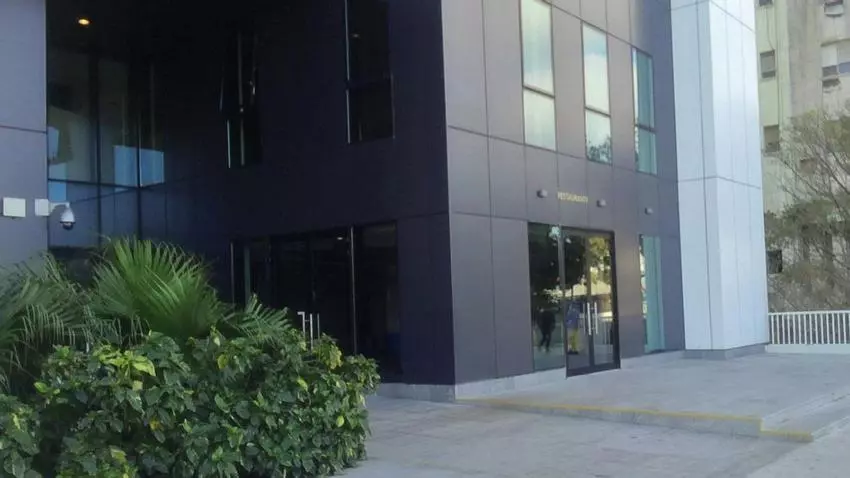
“They told us it was paid for with government money, that it cost I don’t know how many millions of dollars and was handed over to Iberostar to manage. But from the outside it looked closed; we didn’t see much activity,” a Spanish tourist told 14ymedio last October. She had vacationed on the Island the previous month and said her travel agency had “deceived” them by hiding the country’s real situation.
Controversy surrounded the building from the moment its construction was announced in 2018. The structure, first popularly called the “López-Calleja Tower” (before the death of the head of the military conglomerate Gaesa, which owns the facilities through one of its subsidiaries, the Gaviota Group) and later Torre K, represented from the outset a waste of resources in an impoverished country.
As construction progressed and tourism numbers kept falling, technical criticism also began. Several architects pointed out the project’s “mistakes,” including its “pretentious gigantism,” the “insulated glass” that is blinding in a tropical country, and the poor orientation of the hotel, which lacks views to the north, the best side for orienting rooms so they do not suffer from “that Caribbean sun that costs a lot of energy and money to cool.”
The opening of a luxury Iberostar inside the massive structure added further controversy and was not without setbacks. Its inauguration was delayed several times after it had been announced. Initially, Havanatur said it would open on January 15, 2025, but that did not happen. Days later, the company enabled reservations starting February 1, but it was still not ready by then.
When reservations finally opened to the general public in March 2025, after the rooms had briefly been used to house visitors to the Habano Festival, a source linked to Iberostar, the second Spanish hotel company with the largest presence in Cuba after Meliá, admitted that management was concerned about the negative image the hotel had already acquired among citizens.
“People are going to associate the hotel with an increase in misery,” the source told 14ymedio.
Translated by Regina Anavy
______________________
COLLABORATE WITH OUR WORK: The 14ymedio team is committed to practicing serious journalism that reflects Cuba’s reality in all its depth. Thank you for joining us on this long journey. We invite you to continue supporting us by becoming a member of 14ymedio now. Together we can continue transforming journalism in Cuba.