The National Court rejects a family’s appeal and emphasizes that refugee status applies only to people persecuted for “reasons of race, religion, nationality, political opinions or sexual orientation.”
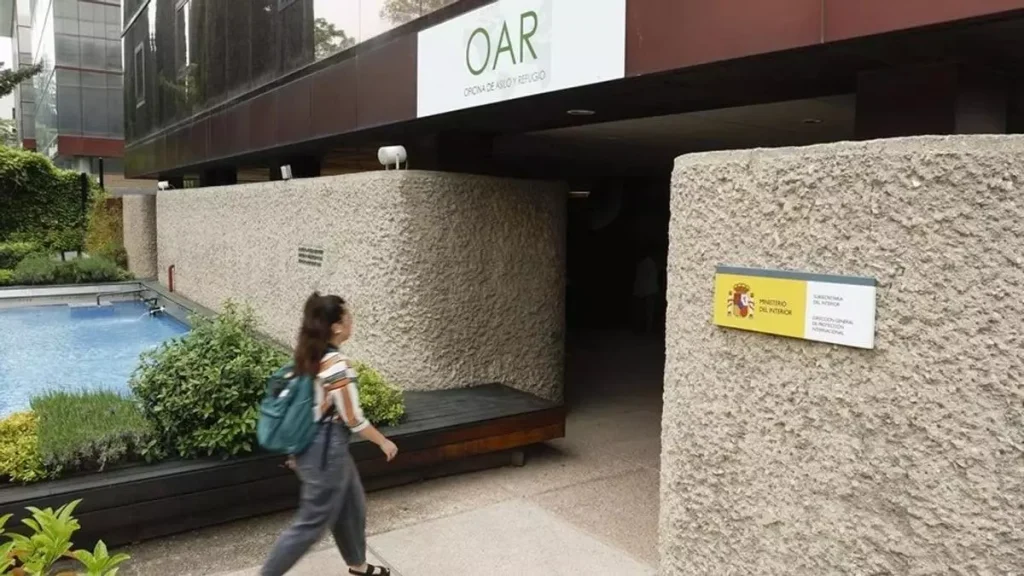
 14ymedio, Madrid, October 05, 2026 – The Cuban political system does not in itself constitute grounds for granting asylum or refugee status to applicants in Spain, who must individually demonstrate that they face an imminent and specific danger if they return to their country. The Spanish Justice System has once again pointed this out, in the case of a Cuban family that appealed the resolution of the Ministry of the Interior and has been met with confirmation of the denial.
The case dates back to September 2019, a few days after the arrival of a father, mother and two children, the younger of whom had cancer, who submitted an application for international protection to the Provincial Brigade for Foreigners and Borders in Madrid. The father stated at the time that his youngest son had been diagnosed with the disease in Havana in 2012 and was undergoing treatment at a city hospital.
During that treatment, the father tried to get the doctors to prescribe a medication that would cause fewer side effects for the child, but they refused and began, according to his testimony, to coerce and threaten him and warn him of sanctions. According to the account, from that point on, the parents began searching on their own for alternative medications in pharmacies in the city without managing to get them, until they were eventually denied entry to the establishments for disturbing public order. According to the father, both parents were arrested and made the decision to leave Cuba because of death threats.
According to the father, both parents were arrested and made the decision to leave Cuba because of death threats
The Spanish authorities asked the father whether he had suffered or feared suffering in the future persecution because of race, religion, political opinions or political manifestations, and he answered no. However, he answered yes when asked whether there is an international or internal conflict in Cuba that causes indiscriminate violence that threatens the lives of its citizens or puts their physical integrity at risk.
There is an internal political conflict in Cuba, he said, adding that he himself had reported the events described to the Provincial Police Inspectorate of Havana, although he never learned what happened with the case. In addition, he indicated that the family had asked the Provincial Health Center in the municipality of Playa for help regarding the minor, without receiving a response. Months later, his wife was detained for three months for disturbing public order, but she was acquitted at trial. His other son was also involved in a dispute with the police.
The Spanish Ministry of the Interior rejected the family’s asylum application, and they decided to appeal through the courts. Now, the National Court has rejected the appeals against the decisions denying the right to asylum and subsidiary protection, basing its decision on the fact that those affected have not been “subject to persecution as required by asylum legislation,” even accepting the account as true.
The ruling emphasizes that refugee status is granted by law to people persecuted for “reasons of race, religion, nationality, political opinions, belonging to a particular social group, gender, sexual orientation or sexual identity,” none of which apply among those described. The court stresses that the appellant “does not even claim the status of a citizen who actively militates against the regime that has governed Cuba’s destiny since 1959, nor does he acknowledge belonging to an organization or group opposed to the current political system.”
The document acknowledges that the shortage of medicines and food cited in the lawsuit is an economic factor that has been denounced by Cubans for years and that can give rise to protests and disturbances of public order resulting from discontent. However, it concludes that this is not a matter covered by asylum legislation.
“It is true that the father claims to feel unfairly treated by his country’s police apparatus and describes a case of animosity with a police chief, but the truly relevant fact is that he acknowledges that his wife was tried and ultimately acquitted of an offense against public order, highlighting both the cessation of government actions against them and their limited nature,” the ruling argues.
“The truly relevant fact is that he acknowledges that his wife was tried and ultimately acquitted of an offense against public order, highlighting both the cessation of government actions against them and their limited nature”
The court considers that if a person does not meet the requirements to be considered a refugee, they could qualify for subsidiary protection, but that to receive it they must demonstrate “well-founded reasons to believe that if they returned to their country of origin they would face a real risk of suffering serious harm to their physical integrity.” In general, the text adds, this usually corresponds to situations of conflict in which violence is indiscriminate. European regulations, moreover, state that granting protection is justified if there are “serious and individual threats to the life or physical integrity of a civilian motivated by indiscriminate violence in situations of international or internal armed conflict,” and therefore it does not apply to Cuba.
“It is our opinion that Cuba is not involved in an armed conflict, for the simple reason that the Cuban State holds an authentic monopoly on organized violence, without armed opposition from dissident sectors. The foregoing leads to the dismissal of the appeal,” the decision concludes, by which the appellants are also ordered to pay the costs of the proceedings, although with a limit of 1,000 euros.
The ruling is just one more example of the thousands of asylum cases filed by Cubans that are denied and dismissed when appealed in Spain. According to data from the Spanish Commission for Refugee Aid (Cear), over the past five years the average percentage of approved applications has been between 2% and 3%. In 2023, the year with the most cases recorded (3,082), only 30 refugee statuses were granted out of 1,157 cases resolved. Another striking figure was that of 2022, when after 11J the number of applications doubled (from around 1,000 in previous years to 2,000) but only between 15 and 20 were approved.
Cear points out that most cases are rejected for the reason indicated by the ruling: the lack of direct evidence of individualized persecution. The organization estimates that between 15% and 25% of Cubans decide to file an appeal before the National Court through the prescribed procedure, which is contentious and administrative, but the dismissal rate is around 95% and 98%.
Translated by Regina Anavy
______________________
COLLABORATE WITH OUR WORK: The 14ymedio team is committed to practicing serious journalism that reflects Cuba’s reality in all its depth. Thank you for joining us on this long journey. We invite you to continue supporting us by becoming a member of 14ymedio now. Together we can continue transforming journalism in Cuba.