Releasing prisoners in exchange for their leaving the country functions as a mechanism to rid the country of critical voices.
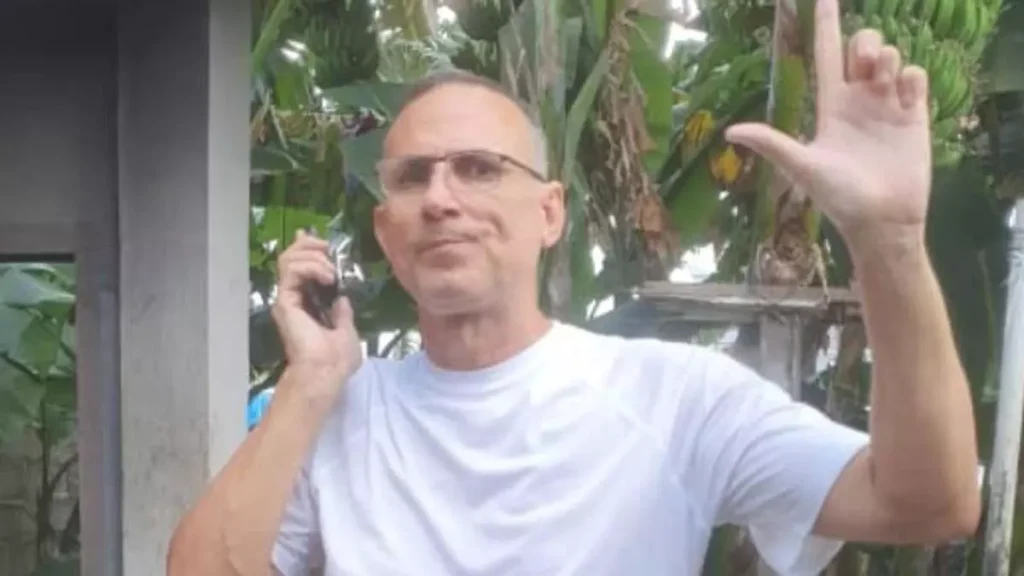
 14ymedio, Havana, 24December 2025 — Ferrer and Robles arrived at their respective destinations in exile on the same day. The coincidence was not accidental; like so many Cuban dissidents in recent decades, both only regained their freedom after agreeing to leave the island. They, along with the Lady in White Aymara Nieto Muñoz, share a fate that has become a pattern in the official treatment of dissent: conditional release on forced exile, presented as “liberation,” but which in reality functions as a mechanism to rid the country of critical voices.
José Daniel Ferrer , a historic leader of the Patriotic Union of Cuba, UNPACU, was arrested on 11 July 2021, before he could participate in the popular protests on that day, and sentenced to four years and six months in prison. During his incarceration, he denounced isolation, beatings, torture, and extreme restrictions on communicating with his family, as well as constant pressure from State Security to abandon his dissent.
Ferrer was released from prison in January 2025, but his parole was revoked in April of the same year for alleged “breaches of obligations,” and he remained in pretrial detention for months. Finally, in October 2025, Ferrer was obliged to leave Cuba for the United States in forced exile. His departure was accompanied by his family and U.S. officials who oversaw his exit, while the Cuban regime issued an official statement presenting his departure as a voluntary act, without acknowledging the pressure and torture he had suffered.
Ferrer recounted in a letter from prison that he accepted exile “for the safety of his family” and because of the impossibility of continuing his activism on the island under constant surveillance.
Ferrer recounted in a letter from prison that he accepted exile “for the safety of his family” and because of the impossibility of continuing his activism within the Island under constant surveillance.
In the case of Luis Robles Elizastigui, known as “the young man with the placard,” his release in January 2025 also did not mean the possibility of staying in Cuba. After serving a five-year sentence imposed for holding a protest sign in 2020 in the middle of San Rafael Boulevard in Havana, and after enduring surveillance and sanctions within the prison, leaving Cuba, along with his mother —who went on a hunger strike to demand his release—and his son, was the only way for him to regain his personal freedom.
Also in 2025, Aymara Nieto Muñoz, a member of the Ladies in White and the target of multiple previous arrests, was forced to leave the island immediately after her release from prison. Convicted in 2018 of assault and property damage, she had spent years in various prisons, drastically complicating contact with her daughters. Her departure from prison directly to the airport, bound for the Dominican Republic and without being able to say goodbye to one of her daughters, was documented by international organizations as a case of forced exile resulting from political repression.
The exiles of Ferrer, Robles, and Nieto are part of a systematic pattern by the Cuban regime. Imprisonment is merely one stage in a broader process that culminates in the expulsion of dissidents from Cuba. International mediation has facilitated the transfer of those released to host countries and has thus helped justify the internal restrictions that prevent opposition members from remaining in the country. In this way, a significant portion of Cuban civic activism is forced off the island, becoming a diaspora by imposition rather than by choice.
See also: Cuban Faces 2025: The 14 Faces That Marked the Pulse of Cuba in 2025
____________
COLLABORATE WITH OUR WORK: The 14ymedio team is committed to practicing serious journalism that reflects Cuba’s reality in all its depth. Thank you for joining us on this long journey. We invite you to continue supporting us by becoming a member of 14ymedio now. Together we can continue transforming journalism in Cuba.