Liberty — inherent in human beings — emanates from an inner conscience. That origin permits man to be free to the extent that he insists on being so, for liberty grants extraordinary power, the use of which becomes a factor in human growth and creates conditions for personal and social development.
Since men achieved establishing the existing relationship between conscious and liberty, this has come clearing a growing role in the evolution of humanity. Thanks to this relationship, even though a person is submitted to limitations or prohibitions from outside forces, the underlying layer of the liberty permits him to think and be free in such conditions. continue reading
Ignacio Agramonte (1841-1873), in defense of his thesis of Bachelor’s of Law in 1866, titled On individual rights, summarized masterfully this relationship in the following words: The right to think freely corresponds to the right of examine, of doubt, of opinion, as stages or directions from that. Fortunately, these, different from the right to speak or work, are not submitted to direct coercion and will be able to obligate one to shut up, to permanently disable, in case saying what is right that is highly unjust. But how can we be able to impede the doubt of what they say? How can we examine the actions of the rest, that which is about instills as truth, all, finally, and that about which they formulate the opinion?
The basis for this argument is that liberty is an essential and inherent right of each person; a condition such that, all intent to suppress/abolish or limit it, more than constituting an attack against humanity, it has been is and will be condemned to failure.
“To renounce one’s liberty,” said Rousseau, “is to renounce the human condition, the rights of humanity and even its duties… Such a renunciation is incompatible with human nature. To relinquish liberty is to relinquish morality.”
The fundamental rights, that is, those of consciousness, information, expression, assembly association, suffrage and habeas corpus, constitute the basis of communication, the exchange of opinions, of codes of conduct and decision-making.
The historical experience demonstrates that the maximum expression of liberty is only possible there, where the fundamental liberties are institutionalized in the rule of law.
The constitutional history of fundamental rights, whose guiding principle is located in the Magna Carta that the English nobility imposed on King John in 1215, contributed key features to the Declaration of Independence of the thirteen colonies of North America (1776) and in the Declaration of the Rights of Man and of the Citizen of the French Revolution (1789). It had a part in the Universal Declaration of Human Rights (1948) and made its way into the International Covenant on Civil and Political Rights and on Economic, Social, and Cultural Rights approved by the United Nations (1976).
In Cuba the constitutional history of liberties has its origin in the Autonomal Government Project of Fr. José Agustín Caballero (1811); it was made flesh in the nineteenth century Mambisa constitutions and the republican constitutions of the twentieth century, whose highest expression was the constitution of 1940.
Continuing that trajectory, and in fulfillment of the Pact of Zanjón (1878), which ended the Ten Year War, laws were implemented in Cuba for freedom of the press and freedom of assembly and association. Endorsed in Article 13 of the Spanish Constitution, these laws gave birth to Cuban civil society: a whole range of associations, spaces and media that reflect plurality and diversity.
Civil society, the permanent school of civility and ethics, constitutes a solid link in the bond between citizens and their nation, culture, history and development, whose existence and functioning require the institutionalization of human rights.
Civil society as well as the State are organs of the social body. The existence of both is not indisputable–rather, what is debatable are their functions and areas of competency.
In Cuba, civil society reached its greatest development around the mid-20th century, as Fidel Castro described it when referring to the situation in Cuba before the 1952 coup [by Fulgencio Batista]: “I will tell you a story. There once was a republic. It had its constitution, its laws, its liberties; a president, a congress, and courts; everyone could associate, assemble, speak and write with full liberty. The government did not satisfy the people, but the people could change it… There was a respected and heeded public opinion, and all issues of collective interest were freely discussed. There were political parties, educational hours on the radio, debate programs on television, public events….”
The logical question that emerges from the history of freedoms in Cuba is this: How was it possible that, following the described advances in areas of rights and liberties, Cuba should regress to a situation that was more backward than what it achieved after the Peace of Zanjón?
The Cuban Totalitarian System
If its most immediate cause is in the 1959 Revolution, the genesis of the Cuban totalitarian system lies in certain characteristics of our development as a people that contributed to the establishment of a model foreign to our history, and to human nature. Among these characteristics, the interrelation of the following four stands out:
- The Cuban national character, resulting from the mix of diverse ethnicities and cultures that arrived in Cuba with the Europeans and Africans–some who came to enrich themselves and return home, others who were brought as slaves, neither with the intention of setting down roots in the Island. To this, according to Fernando Ortiz, can be ascribed the psychological weakness of the Cuban character: the impulsiveness, a trait of this psychological type, that frequently drives us to commit intense acts, but rapid-fire, precipitous, unpremeditated and violent… Men, economies, cultures, and ambitions–here, everything felt foreign, temporary, changed, like migratory birds flying over the country on its periphery, contrary and ill-fated.
- Violence, which arrived on our shores with the Spanish warriors, took its first victims from among the aborigines, and assumed horrible forms on the sugar plantations which gave way to escapes, runaway slaves, stockades and rebellions. It was present in the attacks by the corsairs, in the banditry that ravaged our countryside, in the independence conspiracies and wars. It manifested in coups d’etat, insurgencies, gangsterism, armed assaults and terrorist acts before and after 1959. These events turned violence into political culture.
- The utilitarian ethic, an attitude rooted in colonial and slaver tendencies – a creole variant of 18th century philosophy of utilitarianism–which found in Cuba as fertile a soil as did the sugarcane. This ethic sustained an egotistical individualism and easy living, it took form in corruption, gambling, laziness, and the violation of all that was established, eventually becoming generalized behavior. The concept of man as a means and not an end, as an object and not a subject, the priority that the Cuban-creole oligarchy ascribed to crates of sugar and coffee, the use of power for personal or group gain, the presidential re-elections, the coups d’etat and the generalized use of physical and verbal violence–all are manifestations of the utilitarian ethic that marked the mold of our national character.
- Exclusion, which runs through the history of Cuba from beginning to end: Félix de Arrate y Acosta (1701-1765) called for the putting the rights of his class on an equal footing with those of native-born Spaniards, while excluding blacks and those whites who had not been able to amass fortunes; Francisco de Arango y Parreño (1765-1837) defended the rights and liberties of his class and the enslavement of half the Island’s population; and José Antonio Saco y López (1797-1879), whose concept of nation did not include those born in Africa nor their descendants.
Against the constitutional crisis provoked by the coup d’etat of 1952, there arose two responses: one armed, the other civil. The first was made public on 26 July 1953, with the attack on the Moncada barracks headed by Fidel Castro. Following the fraudulent elections of 1954, Fulgencio Batista reestablished the Constitution of 1940 and granted amnesty to political prisoners–among them the Moncada assailants, who in June 1955 founded the 26 of July Movement (M-26-7) to continue the armed struggle.
Fulgencio Batista’s opposition to a negotiated settlement caused the civil efforts to fail. Violence was imposed: armed movements, attacks, military conspiracies, assaults on barracks and the presidential palace–trademark acts of the movement headed by Fidel Castro, who landed in Cuba in December 1956 and after two years of waging guerilla warfare and sabotage, achieved victory over the professional army on 31 December 1958.
In 1959, the triumphant Revolution, now a source of rights, replaced (without public consent) the 1940 Constitution with the Fundamental Law of the Cuban State. This set of statutes was in force until the Constitution of 1976 was promulgated that affirmed the existence of a sole political party–the Communist one–as the dominant driving force of society and the State.
A system foreign to human nature
A revolution that proposes to liberate men while at the same time does not posit the need for a public space that allows the exercise of freedom, can only lead to the liberation of those individuals from one dependency so as to attach them to another–perhaps one more rigid than the former. Those words of Hannah Arendt are corroborated by the Cuban revolutionary process of 1959. The issue is one of such universal value that it assumes the character of a philosophical generalization. As simple as it is complex, this thesis consists in that every social project that conceives the human person as a means and not an end–besides the anthropological damage it produces–is condemned to failure.
In January 1959 the Provisional President Manuel Urrutia Lleó made public the designation of Fidel Castro as Commander-in-Chief of the Armed Forces. In the Council of Ministers, made up jointly of figures from the armed and civil struggles, José Miró Cardona assumed the office of Prime Minister. In February, when the Fundamental Law of the Cuban State was substituted for Constitution of 1940, the faculties of Chief of the Government were conferred to the Prime Minister, and the functions of Congress to the recently-created Council of Ministers. Some days later, Fidel Castro replaced José Miró Cardona, at which time the charges of Prime Minister and Commander-in-Chief remained with the same person.
The Revolution meanwhile implemented a series of measures of popular benefit, tossed aside the existing institutional, political and economic culture, and proceeded in a sudden manner to “take care of” the problems inherited from an unsustainable trajectory: the concentration of power and property, and the hijacking of civil liberties.
The Spanish philosopher and essayist José Ortega y Gasset warned that the greatest dangers that today threaten civilization are the takeover of life by the State, interventionism of the State, appropriation of all social spontaneity by the State; that is, the annulment of historical spontaneity which, in the final analysis, nourishes and propels human destinies–which is summarized in Benito Mussolini’s argument: “Everything for the State, nothing against the State.”
That process, whereby civil society was swept away and in its place were established associations that are auxiliaries to power, cannot be understood outside the dispute between the Cuban government and the North American administrations. This quarrel was utilized in the name of popular sovereignty to obscure the contradictions between State and society, and to cover up the unsustainability of an inefficient model–but even more, to hijack civil liberties. As Rousseau said, “Even admitting that man can hand over his liberty, he cannot hand over that of his children, born free men. Their liberty belongs to them, and nobody has the right to dispose of it.”
The duration of this model has been so prolonged that the vast majority of Cubans today have known no other option that totalitarian socialism–wherein the economy, the culture and society are monopolized by the State, the State by a sole Party, and the Party under the rule of a Commander-in-Chief–a model that if yesterday satisfied a good portion of our grandparents, today does not satisfy their children, and much less their grandchildren and great-grandchildren.
A possible exit
Despite having access to such a rich source of thought, the events prior to 1952 led to the past: a regress that is inexplicable if one ignores the importance of Cubans’ ethical and civil formation, for which–among the many thinkers who were preoccupied and dealt with these deficiencies, I cite the following six:
- Félix Varela y Morales (1778-1853), the first Cuban who understood the need for changes in thinking. Upon assuming the direction of the Constitution professorship of the San Carlos Seminary, Varela introduced ethics in social and political studies as the bearer of the principle of equality among all human beings, and the foundation of those rights upon which are constructed human dignity and civil participation.
- José de la Luz y Caballero (1800-1862), who understood politics as a process and who came out against suddenness of action. From this vision, de la Luz posited a relationship among education, politics and independence, and conceived the art of education as a premise for social change. He placed his main emphasis on the conviction that liberty is the soul of the social body, and that there is no greater brake upon it than reason and virtue.
- José Julián Martí Pérez (1853-1995), the greatest 19th century Cuban thinker, set himself the mission of directing the inconclusive independence movement. For this he established a linked relationship among party, war and republic –this last being the form and destiny — rather than conceiving war and party as mediating links to arrive at the republic. In his visionary essay, “The Future Slavery,” he more or less said the following: If the poor become habituated to asking the State for everything, they will leave off making any effort toward their subsistence, and–being that public necessities would come to be satisfied by the State–the bureaucrats would achieve an enormous influence, so that “from being slaves to the capitalists they would go on to be slaves to the bureaucrats.” These thoughts he concluded with that even more remote ideal: “I want the first law of our Republic be the reverence of Cubans for the full dignity of man.”
- Enrique José Varona (1849-1933) In My Counsels, written in 1939, Varona complained that the Republic had entered a period of crisis, because a great number of citizens had believed that they could disengage from public affairs. “This selfishness,” he said, “has a high price.” So high, in fact, that we have been able to lose everything. Convinced of these deficiencies, Varona understood that a new way needed to be learned, and to this he dedicated himself: education to form citizens.
- Fernando Ortiz Fernández (1881-1969) In his 1919 work, The Cuban Political Crisis: Causes and Remedies, Ortiz outlined our limitations: the historic lack of preparation of the Cuban people for the exercise of political rights; the ignorance of the governed that impedes their appreciating the true worth of political leaders; the deficient education within the leadership classes that keeps them from checking their selfish aims and aligning them instead with the greatest national interests; the disintegration of the diverse social elements into races and nationalities whose interests are not founded in a supreme national ideal.
- And Jorge Mañach Robato (1898-1961), when referring to the permanent quarrels among Cubans, said: “Every person has his small aspiration, his small ideal, his small program; but what is lacking is the aspiration, the ideal, the program of all–that supreme brotherhood of spirits that is characteristic of the most advanced civilizations.” And he added: “The individualism embedded in our race makes each one the Quixote of his own adventure. Efforts towards generous cooperation are invariably stymied. Selfless leaders do not emerge. In the legislative assemblies, in the intellectual guilds, in the academies, in the organizations, bickering spreads like weeds through the wheat fields from which we await bread for the spirit. It is all about jockeying for position.”
From this analysis we can derive a set of useful lessons for any project directed at improving the situation in which Cuban society is mired. I refer to a way towards a society less imperfect than the current one.
The analysis presented here reveals a set of useful lessons for any project directed at improving the situation in which Cuban society is mired. I refer to a way towards a society less imperfect than the current one.
The most important of the above cited lessons is that responsible public participation in the destinies of the country requires the existence of the citizen–a non-existent concept in the current Cuban political map.
Fundamental liberties must be reincorporated. In their implementation, even if introduced gradually, their indivisible character will be imposed for one simple reason: if civil and political rights constitute the basis for participating in public life, then economic, social and cultural rights are essential for the functioning of society, and the collective rights of all humanity are necessary for preserving life and the planet. Each one of these generations of rights guarantees a particular aspect, and the three in conjunction constitute the buttress for the recognition, respect and observance of the legal guarantees for their exercise.
If we accept that a social system’s degree of evolution depends of the degree of evolution of its constituents, then we must accept–whether we like it or not–that we Cubans, as people, have changed very little, and that in some aspects, we have regressed. Therefore, individual change becomes paramount. Because of all this, to paraphrase the concept of affirmative action, in Cuba there must be an educational initiative–in the absence of which there will be changes, as there have always been, but not the changes that society requires.
Therefore, that possible and necessary exit from the current crisis occurs because each Cuban occupies and makes use of his political share. To this end, the gradual reestablishment of the fundamental rights of the human person should be accompanied by a program of civic formation to serve as the basis of inner changes in the individual, without which economic and political reforms will have very little value–as those have had that were implemented during the era of the Republic up to 1958, and those that were implemented following the 1959 Revolution.
Translated by: Logan Cates and Alicia Barraqué Ellison
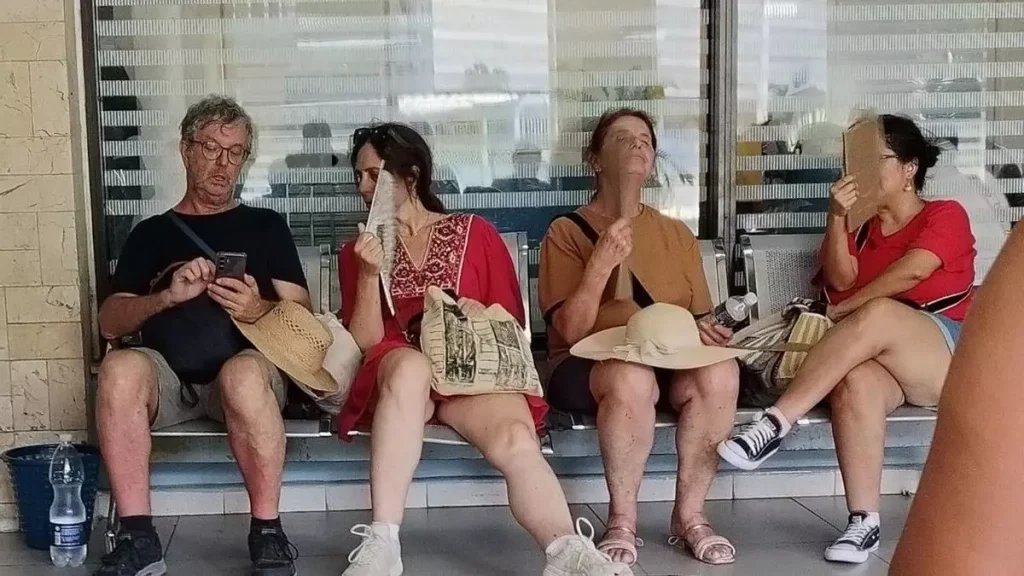
 14ymedio, Madrid, July 16, 2025 [Delayed Translation] Cuban authorities no longer mention the Coronavirus pandemic, as they have until now, as an explanation for the tourism debacle. Discussing the topic at the Agro-Food Commission in Parliament this Tuesday, Minister of Tourism Juan Carlos Garcia Granda related the decrease in visitors to the “shortage of the sector,” which he said began in 2023 and “worsened” throughout 2024.