I Have a Friend Unjustly Imprisoned, His Name is Jose Daniel Ferrer

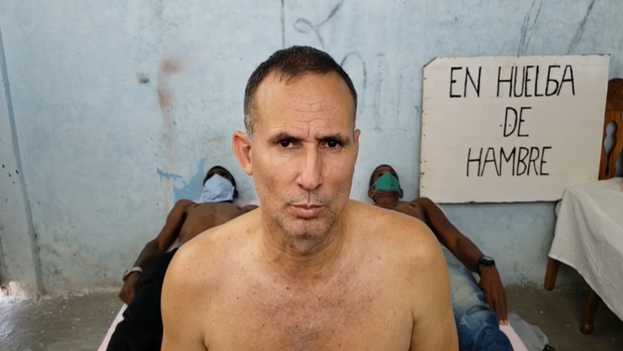
José Daniel Ferrer, leader of Unpacu, who is now imprisoned in Santiago de Cuba, shown in a file image. The sign reads “On Hunger Strike” (Capture)

Note from Translating Cuba: Somehow this article from December of last year got ‘missed’ and so we are posting it now.

14ymedio bigger14ymedio, Reinaldo Escobar, Desde Aquí, Havana, 12 December 2022 — I could add more names to the title, mentioning, for example, Félix Navarro or Luis Manuel Otero Alcántara, but Jose (here without an accent) is the one who is having the worst time of all my friends in prison and he is one of all the prisoners for whom I have most appreciation.

Many see José Daniel Ferrer as that grim face that shoots slogans with an almost military tone, but I know the other one, the one who laughs at himself and who has more reading matter than all his jailers and most significantly, more than all those who identify themselves as “counterintelligence officers,” more than the prosecutors who put together his case, more than the judges who sentenced him.

In that dark corner that is euphemistically defined as a “punishment cell” Jose fights with an army of insatiable mosquitoes that suck his blood and leave him unbearably itchy. He does his best to ignore a permanent noise that doesn’t let him sleep or concentrate. Those are his worst enemies; worse than the henchmen who hijack his mail, kick him in the head, and mistreat his family.

During these Christmas days, while we enjoy the family warmth, Jose remains half-naked and only enduring the low temperatures of this tropical winter, in a humid and pestilential cell, but I know that his suffering is different. José Daniel Ferrer is suffering for us. The lines that have to be stood in to buy food hurt him, the blackouts hurt him, the loss of wages, the gag that does not allow protest, the sentences of the other innocents. continue reading

Everyone who has a friend unjustly imprisoned feels guilty for not doing something to free him: Write letters, make a public protest, organize a rescue team. José Daniel Ferrer has plenty of political maturity to understand everyone who has abandoned him; to understand those who, due to opportunism, ambition or cowardice, do nothing to get him out of there.

José Daniel Ferrer is my friend and he is unjustly imprisoned.

____________

COLLABORATE WITH OUR WORKThe 14ymedio team is committed to practicing serious journalism that reflects Cuba’s reality in all its depth. Thank you for joining us on this long journey. We invite you to continue supporting us by becoming a member of 14ymedio now. Together we can continue transforming journalism in Cuba.
Cuba: January 1959, Dorado was a Shampoo and the Utopia was a Fraud

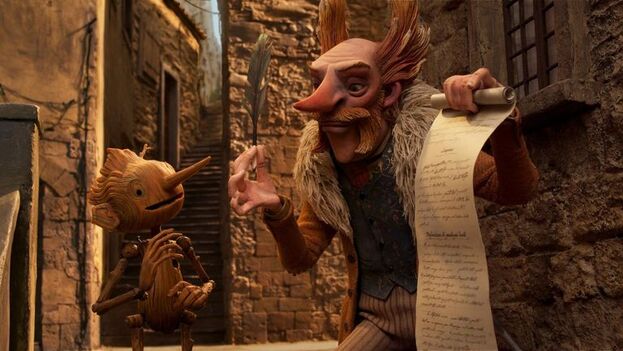
It is not an exaggeration to associate that communist utopia with Pinocchio’s Land of Toys, imagined by Collodi, where vacations begin on January 1st and end on December 31st. (Netflix)

14ymedio bigger14ymedio, Reinaldo Escobar, Havana, 4 January 2022 — The main marketing operation of certain leftist politics throughout the 20th century and so far in the 21st has been to sell an elusive product labeled utopia.

Any remotely decent person should feel miserable if they don’t agree with that chimera that tends to associate itself to an unreachable horizon, which should guide those who instead of believing that “a possible world is better” maintain that “a better world is possible.”

While it seems like a play on words, in the difference between one optic and the other lie the lives of nations and of people, because what is advisable at the end of the path is what determines the route and the route is the day-to-day, the life of those who purchase tickets to one destination or another.

Politicians shouldn’t have the right to place the fantasies of poets in their electoral programs nor in their justifications for holding on to power. Rarely have poets converted their verses into electoral slogans, though they’ve declared parties, “party until it stains,” as Gabriel Celaya defined “the necessary verses” when he said, “They are cries in the heavens and acts on earth.”

But the acts on earth have different consequences than cries in the heavens because time on earth is human and heavenly time is ethereal. This is why it is possible to say that Eden was the first documented utopia and, as is well known, it is Adam’s fault that it didn’t work. The first human disobeyed the rules and, with that, thwarted the original plan. The consequence was that Adam, along with his long lineage, was condemned to earning his sustenance through sweat, that is, work.

Karl Marx, who rarely needed to work to feed his family, imagined communist society as a place where material goods flowed, where those who benefited from them were free to spend their time on many recreational activities and where work would no longer be necessary, but rather be done for pleasure. continue reading

It is not an exaggeration to associate that communist utopia with Pinocchio’s Land of Toys, imagined by Collodi, where vacations begin on January 1st and end on December 31st. Work was not necessary, nor was school, but those who let themselves be fooled by these promises ended up dumb.

It is legitimate to suspect that leaders who promote these political utopias, be it scientific communism or 21st century socialism, know perfectly well that their biggest promises — those that are set in the long term, and for which they demand nameless sacrifices — will never be fulfilled. This is why triumphalism becomes a common denominator of these “leaders of peoples” who, in light of good will, appear to be blind, naive or delusional, when they are actually just cynical.

There are plenty of historical, literary and mystical examples that demonstrate the gross manipulation to which those individuals recruited into fanatical sects with the hope of reaching paradise on earth are subjected. Behind the slogans, teeming with bad poetry used to mobilize the masses, there is usually some theoretical foundation, almost always difficult to understand, for the consumption of the newly initiated. Further back, or further down, lies that unspeakable truth that is not even put on the table when the hierarchs are designing their ambitious plans.

In those cabals, everyone wears their mask and they all know the others wear them as well. Utopia is invoked like an invisible specter, the memory of some founding father is revered, and any act that suggests an intent to reveal the great secret is viewed with distrust… until one day reality appears at the window or knocks down the door.

Translated by: Silvia Suárez

____________

COLLABORATE WITH OUR WORKThe 14ymedio team is committed to practicing serious journalism that reflects Cuba’s reality in all its depth. Thank you for joining us on this long journey. We invite you to continue supporting us by becoming a member of 14ymedio now. Together we can continue transforming journalism in Cuba.
Cuba is Worth Less Every Day and the New Generations Will Inherit an Exhausted Country

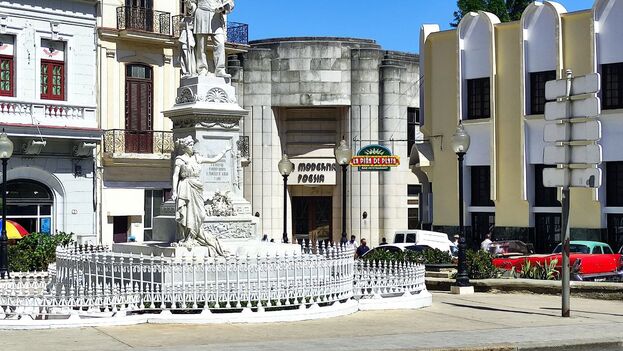
Every day this country is worth less, because it has been decapitalized and because it continues to decapitalize. (14ymedio)

14ymedio bigger14ymedio, Reinaldo Escobar, Havana, 27 December 2022 — Reading economist Oscar Espinosa Chepe in an article published in 2003, a few weeks after his inclusion among the Black Spring prisoners, I learned and understood the importance of the concept of “decapitalization of the material base” in the Cuban economy, especially with regard to the absence of investments and modernization in infrastructure and industry that cause our economy to be less and less competitive in the international market.

Although I do not have reliable data to prove it, I could assure you that the process, instead of being reversed, has become more acute in the past 20 years. It is enough to try to travel by plane from Havana to Santiago de Cuba, to read the official data of the decreasing sugar production, to suffer the energy debacle, to go to a specialist’s office in a hospital or, simply, to try to walk along the sidewalks of a city without looking down.

The inventory of calamities is overwhelming and confirms the hypothesis that if someone added the value that everything has on the Island, they would come to the conclusion that every day this country is worth less, because it has been decapitalized and continues to do so.

To this national drama is now added another of a personal, private nature, but one which has social consequences. It occurs within families where there is an accumulation of transferable goods from parents to children, from grandparents to grandchildren. These goods have also been degraded, due to their excessive use and the diminished quality of what has been acquired.

I am talking about homes, furniture, kitchen utensils, tools, books, appliances, which are obtained with countless sacrifices and  carefully taken care of and maintained so that they will be enjoyed by those who come behind. In this way, despite their probable impairment, things achieve some transcendence because they exceed the limits of their intended use and go further. continue reading

The current migration crisis led mostly by the youngest, in addition to aggravating the human decapitalization of the nation, brings as a collateral consequence the fact that everything accumulated by the family, regardless of its market value, becomes inconsequential, and the impact of any possible improvement in social services is minimized.

To whom do we leave that collection of Latin American literature where there is almost everything written by Mario Vargas Llosa, all of Alejo Carpentier, all of Gabriel García Márquez, almost all of Guillermo Cabrera Infante and even all of Padura? To whom do we leave the Centennial Edition (1953) of the Complete Works of José Martí, the complete poetry of Lezama Lima, the recordings of Celia Cruz? Who is going to keep the drill, the polisher, the collection of screwdrivers, the microwave oven, the many-inch flat-screen TV, when there is no one left to leave it to?

How much are those things worth, already decapitalized, which have lost all significance? People are fixing up their properties to escape. The house is offered with everything inside because Cuba is becoming a country without heirs. “My house for a ticket to Nicaragua,” is said with the same gravity that William Shakespeare put in the mouth of the English king Richard III when he offered his kingdom for a horse.

And it’s worth asking, when it is verified that those in charge in Cuba only invest in hotels and golf courses while everything else is decapitalized: to whom do they intend to leave it?

________________________

This article was originally published in the magazine Convivencia.

Translated by Regina Anavy

____________

COLLABORATE WITH OUR WORKThe 14ymedio team is committed to practicing serious journalism that reflects Cuba’s reality in all its depth. Thank you for joining us on this long journey. We invite you to continue supporting us by becoming a member of 14ymedio now. Together we can continue transforming journalism in Cuba.
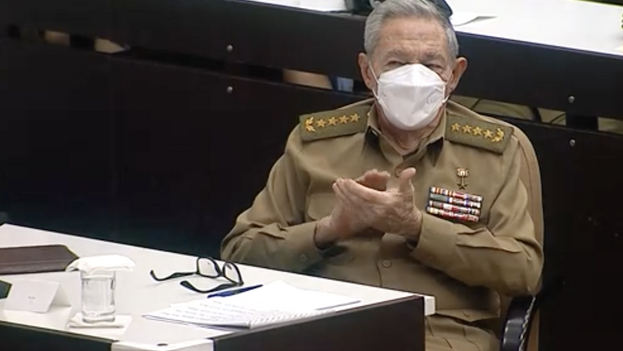
Cuba: The Other Euthanasia

Raúl Castro, during a session of the National Assembly of People’s Power last week. (Screen capture)

14ymedio bigger 14ymedio, Reinaldo Escobar, Havana, 19 December 2022 — The approval of the right to euthanasia announced by the Cuban Ministry of Public Health hasn’t brought about, as one would suppose and desire, a wide debate between its supporters and its critics.

The idea of offering a “dignified death”, of avoiding a prolonged and painful agony, is supported when there’s scientific confirmation that the person’s illness is both incurable and lethal and when it’s the expressed desire of the patient themself (or of their closest relatives, if they should find themself incapable of expressing their will).

It’s the tenacity of the self preservation instinct that can counter the idea of euthanasia (and all forms of suicide), and it can reappear as a change of heart at the last moment, when the process of switching off life is already irreversible. On the other hand, religious considerations which leave the decision in the hands of God oppose the practice.

It’s very tempting to apply the argument in favour of euthanasia in other areas of life. When a successful farm is affected by a blight, it’s best to pull up the sown field and plough the earth; when a company becomes unproductive and despite refurbishments continues to make a loss, the best solution is liquidation; when a whole economic, social and political system doesn’t produce the hoped-for results, you need to change it.

To not beat about the bush, this moribund Cuban type of socialism deserves the application of a merciful euthanasia, above all so that it stops causing such unnecessary pain to all the 11 million patients who suffer under it. There’s an abundance of evidence that the ills contracted under the rules of this system are incurable and that sooner or later the collapse will come without warning.

It’s the self-preservation instinct of a group of people who still cling to their privileges and ideologies that counters this social euthanasia — ideologies with shades of pseudo-religion that invoke the blood spilled in arriving at where we are, from a people still committed to dead leaders of the past and continuing to believe in the blurry illusion of a prosperous future.

It wouldn’t occur to anyone, including myself, to commit suicide even if everything indicated that I were about to suffer a horrible, painful and prolonged departure, but we Cubans don’t have to go on supporting “this” and from here on I’m daring to recommend a “dignified death” for the whole process. And the only ’will’ to take into account here is the will of those who are suffering.

Translated by Ricardo Recluso

____________

COLLABORATE WITH OUR WORKThe 14ymedio team is committed to practicing serious journalism that reflects Cuba’s reality in all its depth. Thank you for joining us on this long journey. We invite you to continue supporting us by becoming a member of 14ymedio now. Together we can continue transforming journalism in Cuba.
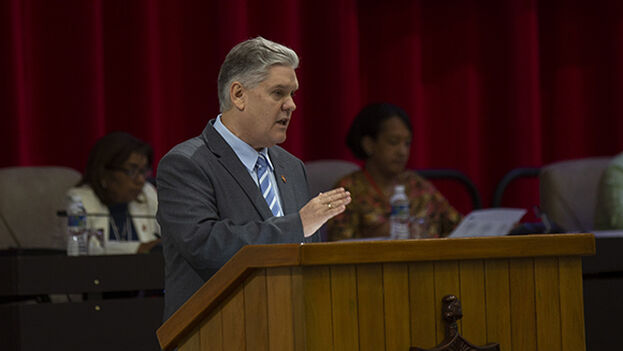
The Ordering Task* and the Law of Gravity

Alejandro Gil Fernández, Cuba’s deputy minister and minister of Economy and Planning, before the National Assembly of the People’s Power of Cuba. (14ymedio)

14ymedio bigger14ymedio, Reinaldo Escobar, Havana, 12 December 2022 — In February 1970, while doing my work as a journalist (still a student) to cover the sugar harvest in the municipality of Florida, I attended an important meeting chaired by Armando Hart Dávalos, the member of the Political Bureau assigned to guarantee the goal corresponding to the province of Camagüey to produce 10 million tons of sugar that year.

The central point of the meeting was to examine the fullfilment of the commitments of the different sectors of the municipality to complete the number of macheteros [cane cutters] that would be part of the Jesús Suárez Gayol brigade.

One by one, the committed local bosses explained the causes of their non-compliance. The dairy company’s boss argued that if he lost one more man from the dairy farms it would not be possible to satisfy the supply of milk to the population; the head of the trade sector explained that not one more store could be closed; that of the railway workshops alleged that without mechanics the trains could not be moved, and the head of Forestry justified himself by invoking the inability to protect the forests with the few personnel at his disposal.

Armando Hart did not flinch. As if he had not paid attention to the arguments, he said that he was not there to hear excuses but to convey to them the news that the initial commitments had been insufficient and that now there were higher goals. After reading the new figures assigned to each sector, he said: “I hope you know how to fulfil this new task of the Revolution.”

One by one, each local boss promised to send more men to the cane fields.

I, who had not yet turned 23, published in a municipal tabloid named Al Machete my first critical journalistic text, where I questioned the honesty of the local officials. “At what time were they lying: when they said they could not meet the goal or when they promised to meet a higher one?” I wondered then. Still without questioning the honesty of the national leader, who thought he had looked good by demanding something impossible. continue reading

Two days later, one of those little bosses attacked me for that text, and I still keep my promise to keep him anonymous. “Look, young man,” he told me as he took off his hat, “If in the name of the Revolution a leader tells you to jump into the void from a great height, you can jump or fake that you are going to make the leap; what you can’t do is mention the law of gravity.” He paused and finished: “Or are you going to tell him that he’s stupid?”

That unforgettable lesson of wisdom and survival — not honesty — came to my mind when I read the justifications that were intended to explain, in the last plenary session of the Central Committee of the Party, why the measures taken by the Government to face the crisis have not had the expected result.

As is known, the 10 million tons of sugar were not produced in 1970. Surely Armando Hart knew it in advance along with everyone who knew something about the harvest, but no one dared to reveal the stupidity of the purpose.

How is it possible that those who plan the economy today do not take reality into account? How can you make a plan and then blame the “blockade” for your non-compliance? Did the planners assume that the restrictive measures imposed by the United States were going to be lifted, that there would be no administrative corruption, that no cyclones or accidents would occur?

Did they forget the law of gravity?

 *Translator’s note: The “Ordering Task” is a collection of measures that include eliminating the Cuban Convertible Peso (CUC), leaving the Cuban peso as the only national currency, raising prices, raising salaries (but not as much as prices), opening stores that take payment only in hard currency which must be in the form of specially issued pre-paid debit cards, and a broad range of other measures targeted to different elements of the Cuban economy. 

Translated by Regina Anavy

____________

COLLABORATE WITH OUR WORKThe 14ymedio team is committed to practicing serious journalism that reflects Cuba’s reality in all its depth. Thank you for joining us on this long journey. We invite you to continue supporting us by becoming a member of 14ymedio now. Together we can continue transforming journalism in Cuba.
“We Will Never Return to Cuba, We Will Not Have the Exiles’ Crick in the Neck”

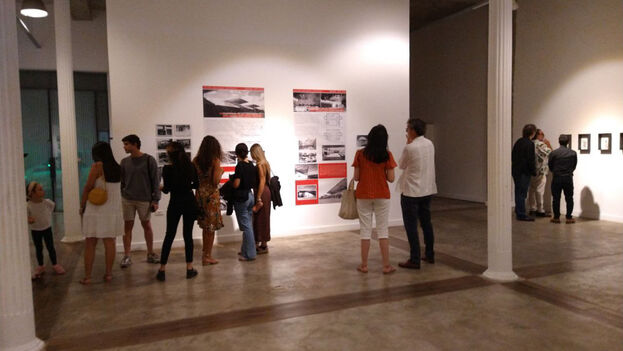
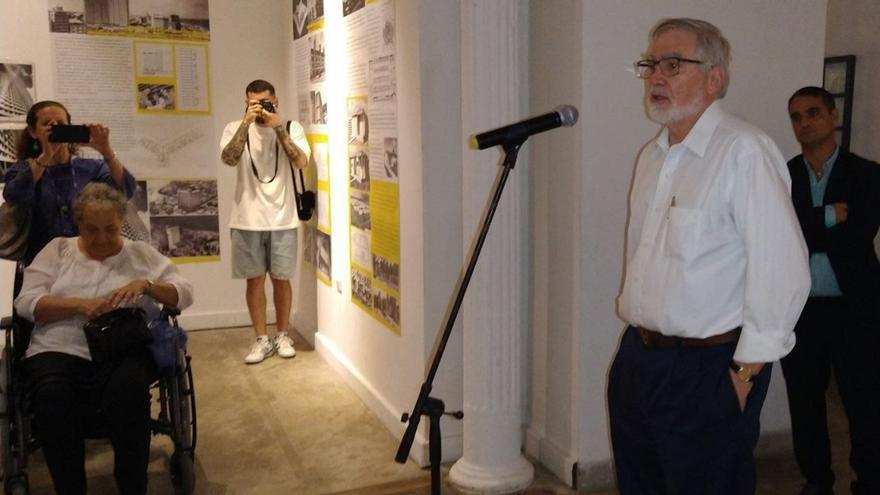
The exhibition ’Martín Domínguez El exilio otro’ was inaugurated at the Taller Gorría Gallery, in Old Havana on December 5. (14ymedio)

14ymedio bigger14ymedio, Reinaldo Escobar, Havana, 6 December 2022 — An exhibition entitled Martín Domínguez El exilio otro [the Other Exile], inaugurated at the Taller Gorría Gallery in Old Havana on December 5 (coincidentally, the Day of the Builder in Cuba), did justice to the Spanish architect Martín Domínguez Esteban (1897-1970) who was behind works as important as the Focsa building, Radiocentro (today the Yara cinema and headquarters of the Cuban Institute of Radio and Television), the current Ministry of Communications, the Marianao City Hall and numerous homes.

We say that he “was behind” because his name did not appear as a signing architect but as “treasurer” or “decorator” and this was because Domínguez never managed to have his professional title revalidated in Cuba.

He escaped from Francoist Spain where he had been “purged for life” for his role in building the military defenses of the Republican side of Madrid in 1936. He arrived in Havana, by the way, in January 1937 and stayed in this city for more than a quarter of a century.

Despite the burden of not being able to show a recognized title, many used his services, including former president Ramón Grau San Martín, who entrusted him with his summer residence in Varadero. continue reading

His son relates that Domínguez replied that he felt conservative in regards to the private family and liberal in politics. (14ymedio)

At the beginning of the Revolution, he participated in the construction of popular houses promoted by the National Institute of Savings and Housing. His reputation led him to the office of Commander Ernesto Guevara, who openly asked him for his political position. His son relates that Domínguez replied that he felt conservative in regards to the private family and liberal in politics. “We’re doing badly, Galician,” said the Argentine, and that same day he decided to leave Cuba.

He collected what he could carry in his car and put it on the ferry that still offered trips between Havana and Miami. He was in that city for a very short time because he decided to settle in New York.

Still in Miami, his son, a clever boy with the same name and who has also followed a career as an architect, was probing him to find out how that adventure would end. And this was the unforgettable response he received: “We are never going to return to Cuba. We are not going to have the exiles’ crick in the neck, like the Spaniards who said ’in two months we will be back in Madrid’. We are not going back to Cuba, we must look ahead and rebuild.”

And he didn’t come back. He died in New York in September 1970 at the age of 72 knowing that wherever he went he left a lasting and useful mark. His work is studied today on the subject of Modern Cuban Architecture. This exhibition, which will be open to the public until December 12, pays tribute to him and fills an unacceptable gap in the memory of Cubans.

____________

COLLABORATE WITH OUR WORKThe 14ymedio team is committed to practicing serious journalism that reflects Cuba’s reality in all its depth. Thank you for joining us on this long journey. We invite you to continue supporting us by becoming a member of 14ymedio now. Together we can continue transforming journalism in Cuba.
Fears Are Justified as Cuba’s New Penal Code Takes Effect

Is it the intention of the dictatorship, from now on, to severely penalize any discrepancy? (Cuba debate) 

14ymedio bigger14ymedio, Reinaldo Escobar, Havana, 30 November 2022 — There are at least three ways to analyze Cuba’s new Penal Code that comes into force this first of December.

The first is paralyzing and ends in the acceptance of the idea that everything a citizen does that deviates one millimeter from what is convenient for the Government or the Communist Party represents a reason to be sentenced to prison. Here, especially inscribed, is the gaze of those who are political opponents, social activists or independent journalists.

This analysis pays attention to Article 119, which punishes with the death penalty anyone who uses force to change the system; Article 120, which penalizes anyone who demands the same but exercising “arbitrarily any right or freedom recognized in the Constitution of the Republic” with up to ten years in prison; and Article 143, which also punishes with ten years anyone who receives funds or finances for activities against the State and its constitutional order.”

The second way of reading the new Code is based on the optimistic belief that the principle of social injuriousness (Article 1.3) will be fully applied, through which, “in order to impose a sanction, it is required that the act produce an injury to legal property of entities protected by law, or endangers them or risks causing it.” If the damage caused is not demonstrated in court, there will be no crime for which to be convicted.

This point of view pays attention to Article 180, which penalizes the official who maliciously promotes the persecution of a person “whose innocence is known,” or to Article 181, which punishes the public official who “applies or orders the application of a security measure without an order from the competent court,” which is supposed to nullify the prohibitions against leaving the country or the limitations on movement to which dissatisfied people are arbitrarily subjected.

The third way of facing the Code is from the point of view that regardless of what is written in the document, “these people,” those who are in charge in Cuba, will always do whatever they want, and it makes no sense to try to determine the degree of threat or relief that the new legal body represents.

Beyond the views on the Code, the bets on what will happen with the new regulations move between two options: the dictatorship will severely penalize any discrepancy; or, simply, it calculates that the icy breath of a terrible threat will be enough to neutralize the opponents, reduce them to silence or incite them to moderation. We will know soon.

____________

COLLABORATE WITH OUR WORKThe 14ymedio team is committed to practicing serious journalism that reflects Cuba’s reality in all its depth. Thank you for joining us on this long journey. We invite you to continue supporting us by becoming a member of 14ymedio now. Together we can continue transforming journalism in Cuba.
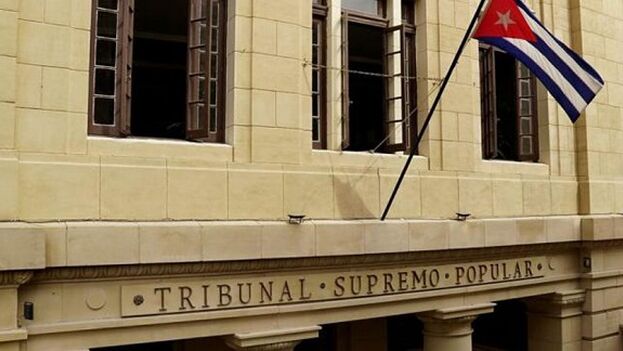
Of Monuments and Ashes: Fidel Castro in Moscow

Detail of Fidel Castro statue in Moscow. (Sputnik)

14ymedio bigger14ymedio, Reinaldo Escobar, Havana, 15 November 2022 — Looking at a photo of a recently unveiled statue in Moscow, I was reminded of the joke about the man who asked to borrow money. “I swear on my father’s ashes,” he said, promising to repay the loan promptly. Almost convinced, the would-be lender said he did not know the man’s father had died. “He hasn’t,” said the borrower, “but he smokes a lot.”

After Fidel Castro decided to quit smoking (at least in public), no senior government or party official was ever seen with a cigar or cigarette again. The decision to immortalize Castro in bronze with “the smoking gun” in his hands, to say nothing of the deceased’s wish that no statues of him be erected, perpetuates the image that he was a chain smoker.

There are other less monumental statues of Castro in South Africa, Mexico and Vietnam (the latter looking vaguely Asian) but the one in Moscow is the most imposing.

The ten-foot-tall figure stands on a rock in front of a bas-relief map of Cuba. His left boot points toward the eastern provinces, his right to Pinar del Rio. Located in Moscow’s Sokol district, in a square that has borne his name since 2017, the piece was jointly sponsored by the Russian Ministry of Defense and the Russian Military-Historical Society. Estimated to have cost 35,000 dollars, it is the work of sculptor Alexei Chebanenko and architect Andrei Bely.

Those who grew up in the Soviet Union might well remember that, when the comandante visited Moscow for the first time, in May 1963, he impertinently strode down plane’s boarding stair with a cigar in his mouth. Those close to him say this was to prevent having to exchange the traditional kiss with his Russian hosts, a gesture that a homophobic guy like Castro could not tolerate.*

This historic slight may be why it was decided to portray him with such an unusual object in his hand. Chebanenko was even careful to include some fledgeling ashes at the tip of the cigar. Cuban officials, who promise to pay the money they owe the Russians, can swear by them.

*Archival footage is available here

____________

COLLABORATE WITH OUR WORKThe 14ymedio team is committed to practicing serious journalism that reflects Cuba’s reality in all its depth. Thank you for joining us on this long journey. We invite you to continue supporting us by becoming a member of 14ymedio now. Together we can continue transforming journalism in Cuba.
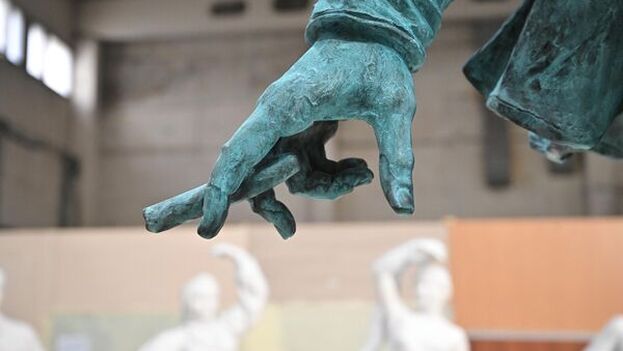
Abstaining in Cuban Elections Means Disagreeing Politically

Campaign for not voting in the next Cuban elections. (Reynier Leyva Novo)

14ymedio bigger14ymedio, Reinaldo Escobar, Havana, November 21, 2022 — Once again, abstention appears as an option to demonstrate political disagreement in Cuba. It already happened in 2019 when the Constitution of the Republic was put to the vote, 15.6% abstained, more recently in the referendum where the Family Code was approved, 25.88% abstained, and it now appears before the elections of the district delegates next Sunday, November 27, where abstention is estimated to exceed 30%. The time when Cubans went to Electoral Colleges to choose their delegates with apparent enthusiasm are long gone.

The numbers are boring and overwhelm the reader, but to understand what will happen on this occasion it is essential to review them.

The approximately eight and a half million registered voters in the country will decide, among 26,746 candidates, who will be the 12,427 district delegates that will make up the 168 Municipal Assemblies of People’s Power.

According to official data, among the candidates there are 18,621 who are affiliated with the Communist Party or the Union of Young Communists, and only 125 who don’t belong to these political organizations. Considering that dissenters with the Government are inclined not to go to the polls, it can be assumed that the militants will have an advantage to fill the positions.

No opponent, not even a declared dissatisfied person, managed or was interested in presenting as a possible candidate in any of the 44,929 area assemblies held and in which, by show of hands, the voters proposed the names of those who will appear on the ballots. A few recorded attempts ended in obstacles to prevent a person from leaving their house or other tricks to make it impossible for the “inconvenient” to participate in these area assemblies, traditionally convened by the Committees for the Defense of the Revolution (CDRs), controlled by the Party and monitored by State Security. continue reading

The next time Cubans with the right to vote will be summoned to the polls will be in 2023, when the renewal of the National Assembly of People’s Power (ANPP) will happen. On that occasion the voters will not be in the situation of electing, but rather of approving, a list of people proposed for deputies that will be presented by the National Candidacy Commission. This list will have the same number of names as there are seats in Parliament.

It remains to be decided how many members the ANPP will have in 2023, but the Electoral Law establishes that at least half of them will come from the members of the Municipal Assemblies. If the current figure of more or less 600 deputies were maintained, the Candidacy Commission would have the opportunity to select about 300 of its preference among the 12,427 who are elected on Sunday.

To the extent that, as planned for 2023, the total number of parliamentarians is reduced, the presence of those who come from the base elected by the voters will also be reduced. The other half will come from government officials, military personnel, party cadres and some athlete, artist or scientist “committed to the process,” who will give the ANPP an appearance of plurality, alien to the diversity of ideological tendencies.

Not only will the political will to demonstrate nonconformity be a reason not to go to the polls, but also the indifference of citizens, who perceive the uselessness of the local bodies of so-called “people’s power,” will also have an enormous weight.

The frequent blackouts, growing inflation, shortages, the deterioration of health services, long lines to acquire basic necessities, and the loss of values overwhelm the vast majority of the population that sees its deputies raising their hands unanimously to approve everything proposed by the Government, but the decisions taken there don’t alleviate anguish or solve the problems.

Going to the polling stations is increasingly a formal act where citizens only worry about being seen, because staying at home marks them, betrays them. So fear is for many the only reason to simulate that they vote for candidates who will pretend to govern on behalf of the people.

The enthusiasm has been over for a while; now the fear is beginning to end.

Translated by Regina Anavy

____________

COLLABORATE WITH OUR WORKThe 14ymedio team is committed to practicing serious journalism that reflects Cuba’s reality in all its depth. Thank you for joining us on this long journey. We invite you to continue supporting us by becoming a member of 14ymedio now. Together we can continue transforming journalism in Cuba.
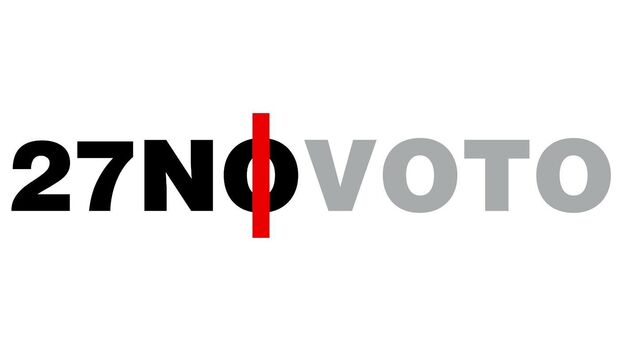
Cuban Comedian Rigoberto Ferrera Uses the Infinite Vocabulary of the Body

Rigoberto Ferrera on Saturday night at the Bertolt Brecht Centre. (14ymedio)

14ymedio bigger14ymedio, Reinaldo Escobar, Havana, 13 November 2022 — Amongst the hundreds of people who gathered in front of the entrance to the Bertolt Brecht Centre on Saturday evening, few knew the reason why the comedian Rigoberto Ferrera was celebrating 30 years on the stage.

1992 was a long time ago for the majority of young people struggling to get into the venue — those who follow him on Instagram — and those who comb their grey hair or who already have no hair left to comb who follow him on Facebook, they probably never passed by that impromptu venue in a tanker truck, on 25th street in Vedado, when ’Riguito’, as his friends call him, played the role of Pepe Grillo in a free adaptation of Pinocchio.

In every one of the many performances of that show, a group of local children learnt the speeches, copied his gestures, and from there was born what became La Colmenita [The Little Beehive] — that ambitious project which took Carlos Alberto Cremata, El Tin, beyond even his best achievements.

Sitting at the keyboard of his piano, or standing on the stage, Rigoberto still holds the attention of that brotherhood of admirers — for whom he stops speaking to allow them to chant the ends of his lines. He doesn’t need the words themselves. He relies on his face. His eyes and his mouth — which spell out everything, but in silence — say it all.

But he also relies on the infinite vocabulary of his body, flexible and elastic, which allows him to demonstrate, say, the difference between how the driver of a big old almendrón-style taxi moves his body, and the contortions of a different driver squeezing behind the wheel of a very small polaquito car. This had to be seen! As Rigoberto stretches out his hand trying to retrieve what remained of his left leg outside of the car. continue reading

At one table reserved for guests sat those officials from the ’Centre for the Promotion of Humour’ who had stayed in Cuba, and whom Rigoberto tore to bits without mercy with his best jokes. But there wasn’t any resentment, only revenge, for which the officials of the organisation (who, despite being officials hadn’t given up being comedians) presented him with the gift of a painting, titled ’the mono liso’ [the smooth monkey] in which the friendly bald comic is depicted in front of the Mona Lisa’s background.

It’s fortunate for Cuban humour that Rigoberto Ferrera remains on the Island, and even more fortunate that this Pepe Grillo continues to stroke any keyboards that there are left to stroke, although there’s no lack of cruel puppet masters in the style of the bearded Stromboli who continue uttering that threat from 30 years ago: “Here, you do what I say and say what I think, and any puppet that gets angry with me I’ll throw them on the candle flame”.

Translated by Ricardo Recluso

____________

COLLABORATE WITH OUR WORKThe 14ymedio team is committed to practicing serious journalism that reflects Cuba’s reality in all its depth. Thank you for joining us on this long journey. We invite you to continue supporting us by becoming a member of 14ymedio now. Together we can continue transforming journalism in Cuba.

A Neighborhood with Proven Revolutionary Credentials Turns to Protest

After more than 100 hours without electricity in the wake of Hurricane Ian, only few lights could be seen in our community.

14ymedio bigger14ymedio, Reinaldo Escobar, Havana, 2 October 2022 – The night of Saturday, October 1, 2022 will be remembered in our Havana neighborhood of Nuevo Vedado as the moment we came to think of ourselves as protestors. After more than 100 hours without electricity in the wake of Hurricane Ian, only few lights could be seen in our community. In addition to numerous individual private homes, the blackout impacted multi-family buildings of twelve, fourteen and twenty-four floors, the equivalent of 5,000 people by conservative estimates.

At 9:00 PM, the exact same time that a few months ago people went out onto the balconies of these buildings to applaud the health care workers who were battling the Covid-19 pandemic, one could hear the first recognizable shot being fired: the shy, almost casual sound of someone banging a metal pot. It was like the fuse that sets off an explosion of long-repressed desire. For an hour and a half the sounds continued. Government skeptics confirmed there were many who participated; officials feared there were too many.

Most of those who obtained homes in these buildings, products of the micro-brigade system,* had to go through a rigorous screening process to determine if they had a distinguished revolutionary background. Housing distribution regulations called for applicants to be judged on how many “labor and social merits” they had earned. Inspectors also secretly noted if these applicants kept religious images in their homes or maintained relations with relatives overseas.

This meant that being a member of the Communist Party or the Young Communist League, having spent time in an overseas mission or holding an official leadership position was considerably more advantageous than having three, seven or even ten years of hands-on construction experience. continue reading

More than forty years have passed since residents of some of these buildings went through the process of acquiring their homes. In one 144-unit structure, 52 of the original owners have died, 47 have moved elsewhere and 15 have emigrated (not counting their children). Among those still living in the building who acquired their units on the basis of “labor and social” merit, the average age is 73 years.

It is true that residents were only calling for the power be turned back on. No one was heard shouting “Freedom!” or demanding those in power step down, as occurred in other neighborhoods in the capital. Still, the protest was massive and effective. Six hours later, electrical service was restored. And by dawn we were no longer the same.

If what happened in our neighborhood is an indication of what has happened in the country, if this small area is like a biopsy that indicates a broader malaise in other areas, it should be taken as a sign of the need to adjust the countdown, the one that will end the anomaly in which we live.

*Translator’s note: a form of collective, self-help construction. https://www.jstor.org/stable/43932851

____________

COLLABORATE WITH OUR WORKThe 14ymedio team is committed to practicing serious journalism that reflects Cuba’s reality in all its depth. Thank you for joining us on this long journey. We invite you to continue supporting us by becoming a member of 14ymedio now. Together we can continue transforming journalism in Cuba.

Cuban Leaders Have Reason to Be Worried Over the Referendum Results

A polling station in Havana where Cubans voted on Sunday, September 25 on whether or not to adopt the Family Code. (14ymedio)

14ymedio bigger14ymedio, Reinaldo Escobar, Havana, 26 September 2022 — Cuba’s Family Code referendum has provided important signals beyond whether or not the electorate has accepted what was being proposed. The most notable is that 26% of voters chose to abstain, a record high for an election conducted by the Communist regime.

The electoral law stipulates that only valid ballots may be considered in the final results. Those who abstained or canceled their ballots or left them blank are not taken into account. That is why the currrent tally indicates a 66.87% approval (the lowest ever for a government proposal). But if the entire electorate is included in the tally, the figure falls to less than 47%. The will of those who abstained as well as those who canceled their ballots or left them blank are not taken into consideration

If President Miguel Diaz-Canel had not said that a vote in favor of the Family Code is a vote for the revolution and for socialism, no one would be able to now claim there is legal evidence that supporters of the system are in the minority for the first time.

Furthermore, we are talking about an electorate that has been denied the chance to hear from those with differing opinions. No matter how much intelligence and political acumen one might want to attribute to those who have the right to vote in Cuba, informed pubic consent lacks a key component: awareness of opposing arguments. continue reading

Even if the measure is approved by more than the 70% minimum predicted by official sources, it is reasonable to assume that, had there been public debate between one side and another, the results would have been different.

As has already been said, the most controversial items (marriage equality, gestational surrogacy, a shift from parental authority to parental responsibility) were the ones that most shifted votes from one side to the other in this contest. And, of course, anti-government feelings led many to abstain while others voted “no” as a form of political punishment.

There were many homophobes who felt compelled to check the “yes” box out of party loyalty while many members of the LGBTQ community chose “no” simply as a protest against the system.* We already know how Evangelicals and a large subset of Catholics voted, as well as every member of the Communist Party.

Was there fraud? Technically, this would have been difficult to pull off given the large number of reliable accomplices it would have required. But those who assume that the government is capable of anything, given its ethical shortcomings, tend to be suspicious of the results.

Some will benefit and some will feel negatively impacted but by the results but, more importantly, there are many “up there” who are concerned that citizens are tired of saying yes to everything that comes there way.

*Translator’s note: The new code legalizes same-sex marriage.

____________

COLLABORATE WITH OUR WORKThe 14ymedio team is committed to practicing serious journalism that reflects Cuba’s reality in all its depth. Thank you for joining us on this long journey. We invite you to continue supporting us by becoming a member of 14ymedio now. Together we can continue transforming journalism in Cuba.

Cuba’s New Family Code: Affective Domestic Partnerships: Neither Married Nor Spouses

The code establishes prohibitions, and none of them alludes to the fact that it’s forbidden to marry people of the same sex. (14ymedio)

14ymedio bigger14ymedio, Reinaldo Escobar (Desde Aquí), Havana, 18 September 2022 — Although the term “spouse” etymologically only means to be attached to the same yoke, the Family Code, about to be submitted to a referendum, is reluctant to call those who are affective de facto “couples.” Those who drafted the law seem to believe that by saying “spouses,” they are now talking about men and women.

That’s why the first definition of the term “marriage” is “the voluntarily concerted union of two people with legal aptitude for it, in order to live together, on the basis of mutual affection, love and respect” and specifies: “it is based on free consent and on the equality of rights, duties and legal capacity of the spouses.”

The code doesn’t establish requirements for celebrating a marriage, but prohibitions, and none of them allude to the fact that it’s forbidden to marry people of the same sex. However, nothing has changed, and those Cuban citizens of the same sex who want to formalize their relationship have to resort to the other concept that precedes the spouse: “an affective domestic partner.”

It’s enough to consult Article 305, which says that “by reason of marriage” conjugal states are defined as single, married, divorced and widowed, but when “single” is mentioned, it specifies “those who have not formalized marriage, even if they are in an affective de facto union, instrumentalized or not.” In case there are any doubts, Article 318 makes it clear that neither the instrumentalization nor the registration of a de facto union creates a new marital status. continue reading

Another difference between the two processes (marriage and the instrumentalization of de facto union) is that married people are not required to have spent a previous time of courtship or to have been married for a while to exercise the rights set forth in the Code; however, for the affective de facto union to have the expected legal effect, its members must, among other requirements, “maintain a permanent common affective life project for at least two years.” (Article 308).

There are sufficient reasons to point out that the “rights won” in this Code by people who choose to live with those of the same sex are inferior to those enjoyed by heterosexual couples.

Although their marital status is defined with the category of singles, when they want to appeal to marriage, then they are no longer so single, because they cannot do so if they do not first dissolve their affective de facto union in the corresponding registry. The Code does not include a provision that allows those who have formed this type of union to receive “marital visits” in prisons, nor is this link considered as an element that makes it easier for a foreigner to obtain the right to reside in the country.

If finally the referendum considers the Family Code valid, it’s possible that we will witness notary ceremonies where those who come to instrumentalize their de facto union dress themselves as in a wedding.  It’s not ruled out that after having signed the rigorous documents, the friends who accompany them demand that they kiss, that there be photos, the exchange of rings and even a convertible that whisks them off to enjoy a long-awaited honeymoon. But there was no marriage; they will not be married; they will not be spouses, at least under the law.

Translated by Regina Anavy

____________

COLLABORATE WITH OUR WORKThe 14ymedio team is committed to practicing serious journalism that reflects Cuba’s reality in all its depth. Thank you for joining us on this long journey. We invite you to continue supporting us by becoming a member of 14ymedio now. Together we can continue transforming journalism in Cuba.
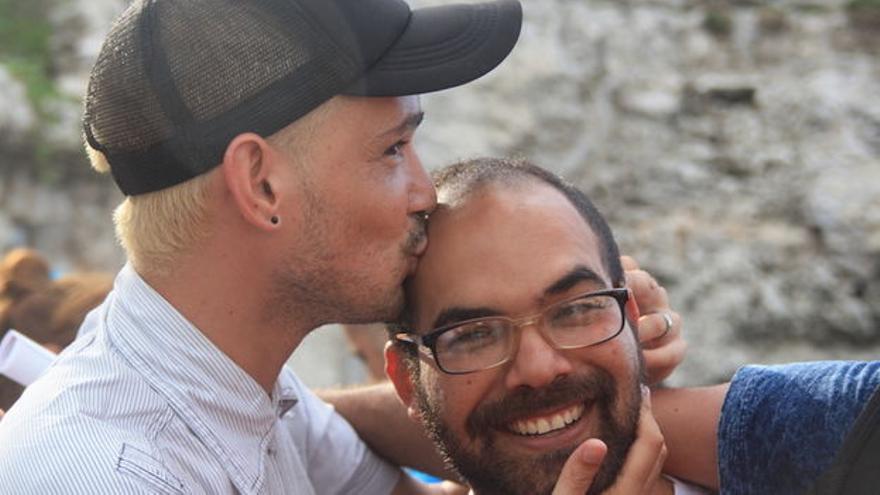
A Poisoned Referendum on Cuba’s New Family Code

“The only propaganda on public billboards, television spots and the front pages of newspapers is directed at a Yes vote of approval.” (14ymedio)

14ymedio bigger14ymedio, Reinaldo Escobar, Havana, 15 September 2022 — There are about ten days left before the third referendum promoted by those who have been governing in Cuba for more than 62 years. The first occurred in 1976, to approve the first Constitution of the Republic drafted by the Communist Party; the second, in 2019, when the Constitution that governs today was submitted to the consideration of the electorate; and the third, which will be held on September 25 of this year, for the Family Code.

I exclude from this list the collection of signatures to approve the amendment of the Constitution in the summer of 2002, where the concept of the irrevocability of the socialist system was introduced. That, a maneuver by Fidel Castro to counteract the Varela Project, was not a referendum because there was no option of marking NO on a secretly-filled ballot that was deposited in an urn.

None of the aforementioned consultations has been preceded by a debate where dissimilar opinions emerge. Voters have only relied on the arguments of those who have prepared these texts. Everything different that citizens have been able to hear or read has been restricted to some religious temples and access to social networks and independent media which are the victims of permanent censorship. The only propaganda on the public billboards, the television spots and the front pages of the newspapers is directed at a Yes vote of approval.

This constitutes an act of ideological violence comparable to that suffered by those enrolled in a sect, on whom the opinion of a leader is imposed. It doesn’t matter if the imposed postulates are noble or evil. What’s perverse is the abolition of options. continue reading

Rights, no matter how long they have been violated, shouldn’t be submitted to a referendum. Neither the abolition of slavery, women’s right to vote, or the use of public services without racial discrimination, to give just three examples, had to wait to be approved at the polls. The inclination that human beings have to relate intimately and live as a couple with another human being should have as a restriction only that the will of the other is not violated and that both are in a position to exercise it. It’s a right.

The inclusion in the Code of what has been called an “affective de facto union instrumented in notarial proceedings” and which is interpreted as the legal acceptance of “equal marriage” not only finds followers among the LGBT community, but in all those who recognize themselves as free thinkers. The other points that have been most disputed are the replacement of the concept of “parental authority” by “parental co-responsibility,” the legalization of surrogate pregnancy and the granting to minors of a progressive autonomy that has been seen as a threat to parental authority.

The Family Code partially satisfies some sectors of the population and at the same time alarms others. There are even those who are content with some aspects and frightened by others. People with disabilities, grandparents or women who want to defend the right to have an abortion will be motivated to approve the Code to receive its benefits, but they will have to pay the price of accepting the other articles even if they contradict their religious beliefs, customs or prejudices.

In order not to lose the custom, in case the Yes obtains the majority, it will be exposed as “a victory of socialism, a confirmation of the people’s support for the Revolution and Fidel’s legacy.” That is also ideological violence.

It’s a pleasure that many dissatisfied Cubans, even those who agree with most of the articles of the Code, won’t want to concede to the regime. The curious thing is that those who are on the other side, where the unconditional militate and the macho, authoritarian and homophobic abound, will have to be disciplined, swallow the liberal concessions and mark a cross on the yes grid.

I dare to predict that this exercise at the polls will leave a record of abstentions and that, if imposed, will be processed in the official media as proof of “our democracy,” never as a defeat of the dictatorship.

Translated by Regina Anavy

____________

COLLABORATE WITH OUR WORKThe 14ymedio team is committed to practicing serious journalism that reflects Cuba’s reality in all its depth. Thank you for joining us on this long journey. We invite you to continue supporting us by becoming a member of 14ymedio now. Together we can continue transforming journalism in Cuba.
‘D Frente’: A New Effort to Find Solutions in Cuba

Those wanting a change or perhaps “the change” that opts for moderation and prudence can join the project. (14ymedio)

14ymedio bigger14ymedio, Reinaldo Escobar, Havana, 9 September 2022 — The document announcing the constitution of an entity called D Frente [D Front] is part of the civilized tradition of using words to call for action, as opposed to the revolutionary practice of executing actions that are then justified with words.

The text complies with three indispensable rules: relevance, precision and correctness.

It is relevant because the Cuban nation needs immediate and profound transformations; it is precise because it includes the essential conquests worth working for at this time; it is correct because it is inclusive and peaceful, renounces offenses and shows respect for those who want the same thing but choose different paths.

D Frente will surely be seen from the official viewpoint as “another attempt to destroy the conquests of the Revolution,” and from the most radical environments of the opposition will probably be described as a “dialogue,” an accomplice of the dictatorship or a promoter of “fraudulent change.” The spokespersons of the regime will cite the nefarious articles of the new Criminal Code to threaten its signatories; those who refuse to renounce violence will be reproached for the absence of a clear purpose to overthrow the dictatorship.

There will be reproaches of another kind, such as that the new attempt aims to supplant existing efforts, that there is talk of reconciliation without mentioning justice, that it was no longer alluding to this or that matter or that “if so-and-so signed it, I won’t,” and whoever complains of not having been invited to write the document will always appear.

However, if it’s not violently crushed by the repressive forces, D Frente can win the approval of anyone who is looking for a civilized space of civic participation. Those who wish for a change or perhaps for “the change” that opts for moderation and prudence can join the project.

D Frente is not the first attempt of this type. Hopefully it won’t be the last!

Translated by Regina Anavy

COLLABORATE WITH OUR WORKThe 14ymedio team is committed to practicing serious journalism that reflects Cuba’s reality in all its depth. Thank you for joining us on this long journey. We invite you to continue supporting us by becoming a member of 14ymedio now. Together we can continue transforming journalism in Cuba.