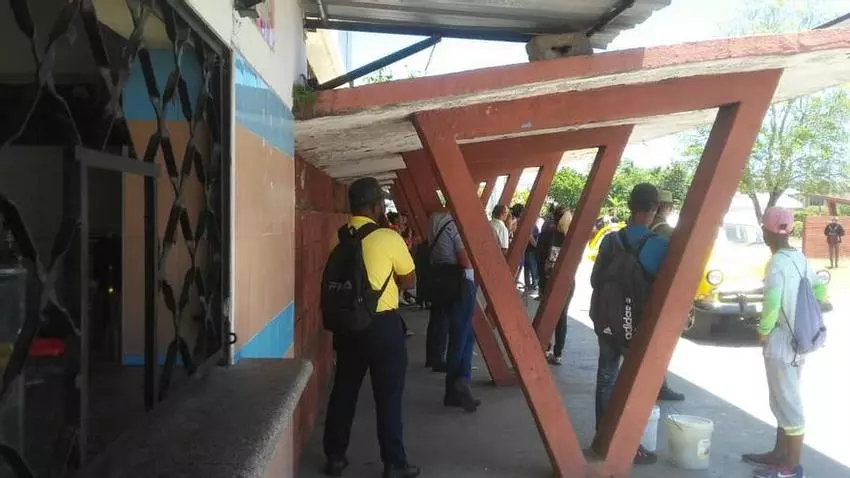
Private Businesses in Matanzas Present Customers with Both Opportunities and Challenges

 If there is one thing that bothers local residents it is that buying something at an MSME is becoming as difficult as doing it at a state-run store
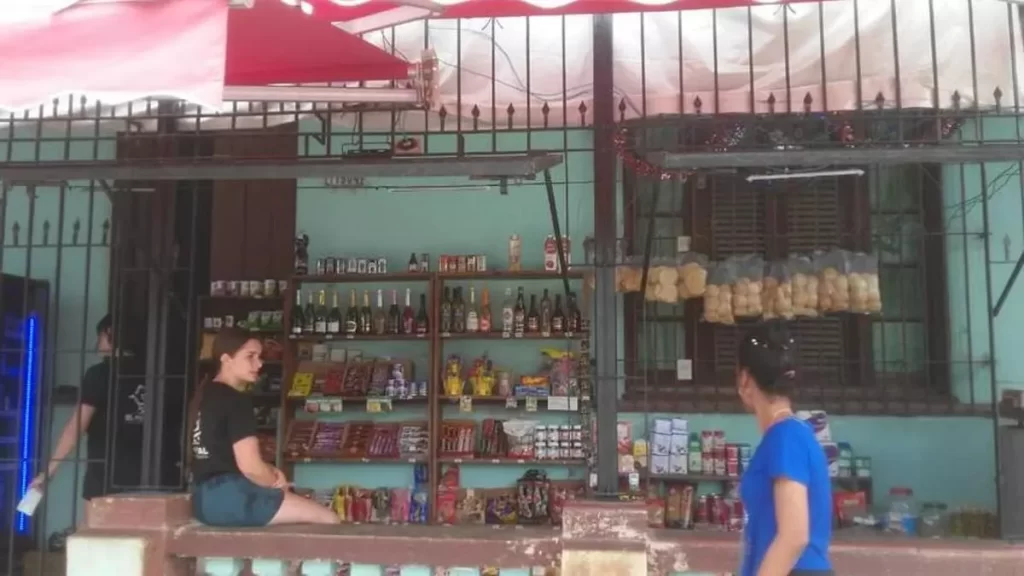

Many local businesses offer products that are scarce or which have not been seen in state stores for years / 14ymedio

14ymedio bigger14ymedio, Julio César Contreras, Matanzas, May 1, 2024 — For years now, one could map the layout of Matanzas by following the trail of the small and medium-sized private businesses (MSMEs) that have proliferated throughout the city. Street-side produce stands, covered entryways of old mansions and makeshift warehouses have served as the locations for the province’s independent businesses. Many offer products that are in short supply or have not been seen in state stores for years. Others are businesses that previously did not even exist in Cuba.

“How can I help you?” asks the receptionist at a workshop near Freedom Park that sells electronic devices. “Sorry, we don’t have batteries for that model,” she tells Julio, a 56-year-old Matanzas resident who wants to use a phone that he has been keeping in a drawer for months.

“I’ve been here several times, asking the same question, but they never have them,” says Julio. “They’ve told me the issue is that they have problems getting parts past Customs. And because this country is not as technologically advanced as others, we sometimes are still using models that manufacturers no longer produce. It seems absurd that the government makes it difficult for these businesses to import parts when the state itself does not offer these services and we have to rely on individuals.”

An electronics workshop on Milanés Street, near Freedom Park / 14ymedio

Other businesses have cropped up in the city, often with tacit approval from local officials, offering services that Cubans have come to believe are impossible to obtain through legal means, without turning to the black market. Such is the case with SuperVision. Many locals use this optometry and eyeware store on Milanés Street to fill a hospital-provided eyeglass prescription. continue reading

This particular MSME shares a small space with a barber shop. It so happens that is one of barbers who explains how the business fills a void created by shortages at state-run eyeware stores. “You bring in your prescription and they make eyeglasses to fit you. You can provide your own frame or pick one out from their selection,” he says.

“I finally got my progressive lenses,” says a satisfied customer who had not been able to find a solution to her problem at state-run eyeglass stores. “It’s true that the prices here are outrageous but, if you have the money, your situation gets resolved.”

If there is one thing that bothers local residents it is that buying something at an MSME is becoming as difficult as doing it at a state-run store, and not for lack of inventory. In a makeshift business along the Central Highway, a saleswoman will not accept ten and twenty-peso banknotes, even from customers who only want to but a single piece of candy. “Here, we only accept 50-peso bills and higher,” she says. Businesses across the island are rejecting small-denomination bills due to the drop in value of the Cuban peso.
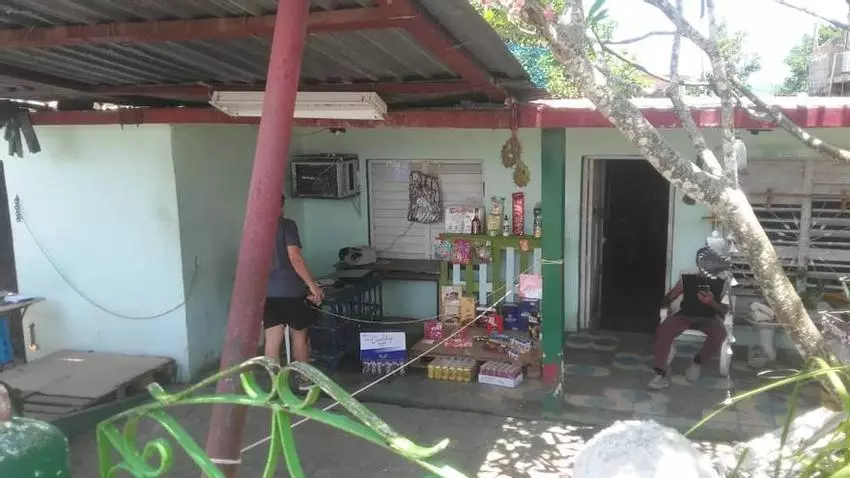
Many private businesses refuse to accept banknotes smaller than fifty pesos / 14ymedio

One neighborhood resident reports that the owners are not worried this requirement will scare away customers because they have the best prices in the district. “One day the place will be fully stocked and the next day it will be empty. They sell everything in a flash,” he explains.

While individual customers use these stores to satisfy their basic needs, other businesses turn to them to buy products wholesale which they can later resell. On Calzada de Tirry, near the house where the late poet Carilda Oliver Labra once lived, El Patrón opens its doors at 7:00 A.M. to a crowd that has gotten there early to buy jams that their families will have for breakfast or to make school snacks for their children. Also waiting in line is Sara, owner of a pushcart who resells El Patrón products in several downtown locations.

“This MSME is the cheapest in town,” says the 62-year-old Matanza resident, who has been waiting in line since 5:00 A.M. “It also attracts a lot of people from far away because what they sell here is high-quality. Since I found this place, I’ve been able to sell jams at more affordable prices,” she says.

Another MSME with competitive prices is located on Second of May Street. It specializes in meats, sweets and beverages, items which Cubans would otherwise only be able to buy at hard-currency stores. However, its “payment options” have made things difficult for more than one consumer. The owners only accept cash, and only in large-denomination bills. Shopping is becoming more difficult because, due to the country’s liquidity crisis, banks only give out small-denomination bills and ATMs never have cash.

For those who must leave the shop in search of the “fat bills” they need to make a purchase, the saleswoman has a ready smile. “No rush. The food here is very well refrigerated. Come back soon,” she says

____________

COLLABORATE WITH OUR WORK: The 14ymedio team is committed to practicing serious journalism that reflects Cuba’s reality in all its depth. Thank you for joining us on this long journey. We invite you to continue supporting us by becoming a member of 14ymedio now. Together we can continue transforming journalism in Cuba.
In the Cuban Athens ‘Everything Is Done on Foot’ Due to the Transport Crisis

Not even the “blues,” the inspectors in charge of intercepting vehicles and boarding passengers in Matanzas, “impose respect”

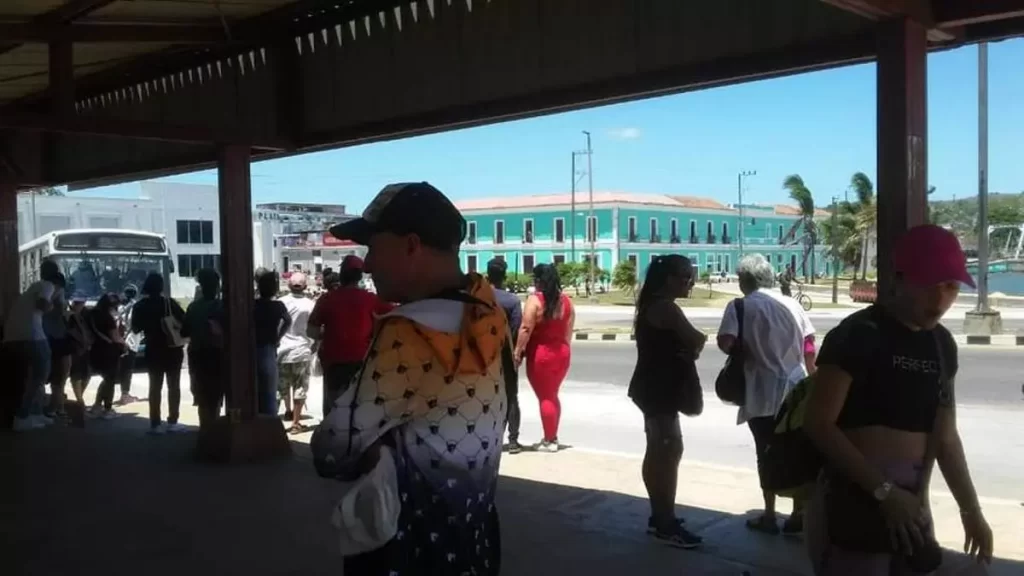
In peak hours, the mass of Matanzas residents who accumulate at the transport stops must decide whether to wait or leave on foot / 14ymedio

14ymedio bigger14ymedio, Julio César Contreras, Matanzas, April 27, 2024 — A Transmetro bus passes by and does not stop. A few minutes later, one from Transtur follows it. Travelers on any road in Matanzas look in desperation at the empty vehicles with the long-awaited air conditioning. “Not even the cars with State license plates stop anymore,” they lament, despite the fact that the leaders have given them the order to pick up passengers.

Not even the soothsayer Nostradamus could predict the times in which public buses circulate within the city of Matanzas. The traditional routes have been terminated for a long time, in an instability that significantly affects the daily routine of the matanceros.

Whether they are articulated, panoramic or assembled by pieces in a state workshop – such as the Dianas – the buses do not work at the same time, much less every day. That translates into a mass of stacked and sweaty Cubans who, when the rush hour arrives at stops, must decide whether to wait for a State car that deigns to pick them up or walk to their destination.

“The blockade does not come from outside, the blockade is here inside,” emphasizes an old man who claims – fanning himself with an improvised leaf – to have been waiting for more than an hour for transportation to go from the historic center to the Peñas Altas area. “Is there no oil?” asks a woman and from the same line the answer emerges: “What there is is no shame, señora. Look at that bus: it’s empty. continue reading

“The blockade does not come from outside, the blockade is here inside,” emphasizes an old man

Not even the figures of the “blues” – inspectors in charge of intercepting vehicles and boarding passengers – “imposes respect” on the state Ladas and Kamazes. To top it all off, the old man still sitting at the stop says, they are as inefficient as the public transport itself. “They only work half a day and on weekends so you can’t expect them.” Nor do the forceful looks of the “blues” and their clipboards intimidate anyone.

The Government’s vehicles pass, wave, and the inspector says goodbye “as if it’s nothing.” When the cars are not known but have State plates, the official registers the number – or pretends to – on a sheet of paper so as not to “offend” overcrowded travelers.

In the end, the “weakest link,” tired of waiting, gets out of line and takes charge of the matter. Any well-formed line is abruptly interrupted when a bus appears. Even if it’s empty, there are pushes and offenses. Pregnant women, children, the elderly and disabled, called to board first, must cross the furious mass in order to get a seat and not run the risk of being left behind.

The disorder quickly becomes a feeding ground for thieves and pickpockets, who grab chains, cash and even cell phones. By the time they manage to get on the bus, many passengers have even been stripped of their identity cards.

The other side of the coin are the private carriers, who, in tune with inflation, impose their prices / 14ymedio

The other side of the coin is the private carriers, who, in line with inflation, impose their prices according to “their objective and subjective needs.” For a trip of a few kilometers, a motorcycle taxi charges between 300 and 500 pesos, Mario, the driver of an electric motorcycle, tells this newspaper. In the case of a vehicle, for the same distance, the price ranges between 50 and 100 pesos per person. The máquinas*, on the other hand, charge about 100 pesos.

According to Mario, those are just the “standard prices.” “If I rent or work at night, the costs go up.” The electric vehicles, which the Government announced last January with pomp and fanfare after buying them at $7,000 each, are far from meeting the city’s demand for transport

At the central transport stop, from which the old man was able to escape in an agricultural truck, a medical student now occupies his seat. “It can already be said with propriety that Matanzas is the Athens of Cuba and, like the ancient Athenians, we do everything on foot,” he mocks. A few streets ahead you can see the remains of the old tram line, inaugurated when the city was experiencing better times and the only blue was that of the bay.

*Translator’s note: Máquinas, almendrones and colectivos are overlapping names for similar services: generally a shared taxi service (and in some cases fixed-route) provided by classic American cars, which are now generally retrofitted with diesel engines because that fuel is more likely to be available than is gasoline.

Translated by Regina Anavy

____________

COLLABORATE WITH OUR WORK: The 14ymedio team is committed to practicing serious journalism that reflects Cuba’s reality in all its depth. Thank you for joining us on this long journey. We invite you to continue supporting us by becoming a member of 14ymedio now. Together we can continue transforming journalism in Cuba.