Monica Baro: "You Can’t Sacrifice Yourself for a Utopia" / Ivan Garcia

Iván García, Havana, December 9th, 2019 — This interview is the fruit of much bargaining. In various profiles that Journal of The Americas aims to publish on independent Cuban journalists of different generations, the name Monica Baro is underlined in red.

The plan was to open the season with an interview of the brilliant young reporter from Havana, who at 31 years of age publishes El Estornudo (The Sneeze), a digital publication of narrative journalism. But Monica was impossible to catch. When she was not travelling abroad, she had a lot of work. Time and again she postponed the date of the interview. I refused to give up.

Finally, on Tuesday, December 3rd, we managed to meet at the Cafe Fortuna, on First and 24th Street in Miramar, a neighborhood in the west of Havana caressed by the breeze from the Atlantic Ocean. The locale was decorated in a vintage style, dimly lit with poems by Chaplin adorning the walls. The servers were dressed in 1950s sailor outfits. continue reading

Twelve minutes after the agreed-upon hour, Monica appeared in black jeans covered in patches. Her hair hung loose and she wore a plastic Made in China watch, a white pullover emblazoned with an image of Frida Khalo, a smile and glasses that gave her a quirky, intellectual air. Monica was in her element.

I heard her name mentioned for the first time in 2014. It was a hot afternoon in summer, in a bar a stone’s throw from the Bay of Havana, where we, a group of independent journalists, would go to drink beers once a month. We would speak about our families, baseball and soccer, as well as local and international politics. But the majority of our time we dedicated to talking about journalism. I don’t recall if it was Jorge Olivera or Victor Manuel Dominguez who mentioned an interview that a Monica Baro had published in OnCuba.

When I read the interview, I found myself more interested in the questions the reporter was asking than the interviewee’s responses. Reading the byline at the end I learned that the reporter was a recently graduated journalist. She had worked in the publication Bohemia and at the Institute of Philosophy. A short while later, as I was revising articles in the Wi-Fi park of La Vibora, I stumbled across Monica again, this time in the independent newspaper Periodismo de Barrio, with a report on a woman who lived in extreme poverty in deep Havana.

Already, journalist cliques were babbling about Monica Baro. It was clear that she was in another league. And then the awards began to pile up. The last, the Gabo Prize, she received in October 2019 in Colombia for her investigation ‘La sangre nunca fue amarilla‘ (The Blood Was Never Yellow), published in Periodismo de Barrio in February of this month.

But Monica remained shrouded in her natural humility, dodging spotlights and praise. When she sat on the stool at Cafe Fortuna, after the usual greeting, she ordered a refreshment. I made the most of it and told her she was more difficult to trap than a politician. She smiled, tilted her head and we began to film.

Iván García: Monica, are you planning to leave, to emigrate?

Monica Baro: Not so far. I am not sure if I will stay in Cuba indefinitely, it is impossible to tell. You never know where you’ll end up.

Iván García: I am going to describe to you two hypothetical scenarios. One, Cuba 2059, Monica, grandmother to a couple of grandchildren, prepares to cover the centennial of the disaster called the Cuban Revolution for El Esturnudo. Second scenario, Monica, 71 years old, already retired, remembered for her contributions to Cuban narrative journalism. Which scenario do you think the future will bring? Do you sincerely believe there is a solution for Cuba?

Monica Baro: I believe so. There are those that think that Cuba will change in two years. Others say five, ten. The truth is that I don’t know how much time Cuba will need to democratize and become a country that respects political liberties and freedom of expression. To be a decent country, where people can have a future and develop themselves openly. But I persevere. This is not something that gives me pause. I think that one has to be in a place one wants to be and is happy.

If I am here it is not because I feel a certain commitment to a certain cause or to the democratization of the country. I am in Cuba because the work that I do here makes me happy. The day that this work no longer makes me happy, I’ll leave.

For a long time the government, and the most rancid left on the continent, have wanted to inoculate us with the idea that you have to sacrifice yourself and everything for the cause and put the interests of society in front of the interests of the individual. And I believe that this is not healthy for any cause. I believe that causes have to be the ones that make people happy.

If you are defending human rights, the freedom of expression and independent journalism, it is because it makes you happy. When I worked for the review Bohemia, I interviewed Pepe Mujica at a CELAC event, and something he said stuck with me: “A generation cannot sacrifice itself for a utopia.”

It is the same on the individual level. You cannot sacrifice yourself for a utopia. For me, utopia is the present. It is not the future. It’s today. And for me, since I graduated in journalism in 2012, every day that I have been in Cuba I have been living in my own utopia, my happiness.

Iván García: Independent, free and alternative journalism, as you call it, arose at the end of the 1980s. Afterward, in the 1990s a number of independent journalism agencies were established that abused the use of the opinion column. But, at the same time, street journalism began, with reports and chronicles from that other island that the regime tries to ignore.

In 2007 the blog Generation Y was started by Yoani Sanchez, which undoubtably marked a new era in freelance journalism with the appearance of new digital publications.

With the relaxation of tensions of the Obama era in 2014, a wave of talented journalists surged forward, exploring that which I call the new Cuban narrative journalism. This is a deliciously different kind of journalism of undeniable quality, and it has awakened suspicions in some independent journalists of the barricade, decidedly anti-Castro. It is said that this new group does not compromise, that they are a fifth column that rejects the current themes of Cuban society and look a bit from above the shoulders of the rest. What is your take on this topic?

Monica Baro: I think this is another political miseducation that we have inherited from the government. We think that we have the authority to judge the political and social leanings of other people. In issuing judgement, we believe ourselves to be the judge of others. It is sad, a culture that we have to overcome, to be constantly questioning that if you are committed to this, I am more committed than you are, a logic that really shocks me.

I make a fair effort not to fall into this vicious cycle, but I don’t want to claim that I am a stranger to this culture. I was educated in Cuban schools, I was indoctrinated, we are part of the same society. One should always question their way of interacting with others, their way of conversing, their way of treating people who are different and think differently than you. And it shouldn’t be that you put yourself in a position of moral superiority to issue judgement, since those who judge believe that they have the moral superiority to do it.

Iván García: Do you believe that this has happened?

Monica Baro: Yes, of course. All those who can say that El Estornudo, Periodismo de Barrio or El Toque are not more radical media, because they don’t deal with more political themes, are obviously making judgements. And for me there is a logical explanation: these media are drawing a border between activism and journalism. I am aware that there are some media that do both simultaneously. I understand that there are publications that engage in political activism. I myself have engaged in political activism on social media in defense of political liberties, freedom of the press and of expression.

In a way, when you create independent journalism in a country where there is no freedom of the press you are defending the right to freedom of the press and freedom of expression. But you have to know there is still a border between journalism and activism. It is important to respect this, as it is what guarantees that what you publish as a journalist has more credibility.

Genre journalists are here for a reason. When you want to give your opinion, you do so. When you go to investigate, you investigate. You demonstrate with facts, you contrast your sources, using various sources if you are going to denounce something.

You try to respect these genres that are here for a reason. And also respect a profession that has rules and norms that are not by choice. They are there to ensure that, first, you protect yourself, second, you protect your sources, and, third, the information that you publish has the effect you are looking for. This is not to say that a journalist, when they leave their office, goes and serves in a political party, of course. But you have to know where the limits are.

Iván García: I am going to give you some bad news and the good news. Digital journalism, just like traditional journalism, has not recovered from the crisis that the introduction of new technology created. The majority of media has not found an effective business model. And the worst part is that, for the past ten years, even now, Chinese media has been using robots as presenters.

They say that artificial intelligence and robots will substitute for a large number of journalists, in particular those who write news. I suspect that the journalists that will remain are those who can tell stories differently, to be read by an audience of readers nostalgic for the Sunday paper.

The good news is that this kind of advanced technology will take a while to reach Cuba. Has the though ever crossed your mind to abandon journalism and take refuge in literature or poetry?

Monica Baro: I don’t know. I don’t think I’ll ever leave journalism. What I want is to tell stories, and journalism gives me this space. Nonetheless, at some point I would love to write literature. In fact, when I first started to write as a child of eleven years, I did not start as a reporter. I liked to write stories and novels. When I was twelve I wrote pages and pages of things. This was where I started, with fiction. But my main interest is telling stories. I would love to write screenplays, but without completely giving up on journalism. The only difference would be that one contains fact and the other fiction.

Iván García: Do you think that social media is harmful to serious journalism?

Monica Baro: Social media is a tool used by people. I do not see it as something abstract, as it has its own life. I do think that we have to educate ourselves about the use of social media, especially when it comes to the consumption of news and information.

Many people say “I read it on the internet,” but the internet is not a source of information. We have to know how to identify which sources are trustworthy, why they are trustworthy or not. People have to learn how to consume journalism. To look up the sources and citations from news articles.

I think that schools should include, as another required subject, a course on how to protect yourself on the internet and how to consume information from the internet. But I don’t believe that journalism will disappear, as journalism does not just inform people but also helps them to understand. Literary journalism is trying to provide something different, other focuses. It does not just aim to give cold hard facts.

Iván García: But then this happens: a joke or fake news generates thousands of comments on social media. Regardless, a deep and entertaining piece like ‘La sangre nunca fue amarilla’, which you published in Periodismo de Barrio, and was awarded the Gabo Prize for Journalism, barely had comments on the site.

Feedback, when there is any, stays in the intellectual world. And then something strange and dangerous happens–those who read your article begin to think themselves reporters and communication professionals. And these articles never reach the people they were aimed at. Not even through reposts.

Monica Baro: This report, ‘La sangre nunca fue amarilla’, took me three years, between research and editing. Of course at times one can feel a bit decieved. But I keep insisting.

The server brought something to eat. Monica mentioned that she’s a fan of cinema.

“From when, on the 5th of December, the annual Cinema Festival starts in La Habana and until it ends on the 15th, I turn off my cellphone. I love classic black-and-white films. Every night I go to see a movie.”

She enjoyed Joaquin Phoenix’s version of the Joker. She loves Tarantino.

“Have you seen his latest film, Once Upon a Time in Hollywood?” I asked.

“No, how was it?” She wanted to know.

“Very good, Tarantino in his purest form.” I said.

We finished eating and returned to the task at hand. She told me that State Security had detained her only once.

“It was in Guantanamo, in 2016, during Hurricane Matthew. I am also regulated (restricted from travelling abroad). At least for now.”

She doesn’t see herself as a political figure. “It’s not my responsibility. Politicians, democracy, have to come to different agreements to be able to govern. I prefer to judge them as a citizen from the perspective of journalism.”

She has her habits and manias. “Before sitting down to write, preferably in the morning, I have to bathe, then I drink coffee and burn some incense, in that order. I don’t have to isolate myself. I can write just the same in an airport at peak hours. I read a lot, at all times,” she confessed.

She respects political columnists. She thinks that they should have broad historical knowledge, a lot of information and a good analytical capacity to write. But they also have to be willing to jump in and give their opinion in any them when needed. Monica Baro is one of the forty Cuban women who signed a letter petitioning an Integral Law against Gender Violence and last November she presented to the National Assembly of Popular Power.

Night had fallen in La Habana. I bid farewell to one of the young voices for change in Cuba. A woman fighting for a different kind of journalism. And for democracy in her country.

Text and Photography: Iván García

Note: On the 5th of December, after this interview, it was announced that four Cubans, the journalists Mónica Baró Sánchez and Carlos Manuel Álvarez, the filmmaker José Luis Aparicio Ferrera and the environmental entrepreneur Alexander López were included in the list of 100 young Latinos who believe in and inspire a better world, created by the periodical Avianca. About Monica, the Colombian publication wrote that the Cuban woman, connected to alternative media like Periodismo de Barrio, El Estornudo and El Toque, won the Gabo Prize of Journalism in 2019 in the Best Article category for her report “La sangre nunca fue amarilla.”

 Translated by: Geoffrey Ballinger

10 Years: A Guy Named Ivan Writes from Havana

July 2009. Iván writing on the first laptop he had, in the room of his daughter, who was then six years old.

Iván García, January 20, 2020 — Three years ago I had a smart phone for the first time. It was a gift from Celeste Matos, a journalist in Miami, with whom I worked for a time. It was robbed, and she offered me another, which was blocked because I couldn’t remember my account ID.

In January 2009, when I began this adventure of opening the blog Desde La Habana (From Havana), I didn’t have a laptop. I used to type on a portable Olivetti Lettera that my mother left me before going into exile in Switzerland in the autumn of 2003.

The Black Spring, as you know, was a repressive wave ordered by Fidel Castro, that imprisoned 75 dissidents, among them 27 independent journalists. It was a tremendous blow to uncensored journalism, and there was a logical retreat. continue reading

My friend Luis Cino, an unsurpassed chronicler, started working as a custodian in a dairy. In order to support my daughter, born February 3, 2003, I had to sell pizzas, snacks and fruit juice from home.

A Swiss reporter used to visit Havana in the month of December and we would meet in the home of Reinaldo Escobar and Yoani Sánchez. I heard Yoani talking about the blogosphere for the first time.

Later I read a very interesting article in Newsweek in Spanish about the importance of personal blogs in the media. This was in 2007. Cino and Juan González Febles had founded Primavera Digital (Digital Spring), an independent site considered illegal by the Regime, and they invited me to collaborate.

In April 2007, Yoani opened her blog, Generación Y (Generation Y*). Her posts were short, well-edited and irreverent. The Sánchez-Escobar couple are like a push-button box: you press a button and out comes an idea. And it occurred to them to open a Blogger Academy in their apartment, on the 14th floor of a Soviet-style building in the suburbs of Nuevo Vedado.

It was then that Yoani invited me to become part of her initiative to set up a platform of bloggers living in Cuba. You are your own publisher, censor and editor. You can write whatever you want. You’re on your own. One month before, I had done an interview with Yoani, which, because of its length, was divided into two parts.

I posted the first part, Conversation with Yoani, on the blog Penúltimas Días (Penultimate Days) on February 9; and the second, Yoani apunta con pistola (Yoani Aims a Gun) on El Blog de Tania Quintero (The Blog of Tania Quintero). It took me a lot of work to convert this long conversation into an interview, since the keyboard on my laptop was in German and didn’t have Spanish accent marks.

Finally, the blog Voces Cubanas (Cuban Voices) created a platform with the name of a musical group containing some 30 bloggers who were keen to win over the world. The idea appealed to me, but I preferred a blog that was more tilted toward journalism. So I invited the independent journalist, Luis Cini, and the lawyer, Laritza Diversent, to write a column.

Each one had their own plan, but I proposed to Laritza that she dissect the convoluted Cuban laws that not even the Government itself complied with. And I, like Cino, wrote posts about the Cuba that the Regime wanted to hide. Also, I tried to monetize the blog to earn some money for the three of us.

As for the Blogger Academy, there I learned everything I know about technology tools. Yoani had insisted that we open our own Twitter accounts. In one class she showed us an iPhone, the first I’d ever seen.

A little later, colleagues in the U.S. gave us modern laptops with Spanish keyboards and decent cell phones. In October 2009, Manuel Aguilera, a world-class journalist, discovered me from the blog Desde La Habana. He hired me for the American edition of El Mundo that Aguilera directed, where I wrote until 2012. In 2013 I began to publish in Diario Las Américas. This was something positive from the journalistic and monetary point of view. The pay for my collaborations allowed me to support my family without many hassles.

But the exclusivity of the blog was lost. The whirlwind of work prevented me and prevents me from writing original posts. Although my texts are reproduced and published on Diario Las Américas and other sites, I haven’t been able to return to writing specific texts for the Desde La Habana blog and El Blog de Iván García y sus amigos. Now I have more time. My daughter is about to enter university, and at present I’m writing only for Diario Las Américas.

For the 10th anniversary of the blog, I promise readers to return to exclusive stories. At least once a month. Up to now I’ve published in private, official, or commercial media. Desde La Habana has been like one of my children. It has opened doors and allowed me to know wonderful people, like Carlos Moreira from Portugal, who has been our administrator for 10 years, as well as innumerable readers who have contacted me through the blog and whom I later met in Cuba.

After a decade, the time to renew oneself has arrived. We will try to do things differently, to incorporate new writers, include videos. I will be telling you along the way what I have in mind.

*Translator’s note: The name refers to the generation born in Cuba during the Cold War whose parents were inspired by Russian names beginning with the letter “Y”.

Translated by Regina Anavy

Two Havanas Within a Single City / Ivan Garcia

Photo of central Havana by Juan Suárez, November 2019, for Havana Times.

Iván García, 5 December 2019 — For three days now there is no running drinkable water. If you want to purchase a pack of cigarettes or medication at the drugstore after 8pm, you must walk more than a kilometer. It is common for men to urinate in the public right-of-way and for people to dump their garbage onto any corner or barren lot.

The residents of La Lira neighborhood in the Havana municipality of Arroyo Naranjo have already forgotten the last time that the state-run roads agency repaired the sidewalks and black-topped the streets that are lit by a few incandescent bulbs. Despite the deteriorating environment, the people there are wont to sit at the street corners or on their front porches and play dominoes, drink cheap rum, or converse about any topic to keep the tedium at bay.

Those with the money to do so make their way over to Calzada de Managua and drink beer in private cafeterias and bars near the old Route 4 stop in Mantilla, where the only famous figure who lives around there is the writer Leonardo Padura, who has never wanted to move from a locality that grows ever poorer and more crime-ridden. continue reading

When one talks with young people of Mantilla, they see as models of success the owner of an illegal gambling casino, an ex-convict who sells stolen construction materials, or a female prostitute who managed to marry an Italian and bought her mother a house in El Vedado.

Due to the abysmal urban transit service and the high price of the private shared-ride taxis, which have doubled in number, it has become difficult to travel regularly to the picture-perfect city of Havana, enjoy a ball game in El Cerro stadium, or tour the glamorous Miramar district.

Arroyo Naranjo localities such as Mantilla, La Lira, El Mor, Párraga, El Calvario, Tamarindo, and Callejas, among others, look like Wild West movie sets. Snide and disdainful Habaneros who reside in the center of capital refer to the neighborhoods on the outskirts of the city as Indaya.* Those denizens of Havana who consider themselves superior to the rest of the Cuban populace were the ones who, more than 30 years ago, awarded the moniker, palestinos (Palestinians) to natives of the eastern provinces

Carlos Andrés, an automotive mechanic and father of three sons, settles into his easy chair after his meal of fried eggs with white rice, red beans, and an avocado slice, to watch sports or a TV drama, until sleep overtakes him. Ironically, he lives on Progreso street, about five or six blocks from the Calzada de Managua. His wife Melba’s routine is to listen to the radio soap operas and gossip a bit with the neighbors.

They had wanted to leave Mantilla. “Arroyo Naranjo, San Miguel del Padrón, and Guanabacoa are the three most violent municipalities. The problem is that in Cuba there is no ’red news.’ Around these parts, a knifing, a home invasion robbery, or a rip-off is an everyday occurrence. Games of chance make waves, someone who doesn’t bet on the bolita will go play cards or throw dice. Drugs — weed (marijuana) above all — are all over the place. And let’s not even mention liquor. A teetotaler cannot live in Mantilla, where the boredom drives you to drink,” says Carlos Andrés.

The couple have one son incarcerated at Combinado del Este prison, another who resides in Miami, and “the youngest likes to study and play piano, but if we stay in Mantilla he’ll end up a bum,” says his wife.

For the 500th anniversary of the founding of Havana, Carlos Andrés and Melba decided to go to La Ceiba del Templete and, on Avenida del Puerto, watch the fireworks that were donated by Canada for the occasion, and later sit for a while on the Malecón seawall and breathe the night air.

“The experience was disappointing. Between the rain and the busses, it took us two hours to get to El Templete. Then another two hours to go around La Ceiba a few times. There are many lights and renovated buildings in Habana Vieja, but all that’s for sale there is for hard currency only. We got home at almost 6am. We’re too old for that kind of thing anymore. It’s better to stay home.”

Gerardo, a retired teacher, lives with his family in an elevated section of La Víbora, and they could watch the fireworks from Parque de Los Chivos. “We could see them as if we were on the Malecón. What many of us Havana residents find annoying is that the government celebrated the 500th anniversary only in that section of Havana where the hotels and tourists are, such as Centro Habana, Habana Vieja, and El Vedado. As for the rest of the municipalities, they can go fuck themselves.”

Havana was designed for less than one million inhabitants. Its aqueduct and infrastructure cannot provide efficient service to the 2.5 million people who live in the capital of the Republic of Cuba today.

Diana, an architect, thinks that the State has not been able to put up quality bars, discotheques, cabarets, and recreational centers in the municipalities to the south of Havana province. “The hotels are concentrated in five municipalities (Habana Vieja, Centro Habana, Plaza, Playa, and the beach zone of Habana del Este). The remaining ten municipalities are bedroom communities. The same has happened with stores and businesses. From there we get the phrase, ’going to Havana,’ when we talk about going shopping. In heavily populated municipalities, such as Diez de Octubre and Arroyo Naranjo, there are no commercial centers. Any stores that exist are small, and they’re almost always out of merchandise. That gentrification has forced people to travel to the center of the city, causing urban transportation bottlenecks.”

Heriberto, manager at a so-called Hard Currency Collection Store (TRD), says that “the various chains that sell in convertible pesos (CUC) had created a network of kiosks, stores and markets in the slums on the outskirts. But, because of fuel shortages and chronic understocks, these TRD have closed, and the majority of these establishments are now concentrated in central Havana, which gives rise to crowded conditions.”

In 12 of the 15 municipalities of the capital, no stores have been opened that sell home appliances and spare parts for cars in dollars, nor are there major supermarkets.

Susana, a housewife, had to go from the Caballo Blanco section of San Miguel del Padrón to the recently re-inaugurated Cuatro Caminos market, in El Cerro, just to buy some spaghetti and tomato paste. “There was none where I live,” she explained, “and since I assumed that I could find some at Cuatro Caminos, I went over there. But the crowd was a nightmare, with cops and police cars all over the place. More than one elderly person was shoved to the floor, and they also broke a window. If the merchandise were distributed in an equitable manner among all the municipalities, these things wouldn’t happen.”

The celebrations for Havana’s 500th anniversary did not reach the suburbs.

*Translator’s Note: “Indaya” is an unofficial “city” or shantytown that sprang in the early ’90s on the banks of the Quibú River, to the west of Havana, built by would-be residents of the capital who migrated from other parts of Cuba. Source: See here.

Translated by:  Alicia Barraqué Ellison

Independent Journalism In Cuba: Flourishing But Underfunded / Ivan Garcia

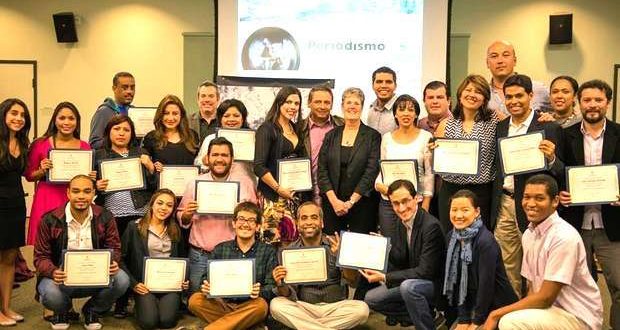
Journalists from Latin America, Central America, and the Caribbean participate in the Investigative Journalism Workshop, organized by the Institute of the Americas on 10-14 November 2014, in San Diego, California. Representing Cuba was the independent journalist Iván García Quintero (back row, far left).

Iván García, 9 May 2019 — Around the mid-1990s, the cohort of official reporters taking the leap into unrestricted journalism in Cuba had — besides experience and media training — the privilege of typewriters at their disposal. Those just starting out in the world’s best occupation were hand-writing their articles in school notebooks.

Newbies would be tasked with reporting evictions, setting up interviews, or being gofers. Those who had been at it longer would sign the articles to be published later by some daily or website based in Florida. In 1995, when poet, writer, and journalist Raúl Rivero founded the Cuba Press agency, he opened the door to a handful of young people who lacked a journalism education but had the desire to learn and work.

To the rookie reporters, Raúl would assign brief write-ups, which after his meticulous review of spelling and style, would be replete with strike-throughs from his red pen that he kept in the pocket of his perennial blue denim shirt. Rivero would dress up the story and insert a compelling headline, never longer than five or six words. In the end, the text would emerge, infused with the literary flavor of his excellent compositions. continue reading

Twenty-four years later, Luis Cino, Jorge Olivera, Víctor Manuel Domínguez and I, among others of Raúl’s followers, continue to religiously publish two or more columns per week on several sites.

We learned that work culture and respect for the profession from dyed-in-the-wool journalists such as Raúl Rivero, Tania Quintero and Ana Luisa López Baeza (deceased in 2018 in exile). It was a time when the Internet sounded like science fiction. Articles would be read by telephone to someone in Miami who would record the texts and later upload them online.

At that time, at the start of the independent journalism movement, you had to climb a sort of military ladder. First, you had to learn to write longhand. Then, you had to master the heavy-duty typewriters made in East Germany. And when you were finally capable of writing a decent text, you could produce it on a laptop that was rotated among various journalists. In those hard years, the beginner reporter learned by doing.

In the spring of 2003, Fidel Castro made a gross mistake: he sent 75 peaceful opposition members, 27 of whom were independent journalists, to prison. He expected that, by jailing a third of those who dedicated themselves to writing freely, he would intimidate the rest. But from the Island there was no stopping the denunciations about repression, the political prisoners of the Group of 75, nor about the situation in Cuba or of Cubans – even if the texts were published unsigned.

Fear did not freeze the writing pens. In November 2007, a group of journalists headed by Juan González Febles y Luis Cino founded Primavera Digital (Digital Spring), an openly anti-Castro weekly. Others continued sending their articles to Cubanet, Cubaencuentro, Revista de la Fundación Hispano-Cubana, and the Sociedad Interamericana de Prensa website.

Some months before, in April of 2007, following the success of the Generación Y blog created by Yoani Sánchez, other oppositional blogs began multiplying. Dozens of bloggers irrupted into digital journalism. Starting in 2012, the incessant trickle of journalists quitting their positions in state media has been unstoppable. As of today, the independent (or free, or alternative – whatever you want to call it) press has grown impressively.

To the more than 200 reporters who, on their own and at their own risk systematically write from Cuba on political, social, cultural, ecological or sports-related topics, we must add newspapers, magazines, Facebook accounts, YouTube channels, and other online platforms.

Also administered from the Island are Primavera Digital, 14ymedio, Periodismo de Barrio, Postdata Club, La Joven Cuba, El Estornudo, El Toque, and Vistar Magazine, among others. Ignacio González of En Caliente Prensa Libre, headquartered in Havana, and Rolando Rodríguez Lobaina of Palenque Visión, located in the eastern zone of the Island, lead audiovisual agencies that are notable for their social protests.

Almost all free communicators lambast the government. Others demand democratic changes, but they recognize and accept the status quo. The biggest problem faced by sites edited in Cuba is monetary. Periodismo de Barrio is the only one that transparently informs the public how it receives and spends its funding, which isn’t much.

The lack of regular cash flow when it’s time to pay contributors for their work, and of the minimum financing needed in journalism, puts the brakes on various projects. Journalistic investigations and in-depth reporting are expensive: they tend to be team efforts, they can last for months, and occasionally require travel to other locations, provinces or countries. With no access to bank credits, the new independent journalism presents a great many difficulties for self-management, growth, and solvency.

The majority of independent journalists in Cuba survive by writing for sites whose editorial staffs are based abroad. A great portion of the materials published in Diario de Cuba, Cubanet and Cubaencuentro come from Cuba. But other sites, also located in foreign countries and dedicated to the subject of Cuba, are sustained by contributors who do not live in Cuba, by international news agencies, and by the rehashing of content from independent sites or the official Cuban press.

Some non-official reporters collaborate on commercial sites run out of the United States, Mexico, and Spain. Those who do this on sites that are subsidized by various foundations will charge $30 to $40 dollars per published text, a bit more if accompanied by photos or videos. Those who publish in for-profit media can make double that, from $50 to $60 per piece. But there are very few who can publish between eight and ten works per month in a private newspaper.

Due to the boom in the number of journalists and a deficit of financing for the editorial offices anchored in other countries, even a willing editor cannot publish more than five or six pieces per month by a single contributor. On average, an independent journalist in Cuba makes somewhere between $125 and $150 per month. This amount is the equivalent of four to six times the median salary in Cuba, but given the scarcities and inflation rampant in the country, it is not enough to live on and provide for a family.

So, what happens? With no outlets for their writing, talented journalists – who, besides lacking material goods, are harassed by State Security – are making plans to exit the country permanently. This is a shame. Young people are leaving who excel in the profession and have even taken courses and won scholarships in foreign universities.

One solution that would stem this bloodletting might be that serious and professional sites such as Diario de Cuba, Cubanet and Cubaencuentro, could receive greater funding so that they could publish more journalists residing on the Island and pay them better rates. Or that foundations or non-governmental organizations would facilitate funds for independent reporters with possibilities of establishing a digital journalism site headquartered in Havana.

Cuba’s future will be decided in around five or six years. By then, the country will find itself with an even more ruined economy, without public infrastructure to speak of, and decapitalized corporations.

And, contrary to the spokespersons for neo-Castroism in the state-run media, Cuban independent journalists will continue denouncing injustice and shedding light on the reality of their country and people. As they have done up to now.

Translated by: Alicia Barraqué Ellison

Something Good Came Out of the Tornado: Solidarity Among Cubans

The singer Haydée Milanés, with sunglasses, was one of the first artists who, of her own accord arranged donations for neighbours affected by the tornado, which caused fatalities, injuries and a lot of damage in various parts of Havana on the night of Sunday January 27th, 2019. Afterwards, again, of their own free will, dozens of musicians, comedians, actors, sportsmen, informal journalists and private business people joined in.

Iván García, 15 February 2019 — Before the violent tornado overturned cars in the Santos Suárez neighbourhood, pulled out electricity poles, and destroyed hundreds of homes, Aniel, a cook in a five star hotel in Old Havana, hardly said hello to his neighbours.

He fenced in his house and transformed it into a fortress, proof against burglars and muggers. Every morning he ran five kilometres through the back streets of Santos Suárez, then he took a shower, while he listened to jazz on his smartphone, and took a shared taxi to his work.

“That was my daily routine. I didnt say good day or hello to anyone in the area. Nor did my wife, and my 10-year-old son hardly had any friends. Stuck in his room all the time, entertaining himself with videogames on his computer. The inequality in our society, people who looked on with envy when their neighbours improved their quality of life, and general egotism, has converted us into hermits. continue reading

Havana is a long way from the violence of Caracas or Rio de Janeiro, but when you take a walk down the streets here, you can see that the majority of families have shut themselves in behind railings or walls, to protect their privacy.

“Most of my stuff I got under the counter (illegally), and, so as not to do it in full view of the CDR (Committee for the Defence of the Revolution), and the neighbours, it seemed the best solution was to shut myself off from everyone. Parties were just with family or work colleagues.

But, after the tornado had gone by, when I looked out of my door, and saw the destruction around me, I was left speechless. I went around the neighbourhood, and when I got back to my house, after having seen all that stuff, which was like scenes from a film about the Second World War, many things changed, right away”, admitted Aniel.

As his house wasn’t damaged, he prepared a spare room and offered it to a young couple and their daughter. “I knew them by sight. Their house was three doors down from mine, but I didn’t even know their names. One night I came home from the hotel and it broke my heart to see them sleeping out in the open as they had lost their house. My wife, my son and I agreed we should put them up. Where three people can fit, so can six. People don’t need to go to church to listen to a mass in order to redeem themselves,” Aniel concluded.

It has become a cliche in the streets of Havana  to go on about the loss of social values, bad manners, and people deforming the Spanish language with shouting and swearing when they talk, using vulgar and incomprehensible slang. Regina, a single mother with two children, trying to get by in the difficult conditions of Cuban socialism by doing the washing and cleaning private houses, has this to say:

“You saw how the rich kept their distance from the poor. They looked down their noses at us, because of our bad luck in life, with no fashionable clothing, or latest model cellphones. But, after the tornado passed, they showed support and altruism. Neighbours who had never spoken to me, gave me money, food and clothes. And I wasn’t one of the worst off.

When the government gives you a few building materials, even though they let you have them for half price, you still have to pay for them, you have to support an enormous bureaucracy, and, as well as that, they ask you to vote Yes to the Constitution. But people give you the little extra they have without asking for anything in return.”

Although the olive green government has described neighbours’ supporting each other, the state media has devoted little space to the free and disinterested aid given by hundreds of private businesses, artists and famous sportsmen.

Carlos, a sociologist, thinks that “the government, as always, goes on exaggerating its own successes  and hiding its failures. They avoid the fact that the procedure for buying building materials (and not all the materials you need to build a house), apart from being annoying, you have to pay for them.

The conditions in the accommodation provided for those who lost their homes, aren’t the best. But Diaz-Canel, in a boastful kind of voice, prefers to emphasise that it was the government that restored the electric supply in five days and the water in four. That is what any public administration is supposed to do. They have tried to brush aside the help provided by the private sector, the church and Cuban ex-pats.”

A few little examples. The singer Haydée Milanés went around distributing water , clothing and cleaning materials in Luyanó. The  Fábrica de Arte Cubano has organised dozens of musicians and artists to help people in Regla and Guanabacoa.

The young actress María Karla Rivero Veloz, daughter of the journalist Raúl Rivero and the actress Coralita Veloz, travelled from Miami to Havana with a load of useful things  which she collected in record time from fellow countrymen in Florida.

The baseball player Alfredo Despaigne, who plays in the Japanese league, gave $21k to victims in the Jesús del Monte area. Owners of independent restaurants and cafes in the capital gave food and served meals at knock-down prices.

After the tornado, thousands of ex-pat Cubans sent money and parcels to the victims, whether they were family members or not. “Every day, on average, we delivered 10 – 15 thousand convertible pesos. But over the last two weeks, the money orders from the United States and Europe have tripled,” according to a Western Union employee in Tienda Brimart in Diez de Octubre.

While she is waiting in a line to pick up the money sent by her brother from Tampa, Diana, a housewife, got things off her chest: “It annoys me that the government boasts about how quickly and efficiently it has made good the damage, when that is its responsibility. Not everything it says is true, some things are lies.

There are people who lost their homes 20 years ago because of a cyclone and they still haven’t given them a home. It also annoys me that the government and the press in Cuba don’t like to recognise the important role played by Cuban families living abroad.

They never publicise the amount of money sent, but it is  thousands of millions of dollars. A greater percentage of Cubans can eat and live better because of that money. Now, following the tornado, while the state asks for a mountain of paperwork to give you sand, blocks and cement, and lets everyone know about it, a friend of mine who lives in Miami sent me $500 to fix the roof of my house, without any of that stupid nonsense.”

If there is one thing ordinary Cubans agree about is that the efforts of thousands of people in Havana was impressive. We have never seen such an enormous and spontaneous movement. Hopefully this feeling of togetherness will continue.

Photo: The singer Haydée Milanés, with sunglasses, was one of the first artists who, of her own accord arranged donations for neighbours affected by the tornado, which caused fatalities, injuries and a lot of damage in various parts of Havana on the night of Sunday January 27th, 2019. Afterwards, again, of their own free will, dozens of musicians, comedians, actors, sportsmen, informal journalists and private business people joined in.

Translated by GH

In Cuba Fear Won / Ivan Garcia

Photo by Juan Suárez taken in January 2019 in Centro Habana. Source: The Havana Times.

Iván García, 27 February 2019 — Ten minutes before 7:00 am on Sunday, February 24, the president of Electoral College Number 3 of District 68 hurried his meager breakfast of bread with mortadella and a cup of a beverage that was brewed from a mixture of coffee and ground peas.

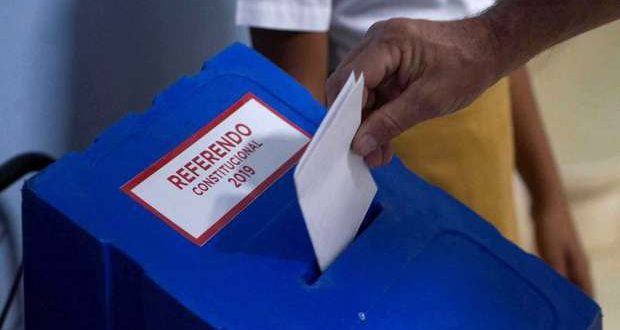
He already had the ballots in order and the pencils were ready for the voters in the four cubicles. On the walls of the premises, located in a garage, were photos of Fidel Castro and several posters in favor of a Yes vote on the revised constitution.

Two “pioneers” — Cuban schoolchildren — commented on the Barcelona-Sevilla soccer game the day before when the president asked them to stand on either side of the small plastic urn of Prussian blue. continue reading

In the first hour of voting turnout was very light. Some retirees who, early in the morning, go out to buy the bread granted by the rationing book, took advantage and voted expeditiously.

“It’s that people like to sleep in, in the morning,” said a woman seated at the school table. The procedure was fast. They wrote down your identity card number, compared your data with the voter registration and then gave you a ballot.

The deficiencies in three of the four voting places visited were palpable. At the number two school in constituency 68 of the Lawton-Vista Alegre people’s council, the day before the vote, voters’ lists had not yet been posted. In three of them, instead of pens, they had put pencils, making it very easy to manipulate the vote.

In all the polls, propaganda in favor of a Yes vote was blatantly on display. The number one electoral college in District 68, where I had to vote, they did not even knock on my door to give me the summons used to call people to vote. They threw mine and my neighbor’s under the door. My name did not appear on the rolls, nor did that of my wife and daughter, eligible to vote. Where the voter’s name was supposed to be placed, they showed an address and an apartment number.

That Sunday, Daniel and his brother took out a bottle of rum and started drinking while playing dominoes with two friends from the neighborhood and listening to reggaeton. “A neighbor who worked at the polling station went through the corridor where we live and jokingly told us, ’when are you going to vote, then get drunk and forget them?’ You know, nobody wants to be marked [for not showing up]. We made a stop and went to vote.”

The domino players say they voted Yes. Do they agree with the text of the new Constitution? Daniel responds: “I have not read it. Everything is pure procedure. If you vote No, they win. If you vote yes, it’s the same.”

It may be true. But automatically a segment of Cubans continues to act like zombies. Luisa, a clerk in a state cafeteria, says she does not approve of the government’s management and is able to overwhelm you for a couple of hours with complaints about market shortages and deficiencies in public services.

But when she votes, she always checks the box that favors the regime. Why? “Hey, the dissidents do not give me a means to vote NO. If I am fired from my job the Embassy of the United States will not grant me asylum as a political refugee. This is the country that I have to live in. And if you do not look like you support the government, you are looking for a problem,” Luisa explains.

Fear always knocks on the door before civic citizenship. The reasons are understood. We Cubans reside in a nation of command and order. The good and bad that can happen to you in life depends to a great degree on your support for the autocracy. Sixty years later, that behavior works as a conditioned reflex.

In spite of everything, the fear has been overcome. In the referendum to approve the 1976 Constitution, 97.7% of Cubans ratified that legal document and attendance was 98%. Forty years later, in the imitation of elections to choose the deputies to the National Assembly, held in 2018, between 23 and 24% of citizens abstained, left the ballots blank or annulled them with rude words and slogans of “Down with Fidel.”

According to reports from observers and alternative media, in the majority of the polls visited, the number of abstentions exceeded the NO vote, while the Yes won comfortably.

Carlos, a sociologist, affirms that “in every election, votes against government proposals increase, but for various reasons, including fear, people feel more comfortable staying at home than going to vote and having to voteno or leave the ballot blank. Abstention can be justified in innumerable ways. I’m sick, I had a family problem, or a lie. But still many Cubans think that in the polling stations there are video cameras and voting NO or putting anti-government slogans can bring you problems.”

Although the ballot boxes are watched over by the young pioneers, in the vicinity of the polling stations the presence of State Security agents dressed in civilian clothes is visible. “Operations are mounted in all elections, with the participation of the police, DTI and Security. In areas where known dissidents live, surveillance is greater. If they are going to audit the vote count they are alert in case of any provocation,” says a former intelligence officer.

These operatives Olympianly transgress their own legal norms implemented by the regime. Dozens of opponents, such as José Díaz Silva, were assaulted or prevented from voting. Yoani Sánchez, director of 14ymedio, chronicled the tension she experienced in an electoral college when she demanded her rights. In the end, at the cry of Viva la Revolución, he had to endure the usual act of repudiation.

This fear of what can happen when acting voluntarily or against the interests of the government is always present among Cubans. That is why people prefer to see things from the stands or record from a distance with their mobile phones the protests and beatings of the political police to peaceful opponents.

In this referendum the victory was pre-ordained in favor of the Yes. After three o’clock in the afternoon of Monday, February 25, Alina Balseiro, president of the National Electoral Commission, appeared in a press conference informing that the new Constitution of the Republic of Cuba it was approved with 86.85% of the votes cast, according to preliminary data. Of the 9,298,277 citizens with the right to suffrage, 7,848,343 (84.4%) went to the polls to answer the question Do you ratify the new Constitution of the Republic?

Accepted as valid were 7,522,569 votes were, of which 6,816,169 voters voted Yes (86.85%) and 706,400 voted No (9.0%). 127,100 ballots were canceled and 198,674 were left blank.

In an article published in, the independent journalist Reinaldo Escobar commented: “The preliminary results of the referendum on the new Constitution confirm what was expected: that the new Constitution was going to be approved by the majority and that the process was going to make clear the increase in citizen dissent by putting a number to that group that rejects the administration of the authorities.

“More than two and a half million voters all over the country have distanced themselves from the new Constitution, between No, null, and blank votes, in addition to abstentions. Many have thus found themselves on the path to distancing themselves from the ruling political and economic system on the island.”

In Cuba, without international observers, reliable automatic voting machines, indelible ink, not to mention the excessive propaganda in favor of the regime, even inside the polling places, the official data usually awakens distrust among the opponents, independent journalists, exiles and analysts who follow Cuba.

Fear, for now, remains an involuntary ally of the olive-green autocracy.

From Engineer in Havana to Magazine Director in Kentucky / Ivan Garcia

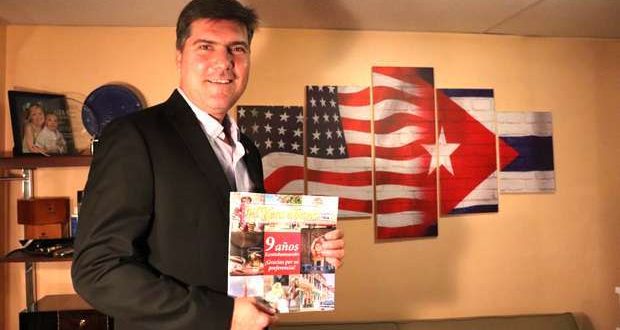
Luis David Fuentes with a copy of El Kentubano magazine. Taken from Insider Lousville.

Iván García, 5 March 2019 — Twenty-five years ago, Luis David Fuentes pedaled 17 kilometers a day on a rough Chinese bicycle through the dark and dilapidated Havana streets towards the CUJAE, today José Antonio Echevarría Technological University, located in Marianao, a municipality in the south of Havana, where he studied mechanical engineering.

Those were the hard years of the Special Period. The people ate little and badly. The blackouts lasted twelve hours. And hunger caused people to replace the usual animal proteins by eating cats, pigeons and sparrows. Fidel Castro had a Plan B in case the famine worsened. It was called Option Zero. Military trucks would distribute food in the neighborhoods, escorted by armed soldiers. It did not reach that extreme. Luis David still remembers that every day he pedaled as if he were a professional cyclist with a piece of dry bread and a glass of water with brown sugar for breakfast.

“It was a difficult stage. I went from El Vedado to CUJAE on that bicycle with hardly anything in my stomach. When I could, I drank a little jug of powdered milk. I returned home after eight or nine hours without tasting a bite. I do not know how I survived and became an engineer. Like most Cuban homes of that time, my parents were integrated in the process, especially my father, a hard-working man, a fidelista who believed to the core the story that utopian socialism would one day arrive. continue reading

My mother was always very clearheaded, but out of respect for my father, she just taught us to believe in God and we knew of the injustice that the Revolution had committed with her father, a Galician emigrant who arrived empty-handed and based on hard work managed to have land, livestock and property. Everything was expropriated by the agrarian reform. My grandfather did not survive that shock and the next year he died. After so much sadness and agony, after a while my grandmother also died. I did not know them in life,” says Luis David by email from Kentucky in the United States.

Very young he began to question the olive green totalitarianism and the economy of barracks implemented by the Castros. “I did not like that the double morality caused by the fear that prevented you from expressing your opinions with sincerity, nor the hypocrisy of the leaders: they preached as if they were proletarians and lived as bourgeois.

I never thought about leaving Cuba. When I graduated, I did my social service of two years in the National Institute of Normalization, an agency where bureaucracy and servility to the ideas of the Communist Party reigned, without the basic resources to work. The salary was 198 pesos a month (8 dollars). I was an engineer, but I felt miserable, with that salary I could not help my parents in the maintenance of the home. That reality made me change my mind and I decided to emigrate.”

He tried first in Venezuela and Colombia. In 1996, finally, he was able to travel to Chile, where before getting a job as an engineer, he was a door-to-door salesman and a doorman in a nightclub. In 2000 he traveled to the United States. Contrary to the vast majority of Cubans, who settle in Florida, because of the weather, to be able to speak Spanish and to see the same sea that bathes the northern coast of Cuba, Luis David, settled in Kentucky, in the southeastern center of the United States. For eleven years he worked as an environmental engineer-specialist in the Kentucky government.

In August 2009, faced with the need for information and publicity from the growing Cuban community, Luis David founded El Kentubano. “It was done with own resources, without external help. Something new for me, because I was not an entrepreneur or a journalist. I did it from nothing. I was learning along the way. The publication is supported by advertisements, one part is distributed free and another by subscriptions.

In the beginning, the money obtained was barely enough to pay the cost of production, printing, distribution and marketing. Many times I had to spend my income to continue putting out El Kentubano. At that time, except for the design, I was the one who wrote, did interviews, looked for sponsors and distributed the magazine, but now I have a team mde up of Yany Díaz, journalist, and Elizabeth Alarcón, designer,

“The digital era has decimated printed publications, but in the case of publications aimed at a specific group, be it health, sports or emigration, far from being extinct they have prospered. And in recent years, thanks to the increase in the Cuban community and new businesses, the magazine’s life was guaranteed. Sponsors contributing this include companies such as Humana, Kroger, Sprint, American Airlines, Toyota and McDonald’s, among others, have seen in The Kentubano a marketing tool and advertise in it. In 2009 a thousand copies of 20 pages per month were printed, today the magazine has 90 pages and 10 thousand copies are printed monthly.”

The Kentubano has color photos on its front and back cover. On the inside pages of the gazette paper, you can see photos and ads in color and black and white. Some of his texts are taken from Cuban digital sites. And in between the ads are interspersed advice to newcomers, interviews with relevant Cubans in Kentucky or recipes for traditional sweets. The business model of digital journalism is under construction. Newspapers like The New York Times already make a profit thanks to their 3.6 million subscribers on the internet. Other media implement proactive strategies and raise money among their readers by asking them what kind of stories they want to read.

“Taking the magazine forward was a titanic task. Two years ago I decided to take a break as an engineer and dedicate more time to my family, to the community through El Kentubano, the Capítulo Kentucky José Martí and the Cuban American Association of Kentucky (ACAK), a group created a year ago and whose members, selflessly, with their own resources, represent and defend the interests of our community under the José Martí motto Helping those who need it is not only part of one’s duty, but of happiness,” says Luis David proudly.

When Luis David arrived in Kentucky in 2000, the number of Cubans did not exceed 500. In 2006 there were already about 5,000 Cubans, currently there are more than 25,000 in Louisville alone, the largest city in the State. “Almost all of them come directly from Cuba and although their knowledge of economics is limited, they have managed to become a thriving and enterprising community that has managed to deal with the cold, language and customs that are so different.

The result of their integration into society is translated into the large number of shops, restaurants, consultancies and small businesses in Louisville. Also important has been the role of doctors, dentists, engineers, lawyers, computer scientists and police officers of Cuban origin, among other professionals with prominent positions in large companies and state offices.

Luis David had to pound the streets of Louisville to get sponsors. “At the beginning, it was difficult to convince Cuban business owners of the importance of advertising. The Cuban of the Island has no idea what marketing is. The only thing they had seen was a bodega manager writing out his accounts on the cash register paper. When you convince the first one, the others followed along, little by little.”

In his opinion, “after Florida, the Cuban community of Kentucky is one of the most prosperous in the United States and it is, per capita, where the largest number of small Cuban businesses exists in the world.” In 2018, Governor Matt Bevin received in his mansion about 200 Cuban leaders and entrepreneurs, a recognition of that community’s contribution to the economy and culture of Kentucky. Luis David has received several awards.

In the wake of the January 27th tornado that killed and wounded many and caused enormous material damage in five municipalities of Havana, Cubans from Kentucky raised $ 6,410. A member of the community traveled to one of the affected areas and personally delivered the donations. Words of thanks from the victims can be seen in this video uploaded to Facebook.

Luis David is married. Yamilet, his wife, is also Cuban and works as an interpreter and translator for the Kentucky government. They are the parents of two children, Fernanda, 15, a high school freshman, and Luis Manuel, 12, a 7th grader. Claudio Fuentes, a prominent photographer and dissident, is his cousin.

Despite having been away from Cuba for more than two decades, he is still passionate about Cuban music. “In 1996 I left for Chile with a suitcase with two changes of clothes. in one hand, a bag with my collection of vinyl records by Benny Moré and in the other my bongo, an instrument that I learned to play in my hometown. My professor was Arturo Linares, El hueso, bongocero by Joseíto Fernández.” Besides dancing salsa and rumba, he likes to drink coffee, smoke tobacco, have a drink of rum and play dominoes. He professes a deep respect for the hero José Martí.

Now established in Louisville, Luis David undertook the task of locating a bust of the Apostle, as Cubans call José Martí, given in 1955 to Kentucky by the Cuban government of the time, as a tribute to the brave Kentuckians who fought for the freedom of Cuba in 1850 and who had been missing for years. The makers of the magazine El Kentubano created a project named Facing the Sun, with the aim of replacing Martí’s bust in the Shively Park in Louisville. With the twelve thousand dollars collected, they were able to restore it and unveil it in a ceremony held on July 21, 2012.

Every 28th of January, that place is a meeting point for the Kentubanos, a name created by Luis David Fuentes, who at age 47 confesses that he does not know where life will take him tomorrow. “I never imagined living in Kentucky, it’s already been 19 years and I do not think I’ll return to the Island when things change. Yes I would like to contribute with my experience, do some business, maybe a magazine, be able to travel to my homeland. But the United States has adopted me as a son, here I have created a family, I have many friends and responsibilities in this society.”

As the Cuban poet Eliseo Alberto wrote, Cuba is a distant piano that someone plays behind the horizon.

Almost Two and a Half Million Cubans Didn’t Vote Yes / Ivan Garcia

Source: Noticias SIN

Ivan Garcia, 1 March 2019 — Within twelve months, salaries will continue to be a joke in poor taste in Cuba. The predatory inflation caused by the dual currency will be maintained. The shortage of food in state markets will increase. Public transport will get worse. The streets will need to be paved. The water leaks will continue. Thousands of multifamily buildings, destroyed and their facades unpainted, will be at risk of collapse.

If in Venezuela the dictator Nicolás Maduro falls, there will be programmed blackouts. Fuel supplies will fall. The price of food will skyrocket. The State will continue to look at private entrepreneurs who earn a lot of money as criminals. If a person needs a check-up, he will have to bribe the doctors with gifts. The shortage of medicines in pharmacies will be alarming. And state workers will have three vacation options: watch TV at home, go to the beach or play dominoes: Tourist hotels will not be within reach of their pockets. continue reading

With the shameful salaries the government pays, Cubans who voted Yes will not be able to buy quality furniture, modern appliances or a fifty-inch television. Nor an air conditioner to escape the tropical heat, nor lunch in a paladar (private restaurant) for a child’s birthday or a wedding anniversary.

Families will have to keep turning to relatives and friends abroad — los gusanos, the worms, as the regime called them when they left — so that they can continue to send them medicines, clothes, shoes or a smartphone that allows them to access the network faster. And they ask the same relatives to please recharge their monthly cell phone or internet accounts.

In 2020, at the level of microeconomics, things in Cuba will continue the same or worse.

The new Constitution does not allow Cubans to invest in their country nor can residents abroad aspire to a public office. The olive-green autocracy will continue to charge a luxury tax on the passports its compatriots who wish to visit their own on the island. And it will maintain its policy of apartheid, by making professionals who stay in other countries wait eight years to enter their homeland.

The productions of sugar, rice and potatoes, among others, will continue to fall. Beef, fish and seafood will continue to be exotic dishes, forbidden to the majority of the population. What will we have then? More of the same. Unbuilt homes, unpaved streets, empty warehouses and markets… Broken dreams, unfulfilled longings. The future will remain a bad word. But if anything will abound it will be official promises and slogans.

The future constitution does not guarantee prosperity, economic freedom or democracy. It is a legal text that strengthens for life the inefficient system established by Fidel Castro. A punishment. Although neo-Castroism may try to wash its face by authorizing homosexual marriage or writing a family code consistent with the new times.

That face washing would not prevent poverty from becoming widespread and two hot meals a day remaining a luxury in a high percentage of Cuban families. Public services would remain chaotic. While corruption, theft, lack of control and bureaucracy continue to take root from one end of the island to the other.

The ’overwhelming victory’ of the Yes vote can be read in more than one way. The citizen response to the insane national economy has been slowly showing itself. In 2003, 6.13% of the voters left the ballot blank or nullified it. In 2017, the figure rose to 21.12% and in the constitutional referendum of February 24, 2019, it was 26.69%.

But totalitarian governments leave little room for error. The supporters of NO and abstaining could not campaign in the state media and never had a public space to present and defend their positions. Quite the opposite. In those conditions, despite the traps and alleged frauds, the fact that almost two and a half million Cubans living on the Island, did not openly support or had doubts about the new Constitution can be considered a political victory.

In the article “An Unsurprising Triumph,” (Cubanet, February 27, 2019), independent journalist Luis Cino wrote: “There is something positive from this referendum: it indicates that more and more Cubans are daring to show their disagreement with the regime. Those people who managed to overcome the fear of reprisals and dared to contradict the official designs, improved their self-esteem, stopped feeling like rags. Now they no longer feel like tame farm animals, but worthy, at peace with their conscience. And lighter, because there is no doubt that lying and faking weigh too much on the soul. ”

The Communist Party of Cuba “has about 720 thousand members and the Union of Young Communists with about 450 thousand, but Cuba has 11.2 million inhabitants. Nine out of ten Cubans are not communists in a communist nation,” said Roberto Álvarez Quiñones in “The Elitist Dictatorship of the PCC” (Diario de Cuba, February 19, 2016). If we take into account these data, the almost two and a half million people who voted NO, left their ballots blank, annulled them or did not go to vote, represent a greater number than the total membership of the only two political organizations authorized in the country.

There is no need for consensus among the ‘disaffected’, for example, to collect 50,000 signatures and submit citizen initiatives that allow amendments to the legal tome. The regime would have to respond to the demand or it would be evident, as it has been up to now, that it has infringed its own Constitution.

When the Constitution comes into force, endorsed with an 86.85% affirmative vote, various citizen initiatives could be presented, such as founding private digital media, political groups and non-governmental organizations.

Today we are two and a half million people who demand authentic changes. The best ally we have is the erratic performance of the government. Each year that passes, thousands of followers will join the ranks of the disgruntled. Because it is proven that the revolution started by the Castros six decades ago has not worked and will not work.

“This Constitution reflects the ideological spirit of post-Castroism. There is a genuine interest among a caste of military officials and heirs of the regime to disguise the growing state capitalism under the rhetorical garb of socialist manuals. There is a greater investment of foreign companies in sectors such as hospitality and tourism, but civil liberties and individual autonomy are still hijacked by political authoritarianism,” said journalist and writer Carlos Manuel Álvarez in “The Map of a Possible Cuba” (The New York Times in Spanish, February 27, 2019).

We can not and should not be discouraged. Citizen indifference and emigration are not the solution to Cuba’s problems. We need to fight. Here and now. The skeptics will continue to put sticks on the wheel.

The propaganda of the regime will call us mercenaries. But there is no other way. Democracy was never an easy road.

Cuban Surrealism / Ivan Garcia

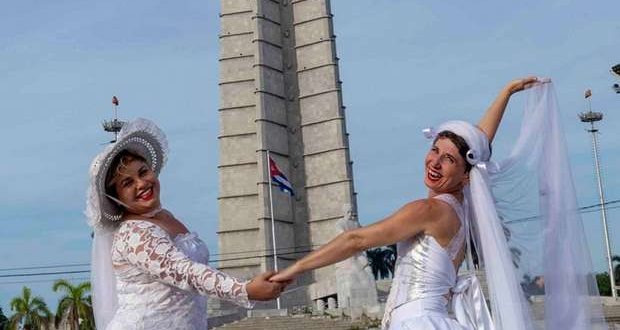
Symbolic wedding in Havana’s Plaza of the Revolution in defense of homosexual marriage, eliminated in the text of the new Constitution, which has unleashed controversy in the Cuban LGBTI community and also in different religious denominations settled in Cuba. Taken from Cubaencuentro.

Iván García, 22 February 2019 — While the television news announces an imminent landing of the Yankee marines in Venezuela for the weekend, and resuscitates phrases from old  speeches by Fidel Castro, Orestes, a Havanan who, among other things, sells liters of bleach at 25 pesos, prepares a sofrito of black beans while the volume of his portable speaker rises with the music of the reggaeton singer Jacob Forever.

“Today I ended up late for dinner. I had to walk almost twenty kilometers selling bleach all over the city,” he says as he starts making the tomato, cabbage and cucumber salad which he will accompany with white rice, beans and a single-egg omelet,” because there are also almost no eggs to be had.”

In addition to bleach, Orestes sells what falls off the truck: flavorings, floor mops or clothes brought in from Panama by the ‘mules’. He lives in a ramshackle room in a collective shelter south of the capital. His topics of conversation are sports, women and the harsh living conditions implemented by neo-Castroism. continue reading

“Cuba has become a jungle. Everyone is trying to survive. And the government continues with its theater. It is rumored that after the referendum on February 24, Canelo (Díaz-Canel) will legalize la bolita (the now-illegal lottery). If that happens, then it will be the government that is going to make the money,” he says, adding:

“I’m going to vote Yes. I have no other choice. Otherwise, the sector chief (police) comes down on you and makes your life impossible. Vote NO and what does it solve? And if the Americans get their hands on Venezuela, they say they’re going to send Cubans to fight there. I would not go, I don’t need anything in that country. Why do I have to fight for Maduro? I would look for a medical certificate where it says I’m crazy. My thing is selling bleach and getting it on with my little girlfriend. There isn’t anything else.”

A few hours after the beginning of the electoral farce that would ratify the future Constitution, I asked all sorts of people in Havana if they had read the text of the Constitution. “One day in my workplace, from up above, they scheduled a debate. I didn’t understand anything. These legal issues are written in a language that only lawyers understand,” says Mara, a clerk in a state cafeteria.

Yadira, a pre-university student, responds: “No, I didn’t read it, I’m not for that.” And how do you plan to vote?, I ask. “I will vote Yes. At my school, in a debate we had, they told us that it was the only way to maintain the gains of the Revolution. We know it’s crap, but nobody wants to look for problems,” confesses the young woman, who on Sunday, February 24, will vote for the first time in her life.

Luis Manuel, a taxi driver, says he read the constitutional text “and that’s why I will mark NO. You have to be very forgetful to vote Yes after living so many years with a foot up your ass. Buddy, it is irresponsible to support a system that does not work and grant it the grace to govern us the rest of our lives.”

Ismary, a bank employee, does not intend to vote. “And if the polling place comes to my house with the ballot, maybe I’ll put Yes, so as not to stand out. But if I wake up on the wrong side of the bed, I’m going to vote No. In any event, if I vote Yes or No, annul the ballot, leave it blank, not go vote, nothing is going to change, everything will remain the same or worse. Diaz-Canel said it already, on Sunday the Yes will win. I do not know why they have elections in Cuba, if they do not want people to vote NO.”

Andres, a biologist, resident of the Capdevila neighborhood, twenty minutes by car from downtown Havana, says that in his neighborhood they prepared a debate “with stooges from the government, to encourage them to vote Yes. But you can’t live on rhetoric or the past, this revolution has already gone to hell. I intend to vote NO because the rulers have not been able to meet the demands of the people. They’ve been living off their story for 60 years, false promises and lies. And everything in life has a limit. It’s been a while since I hung up the gloves. I do not believe in any of them.”

Along with the referendum, the critical situation in Venezuela is a topic of conversation in the streets of Havana. If we give credit to the neo-Castro autocracy, it is only a matter of time before the United States invades Venezuela. And in schools, companies and institutions throughout the island, Cubans are being called to sign a book condemning the hypothetical invasion.

The official story they offer about Venezuela is very simple: Trump has blockaded it because it is a sovereign and independent nation and the United States and the Venezuelan opposition are to blame for all the evils.

The propaganda apparatus of the regime has designed a version of the events that excludes the disastrous administration of Nicolás Maduro, corruption, repression and torture of political prisoners as well as the parliamentary coup of the PSUV of the National Assembly which — after the opposition won a majority in 2015 — took away all its powers.

This strategy works with uninformed people, such as Cubans who drink coffee without milk (because there isn’t any) or with those who, due to the high cost of the internet, only use it to communicate with their relatives abroad and not to learn about what is really happening in Venezuela and in the rest of the world, except for a few exceptions.

“A military aggression by the United States against Venezuela would be a gift to Maduro, because it would justify the disaster by selling him as a victim. Trump is capable of anything. But there is a reality: the hyperinflation in Venezuela, the hunger and poverty have two culprits: Madurismo and the Cuban government, which with its crazy advice has caused the collapse of that nation,” says Sergio, a retired university professor.

Someday, those who have governed Cuba for six decades will have to offer a public apology. In the name of the worst socialism, they have impoverished Venezuela and polarized the country. For twenty years, the Cuban special services and their military advisers have designed defense strategies. The blatant interference of Castroism in Venezuela was proven in an audio, released in 2013, of a conversation between Mario Silva, a Chavista journalist, and Aramís Palacios, a senior Cuban intelligence official.

Caracas is a matter of national security for the Havana regime. They will fight with all the means at their disposal in order to keep Maduro in power. The defense at all costs of Hugo Chavez’s substitute has unleashed all kinds of rumors. In the streets people are saying that Cuba could send troops. “My son is doing his military service and I told him not to sign any paper that would commit him to fight in Venezuela. We are not living in the times of Angola, when many like me were naive enough to fight,” says Armando, self-employed.

Local analysts believe that unless they send elite troops, “Cuba is not in a position to deploy a vast operation like the one in Angola 44 years ago. It would be impossible, with outdated weapons and a precarious preparation. The doctrine of a war ‘of the whole people’ is the case for the military occupation of the country.

But if military events take place in Venezuela, modern warfare strategies should be used, such as air strikes to specific sites with smart missiles. The United States will not disembark troops in Venezuela. It would be a clumsy move that would reverse all the Latin American and global support that Washington has achieved,” predicts a former officer of the armed forces.

According to the prestigious Cuban-American economist Carmelo Mesa-Lage, the loss of the Venezuelan subsidy would impact between 10 and 15 percent of Cuba’s GDP. In an economy in recession, where Raúl Castro’s reforms do not encourage agricultural, productive or industrial growth, losing access to subsidized oil from Caracas could cause a dangerous setback.

Cubans are tired of shortages and false promises. A new Special Period could explode through the air the inoperative barracks economy and the lack of political liberties. And Fidel Castro is no longer there to help get through the disaster.

Havana: Venezuela Sneaks in Between the Tornado and the Referendum / Ivan Garcia

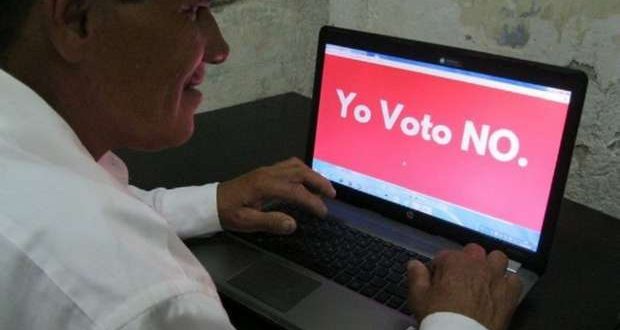
“I’m Voting No.” Source: Diario Las Américas.

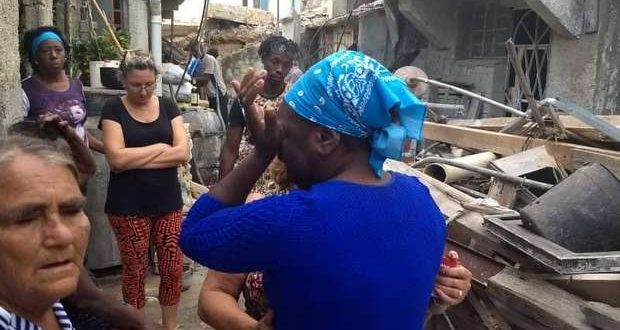
Ivan Garcia, 22 February 2019 — Collecting the masonry rubble and the trees severed by the powerful tornado that it several Havana municipalities on 27 January, when the night falls the residents of Luyano take turns to stand guard until dawn to protect the construction materials piled on the sidewalk, bought at half price from the state stores.

Three weeks later, the inhabitants of the old workers’ quarter are still telling their stories of panic. Ángel, a chef, says that after the government’s propaganda highlighting its own effectiveness in serving the victims, restoring electricity and telephone services, “the Mayimbes* forget to talk about replacing the furniture and appliances that people lost under the collapse of roofs and houses.”

And it wasn’t a small number. The last official count talks about 7,800 damaged houses, of which 730 are total collapses and almost 1,000 partial collapses. The most affected municipalities were Regla, Guanabacoa and Diez de Octubre. continue reading

Angel considers himself a ’wealthy’ neighbor: he did not have to wait for the state brigades to start repairing his home. He already put up the roof plate and two masons are fixing the exterior walls. “But the tornado left me penniless. Where do I get the money? “Inventing” in my workplace. On Saturday, for example, we made the snacks and lunches for several electoral colleges in the municipality of Diez de Octubre that held a voting test in advance of the referendum on February 24. I sold the food that day and invested the money in the repair of my house.”

A few hours before the constitutional referendum, an authentic staging of the military autocracy, which tries to feign democracy, the propaganda of the regime is increasingly unbearable. “It’s an attack by land, sea and air. Not even covering your ears gives you an escape from the chant for the people to vote Yes,” confesses Sheila, a nurse, who recommends using the Weekly Packet to rent movies and American serials to escape the tedious political campaign.

When Mayra is disgusted, as now, while waiting in line to buy chicken quarters at a state market, she says aloud: “On Sunday, the 24th, I’m getting desperate. I’m going to put a big NO on the ballot [for the Referendum on the Constitution]. The government does not do anything right and wants Cubans to applaud their nonsense.”

Social networks became a battlefield of dissidents, both for those who support the NO and those who ask people to abstain, tonot vote. Each and every one of them turn the internet into a boxing ring, but everyone is aware that it would be a great irresponsibility to grant a new blank check to a dictatorship that has failed to administer public services and guarantee a decent standard of living.

According to some analysts, Sunday 24 February will be a victory in the tune of Yes. “But the number of negative or blank votes could approach 35 percent. We are talking about more than three million Cubans. It is a force that grows with each vote. In the near future it will be necessary to take them into account,” says Egberto, a graduate in political science.

Saul, a former diplomat, believes that “the dissidence should have asked in international forums sfor experts to monitor the referendum to protect from possible fraud. That would have placed the government in a dilemma. If it opposed, it was marked as intolerant and there was the suspicion of a plebiscite without guarantees.”

You do not have to be a legal expert to recognize that the future Constitution does not reflect the wide diversity that currently exists in Cuba. The result is a Constitution designed by the regime and for the regime. An ideological text to cement the power in place. Castroism would become a monarchy of a single party. A papacy.

Carlos, a sociologist, affirms that “even winning, the government will be questioned, because if the two million Cubans residing abroad and those temporarily abroad had voted, the majority vote would be NO.” Hundreds of Cubans living for a time in other countries, and who still maintain their rights in Cuba, in social networks have complained that the regime, in a clear violation of current laws, is not allowing them to vote.

“In Ecuador live thousands of Cubans who want to vote, but the embassy told us that to do so we should travel to the island. It is blackmail. Pay seven hundred or a thousand dollars for a round trip just to go to vote. When now, by new technologies, you can vote at a distance. As the government did with its international collaborators, to whom they guaranteed the vote,” says a Cuban resident in Quito, referring to the government’s having assured that all Cubans serving on government missions abroad were given a chance to vote.

In its attempt to win at any cost, the government plays in the arena inclined in its favor. While the regime’s propaganda invites a YES vote, in Caracas the anachronistic left that Fidel Castro founded is fighting for its life. The news from Venezuela sounds worse every day. In a media display, the neo-Castro rulers have burned all their ships. And they have deployed a campaign entitled “Hands outside Venezuela”.

Due to the absolute social control of the regime, in schools and workplaces, they are collecting signatures against a hypothetical intervention of the United States in Venezuela. The Cuban armed forces have joined the chorus of support for the unpresentable Nicolás Maduro. On the street, people wonder how Cuba can support Venezuela, when Cuba itself needs to be supported, especially after the passage of the tornado through Havana.

“If Fidel were alive or we were in the 1980s, when the FAR [Revolutionary Armed Forces] had a modern and logistical weapon to deploy troops abroad, I do not doubt that military officers would have been sent to fight in Venezuela. But the context is different. The generals are dedicated to businesses that generate dollars and the weapons that we possess are antiquated. We have no merchant marine to move large contingents of soldiers. And we should ask ourselves how many Cubans, voluntarily, would be willing to fight for Maduro.

Cuba’s support is only of a moral and publicity nature. When things are heating up there, they send back to the island the advisers in intelligence and military counterintelligence that they have in Venezuela,” predicts a former officer of the armed forces.

For now, the regime’s strategy is to get more than 4 million YES votrd in the referendum on February 24. And entrenched from a distance, attempting to shore up Maduro. As far as it can.

*Translator’s note: Mayimbe is a Taino (pre-Columbus Caribbean native) word for chief. 

“If Maduro Falls, in Cuba We’ll Return to the Special Period” / Ivan Garcia

Stove similar to that used by many Cuban families during the s0-called Special Period in the 1990’s. Taken from the blog Vertientes Camaguey.

Ivan Garcia, 7 February 2019 — John Bolton, Donald Trump’s National Security advisor, is asking autocrat Nicolas Maduro to renounce power in Miraflores and to enjoy a political retirement on a Caribbean beach.  Otherwise, he forecasts a terrorist prison cell for him at the United States’ Guantanamo Naval Base, more than 1000 kilometers east of Havana.

So far, forty nations have stopped recognizing Maduro.  The European Union gave him an ultimatum to carry out free elections, and Juan Guaidó, the self-proclaimed president, is trying to flip the last Maduro bastion: the armed forces.

“I believe that it is necessary for the military to cede and leave Maduro all alone and thus to avoid greater ills, at least the mid-level commanders, because those higher are corrupt and very committed, and they know that their heads will roll next to the president’s.  Let’s hope that is not delayed much because Maduro is already considering the idea of new elections, though not presidential elections, but to restore the National Assembly, and we already know how elections are there, the same as here.

“In fact, that company that was in charge of the technical side of the elections, and was paid money for it, denounced the filth of the process.  Maduro intends a new election in order to manipulate and erase the opposition as usual.  For Venezuelans, it is NOW or NEVER,” says Reinaldo, a retired former history teacher who has followed the events in Simon Bolivar’s homeland since the first coup attempt on February 4, 1992. continue reading

With exceptions, like that of the former history teacher, in Cuba the Venezuelan soap opera is watched without much passion.  The Castro brothers were always allied unconditionally to Hugo Chavez, and currently the neo-Castroite Miguel Diaz-Canel keeps offering military and intelligence advice to Nicolas Maduro.  But there are other political actors involved in Venezuela.  Each one seeks to guard its interests, like Russia, Turkey and China, who have invested billions of dollars in the mining and energy sectors.

In the cases of Turkey and China, if the opposition guarantees a slice of the future economic pie, it does not matter to them how Maduro’s luck may run.  Putin has other interests.  He is looking to establish Russia as a center of world power and in geopolitical strategy to create a conflict in a United States zone of influence.  But if the Trump administration promises to lift economic sanctions on Russia after the annexation of the Crimea or to guarantee it will not lose its investments in Venezuela, the Russian president wouldn’t mind changing his posture.

Several Caribbean islands back Maduro because he guarantees them oil for the price of peanuts.  The US and the EU are counting on a democratic system and on having a partner and not an enemy in Miraflores, for political and economic reasons:  Venezuela has 25% of the world’s oil reserves, in addition to tantalite, gold and fresh water sources.  Cuba supports Venezuela for the simple reason that the late Fidel Castro was the progenitor of Chavismo.

The Cuban dictatorship paved the way to Miraflores without firing a shot or causing a coup.  With absurd ideological prescriptions and erroneous political doctrines, Fidel Castro and Hugo Chavez drove the country to its current precipice.

Maduro’s Venezuela is the best example of what not to do in political and economic terms.  Submerged in poverty, the United Socialist Party of Venezuela (PSUV), the governing party, is incapable of producing enough petroleum to permit feeding a population that, thanks to the “Maduro diet,” has lost on average from 22 to 33 pounds  each due to lack of food.

It’s too much.  An oil country with constant blackouts.  If Venezuela does not change, it will suddenly enter a primitive stage, plagued by criminal gangs.  Startled, the world has seen how a nation that used to have inequalities but was immensely rich, after the arrival of Chavez and Maduro has retreated to the extreme of shared misery, turning survival into a way of life with hyperinflation that raises the price of food every three days.

What is happening in Venezuela is not a priority among ordinary Cubans who have spent decades subsisting on the ration booklet, surrounded by penury and limitations.  In spite of the state media’s deployment of its campaigns and panegyrics to rescue its soldier Maduro, Cubans haven’t been aware of the Venezuelan context.

According to the German newspaper Deutsche Welle, “Thanks to the arrival of the internet to mobile phones, in Cuba citizens can more immediately compare the news about Venezuela published by the foreign and independent outlets, reports quite distinct from the triumphalist and totally biased fanfare of the official press.  The Telesur channel, controlled by the PSUV and broadcast on the Island, has shown a pathological blindness when it comes to counting demonstrators and protests.”

Roger, a nurse who worked in Caracas a year ago, insists that he is better informed than most Cubans.  “The Venezuela that Telesur and [Cuba’s state newspaper] Granma describe is not what I knew.  Eighty percent of Venezuelans demand Maduro’s head, they are fed up with a guy fatter than a mother-in-law, always shouting, insulting and accusing everyone of plotting to assassinate him.  Every time he speaks on television people grab some rum, go out on the street and hit the bottle.  Cuba is very bad, but Venezuela is much worse.”

Jaime, a state taxi driver, asserts that he is more or less up to date on what is happening in Venezuela from listening to international radio stations on short wave.  In his opinion, “The western democracies have rushed to support the claims of Juan Guaidó, a guy very well know in his home.  I don’t like Maduro, nor do I like Trump, but both, although we don’t like them, they are official presidents until they leave or they ‘go’ legally.”

Dagoberto, a baker, does not understand the role of the two presidents.  “Why doesn’t Maduro put the other one in jail?  Didn’t he win an election?  In Cuba no one elects the president, and no one opens fire on us.  The Cuban government supports him because he gives it oil.  Maduro thinks he’s the hottest thing on the planet, but if Venezuela is fucked, in Cuba we’re going to be living in the dark.”

Laritza, employed in a private cafe, says that her mother spent two years on a mission on Venezuela.  “She said it was in flames.  Teens with machine guns on the corners in the poor neighborhoods and at night you can’t go out in the street.  If you drive a car, you can’t stop at the lights.  In Venezuela, everything is lacking, but they have industrial quantities of petroleum:  Give it a kick anywhere, and it spouts black gold.  If they knock Maduro off his horse, in Cuba we’ll return to the Special Period.”

Orlando, a private hairdresser, comments:  “Maduro is a shit cocktail; fat and gaudy, he is unbearable when he speaks and disgraceful when he starts dancing with his wife, who looks older since she dyed her hair blonde.  If they get him out of there, he will surely come here.  I imagine him driving a bus in Havana,” and he lets out a laugh. [Ed. note: in Maduro’s pre-political life he was a busdriver.]

Analysts and economic experts predict that Cuba will enter a cycle of economic decline if Maduro steps down.  “But never like in the Special Period of the ’90’s, when the GDP fell some 35 percent.  Now the economy is more diversified and in spite of the obstacles and regulations, self-employment has been consolidated (recently the Ministry of Labor reported that more than 1.4 million Cubans work in the private sector, 13% of the population).

“Anyway, with or without Maduro, the country is going to enter a recession because there is no substitute for Venezuelan oil obtained by barter.  The Cuban government does not have enough liquidity to spend two or three billion on buying oil on the international market,” underscores a Havana economist.

Occupied in the odyssey of getting food and solving daily problems, with few exceptions Cubans do not have the time or the opportunity to be informed about Nicolas Maduro and Juan Guaidó through foreign or independent media outlets.  With other undertones, Venezuela seems to them too much like what they have experienced.  A deja vu.

Translated by Mary Lou Keel

Cuba: Constitutional Referendum, Food Shortage And Social Unrest / Ivan Garcia

Food market. Source: Diario Las Americas

Iván García, 28 January 2019 – When they saw that a ramshackle GAZ 52 Soviet-era truck was parked at the entrance to the Monaco market, in the neighborhood of La Víbora, south of Havana, and began unloading boxes of eggs, a long line quickly formed. The crowd, made up of housewives, retirees, workers in the area who take advantage of their working hours to buy food, business owners and retailers, tried to organize the line.

Mirta, a housewife, was there all afternoon, but in the end she couldn’t even buy an egg. “Do you think I can vote Yes in the upcoming election to ratify the Constitution? With such a deficient government, many of us from Havana are going to vote No, although we know that this will not change the situation.”

Alfredo, owner of a sandwiches and juices café, annoyed, does not understand “why the government does not put a note in Granma newspaper that says the People of Cuba are incapable. Then, they resign en masse and call for elections where the population can choose another model of a country. Self-employed people lack access to wholesale markets and now the State has rationed the products they sell in the unrationed market. You could only buy one carton of eggs per person. Those of us who have business, what do we do?” continue reading

Mercedes, a teacher, has been trying to get bags of liquid natural yogurt for two weeks. “I suffer from colitis and I have a medical recommendation to eat yogurt. In all of Havana, whether in foreign currency or in national currency, you do not find natural yogurt. But if only that was all. A lemon costs 4 pesos. And to buy fresh bread outside the rationed market you have to stand in line for an hour. In the search for food I lose two hours daily. To the problem of the food I can also add that the building’s water pump is broken, taking a bus is an ordeal and the salary they pay you is an insult. With that list of calamities, one must be very opportunistic to vote for socialism to be perpetuated in Cuba.”

Yania Suárez, an independent journalist, says: “From the people I’ve talked to, especially with young people, they still do not understand the content of what is being voted on, much less the importance of the vote. For them it is a hypocritical process that will perpetuate the state of affairs. They see it as something incomprehensible, boring and useless that those “up there” are doing behind the people’s back for their own benefit, as always. Apathy is what I have seen the most.”

Daniel, who works in a state cafeteria, affirms that in Cuba young people are not for the Constitution or anything. “They say that everything about the government is a lie and they do not believe in the leaders. Many young people talk like that, but they attend the events and go to vote. I do not talk so much, but I do not participate or collaborate with these people (the regime).”

Gerald, a Cuban who lives in Florida and often visits his family in Cuba, alarmed, refers to “the tremendous shortages in all the provinces. Even with enough money you can’t buy what you need. If there is no fraud in the next elections, I am sure that among those who will vote No, leave the ballot blank or not vote at all, you can reach 30 percent or more of the votes. If the almost three million Cubans living abroad could vote, that number would double. ”

Ramón, another Cuban resident in the United States, very active in social networks, confesses that “in all the forums I have put VOTE NO. At least that action will give Cubans the possibility of morally empowering themselves. They will know that they can oppose something, directly and openly, even in the privacy of an electoral booth.

“Mariela Castro said that Voting NO was sabotage and for me that indicates they are shaking in their boots. Millions of NO votes would give the world, and in particular Cubans, the confirmation that there are millions that do not support Castroism.

“No one on the island can bear another ‘Special Period’ and that is what Cuba is heading for if the regime does not change the rules of the game, even if it is in the economy like China or Vietnam. And it does not seem that they intend to do it, so they will continue heading over the cliff.”

Norge, a professor of political science, believes that “for the first time in the 60 years of the Revolution, the ruling caste feels the breath of discontent on their necks. I think there is a terrible fear. Perhaps many regime bigwigs are wondering why the hell they came up with this plebiscite. If they play cleanly, the percentage of negative votes, voided ballots and abstentions could be surprising.”

Luisa, a lawyer, points out that the statistics do not play in favor of the government. “In the last two elections, that of neighborhood delegates and candidates for the National Assembly, even with the symbolism represented by the recent death of Fidel, the number of people who did not vote or annulled their ballot was around 20 percent, plus or minus two million Cubans. Those figures have been increasing in each election. It would not be unreasonable that on February 24, votes against, abstentions and blank ballots exceed three million, an amount to take into account.”

Carlos, a sociologist, believes that there is a lot of fear within the government itself. “Otherwise you can’t understand the fierce campaign that all official media are carrying out to tip the vote in their favor. In social networks, there have been cases such as that of President Miguel Díaz-Canel, who called Cubans who think differently ‘sons-of-bitches’, or the unpresentable Yusuam Palacios, president of the Marti Youth Movement, who, because he lacked the capacity to establish a civilized debate with Internet users, uses threats and offenses. If the promoters of the NO vote had space in the national and provincial press and if the Cubans residing in other nations could vote, the government would lose the referendum on February 24.”

While the debate for or against the future Constitution takes place on social networks and independent and alternative media, in Cuba the regime deploys broad propaganda to win supporters.

“Something that is illegal, because according to the regulations in force, neither the State nor the Communist Party can use electoral propaganda, is on every program at all times,” notes the retired sociologist Carlos Eloísa. “Whether it’s a ball game or a Brazilian telenovela, in the background on the screen that have ‘I’m Voting Yes.’ It’s exhausting. If it’s like this with a whole month left, if they keep up with the same onslaught imagine when there are just a few days before the vote you won’t be able to turn on the radio or TV.”

The same a ball game or during the Brazilian novel. You hang on the back of the screen I vote YES. It is harrowing. If you still have a month left and they’re giving you the same matraquilla, I suppose that when there are a few days left you can not turn on the radio or watch TV. ”

Olga Lidia, a doctor, says “It remains to be seen what the voting intentions are of the indifferent or the zombies, the segment of the citizenry that usually goes to vote and pretends to support the Government, the Party and the Revolution.”

Edgar, a communications specialist, believes that “the government should temper that campaign, because it is counterproductive. The opinions that come out in the news, most of the time do not reflect the diversity of points of view nor the dissatisfaction among ordinary people. In the absence of economic results, what they promote are details, such as the arrival of 450 Russian microbuses and 89 Chinese buses to improve transport in the capital.

“Messages that try to sell optimism. On the street, people say that this is a drop of water in the ocean, because in Havana, for the urban transport service to work, more than 3 thousand buses and 5 thousand taxis are needed. Not the 700 buses that are currently circulating. Many people, in a whisper, recognize that the sate media are manipulative and no doubt when they go to vote, they’ll mark their ballots with a No.”

Paraphrasing Lincoln, you can fool the people one time. But not all the time.

Thousands of People Need Urgent Help in Havana (and the Names of the Deceased) / Ivan Garcia

Luyanó  residents the day after the tornado, which ravished that Havana neighborhood. Taken by the independent journalist Yosmany Mayeta for Cubanet.

Iván García, 2 February 2019 — “An organized society, a planned economy, a socialist government, will always have reserves so that no one is left homeless,” President Miguel Diaz-Canel wrote in his Twitter account.

Nobody in Cuba is left homeless after a natural catastrophe, tragic accident or serious illness, said Fidel and Raul Castro in the almost six decades that held power. The reality is very different.

For example, there are hundreds of Cubans who lost their homes or were seriously damaged by hurricanes that have hit the island in the last seven years and are still waiting for repairs or to be given a home. In Havana, dozens of families, also affected by cyclones, have been housed for more than twenty years, waiting for someone to remember them and provide them with an apartment or a house to live in with dignity. continue reading

According to specialists in meteorology, the tornado that hit the capital at 8:30 on Sunday night, January 27, was formed in the Casino Deportivo neighborhood, located on the border of the Cerro and Diez de Octubre municipalities and extended to Regla, Guanabacoa, San Miguel del Padrón and Habana del Este.

A night guard who was on duty at that time, relates it this way: “A slight fog made it difficult to see on the First Ring of the Port road that leads to the town of Regla. A pile of tiles and work tools flew off to the bay. The brutal force of the wind overturned cargo trucks as if they were toys. One of them was dragged to a corner and turned over. Whatever they say happened, reality was worse.”

The warehouses, workshops and the José Antonio Echevarría wheat mill  were hit by the fury of the tornado winds that in 16 minutes traveled eleven kilometers and crossed five municipalities of Havana. The grass in that industrial zone looks like it was burned by a powerful blowtorch.

Dinorah, a housewife, crosses herself and says that in the Casino Deportivo neighborhood there wasn’t much damage. “But there was a thunderous noise, as if it were something supernatural. Then we learned that it was the tornado on its way.”

Despite the rain and bad weather, there were people connecting to the internet in the Wifi zone of the Monaco park. One of them, Pablo, a university student, says that suddenly the sky changed color, “it became reddish and the buzz was similar to that of the aircraft turbines. The wind storm devastated everything. It pulled a tree from the corner of Santa Catalina and Mayía Rodríguez and put it in the doorway of a house. It broke stoplight as if it were a pencil. When you walk through the places where the tornado passed, it looks like a war zone. ”

The meteorological phenomenon had a radius of from 500 meters to a kilometer in its exit to the sea. Its winds between 275 and 320 kilometers per hour devastated what was in its way. “Terrible, worse than a hurricane. In the area of the Paradero de la Víbora did no damage, but nearby towns such as Santos Suárez and Luyanó were destroyed. It seemed that the mother of all the bombs had fallen to us, recalls Rogelio, a meter reader who lives in Luyanó.

Antonio was at a party at his sister’s house in Santos Suarez when they suddenly felt a bestial howl. “I nevertheless can not believe that. My sister’s house was newly repaired and remained strong and solid, it looked like a bunker. But from a plume the wind destroyed the entire wall of the entrance, threw giant trees at thirty or fifty meters and crushed the cars parked in the block as if King Kong had stepped on them.”

Rosa, her sister, confesses that the problems start now. “Now comes the good part. The stage of recovering losses and rebuilding what is damaged. But I have money and cement bags, when they appear on the black market, sell for 300 pesos. On television, all this chitchat of the government, of municipal micro-industries to make construction materials, but when you need them, they do not appear, not even in the stores that sell in hard currency.”

Aida, a housewife, says she lost part of the roof from rooms in her house. “Some government authorities have come and they give you encouragement, because they have the gift of the gab. But in the real world the help is delayed, until it disappears and nobody remembers your tragedy. People are upset and can’t take anymore. We want them to finish fixing the electricity and start selling, at reasonable prices or in installments, construction materials and household goods for the families that need them.”

In the affected areas, the government began selling bags of cookies, food and some canned goods. In the newspaper Granma, it was announced that the Union of Commerce and Gastronomy of Havana set up 17 tents for the sale of prepared processed foods, in the municipalities Diez de Octubre (eight tents), Regla (four), Guanabacoa (three) and San Miguel del Padrón (two). “If you are careless, that is all that they will give to the victims in terms of food. Luckily the tornado did not cause damage in our humble home, “says Carlos Manuel, retired.

Osvaldo, an accountant for a textile company, affirms that “these people (the regime) have to understand that most people do not have a penny. No one is to blame for that disaster. The best they can do is donate or give away those things. They say that along the Calzada de Luyanó they saw some pinchos (leaders), as fat as pigs, but where I live, no one has come by.

“Diaz-Canel spoke at a Council of Ministers and said that we must shorten recovery times and have a lot of sensitivity. But as always happens in Cuba, the words mean nothing and when they do something, they do it badly. Did you see what Raúl Castro did? He joined the March of the Torches, but he does not deign to tour the neighborhoods damaged by the tornado. And he is the first party secretary.”

In a bakery where bread is sold unrationed, very close to the Miguel Henríquez hospital, in Luyanó, the lines were a block long. Gregorio, master baker, remembers that the day the tornado passed “people held on to each other or clung to the railings of the bakery so they wouldn’t be carried away by the tornado. Look there is a need, times are tough and a lot of people are hungry.”

With immediacy, Diaz-Canel on a Twitter announced that three people had died and 172 were injured. Later it was learned that there were four deaths and the number of injured had increased to 195, although unofficially it is rumored that the injured exceed 300, some in serious condition. “When the Boeing plane crashed, in May of 2018, they immediately gave the names of the passengers, Cubans and foreigners, but now it took four days to give the names of the four deceased, one woman and three men,” says Laura, retired.

According to official figures, 1,238 homes suffered property damage, 123 totally collapsed. There were 625 partial collapses, 224 roofs damaged, 154 partially. Of the damaged homes 112 are of type 1, that is to say with tile roofs, which are rarely affected. The most affected neighborhoods are those of Regla, Diez de Octubre, Guanabacoa and San Miguel, where the powerful EF4 tornado passed, which, in addition to damaging housing, caused considerable damage to public health facilities, such as the Maternity University Hospital of Ten de Octubre, better known as Daughters of Galicia, four polyclinics, a pharmacy and a nursing home.

The authorities reported that more than 100 thousand people do not have electricity, but they have not presented an evaluation of the cost of the losses in state assets. Dalia, economist, believes that “damages to companies and institutions of the State, in a superficial calculation, can exceed 600 million dollars. To this we must add the containers of goods that were damaged and part of their cargo was stolen, something that the press has not reported. Fifty state transportation vehicles suffered some kind of damage.” Even less is known about the damage and losses suffered by private entrepreneurs who had businesses in the four municipalities where the tornado passed.

While the State continues with its mottos and slogans and slowly prepares to help the victims and assess the amount of damages, musicians and artists are visiting affected neighborhoods and making donations from their own pockets.

Under the motto Fuerza Habana (Havana Strong), individual and collective campaigns were activated on Monday, January 28. By personal initiative, they have brought food to the affected areas. The singer Haydée Milanés uploaded a video to her Twitter from one of the affected sites and asked those who were willing to help, to do so. Periodismo de Barrio tweeted that the duo of Yomil and El Dany, plus Diván and Alex Duvall, in addition to the rocker Athanay, distributed water jugs, soft drinks and other products in Jesús del Monte, Luyanó. The actor Andy Vázquez, of the Vivir del Cuento TV program, toured affected areas and comedian Ulises Torac wrote that “there are people without homes walking around asking for votes,” a reference to the government mobilizing hundreds of university students and soldiers to touring the devastated areas wearing shirts with the slogan “I’m Voting Yes,” on the February 24 Constitutional Referendum.

Spanish singer Alejandro Sanz and Cuban actor Luis Alberto García appealed for solidarity so that all humanitarian aid from abroad can reach Cuba for the victims of the tornado that hit Havana, free of restrictions and customs duties. The reggaetonist Osmani García went to Díaz-Canel and told him that, “like other global artists, we are spokespersons and ambassadors of our people throughout the world.

“Therefore, we have the duty and responsibility to speak for those who can not and do not ask for help. I know that you are a good father of a family, please it is necessary and urgent that a humanitarian channel be opened in Cuba so that the thousands of victims of that terrible tornado can receive donations and help from the world,

For some time, Cubans living on the island have considered that the government should decree a customs moratorium and free of cost, deliver the packages coming from abroad. “They talk about human rights without blushing their faces, but they charge dearly for the family help packages that come from outside. A few days ago, my daughter-in-law who lives in Europe, sent clothes and some gifts for my daughter’s birthday and to receive the box, which weighed little more than 4 kilos, I had to pay 50 cuc [roughly $50 US]. It is an abuse.

“Because of the anguished situation that so many people are living through, in Havana because of the tornado, but also in the rest of the country, where there are still families affected by floods and the passage of hurricanes, they should authorize the sending of packages at no cost to the recipients. Three months ago, milk powder was impossible to get in Havana, not to mention the scarcity of bread and eggs, among other products,” complains Marta, a housewife.

Despite the campaign that emerged on social networks (and which have been echoed by Florida media and independent Cuban sites), calling for a humanitarian aid channel to be opened, to date, the regime has only opened a bank account in pesos and another in convertible currency for those people who want to help.

In a country of excessive control, only the State has the green light to receive and distribute humanitarian aid. They do not even permit stipulations on how and where the donations are distributed. It is the intrinsic nature of a totalitarian system. The individual and spontaneous initiatives sound like an enemy plot against the Castro regime.

Names of the deceased

Lázaro Javier Ruiz Varela, 23 years old, from Mayabeque and resident of Cintra No. 55 between Empresa and Reyes, Cerro, Havana. Cause: When the bus in which he was traveling overturned, he suffered a fracture of the base and vault of the skull, with severe brain contusion, causing injury to upper nervous centers.

María Esther Linares Deroncelé, 56 years old, from Santiago de Cuba and resident of Calle H No. 26 between Adolfo del Castillo and Final, Guanabacoa, Havana. The collapse of the roof of her house caused severe thoracic-abdominal compression, causing acute anemia.

Juan Francisco Cuesta Kessel, 79 years old, native of Havana and resident of Calle 377 No. 17823 Apt. 10 between 178 and 184, Mulgoba Neighborhood, Boyeros, Havana. The collapse of the roof of his house caused him chest and abdominal compression, causing him to suffocate.

Ronner Hernández Caso, 42 years old, from Pinar del Río and resident of 3rd Avenue. No. 1410 between 14 and 16, Caraballo, Jaruco, Mayabeque. The bus in which he was traveling overturned, causing an acute subdural fracture and subarachnoid hemorrhage that caused him intracranial hypertension. He was operated on, but died.

In that list, released by Civil Defense and published in the Granma newspaper on January 31, does not include the case of a 13-year-old teenager who died from electrocution by a high voltage cable, while helping a neighbor in Mangos Street No. 133, Santos Suárez, Havana.

Note: On Friday, February 1, Cubanet reported that in a video posted on social networks showing residents chasing after an official delegation headed by President Miguel Díaz-Canel shouting “shameless,” The official delegated ran and hurriedly got into their vehicles. This happened in Regla, one of the localities most affected by the passage of the 300 km/h tornado that hit Havana on the night of Sunday, January 27. Three of the four dead and at least 50 of the injured are from Regla.

How Cubans See the Crisis in Venezuela / Ivan Garcia

Whenever he traveled to Havana, Nicolás Maduro met with Fidel Castro. The image is from March 2016 and was taken from La Razón.

Iván García, 5 February 2019 — After the daily rush, Aleida, a housewife, goes out in search of fruits and vegetables and other foods in the market. At lunchtime, thanks to her culinary creativity, she turns three chicken legs into six little servings. After cleaning up, she sits down to watch the Brazilian telenovela and when it is over, she tunes into Telesur, a news channel founded with the petrodollars of the late Hugo Chávez and managed by the propaganda wing of the Venezuelan PSUV and the Department of Revolutionary Orientation of the Cuban Communist Party.

At that moment, the unpresentable Nicolás Maduro, with a frown, is attacking Trump and “Yankee imperialism.” Aleida turns to her husband sitting next to her, and asks, “And now what happened in Venezuela?”

“I don’t know, on the radio I heard there’s a coup d’etat. How strange, without tanks or shots. A guy named Juan Guaidó says he is president. I do not understand anything. Turn that off and let’s watch a serial from the weekly packet,” replies her husband. continue reading

Nor does Rubén, a winemaker, understand the Venezuelan situation. “Maduro is always screaming and cursing at someone. Who would think to make a busdriver president? In Venezuela, scandals and problems follow each other and have no end.”

Denise, a university student, is more informed. Her father is a doctor and he is working on a mission in Maracaibo, Venezuela. “That’s a mess. No food, a pound of pork has one price today and in three days costs twice as much. According to my father, the majority of the population don’t like Maduro, but there is also a certain distrust of the opposition. However, Guaidó has come across well, he is young and when he speaks he seems like an ordinary Venezuelan.”

With the exception of political analysts, journalists, dissidents and well-informed people, Cubans are unaware of what is happening in Venezuela. Norge, a graduate in political science, believes that “the manipulation of information in the national media and in Telesur is atrocious. In the press, you can’t find statistics the on hyper inflation (in Venezela), the depreciation of the Bolívar (national currency), the decrease in oil production, much less can you can read a report or a report about the hardships, hunger and lack of medicines in Venezuela.”

Alicia, a designer in private business, says that in Cuba they blame the United States, the opposition and private businessmen for the economic difficulties in Venezuela. “The political situation where Guaidó proclaimed himself [interim] president and pointed to Maduro as a usurper, is not explained in [the newspapers] Granma or Juventud Rebelde. You can not read a serious analysis that provides elements to understand the current state of affairs in Venezuela. Then they say that the Americans are to blame.”

The Venezuelan context has the ingredients of a Hollywood thriller. Espionage, corruption to spare, violation of human rights, torture, degrading treatment of political prisoners and even alleged suicides.

From the Island, Maduro’s Venezuela is seen as cornered between the ideological scams of the Cuban regime and the advice of the Special Service troops of Castroism. The lack of liquidity, the economic crisis and the isolation from the West has caused Chavismo to become a toady of Russia, China and Turkey.

“On January 24 and 25 I woke up early, with the TV remote in my hand. From the bed I expected to see the news of Maduro’s departure, almost certainly to Cuba, but unfortunately it did not happen. It is a real pity that the Venezuelan military commanders have not made the leap, but that reaction is normal, because they are corrupt to the core. They live on perks like the generals here. And in the case of Venezuela, we must add influence peddling and drug trafficking,” says Rolando, a secondary school teacher.

Recently, in the newspaper ABC, a story was published entitled “This is How Chavismo’s Children Spend their Nights in Madrid.” It focuses on Mitchell Padrino Betancourt, eldest son of Defense Minister Vladimir Padrino López. “Mitchell knows well the intricacies of the Madrid night and engages in long revelries regardless of the day of the week. He knows how to get the most out of the wee hours with expensive champagne, hookahs and a lot of reggaeton.”

Mitchell and his sister Yarazetd study at Madrid universities. Both were born of the marriage of Padrino with Yarazetd Betancourt, daughter of a colonel. A source told ABC that “Padrino’s children frequently leave home for security reasons, travel a lot to Venezuela, but right now no one knows where they are.”

For Professor Rolando, “all that and more happens with the approval and the special and express advice of the Cuban misgovernment. The penetration is so evident that Maduro now appears with Interest Sections [stand-ins for embassies when there were no formal relations], those that opened in Havana and Washington before relations with the United States were re-established in December 2014. There can be no stronger evidence of the presence of the hands of Cuba in Venezuela.”

Venezuela has long ceased to be sovereign. Silently, without firing a shot, Fidel Castro, with the authorization of Hugo Chávez, began to control key points of the power structures in the South American nation. Military advisors and Cuban counterintelligence have access to privileged information, be it the control of identity cards and passports and customs, or military strategies in case of an aggression from the United States.

Fidel Castro achieved an unprecedented political feat. With a third of the population, a miserable GDP and an army with obsolete weaponry, he managed to colonize Venezuela at the stroke of ideological ingredients. Like tropical Rasputins, the Cuban advisers walk around Venezuela’s Miraflores Palace advising the cream of the Chavista executive.

In the vast operation of managing a country from a distance, the island regime has distorted the rules of the economic and productive game in Venezuela. Castroism has a significant share of guilt in the bestial Venezuelan crisis. In addition to getting oil at rock bottom prices, Cuba obtained billions of dollars in subsidies.

Like a leech, the olive green autocracy has sucked resources, managed operations to buy food with high cost overruns, and re-exported Venezuelan fuel at international market prices. If we give credit to international scholars, in these twenty years of Chavismo, Cuba has obtained benefits equivalent to one hundred billion dollars. Maybe more.

ALBA — a kind of European Union for Latin American and Caribbean countries, designed by Fidel Castro and Hugo Chávez and with the participation of leftist governments or those dependent on Venezuelan oil — never worked. “Fidel said that thanks to ALBA, in Cuba, chocolates, toys and cans of sardines would be sold at reasonable prices and Cubans could go as tourists to Margarita Island. Everything was a lie,” recalls Ignacio, a retired cigar worker.

In the offices of the Palace of the Revolution a space and a common currency, the Sucre, was delineated. Half jokingly, half seriously, the comrades of the PCC (Cuban Communist Party) and the PSUV (United Socialist Party of Venezuela) called their alliance “Cubazuela.”

When the economic crisis in Venezuela worsened, due to the fall in oil prices, Chávez’s handpicked successor opted for new credit lines with Russia and China. The debt between Cuba and Venezuela then grew. Currently, the United States is one of the few countries that pay cash for their purchases of Venezuelan fuel. Oil exports to China are pay downs on the debt. Russia has invested ten billion dollars in the oil sector and Turkey has received concessions for mining and gold mining.

With his erratic economic policies and concessions to great powers, in search of support and geostrategic balance, Maduro has sunk Venezuela and transformed the rich country into a poor nation and a hostage of external political chess.

Because of his great irresponsibility and ideological blindness, and for the good of Venezuela and the Venezuelans, Nicolás Maduro should resign now.

Independent Taxi Drivers in Havana Revolt / Ivan Garcia

Dozens of people wait for a private taxi at a taxi-stand in Centro Habana. Image by Juan Suarez from the Havana Times.

Iván García, 14 December 2019 — Without a union to defend them or any organizational structure behind them, thousands of Havana taxi drivers have agreed to stay home in the coming days, says the driver of a dilapidated 1948 Ford with a German engine and automatic transmission.

Let me introduce you to Ignacio (not his real name), a burly guy with a gravelly voice who fires off words at amazing speed and who has been driving twelve hours a day through the Havana’s dilapidated streets for twenty years.

“The decision not to go to work was spontaneous,” he says. “No one ordered it. It’s the result of a confrontation caused by the government, which is trying to reduce our numbers by decree. We have been in their crosshairs ever since self-employment was legalized in 1994. continue reading

“In spite of all the serious transportation problems which the government has not been able to resolve, the authorities have refused to sit down with and talk with us to come to some consensus. Last year, when we started charging flat fees for fixed routes, the government decided to impose restrictions without consulting with the taxi drivers. Nothing positive has come out of this war. It’s the people who are suffering.”

According to Ignacio, “95% of the fuel on which the private transport sector relies is supplied by state agencies. It’s not our fault there’s so much corruption. Having to buy fuel from CUPET (Cuba Petroleo, a state-owned company) reduces our profits substantially. Most of our cars are made up of parts from here and there. Given the heavy daily use and the poor condition of roadways, something is always breaking down.

“Since 2017 we have been willing to negotiate with the state in hopes of reaching an agreement acceptable to both sides but they have always refused. What they did instead was threaten to take away our licenses and impose fines. Agents  from DTI (Technical Research Department) and State Security began to harass those who were openly calling for a strike.”

He adds, “Though it didn’t ask us for our opinions, when the government published the new rules a month ago, they did include some things we had been asking for, such as a subsidized price for gasoline and a wholesale market for spare parts. But we have no guarantees and most of us disagree with the requirement to open a bank account.

“At first we have to set aside 80% of what we earned. It’s now been reduced to 65% but that is still very high. It’s also very inconvenient. There are very long lines at the bank to deposit or withdraw money. And banking hours are from 8:00 A.M to 3:00 P.M., hours when taxi drivers are working.

“The regulations for taxi drivers who choose to work without depositing their money in the bank and who don’t receive 220 liters of gas at the CUPET price (around 5,500 pesos) is simply absurd. Since it refuses to have an open dialogue with us, the government has left us with only one option: to not go to work.”

Gisela, a government ministry employee who frequently uses collectively owned taxis, says, “The problems with privately owned transport began more than a year ago and have gradually been getting worse. The straw the broke the camel’s back happened last Friday, December 7. I spent three hours on Tenth of October Avenue and only six or seven private taxis went by, all of them full. The only options were to struggle with the buses or find a cooperative taxi. The government should talk to the drivers because they don’t have ready solutions to the ongoing transportation crisis in the capital.”

The regime’s response has been to look backwards. Minister of Transportation Adel Izquierdo assures the press that “before year’s end, four hundred microbuses from twelve locations and ninety buses, sixty of them articulated, will be put into service.”

The announcement has led to increasing complaints from Havana residents who note that, if authorities had vehicles in reserve, they should not have waited until the situation reached its current extreme.

Posts in official digital media criticize authorities for their inability to manage the public transport system. Pedro, a Havana bus driver with forty-years’ experience, believes, “These measures are just a band-aid. In the 1980s the city had 2,500 buses and 5,000 to 6,000 government-run taxis. Now there are only 700 buses and 200 taxis. That’s not enough to meet the demand of more than a million passengers a day. And though 12,000 almendrones* have been added in the last two or three years, it’s still not enough to meet demand.”

André, a transportation specialist, notes, “There’s nothing wrong with the way the main bus routes P and A are laid out. But for a P route to function properly, there should be thirty buses coming every five to eight minutes. That’s not happening. At the moment there are more than 200 buses out of service due to a lack of spare parts. China stopped selling them to us due to unpaid bills.”

Arturo, the shift manager at the Santa Amalia terminal in Arroyo Naranjo, reports that on December 7, before the strike was announced, “Transmetro buses and school buses are added to the routes.” On that day police cars and plain-clothes agents patrolled the area surrounding Fraternity Park, where various independent taxi routes converge, trying to pressure independent taxi drivers.

“They took away my DSE (Department of State Security) card and threatened me, saying they could decommission my car. I used the excuse that it was broken,” says a taxi driver who works the route from Fraternity Park to Playa.

“These people are tightening the screws on us. They mean business and are trying to pressure us to work under their conditions. Most of us are not going to accept that. It has been reported that the government had changed or cancelled the regulation it was going to apply to self-employed workers and independent artists, so I don’t understand why they are taking such an aggressive stance with us.”

For Ignacio, who drives an old 1948 Ford, it is a matter of resisting. “If we insist on our rights, the government will change strategy. But we have to keep shouting,” he says.

In the first eight months of his mandate, the hand-picked president Miguel Díaz-Canel has demonstrated that he knows how to listen. And also how to retreat if the circumstances require it. At least that’s what he expressed on Twitter on 7 December: “There is no reason to believe that rectifications are setbacks, or to confuse them with weaknesses when listening to the people.”

*Translator’s note: Restored 1950s American sedans used as taxis by their individual owners.