The arrival of fuel is stimulating traffic and bringing vehicles back to the streets, while blackouts lasting more than 20 hours continue to affect life inside Havana’s homes
 14ymedio, Yoani Sanchez, Havana, October 3, 2026 / I cross Tulipán Street and immediately notice something different. There iss more traffic than a few weeks ago, sufficient to make me lose the habit of looking twice before crossing to the other side. A red Lada forces me to quicken my pace to reach the sidewalk before its wheels hit the enormous pool of sewage surrounding the 19 de Abril Polyclinic. The city seems to be moving again, even if it’s through pestilential waters.
I climb the hill. Below the two twenty-story buildings, the open-air garage sale begins to fill up. On improvised tables and clothes racks appear objects that summarize the needs of the moment: a suitcase for someone planning to leave, a folding chair for someone who needs to wait for hours in front of a bakery at the rationed market.
26th Street has also come alive. It must be the gasoline arriving in large quantities from the United States, injecting movement into the cavernous bodies of the Cuban economy. In doorways and private homes small hardware stores have sprung up; on one corner a restaurant shines with freshly varnished woodwork, and a new line of electric tricycles connects the Iron Bridge over the Almendares River with the Clinical Surgical Hospital.
26th Street has also come to life. It must be the gasoline arriving in large quantities from the US, injecting some life into the cavernous bodies of the economy.
However, there are few people walking. It’s Friday, and the weather has cooled down. A layer of clouds makes the journey more bearable, but what our legs appreciate, our batteries lament. Our solar panel hasn’t given us a single watt for two days. With blackouts that last more than 20 hours, a cloudy day is a curse: it cools the early morning and allows us to do without the rechargeable fan for a while, but at dawn there won’t be any sun to recharge it either. The entire Cuban energy dilemma is encapsulated in that paradox. continue reading
On the other side of the Iron Bridge, on 31st Street, a privately owned restaurant is packed shortly after 10:00 in the morning. Lined up outside are modern cars. Inside, customers sip smoothies, nibble on snacks, and take selfies. Another sign that fuel is flowing, although it is also a barometer of who can afford to convert that circulation into consumption.
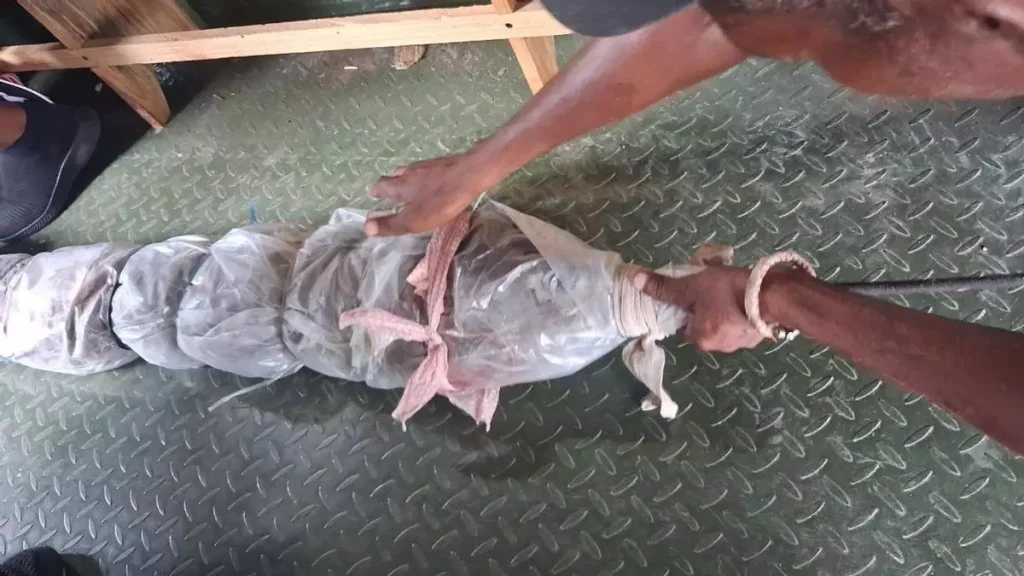
After visiting a friend, I decide to head back, trying out the new tricycle route. A green one is about to leave. In front of me, a passenger is placing a huge, freshly caught marlin on the floor. The fish is wrapped from head to tail in successive layers of clear plastic bags, secured with strips of cloth and string, like a marine mummy. Only its long, dark, thin, and rigid beak remains exposed, pointing toward the back of the vehicle. Each new passenger carefully calculates where to place their feet to avoid stepping on the body, which occupies a good portion of the aisle. Hemingway would have been captivated by the scene.
The tricycle laboriously climbs up to 23rd Street. Then we pass by the wall of the Colón Cemetery and end up back on 26th. At Tulipán I get off, dodging the now rigid fish for the last time, which will probably end up distributed among several tables or sold in pieces.
I walk home and, upon arriving at the building, discover a small miracle: the little red lights above the elevator doors are on. There’s electricity. I step into an elevator for the first time in weeks and upstairs immediately start the washing machine. We have to take advantage of every minute of electricity like we used to make the most of a downpour by filling buckets. The anxiety to get things done when the power returns gnaws at us with the same intensity as the guilt we feel if we don’t manage to get everything done during those brief moments of illumination.
The wash cycle doesn’t even finish because the power goes out again.
Outside, the city is somewhat more animated: the red Lada, the cars in front of the restaurant, the tricycles climbing the hills, and even that needlefish voyaging through Havana. Gasoline has brought movement back to some streets, but not enough to light up the houses. Cuba is starting to move again, even if the end of the road remains dark.
Read More Havana Chronicles Here
______________________
COLLABORATE WITH OUR WORK: The 14ymedio team is committed to practicing serious journalism that reflects Cuba’s reality in all its depth. Thank you for joining us on this long journey. We invite you to continue supporting us by becoming a member of 14ymedio now. Together we can continue transforming journalism in Cuba.