Somos+ Prepares for its Convention Under Police Harassment / 14ymedio

Eliecer Avila and the organizing committee for the Convention of the Somos+ (We Are More) Movement

14ymedio bigger14ymedio, Havana, 9 January 2016 — The independent movement Somos+ (We Are More) is experiencing intense days as its annual convention approaches, due to a strong police operation against its members. The arrest of activist Joanna Columbie last Thursday in Santiago de Cuba, raised the tension around the event scheduled for 14 January several degrees.

Police pressure has included threats to the majority of Somos+’s members living in Cuba, and police warnings that the meeting would not be permitted. The national coordinator of the group, Manuel Diaz Mons, was also arrested and later released, after an exaggerate options in which several vinyl posters with the Somos+ logo were confiscated. continue reading

There whereabouts of Joanne Columbie remain unknown. If is the second occasion in less than six months in which the former municipal education methodologist has been jailed to prevent her traveling to Havana for a Somos+ meeting. Last September she was taken to the police station in the city of Cespedes in Camaguey, where she lives.

Members of the group strongly denounced the police operation that tool place “in several provinces against people with responsibilities for preparing for the annual convention.” The activists also reported that several members of the organization had their email service cut off by the State entity Nauta.

In a document released Friday, the leader of the organization, Eliecer Avila, condemned “energetically these actions against a peaceful convention,” and warned that they would go ahead with plans to hold the meeting.

Somos+ is a movement created in March of 2013 by Avila, who defined it from its beginning as a group “concerned with opinions and with ideas for future, that many of us share.”

Last Opportunity / 14ymedio, Reinaldo Escobar

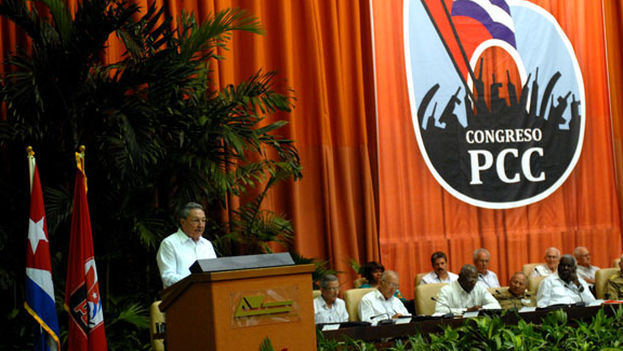
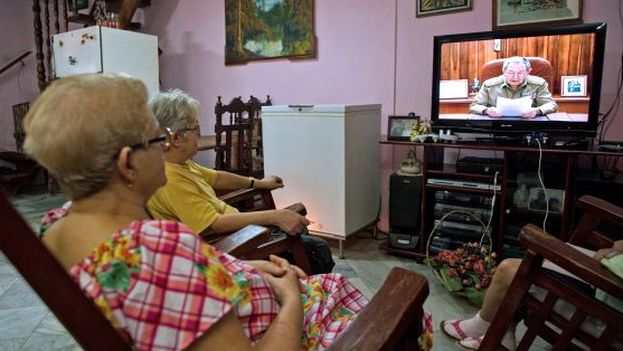
President Raul Castro at the inauguration of the Sixth Congress of the Communist Party of Cuba

14ymedio bigger14ymedio, Desde Aqui, Reinaldo Escobar, Havana, 11 January 2016 — In fewer than one hundred days Cuba’s current leaders will make public their proposals looking ahead to the year 2021. The Seventh Congress of the Communist Party of Cuba could be the last opportunity left to the self-named “historic generation of the Revolution” to make concrete proposals to solve specific problems. The conclave also represents an occasion to outline a road map of eventual relief, through the often announced, “conceptualization of the model.”

However, having the opportunity to elaborate proposals for the future is very different from counting on the receivers of the promises being able to believe in them. continue reading

Free citizens, in modern democracies, are usually impatient with leaders who don’t meet the terms of what they say they will do. They punish them at the ballot boxes and take to the streets to demand their resignations. The inmates of a prison, in contrast, easily renew their hopes that improvements will come, because the only alternative is to jump the walls of the prison or to plot a riot, where they would be playing with their lives.

A simplified list of the unfinished business of the Cuban government would include aspects such as the insufficiency of wages, the dual monetary system, the lack of productivity and the lack of attractions for foreign investment. To that we would have to add issues of housing, public transportation, shortages and communications. Not to mention deeper issues, such as the lack of political and economic rights.

But students who fail to complete their school assignments have limited chances to get their work re-graded or to take special exams. Nor can they repeat a grade in school every time they want, because there is a limit – let’s say a moral one – to asking for another opportunity, and another limit for granting it.

To many it may seem exaggerated to compare the situation of Cubans with those of prisoners in jail, but it would be even more absurd to equate them with the citizens of a functioning democracy. The truth is that those who do not want to escape, or who are not disposed to riot, convinced they have no power to decide anything at the polls, may be tempted to offer another opportunity, but not in response to just any promise!

The Cuban leaders repeatedly failed. They have not been able to shape the “New Man,” nor have they brought material prosperity and economic equality. They have not eliminated poverty, nor slums; they have not been able to peer into the socialism that 29 years ago they said “now, indeed,” they would construct. The only decent thing that remains is to propose a profound and immediate change.

They have fewer than one hundred days in which to do it.

Eduardo del Llano’s ‘Epic’ / 14ymedio, Luz Escobar

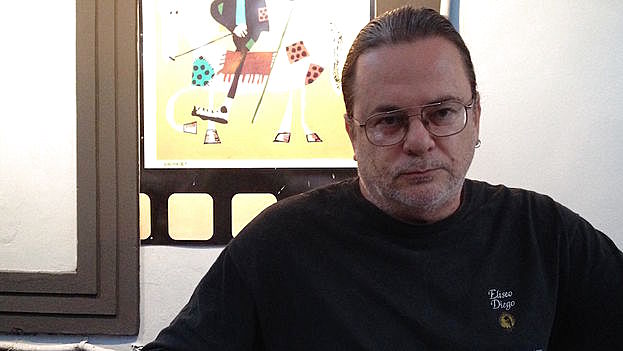
Cuban filmmaker Eduardo del Llano. (14ymedio)

14ymedio bigger14ymedio, Luz Escobar, 10 January 2016 – A Cuban jaded in the cynicism of the present travels back in time to the year 1960 searching for the lost epic. The story of someone who wants to regain the enthusiasm around a social project that turned into something very different from the dream, will move and amuse those who see the latest short film directed by Eduardo del Llano.

Epic is a touching portrait of some people’s disappointment and others’ Utopia, blending the absurd, science fiction and drama. Its director, scriptwriter and principal architect talks with 14ymedio about his latest film “creature” and other demons of filmmaking.

EscobarWith your latest short film Epic are you returning to science fiction?

Del Llano. In Epic science fiction is like an anomalous element that allows me to make contact between a Cuban of today and another from the sixties. This latter is also a Cuban who is real and very important in Cuban culture, a Cuban who existed just at that moment when everything was epic, when everyone believed in the Utopia, and it seemed like everything would turn out well. The expectations generated in contrasting the Utopia with the actual result, obviously would have been impossible in a strictly realistic narrative. continue reading

The idea was to be able to present, with a more or less logical premise – one that allows the viewer to suspend disbelief – a Cuban of the present and another from the past, both situated on the two extremes of the chain, not the food chain but the utopian ideological chain.

EscobarEpic was presented at the last Havana Film Festival. Will it go into regular screenings in the coming months?

Del Llano. I don’t know if will be scheduled, but I don’t much care. For me, it was very important that it was shown in the last Festival, although they gave me the worst possible times. At the Chaplin Theater, on a Sunday at ten in the morning, and, even worse than that, at the Infanta multiplex on Saturday at half an hour past midnight. Even I didn’t go there…

EscobarHow did the audience react?

Del Llano. People had a kind of catharsis. When it ended they clapped and even shouted “Bravo!”

EscobarSurely this short will circulate in the weekly packet. How do you deal with piracy?

Del Llano. It has been a problem. I think I know pretty well how to make a movie up to the moment it ends, but I don’t have the slightest idea what to do with it then. Internally, I have no problems with the packet, I think it’s the Cuban equivalent of any broadcaster in the world. Where there is everything from the most ridiculous like Case Closed, to the highest quality Scandinavia cinema.

EscobarSex Machine Productions is a pioneer among independent producers. How has it managed to survive despite having no legal recognition?

Del Llano. Sex Machine Productions was a gentleman’s agreement between Frank Delgado, Luis Alberto Garcia and Nestor Jimenez. We agreed that we would do things like this as a cooperative, where I pay what I can and if at some point we hit it big and earn a lot of money, it will be distributed based on determined percentages that we adjust at that time, but it is not a producer in and of itself.

Sex Machine Productions is me. There are shorts where the character of Nicanor* does not appear, nor is there Frank’s music, nor do Luis Alberto or Nestor act in it, but it comes out under the same logo.

EscobarYou have feature films and many shorts. In what format do you feel more comfortable?

Del Llano. At one time I said that would only make shorts, not out of conviction, but because I felt comfortable with the shorts. Even my two feature films are not very long, one is 61 minutes and the other 73 minutes.

EscobarWhat genre do you prefer?

Del Llano. I always thought – and I’m paying for it firsthand – that in Cuban cinema we should have science fiction, terror, erotica. I took the risk and now I’m coming up against the idea that, “and now this movie doesn’t seem Cuban because there are no prostitutes and no salsa music.”

Escobar. Are you a part of the group of filmmakers that is promoting a new Film Law, the so-called G-20 group?

Del Llano. There are a lot of misconceptions about what the G-20 is. We are a gathering of filmmakers where there are no directors, no art directors, no photography directors, and we meet as if as we are going to put fifty or sixty people to the task of writing a text, we choose a kind a “central committee” so there is an executive arm.

If at a meeting there is an agreement to draft a document, they are responsible for writing it. This is the G-20, but it is not “20 filmmakers fighting for a Film Law in Cuba,” because we are much more than that. Nor are we always the same people, although there are faces that remain, out of respect and visibility, which is the case with Fernando Perez.

EscobarWhat have you achieved with your demands?

Del Llano. From the beginning we have tried to work with what is established, because it is about a law, not about a revolt. We have tried to fit it into the legislation that already exists, but also to start expanding it. At the first meetings there were representatives from the Ministry of Culture, I don’t know if there was also anyone from the Cuban Writers and Artists Union (UNEAC), but they don’t come anymore. I feel like they are waiting for us to get tired.

The October meeting last year ended with the adoption of a draft Film Law. The ball is now in their court.

EscobarAnd so what’s missing?

Del Llano. What’s missing is someone who comes along and says, “this isn’t the way to do this and this”… to see it through the eyes of the censor, of the other side. In this sense we are a little stagnant, which doesn’t mean we are going to give up. We are not going to stop insisting, but we see no response.

EscobarThe last meeting was fraught with tension…

Del Llano. Hopefully not, but I suspect that the last meeting where the incident occurred with Eliecer Avila, they are going to use that to say, “See what happens when you meet,” and then throw some more shit on is. I Am not aware that it is going to be like this, but I suspect it.

The same attitude of ejecting someone from a gathering because they are considered “counterrevolutionary” is as if they were some Saint Benedict that you can’t get rid of, as if they were synonymous with a provocateur. Eliecer was sitting behind me and remained silent the whole time. Even when the issue came up of throwing him out.

Then, indeed, ICACI and UNEAC appeared saying, “we are revolutionary filmmakers.” So they did respond to this. What worries me is that the ICAIC, which the whole time has said it is on our side, reacted with this level of intolerance against someone who thinks differently.

EscobarWhat projects are you working on?

Del Llano. What I have in hand are fake documentaries. I really like this format that few in Cuba have done. I did The Truth About G2 [Cuba’s State intelligence service], and the things that I have in mind come from that. For example, I published a novel last year and when Luis Alberto Garcia read it he said to me, “We have to make this novel into a movie.” For now it would be hard to do that because it requires an enormous budget.

It is titled Bonsai and is about a town in Pinar del Rio which is isolated from the rest of Cuba and there they build communism, but by chance. Even the things they do they don’t do well, but it comes out fine, thanks to chance. They construct a viable communism, with freedom, with democracy, with positive economic results, like it should have been, where everyone in the world does well.

I would love to film that story.

*Translator’s note: Nicanor O’Donnell, played by Luis Alberto Garcia, is the “anti-hero” character in several of Del Llano’s films. Read more here. The films are on YouTube, in Spanish

The Day the Prisoners Are Freed in Venezuela / 14ymedio, Carlos Alberto Montaner

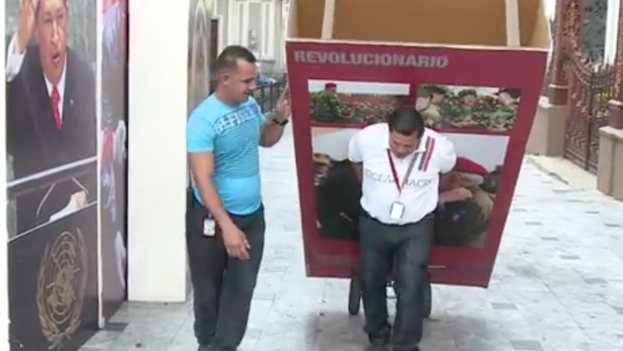
Photographs of former President Hugo Chavez being removed from Parliament. (Youtube)

14ymedio bigger14ymedio, Carlos Alberto Montaner, Miami, 9 January 2016 – I couldn’t avoid the sense of déjà vu. It brought to mind Eduardo Suarez, formerly with El Mundo, a professional of the image with a fine instinct for the news. Hugo Chavez’s photographs being expelled from the new Venezuelan National Assembly brought back to me the unforgettable episodes at the end of European communism, with the statues of Stalin rolling on the ground in the midst of a glorious dust.

Somehow, what happened in Caracas is a continuation of those events. It is with good reason that the Chavistas and their fellow travelers proclaimed themselves cultivators of 21st Century Socialism, although with much less violence than that of the 20th century, but with the same level of incompetence and perhaps even more corruption. It was the enormous amount of patronage, collectivism and disdain for the ways of liberal democracy that allowed this to happen, in the time after the fall of the Berlin Wall and the total discrediting of Marxist superstitions. continue reading

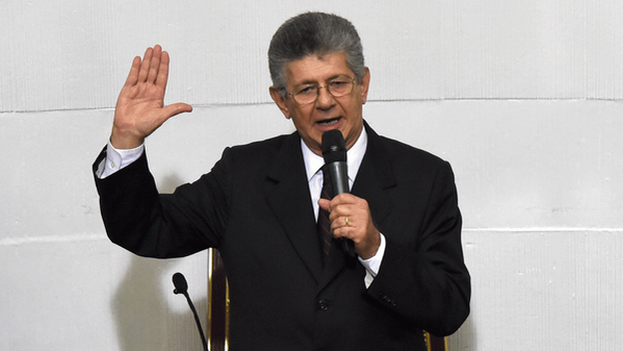
Henry Ramos Allup, the new president of Venezuela’s National Assembly, has done well, starting his work without fear. Not only does he have reason behind him, but also the Constitution and two-thirds of the seats in parliament. According to a Datincorp survey, 81% of Venezuelans reject Nicolas Maduro’s call to ignore the decisions of the new parliament.

The clearest priority of this anguished society is to relieve its grave economic problems, but this rescue operation begins by respecting the popular will, expressed in the designation of 112 deputies, not one less, and in releasing to the streets the hundreds of unjustly imprisoned political prisoners, led by Leopold Lopez and Antonia Ledezma. Venezuela’s national poet, Andres Eloy Blanco, anticipated it many years ago: “I sowed the stars / held in the heart / and it was good like the day / the prisoners were freed.”

Former Spanish president Felipe Gonzalez warned Maduro with great urgency. Venezuela is heading into a humanitarian crisis. Bad governance has decimated the productive capacity of the country, there is not enough food, medicine nor the money to import them, and international credit is finished.

As Maduro continued to chat with the birds, indifferent to reality, and as his new minister of the economy can’t find his right hand and ended up pulverizing the rubble, the only hope for rectification is the set of measures that can be taken by the National Assembly.

Second, inflation takes off and the government responds with price controls and the printing of money, which worsens the crisis. The third stage is complete chaos: shortages, an exponential increase in poverty, and a virtual collapse of the system.

The fourth, which Venezuelans should be experiencing now if Maduro weren’t so blatantly ignorant, is the adjustment. Prices must be reconciled, public spending cut and the productive apparatus revitalized by opening the doors to entrepreneurs and national and foreign investors, which requires respect for private property and a trustworthy judicial system.

21st Century Socialism arose with the petrodollars of Hugo Chavez’s Venezuela, under the treacherous direction of the Castros, and will end up with the collapse of this artificial, absurd and, above all, unaffordable, little world. Fortunately, as happened with the communist counties of Europe, the transition will probably be peaceful and carried out via legitimate elections. He who kills through ballot box, dies through the ballot box.

Enguayabera, Oxygen for Alamar / 14ymedio, Reinaldo Escobar

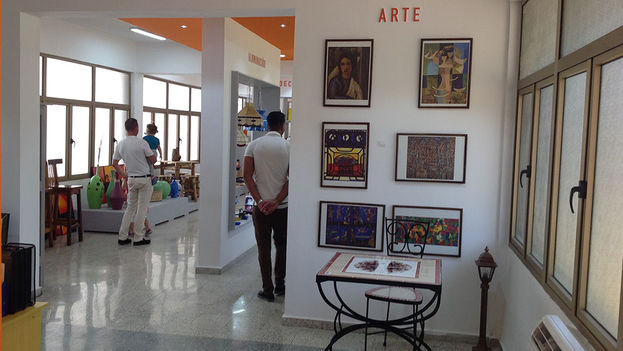
The shop for Artex objects is one of the few areas of the complex that is already up and running. (14ymedio)

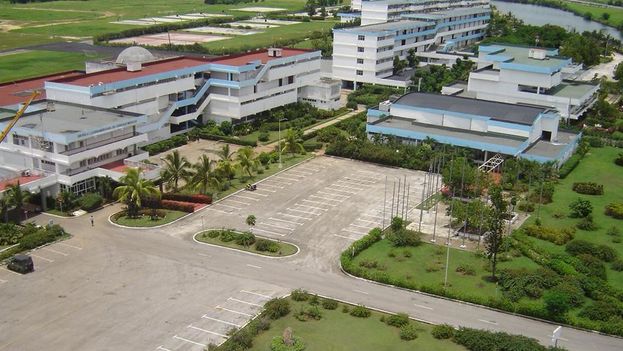
14ymedio bigger14ymedio, Reinaldo Escobar, Havana, 9 January 2015 — A neighborhood without a church, cemetery or cultural center. That was Alamar in East Havana until late last year, when the Enguayabera recreational complex opened. A mass of concrete that for decades was an abandoned ruin, now seeks to offer the more than 100,000 people in the area a different option to boredom and alcohol.

The district’s residents are delighted with the new place, although many of its areas are not yet up and running. Since the nineties the hall, which was built to house a factory making guayabera shirts, had been converted into a public toilet and garbage dump. “The rats were driving us crazy,” said a neighbor whose ground floor apartment was affected by the abandoned factory. continue reading

Now, the old textile factory located on 162nd Street is newly painted and trucks come and go hauling away the trash. At the entrance, some photographs show the deterioration that overcame the building during the “Special Period” – after the collapse of the Soviet Union and the loss of its subsidies to Cuba – when the factory was forced to stop production and send its workers home.

Enguayabera is trying to emulate the popular Cuban Art Factory* in Havana’s Plaza district but, unlike that center, it will be administered entirely by state entities. The place has four cinemas with a capacity of 40 seats, a small theater, and party space where the whole complex was opened on 29 December with a concert by Manolito Simonet y su Trabuco.

For now, the literary café, ice cream shops and the shops operated by Artex and the Cuban Fund of Cultural Assets attract the most people during the day. Although the wifi area trumps everything atthis point, as an alternative for those who, until recently, had to travel to the Pan American Village or wifi zones in more central parts of Havana in order to connect.

The space also has a playground and three inflatable parks, but the huge puppets that make up the latter were not inflated this week, to the frustration of the children and their parents who arrived, excited by television reports about the new attractions. The sense of a rushed opening permeates the place, but does not diminish the enthusiasm of many.

With two teenagers, Yusmila has lived in the area since she was a child and commented to this newspaper about her relief, now that her family will have recreational opportunities so close to home. “I don’t let them go into Havana after six in the evening and they were really bored at home,” said the woman, for whom “the ability to go to the movies 200 yards from here is a blessing.”

However, others are more skeptical about the cultural offerings promoted by Enguayabera. A young taxi driver who operates on the route between Havana’s Central Park and Alamar commented on this. As a self-employed worker, it seems excessive to him to have “four movie theaters, in a time when people have everything at home with the weekly packet.”

The man also recognizes that the new cultural center will affect him directly because, as he confesses, “all those who will now entertain themselves in Alamar are customers I will lose because they won’t need to go here and there to get to a disco or a movie theater.”

Eusebio Mitjans has lived for 35 years in the neighborhood that was supposed to be the home of the “New Man,” but which ended up becoming a dysfunctional bedroom city filled with prefabricated blocks. He spent dozens of hours in voluntary work on the construction of the guayabera factory during the eighties, and now says he feels “satisfied” because the site is being renovated for young people.

Sitting with Mitjans on Thursday in the site’s literary café was his 20-year-old niece. The young woman asked the waitress if there was a program yet for the authors who would be presenting their works. But the clerk just shrugged her shoulders and didn’t answer. “In Alamar there are more writers than buildings, and now all they need is to publish their books,” said the young woman.

All around her is the glittering appearance of the new. The nightmare of the parishioners is that one bad day it will all collapse into ruins, as happened once already to the guayabera factory.

*Translator’s note: See articles here, from The Havana Times, and here from the Washington Post.

More Than 10,000 Food Services Paralyzed In Villa Clara For Health Infractions / 14ymedio, Zunilda Mata

Hygiene rules require workers to protect food from human hair and not to take money with the same hand that served the food. (EFE)

14ymedio bigger14ymedio, Zunilda Mata, Havana, 8 January 2015 – More than 10,000 services in Villa Clara have been paralyzed for health infractions, according to a report from the Department of Health Inspection Control published in the official press on Wednesday.

In addition, the repeated failure of 11 establishments to comply with the health regulations has led to their being brought to court. These businesses many not open again until the health violations are resolved.

Food exposed for hours, undercooked meat, and inadequate cleaning are some of the most common health infractions detected in2015 in state and private food services in the province. The inspections led to the closure of 19 food establishments in Villa Clara, the withdrawal of 1,200 licenses for self-employment, and the imposition of 13,000 fines. continue reading

As revealed to the press by Manuel Santos, a department official in Villa Clara, centers for the processing and sale of food, including snack bars, restaurants, coffee shoos and workers dining rooms, have been affected by the preventive measures.

Another of the most common infractions is committed by employees who serve food with their hands, without correctly using protective clothing designed for kitchens and food service. To this is added the placing of raw meat near sausages and smoked meats, increasing the risk of salmonella, a disease caused by a bacterium that causes severe diarrhea, vomiting and headache.

The drought affecting the country has aggravated the problems in hygiene in many places serving food, as their water supply has diminished in recent months. Other difficulties, including acquiring detergent, transport, and appropriate refrigeration equipment affect both government and private businesses.

Health standard violations storing, handling and preparation of food put consumers’ health at risk. First Deputy Health Minister Jose Angel Portal Miranda confirmed in the National Assembly, last December, that acute diarrheal diseases had decreased by 13.5% in 2015 over the previous year, but not as much as in 2014 when they were down 25.6% compared to 2013.

In recent weeks television has reinforced messages urging consumers to avoid eating foods that have not been properly protected, or that have some into contact with dust or flies. The adds alert staff not to handle food with the same hand that touches money.

Is Cristal Beer Back? / 14ymedio

People wait for the Cristal delivery trucks outside the markets. (14ymedio)

14ymedio bigger14ymedio, Havana, 4 January 2016 — This year end, the traditional dinner of December 31 was marked not only by high food prices, but also by a shortage of beer. The lack of “a cold one” of domestic production forced the government to increase imports of foreign brands, including Heineken, Bavaria, Sol and Mahou. However, most consumers still prefer the Cuban varieties, especially Cristal.

The lack this pale ale was again a subject of discussion at the last session of the National Assembly, where the problem was attributed to an increase in consumption due to an increase in the number of private restaurants and cafes, along with the growth of foreign tourism.

The fluctuations in the supply of raw materials, especially the so-called “Czech malt,” have also negatively impacted the Bucanero SA brewery, the largest in the country, located in the province of Holguin. The plant produces more than half the beer consumed nationally, both in Cuban convertible pesos and Cuban pesos.

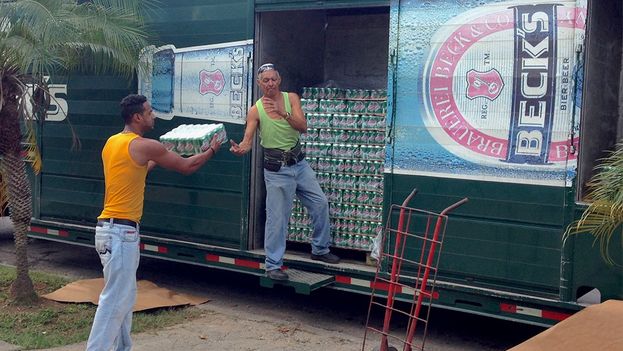
Now, people wait for the Cristal delivery trucks outside the markets, even when – as is the case in the image above – it comes “disguised” as a delivery of Becks.

Argentinian Doctors Trained In Cuba Deny The Withdrawal of Their Qualifications / 14ymedio

Latin American School of Medicine (Facebook)

14ymedio bigger14ymedio, Havana, 6 January 2016 – The news widely broadcast in Cuba’s official press regarding the disqualification, in their own country, of Argentinian doctors trained in Cuba, has turned out to be false, according to a clarification by Prensa Latina regarding a communication from Project Tatu, which brings together young doctors who have graduated from Cuba’s Latin American School of Medicine (ELAM).

Project Tatu, which has posted a statement on the internet, explained that the news was a lie, adding, “There is no legal way to nullify credentials once the qualification has been awarded.”

In the statement sent to Prensa Latina, the organization said, “We regret that many sympathetic press agencies have reproduced this unfounded information, creating great confusion.”

Patricio Ancarola, spokesperson for the Argentina Ministry of Health, also denied that the holder of that portfolio, Doctor Jorge Lemus, made a decision of this nature. In addition, Project Tatu said, “It is the Ministry of Education and not the Ministry of Health or the nation’s Health Minister, Dr. Jorge Lemus, as press reports have stated, which has the authority to recognize qualifications.”

ELAM, located in Havana, has trained over 25,000 doctors from 84 countries since its founding in 1999.

Please / 14ymedio

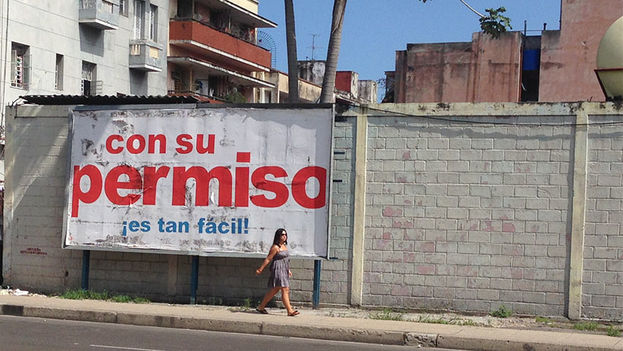
Propaganda poster to highlight the importance of values. “Excuse me.” It is so easy! (14ymedio)

14ymedio bigger14ymedio, Havana, 6 January 2016 – The loss of values has been at the center of the Cuban government’s official discourse for several years. The lack of formal education and urban and neighborhood social indisciplines, have been addressed with concern by officials and in the national media. Countless television ads call for not shouting when talking, avoiding loud music, and recovering the formulas of courtesy such as “please” and “thank you.” However, the deterioration has not been reversed nor has the situation shown any improvement.

Last October an article published in the Catholic magazine Palabra Nueva (New Word) addressed the ethical and moral deficiencies that run through Cuban society. The author, Orlando Marquez, recalled some declarations by Raul Castro in 2013 in which he affirmed that it was time for religious entities to help in recovering these values. However, the writer claimed that, from his point of view, religious institutions should be allowed “to develop their work freely.”

Venezuela Wins, Intolerance Loses / 14ymedio, Yoani Sanchez

Opposition lawmaker Henry Ramos Allup is the new president of the Venezuelan National Assembly. (MUD)

14ymedio bigger14ymedio, Yoani Sanchez, Havana, 6 January 2016 – If Hugo Chavez were alive and Fidel Castro active, the Venezuelan opposition would not have taken over the National Assembly. The comandantes knew that if they accepted an opposition majority in this body of power it would spell their political end. The Cuban leader eradicated the multi-party system in order to prevent something like this, while Chavez, leader of a military coup, shielded the electoral system and bought loyalty with oil.

However, the worst nightmare of both just took shape in Caracas. This Tuesday the deputies from the United Socialist Party of Venezuela (PSUV) became aware of their overwhelming minority given their small number of legislative seats. In a place where they can no longer even see the image of the “eternal president,” Chavez’s followers received a democratic slap in the face. continue reading

Accustomed to legislating with a marked numerical superiority, the ruling party found their disadvantage a bitter pill to swallow and stomped out of the room. For them, the coming months will be a martyrdom because they will hear a flood on contrary opinions, they will be held accountable for their decisions, and they will see laws approved that will affect their own bloc.

In the Castro regime’s manual, one can read in great big red letters the maxim to avoid at all costs allowing political opponents to take the microphones. One lesson that the Plaza of the Revolution taught Chavez, but that his clumsy disciple Nicolas Maduro did not assimilate well. Maduro’s arrogance made him believe that he would win the elections of last December 6, and today he is looking hard for ways to tie the hands of the National Assembly.

While the Venezuelan Supreme Court was hearing the ruling party’s challenges to three deputies-elect from the Democratic Unity Roundtable (MUD), Cuban parliamentarians were meeting at the Palace of Conventions. In Caracas, everything was speculation and political tension, but in Havana the script was already well known: vote unanimously and, at best, listen to long hours of speeches about the supply of yogurt, the poor quality of the induction cookers recently hawked to the population, or the complications involved in obtaining a birth certificate.

Cuba’s National Assembly of People’s Power, led by Esteban Lazo, was once again the image of docility, but its Venezuelan counterpart was transformed, this Tuesday, into pure effervescence. The South American nation has become, as of this moment, a country difficult to govern. But what democracy is easy?

Now there is only one parliament in this hemisphere that functions as a ventriloquist for power. One country where the legislators applaud a ruler who attends the National Assembly dressed in an army uniform, and spits at the minister of the economy to stop blushing about the failure of his programs. In this nation, where for nearly six decades we have not heard a real debate among legislators, this Tuesday we were proud and envious of Venezuela.

The One-sided Paralysis of the Cuban Press / 14ymedio, Yoani Sanchez

Television remains under a strict monopoly of the Communist Party to sustain a biased editorial line does not represent the national complexity.

14ymedio bigger14ymedio, Generation Y, Yoani Sanchez, 6 January 2015 – Sometimes I wish I lived in the country they show on television. This hopeful nation of rose-colored dreams presented by the official press. A place of props and slogans, where factory production exceeds goals and employees are declared “workplace heroes.” In this Cuba, bouncing off the antennas to reach our small screens, there is no room for sickness, pain, frustration or impatience.

The official Cuban press has tried to approach the country’s reality in recent years. Several young faces appear on TV programs to report on administrative negligence, poor services, or consumer complaints about bureaucratic paperwork. But even still, state journalism continues to be a long way from objectivity and respect for the truth. continue reading

Television, radio and newspapers are maintained under strict monopoly of the Communist Party, and not only because they are ideologically subordinated, but also because they are financed from the state coffers – money that belongs to all Cubans – money that they use to sustain a biased editorial line that does not reflect the national complexity.

The topics covered by the journalists of this partisan press represent the interests of an ideology and a group in power, not of the entire country. They never dare, for example, in their reporting, to question the authorities, nor the current political system, nor the organs of State Security nor the activities of the police, among other taboo subjects.

However, where the official press most betrays the precepts of balance and impartial information is in the testimonies they broadcast, in the voices they give space to and the opinions they express. By the grace of journalistic censorship, access to the microphone is granted only to those who agree with the government and applaud the actions of its leaders.

They never interview someone with a difference of opinion, or someone who believes the country should take other political or economic paths. Unanimity continues to fill the front pages and the news broadcasts, although for a long time now loud dissent has been heard on buses, in stores, in the hallways of institutions and even in classrooms.

At the beginning of this year an avalanche of reports filled the television broadcasts. The protagonists were young people who claimed to live “in the best of all possible worlds,” smiling with confidence in their future and not even dreaming of emigration. Not included among the opinions were those from anyone in the process of leaving Cuba, or feeling frustrated by their professional prospects, or submerging themselves in illegalities to survive.

In the almost 70,000 hours of annual television broadcasts not a single self-employed person complains about their high taxes. Parents who fear the growing violence in Cuban streets are never encountered in the Cuban media, and women beaten by their husbands don’t appear demanding legal measures to protect them from the abuse.

The teachers whose pay doesn’t allow them to live a decent life find no echo of their demands in the media, nor do dissidents appear to demand respect for their opinions. An inmate denouncing bad prison conditions has no chance to appear before the cameras, nor do the patients who have been victims of medical ethics violations or bad treatment in the Public Health System.

This entire area of Cuba, the widest area, remains outside the authorized media. Because the official Cuban press doesn’t exercise journalism, rather it proselytizes. Although it is made up of many professionals with university and post-graduate degrees, they do not have the freedom to engage in the work of reporting. Instead of looking for the truth, they try to impose an opinion. What they do cannot even call itself “the press.”

Cuba’s New Ration Book / 14ymedio

Cuban ration booklet. “Control of sales for FOOD PRODUCTS. This booklet does not constitute a document of identification.” (14ymedio)

14ymedio bigger14ymedio, Havana, 5 January 2016 — During the last week of the year and the first days of the 2016, Cuban families have received their ration booklets to access the rationed food system in place since 1962.

Despite strong rumors predicting the end of the rationed market, the fact is that it still stands, albeit with a considerable decrease in the numbers of products and increases in the prices of many of them.

The Cuban Nation And The Cuba Of The Castro Brothers / 14ymedio, Jorge Hernandez Fonseca

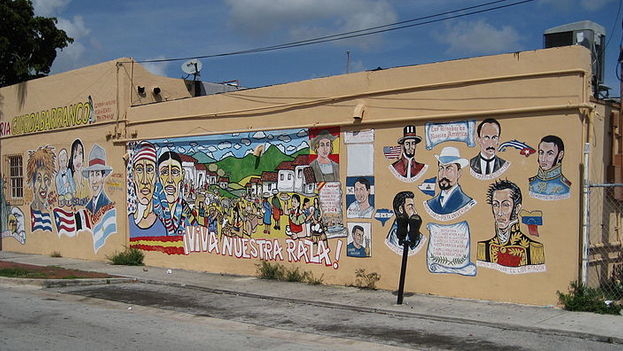
Mural painted on a café in Little Havana, Miami. (Flickr)

14ymedio bigger14ymedio, Jose Hernandez Fonseca, 5 January 2016 – When the current and voluminous world news talks about Cuba it is understood that it is talking about the Castro brothers’ Cuba. This, of course, for the quarter of the island’s population that lives abroad, is an inaccuracy. The real Cuba is the sum of the two separate worlds: the island governed by the Castro regime and the Cubans who live scattered around the rest of the world.

In reality, the Cuban nation is a dichotomy. There is the Cuba that survives on the island, whose basic aspiration is to leave and go abroad to free itself from an impoverished dictatorship; and the Cuba that has been reborn far from home, in other latitudes, that longs for and venerates the island. In reality they are two Cubas: one subjugated and poor and the other burgeoning and rich, as the island was in the past and will be in the future. In any event, Miami is what Havana would have been without Fidel Castro. continue reading

It is important to say that Cuba, prior to the Castro dictatorship, had the highest indicators of economic and social development in all of Latin America: the second highest per capita income, the highest per capita consumption of electricity, the lowest rate of illiteracy, the greatest number of daily newspapers, the highest number of cars per capita, the highest consumption of protein and one of the highest numbers of cattle per inhabitant, the highest average wage, more movie theaters than Paris and a long list of other attributes that included being the center of the world’s music.

It is true that before the current Castro dictatorship there was another dictatorship, but that one limited itself to circumscribing political liberties, allowing economic, social and human development typical of the first world. The people of Cuba fought against the previous dictatorship, but never with the intention to create an impoverished totalitarianism like the absurdity imposed by the Castros.

It must be said, moreover, that “the best” of Cuban society is outside the island. The best athletes, artists, writers, engineers, architects, intellectuals, journalists, comedians, musicians, teachers, politicians, among other professionals – or simply workers – live outside the island, forced by the mandate of obedience and emasculation that has been militarily imposed within Cuba by the Castro regime.

Faced with this reality, it is inappropriate to try to solve “the Cuban problem” without recourse to the effort, capital, entrepreneurship and leadership of the quarter of the Cuban population abroad. The effort of the United States to inject the entrepreneurial and/or democratic virus within the island means nothing, if the most dynamic part of the Cuban population is prevented from participating, investing, leading and even governing, the Cuban nation of the future.

Let’s not fool ourselves, no nation has emerged from the status of Haitianization that Cuba is currently subjected to without the participation of its best children, those who have triumphed in the conditions of exile, not only in the United States but everywhere in the world. Cuban intellectuals will insist on their patriotic values, whether they love or hate the dictatorship and its allies. The recognition of every Cuban is the only formula to shape the Cuban nation of the future.

Number Of Political Arrests In Cuba Doubles From Dec. 2014 / 14ymedio

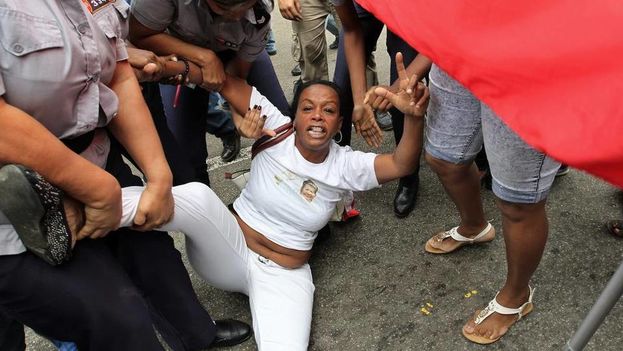
A member of the Ladies in White is arrested by police on Thursday, 10 December 10, in Havana. (Photo EFE)

14ymedio bigger14ymedio, Havana, 4 January 2015 — The number of political arrests in the month of December in Cuba was almost twice that of December 2014, from 489 increasing to 930, according to the monthly report issued by the Cuban the National Commission for Human Rights and National Reconciliation (CCDHRN).

The number represents a significant decrease from November, when there were at least 1,447 arrests. However, that figure was the highest in years, according to information from the CCDHRN, which reported December was the third worst month of the year, after the two months preceding it (there were 1,093 political arrests in October).

The CCDHRN is particularly concerned because five former political prisoners – released as a part of the negotiations between the Cuban and United States governments that led to the reestablishment of relations – were newly arrested and being held in high security prisons. These prisoners are

Wilfredo Parada Milian, Jorge Ramirez Calderon, Carlos Manuel Figueroa, Aracelio Ribeaux Noa and Vladimir Morera Bacallao, who was on a hunger strike between 9 October and the end of the year. The five have been imprisoned in “rigged processes without due process,” according to the organization led by Elizardo Sanchez.

Once again, the groups most affected by repression, the report denounced, are the Ladies in White and the Patriotic Union of Cuba (UNPACU), who “apart from physical violence and all kinds of humiliations” suffered “acts of vandalism and the extrajudicial confiscation of toys intended to be distributed to poor children, computers, cellphones and other work tools acquired legally, as well as cash taken from many of the opponents who were arrested.”

The CCDHRN expressed despair because despite the expectations created by the restoration of diplomatic relations between Cuba and the US, “political repression increased steadily throughout 2015.” In addition, the report denounced that poverty has continued to grow, which has motivated, in the opinion of the organization, the migratory crisis of those “trying to escape Cuba by any means, including illegal emigration at the price of human suffering.”

Vladimir Morera Bacallao Ends Hunger Strike / 14ymedio

Union activist Vladimir Morera Bacallao. (Source: Twitter)

14ymedio bigger14ymedio, Havana, 4 January 2016 – Government opponent Vladimir Bacallao Morera has ended his hunger strike, having begun to eat on 30 December, according to information received by 14ymedio from Librado Linares. The prisoner spent more than 80 days without eating to demand his release, after being condemned to four years imprisonment for the alleged crime of “injuries.”

“Last Wednesday they began to give him a serum, and this altered his consciousness and made him lose his will, and they began supplying food,” said Linares. Linares, the leader of the Cuban Reflection Movement (MCR), has not been able to visit the patient in the intermediate care unit at the Arnaldo Milian Provincial Hospital in Santa Clara, where he continues to be confined, be he spoke on repeated occasions with his family. continue reading

Morera Bacallao weighed less than 95 pounds as a result of the hunger strike demanding the annulment of his sentence. At present, according to reports from his family is in a state of physical recovery, and is “digesting well what he eats,” said Linares.

The opponent has put a sign on the facade of his house during the April 1915 People’s Power elections where he proclaimed, “I vote for my freedom and not in some elections where I cannot elect my president.”

The text unleashed the fury among the government rulers of the town of Manicaragua. In the midst of an act of repudiation against him the second secretary of the Communist Party in the municipality, Ivis Herrera, he fell after slipping on melted asphalt that had been thrown at the Bacallao Morera’s home. In the fall Herrera suffered a blow to the head that is the center of the allegations against Bacallao Morera.

This was the second time that the dissident declared a hunger strike after entering prison. During the first 40 days he remained without food, until officials promised to review his case. On 9 October he resumed fasting, and continued until the end of the year. To date, it is not known whether the decision to stops the hunger strike has been accompanied by a new commitment on the part of prison authorities to ease or overturn his conviction.

On Tuesday, the United States asked Havana to release the dissident given the deterioration of his health. US State Department spokesman Mark Toner told journalists that Washington was “deeply concerned” about Morera Bacallao deteriorating health, and called “urgently” for him to be freed from prison.